
Presentation to the South Carolina Nuclear Advisory Council
- Slides: 28
Presentation to the South Carolina Nuclear Advisory Council SREL Updates and New Radionuclide Education, Monitoring and Outreach Program (REMOP) July 14, 2016 Dr. Olin E. Rhodes, Jr. – Director SREL Professor, University of Georgia (UGA)
Objectives Savannah River Ecology Lab (SREL) Mission Staffing Funding and Work Scope Significant Advancements New Programs For FY 16 Radionuclide Education, Monitoring and Outreach Program
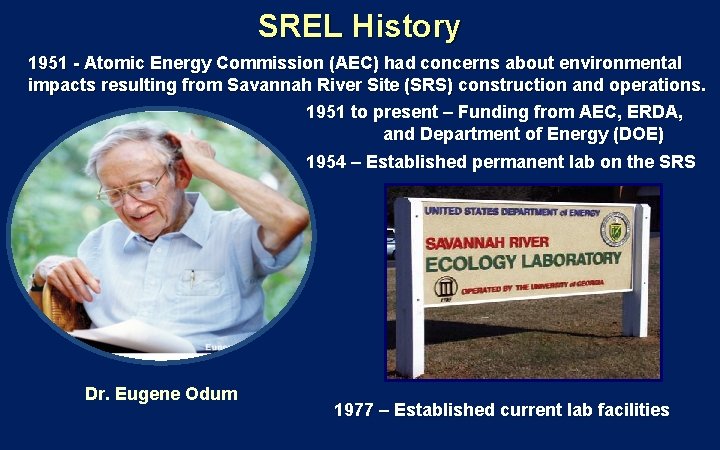
SREL History 1951 - Atomic Energy Commission (AEC) had concerns about environmental impacts resulting from Savannah River Site (SRS) construction and operations. 1951 to present – Funding from AEC, ERDA, and Department of Energy (DOE) 1954 – Established permanent lab on the SRS Dr. Eugene Odum 1977 – Established current lab facilities
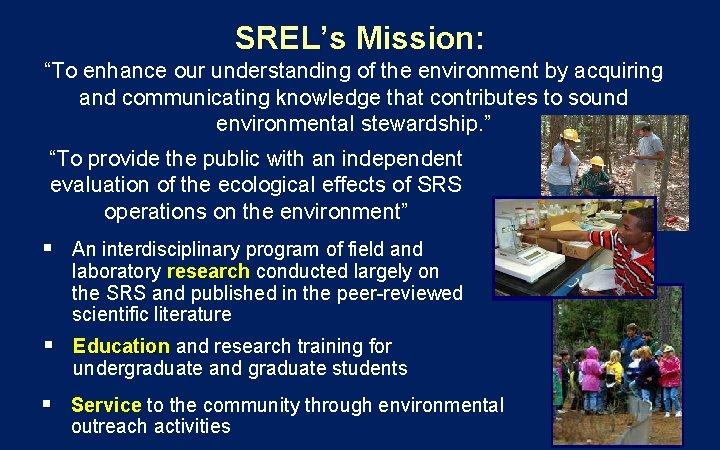
SREL’s Mission: “To enhance our understanding of the environment by acquiring and communicating knowledge that contributes to sound environmental stewardship. ” “To provide the public with an independent evaluation of the ecological effects of SRS operations on the environment” § An interdisciplinary program of field and laboratory research conducted largely on the SRS and published in the peer-reviewed scientific literature § Education and research training for undergraduate and graduate students § Service to the community through environmental outreach activities
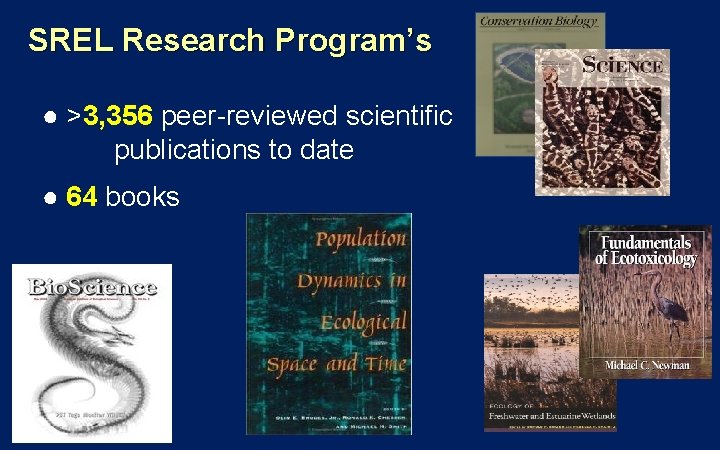
SREL Research Program’s ● >3, 356 peer-reviewed scientific publications to date ● 64 books
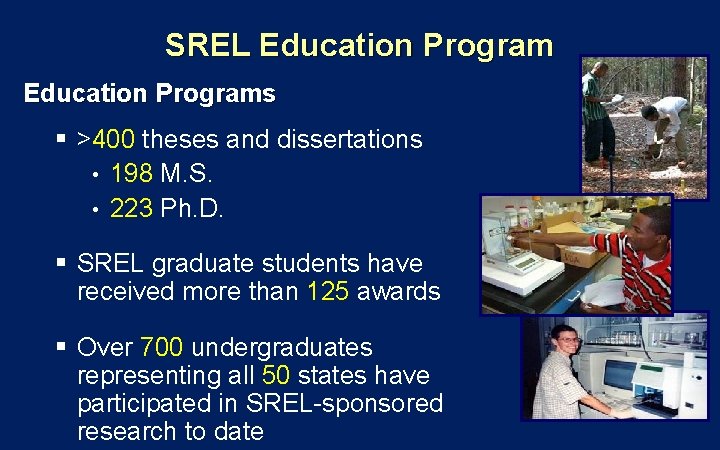
SREL Education Programs § >400 theses and dissertations • 198 M. S. • 223 Ph. D. § SREL graduate students have received more than 125 awards § Over 700 undergraduates representing all 50 states have participated in SREL-sponsored research to date
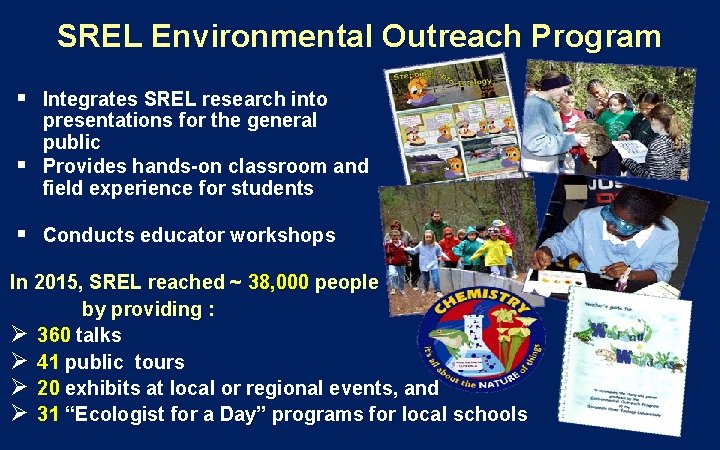
SREL Environmental Outreach Program § Integrates SREL research into § presentations for the general public Provides hands-on classroom and field experience for students § Conducts educator workshops In 2015, SREL reached ~ 38, 000 people by providing : Ø 360 talks Ø 41 public tours Ø 20 exhibits at local or regional events, and Ø 31 “Ecologist for a Day” programs for local schools
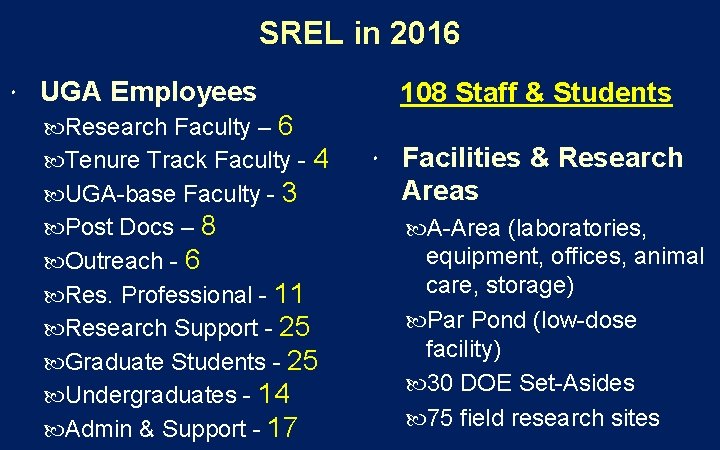
SREL in 2016 UGA Employees Research Faculty – 108 Staff & Students 6 Tenure Track Faculty UGA-base Faculty Post Docs – Outreach - 4 3 8 6 11 Research Support - 25 Graduate Students - 25 Undergraduates - 14 Admin & Support - 17 Res. Professional - Facilities & Research Areas A-Area (laboratories, equipment, offices, animal care, storage) Par Pond (low-dose facility) 30 DOE Set-Asides 75 field research sites
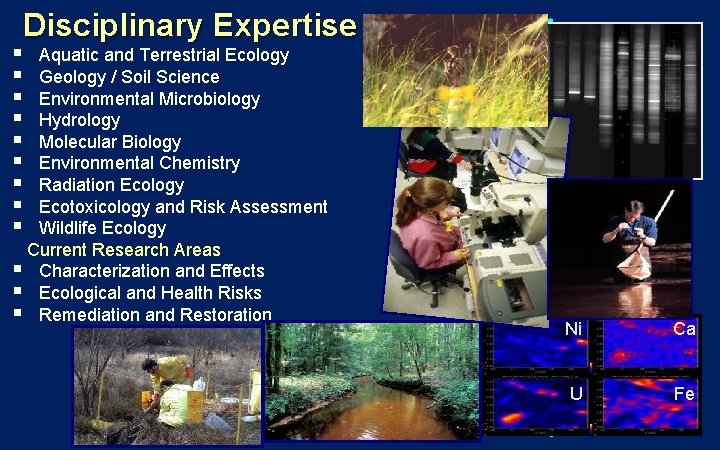
§ § § § § Disciplinary Expertise Aquatic and Terrestrial Ecology Geology / Soil Science Environmental Microbiology Hydrology Molecular Biology Environmental Chemistry Radiation Ecology Ecotoxicology and Risk Assessment Wildlife Ecology Current Research Areas § Characterization and Effects § Ecological and Health Risks § Remediation and Restoration Ecosystem Community Population Organism breadth of SREL’s expertise Organ Tissue Ni Cell Ca Molecule U Atom Fe
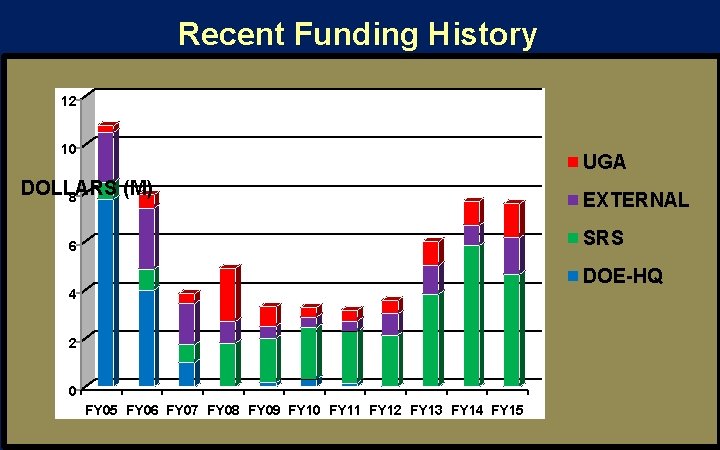
Recent Funding History 12 10 UGA DOLLARS (M) 8 EXTERNAL SRS 6 DOE-HQ 4 2 0 FY 05 FY 06 FY 07 FY 08 FY 09 FY 10 FY 11 FY 12 FY 13 FY 14 FY 15
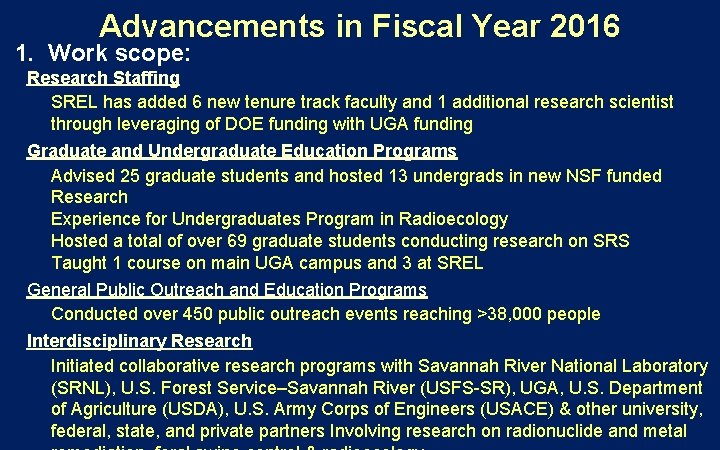
Advancements in Fiscal Year 2016 1. Work scope: Research Staffing SREL has added 6 new tenure track faculty and 1 additional research scientist through leveraging of DOE funding with UGA funding Graduate and Undergraduate Education Programs Advised 25 graduate students and hosted 13 undergrads in new NSF funded Research Experience for Undergraduates Program in Radioecology Hosted a total of over 69 graduate students conducting research on SRS Taught 1 course on main UGA campus and 3 at SREL General Public Outreach and Education Programs Conducted over 450 public outreach events reaching >38, 000 people Interdisciplinary Research Initiated collaborative research programs with Savannah River National Laboratory (SRNL), U. S. Forest Service–Savannah River (USFS-SR), UGA, U. S. Department of Agriculture (USDA), U. S. Army Corps of Engineers (USACE) & other university, federal, state, and private partners Involving research on radionuclide and metal
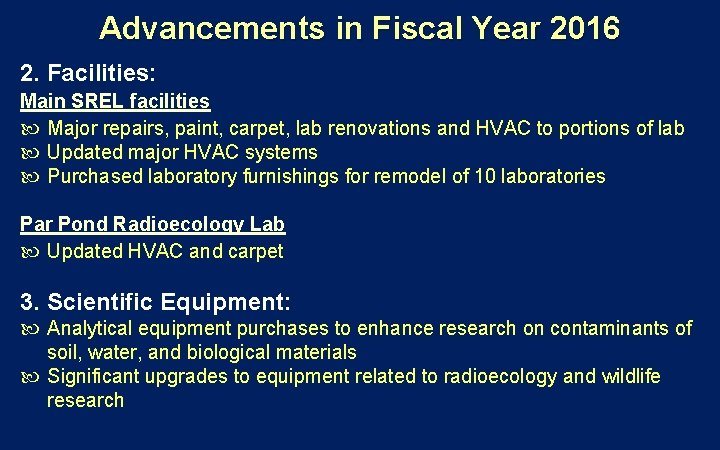
Advancements in Fiscal Year 2016 2. Facilities: Main SREL facilities Major repairs, paint, carpet, lab renovations and HVAC to portions of lab Updated major HVAC systems Purchased laboratory furnishings for remodel of 10 laboratories Par Pond Radioecology Lab Updated HVAC and carpet 3. Scientific Equipment: Analytical equipment purchases to enhance research on contaminants of soil, water, and biological materials Significant upgrades to equipment related to radioecology and wildlife research
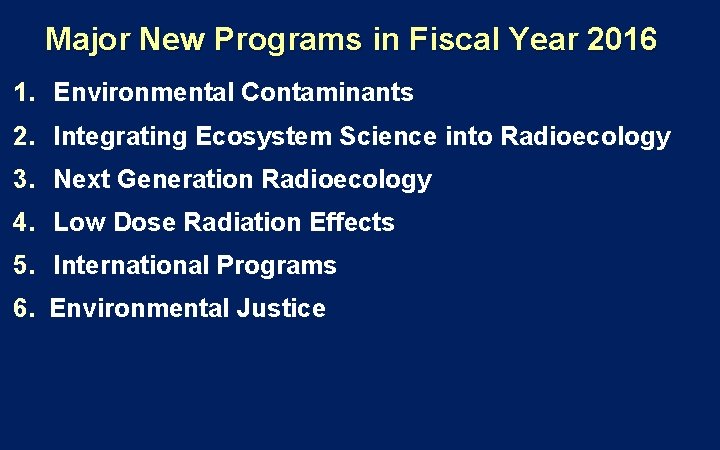
Major New Programs in Fiscal Year 2016 1. Environmental Contaminants 2. Integrating Ecosystem Science into Radioecology 3. Next Generation Radioecology 4. Low Dose Radiation Effects 5. International Programs 6. Environmental Justice
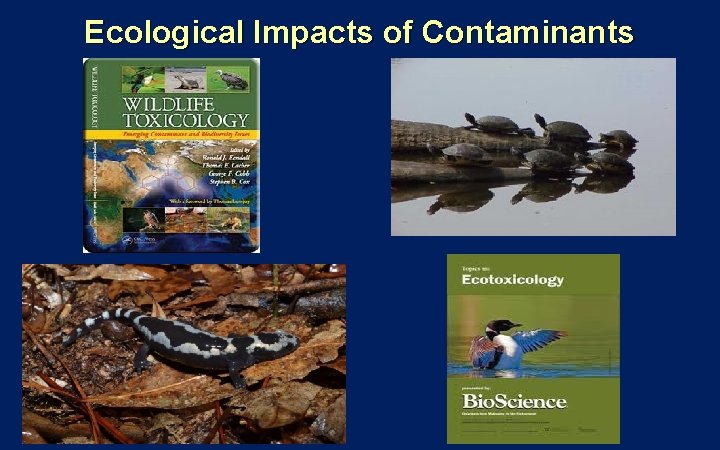
Ecological Impacts of Contaminants
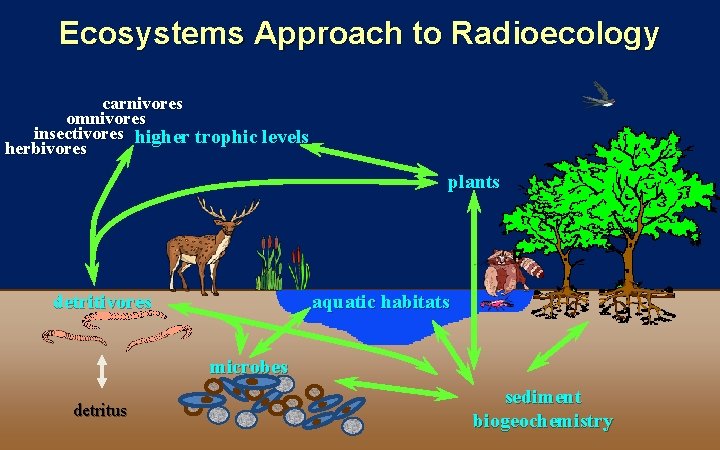
Ecosystems Approach to Radioecology carnivores omnivores insectivores higher trophic levels herbivores plants detritivores aquatic habitats microbes detritus sediment biogeochemistry
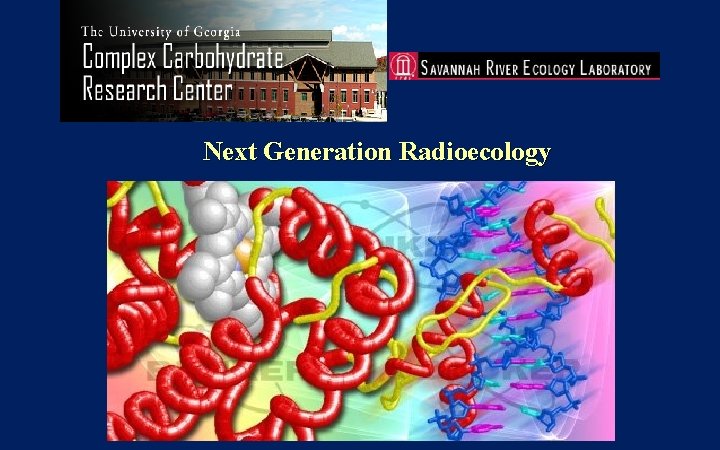
Next Generation Radioecology
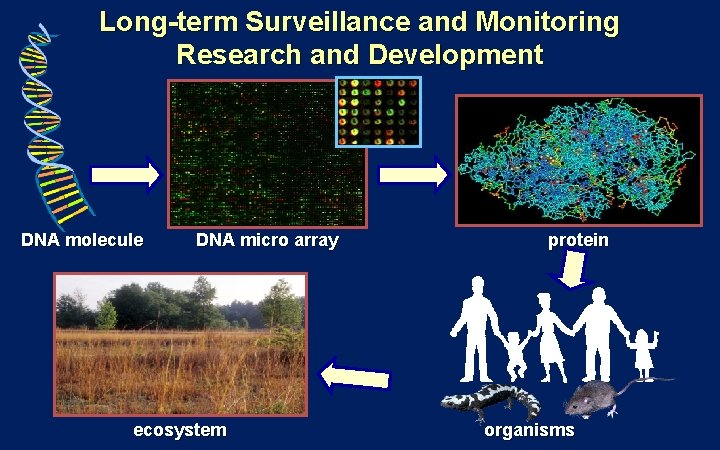
Long-term Surveillance and Monitoring Research and Development DNA molecule DNA micro array ecosystem protein organisms
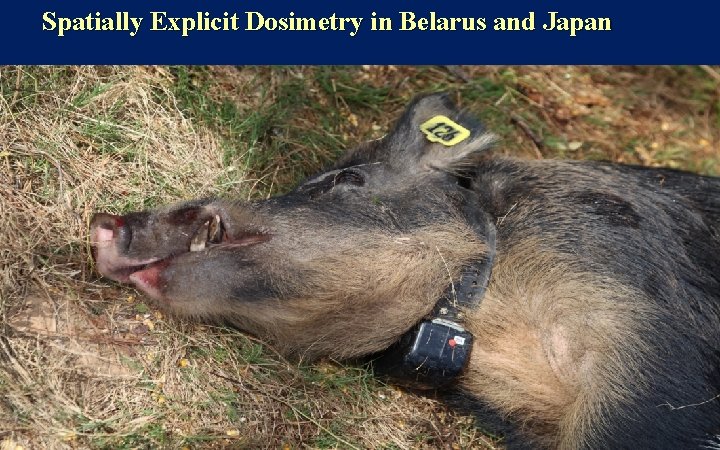
Spatially Explicit Dosimetry in Belarus and Japan 18
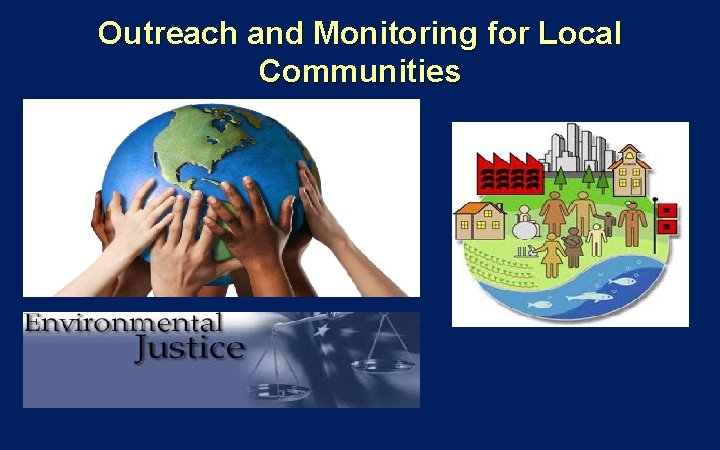
Outreach and Monitoring for Local Communities
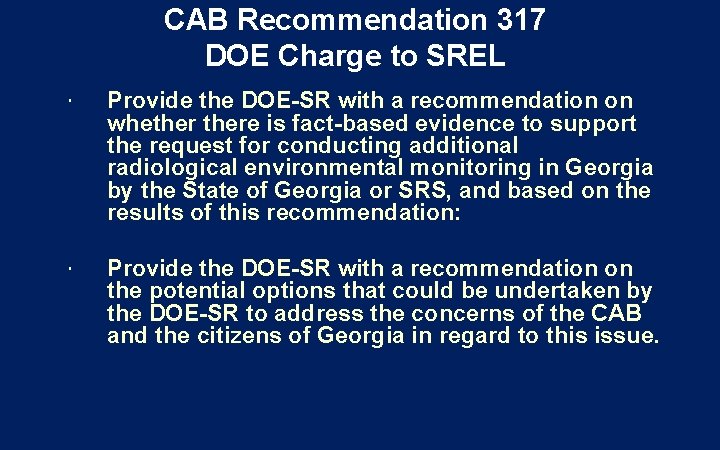
CAB Recommendation 317 DOE Charge to SREL Provide the DOE-SR with a recommendation on whethere is fact-based evidence to support the request for conducting additional radiological environmental monitoring in Georgia by the State of Georgia or SRS, and based on the results of this recommendation: Provide the DOE-SR with a recommendation on the potential options that could be undertaken by the DOE-SR to address the concerns of the CAB and the citizens of Georgia in regard to this issue.
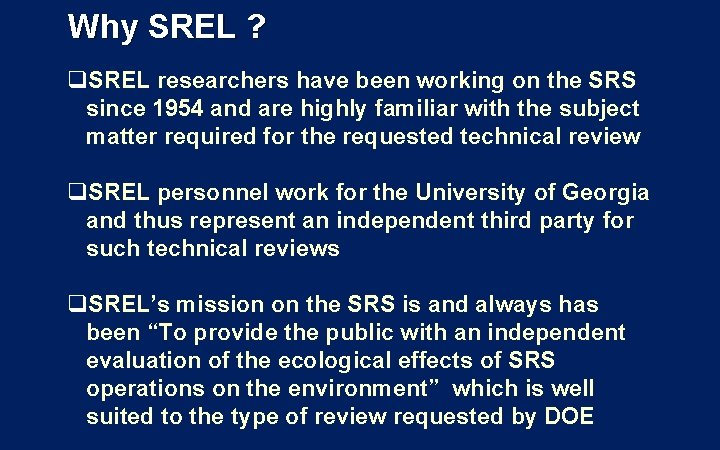
Why SREL ? q. SREL researchers have been working on the SRS since 1954 and are highly familiar with the subject matter required for the requested technical review q. SREL personnel work for the University of Georgia and thus represent an independent third party for such technical reviews q. SREL’s mission on the SRS is and always has been “To provide the public with an independent evaluation of the ecological effects of SRS operations on the environment” which is well suited to the type of review requested by DOE
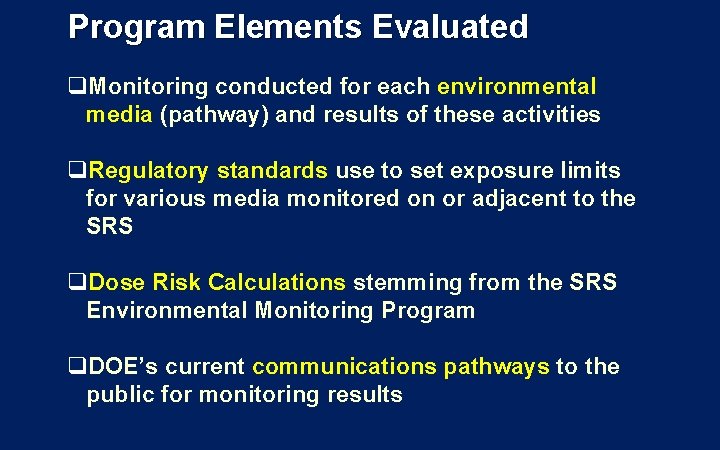
Program Elements Evaluated q. Monitoring conducted for each environmental media (pathway) and results of these activities q. Regulatory standards use to set exposure limits for various media monitored on or adjacent to the SRS q. Dose Risk Calculations stemming from the SRS Environmental Monitoring Program q. DOE’s current communications pathways to the public for monitoring results
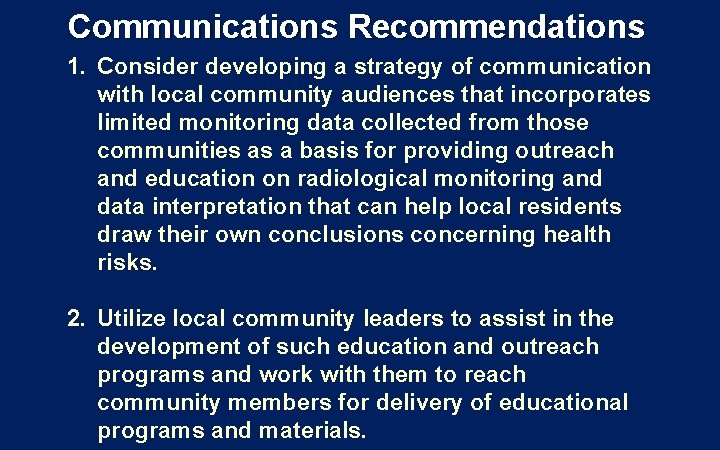
Communications Recommendations 1. Consider developing a strategy of communication with local community audiences that incorporates limited monitoring data collected from those communities as a basis for providing outreach and education on radiological monitoring and data interpretation that can help local residents draw their own conclusions concerning health risks. 2. Utilize local community leaders to assist in the development of such education and outreach programs and work with them to reach community members for delivery of educational programs and materials.
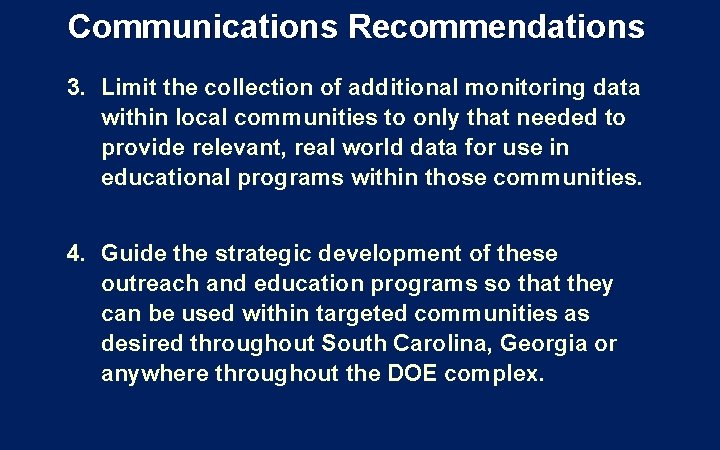
Communications Recommendations 3. Limit the collection of additional monitoring data within local communities to only that needed to provide relevant, real world data for use in educational programs within those communities. 4. Guide the strategic development of these outreach and education programs so that they can be used within targeted communities as desired throughout South Carolina, Georgia or anywhere throughout the DOE complex.
SREL Radionuclide Education, Monitoring and Outreach Program (REMOP) WHERE: WHERE Shell Bluff, Georgia WHO: WHO DOE (Funder) SREL (Outreach and Monitoring) GA WAND (Facilitate Communication to Local Residents) WHEN: WHEN Currently Hiring Staff (Targeted Start of Fall 2016)
SREL Radionuclide Education, Monitoring and Outreach Program (REMOP) Goal: Goal To utilize radionuclide and metals data collected within the local community of Shell Bluff to inform outreach and education efforts on radionuclide monitoring programs and risks designed for delivery to local residents. *** NOT A NEW MONITORING PROGRAM***
SREL Radionuclide Education, Monitoring and Outreach Program (REMOP) Summary Details: Details 1. Three-year project 2. Pre-Post surveys of residents 3. Community participation in selection of sites and media 4. Review of existing monitoring program data from DOE, SCDHEC, and Vogtle for comparative purposes 5. Development of outreach programing to help residents interpret data and gain perspective on risk
THANK YOU