
PRESENTATION TO THE NH NRCS STATE TECHNICAL COMMITTEE
- Slides: 19
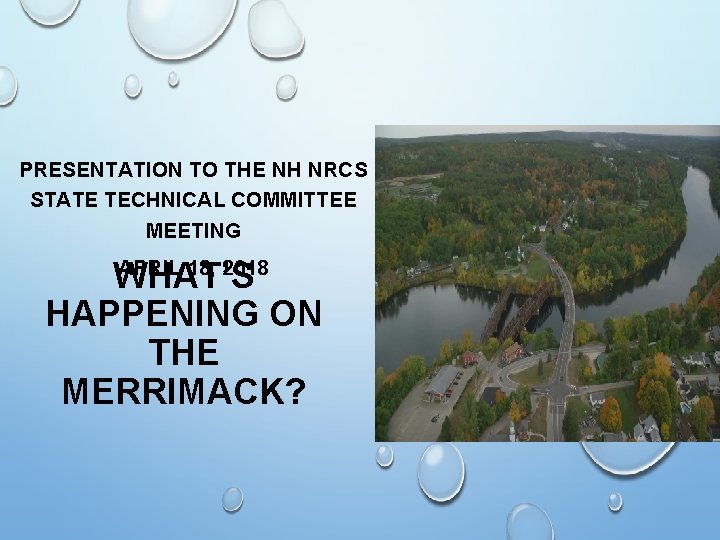
PRESENTATION TO THE NH NRCS STATE TECHNICAL COMMITTEE MEETING APRIL 18, 2018 WHAT’S HAPPENING ON THE MERRIMACK?
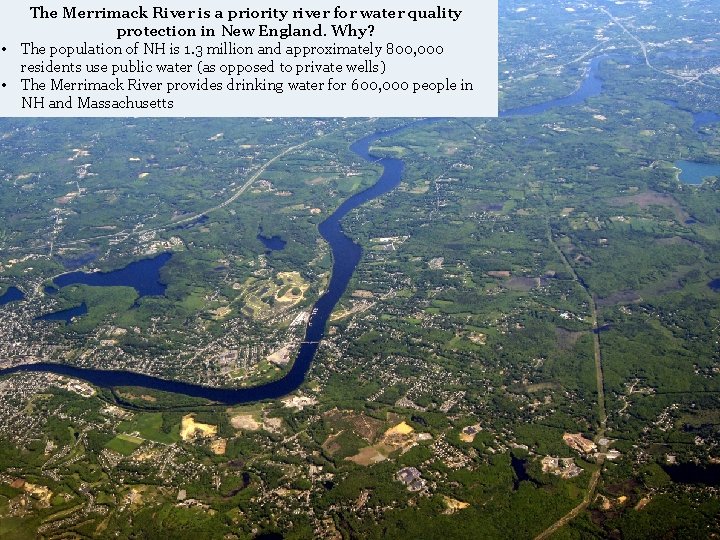
The Merrimack River is a priority river for water quality protection in New England. Why? • The population of NH is 1. 3 million and approximately 800, 000 residents use public water (as opposed to private wells) • The Merrimack River provides drinking water for 600, 000 people in NH and Massachusetts
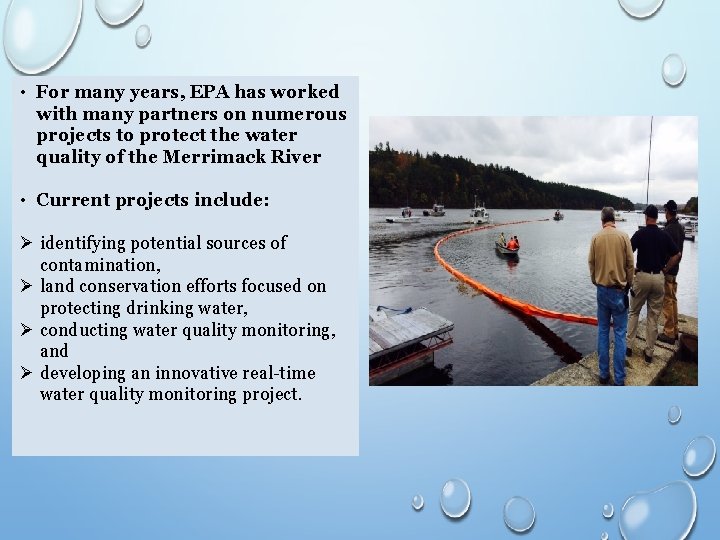
• For many years, EPA has worked with many partners on numerous projects to protect the water quality of the Merrimack River • Current projects include: Ø identifying potential sources of contamination, Ø land conservation efforts focused on protecting drinking water, Ø conducting water quality monitoring, and Ø developing an innovative real-time water quality monitoring project.
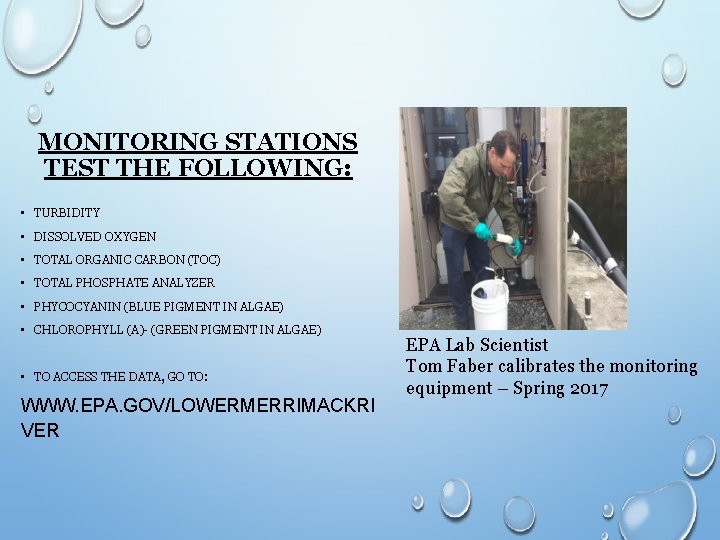
MONITORING STATIONS TEST THE FOLLOWING: • TURBIDITY • DISSOLVED OXYGEN • TOTAL ORGANIC CARBON (TOC) • TOTAL PHOSPHATE ANALYZER • PHYCOCYANIN (BLUE PIGMENT IN ALGAE) • CHLOROPHYLL (A)- (GREEN PIGMENT IN ALGAE) • TO ACCESS THE DATA, GO TO: WWW. EPA. GOV/LOWERMERRIMACKRI VER EPA Lab Scientist Tom Faber calibrates the monitoring equipment – Spring 2017
QUESTIONS? KIRA JACOBS EPA DRINKING WATER PROGRAM - SOURCE PROTECTION JACOBS. KIRA@EPA. GOV 617 -918 -1817 Photo courtesy of Strafford Rivers Conservancy
River Advocates and Conservationists— Finding the Sweet Spot Rusty Russell, Executive Director Merrimack River Watershed Council USDA Natural Resources Conservation Service State Technical Committee Meeting Concord, New Hampshire Wednesday, April 18, 2018
Merrimack River Watershed Council: Long -Term Objectives § Clean Water § Public Access
It Helps to Have a Dedicated Staff
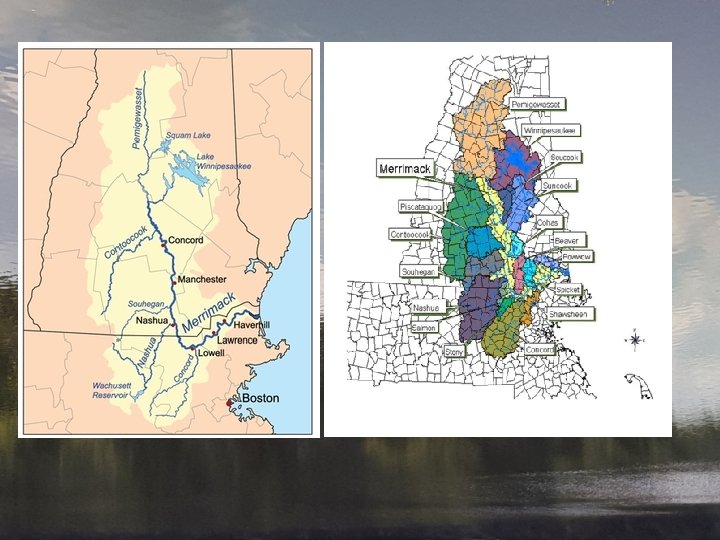
New Hampshire + MRWC In the Granite State: § 76% of total 2. 6 million acres of Merrimack watershed § 64% of watershed’s 214 cities and towns § All or part of 12 of its 15 sub-watersheds § 61% of main stem’s 125 -mile length § Major unprotected forest land is key input to river health § NH’s activities influence downstream neighbor § E. g. , Manchester POTW plant dumps more than 200 million gallons of raw/partially-treated sewage into the Merrimack annually
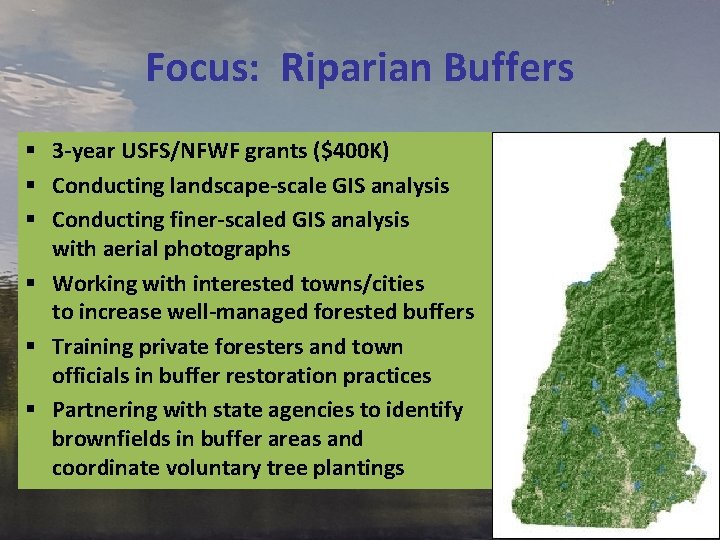
Focus: Riparian Buffers § 3 -year USFS/NFWF grants ($400 K) § Conducting landscape-scale GIS analysis § Conducting finer-scaled GIS analysis with aerial photographs § Working with interested towns/cities to increase well-managed forested buffers § Training private foresters and town officials in buffer restoration practices § Partnering with state agencies to identify brownfields in buffer areas and coordinate voluntary tree plantings
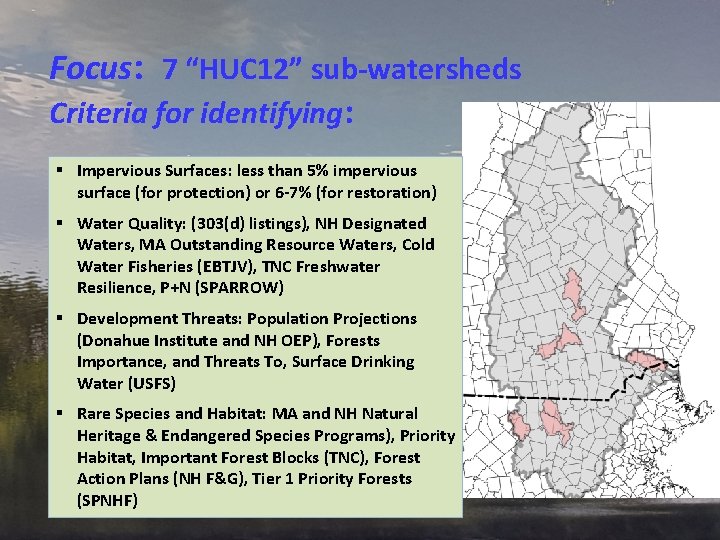
Focus: 7 “HUC 12” sub-watersheds Criteria for identifying: § Impervious Surfaces: less than 5% impervious surface (for protection) or 6 -7% (for restoration) § Water Quality: (303(d) listings), NH Designated Waters, MA Outstanding Resource Waters, Cold Water Fisheries (EBTJV), TNC Freshwater Resilience, P+N (SPARROW) § Development Threats: Population Projections (Donahue Institute and NH OEP), Forests Importance, and Threats To, Surface Drinking Water (USFS) § Rare Species and Habitat: MA and NH Natural Heritage & Endangered Species Programs), Priority Habitat, Important Forest Blocks (TNC), Forest Action Plans (NH F&G), Tier 1 Priority Forests (SPNHF)
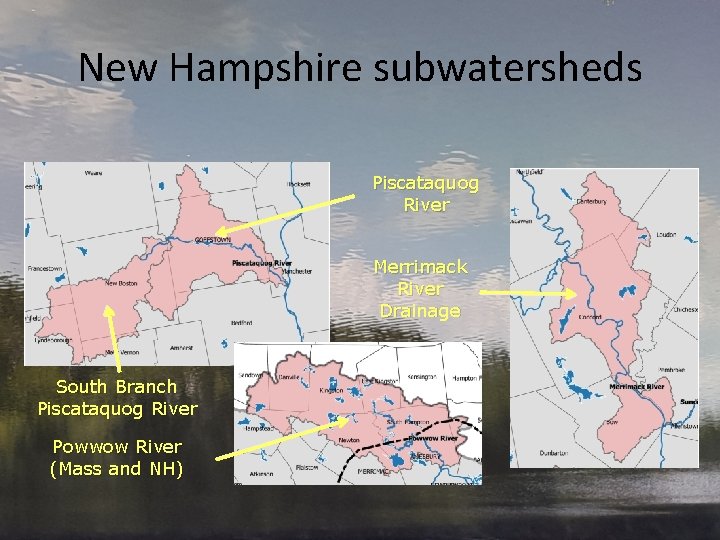
New Hampshire subwatersheds Piscataquog River Merrimack River Drainage South Branch Piscataquog River Powwow River (Mass and NH)
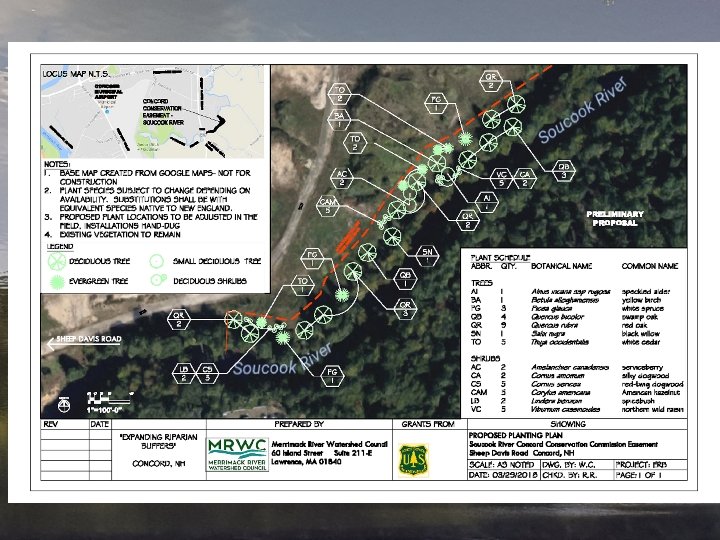
Riparian Buffers in NH – Where We Are NFWF sites in NH: § Needed: 5 total § Completed pre-2018: 3 § Will install this spring: 2 (NHTI campus, Clough State Park) USFS sites in NH: § § Needed: 20 between NH and MA Completed pre-2018 in NH: 0 Completed pre-2018 in MA: 11 Will install this spring in NH: 6 (Aggregate Industries, Black Brook, Proctor, Soucook, NHTI campus, Clough State Park) § Will install this fall in NH: 2 (likely)
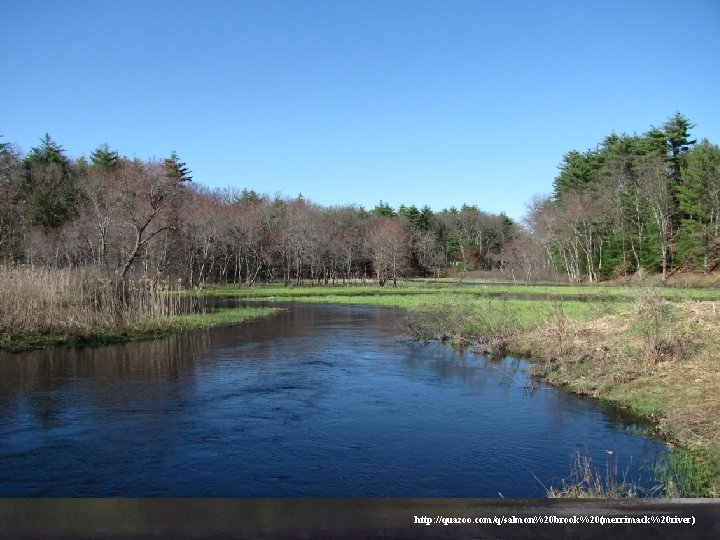
http: //quazoo. com/q/salmon%20 brook%20(merrimack%20 river)
Future Goals for MRWC in NH § Promote closer relationship among watershed advocates, land trusts, planning commissions, state and federal officials, political leaders § Expand river recreational opportunities (e. g. , kayak launches and multi-use paths) § Increase land protection, especially in vulnerable riparian areas § Monitor and analyze impacts of polluted stormwater runoff in areas historically prone to rapid, diffused development § Promote safe drinking water, especially among private well users § Study the issue of unregulated water contaminants (e. g. , PFOAs, MTBE) § Broaden and organize water quality analyses to identify and achieve optimal water testing efforts in the Merrimack and tributaries § Push for real-time public notification of CSO events § Play stronger role in issues relating to fish passage and unneeded dams
Thank You! Questions? Contact information: Rusty Russell rrussell@merrimack. org 617. 515. 9522 (cell)