
Presentation title Date Diagnosing diabetes in Childhood Kampala
Presentation title Date Diagnosing diabetes in Childhood
Kampala, Uganda March 2010 Date Slide no 2 Diabetes in Childhood • How does diabetes in children develop? • Why should children with diabetes be treated differently from most adults with diabetes? • Why can children with diabetes become so ill, and sometimes die?
Kampala, Uganda March 2010 Date Slide no 3 Diabetes • Group of disorders characterised by chronically high blood glucose levels. • Glucose in blood comes from • Food (food converted to glucose in the liver) • Stores (energy stored in liver, muscle and fat) • Glucose provides energy to cells and organs • Require insulin to move from blood to cells
Kampala, Uganda March 2010 Date Insulin • Hormone secreted by the pancreas • Produced by β-cells of the pancreas • Diabetes occurs if: • Pancreas does not produce enough insulin (type 1 diabetes) • Effect of insulin decreased (type 2 diabetes) Slide no 4
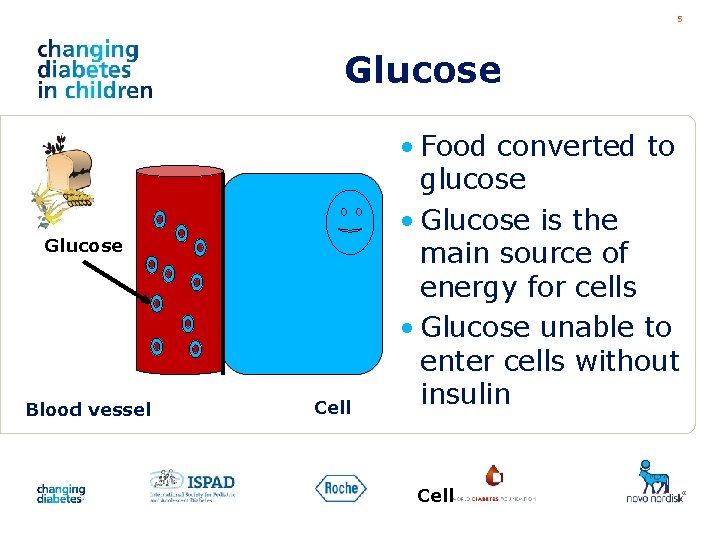
5 Glucose Blood vessel Cell • Food converted to glucose • Glucose is the main source of energy for cells • Glucose unable to enter cells without insulin Cell
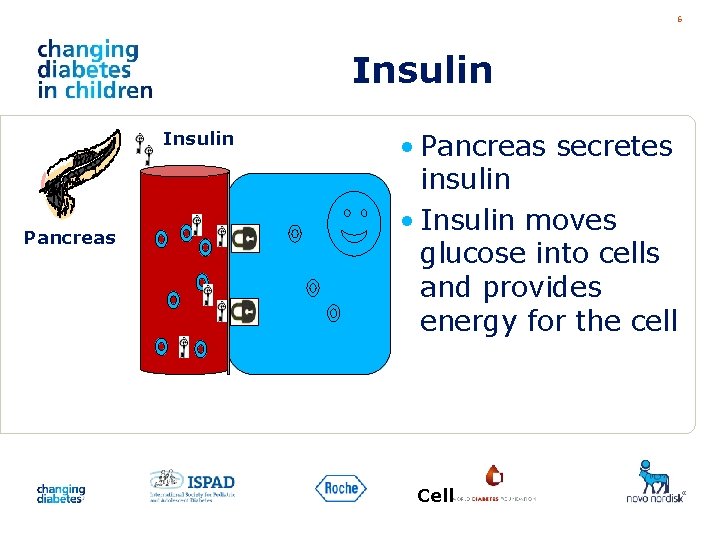
6 Insulin Pancreas • Pancreas secretes insulin • Insulin moves glucose into cells and provides energy for the cell Cell
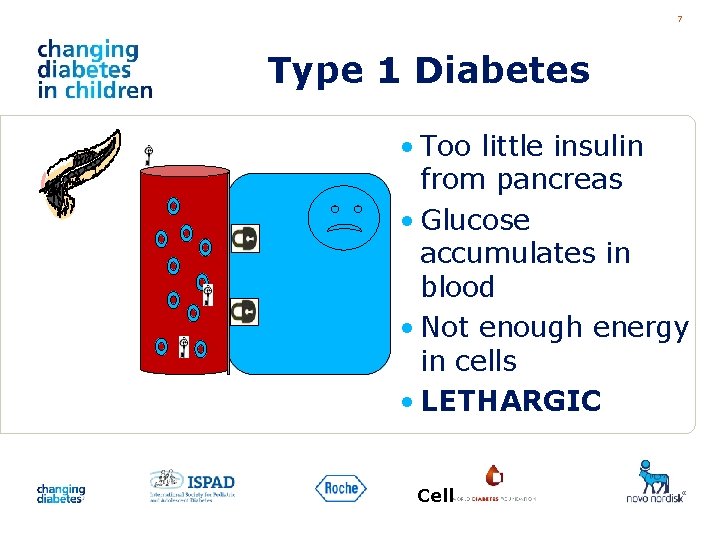
7 Type 1 Diabetes • Too little insulin from pancreas • Glucose accumulates in blood • Not enough energy in cells • LETHARGIC Cell
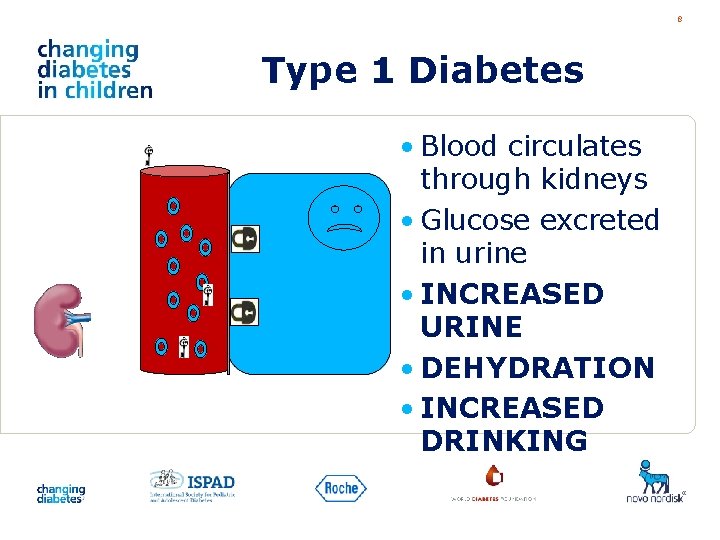
8 Type 1 Diabetes • Blood circulates through kidneys • Glucose excreted in urine • INCREASED URINE • DEHYDRATION • INCREASED DRINKING
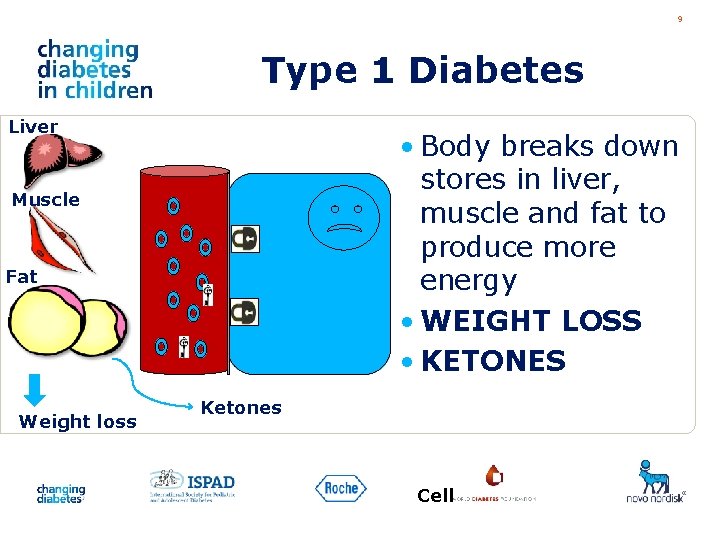
9 Type 1 Diabetes Liver • Body breaks down stores in liver, muscle and fat to produce more energy • WEIGHT LOSS • KETONES Muscle Fat Weight loss Ketones Cell
Kampala, Uganda March 2010 Date Slide no 10 Ketones • Common feature of type 1 diabetes, risk of developing DKA • Rare in type 2 diabetes, but can present in DKA • Occurs because of a breakdown of fat • Is life threatening Signs and symptoms: • Sweet smell on breath • Vomiting • Stomach pain • Rapid/acidotic breathing • Altered level of consciousness
Kampala, Uganda March 2010 Date Slide no 11 Type 1 Diabetes SYMPTOMS • Lethargy • Increased urination • Increased thirst • Bed wetting • Vomiting Often misdiagnosed as gastroenteritis! SIGNS • Weight loss • Dehydrated • Altered level of consciousness • Acidotic/rapid breathing Often misdiagnosed as asthma or pneumonia
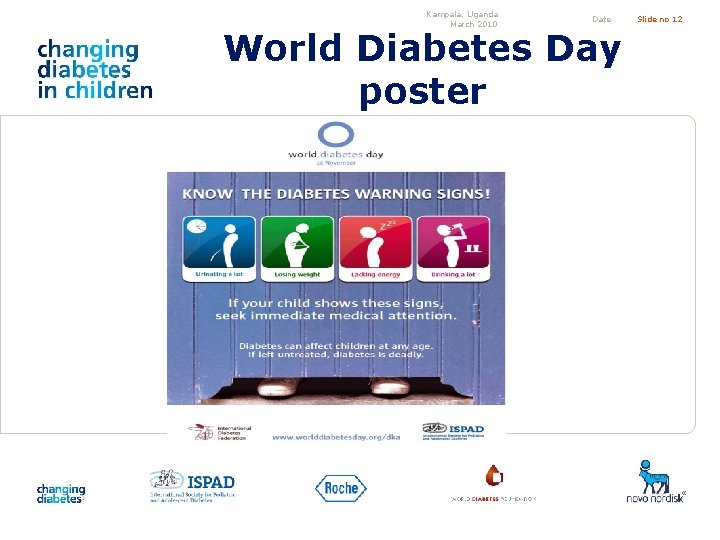
Kampala, Uganda March 2010 Date World Diabetes Day poster Slide no 12
Kampala, Uganda March 2010 Date Slide no 13 Type 2 diabetes • Usually seen in older people, but can occur in teenagers (usually overweight) • Due to resistance to effects of insulin • Often associated with obesity • Often asymptomatic • Treated with life style change and oral medications • Increasingly seen in youth
Kampala, Uganda March 2010 Date Slide no 14 Other types of diabetes • Malnutrition associated diabetes • Neonatal diabetes • Maturity onset diabetes of the young • Gestational diabetes
Kampala, Uganda March 2010 Questions Date Slide no 15
Presentation title Date Confirming a diagnosis of diabetes
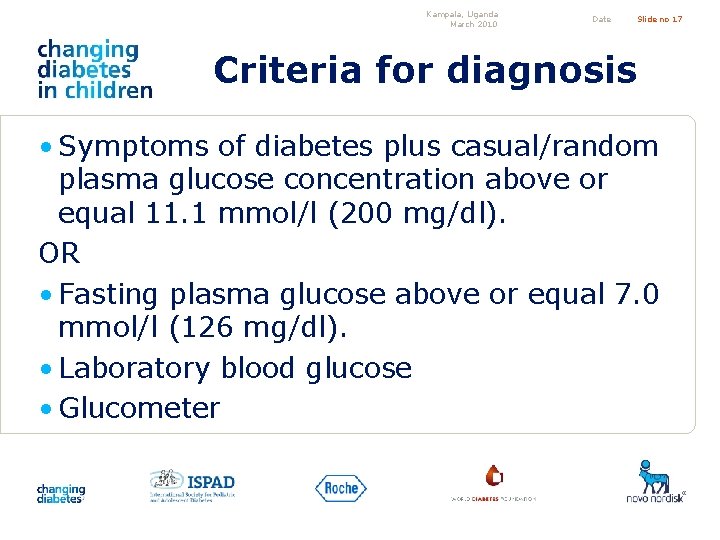
Kampala, Uganda March 2010 Date Slide no 17 Criteria for diagnosis • Symptoms of diabetes plus casual/random plasma glucose concentration above or equal 11. 1 mmol/l (200 mg/dl). OR • Fasting plasma glucose above or equal 7. 0 mmol/l (126 mg/dl). • Laboratory blood glucose • Glucometer
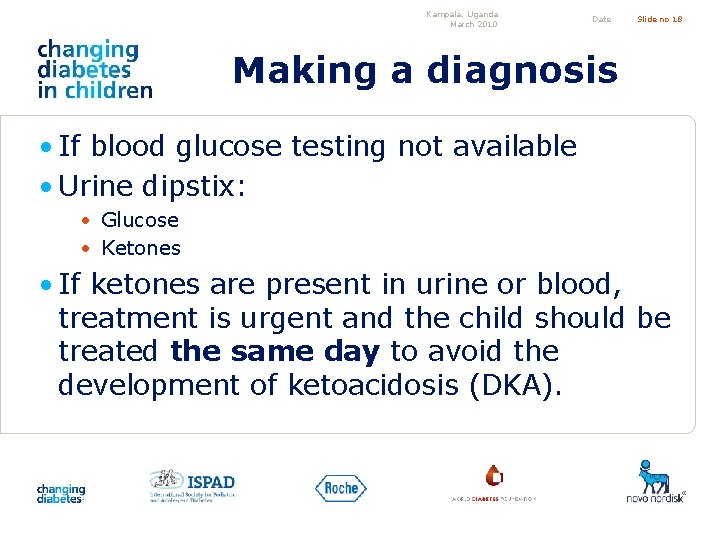
Kampala, Uganda March 2010 Date Slide no 18 Making a diagnosis • If blood glucose testing not available • Urine dipstix: • Glucose • Ketones • If ketones are present in urine or blood, treatment is urgent and the child should be treated the same day to avoid the development of ketoacidosis (DKA).
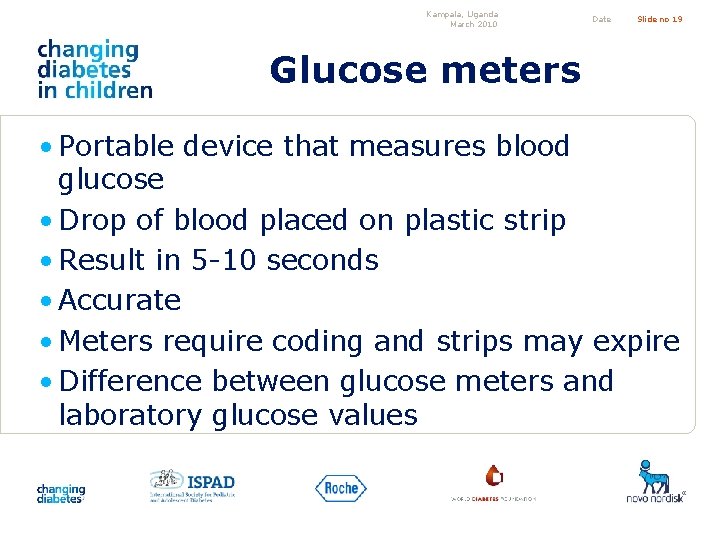
Kampala, Uganda March 2010 Date Slide no 19 Glucose meters • Portable device that measures blood glucose • Drop of blood placed on plastic strip • Result in 5 -10 seconds • Accurate • Meters require coding and strips may expire • Difference between glucose meters and laboratory glucose values
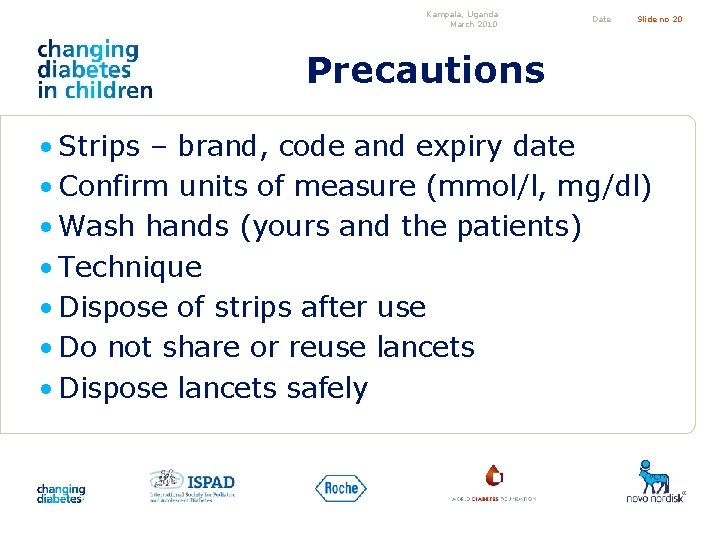
Kampala, Uganda March 2010 Date Slide no 20 Precautions • Strips – brand, code and expiry date • Confirm units of measure (mmol/l, mg/dl) • Wash hands (yours and the patients) • Technique • Dispose of strips after use • Do not share or reuse lancets • Dispose lancets safely
Kampala, Uganda March 2010 INTERMISSION • Using blood glucose meters • Using urine dipstix • Tea Date Slide no 21
Kampala, Uganda March 2010 Questions Date Slide no 22
- Slides: 22