
Presentation prepared by Marilyn Shaw University of Northern
Presentation prepared by: Marilyn Shaw University of Northern IA This multimedia product and its contents are protected under copyright law. The following are prohibited by law: • Any public performance or display, including transmission of any image over a network; • Preparation of any derivative work, including extraction, in whole or in part, of any images; • Any rental, lease, or lending of the program. Copyright © 2014, 2011, 2008 Pearson Education, Inc. All Rights Reserved .
Chapter 1 Connecting Process and Principles Copyright © 2014, 2011, 2008 Pearson Education, Inc. All Rights Reserved.
Communication: Making Connections Communication Competence Skills Understanding Making connections Copyright © 2014, 2011, 2008 Pearson Education, Inc. All Rights Reserved.
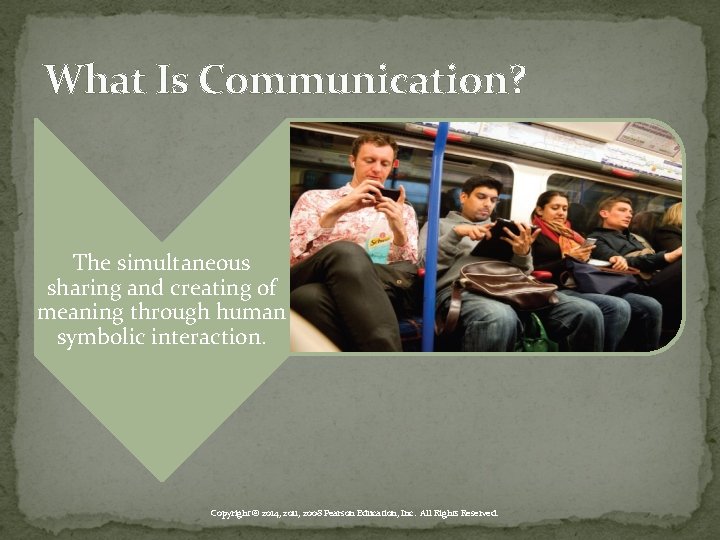
What Is Communication? The simultaneous sharing and creating of meaning through human symbolic interaction. Copyright © 2014, 2011, 2008 Pearson Education, Inc. All Rights Reserved.
Why Should We Study Communication? Career development Ethical behavior Cultural diversity Technological demands Successful living Copyright © 2014, 2011, 2008 Pearson Education, Inc. All Rights Reserved.
Communication and Our Technological Society Social Media Social Networks Communication and Career Development Communication and Ethical Behavior Communication and Our Multicultural Society Copyright © 2014, 2011, 2008 Pearson Education, Inc. All Rights Reserved.
Principles of Communication is a process Communication is a system Communication is transactional Communication can be intentional or unintentional Copyright © 2014, 2011, 2008 Pearson Education, Inc. All Rights Reserved.
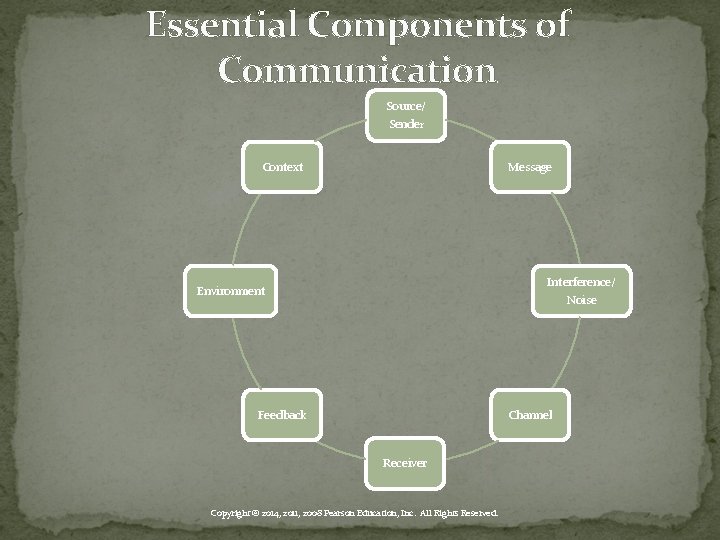
Essential Components of Communication Source/ Sender Context Message Interference/ Noise Environment Feedback Channel Receiver Copyright © 2014, 2011, 2008 Pearson Education, Inc. All Rights Reserved.
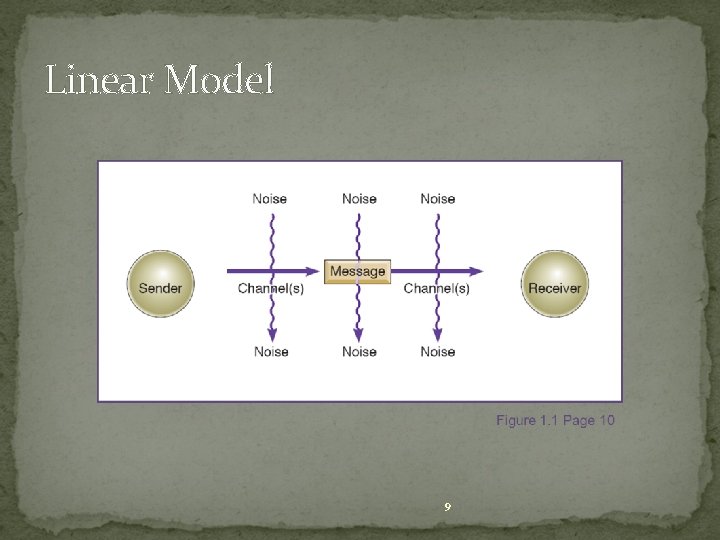
Linear Model 9
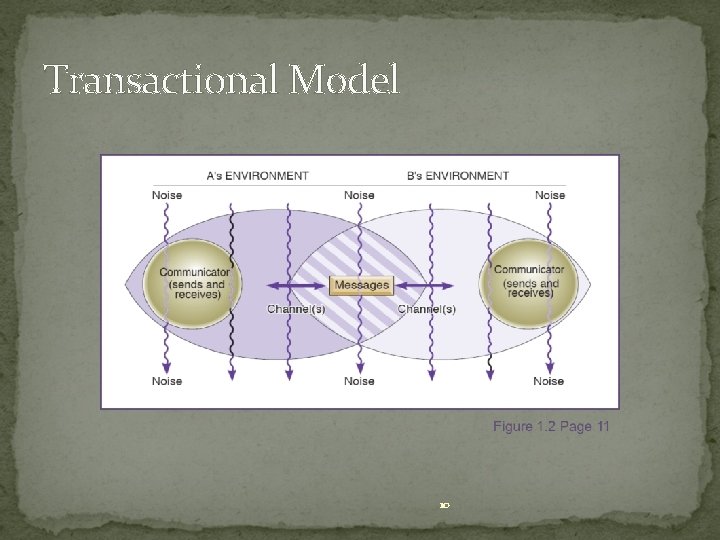
Transactional Model 10
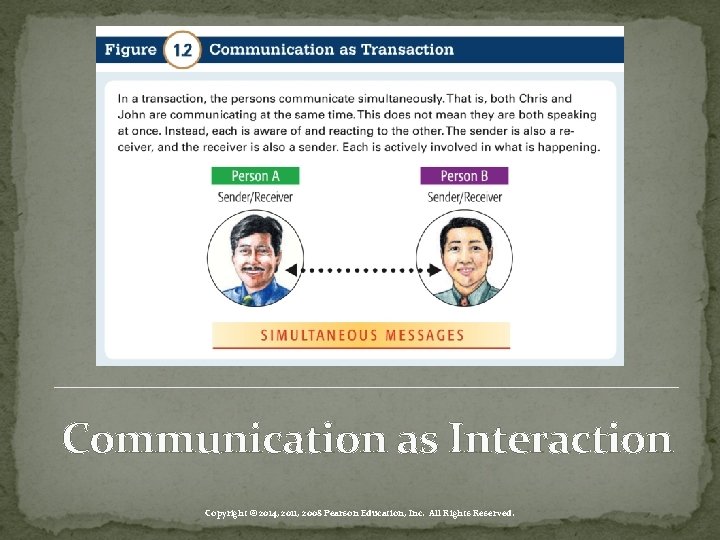
Communication as Interaction Copyright © 2014, 2011, 2008 Pearson Education, Inc. All Rights Reserved.
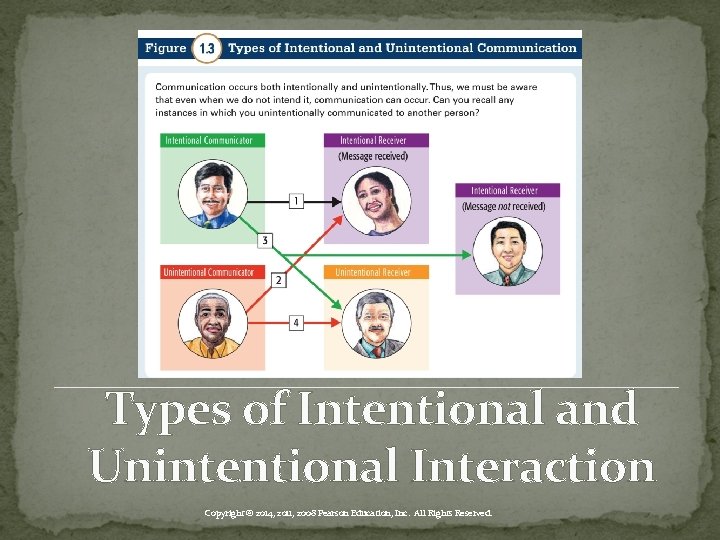
Types of Intentional and Unintentional Interaction Copyright © 2014, 2011, 2008 Pearson Education, Inc. All Rights Reserved.
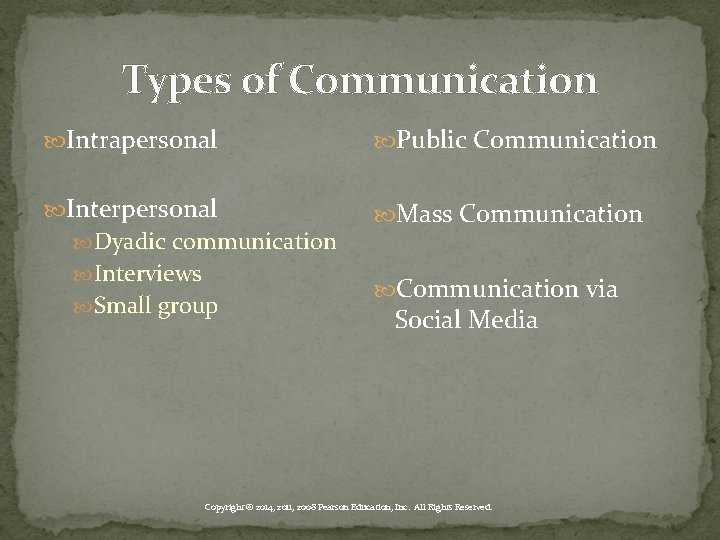
Types of Communication Intrapersonal Public Communication Interpersonal Mass Communication Dyadic communication Interviews Small group Communication via Social Media Copyright © 2014, 2011, 2008 Pearson Education, Inc. All Rights Reserved.
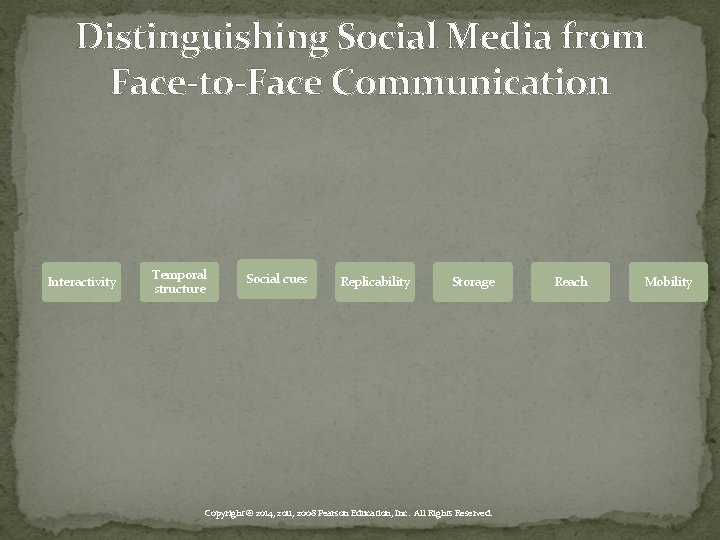
Distinguishing Social Media from Face-to-Face Communication Interactivity Temporal structure Social cues Replicability Storage Copyright © 2014, 2011, 2008 Pearson Education, Inc. All Rights Reserved. Reach Mobility
Misconceptions about Communication Is a Cure-All Quantity Means Quality Meaning Is in the Words We Use We Have a Natural Ability to Communicate Communication Is Reversible Copyright © 2014, 2011, 2008 Pearson Education, Inc. All Rights Reserved.
- Slides: 15