
Presentation Outline PART I The Basics DNA Replication
Presentation Outline PART I The Basics DNA Replication Transcription PART II Translation Protein Trafficking & Cell-cell communications Criticisms & Conclusion
Translation Interpreting the information coded in the m. RNA into proteins The nucleotides are read in triplets (set of three) called codons Each triplet code for a specific amino acid, and sometimes more than one codon exist for an amino acid m. RNA are read by the translational machinery including ribosomes, t. RNAs and r. RNAs Like transcription, it also includes initiation, elongation and termination

Codon Table

Ribosome Two subunits Mostly made up of r. RNAs and proteins A, P and E site
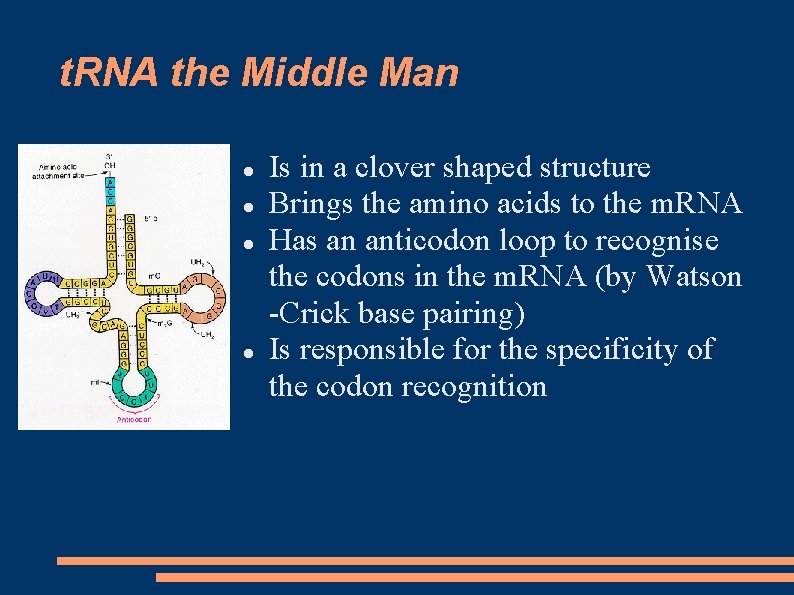
t. RNA the Middle Man Is in a clover shaped structure Brings the amino acids to the m. RNA Has an anticodon loop to recognise the codons in the m. RNA (by Watson -Crick base pairing) Is responsible for the specificity of the codon recognition
t. RNA Charging Aminoacylation is the process of adding an aminoacyl group to a compound. It produces t. RNA molecules with their CCA 3' ends covalently linked to an amino acid Each t. RNA is aminoacylated(or charged) with a specific amino acid by an aminoacyl t. RNA synthase. There is normally a single aminoacyl t. RNA synthetase for each amino acid, despite the fact that there can be more than one t. RNA, and more than one anticodon, for an amino acid.
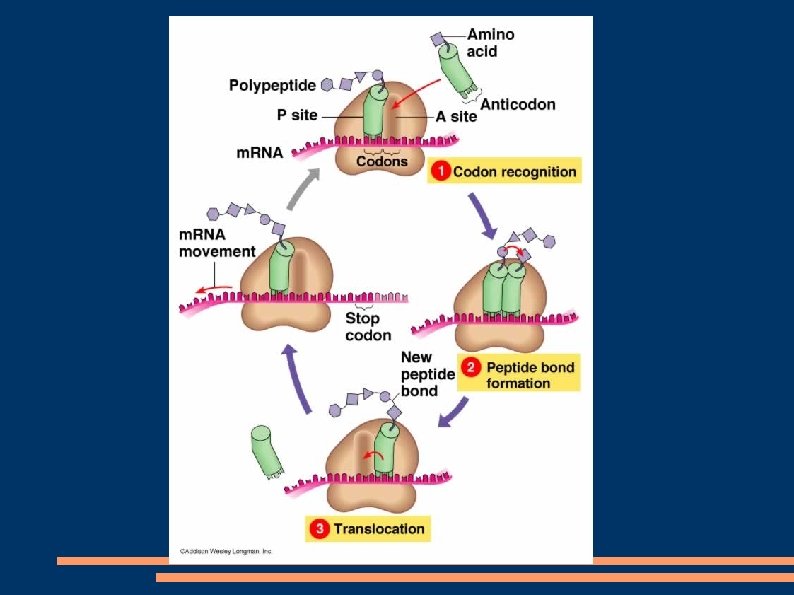
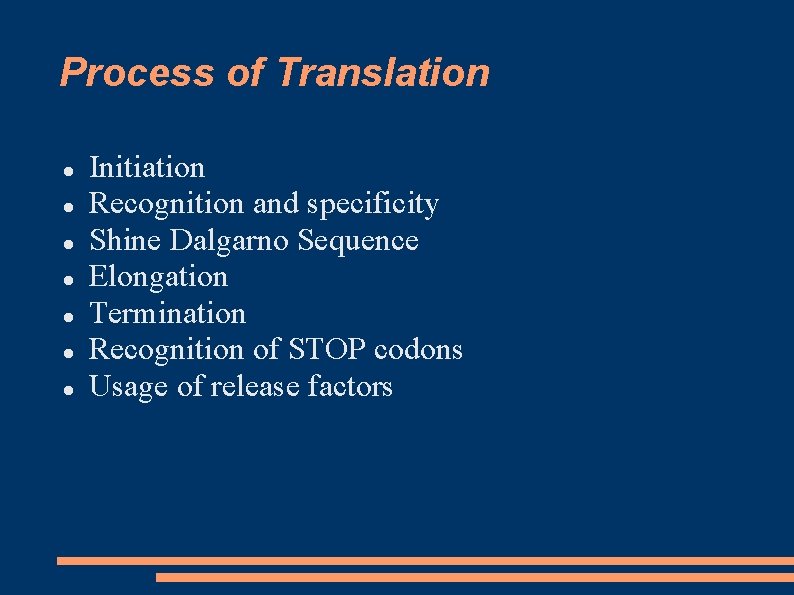
Process of Translation Initiation Recognition and specificity Shine Dalgarno Sequence Elongation Termination Recognition of STOP codons Usage of release factors
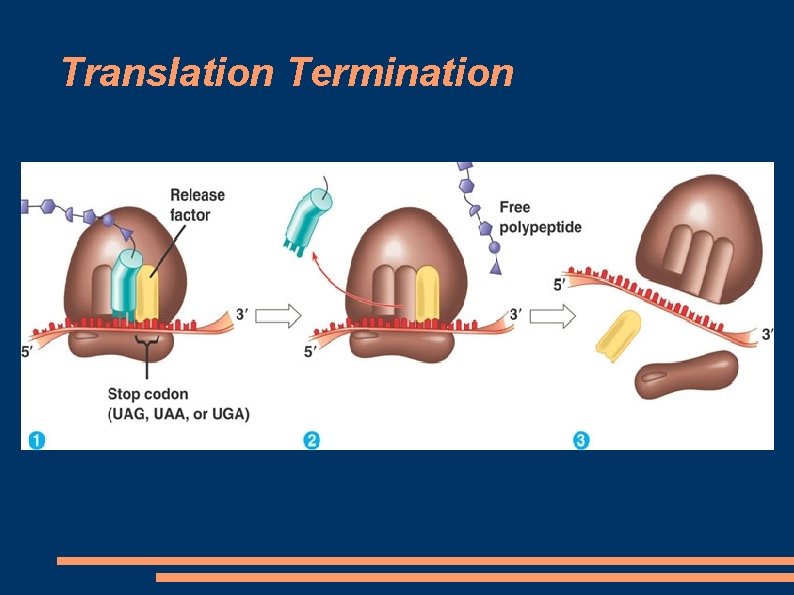
Translation Termination
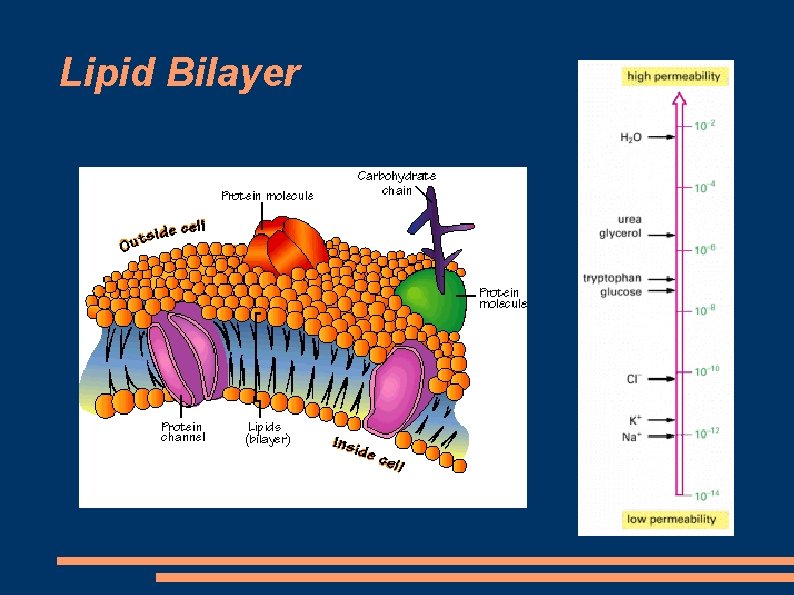
Lipid Bilayer
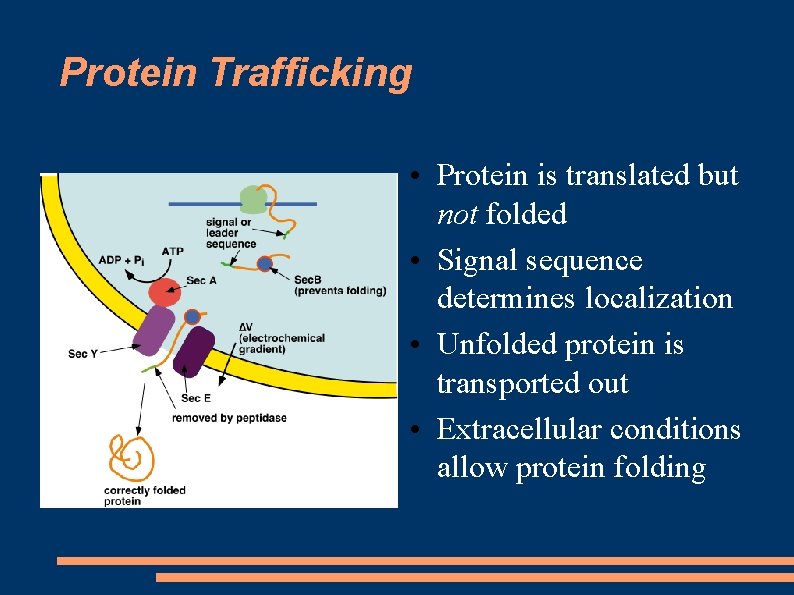
Protein Trafficking • Protein is translated but not folded • Signal sequence determines localization • Unfolded protein is transported out • Extracellular conditions allow protein folding
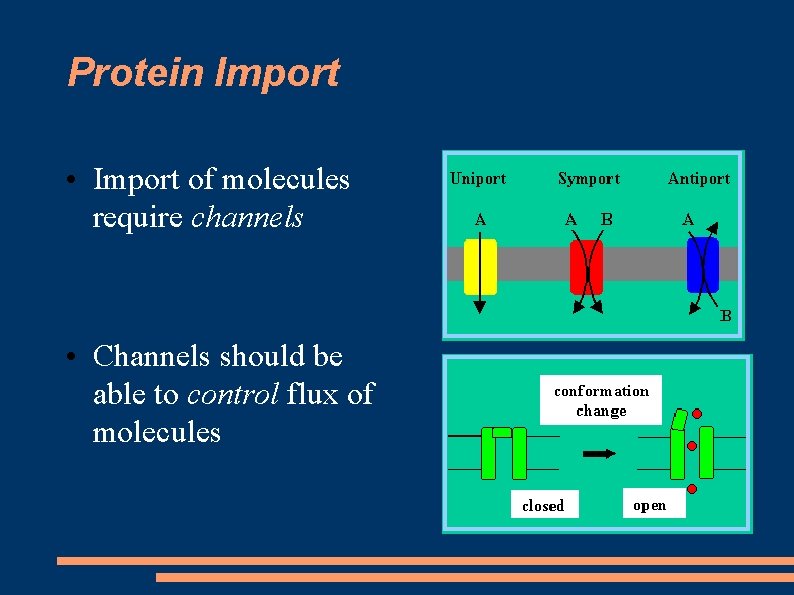
Protein Import • Import of molecules require channels • Channels should be able to control flux of molecules
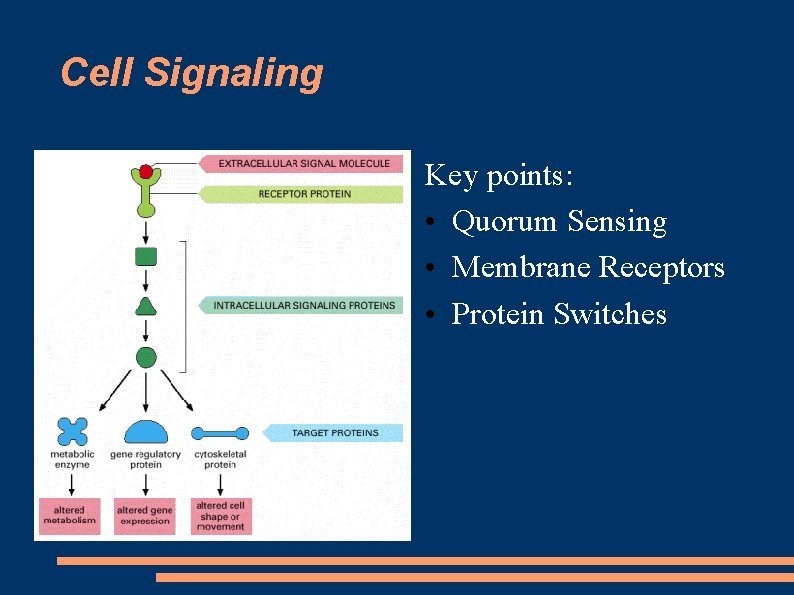
Cell Signaling Key points: • Quorum Sensing • Membrane Receptors • Protein Switches
Quorum Sensing Autocrine signaling Secreted signal molecule affects the same cell Signal is released at high signal molecule concentration (high cell count) Examples: lux operon (Lux. R/Lux. I) in Vibrio fischeri las operon (Las. R/Las. I) in Pseudomonas aeruginosa exp operon (Exp. R/Exp. I) in Erwinia carotovora

Lux Operon
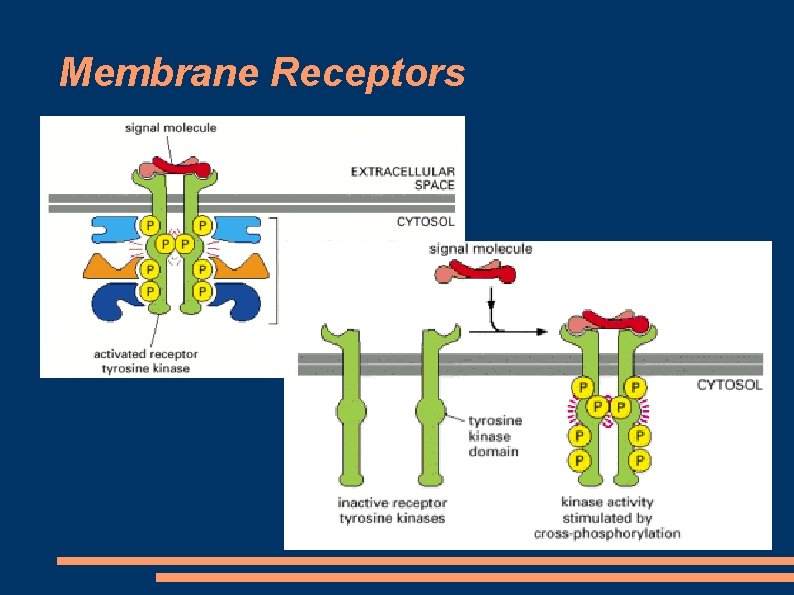
Membrane Receptors
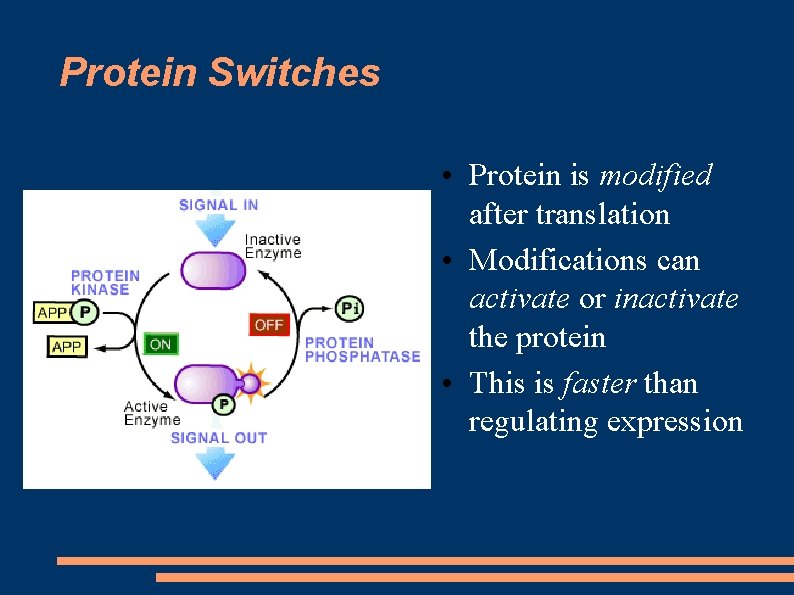
Protein Switches • Protein is modified after translation • Modifications can activate or inactivate the protein • This is faster than regulating expression
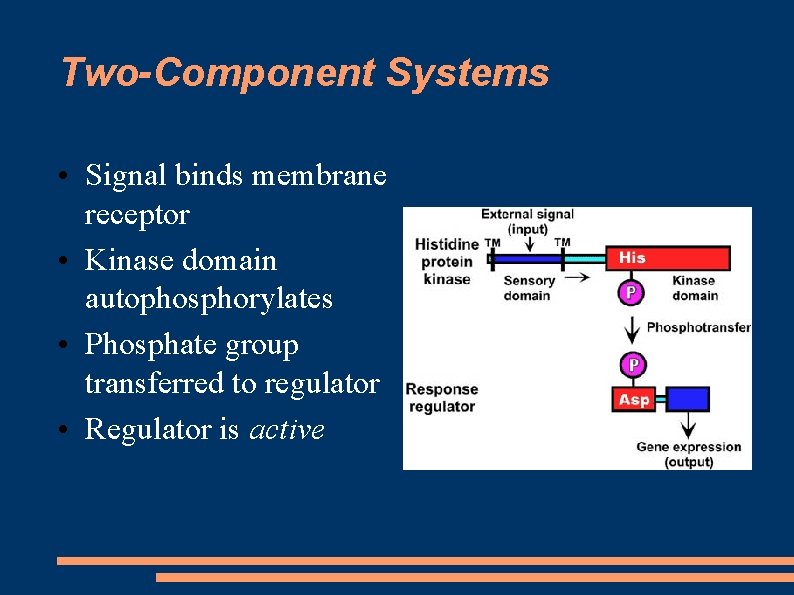
Two-Component Systems • Signal binds membrane receptor • Kinase domain autophosphorylates • Phosphate group transferred to regulator • Regulator is active
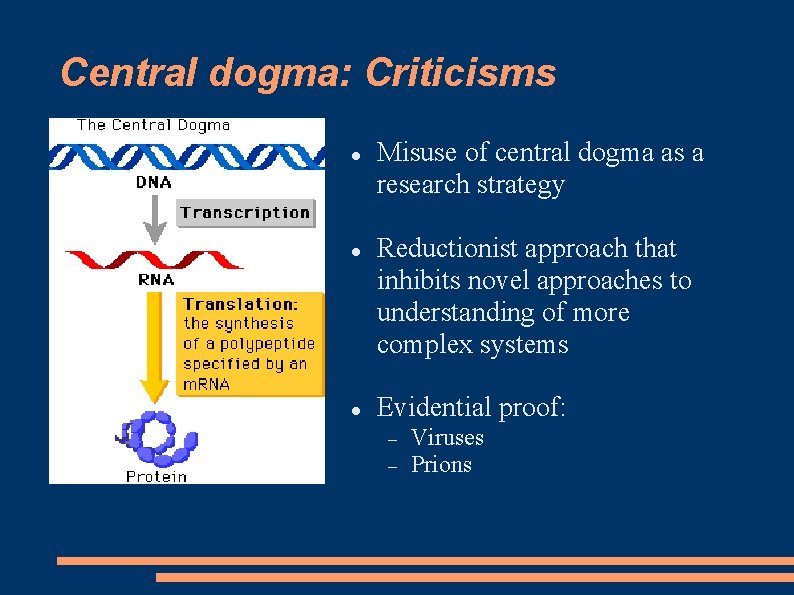
Central dogma: Criticisms Misuse of central dogma as a research strategy Reductionist approach that inhibits novel approaches to understanding of more complex systems Evidential proof: Viruses Prions
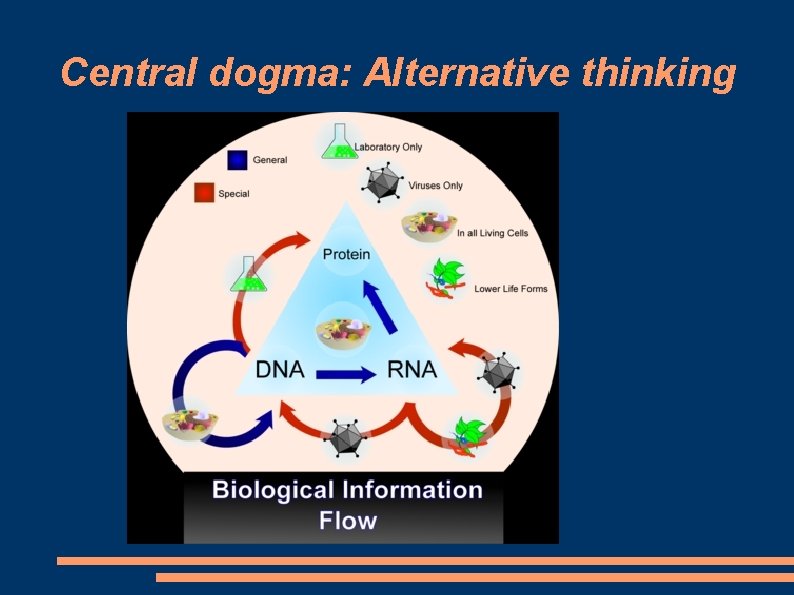
Central dogma: Alternative thinking
Conclusion As Horace Freeland Judson records in The Eighth Day of Creation: "My mind was, that a dogma was an idea for which there was no reasonable evidence. You see? !" And Crick gave a roar of delight. "I just didn't know what dogma meant. And I could just as well have called it the 'Central Hypothesis, ' or — you know. Which is what I meant to say. Dogma was just a catch phrase. "
End of Part II Q&A Coffeebreak? !
- Slides: 23