
Presentation Outline Definition characteristics How to plan Purposes


- Slides: 17
Presentation Outline Definition characteristics How to plan Purposes Major elements The criteria of objective Advantages The outline Materials, media, tools
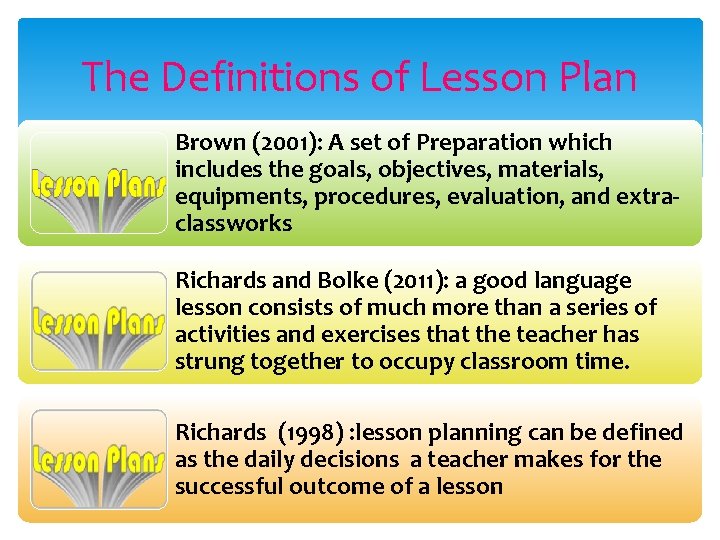
The Definitions of Lesson Plan Brown (2001): A set of Preparation which includes the goals, objectives, materials, equipments, procedures, evaluation, and extraclassworks Richards and Bolke (2011): a good language lesson consists of much more than a series of activities and exercises that the teacher has strung together to occupy classroom time. Richards (1998) : lesson planning can be defined as the daily decisions a teacher makes for the successful outcome of a lesson
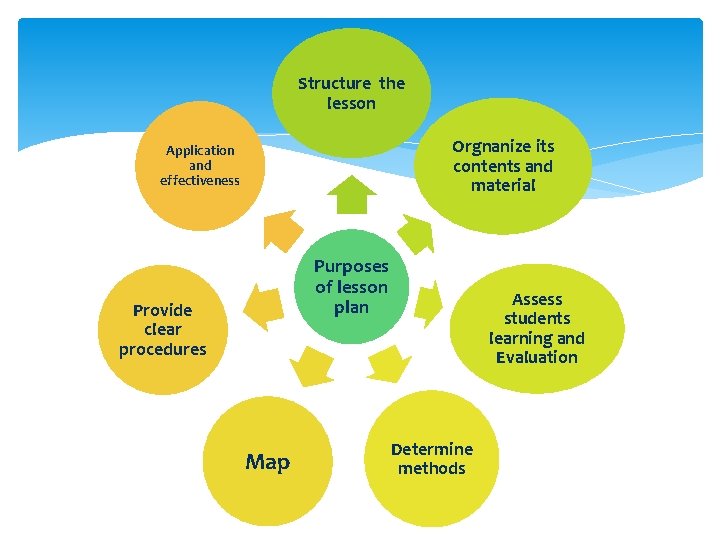
Structure the lesson Orgnanize its contents and material Application and effectiveness Purposes of lesson plan Provide clear procedures Map Assess students learning and Evaluation Determine methods
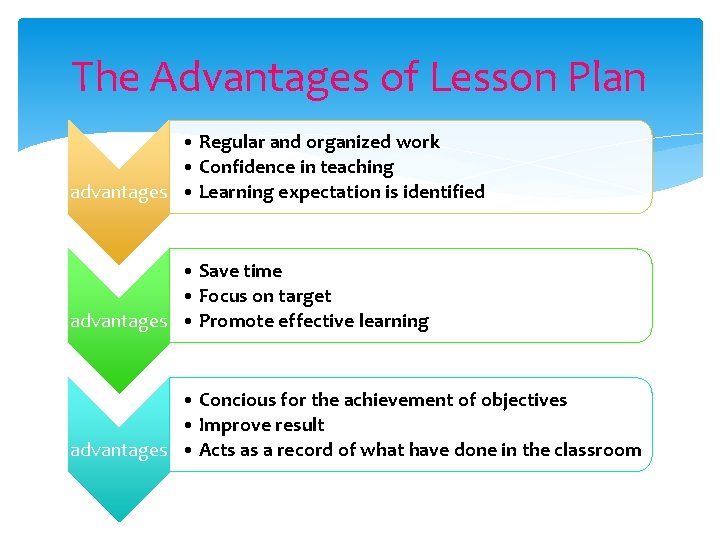
The Advantages of Lesson Plan • Regular and organized work • Confidence in teaching advantages • Learning expectation is identified • Save time • Focus on target advantages • Promote effective learning • Concious for the achievement of objectives • Improve result advantages • Acts as a record of what have done in the classroom
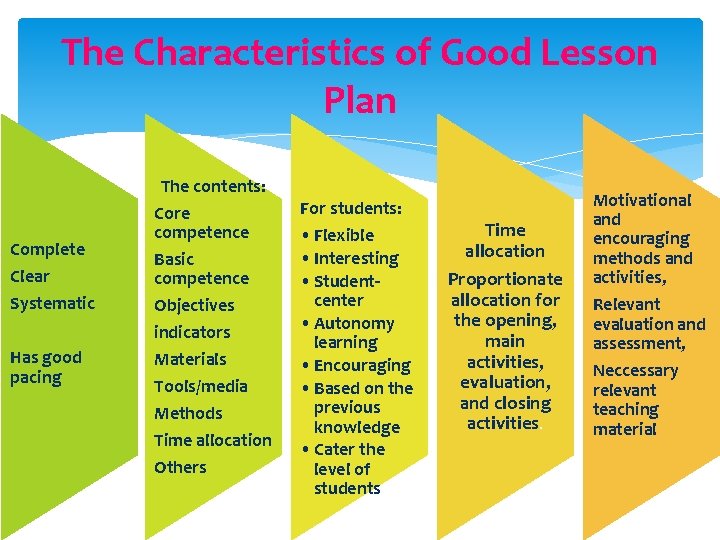
The Characteristics of Good Lesson Plan The contents: Complete Clear Systematic Has good pacing Core competence Basic competence Objectives indicators Materials Tools/media Methods Time allocation Others For students: • Flexible • Interesting • Studentcenter • Autonomy learning • Encouraging • Based on the previous knowledge • Cater the level of students Time allocation Proportionate allocation for the opening, main activities, evaluation, and closing activities. Motivational and encouraging methods and activities, Relevant evaluation and assessment, Neccessary relevant teaching material
THE MAJOR ELEMENTS OF LESSON PLAN Brown (2001) TEAL center (2010) Curriculum 2013 • Goals, objectives, materials, equipments, procedures, evaluation, extra-classwork • Warm up, introduction, presentation, practice, evaluation, and application (major activities) • The core competences, basic competences, indicators, objectives, methods and strategy, materials, tools and media, procedures, evaluation, and assessment
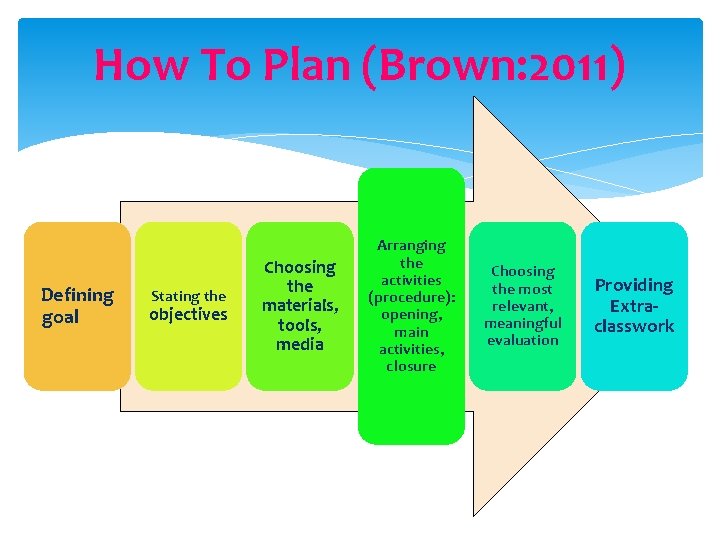
How To Plan (Brown: 2011) Defining goal Stating the objectives Choosing the materials, tools, media Arranging the activities (procedure): opening, main activities, closure Choosing the most relevant, meaningful evaluation Providing Extraclasswork
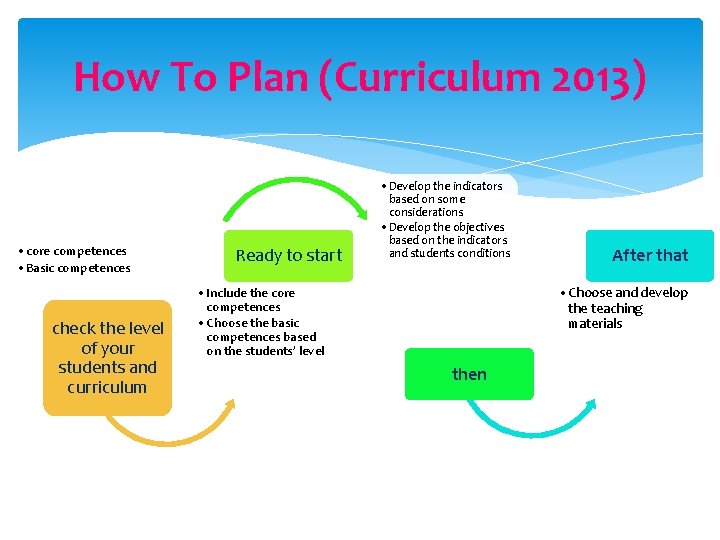
How To Plan (Curriculum 2013) • core competences • Basic competences check the level of your students and curriculum Ready to start • Develop the indicators based on some considerations • Develop the objectives based on the indicators and students conditions After that • Choose and develop the teaching materials • Include the core competences • Choose the basic competences based on the students’ level then
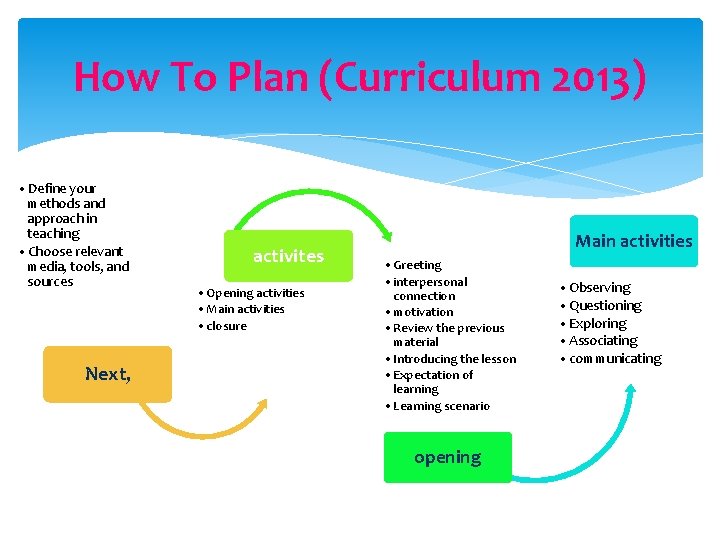
How To Plan (Curriculum 2013) • Define your methods and approach in teaching • Choose relevant media, tools, and sources Next, activites • Opening activities • Main activities • closure Main activities • Greeting • interpersonal connection • motivation • Review the previous material • Introducing the lesson • Expectation of learning • Learning scenario opening • Observing • Questioning • Exploring • Associating • communicating
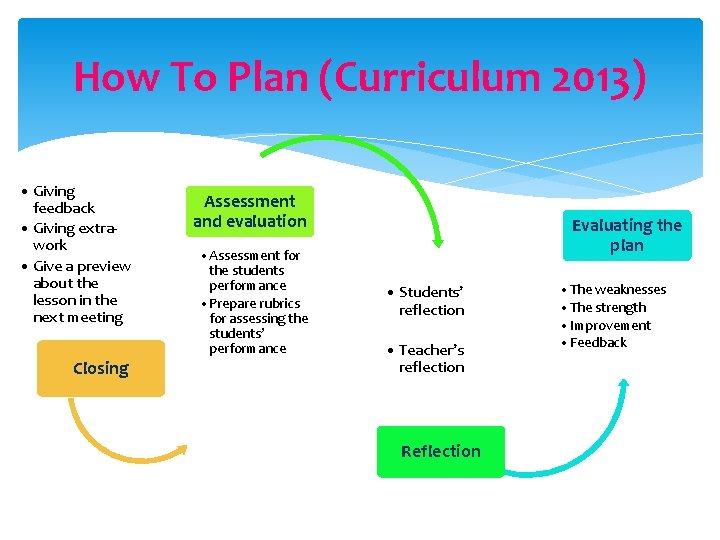
How To Plan (Curriculum 2013) • Giving feedback • Giving extrawork • Give a preview about the lesson in the next meeting Closing Assessment and evaluation • Assessment for the students performance • Prepare rubrics for assessing the students’ performance Evaluating the plan • Students’ reflection • Teacher’s reflection Reflection • The weaknesses • The strength • Improvement • Feedback
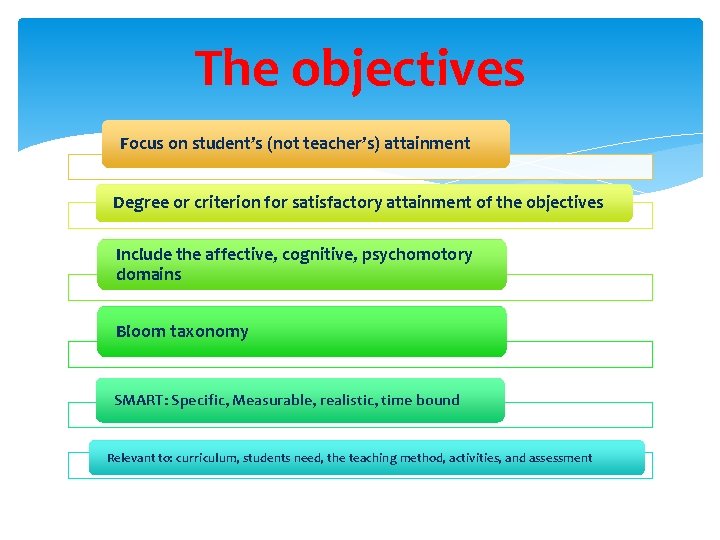
The objectives Focus on student’s (not teacher’s) attainment Degree or criterion for satisfactory attainment of the objectives Include the affective, cognitive, psychomotory domains Bloom taxonomy SMART: Specific, Measurable, realistic, time bound Relevant to: curriculum, students need, the teaching method, activities, and assessment
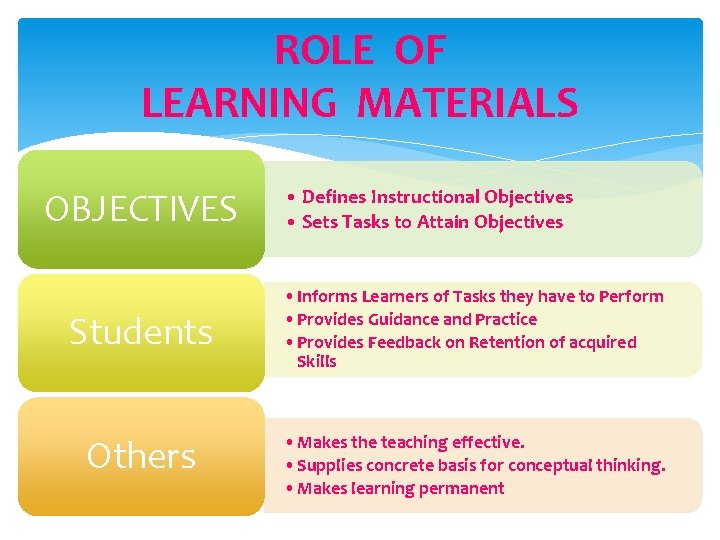
ROLE OF LEARNING MATERIALS OBJECTIVES Students Others • Defines Instructional Objectives • Sets Tasks to Attain Objectives • Informs Learners of Tasks they have to Perform • Provides Guidance and Practice • Provides Feedback on Retention of acquired Skills • Makes the teaching effective. • Supplies concrete basis for conceptual thinking. • Makes learning permanent
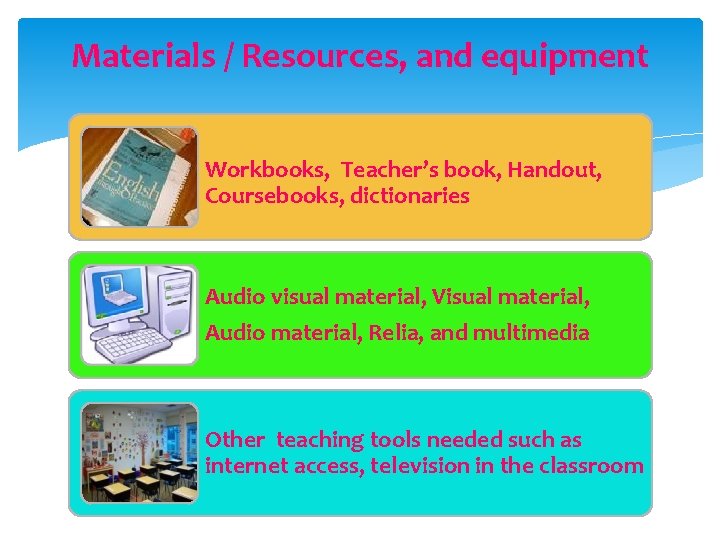
Materials / Resources, and equipment Workbooks, Teacher’s book, Handout, Coursebooks, dictionaries Audio visual material, Visual material, Audio material, Relia, and multimedia Other teaching tools needed such as internet access, television in the classroom
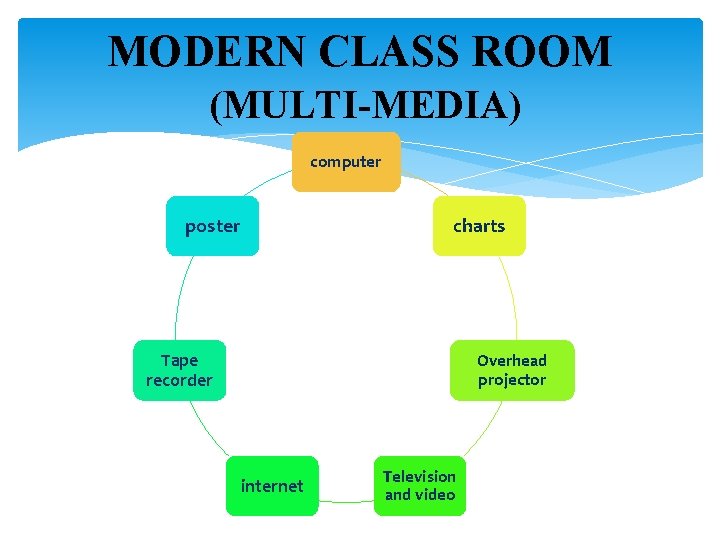
MODERN CLASS ROOM (MULTI-MEDIA) computer poster charts Tape recorder Overhead projector internet Television and video
References Brown, H. (2001). Teaching by principles: An interactive approach to language pedagogy (2 nd ed. , pp. 149 -163). White Plains, NY: Longman. Duncan, G. , & Met, M. (2010). STARTALK. From Paper to Practice: College Park, MD: National Foreign Language Center at the University of Maryland. Haynes, A. (2010). The complete guide to lesson planning and preparation (pp. 65 -76). London: Continuum. Republik Indonesia. (2013). Peraturan Menteri Pendidikan dan Kebudayaano No. 81 A tahun 2013. Tentang Implementasi Kurikulum. Menteri Pendidikan dan Kebudayaan Republik Indonesia Richards, J. C. , & Bohlke, D. (2011). Planning and reviewing your lessons. In Creating effective language lessons (pp. 35 -42). Cambridge: Cambridge University Press. Richards, J. C. , & Renandya, W. A. (2002). Methodology in Language Teaching: An Anthology of Current Practice. NY: New York. Cambridge University Press. Richards, J. C. , (1998). What’s the Use of Lesson Plan. New York: Cambridge University Press Richards, J. C. , & Lockhart, C. (1994) Reflective teaching in Second Language Classrooms. Cambridge: Cambridge University Press. Shrum, J. L. , & Glisan, E. (1994). Teacher’s Handbook: Contextualized Language Instruction. Boston, MA: Heinle and Heinle TEAL Center Staff, T. (2010). Effective Lesson Planning. TEAL Teaching Excellence in Adult Literacy, 8, 1 -2. Ur. P. (1996). A Course in Language Teaching: Practice and Theory. Cambridge: Cambridge University Press.
“The mediocre teacher tells. The good teacher explains. The superior teacher demonstrates. The great teacher inspires. ” Thank you