
Presentation Outline 1 History of CMAM in Malawi
- Slides: 24
Presentation Outline 1. History of CMAM in Malawi 2. Policy and Strategic Environment 3. Overview of CMAM: Components and the Continuum of Care 4. Updates in the 2016 CMAM Guidelines
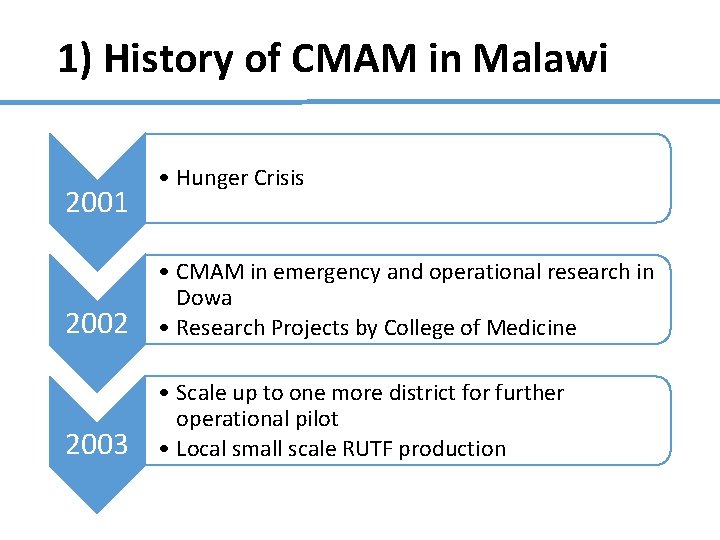
1) History of CMAM in Malawi 2001 • Hunger Crisis 2002 • CMAM in emergency and operational research in Dowa • Research Projects by College of Medicine 2003 • Scale up to one more district for further operational pilot • Local small scale RUTF production
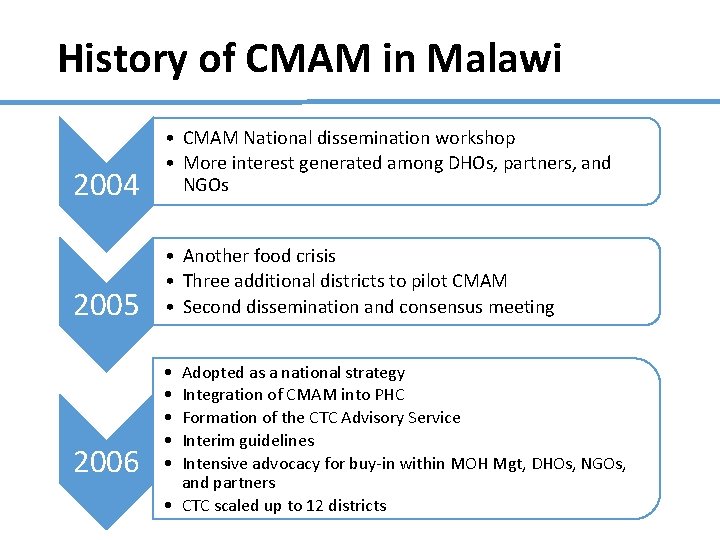
History of CMAM in Malawi 2004 • CMAM National dissemination workshop • More interest generated among DHOs, partners, and NGOs 2005 • Another food crisis • Three additional districts to pilot CMAM • Second dissemination and consensus meeting 2006 • • • Adopted as a national strategy Integration of CMAM into PHC Formation of the CTC Advisory Service Interim guidelines Intensive advocacy for buy-in within MOH Mgt, DHOs, NGOs, and partners • CTC scaled up to 12 districts
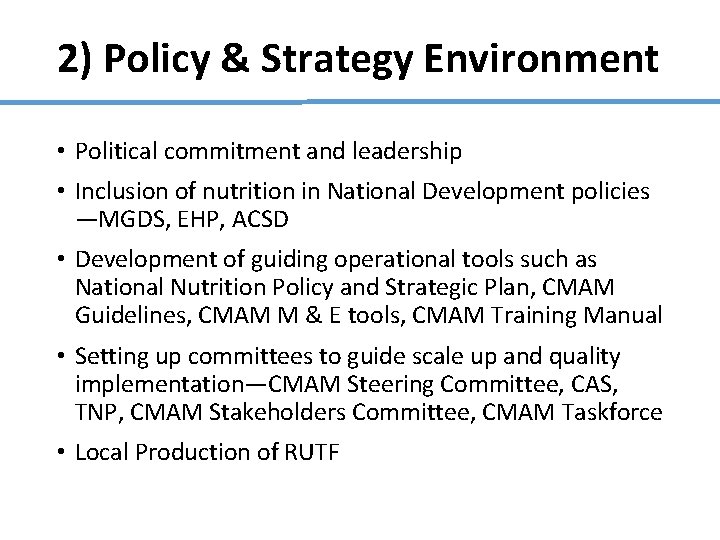
2) Policy & Strategy Environment • Political commitment and leadership • Inclusion of nutrition in National Development policies —MGDS, EHP, ACSD • Development of guiding operational tools such as National Nutrition Policy and Strategic Plan, CMAM Guidelines, CMAM M & E tools, CMAM Training Manual • Setting up committees to guide scale up and quality implementation—CMAM Steering Committee, CAS, TNP, CMAM Stakeholders Committee, CMAM Taskforce • Local Production of RUTF
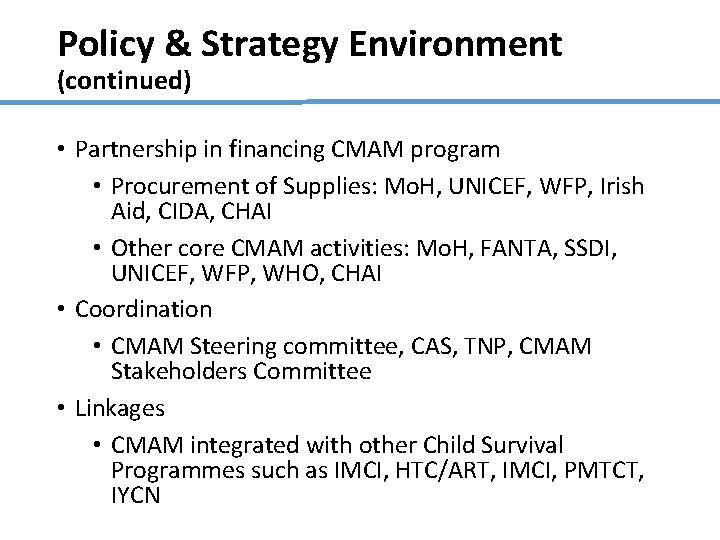
Policy & Strategy Environment (continued) • Partnership in financing CMAM program • Procurement of Supplies: Mo. H, UNICEF, WFP, Irish Aid, CIDA, CHAI • Other core CMAM activities: Mo. H, FANTA, SSDI, UNICEF, WFP, WHO, CHAI • Coordination • CMAM Steering committee, CAS, TNP, CMAM Stakeholders Committee • Linkages • CMAM integrated with other Child Survival Programmes such as IMCI, HTC/ART, IMCI, PMTCT, IYCN
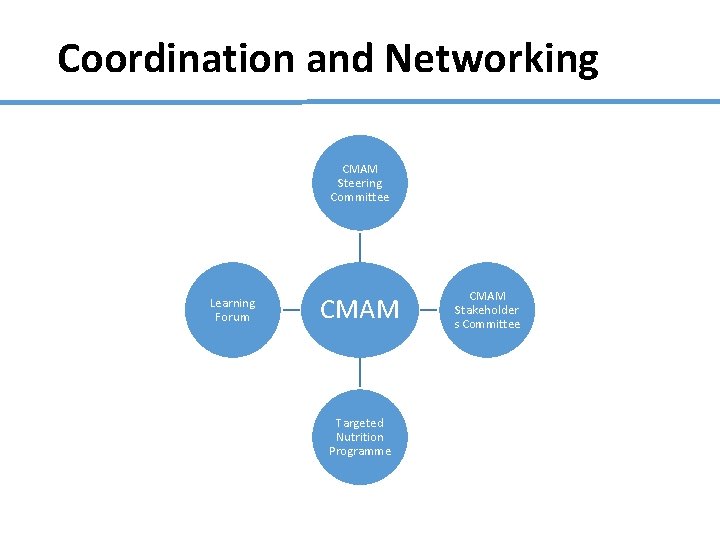
Coordination and Networking CMAM Steering Committee Learning Forum CMAM Targeted Nutrition Programme CMAM Stakeholder s Committee
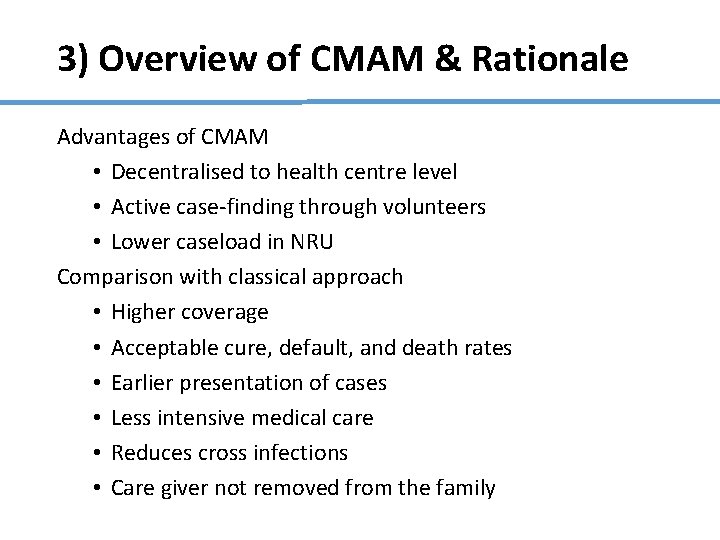
3) Overview of CMAM & Rationale Advantages of CMAM • Decentralised to health centre level • Active case-finding through volunteers • Lower caseload in NRU Comparison with classical approach • Higher coverage • Acceptable cure, default, and death rates • Earlier presentation of cases • Less intensive medical care • Reduces cross infections • Care giver not removed from the family
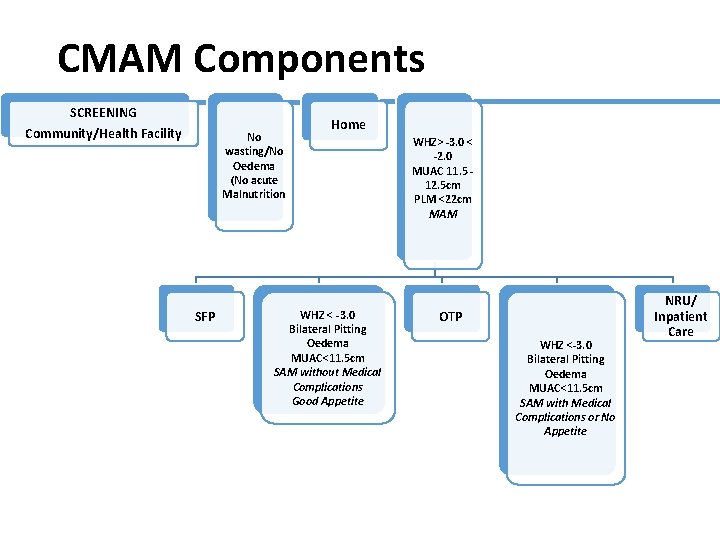
CMAM Components SCREENING Community/Health Facility No wasting/No Oedema (No acute Malnutrition SFP Home WHZ < -3. 0 Bilateral Pitting Oedema MUAC<11. 5 cm SAM without Medical Complications Good Appetite WHZ> -3. 0 < -2. 0 MUAC 11. 5 12. 5 cm PLM <22 cm MAM OTP WHZ <-3. 0 Bilateral Pitting Oedema MUAC<11. 5 cm SAM with Medical Complications or No Appetite NRU/ Inpatient Care
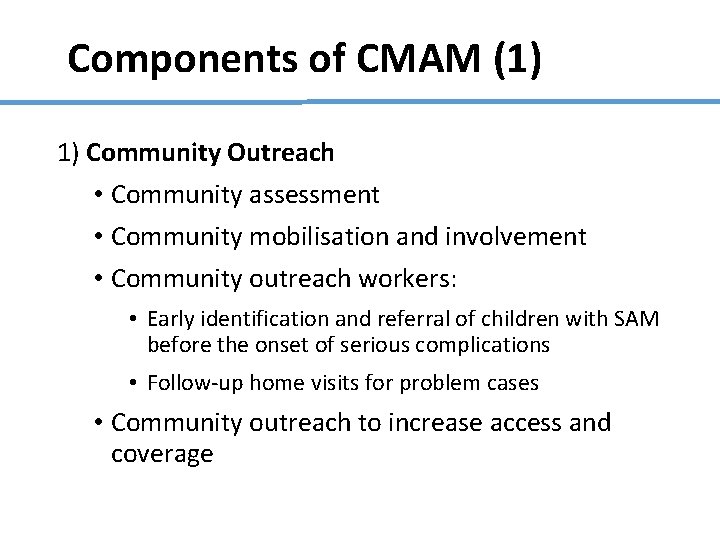
Components of CMAM (1) 1) Community Outreach • Community assessment • Community mobilisation and involvement • Community outreach workers: • Early identification and referral of children with SAM before the onset of serious complications • Follow-up home visits for problem cases • Community outreach to increase access and coverage 10
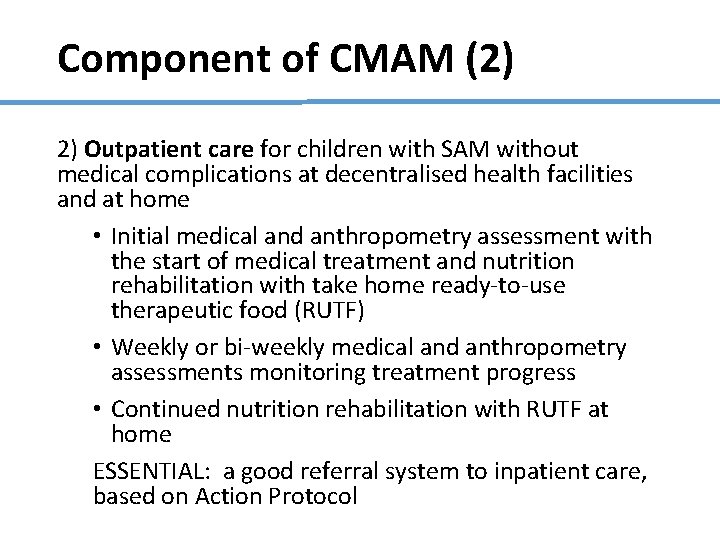
Component of CMAM (2) 2) Outpatient care for children with SAM without medical complications at decentralised health facilities and at home • Initial medical and anthropometry assessment with the start of medical treatment and nutrition rehabilitation with take home ready-to-use therapeutic food (RUTF) • Weekly or bi-weekly medical and anthropometry assessments monitoring treatment progress • Continued nutrition rehabilitation with RUTF at home 11 ESSENTIAL: a good referral system to inpatient care, based on Action Protocol
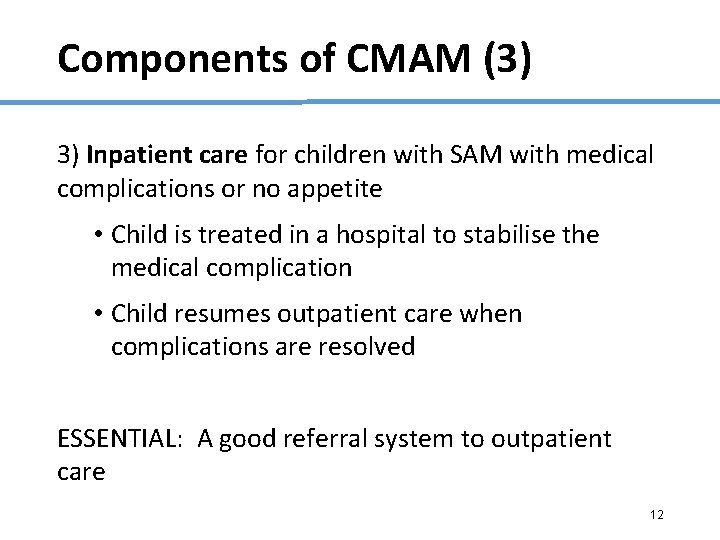
Components of CMAM (3) 3) Inpatient care for children with SAM with medical complications or no appetite • Child is treated in a hospital to stabilise the medical complication • Child resumes outpatient care when complications are resolved ESSENTIAL: A good referral system to outpatient care 12
Components of CMAM (4) 4) Services or programmes for the management of moderate acute malnutrition (MAM) • Supplementary Feeding 13
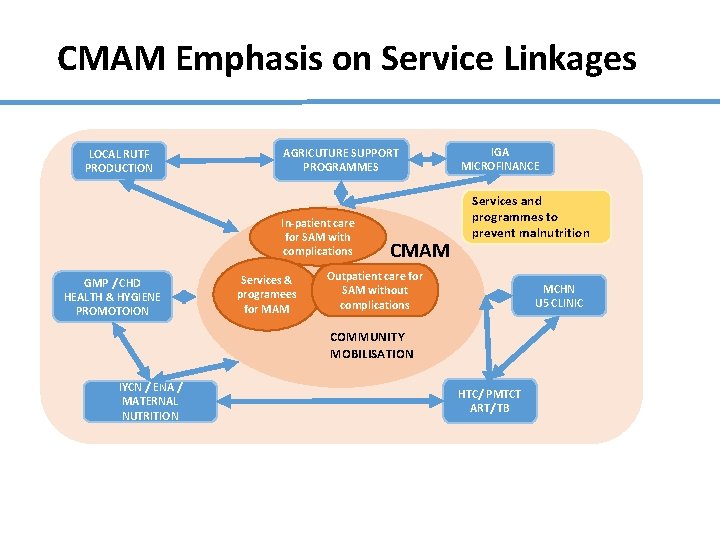
CMAM Emphasis on Service Linkages LOCAL RUTF PRODUCTION AGRICUTURE SUPPORT PROGRAMMES In-patient care for SAM with complications GMP / CHD HEALTH & HYGIENE PROMOTOION Services & programees for MAM CMAM IGA MICROFINANCE Services and programmes to prevent malnutrition Outpatient care for SAM without complications MCHN U 5 CLINIC COMMUNITY MOBILISATION IYCN / ENA / MATERNAL NUTRITION HTC/ PMTCT ART/ TB
4) Highlights of updates in the 2016 CMAM Guidelines • Low coverage and poor outcomes • Limited pre-service training and orientation • Service standards and guidelines • Global (WHO) and national updates
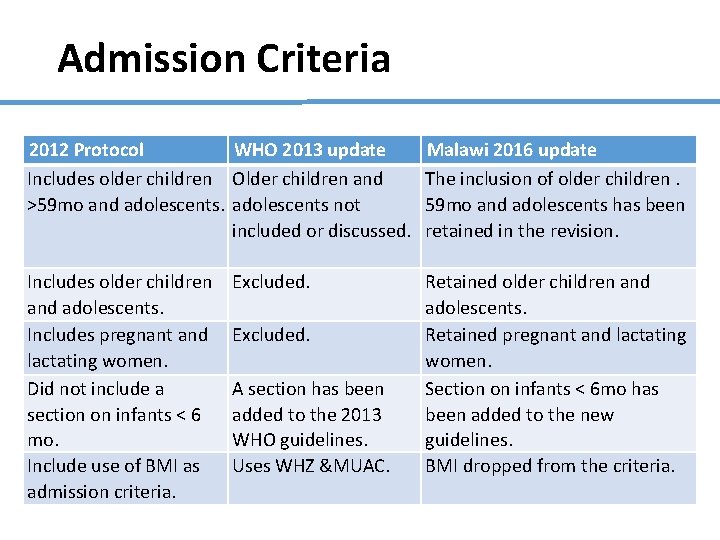
Admission Criteria 2012 Protocol WHO 2013 update Includes older children Older children and >59 mo and adolescents not included or discussed. Malawi 2016 update The inclusion of older children. 59 mo and adolescents has been retained in the revision. Includes older children and adolescents. Includes pregnant and lactating women. Did not include a section on infants < 6 mo. Include use of BMI as admission criteria. Retained older children and adolescents. Retained pregnant and lactating women. Section on infants < 6 mo has been added to the new guidelines. BMI dropped from the criteria. Excluded. A section has been added to the 2013 WHO guidelines. Uses WHZ &MUAC.
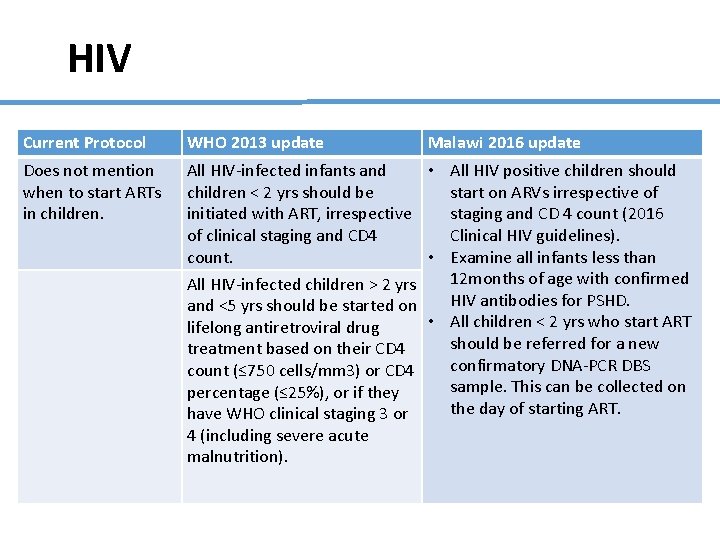
HIV Current Protocol WHO 2013 update Malawi 2016 update Does not mention when to start ARTs in children. All HIV-infected infants and • All HIV positive children should children < 2 yrs should be start on ARVs irrespective of initiated with ART, irrespective staging and CD 4 count (2016 of clinical staging and CD 4 Clinical HIV guidelines). count. • Examine all infants less than 12 months of age with confirmed All HIV-infected children > 2 yrs HIV antibodies for PSHD. and <5 yrs should be started on • All children < 2 yrs who start ART lifelong antiretroviral drug should be referred for a new treatment based on their CD 4 confirmatory DNA-PCR DBS count (≤ 750 cells/mm 3) or CD 4 sample. This can be collected on percentage (≤ 25%), or if they the day of starting ART. have WHO clinical staging 3 or 4 (including severe acute malnutrition).
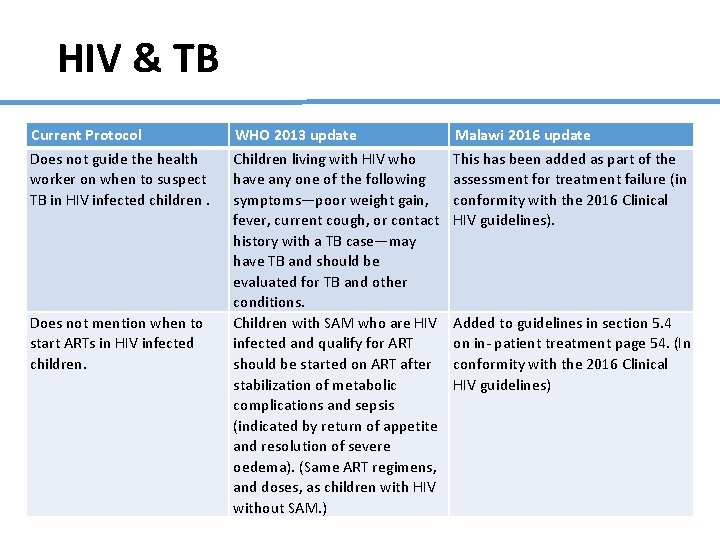
HIV & TB Current Protocol Does not guide the health worker on when to suspect TB in HIV infected children. Does not mention when to start ARTs in HIV infected children. WHO 2013 update Children living with HIV who have any one of the following symptoms—poor weight gain, fever, current cough, or contact history with a TB case—may have TB and should be evaluated for TB and other conditions. Children with SAM who are HIV infected and qualify for ART should be started on ART after stabilization of metabolic complications and sepsis (indicated by return of appetite and resolution of severe oedema). (Same ART regimens, and doses, as children with HIV without SAM. ) Malawi 2016 update This has been added as part of the assessment for treatment failure (in conformity with the 2016 Clinical HIV guidelines). Added to guidelines in section 5. 4 on in- patient treatment page 54. (In conformity with the 2016 Clinical HIV guidelines)
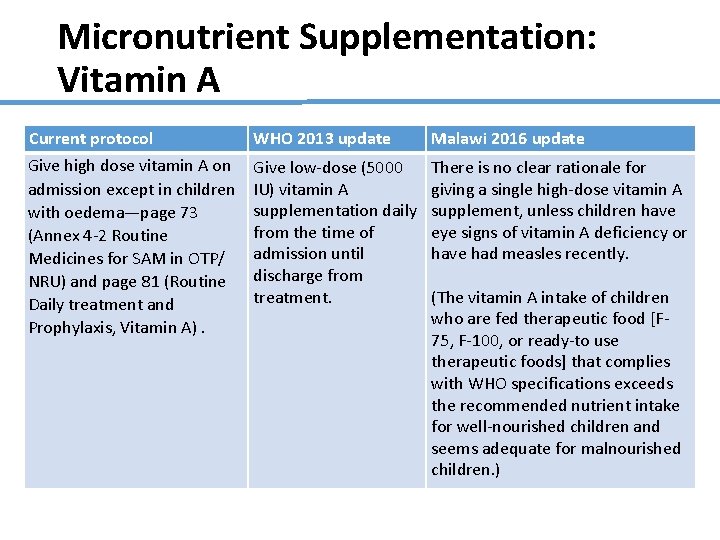
Micronutrient Supplementation: Vitamin A Current protocol WHO 2013 update Malawi 2016 update Give high dose vitamin A on admission except in children with oedema—page 73 (Annex 4 -2 Routine Medicines for SAM in OTP/ NRU) and page 81 (Routine Daily treatment and Prophylaxis, Vitamin A). Give low-dose (5000 IU) vitamin A supplementation daily from the time of admission until discharge from treatment. There is no clear rationale for giving a single high-dose vitamin A supplement, unless children have eye signs of vitamin A deficiency or have had measles recently. (The vitamin A intake of children who are fed therapeutic food [F 75, F-100, or ready-to use therapeutic foods] that complies with WHO specifications exceeds the recommended nutrient intake for well-nourished children and seems adequate for malnourished children. )
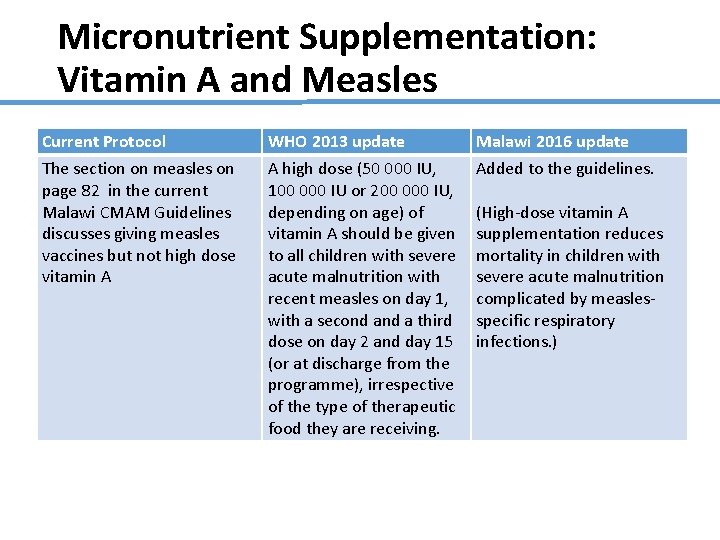
Micronutrient Supplementation: Vitamin A and Measles Current Protocol The section on measles on page 82 in the current Malawi CMAM Guidelines discusses giving measles vaccines but not high dose vitamin A WHO 2013 update A high dose (50 000 IU, 100 000 IU or 200 000 IU, depending on age) of vitamin A should be given to all children with severe acute malnutrition with recent measles on day 1, with a second a third dose on day 2 and day 15 (or at discharge from the programme), irrespective of the type of therapeutic food they are receiving. Malawi 2016 update Added to the guidelines. (High-dose vitamin A supplementation reduces mortality in children with severe acute malnutrition complicated by measlesspecific respiratory infections. )
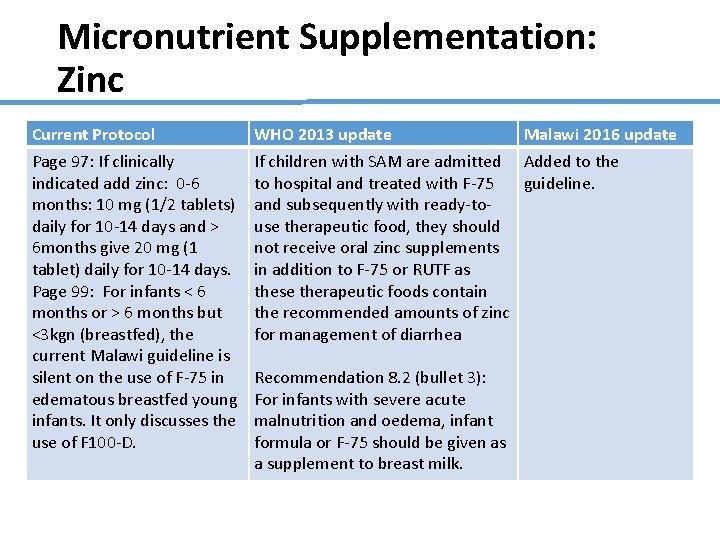
Micronutrient Supplementation: Zinc Current Protocol Page 97: If clinically indicated add zinc: 0 -6 months: 10 mg (1/2 tablets) daily for 10 -14 days and > 6 months give 20 mg (1 tablet) daily for 10 -14 days. Page 99: For infants < 6 months or > 6 months but <3 kgn (breastfed), the current Malawi guideline is silent on the use of F-75 in edematous breastfed young infants. It only discusses the use of F 100 -D. WHO 2013 update Malawi 2016 update If children with SAM are admitted Added to the to hospital and treated with F-75 guideline. and subsequently with ready-touse therapeutic food, they should not receive oral zinc supplements in addition to F-75 or RUTF as these therapeutic foods contain the recommended amounts of zinc for management of diarrhea Recommendation 8. 2 (bullet 3): For infants with severe acute malnutrition and oedema, infant formula or F-75 should be given as a supplement to breast milk.
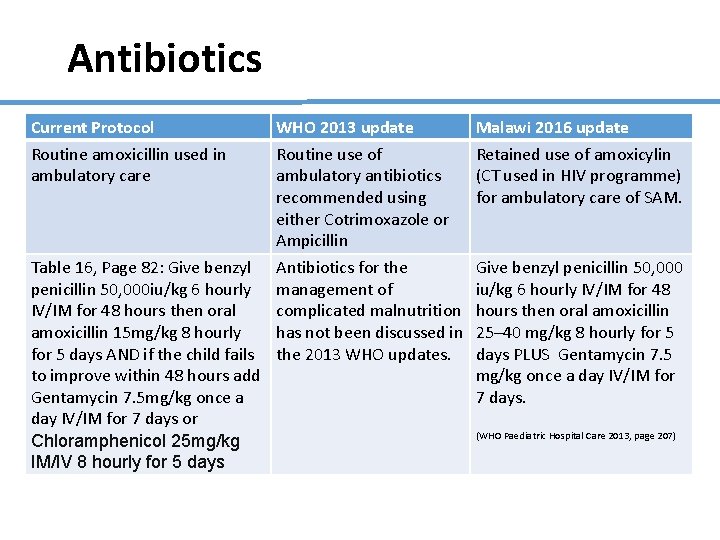
Antibiotics Current Protocol Routine amoxicillin used in ambulatory care Table 16, Page 82: Give benzyl penicillin 50, 000 iu/kg 6 hourly IV/IM for 48 hours then oral amoxicillin 15 mg/kg 8 hourly for 5 days AND if the child fails to improve within 48 hours add Gentamycin 7. 5 mg/kg once a day IV/IM for 7 days or Chloramphenicol 25 mg/kg IM/IV 8 hourly for 5 days WHO 2013 update Routine use of ambulatory antibiotics recommended using either Cotrimoxazole or Ampicillin Antibiotics for the management of complicated malnutrition has not been discussed in the 2013 WHO updates. Malawi 2016 update Retained use of amoxicylin (CT used in HIV programme) for ambulatory care of SAM. Give benzyl penicillin 50, 000 iu/kg 6 hourly IV/IM for 48 hours then oral amoxicillin 25– 40 mg/kg 8 hourly for 5 days PLUS Gentamycin 7. 5 mg/kg once a day IV/IM for 7 days. (WHO Paediatric Hospital Care 2013, page 207)
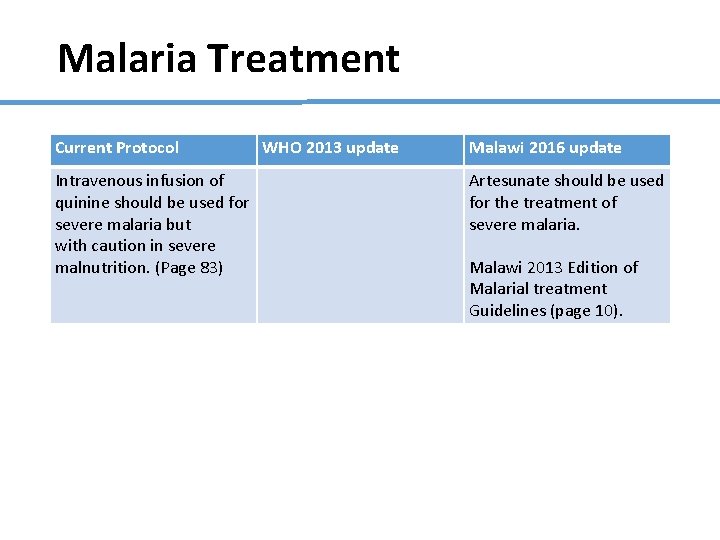
Malaria Treatment Current Protocol Intravenous infusion of quinine should be used for severe malaria but with caution in severe malnutrition. (Page 83) WHO 2013 update Malawi 2016 update Artesunate should be used for the treatment of severe malaria. Malawi 2013 Edition of Malarial treatment Guidelines (page 10).
Thank You