
Presentation on PM FME Scheme in Punjab Overview

Presentation on PM FME Scheme in Punjab
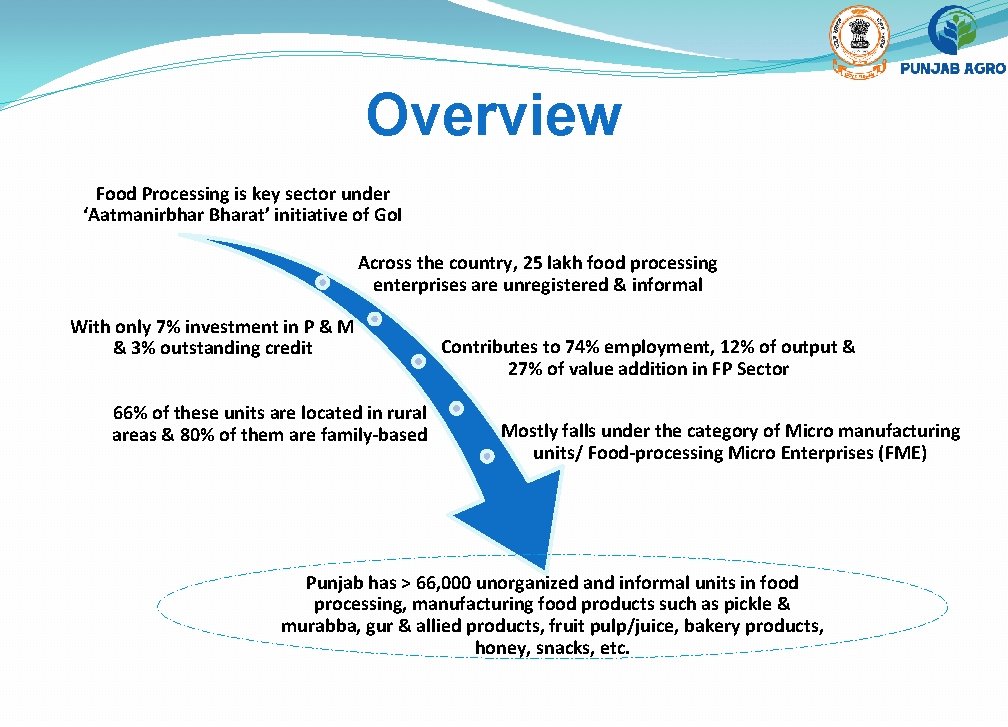
Overview Food Processing is key sector under ‘Aatmanirbhar Bharat’ initiative of Go. I Across the country, 25 lakh food processing enterprises are unregistered & informal With only 7% investment in P & M & 3% outstanding credit 66% of these units are located in rural areas & 80% of them are family-based Contributes to 74% employment, 12% of output & 27% of value addition in FP Sector Mostly falls under the category of Micro manufacturing units/ Food-processing Micro Enterprises (FME) Punjab has > 66, 000 unorganized and informal units in food processing, manufacturing food products such as pickle & murabba, gur & allied products, fruit pulp/juice, bakery products, honey, snacks, etc.
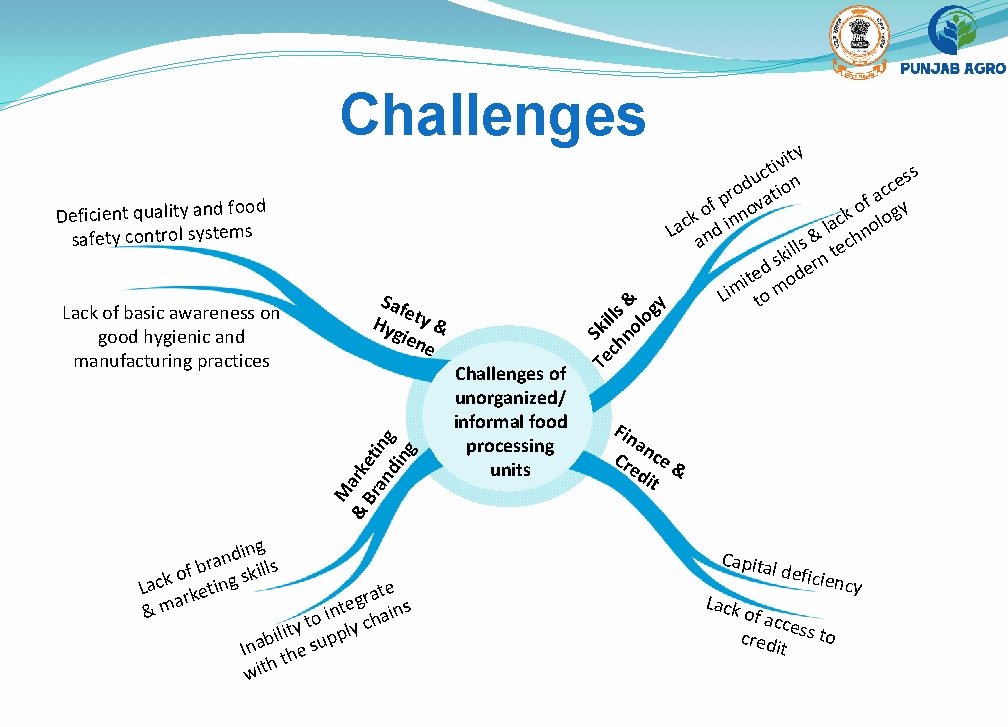
Challenges Saf e Hyg ty & ien e M & ark Br eti an ng din g Lack of basic awareness on good hygienic and manufacturing practices ing d n bra skills f o Lack rketing ate r g a te ains n &m i to ly ch y t i l i pp Inab the su with Challenges of unorganized/ informal food processing units Te Ski ch lls no & lo gy d Deficient quality and foo safety control systems ity v i ct n ss u e d cc ro atio a p f y v f o o o g k n k o c l n c i a o l La nd n & h a lls tec i k s ern d ite mod m Li to Fin a Cre nce & dit Capita Lack l defic iency of ac ce credi ss to t
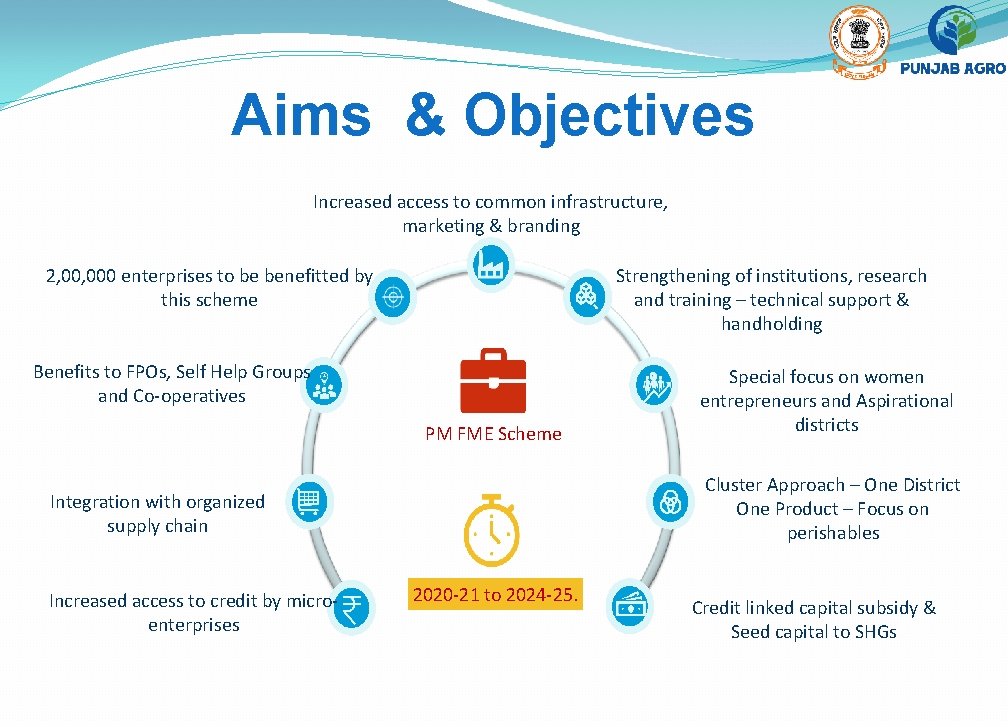
Aims & Objectives Increased access to common infrastructure, marketing & branding Strengthening of institutions, research and training – technical support & handholding 2, 000 enterprises to be benefitted by this scheme Benefits to FPOs, Self Help Groups and Co-operatives PM FME Scheme Cluster Approach – One District One Product – Focus on perishables Integration with organized supply chain Increased access to credit by microenterprises Special focus on women entrepreneurs and Aspirational districts 2020 -21 to 2024 -25. Credit linked capital subsidy & Seed capital to SHGs
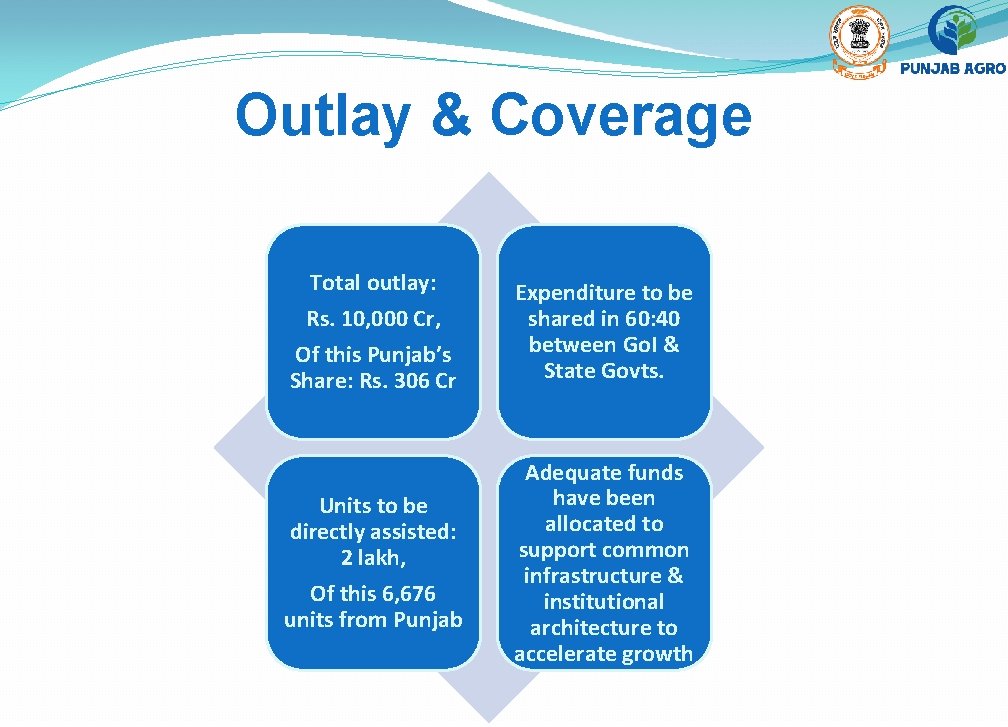
Outlay & Coverage Total outlay: Rs. 10, 000 Cr, Of this Punjab’s Share: Rs. 306 Cr Units to be directly assisted: 2 lakh, Of this 6, 676 units from Punjab Expenditure to be shared in 60: 40 between Go. I & State Govts. Adequate funds have been allocated to support common infrastructure & institutional architecture to accelerate growth
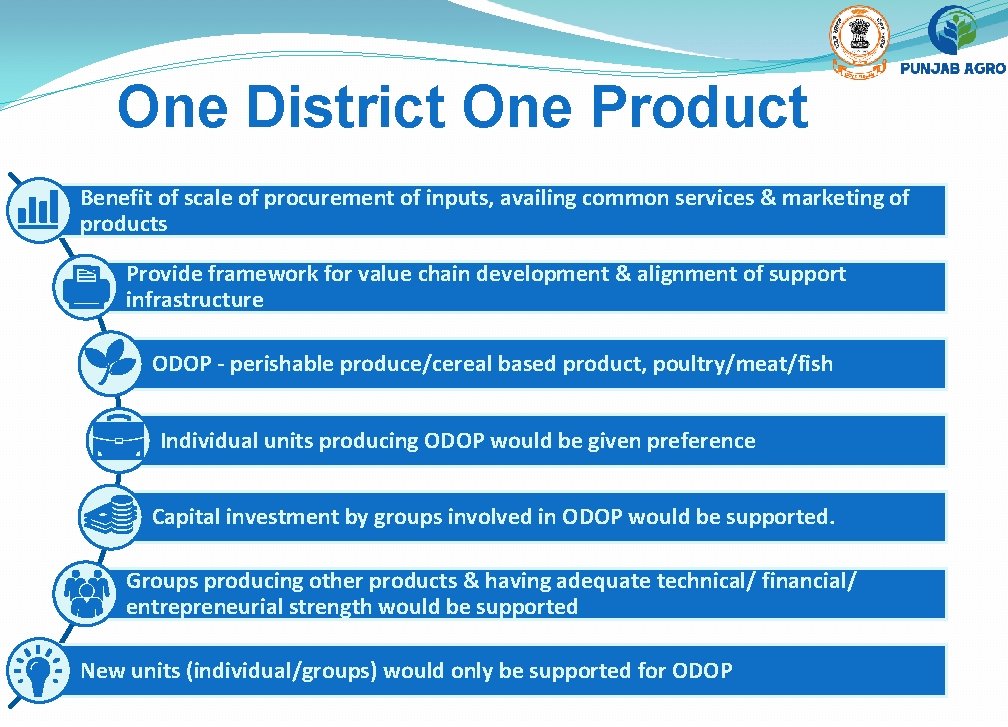
One District One Product Benefit of scale of procurement of inputs, availing common services & marketing of products Provide framework for value chain development & alignment of support infrastructure ODOP - perishable produce/cereal based product, poultry/meat/fish Individual units producing ODOP would be given preference Capital investment by groups involved in ODOP would be supported. Groups producing other products & having adequate technical/ financial/ entrepreneurial strength would be supported New units (individual/groups) would only be supported for ODOP
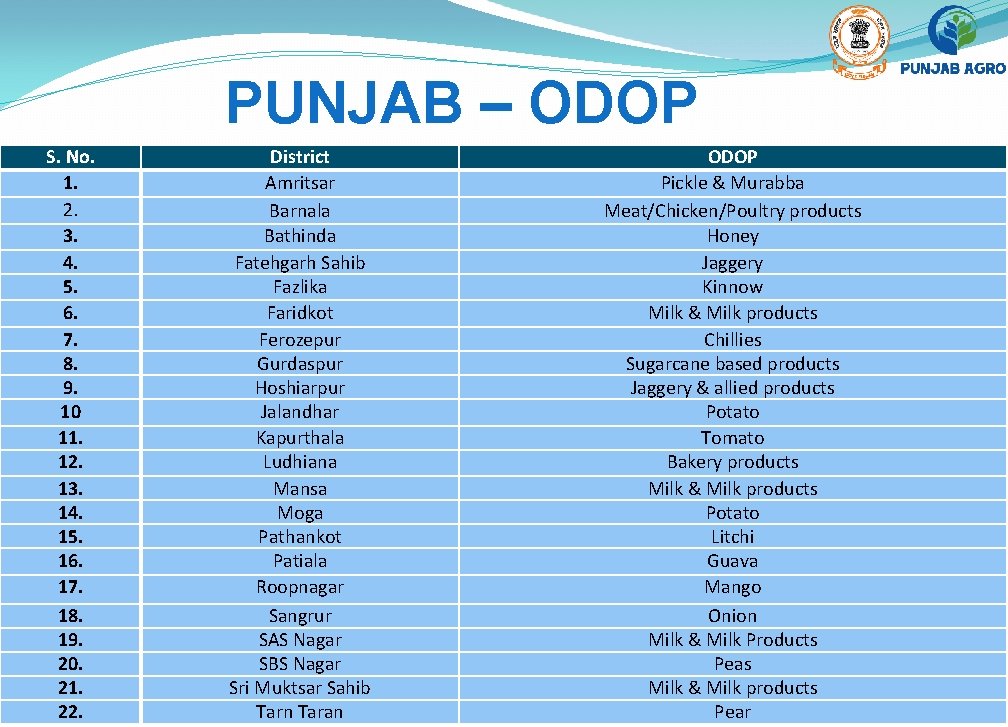
PUNJAB – ODOP S. No. 1. 2. 3. 4. 5. 6. 7. 8. 9. 10 11. 12. 13. 14. 15. 16. 17. 18. 19. 20. 21. 22. District Amritsar Barnala Bathinda Fatehgarh Sahib Fazlika Faridkot Ferozepur Gurdaspur Hoshiarpur Jalandhar Kapurthala Ludhiana Mansa Moga Pathankot Patiala Roopnagar Sangrur SAS Nagar SBS Nagar Sri Muktsar Sahib Tarn Taran ODOP Pickle & Murabba Meat/Chicken/Poultry products Honey Jaggery Kinnow Milk & Milk products Chillies Sugarcane based products Jaggery & allied products Potato Tomato Bakery products Milk & Milk products Potato Litchi Guava Mango Onion Milk & Milk Products Peas Milk & Milk products Pear
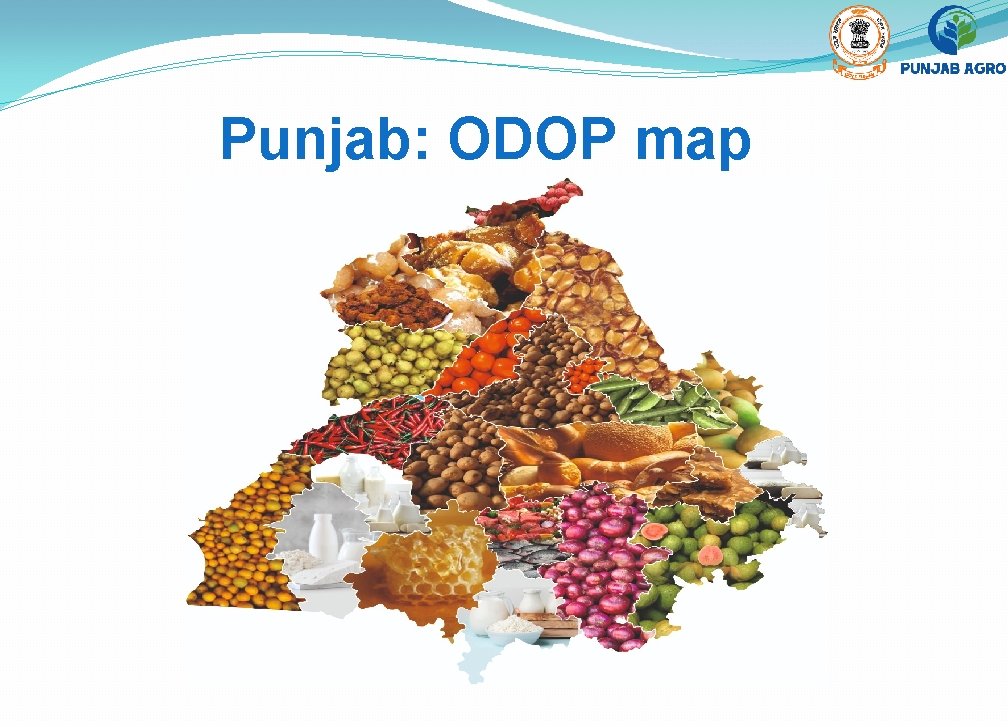
Punjab: ODOP map
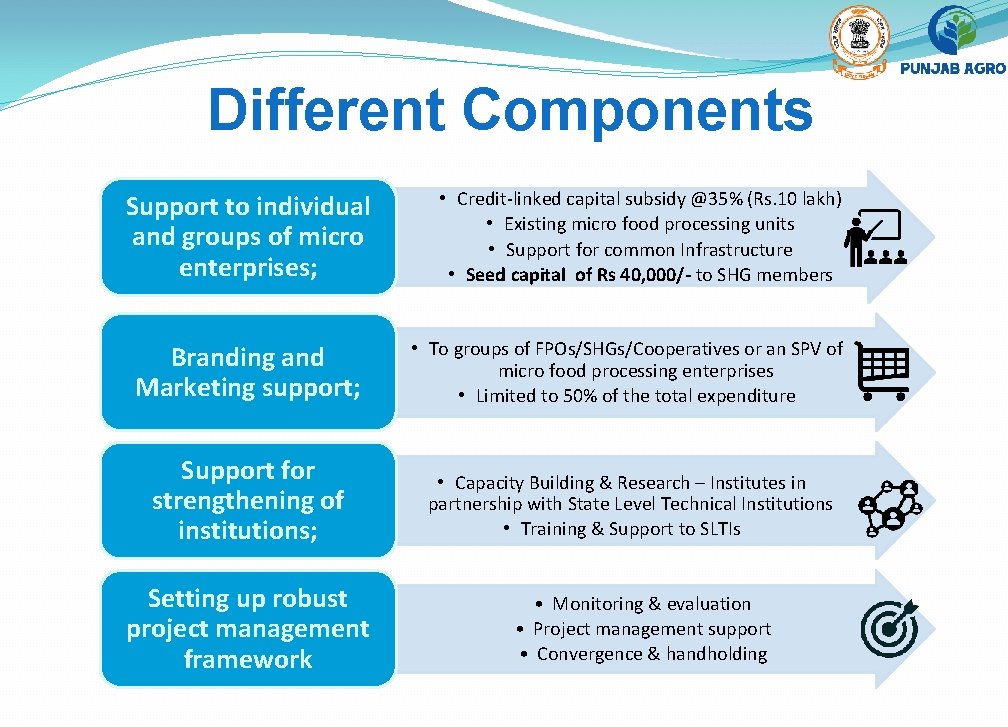
Different Components Support to individual and groups of micro enterprises; • Credit-linked capital subsidy @35% (Rs. 10 lakh) • Existing micro food processing units • Support for common Infrastructure • Seed capital of Rs 40, 000/- to SHG members Branding and Marketing support; • To groups of FPOs/SHGs/Cooperatives or an SPV of micro food processing enterprises • Limited to 50% of the total expenditure Support for strengthening of institutions; • Capacity Building & Research – Institutes in partnership with State Level Technical Institutions • Training & Support to SLTIs Setting up robust project management framework • Monitoring & evaluation • Project management support • Convergence & handholding
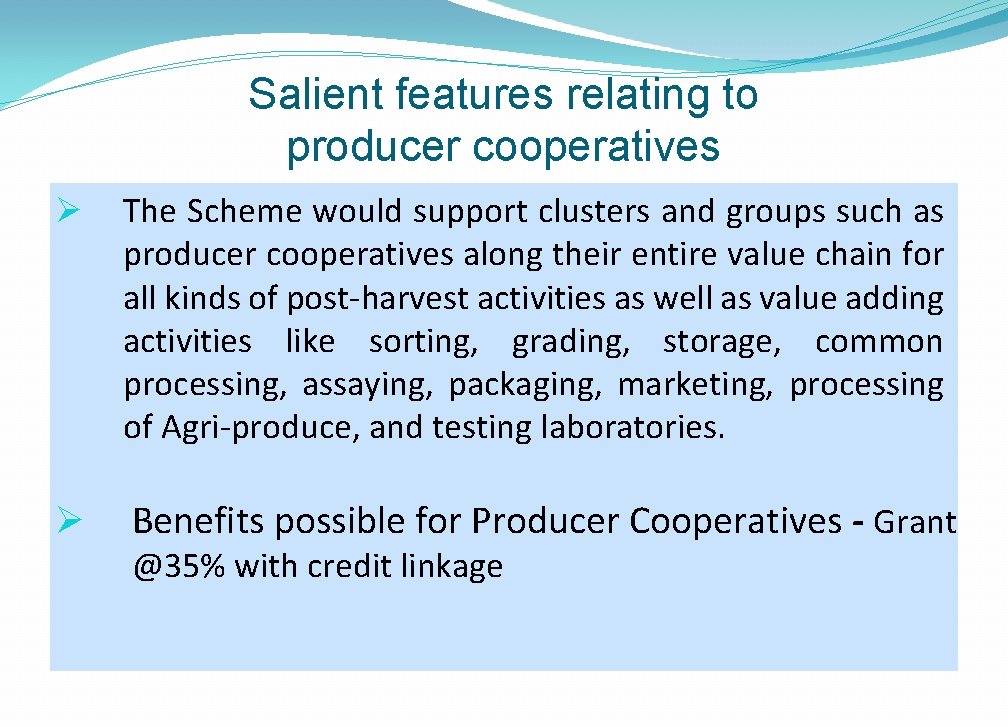
Salient features relating to producer cooperatives Ø The Scheme would support clusters and groups such as producer cooperatives along their entire value chain for all kinds of post-harvest activities as well as value adding activities like sorting, grading, storage, common processing, assaying, packaging, marketing, processing of Agri-produce, and testing laboratories. Ø Benefits possible for Producer Cooperatives - Grant @35% with credit linkage
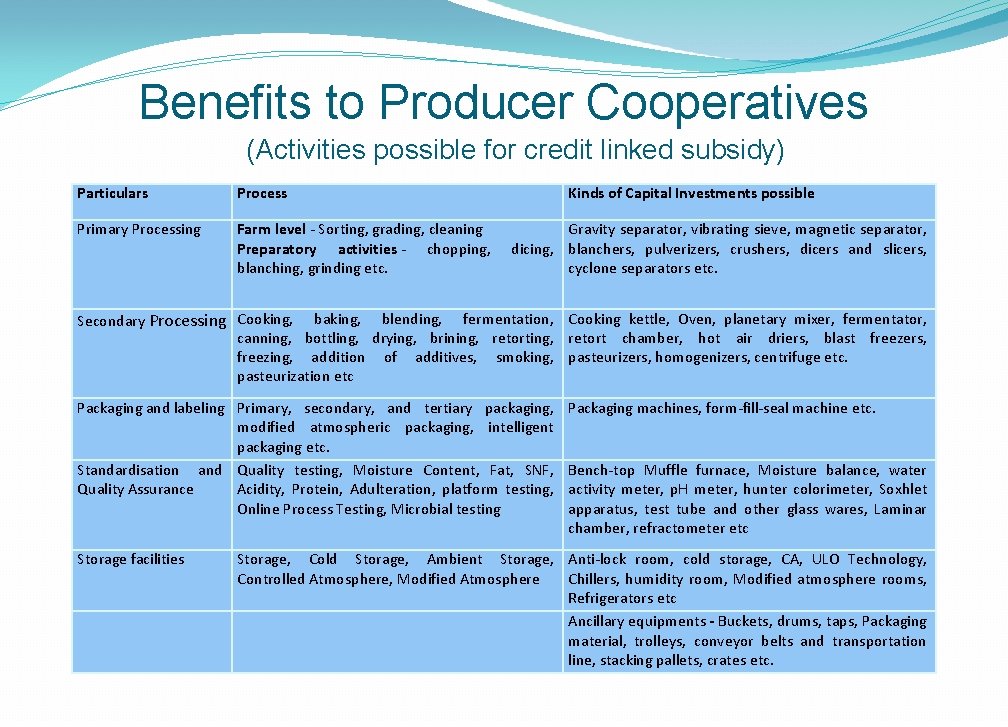
Benefits to Producer Cooperatives (Activities possible for credit linked subsidy) Particulars Process Primary Processing Farm level - Sorting, grading, cleaning Preparatory activities - chopping, blanching, grinding etc. Kinds of Capital Investments possible Gravity separator, vibrating sieve, magnetic separator, dicing, blanchers, pulverizers, crushers, dicers and slicers, cyclone separators etc. Secondary Processing Cooking, baking, blending, fermentation, Cooking kettle, Oven, planetary mixer, fermentator, canning, bottling, drying, brining, retort chamber, hot air driers, blast freezers, freezing, addition of additives, smoking, pasteurizers, homogenizers, centrifuge etc. pasteurization etc Packaging and labeling Primary, secondary, and tertiary packaging, modified atmospheric packaging, intelligent packaging etc. Standardisation and Quality testing, Moisture Content, Fat, SNF, Quality Assurance Acidity, Protein, Adulteration, platform testing, Online Process Testing, Microbial testing Storage facilities Packaging machines, form-fill-seal machine etc. Bench-top Muffle furnace, Moisture balance, water activity meter, p. H meter, hunter colorimeter, Soxhlet apparatus, test tube and other glass wares, Laminar chamber, refractometer etc Storage, Cold Storage, Ambient Storage, Anti-lock room, cold storage, CA, ULO Technology, Controlled Atmosphere, Modified Atmosphere Chillers, humidity room, Modified atmosphere rooms, Refrigerators etc Ancillary equipments - Buckets, drums, taps, Packaging material, trolleys, conveyor belts and transportation line, stacking pallets, crates etc.
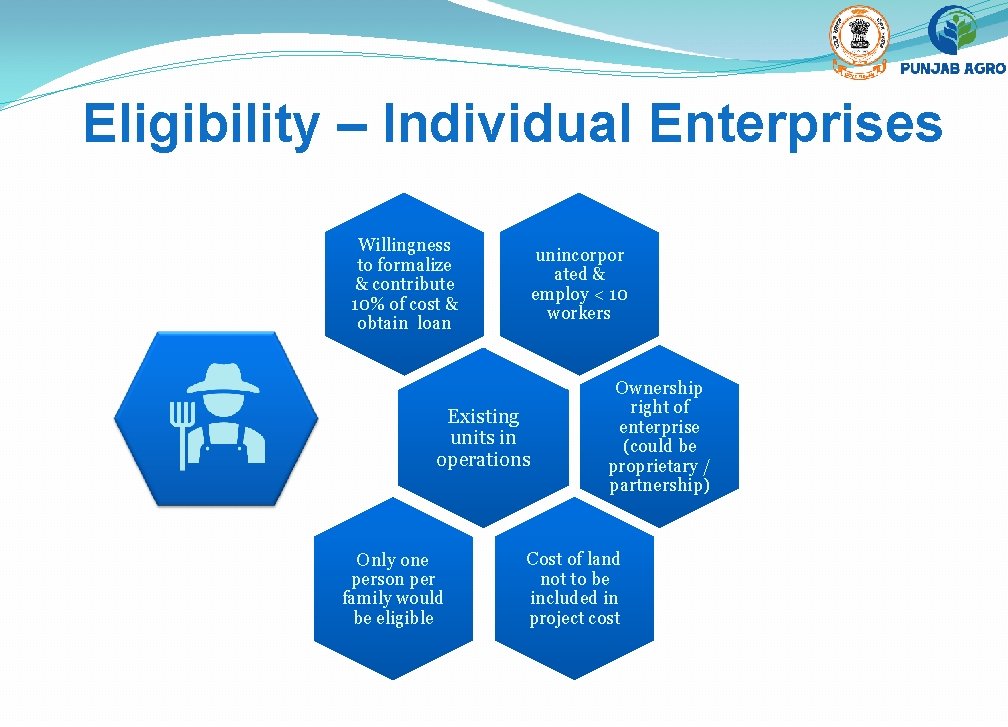
Eligibility – Individual Enterprises Willingness to formalize & contribute 10% of cost & obtain loan unincorpor ated & employ < 10 workers Existing units in operations Only one person per family would be eligible Ownership right of enterprise (could be proprietary / partnership) Cost of land not to be included in project cost
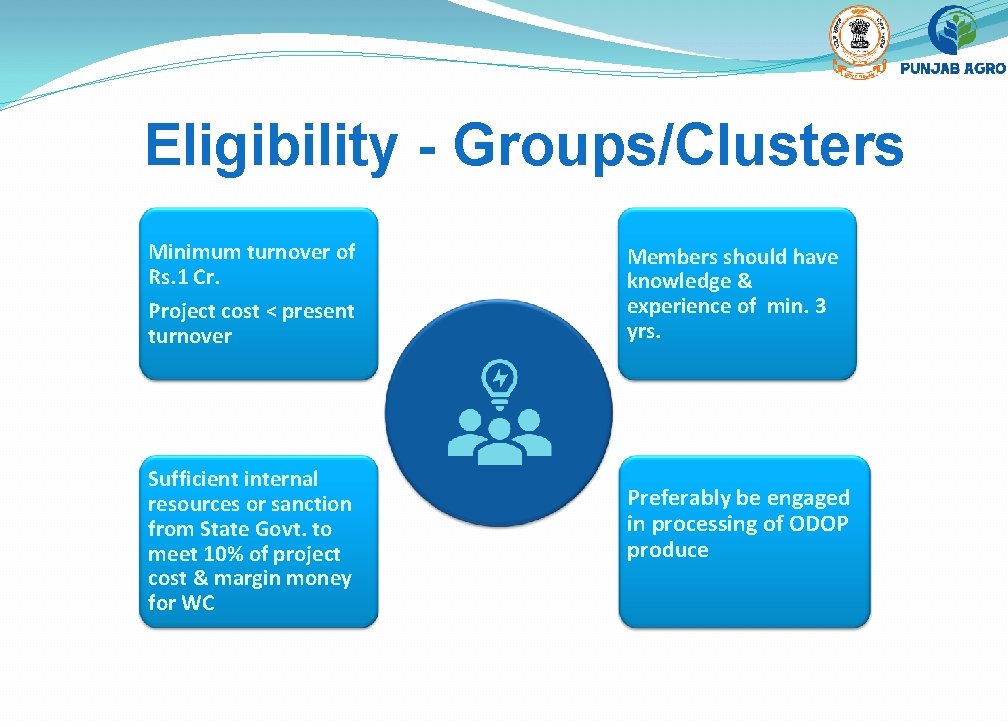
Eligibility - Groups/Clusters Minimum turnover of Rs. 1 Cr. Project cost < present turnover Sufficient internal resources or sanction from State Govt. to meet 10% of project cost & margin money for WC Members should have knowledge & experience of min. 3 yrs. Preferably be engaged in processing of ODOP produce
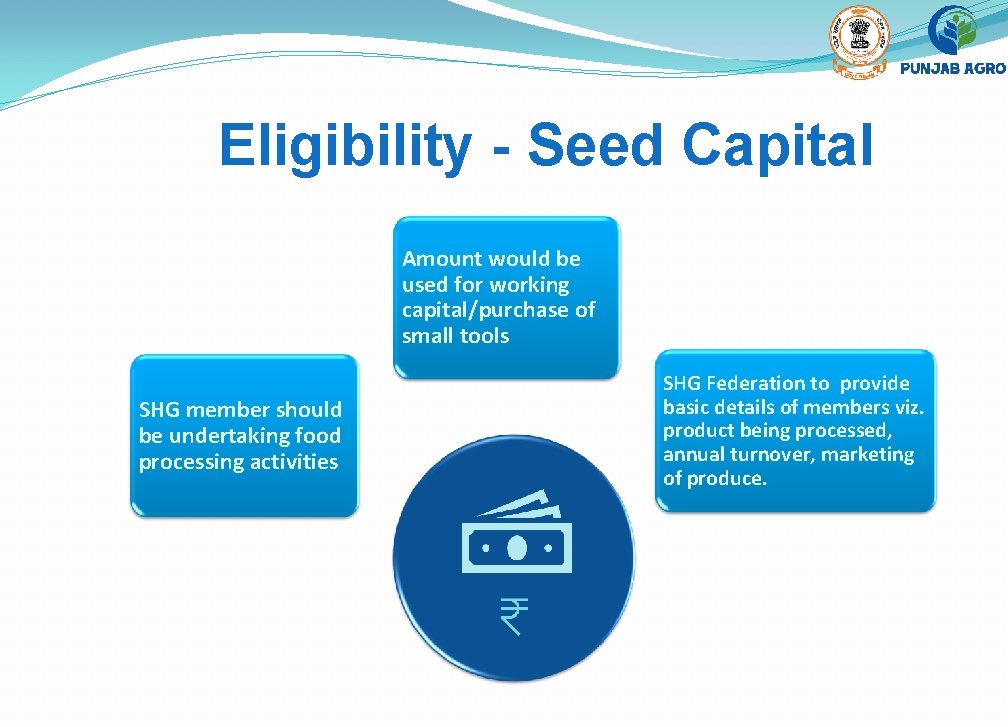
Eligibility - Seed Capital Amount would be used for working capital/purchase of small tools SHG member should be undertaking food processing activities SHG Federation to provide basic details of members viz. product being processed, annual turnover, marketing of produce.
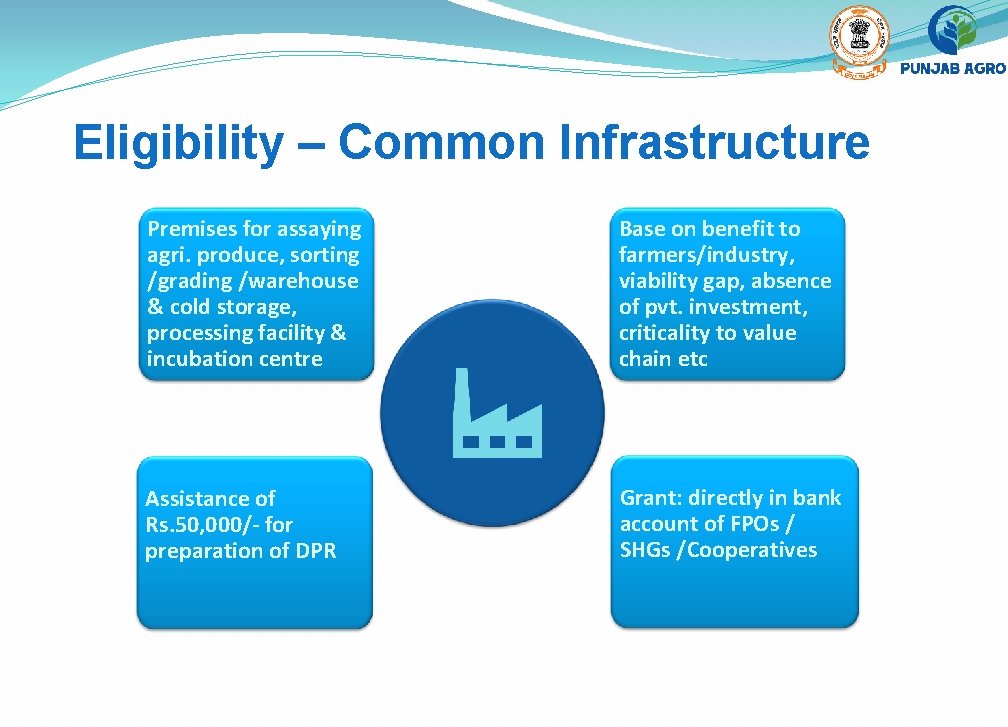
Eligibility – Common Infrastructure Premises for assaying agri. produce, sorting /grading /warehouse & cold storage, processing facility & incubation centre Base on benefit to farmers/industry, viability gap, absence of pvt. investment, criticality to value chain etc Assistance of Rs. 50, 000/- for preparation of DPR Grant: directly in bank account of FPOs / SHGs /Cooperatives
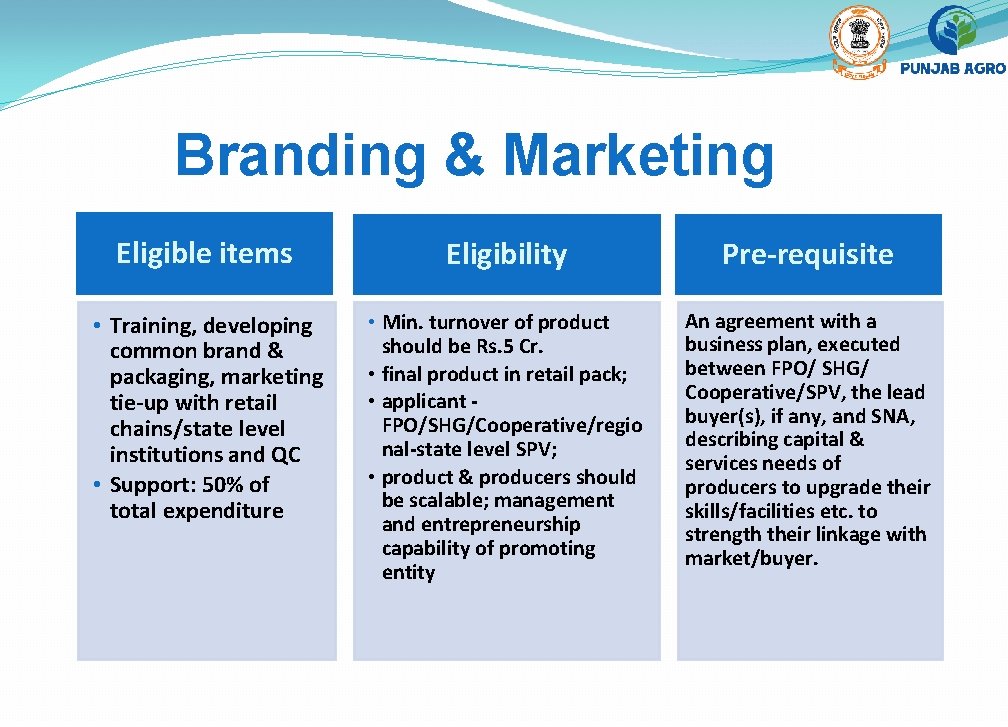
Branding & Marketing Eligible items Eligibility Pre-requisite • Training, developing common brand & packaging, marketing tie-up with retail chains/state level institutions and QC • Support: 50% of total expenditure • Min. turnover of product should be Rs. 5 Cr. • final product in retail pack; • applicant FPO/SHG/Cooperative/regio nal-state level SPV; • product & producers should be scalable; management and entrepreneurship capability of promoting entity An agreement with a business plan, executed between FPO/ SHG/ Cooperative/SPV, the lead buyer(s), if any, and SNA, describing capital & services needs of producers to upgrade their skills/facilities etc. to strength their linkage with market/buyer.
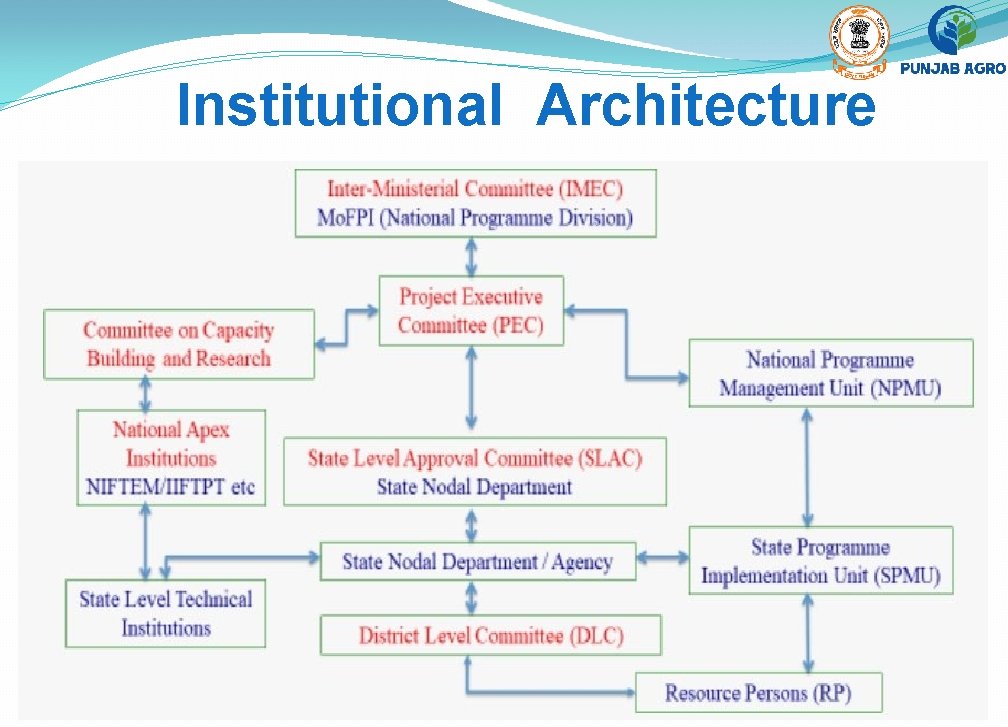
Institutional Architecture
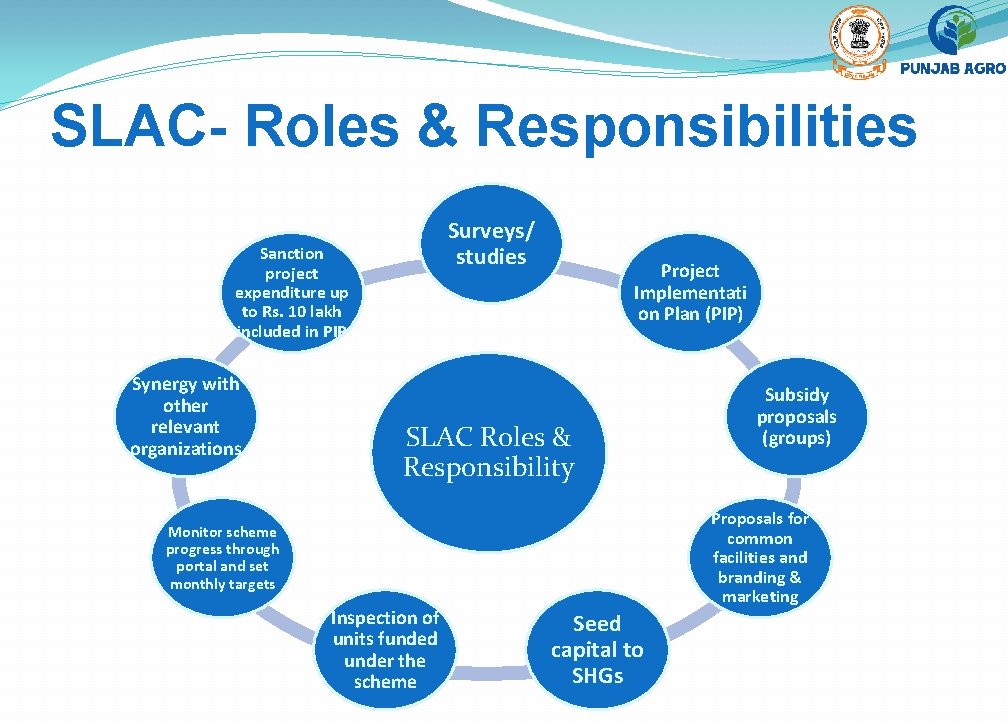
SLAC- Roles & Responsibilities Surveys/ studies Sanction project expenditure up to Rs. 10 lakh included in PIP Synergy with other relevant organizations Project Implementati on Plan (PIP) SLAC Roles & Responsibility Proposals for common facilities and branding & marketing Monitor scheme progress through portal and set monthly targets Inspection of units funded under the scheme Subsidy proposals (groups) Seed capital to SHGs
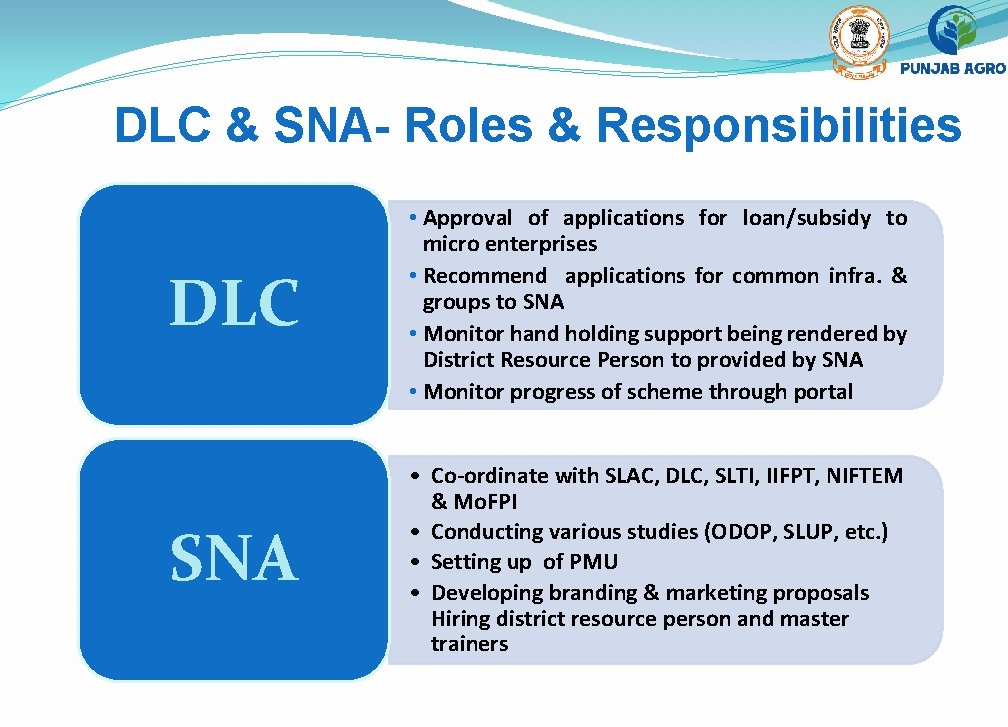
DLC & SNA- Roles & Responsibilities DLC • Approval of applications for loan/subsidy to micro enterprises • Recommend applications for common infra. & groups to SNA • Monitor hand holding support being rendered by District Resource Person to provided by SNA • Monitor progress of scheme through portal SNA • Co-ordinate with SLAC, DLC, SLTI, IIFPT, NIFTEM & Mo. FPI • Conducting various studies (ODOP, SLUP, etc. ) • Setting up of PMU • Developing branding & marketing proposals Hiring district resource person and master trainers
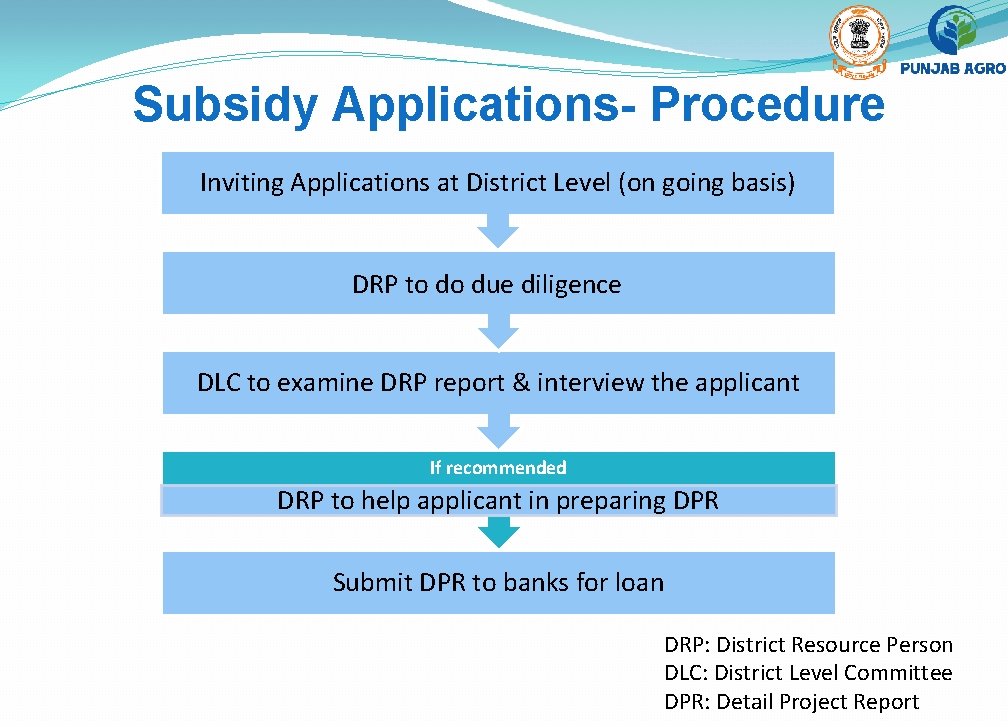
Subsidy Applications- Procedure Inviting Applications at District Level (on going basis) DRP to do due diligence DLC to examine DRP report & interview the applicant If recommended DRP to help applicant in preparing DPR Submit DPR to banks for loan DRP: District Resource Person DLC: District Level Committee DPR: Detail Project Report
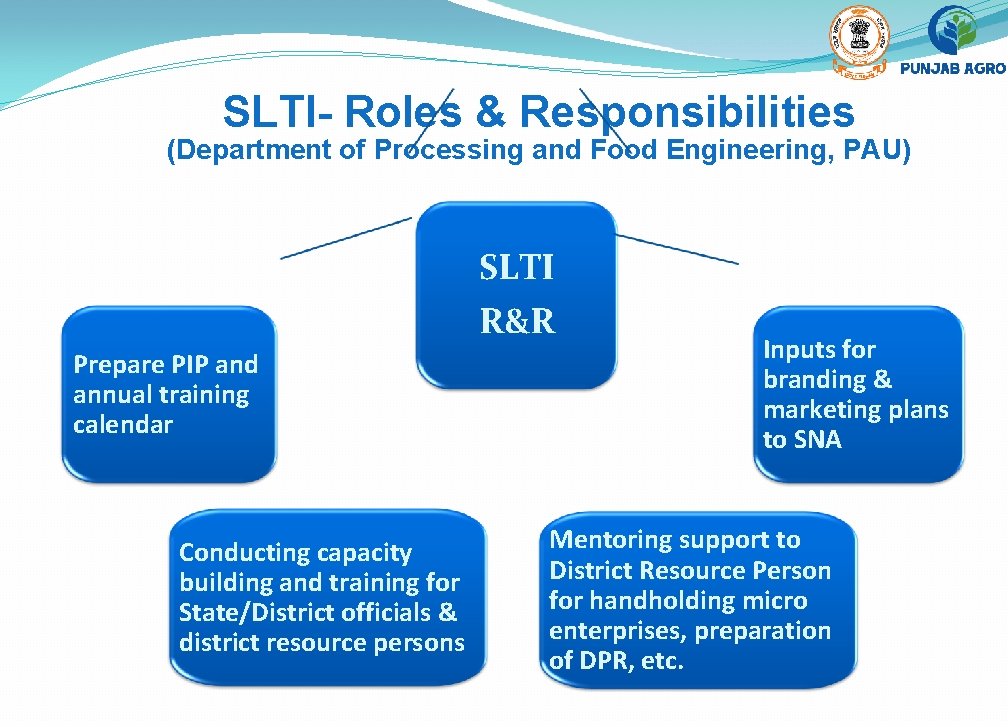
SLTI- Roles & Responsibilities (Department of Processing and Food Engineering, PAU) SLTI R&R Prepare PIP and annual training calendar Conducting capacity building and training for State/District officials & district resource persons Inputs for branding & marketing plans to SNA Mentoring support to District Resource Person for handholding micro enterprises, preparation of DPR, etc.
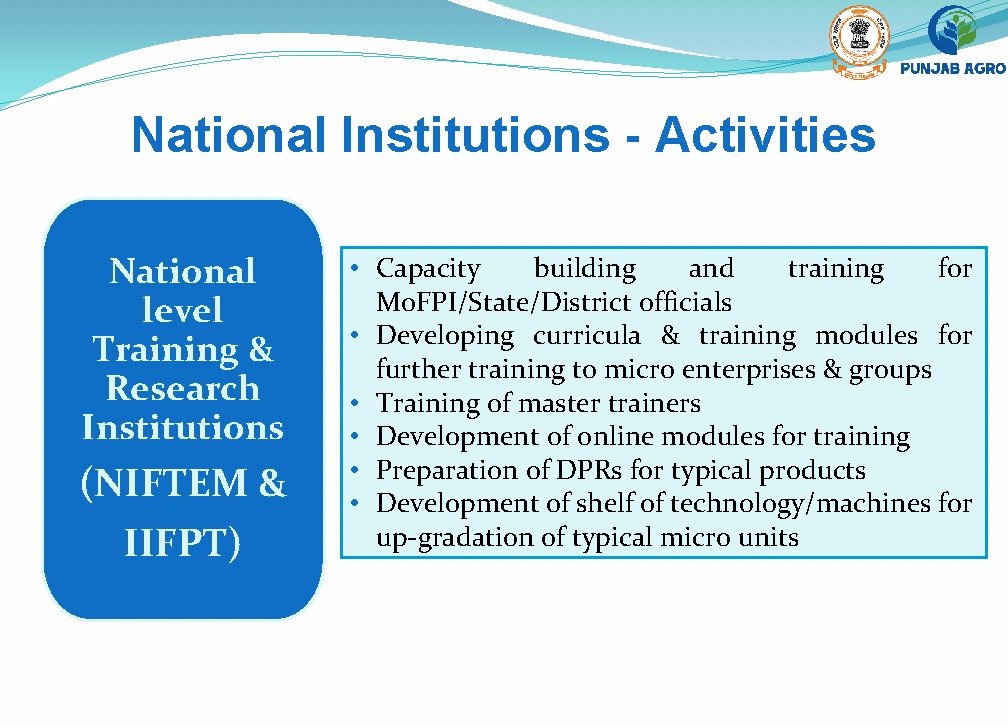
National Institutions - Activities National level Training & Research Institutions (NIFTEM & IIFPT) • Capacity building and training for Mo. FPI/State/District officials • Developing curricula & training modules for further training to micro enterprises & groups • Training of master trainers • Development of online modules for training • Preparation of DPRs for typical products • Development of shelf of technology/machines for up-gradation of typical micro units
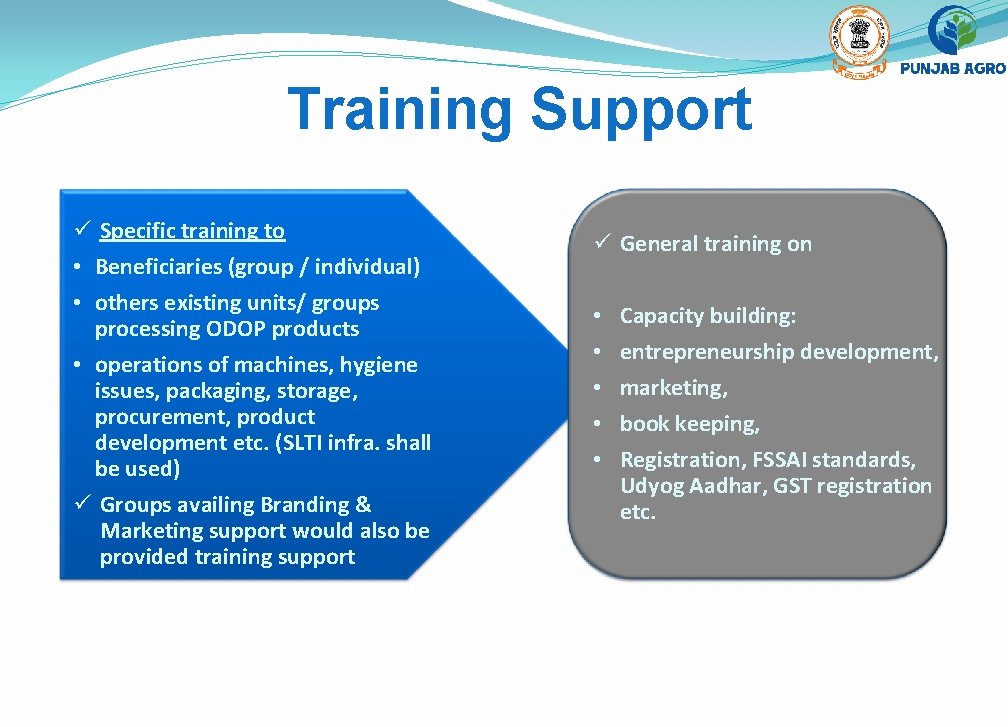
Training Support ü Specific training to • Beneficiaries (group / individual) • others existing units/ groups processing ODOP products • operations of machines, hygiene issues, packaging, storage, procurement, product development etc. (SLTI infra. shall be used) ü Groups availing Branding & Marketing support would also be provided training support ü General training on • • • Capacity building: entrepreneurship development, marketing, book keeping, Registration, FSSAI standards, Udyog Aadhar, GST registration etc.
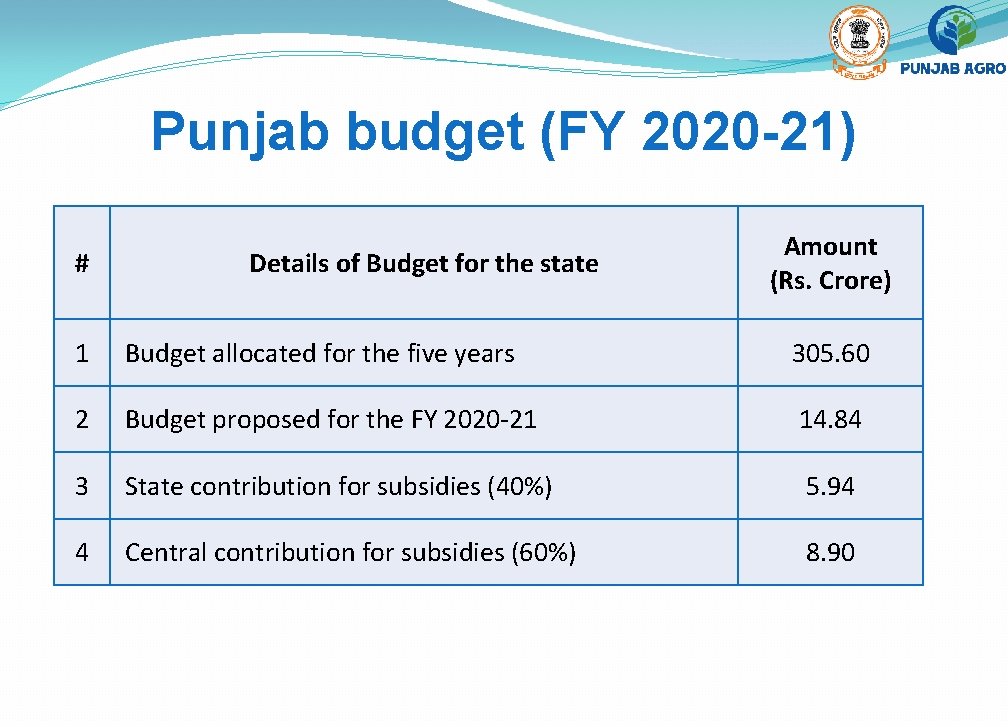
Punjab budget (FY 2020 -21) # Details of Budget for the state Amount (Rs. Crore) 1 Budget allocated for the five years 305. 60 2 Budget proposed for the FY 2020 -21 14. 84 3 State contribution for subsidies (40%) 5. 94 4 Central contribution for subsidies (60%) 8. 90
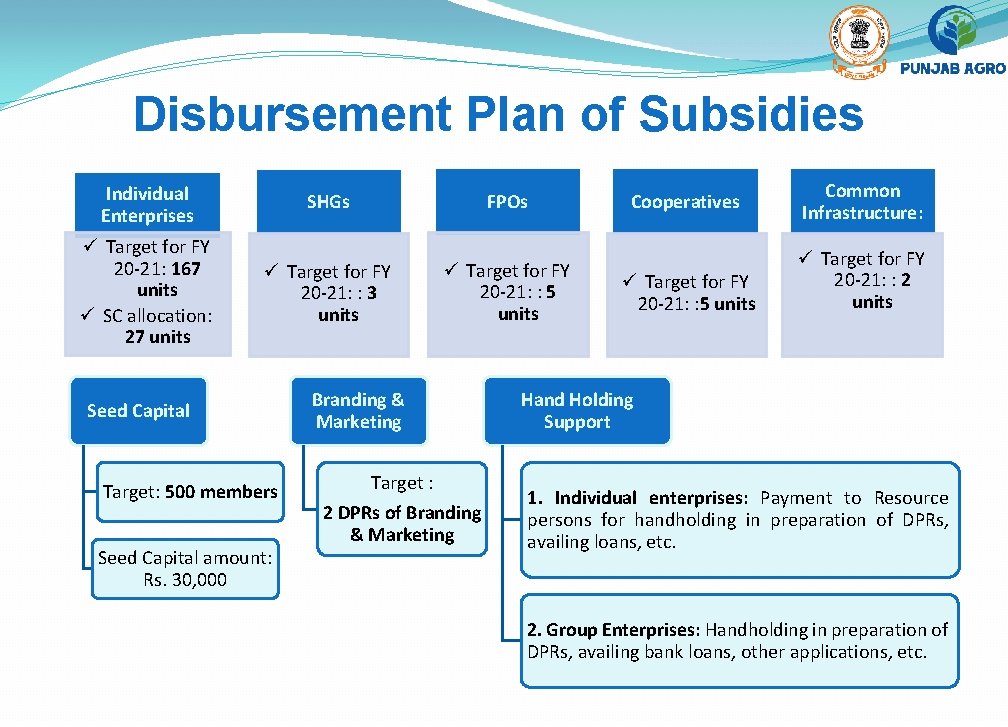
Disbursement Plan of Subsidies Individual Enterprises SHGs FPOs ü Target for FY 20 -21: 167 units ü SC allocation: 27 units ü Target for FY 20 -21: : 3 units ü Target for FY 20 -21: : 5 units Seed Capital Target: 500 members Seed Capital amount: Rs. 30, 000 Branding & Marketing Target : 2 DPRs of Branding & Marketing Cooperatives ü Target for FY 20 -21: : 5 units Common Infrastructure: ü Target for FY 20 -21: : 2 units Hand Holding Support 1. Individual enterprises: Payment to Resource persons for handholding in preparation of DPRs, availing loans, etc. 2. Group Enterprises: Handholding in preparation of DPRs, availing bank loans, other applications, etc.

- Slides: 26