
PRESENTATION ON PHOTOSYNTHESIS PHOTOSYNTHESIS An anabolic endergonic carbon
PRESENTATION ON PHOTOSYNTHESIS
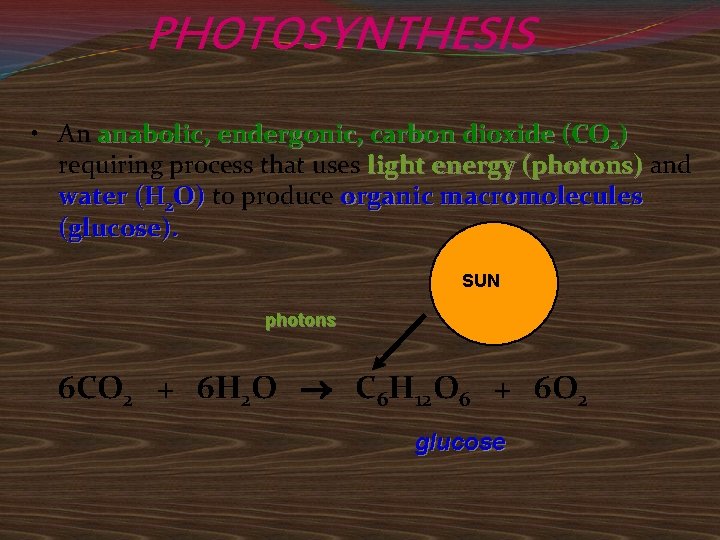
PHOTOSYNTHESIS • An anabolic, endergonic, carbon dioxide (CO 2) requiring process that uses light energy (photons) and water (H 2 O) to produce organic macromolecules (glucose). SUN photons 6 CO 2 + 6 H 2 O C 6 H 12 O 6 + 6 O 2 glucose
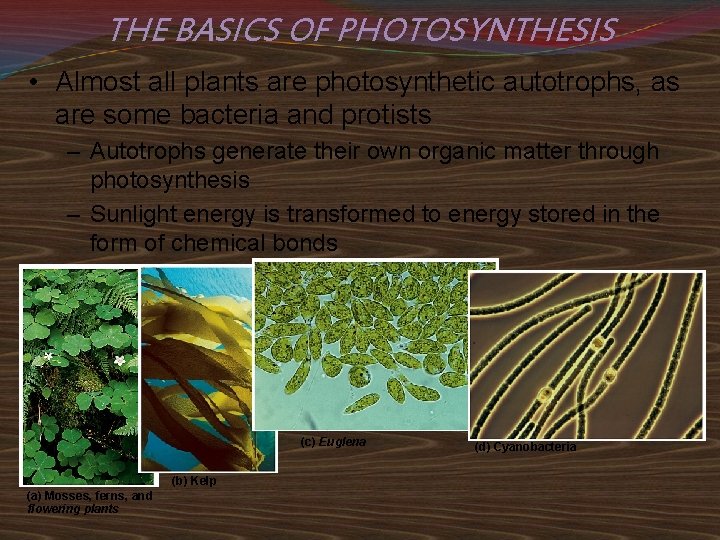
THE BASICS OF PHOTOSYNTHESIS • Almost all plants are photosynthetic autotrophs, as are some bacteria and protists – Autotrophs generate their own organic matter through photosynthesis – Sunlight energy is transformed to energy stored in the form of chemical bonds (c) Euglena (b) Kelp (a) Mosses, ferns, and flowering plants (d) Cyanobacteria
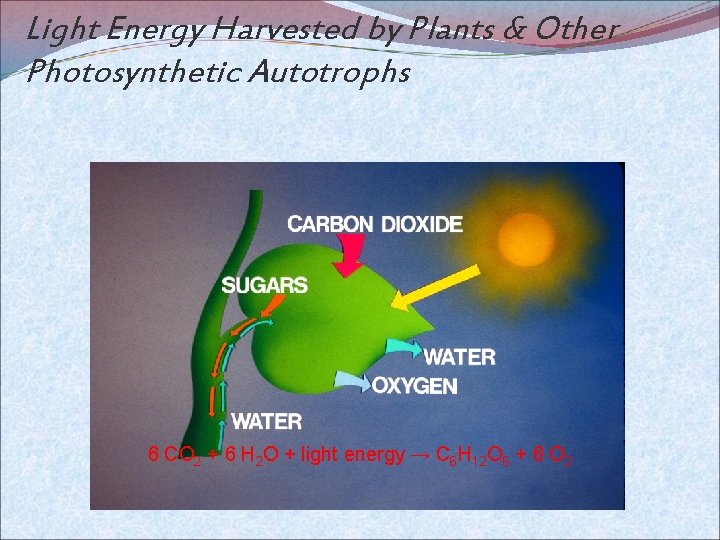
Light Energy Harvested by Plants & Other Photosynthetic Autotrophs 6 CO 2 + 6 H 2 O + light energy → C 6 H 12 O 6 + 6 O 2
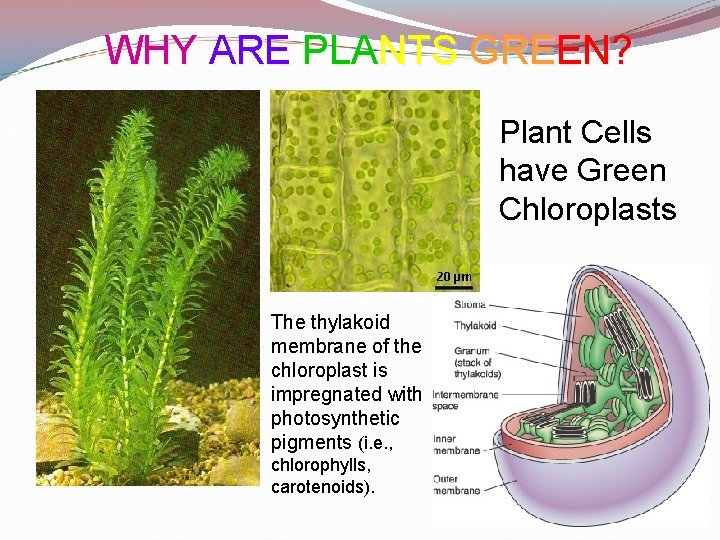
WHY ARE PLANTS GREEN? Plant Cells have Green Chloroplasts The thylakoid membrane of the chloroplast is impregnated with photosynthetic pigments (i. e. , chlorophylls, carotenoids).
Photosynthesis occurs in chloroplasts In most plants, photosynthesis occurs primarily in the leaves, in the chloroplasts A chloroplast contains: stroma, a fluid grana, stacks of thylakoids The thylakoids contain chlorophyll Chlorophyll is the green pigment that captures light for photosynthesis
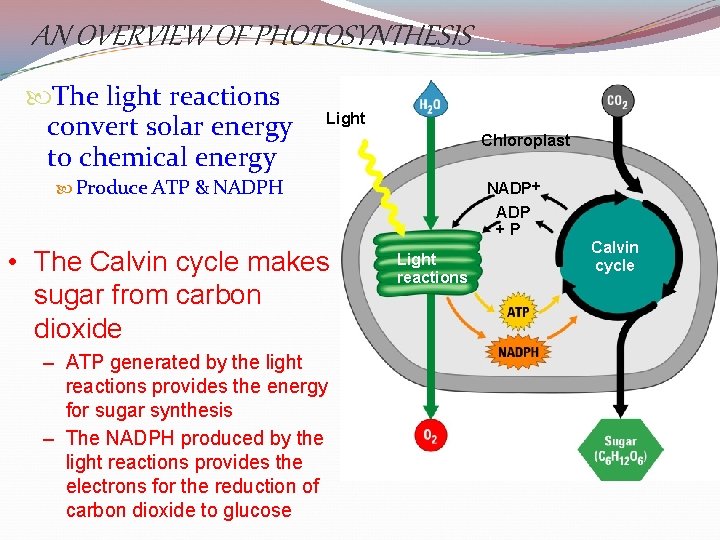
AN OVERVIEW OF PHOTOSYNTHESIS The light reactions convert solar energy to chemical energy Light Chloroplast Produce ATP & NADPH • The Calvin cycle makes sugar from carbon dioxide – ATP generated by the light reactions provides the energy for sugar synthesis – The NADPH produced by the light reactions provides the electrons for the reduction of carbon dioxide to glucose NADP +P Light reactions Calvin cycle
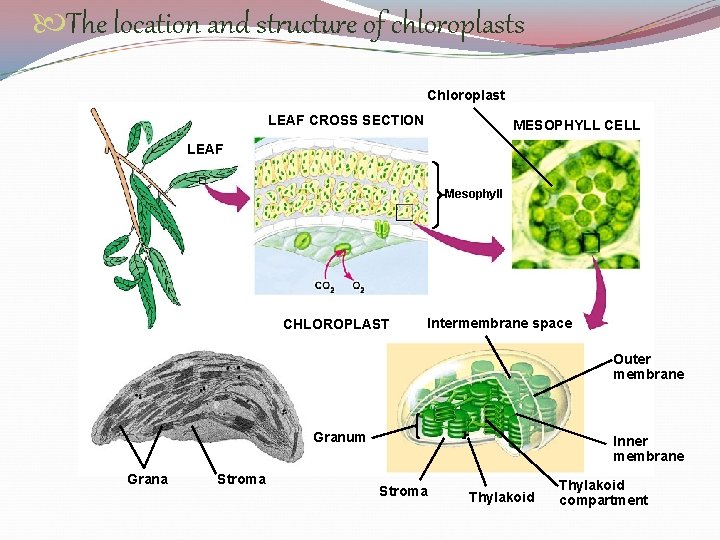
The location and structure of chloroplasts Chloroplast LEAF CROSS SECTION MESOPHYLL CELL LEAF Mesophyll CHLOROPLAST Intermembrane space Outer membrane Granum Grana Stroma Inner membrane Stroma Thylakoid compartment
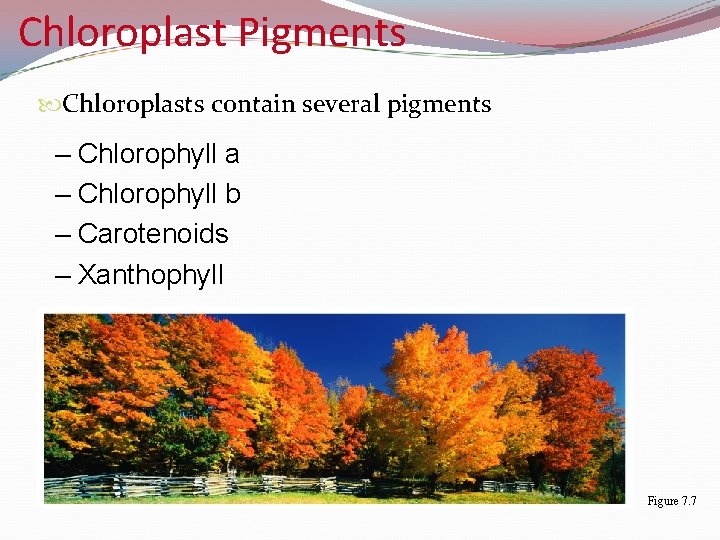
Chloroplast Pigments Chloroplasts contain several pigments – Chlorophyll a – Chlorophyll b – Carotenoids – Xanthophyll Figure 7. 7
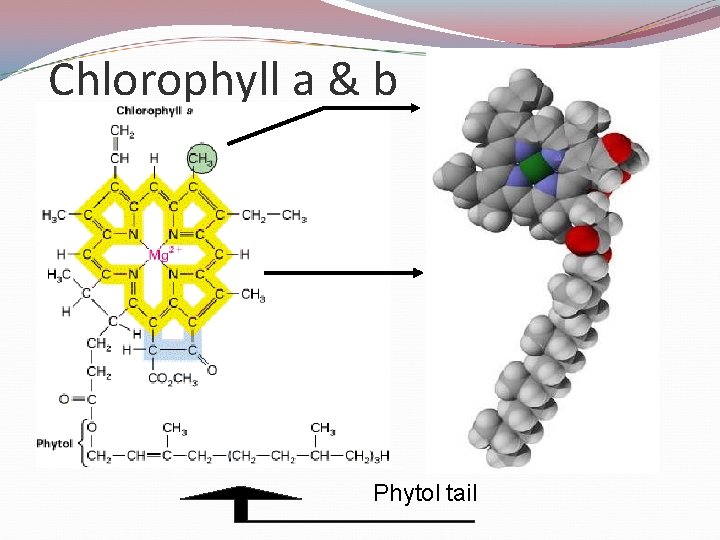
Chlorophyll a & b • Chl a has a methyl group • Chl b has a carbonyl group Porphyrin ring delocalized e- Phytol tail
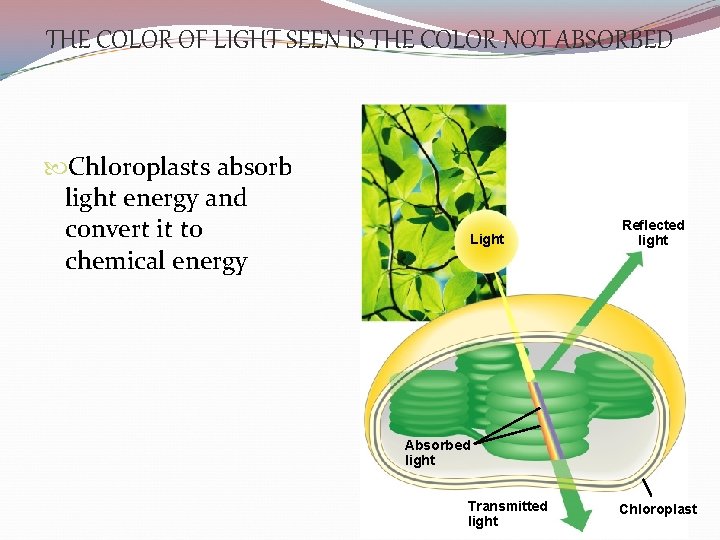
THE COLOR OF LIGHT SEEN IS THE COLOR NOT ABSORBED Chloroplasts absorb light energy and convert it to chemical energy Light Reflected light Absorbed light Transmitted light Chloroplast
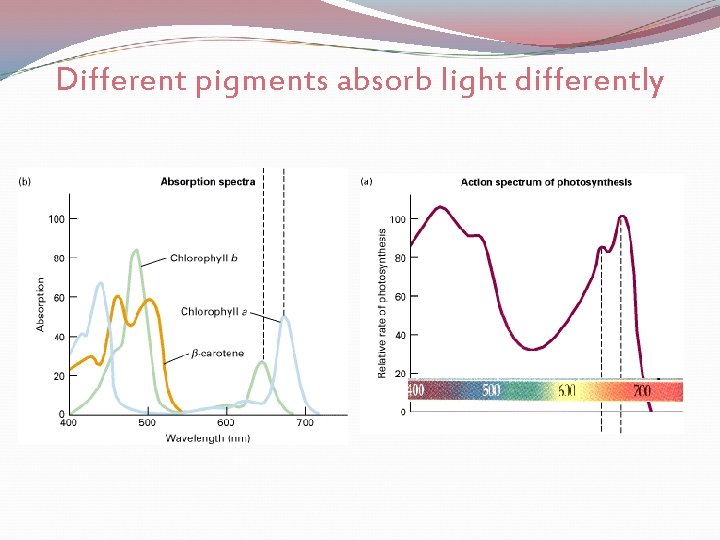
Different pigments absorb light differently

BREAKDOWN OF PHOTOSYNTHESIS Two main parts (reactions). 1. Light Reaction or Light Dependent Reaction Produces energy from solar power (photons) in the form of ATP and NADPH
1. LIGHT REACTION (ELECTRON FLOW) Occurs in the Thylakoid membranes During the light reaction, reaction there are two possible routes for electron flow A. Cyclic Electron Flow B. Noncyclic Electron Flow
Steps of Photosynthesis Light hits reaction centers of chlorophyll, found in chloroplasts • Chlorophyll vibrates and causes water to break apart. • Oxygen is released into air • Hydrogen remains in chloroplast attached to NADPH • “THE LIGHT REACTION”
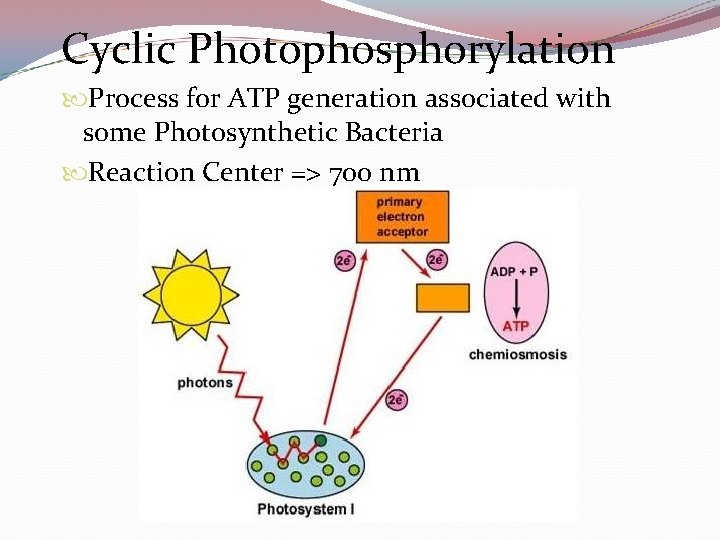
Cyclic Photophosphorylation Process for ATP generation associated with some Photosynthetic Bacteria Reaction Center => 700 nm
A. CYCLIC ELECTRON FLOW Occurs in the thylakoid membrane Uses Photosystem I only P 700 reaction center- chlorophyll a Uses Electron Transport Chain (ETC) Generates ATP only ADP + ATP
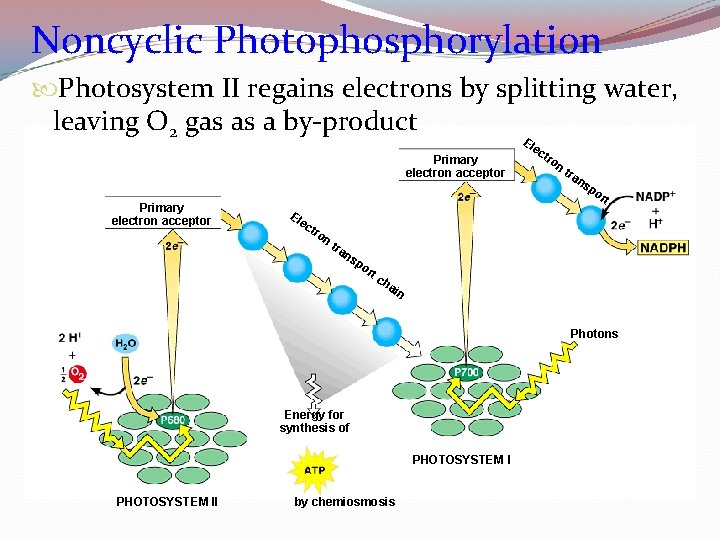
Noncyclic Photophosphorylation Photosystem II regains electrons by splitting water, leaving O 2 gas as a by-product Primary electron acceptor El ec tro n tra ns po rt tra ns po r tc ha in Photons Energy for synthesis of PHOTOSYSTEM II by chemiosmosis
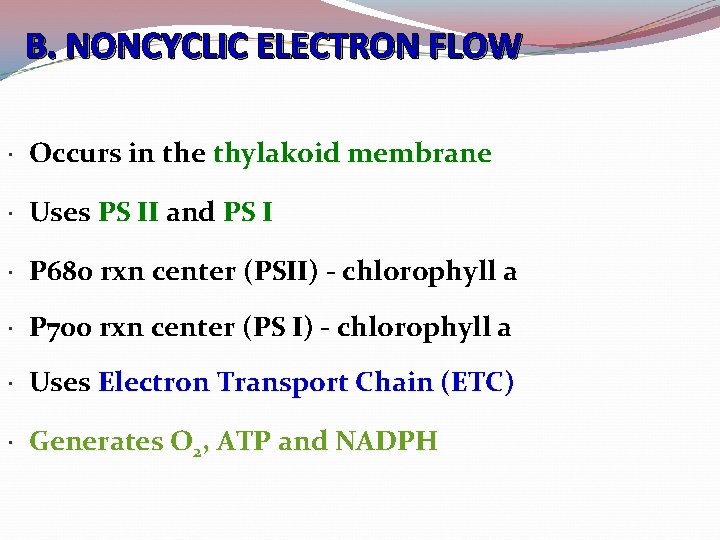
B. NONCYCLIC ELECTRON FLOW Occurs in the thylakoid membrane Uses PS II and PS I P 680 rxn center (PSII) - chlorophyll a P 700 rxn center (PS I) - chlorophyll a Uses Electron Transport Chain (ETC) Generates O 2, ATP and NADPH
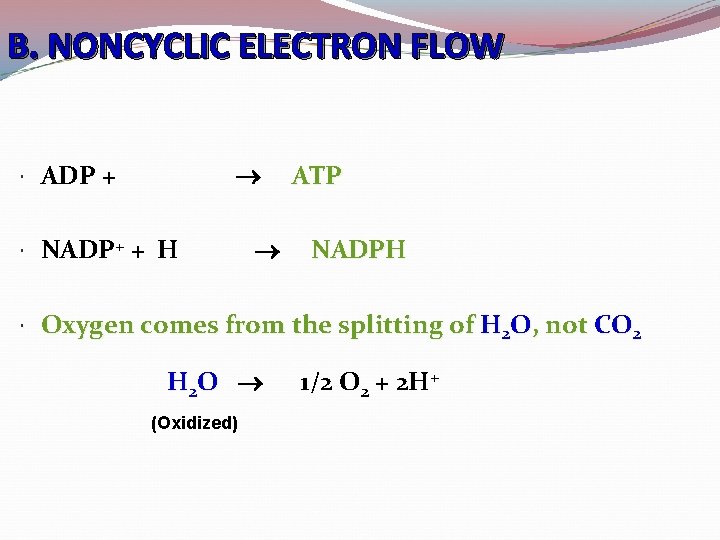
B. NONCYCLIC ELECTRON FLOW ADP + NADP+ + H Oxygen comes from the splitting of H 2 O, not CO 2 H 2 O (Oxidized) ATP NADPH 1/2 O 2 + 2 H+
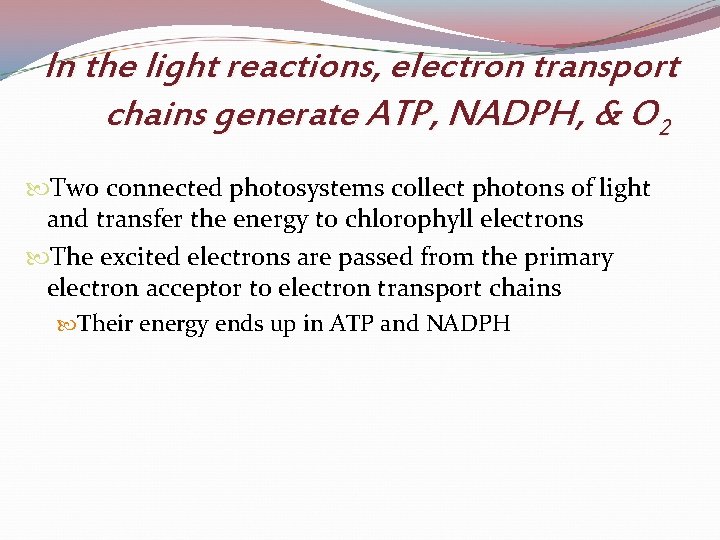
In the light reactions, electron transport chains generate ATP, NADPH, & O 2 Two connected photosystems collect photons of light and transfer the energy to chlorophyll electrons The excited electrons are passed from the primary electron acceptor to electron transport chains Their energy ends up in ATP and NADPH
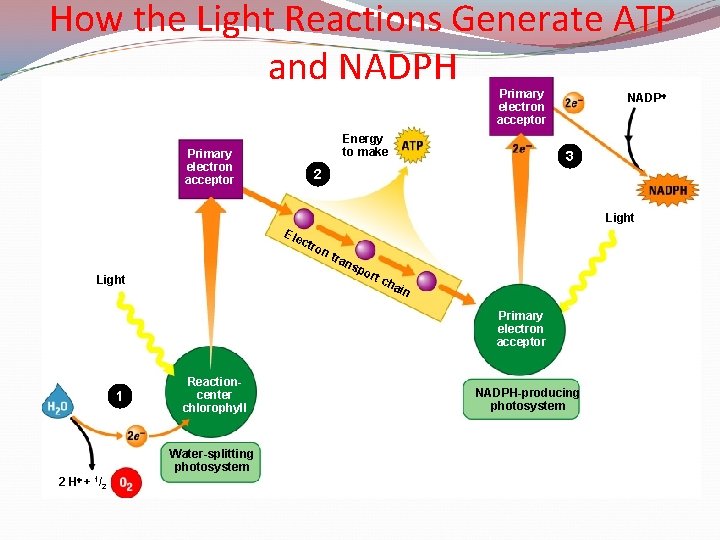
How the Light Reactions Generate ATP and NADPH Primary electron acceptor Energy to make Primary electron acceptor NADP 3 2 Light Ele ctr Light on tra ns po rt ch ain Primary electron acceptor 1 Reactioncenter chlorophyll Water-splitting photosystem 2 H + 1/2 NADPH-producing photosystem

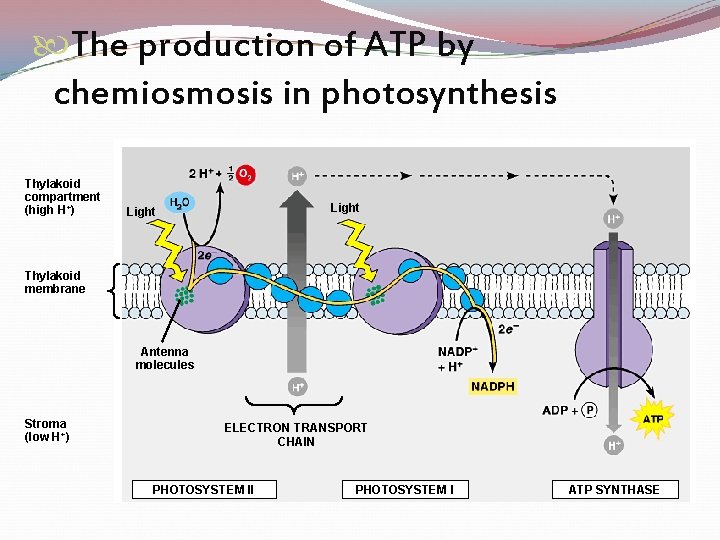
The production of ATP by chemiosmosis in photosynthesis Thylakoid compartment (high H+) Light Thylakoid membrane Antenna molecules Stroma (low H+) ELECTRON TRANSPORT CHAIN PHOTOSYSTEM II PHOTOSYSTEM I ATP SYNTHASE
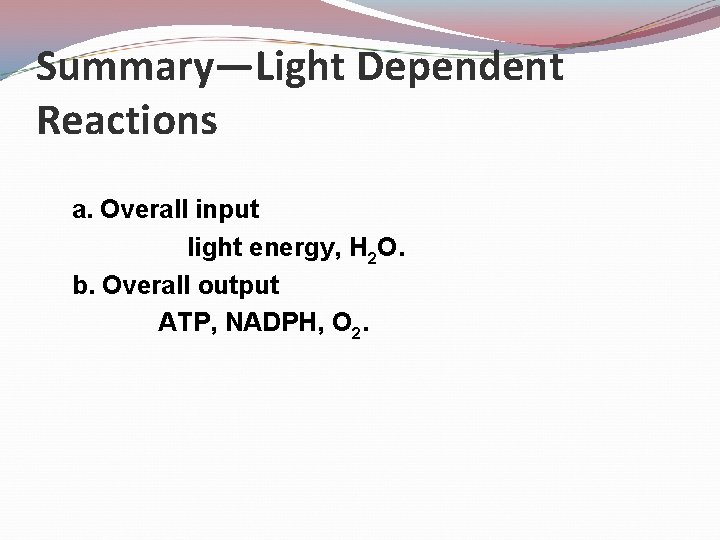
Summary—Light Dependent Reactions a. Overall input light energy, H 2 O. b. Overall output ATP, NADPH, O 2.
Steps of Photosynthesis The DARK Reactions= Calvin Cycle • CO 2 from atmosphere is joined to H from water molecules (NADPH) to form glucose • Glucose can be converted into other molecules with yummy flavors!
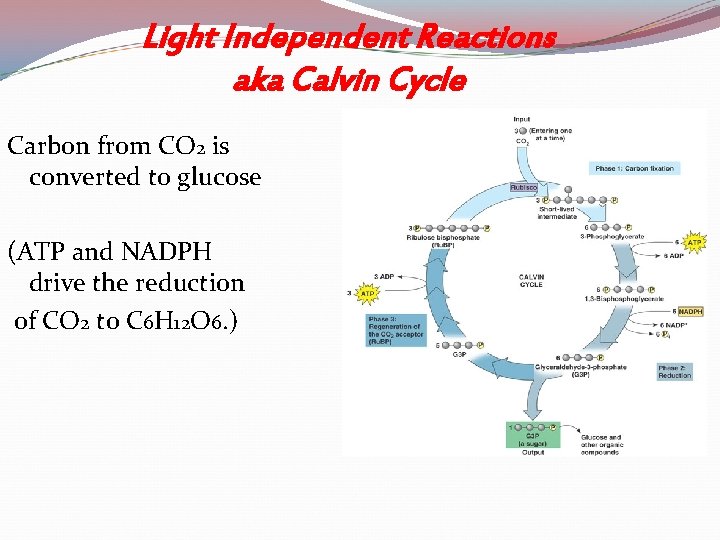
Light Independent Reactions aka Calvin Cycle Carbon from CO 2 is converted to glucose (ATP and NADPH drive the reduction of CO 2 to C 6 H 12 O 6. )
BREAKDOWN OF PHOTOSYNTHESIS 2. Calvin Cycle or Light Independent Reaction or Carbon Fixation or C 3 Fixation Uses energy (ATP and NADPH) from light rxn to make sugar (glucose).
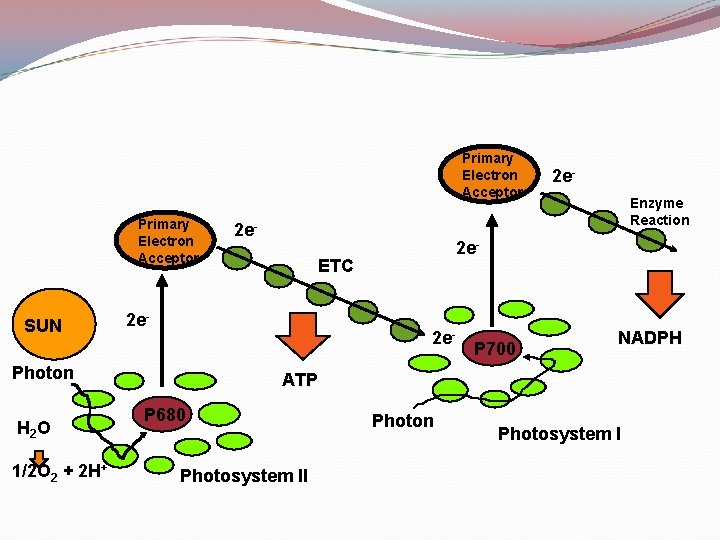
Primary Electron Acceptor SUN 1/2 O 2 + 2 H+ Enzyme Reaction 2 e- ETC 2 e- Photon H 2 O 2 e- P 700 NADPH ATP P 680 Photosystem II Photon Photosystem I
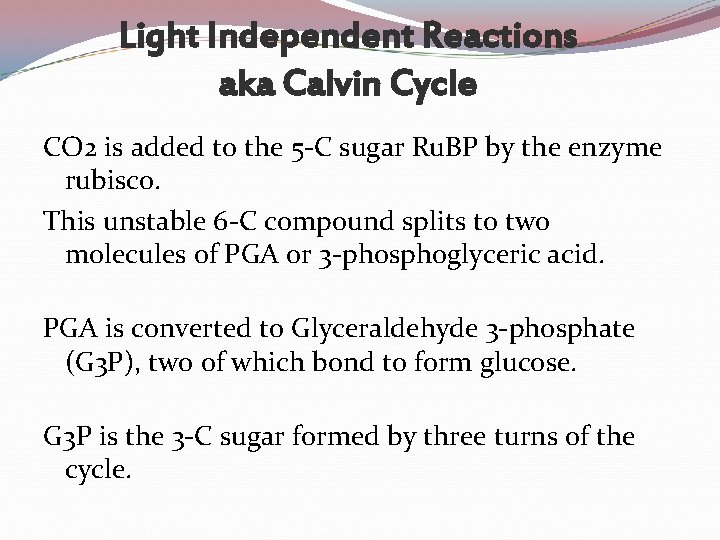
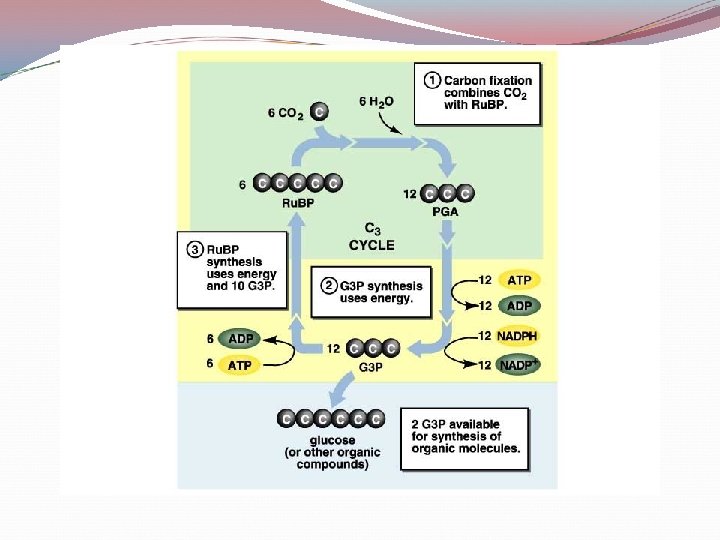
Light Independent Reactions aka Calvin Cycle CO 2 is added to the 5 -C sugar Ru. BP by the enzyme rubisco. This unstable 6 -C compound splits to two molecules of PGA or 3 -phosphoglyceric acid. PGA is converted to Glyceraldehyde 3 -phosphate (G 3 P), two of which bond to form glucose. G 3 P is the 3 -C sugar formed by three turns of the cycle.
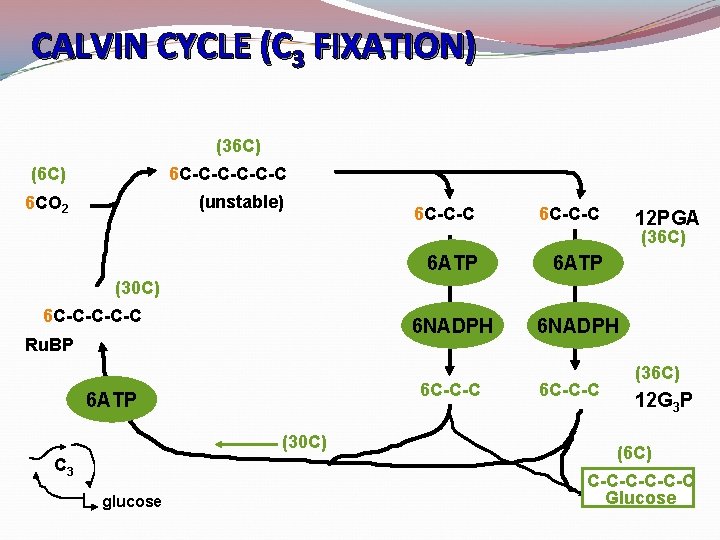
CALVIN CYCLE (C 3 FIXATION) (36 C) (6 C) 6 C-C-C-C 6 CO 2 (unstable) 6 C-C-C 12 PGA (36 C) 6 ATP 6 NADPH (30 C) 6 C-C-C Ru. BP 6 C-C-C 6 ATP (30 C) C 3 glucose 6 C-C-C (36 C) 12 G 3 P (6 C) C-C-C-C Glucose
Summary—Light Independent Reactions a. Overall input CO 2, ATP, NADPH. b. Overall output glucose.
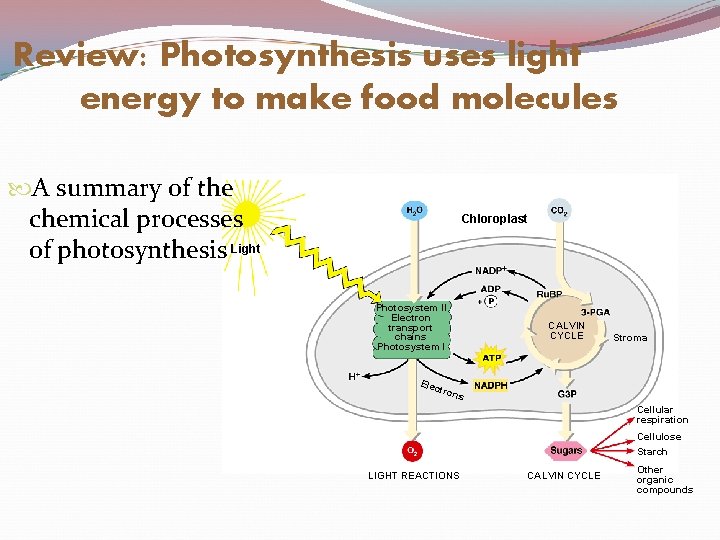
Review: Photosynthesis uses light energy to make food molecules A summary of the chemical processes of photosynthesis Light Chloroplast Photosystem II Electron transport chains Photosystem I Elec CALVIN CYCLE Stroma tron s Cellular respiration Cellulose Starch LIGHT REACTIONS CALVIN CYCLE Other organic compounds
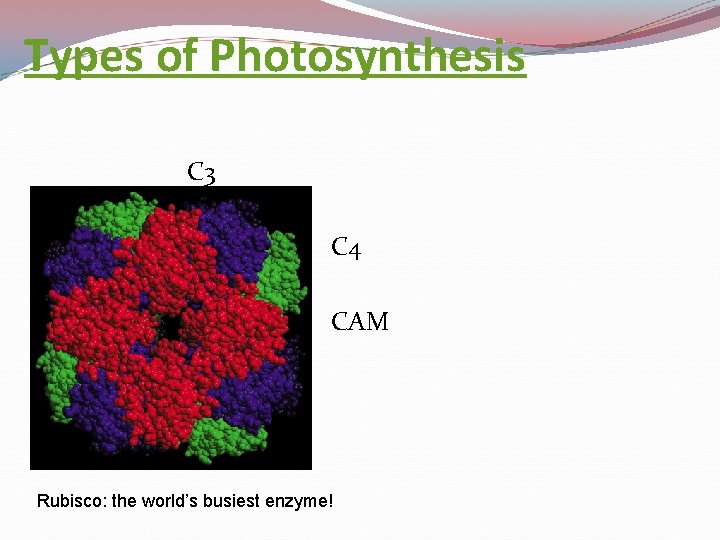
Types of Photosynthesis C 3 C 4 CAM Rubisco: the world’s busiest enzyme!
Photorespiration When Rubisco reacts with O 2 instead of CO 2 Occurs under the following conditions: Intense Light (high O 2 concentrations) High heat Photorespiration is estimated to reduce photosynthetic efficiency by 25%
Why high heat? When it is hot, plants close their stomata to conserve water They continue to do photosynthesis use up CO 2 and produce O 2 creates high O 2 concentrations inside the plant photorespiration occurs
C 4 Photosynthesis Certain plants have developed ways to limit the amount of photorespiration C 4 Pathway* CAM Pathway* * Both convert CO 2 into a 4 carbon intermediate C 4 Photosynthesis
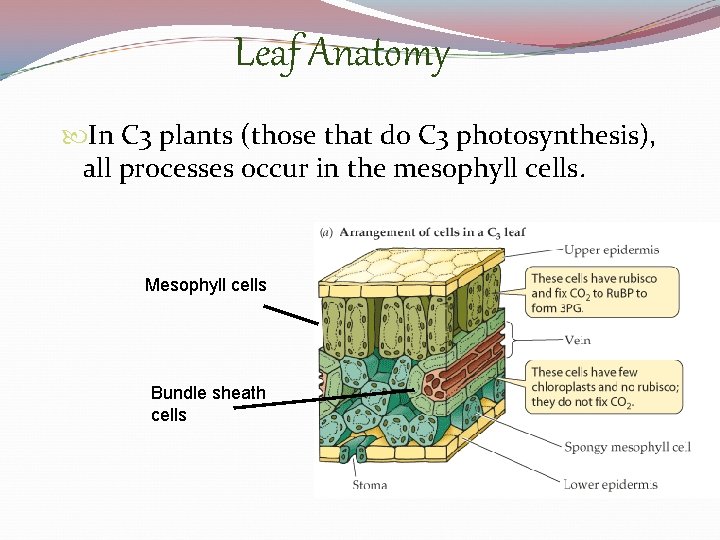
Leaf Anatomy In C 3 plants (those that do C 3 photosynthesis), all processes occur in the mesophyll cells. Mesophyll cells Bundle sheath cells
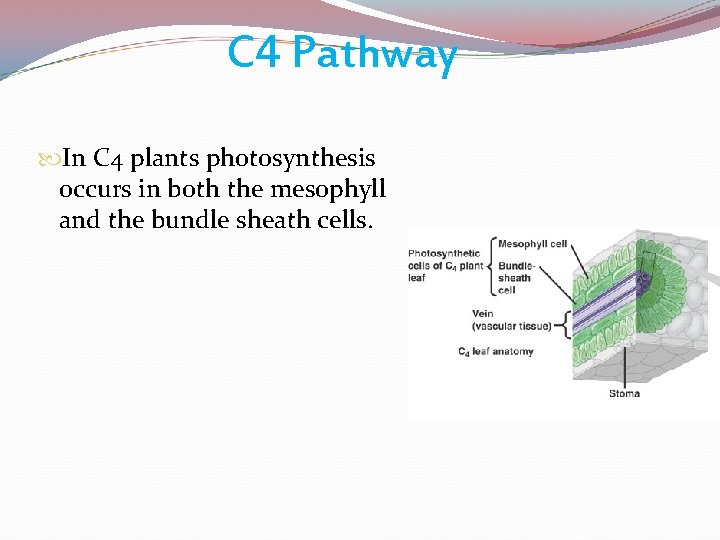
C 4 Pathway In C 4 plants photosynthesis occurs in both the mesophyll and the bundle sheath cells.
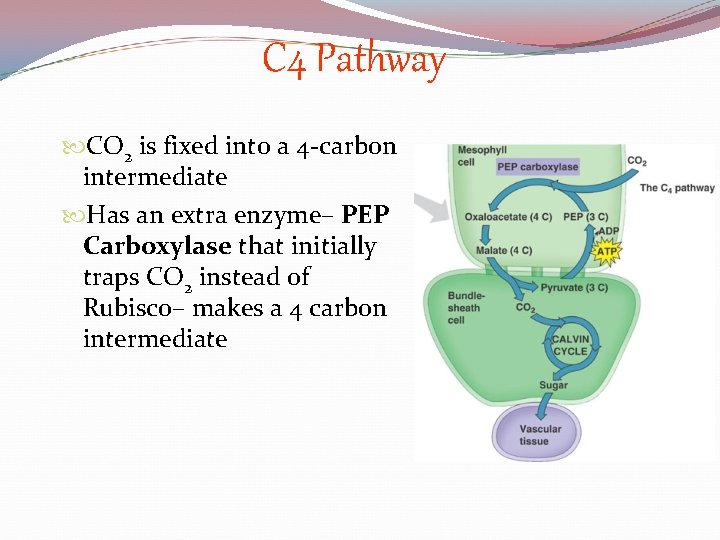
C 4 Pathway CO 2 is fixed into a 4 -carbon intermediate Has an extra enzyme– PEP Carboxylase that initially traps CO 2 instead of Rubisco– makes a 4 carbon intermediate
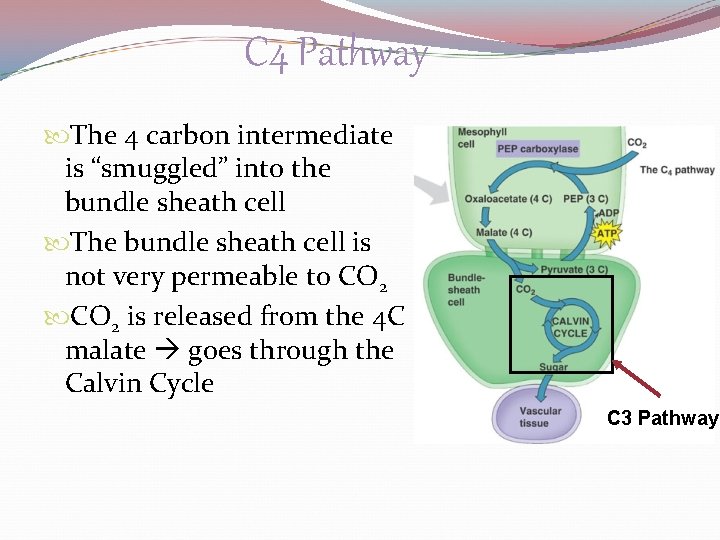
C 4 Pathway The 4 carbon intermediate is “smuggled” into the bundle sheath cell The bundle sheath cell is not very permeable to CO 2 is released from the 4 C malate goes through the Calvin Cycle C 3 Pathway
How does the C 4 Pathway limit photorespiration? Bundle sheath cells are far from the surface– less O 2 access PEP Carboxylase doesn’t have an affinity for O 2 allows plant to collect a lot of CO 2 and concentrate it in the bundle sheath cells (where Rubisco is)
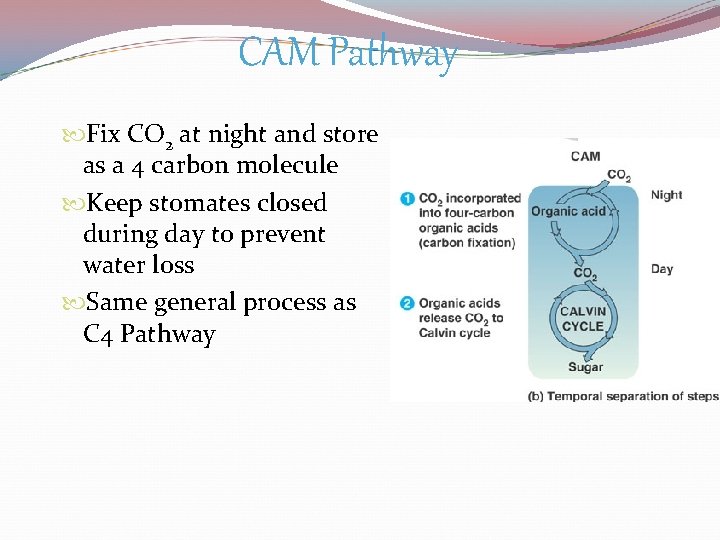
CAM Pathway Fix CO 2 at night and store as a 4 carbon molecule Keep stomates closed during day to prevent water loss Same general process as C 4 Pathway
How does the CAM Pathway limit photorespiration? Collects CO 2 at night so that it can be more concentrated during the day Plant can still do the calvin cycle during the day without losing water

THANKS
- Slides: 46