
Presentation on EMI shielding Fabrics TTL 771 Electronics
Presentation on EMI shielding Fabrics (TTL 771 Electronics and Controls in Textile Industry) Presentation by Krishnasamy J. (2012 TTZ 8174)
Outlook • Electromagnetic waves • EMI shielding • Material source • Conductive fabrics • Assessing technique • Other Application areas Ø Textile transmission lines Ø Textile sensor Ø Textile antenna
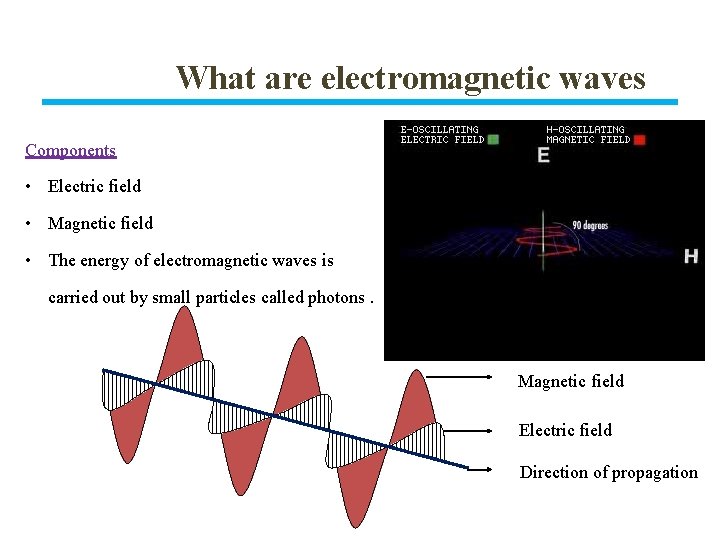
What are electromagnetic waves Components • Electric field • Magnetic field • The energy of electromagnetic waves is carried out by small particles called photons. Magnetic field Electric field Direction of propagation
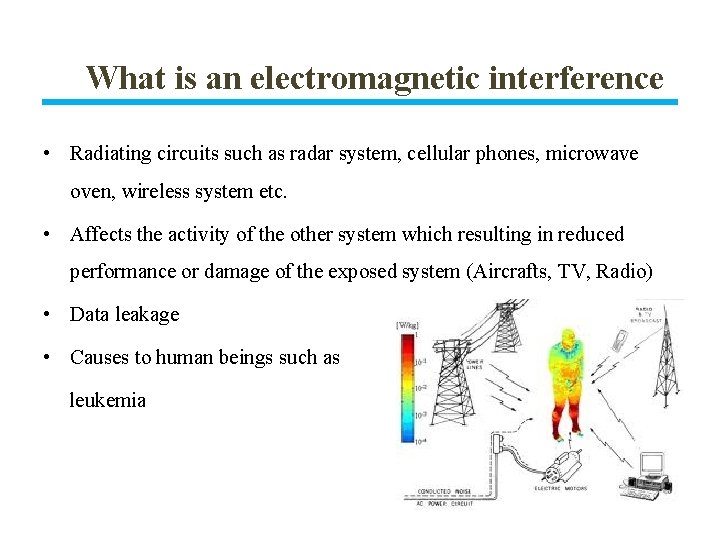
What is an electromagnetic interference • Radiating circuits such as radar system, cellular phones, microwave oven, wireless system etc. • Affects the activity of the other system which resulting in reduced performance or damage of the exposed system (Aircrafts, TV, Radio) • Data leakage • Causes to human beings such as leukemia
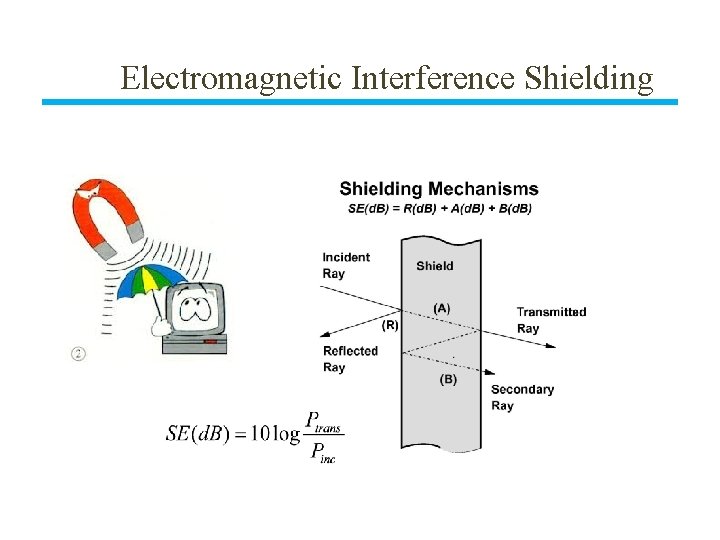
Electromagnetic Interference Shielding
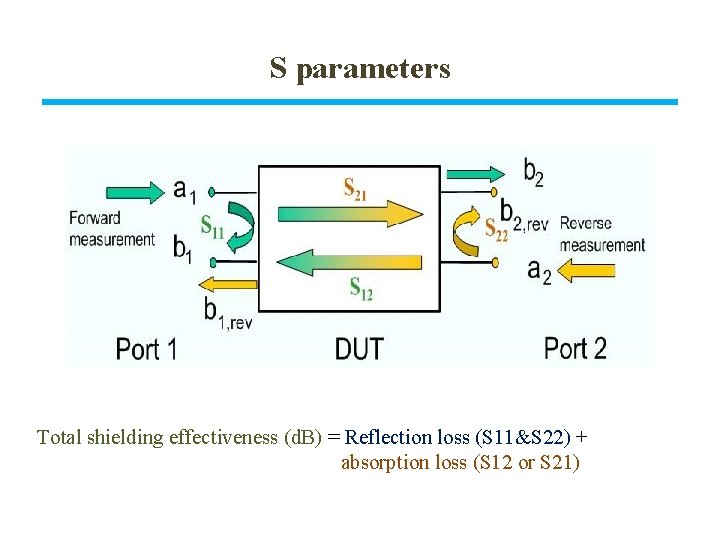
S parameters Total shielding effectiveness (d. B) = Reflection loss (S 11&S 22) + absorption loss (S 12 or S 21)
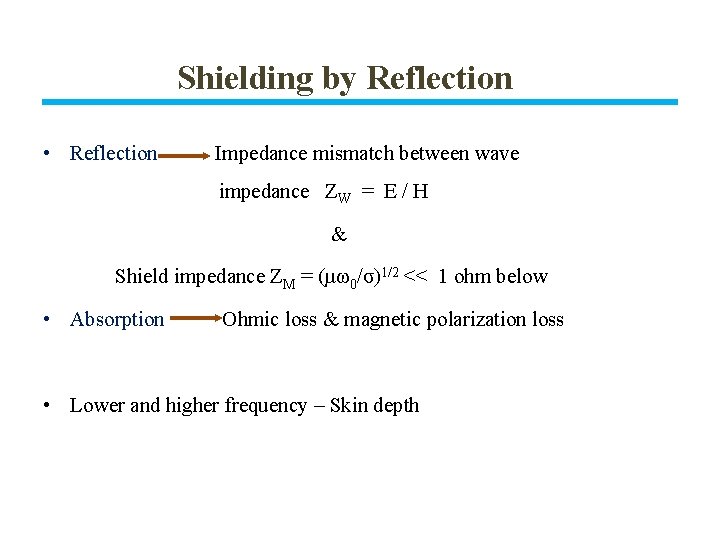
Shielding by Reflection • Reflection Impedance mismatch between wave impedance ZW = E / H & Shield impedance ZM = (μω0/σ)1/2 << 1 ohm below • Absorption Ohmic loss & magnetic polarization loss • Lower and higher frequency – Skin depth
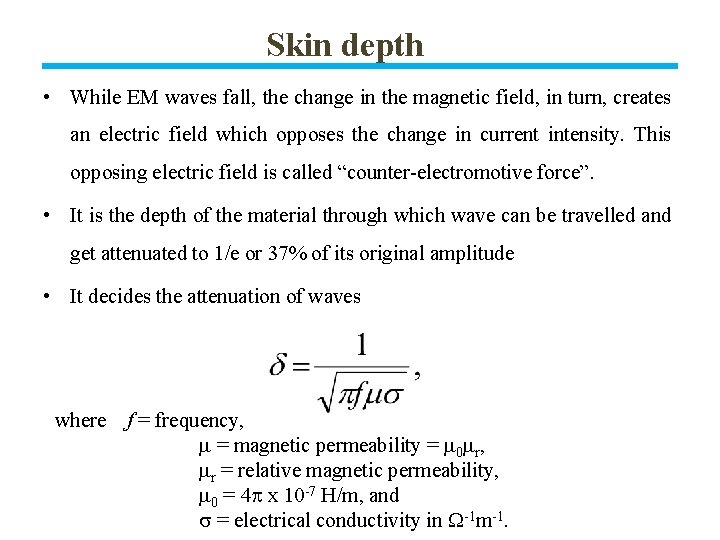
Skin depth • While EM waves fall, the change in the magnetic field, in turn, creates an electric field which opposes the change in current intensity. This opposing electric field is called “counter-electromotive force”. • It is the depth of the material through which wave can be travelled and get attenuated to 1/e or 37% of its original amplitude • It decides the attenuation of waves where f = frequency, = magnetic permeability = 0 r, r = relative magnetic permeability, 0 = 4 x 10 -7 H/m, and = electrical conductivity in -1 m-1.
Factors governing – EMI shielding • Skin depth • Frequency • Shielding impedance • Polarization of waves • Material made • Conductivity and permeability • Number of layers
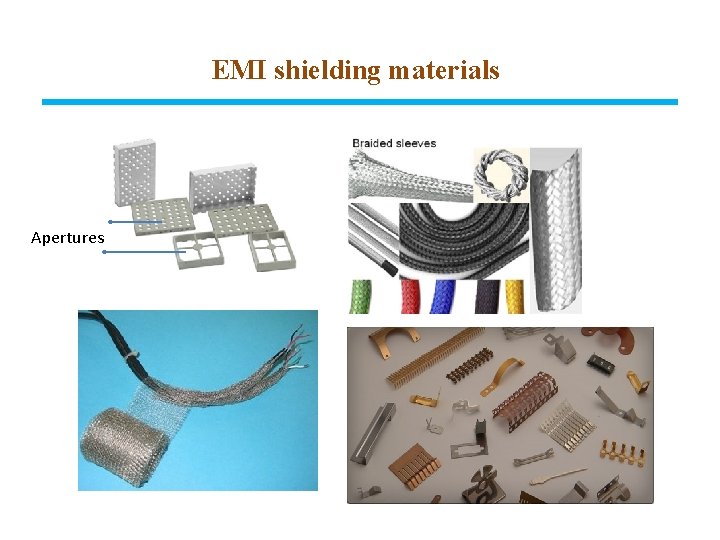
EMI shielding materials Apertures
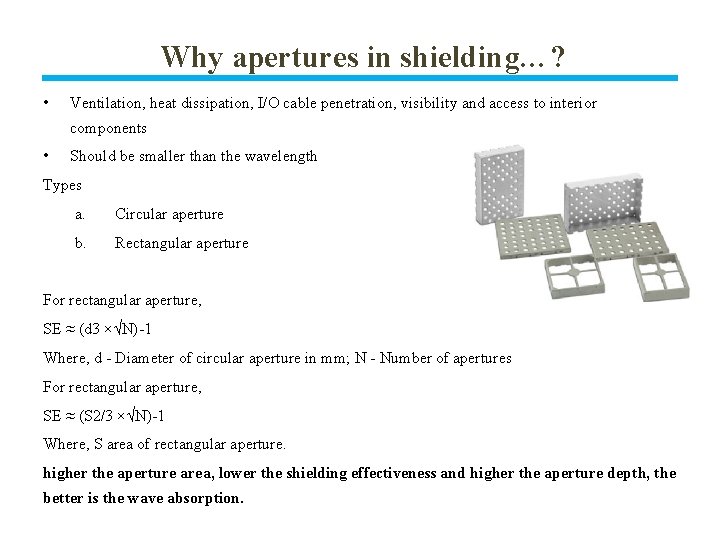
Why apertures in shielding…? • Ventilation, heat dissipation, I/O cable penetration, visibility and access to interior components • Should be smaller than the wavelength Types a. Circular aperture b. Rectangular aperture For rectangular aperture, SE ≈ (d 3 ×√N)-1 Where, d - Diameter of circular aperture in mm; N - Number of apertures For rectangular aperture, SE ≈ (S 2/3 ×√N)-1 Where, S area of rectangular aperture. higher the aperture area, lower the shielding effectiveness and higher the aperture depth, the better is the wave absorption.
Materials for EMI shielding (a) Dielectric composite absorbers work based on ohmic loss of energy due to added conductive fillers (carbon black, graphite or metal particles) (b) Magnetic composite absorbers work based on magnetic hysteresis effect of magnetic materials (ferrite) density of magnetic materials is high, which couldn’t be used as filler
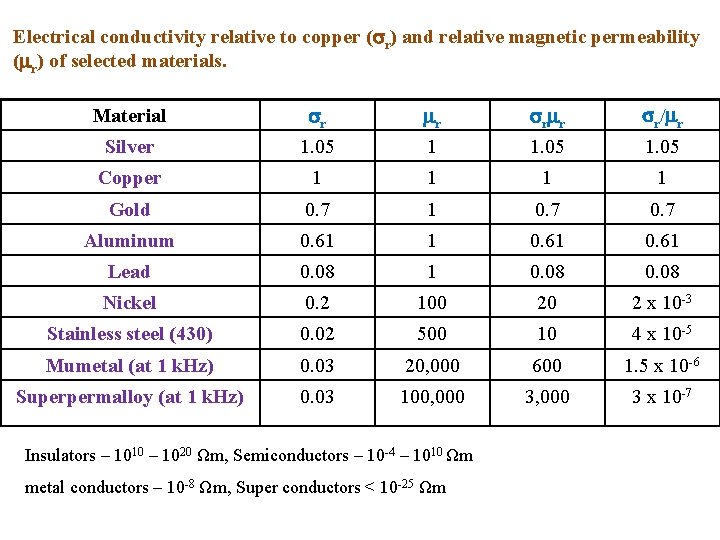
Electrical conductivity relative to copper ( r) and relative magnetic permeability ( r) of selected materials. Material r r r/ r Silver 1. 05 Copper 1 1 Gold 0. 7 1 0. 7 Aluminum 0. 61 1 0. 61 Lead 0. 08 1 0. 08 Nickel 0. 2 100 20 2 x 10 -3 Stainless steel (430) 0. 02 500 10 4 x 10 -5 Mumetal (at 1 k. Hz) 0. 03 20, 000 600 1. 5 x 10 -6 Superpermalloy (at 1 k. Hz) 0. 03 100, 000 3 x 10 -7 Insulators – 1010 – 1020 Ωm, Semiconductors – 10 -4 – 1010 Ωm metal conductors – 10 -8 Ωm, Super conductors < 10 -25 Ωm
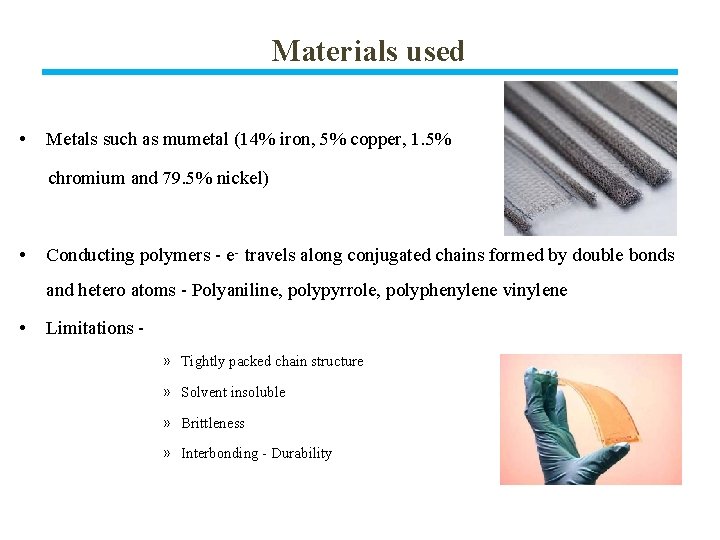
Materials used • Metals such as mumetal (14% iron, 5% copper, 1. 5% chromium and 79. 5% nickel) • Conducting polymers - e- travels along conjugated chains formed by double bonds and hetero atoms - Polyaniline, polypyrrole, polyphenylene vinylene • Limitations » Tightly packed chain structure » Solvent insoluble » Brittleness » Interbonding - Durability
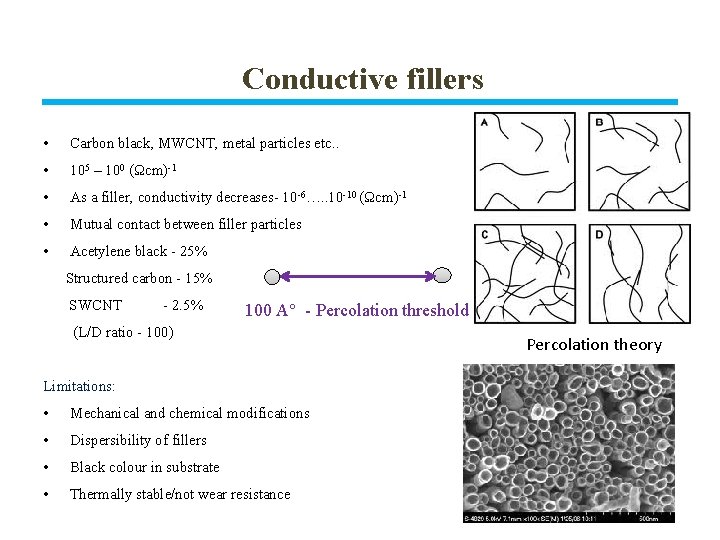
Conductive fillers • Carbon black, MWCNT, metal particles etc. . • 105 – 100 (Ωcm)-1 • As a filler, conductivity decreases- 10 -6…. . 10 -10 (Ωcm)-1 • Mutual contact between filler particles • Acetylene black - 25% Structured carbon - 15% SWCNT - 2. 5% 100 A° - Percolation threshold (L/D ratio - 100) Limitations: • Mechanical and chemical modifications • Dispersibility of fillers • Black colour in substrate • Thermally stable/not wear resistance Percolation theory
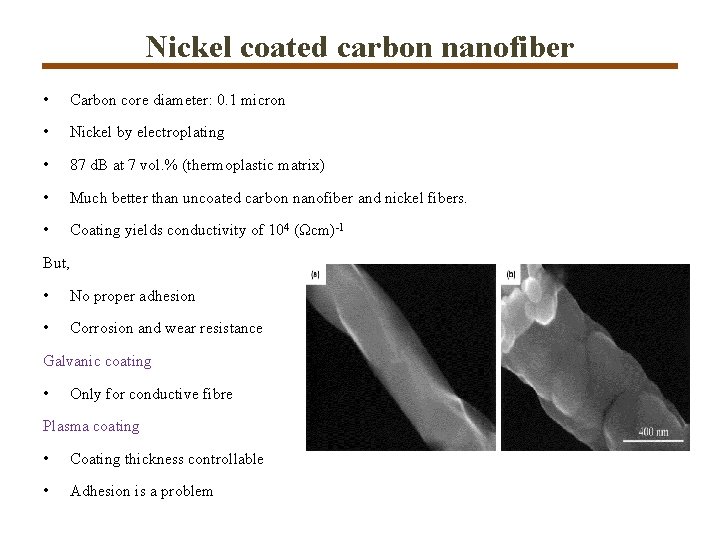
Nickel coated carbon nanofiber • Carbon core diameter: 0. 1 micron • Nickel by electroplating • 87 d. B at 7 vol. % (thermoplastic matrix) • Much better than uncoated carbon nanofiber and nickel fibers. • Coating yields conductivity of 104 (Ωcm)-1 But, • No proper adhesion • Corrosion and wear resistance Galvanic coating • Only for conductive fibre Plasma coating • Coating thickness controllable • Adhesion is a problem
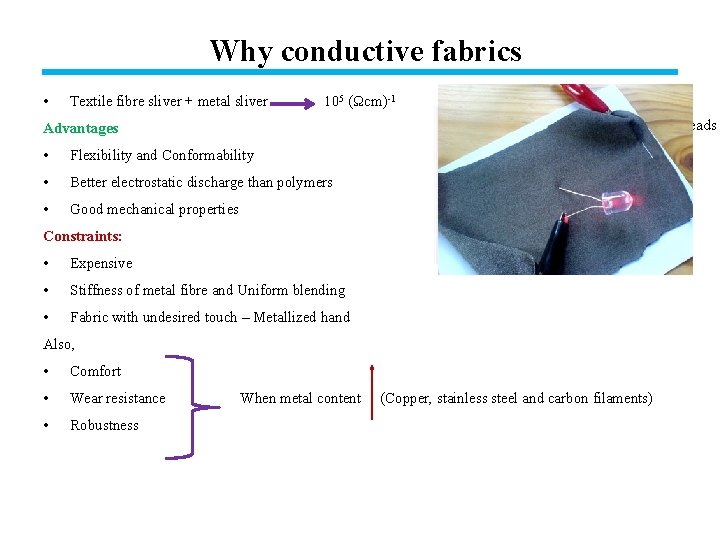
Why conductive fabrics • Textile fibre sliver + metal sliver 105 (Ωcm)-1 Metallic threads Advantages • Flexibility and Conformability • Better electrostatic discharge than polymers • Good mechanical properties Constraints: • Expensive • Stiffness of metal fibre and Uniform blending • Fabric with undesired touch – Metallized hand Also, • Comfort • Wear resistance • Robustness When metal content (Copper, stainless steel and carbon filaments)
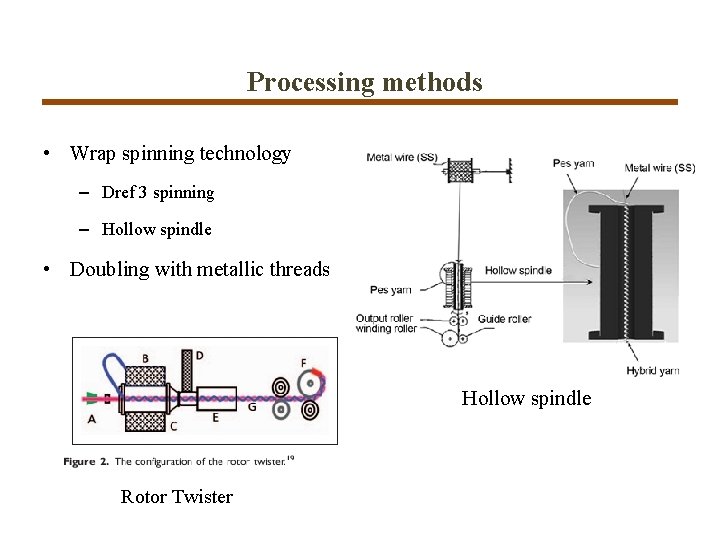
Processing methods • Wrap spinning technology – Dref 3 spinning – Hollow spindle • Doubling with metallic threads Hollow spindle Rotor Twister
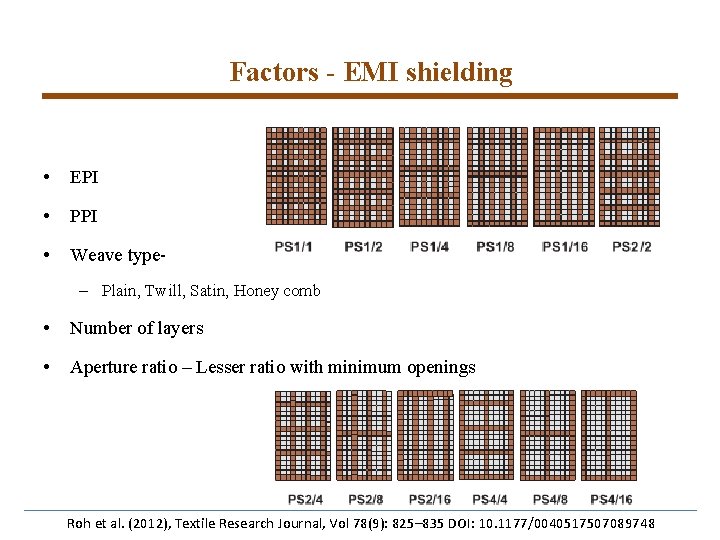
Factors - EMI shielding • EPI • PPI • Weave type– Plain, Twill, Satin, Honey comb • Number of layers • Aperture ratio – Lesser ratio with minimum openings Roh et al. (2012), Textile Research Journal, Vol 78(9): 825– 835 DOI: 10. 1177/0040517507089748
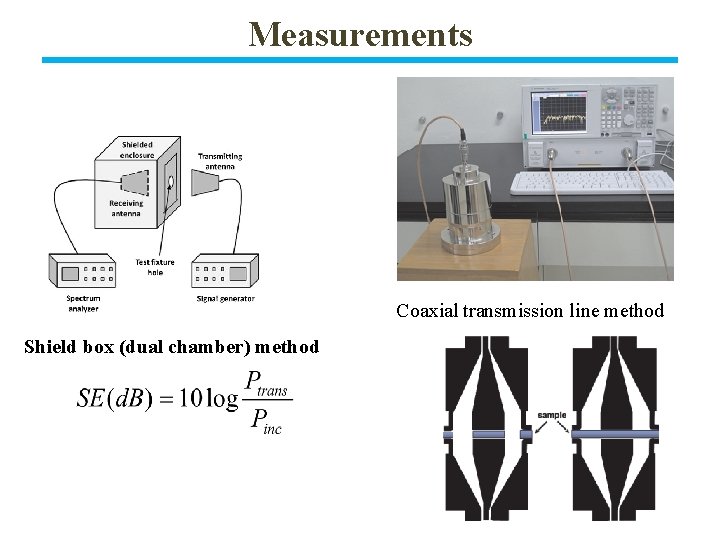
Measurements Coaxial transmission line method Shield box (dual chamber) method
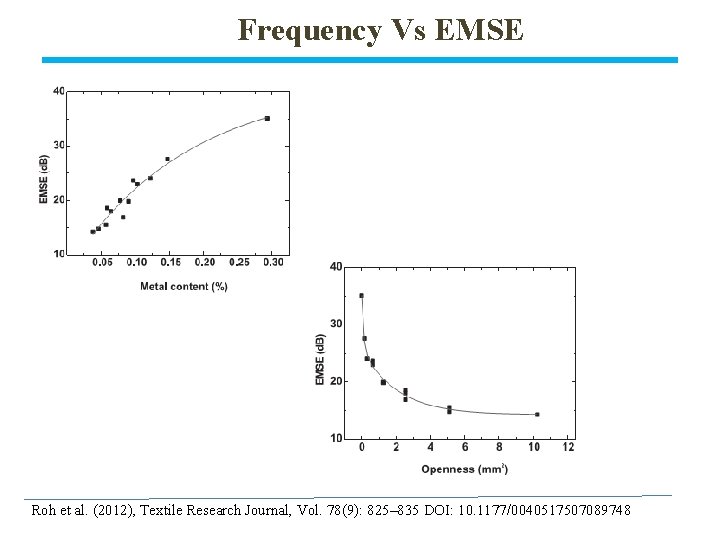
Frequency Vs EMSE Roh et al. (2012), Textile Research Journal, Vol. 78(9): 825– 835 DOI: 10. 1177/0040517507089748

Thank you for your attention
- Slides: 22