
Presentation on Biologically important drugs For 3 rd
Presentation on “Biologically important drugs” For 3 rd semester(Hons. ) SEC- Pharmaceutical Chemistry Presented by Sailesh Chettri. Department of Chemistry St. Joseph’s College. Darjeeling.
DEFINITIONS • A drug is any substance (other than food that provides nutritional support) that, when inhaled, injected, smoked, consumed, absorbed via a patch on the skin, or dissolved under the tongue causes a temporary physiological (and often psychological) change in the body. • A pharmaceutical drug, also called a medication or medicine, is a chemical substance used to treat, cure, prevent, or diagnose a disease or to promote wellbeing. Traditionally drugs were obtained through extraction from medicinal plants, but more recently also by organic synthesis. Pharmaceutical drugs may be used for a limited duration, or on a regular basis for chronic disorders.
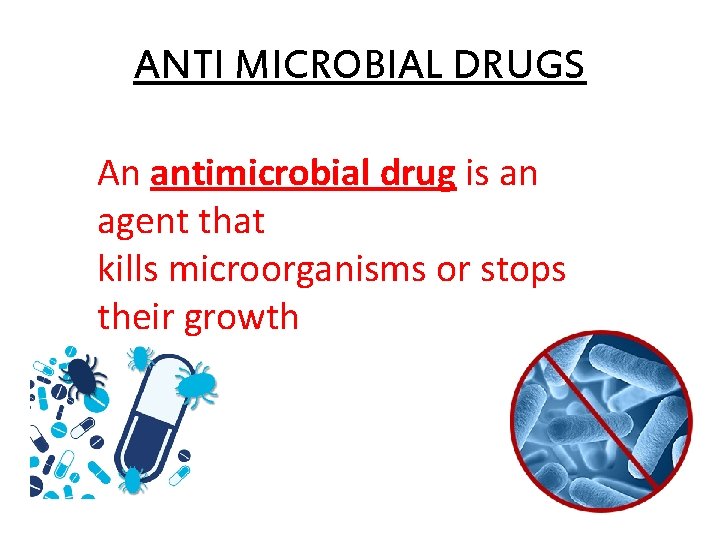
ANTI MICROBIAL DRUGS An antimicrobial drug is an agent that kills microorganisms or stops their growth
FEW DEFINITIONS Antibacterial spectrum - Range of activity of an antimicrobial against bacteria. A broadspectrum antibacterial drug can inhibit a wide variety of gram-positive and gram-negative bacteria, whereas a narrow-spectrum drug is active only against a limited variety of bacteria. Bacteriostatic activity - The level of antimicrobial activity that inhibits the growth of an organism. This is determined in vitro by testing a standardized concentration of organisms against a series of antimicrobial dilutions. The lowest concentration that inhibits the growth of the organism is referred to as the minimum inhibitory concentration (MIC). Bactericidal activity - The level of antimicrobial activity that kills the test organism. This is determined in vitro by exposing a standardized concentration of organisms to a series of antimicrobial dilutions. The lowest concentration that kills 99. 9% of the population is referred to as the minimum bactericidal concentration (MBC). LD 50 - The value of LD 50 for a substance is the dose required to kill half the members of a tested population after a specified test duration.
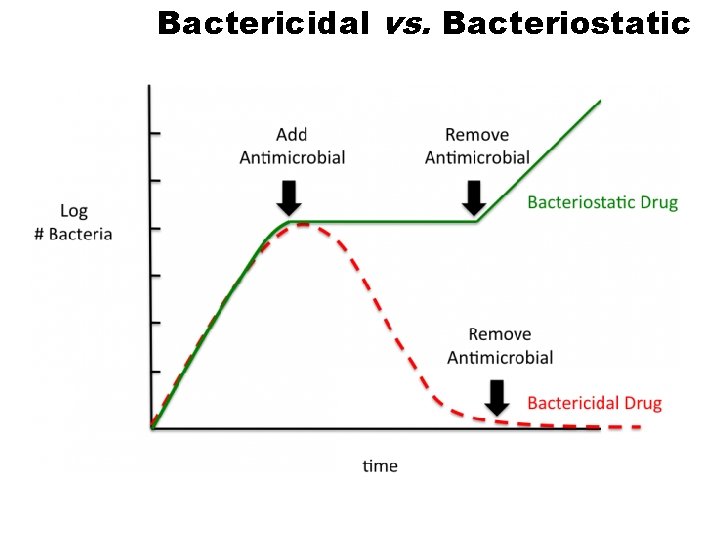
Bactericidal vs. Bacteriostatic
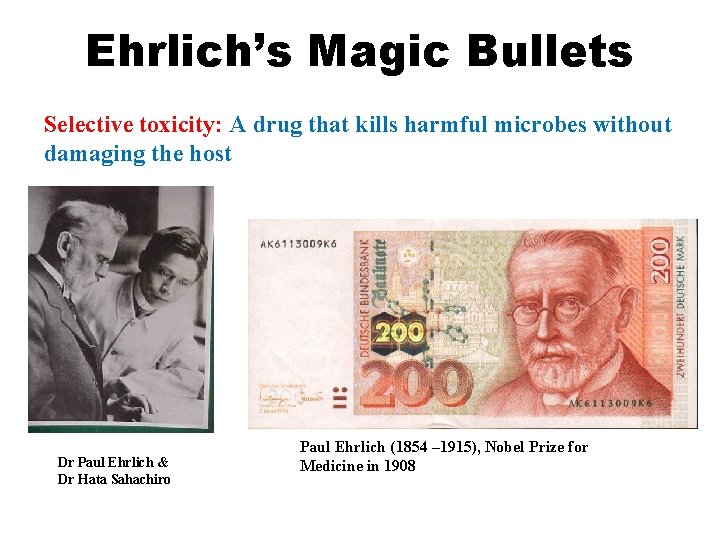
Ehrlich’s Magic Bullets Selective toxicity: A drug that kills harmful microbes without damaging the host Dr Paul Ehrlich & Dr Hata Sahachiro Paul Ehrlich (1854 – 1915), Nobel Prize for Medicine in 1908
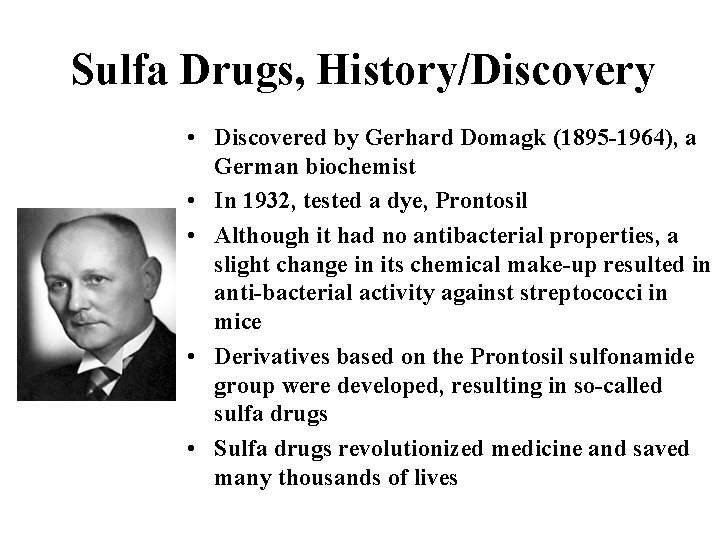
Sulfa Drugs, History/Discovery • Discovered by Gerhard Domagk (1895 -1964), a German biochemist • In 1932, tested a dye, Prontosil • Although it had no antibacterial properties, a slight change in its chemical make-up resulted in anti-bacterial activity against streptococci in mice • Derivatives based on the Prontosil sulfonamide group were developed, resulting in so-called sulfa drugs • Sulfa drugs revolutionized medicine and saved many thousands of lives
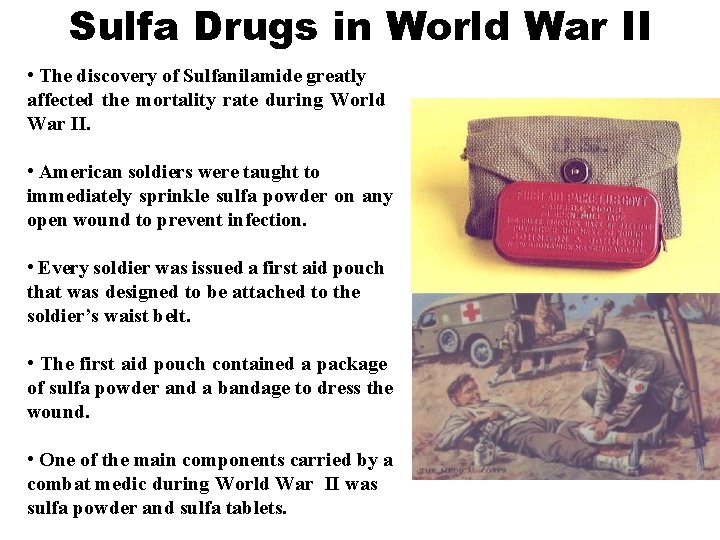
Sulfa Drugs in World War II • The discovery of Sulfanilamide greatly affected the mortality rate during World War II. • American soldiers were taught to immediately sprinkle sulfa powder on any open wound to prevent infection. • Every soldier was issued a first aid pouch that was designed to be attached to the soldier’s waist belt. • The first aid pouch contained a package of sulfa powder and a bandage to dress the wound. • One of the main components carried by a combat medic during World War II was sulfa powder and sulfa tablets.
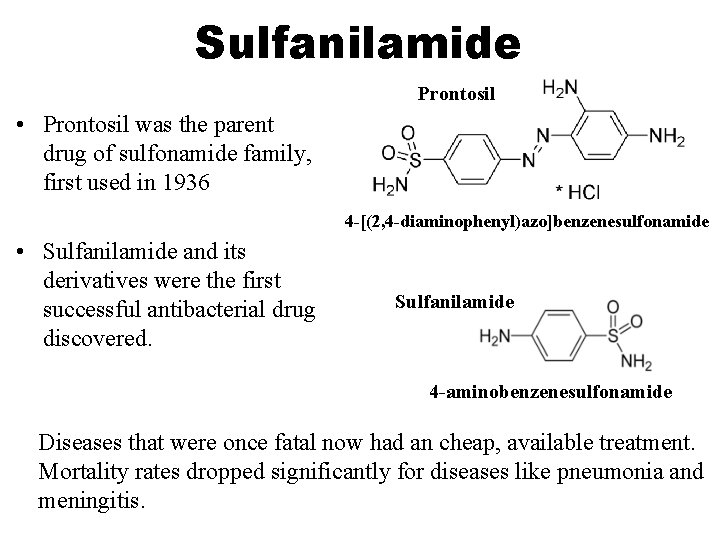
Sulfanilamide Prontosil • Prontosil was the parent drug of sulfonamide family, first used in 1936 4 -[(2, 4 -diaminophenyl)azo]benzenesulfonamide • Sulfanilamide and its derivatives were the first successful antibacterial drug discovered. Sulfanilamide 4 -aminobenzenesulfonamide Diseases that were once fatal now had an cheap, available treatment. Mortality rates dropped significantly for diseases like pneumonia and meningitis.
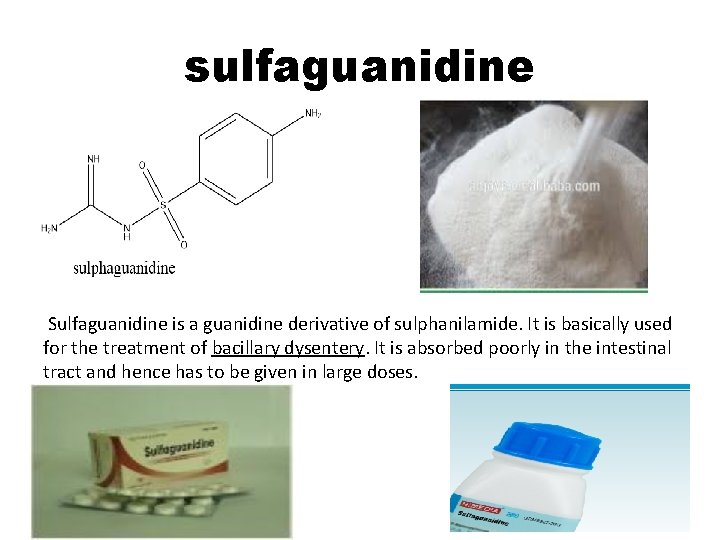
sulfaguanidine Sulfaguanidine is a guanidine derivative of sulphanilamide. It is basically used for the treatment of bacillary dysentery. It is absorbed poorly in the intestinal tract and hence has to be given in large doses.
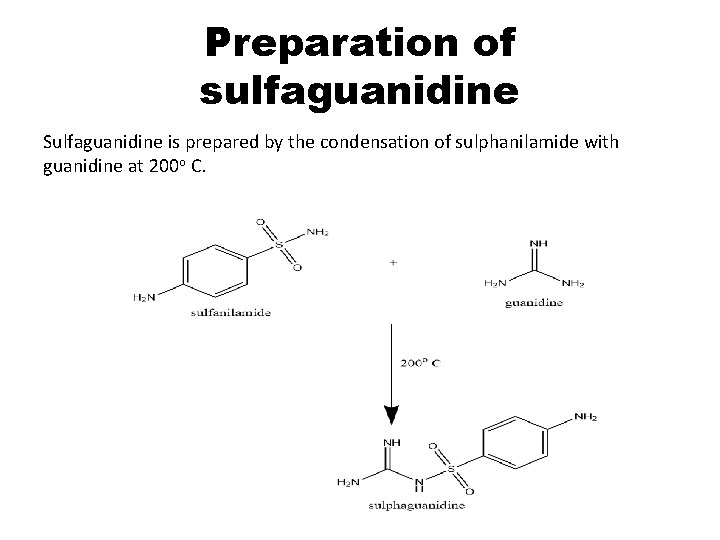
Preparation of sulfaguanidine Sulfaguanidine is prepared by the condensation of sulphanilamide with guanidine at 200 o C.
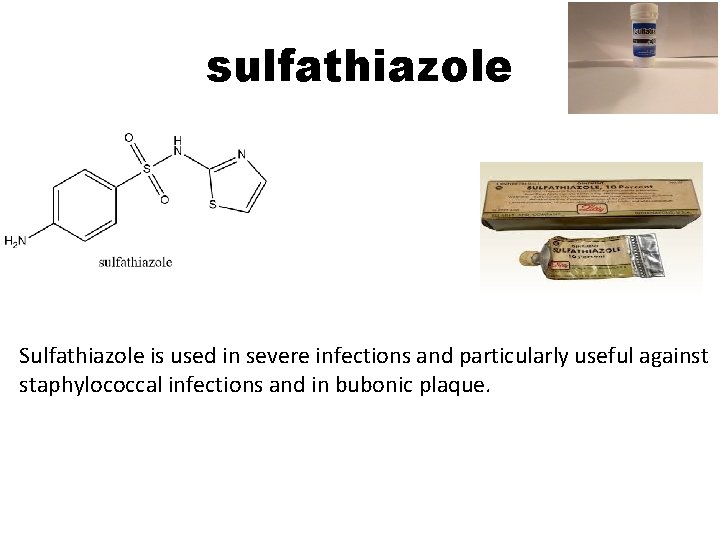
sulfathiazole Sulfathiazole is used in severe infections and particularly useful against staphylococcal infections and in bubonic plaque.
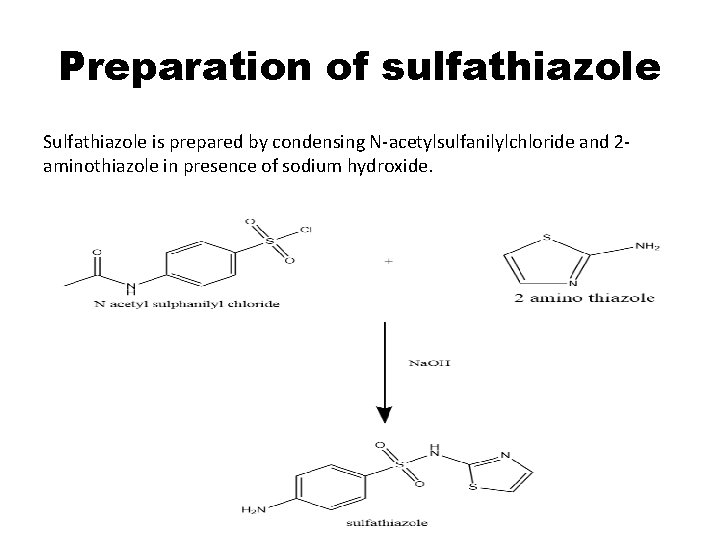
Preparation of sulfathiazole Sulfathiazole is prepared by condensing N-acetylsulfanilylchloride and 2 aminothiazole in presence of sodium hydroxide.
Anti biotics • An antibiotic is a type of antimicrobial substance active against bacteria and is the most important type of antibacterial agent for fighting bacterial infections. • Antibiotic medications are widely used in the treatment and prevention of such infections. They may either kill or inhibit the growth of bacteria. • A limited number of antibiotics also possess antiprotozoal activity. • Antibiotics are not effective against viruses such as the common cold or influenza; drugs which inhibit viruses are termed antiviral drugs or antivirals rather than antibiotics.
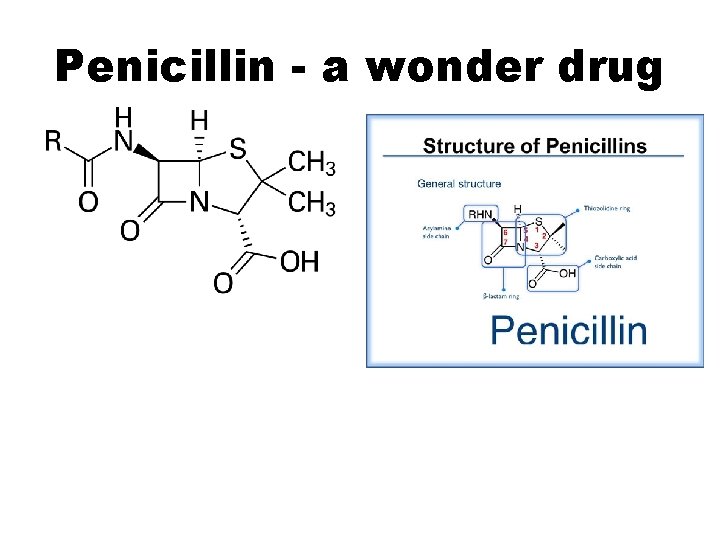
Penicillin - a wonder drug
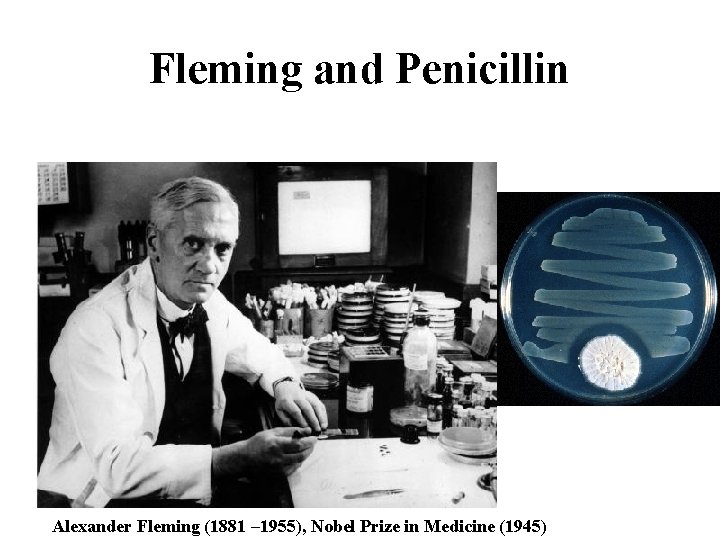
Fleming and Penicillin Alexander Fleming (1881 – 1955), Nobel Prize in Medicine (1945)
What is penicillin? • Penicillin (PCN or pen) is a group of antibiotics which were among the first medications to be effective against many bacterial infections caused by staphylococci and streptococci. • They are still widely used today, though many types of bacteria have developed resistance following extensive use. • About 10% of people report that they are allergic to penicillin; however, up to 90% of this group may not actually be allergic. • All penicillins are β-lactam antibiotics.
Types of Penicillins • • • Penicillin G Penicillin K Penicillin O Penicillin V Penicillin N
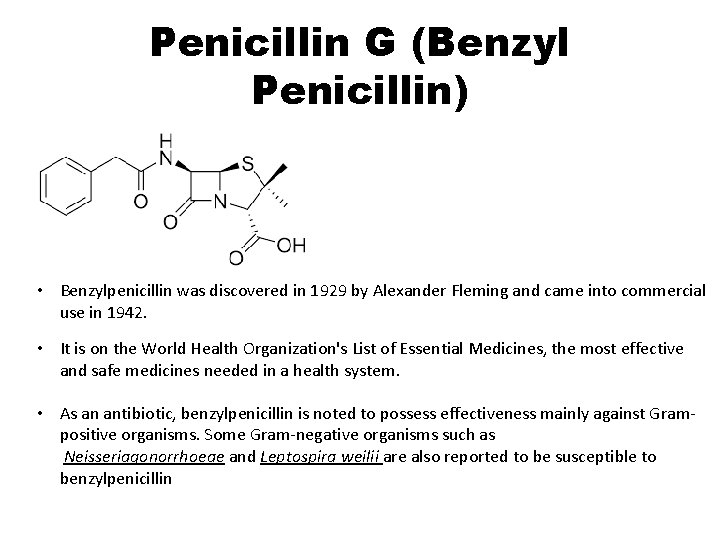
Penicillin G (Benzyl Penicillin) • Benzylpenicillin was discovered in 1929 by Alexander Fleming and came into commercial use in 1942. • It is on the World Health Organization's List of Essential Medicines, the most effective and safe medicines needed in a health system. • As an antibiotic, benzylpenicillin is noted to possess effectiveness mainly against Grampositive organisms. Some Gram-negative organisms such as Neisseriagonorrhoeae and Leptospira weilii are also reported to be susceptible to benzylpenicillin
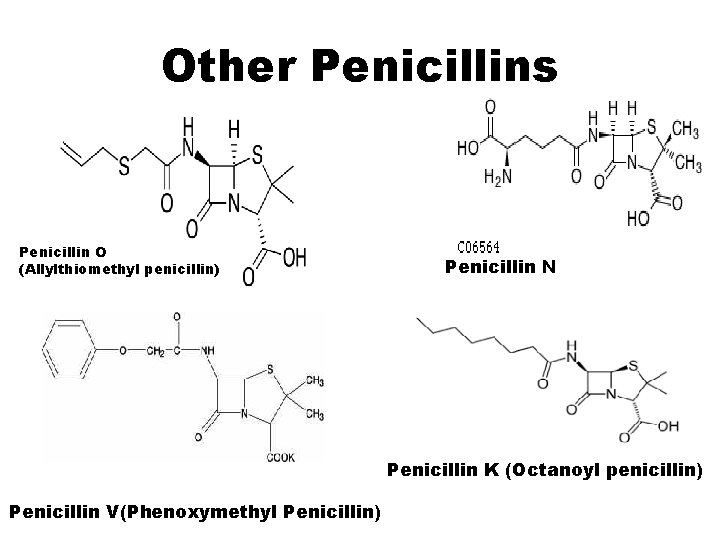
Other Penicillins Penicillin O (Allylthiomethyl penicillin) Penicillin N Penicillin K (Octanoyl penicillin) Penicillin V(Phenoxymethyl Penicillin)

THANK YOU EVERYONE…
- Slides: 21