
Presentation Natural Hazards Prepared by Oleksandra Pekhno Form
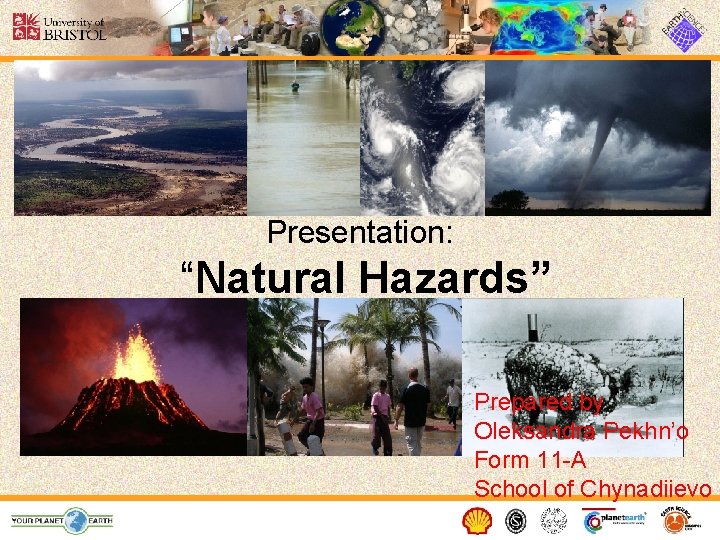
Presentation: “Natural Hazards” Prepared by Oleksandra Pekhn’o Form 11 -A School of Chynadiievo
Introduction to Natural Hazards • What is a “Geohazard”? – Earth processes (involving the lithosphere, hydrosphere & atmosphere) that, upon interaction with human activity, cause loss of life and property geoprocess human process Hazardous condition or result – It is important to understand the human element • without it, there would be no hazard • because of it, the science of geohazards becomes more important every year – mitigation: reduction/prevention
Why is the human element so critical? • The Earth’s population is increasing • • more people living in hazard-prone areas populations are becoming hyper-concentrated consumption of resources examples: – today there are 6 billion people on Earth ( ~ 50% live in cities) – by 2025, there will be ~8 billion people (~ 66% in cities) – of these cities, 40% are coastal » prone to severe storm and tsunami damage – and a large majority lie in areas subject to other geohazards (for example volcanoes and earthquakes)
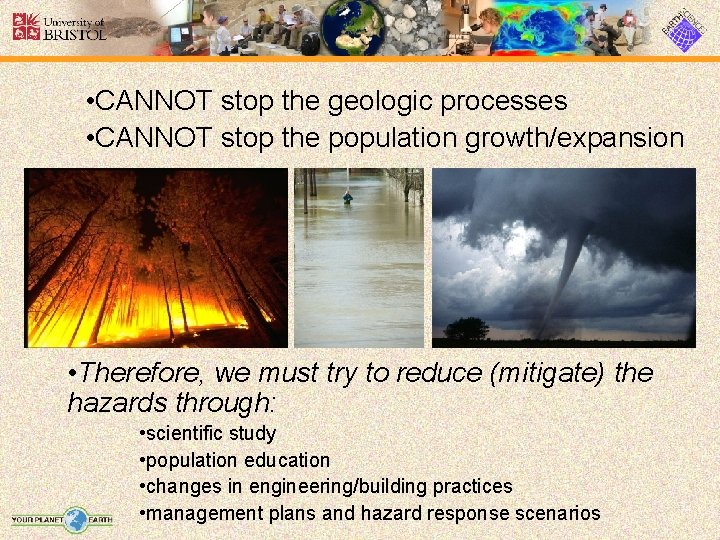
• CANNOT stop the geologic processes • CANNOT stop the population growth/expansion • Therefore, we must try to reduce (mitigate) the hazards through: • scientific study • population education • changes in engineering/building practices • management plans and hazard response scenarios
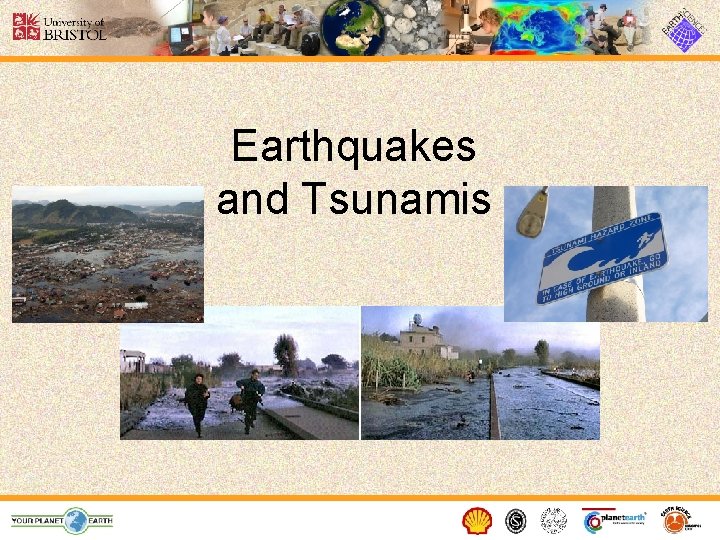
Earthquakes and Tsunamis
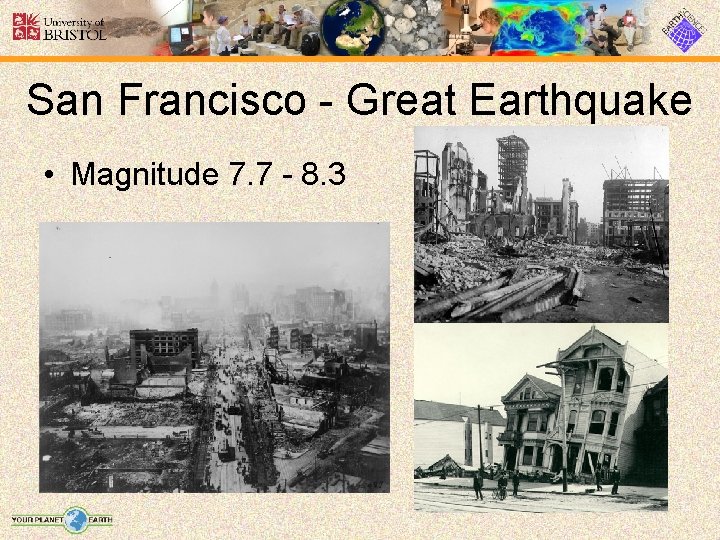
San Francisco - Great Earthquake • Magnitude 7. 7 - 8. 3
Earthquake Hazards • These are important hazards to understand: – the natural hazard that on average kills the highest number of people per year (> 1 million during the past century) – commonly strikes without warning – no time for evacuation – not a predictable trend to earthquake numbers, magnitude or location • 1000's of large earthquakes every year • ~ 20 are > M 7. 0 and these account for 90% of the energy released and 80% of all the fatalities
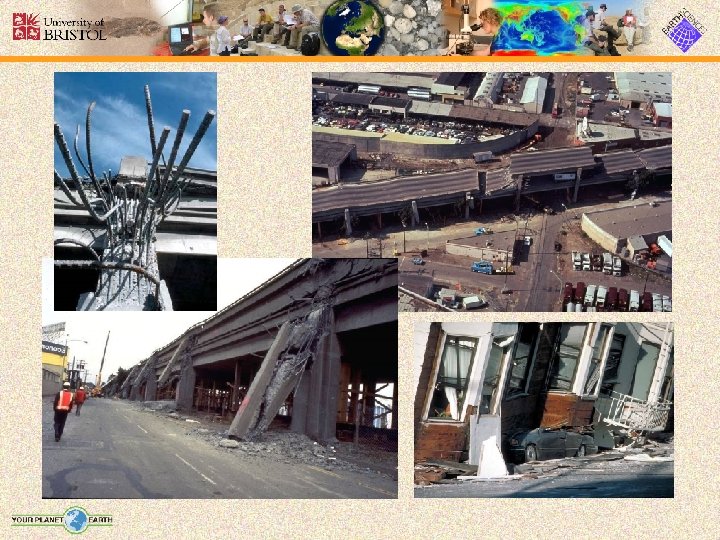
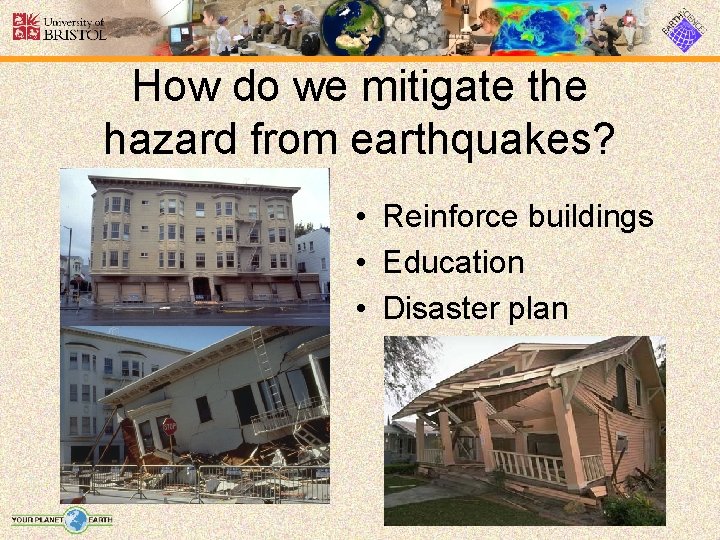
How do we mitigate the hazard from earthquakes? • Reinforce buildings • Education • Disaster plan
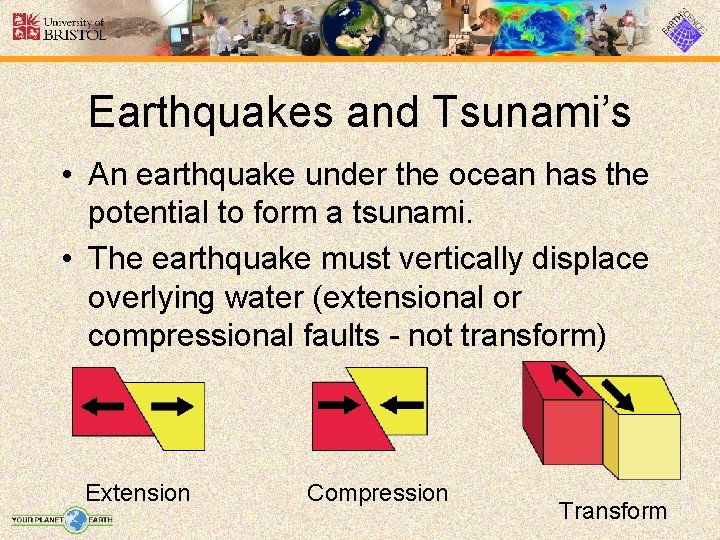
Earthquakes and Tsunami’s • An earthquake under the ocean has the potential to form a tsunami. • The earthquake must vertically displace overlying water (extensional or compressional faults - not transform) Extension Compression Transform
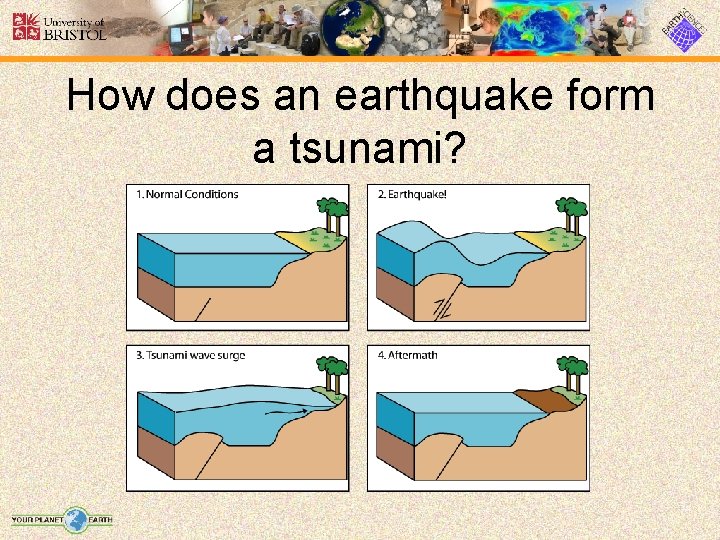
How does an earthquake form a tsunami?
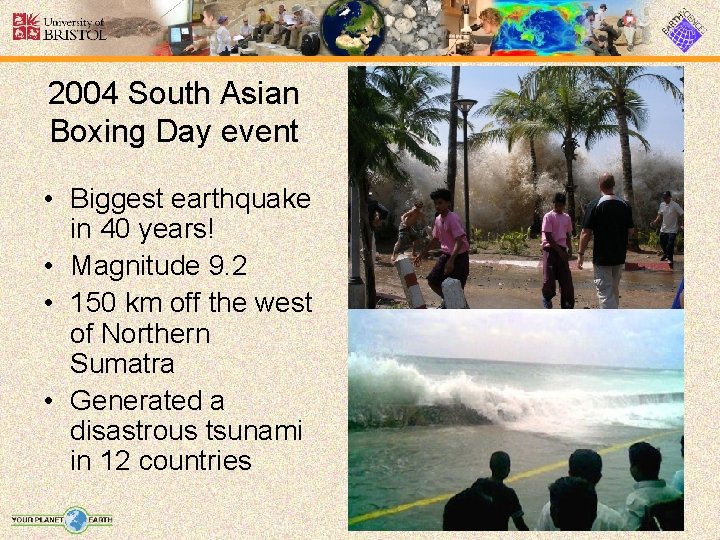
2004 South Asian Boxing Day event • Biggest earthquake in 40 years! • Magnitude 9. 2 • 150 km off the west of Northern Sumatra • Generated a disastrous tsunami in 12 countries

Second largest recorded earthquake • The earthquake occurred at a convergent tectonic plate boundary (subduction zone) • An estimated 1, 600 km (994 miles) of faultline slipped about 15 m (50 ft)! • The earthquake released 20 x 1017 Joules of energy – Equivalent to: • 475, 000 kg of TNT • 23, 000 Hiroshima atomic bombs!
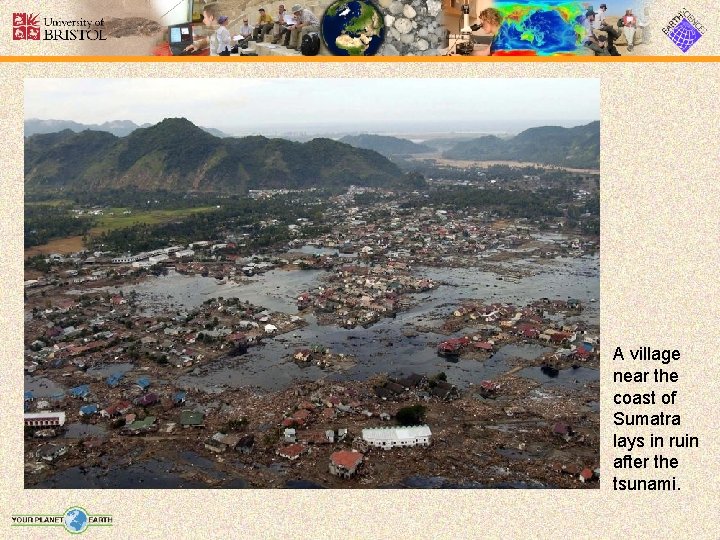
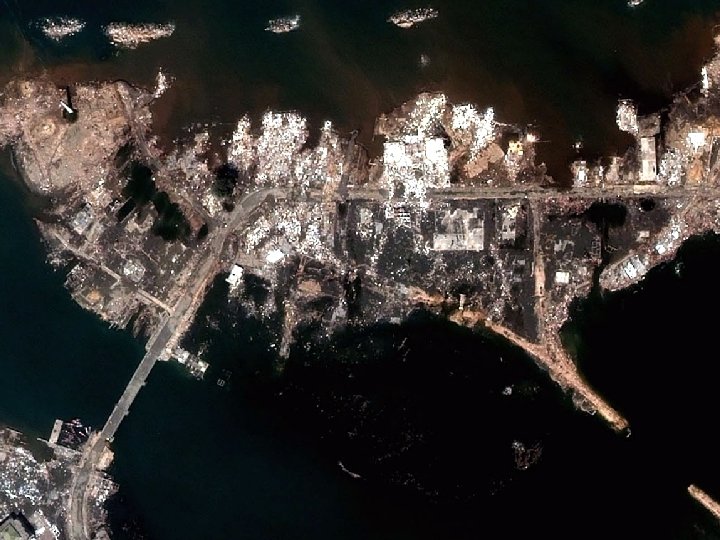
A village near the coast of Sumatra lays in ruin after the tsunami.
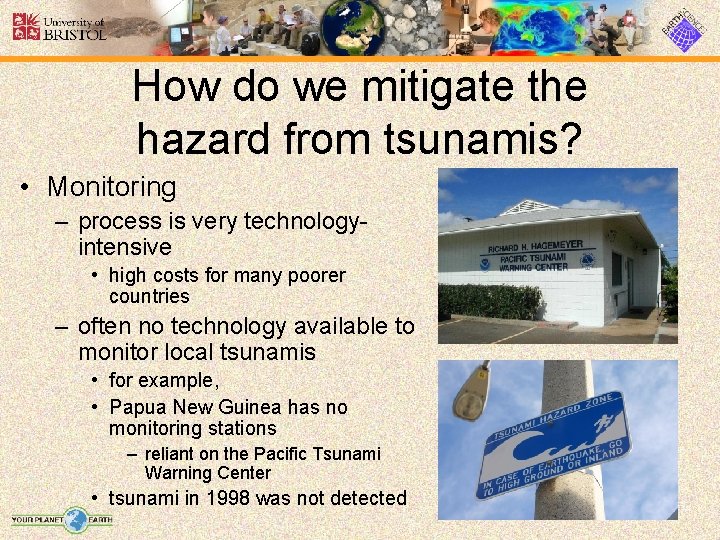
How do we mitigate the hazard from tsunamis? • Monitoring – process is very technologyintensive • high costs for many poorer countries – often no technology available to monitor local tsunamis • for example, • Papua New Guinea has no monitoring stations – reliant on the Pacific Tsunami Warning Center • tsunami in 1998 was not detected
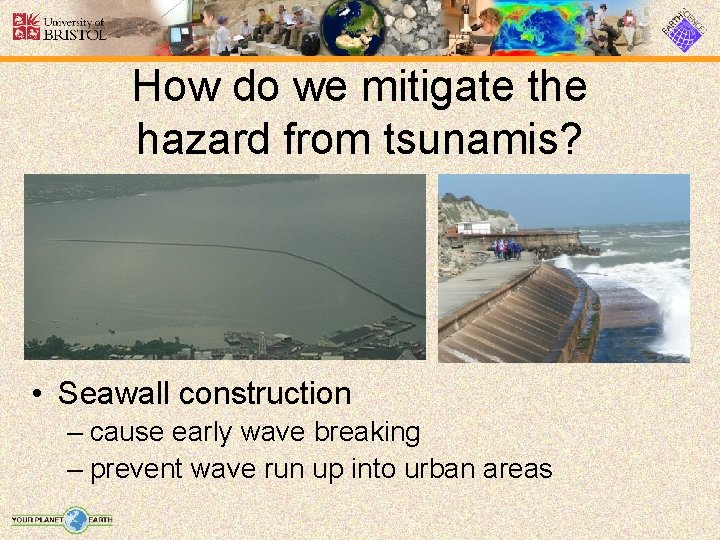
How do we mitigate the hazard from tsunamis? • Seawall construction – cause early wave breaking – prevent wave run up into urban areas
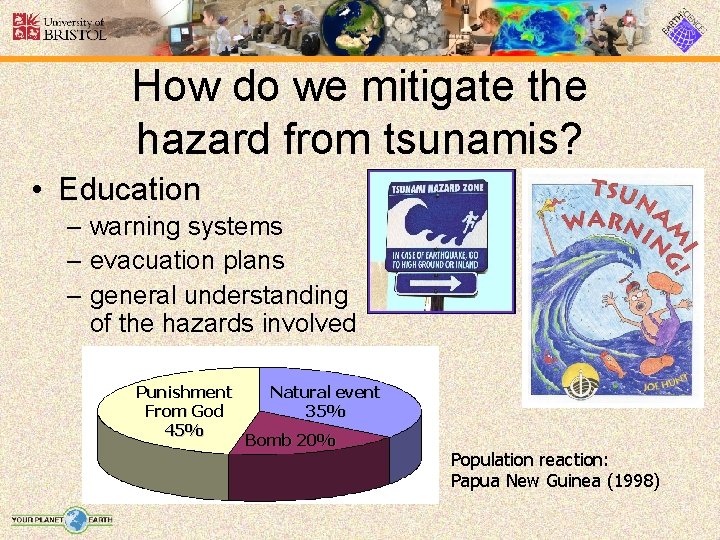
How do we mitigate the hazard from tsunamis? • Education – warning systems – evacuation plans – general understanding of the hazards involved Punishment From God 45% Natural event 35% Bomb 20% Population reaction: Papua New Guinea (1998)
Tropical Storms
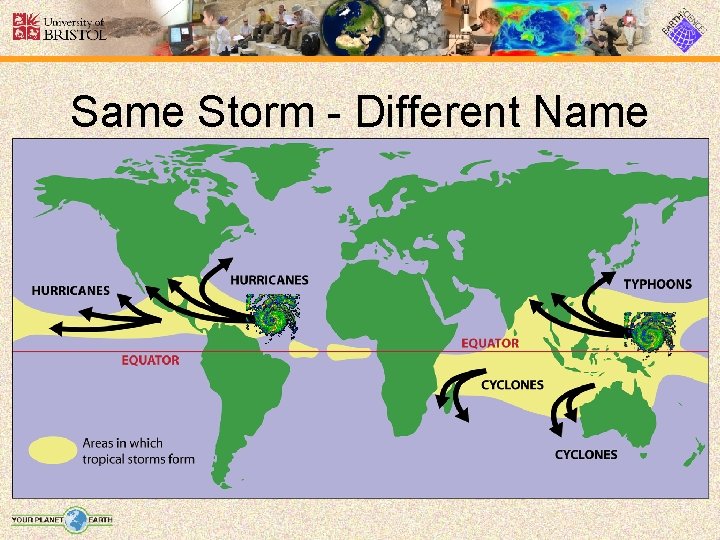
Same Storm - Different Name
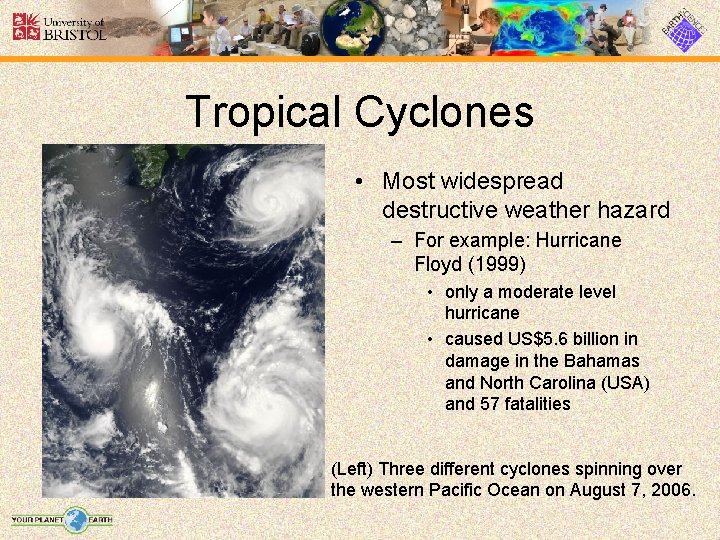
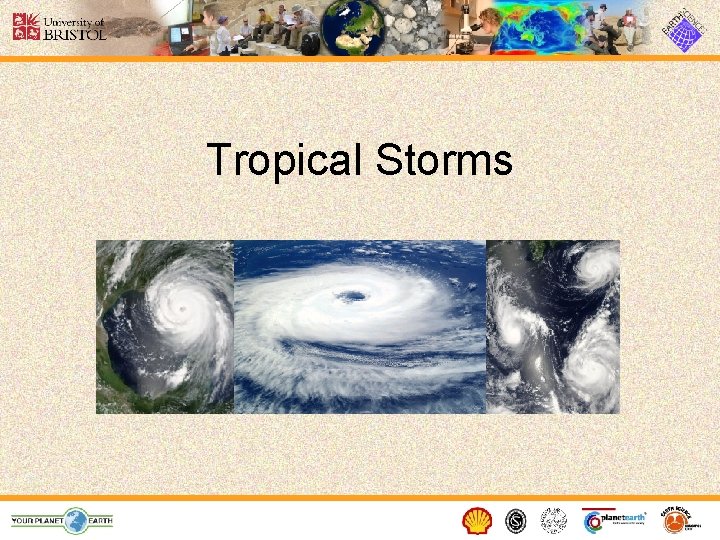
Tropical Cyclones • Most widespread destructive weather hazard – For example: Hurricane Floyd (1999) • only a moderate level hurricane • caused US$5. 6 billion in damage in the Bahamas and North Carolina (USA) and 57 fatalities (Left) Three different cyclones spinning over the western Pacific Ocean on August 7, 2006.
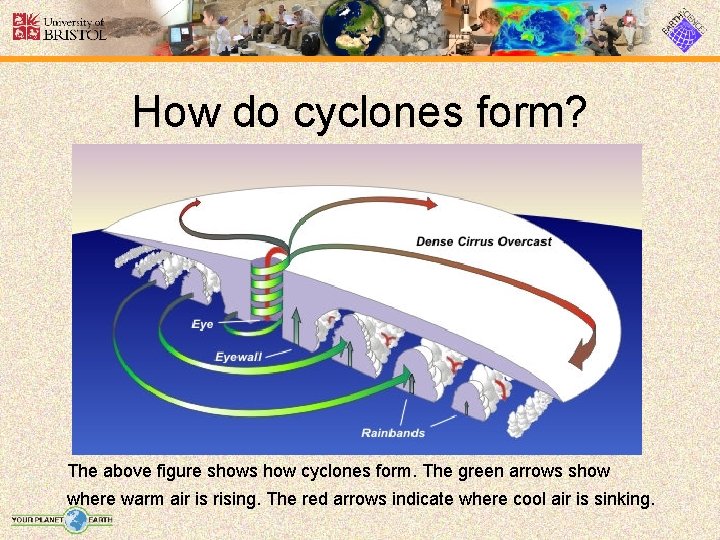
How do cyclones form? The above figure shows how cyclones form. The green arrows show where warm air is rising. The red arrows indicate where cool air is sinking.
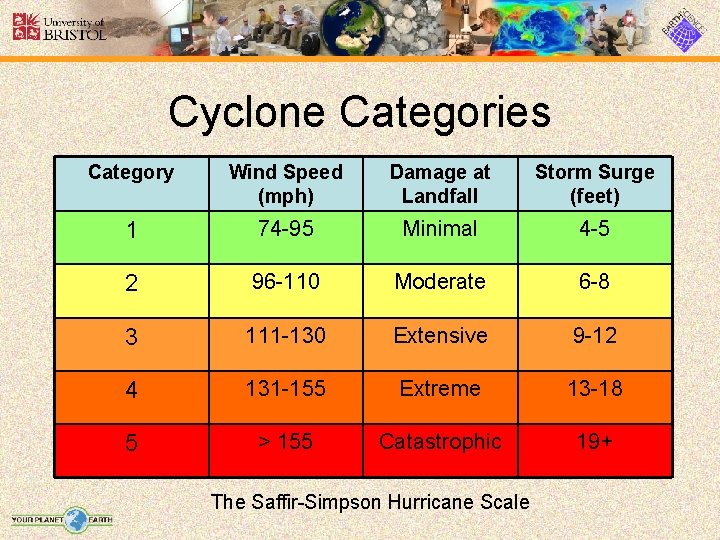
Cyclone Categories Category Wind Speed (mph) Damage at Landfall Storm Surge (feet) 1 74 -95 Minimal 4 -5 2 96 -110 Moderate 6 -8 3 111 -130 Extensive 9 -12 4 131 -155 Extreme 13 -18 5 > 155 Catastrophic 19+ The Saffir-Simpson Hurricane Scale
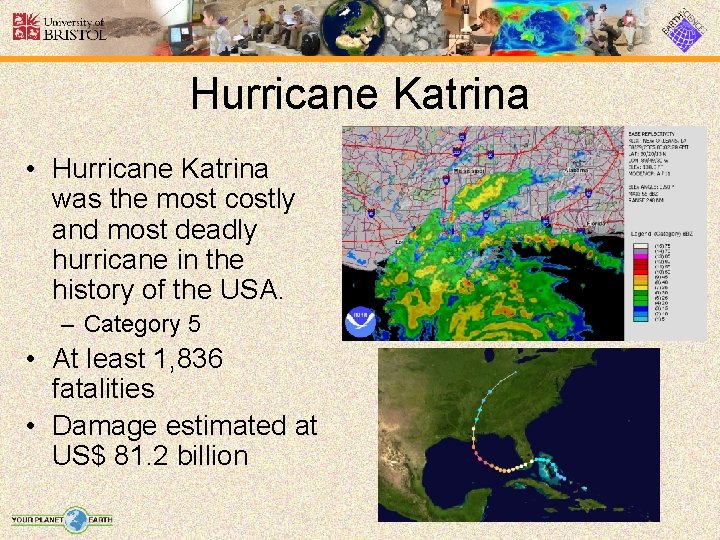
Hurricane Katrina • Hurricane Katrina was the most costly and most deadly hurricane in the history of the USA. – Category 5 • At least 1, 836 fatalities • Damage estimated at US$ 81. 2 billion
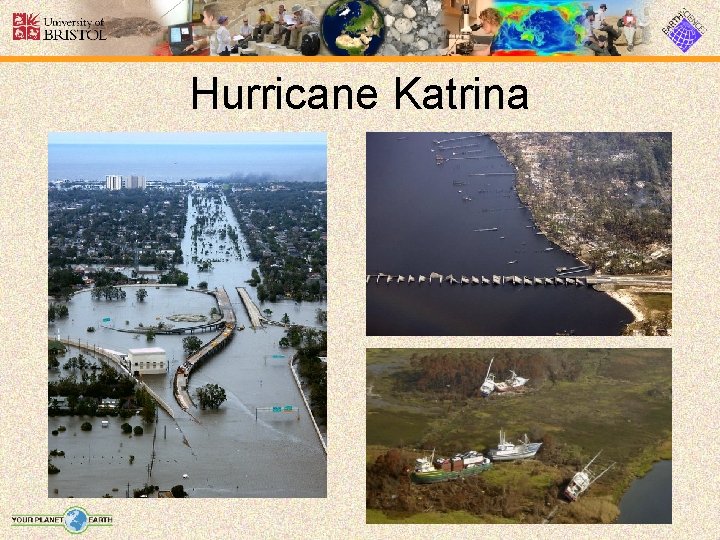
Hurricane Katrina
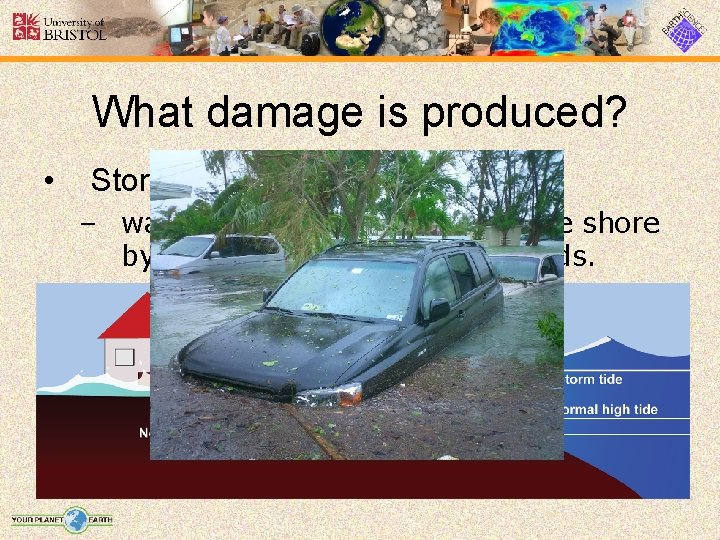
What damage is produced? • Storm Surge – water that is pushed toward the shore by the force of the cyclone winds.
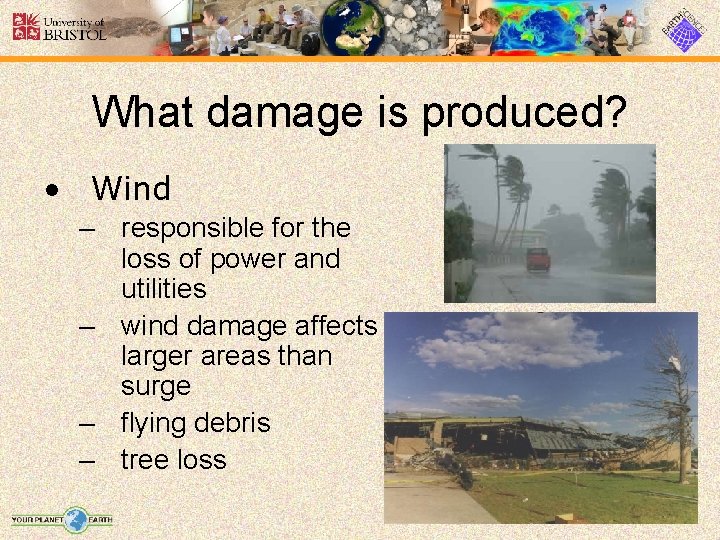
What damage is produced? • Wind – responsible for the loss of power and utilities – wind damage affects larger areas than surge – flying debris – tree loss
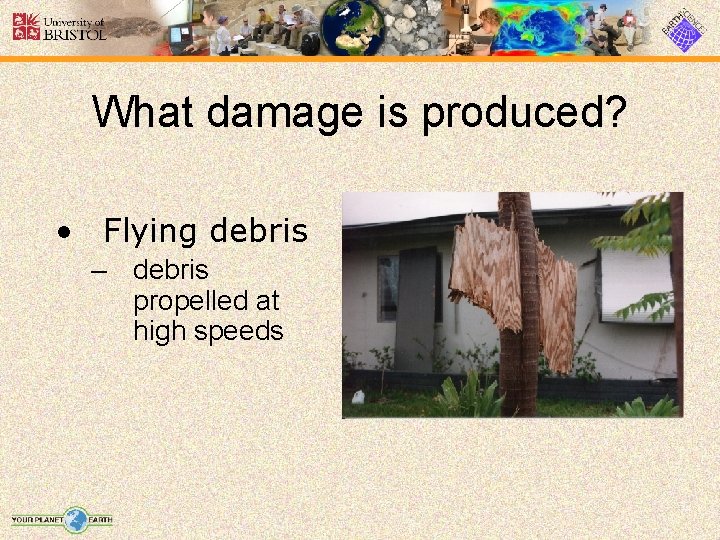
What damage is produced? • Flying debris – debris propelled at high speeds
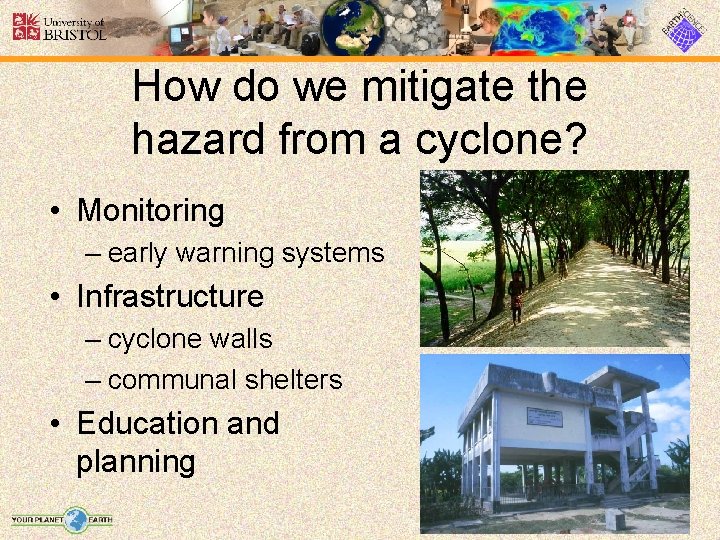
How do we mitigate the hazard from a cyclone? • Monitoring – early warning systems • Infrastructure – cyclone walls – communal shelters • Education and planning
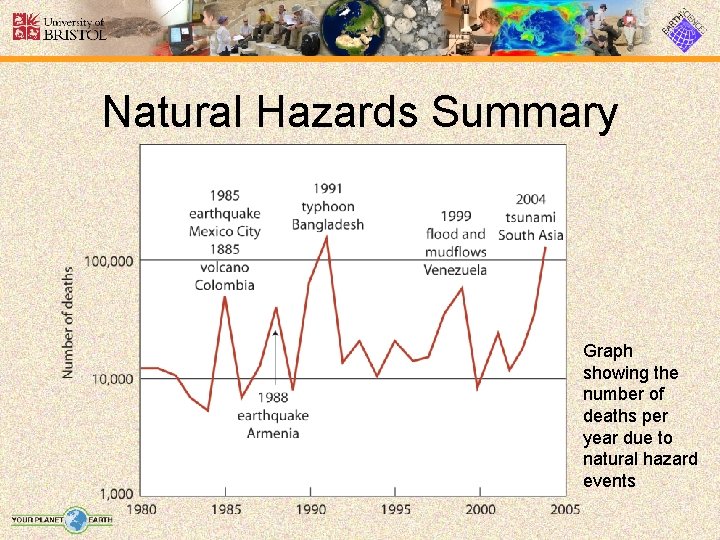
Natural Hazards Summary Graph showing the number of deaths per year due to natural hazard events
- Slides: 30