
PRESENTATION Goal Setting Developing good goals will ensure



- Slides: 10
PRESENTATION Goal Setting Developing good goals will ensure a steady pace towards success. Goals should be SMART: Specific, Measurable, Accountable, Realistic and Timetabled. CLICK TO BEGIN
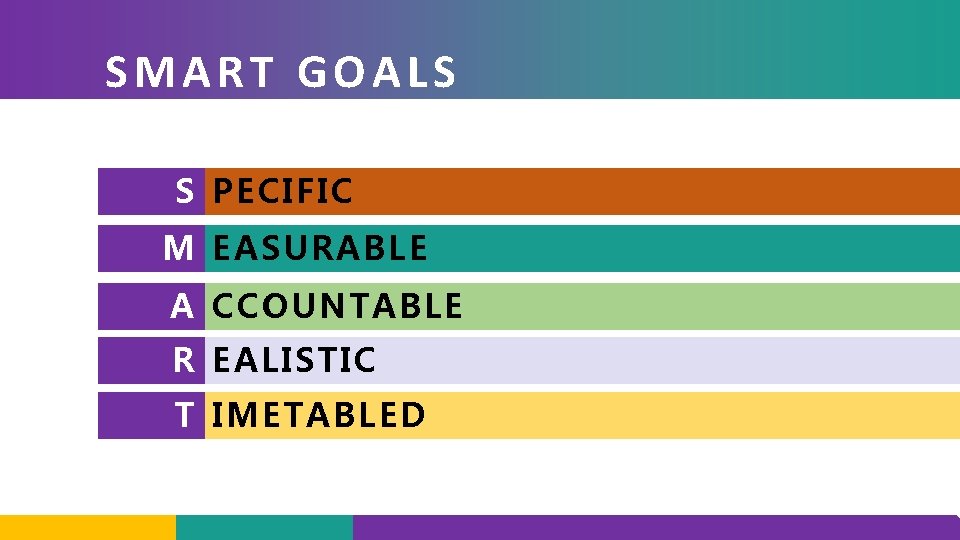
SMART GOALS S PECIFIC M EASURABLE A CCOUNTABLE R EALISTIC T IMETABLED
SPECIFIC GOALS Simple – Sensible – Specific: (simple, sensible, significant) – Goals need to Significant efforts and be motivated. Vague undefined goals be clear and specific to enable people to focus their hinder people’s enthusiasm and can lead to early frustration. Questions to ask include: What do I want to accomplish? Why is this goal important? Who is involved? Where is it located? Which resources or limits are involved?
MEASURABLE GOALS Easy to track Marker of progress Increases motivation Measurable: Goals need to be measurable to enable people to determine if they are making progress towards achieving them. Seeing progress helps keep people motivated and focused. It also helps people realize when progress is not being made so they can identify problems and figure out solutions. Questions to ask include: How long should it take to accomplish a particular goal? What steps do I need to undertake to achieve a goal? What does it look like when the goal is accomplished?
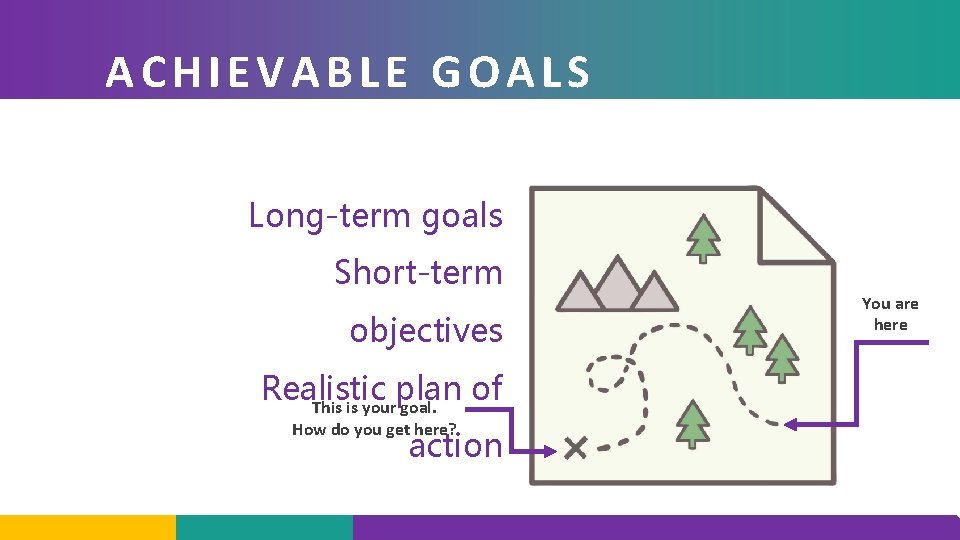
ACHIEVABLE GOALS Long-term goals Short-term objectives Realistic plan of This is your goal. How do you get here? action You are here
RELEVANT GOALS Goals must be part of overall success Focused objectives Goals must match business needs
TIMELY GOALS Goals must have deadlines Timelines helps avoid procrastination Measure of progress
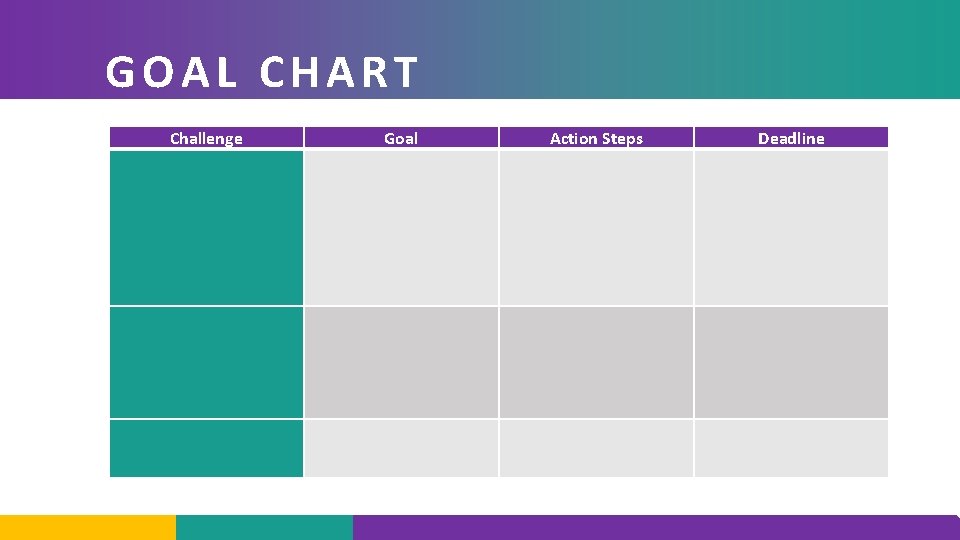
GOAL CHART Challenge Goal Action Steps Deadline
www. pauktuutit. ca