
Presentation by Sangeetha N Kumar X Std Embassy
Presentation by Sangeetha. N. Kumar X Std. Embassy Public School
• • Introduction Farming Types - Chemical farming - Organic farming Chemical Farming - Advantages - Disadvantages Organic Farming - Components - Principles - Methods - Advantages - Disadvantages Case Study Comparative Study Statistical Data Conclusion t Conten
INTRODUCTION • • • Agriculture Soil requirements Minerals (N, P, K) Organic matter (Humus)
FARMING TYPES • Mainly two types of Farming : Ø Chemical Farming Ø Organic Farming
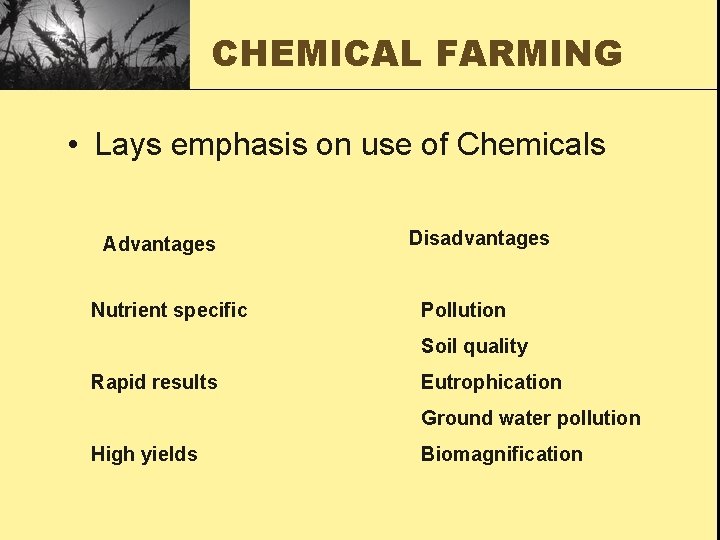
CHEMICAL FARMING • Lays emphasis on use of Chemicals Advantages Nutrient specific Disadvantages Pollution Soil quality Rapid results Eutrophication Ground water pollution High yields Biomagnification

ORGANIC FARMING A production system which avoids the use of synthetic fertilizers COMPONENTS OF ORGANIC FARMING Integrated Farming Integrated Pest Management Organic Biofertilizers ORGANIC FARMING Integrated Disease Management Crop Rotation Integrated Weed Management
PRINCIPLES OF ORGANIC FARMING → Biodiversity → Sustainability → Natural Plant Nutrition → Natural Pest Management → Integrity
METHODS OF ORGANIC FARMING v Organic Pest Control v Soil Quality v Biodynamics v Vermiculture v Earthworm : The Natural Bioreactor v Vermicompost
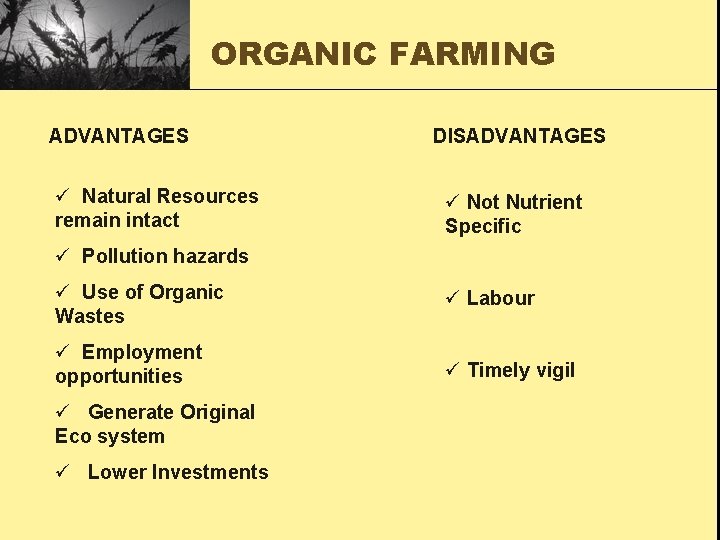
ORGANIC FARMING ADVANTAGES ü Natural Resources remain intact DISADVANTAGES ü Not Nutrient Specific ü Pollution hazards ü Use of Organic Wastes ü Labour ü Employment opportunities ü Timely vigil ü Generate Original Eco system ü Lower Investments
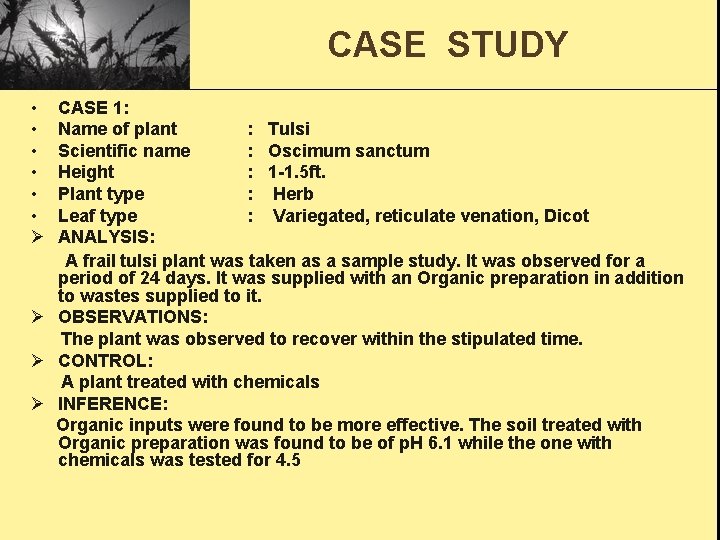
CASE STUDY • • • Ø CASE 1: Name of plant : Tulsi Scientific name : Oscimum sanctum Height : 1 -1. 5 ft. Plant type : Herb Leaf type : Variegated, reticulate venation, Dicot ANALYSIS: A frail tulsi plant was taken as a sample study. It was observed for a period of 24 days. It was supplied with an Organic preparation in addition to wastes supplied to it. Ø OBSERVATIONS: The plant was observed to recover within the stipulated time. Ø CONTROL: A plant treated with chemicals Ø INFERENCE: Organic inputs were found to be more effective. The soil treated with Organic preparation was found to be of p. H 6. 1 while the one with chemicals was tested for 4. 5
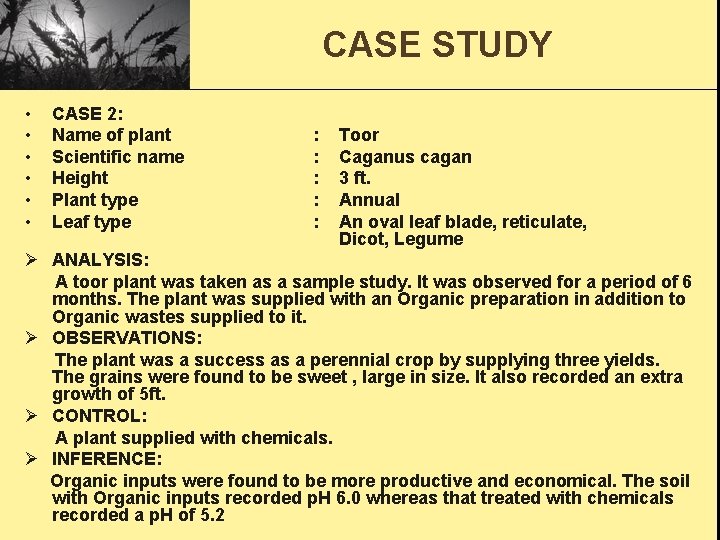
CASE STUDY • • • CASE 2: Name of plant Scientific name Height Plant type Leaf type : : : Toor Caganus cagan 3 ft. Annual An oval leaf blade, reticulate, Dicot, Legume Ø ANALYSIS: A toor plant was taken as a sample study. It was observed for a period of 6 months. The plant was supplied with an Organic preparation in addition to Organic wastes supplied to it. Ø OBSERVATIONS: The plant was a success as a perennial crop by supplying three yields. The grains were found to be sweet , large in size. It also recorded an extra growth of 5 ft. Ø CONTROL: A plant supplied with chemicals. Ø INFERENCE: Organic inputs were found to be more productive and economical. The soil with Organic inputs recorded p. H 6. 0 whereas that treated with chemicals recorded a p. H of 5. 2
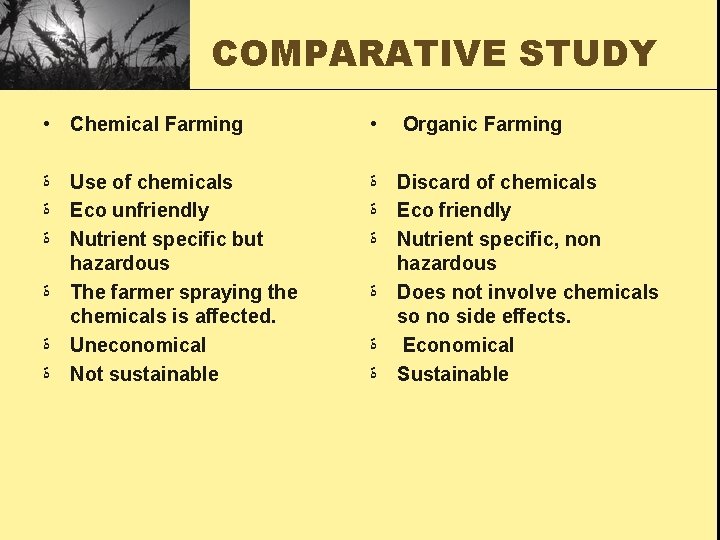
COMPARATIVE STUDY • Chemical Farming • Organic Farming ة ة ة Discard of chemicals Eco friendly Nutrient specific, non hazardous Does not involve chemicals so no side effects. Economical Sustainable ة ة ة Use of chemicals Eco unfriendly Nutrient specific but hazardous The farmer spraying the chemicals is affected. Uneconomical Not sustainable ة ة ة
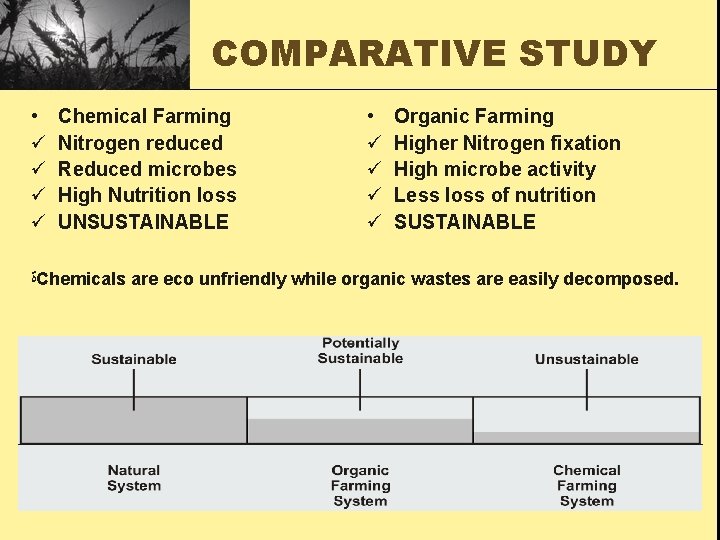
COMPARATIVE STUDY • ü ü Chemical Farming Nitrogen reduced Reduced microbes High Nutrition loss UNSUSTAINABLE • ü ü Organic Farming Higher Nitrogen fixation High microbe activity Less loss of nutrition SUSTAINABLE ة Chemicals are eco unfriendly while organic wastes are easily decomposed.
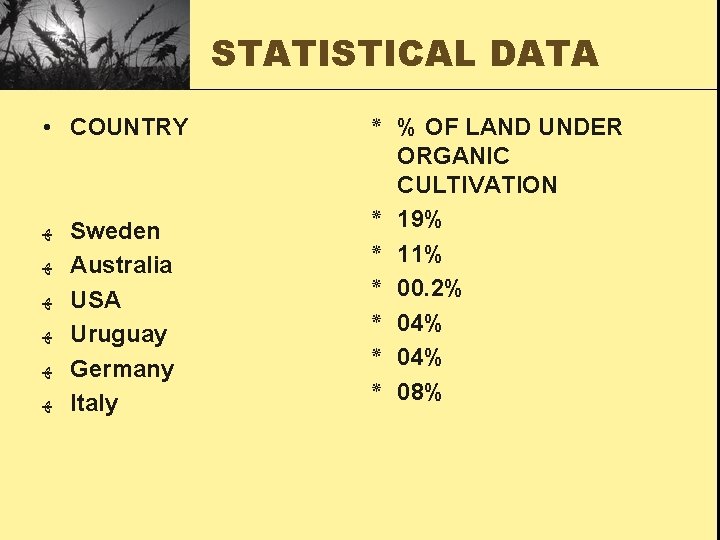
STATISTICAL DATA • COUNTRY ﻬ ﻬ ﻬ Sweden Australia USA Uruguay Germany Italy ٭ % OF LAND UNDER ORGANIC CULTIVATION ٭ 19% ٭ 11% ٭ 00. 2% ٭ 04% ٭ 08%
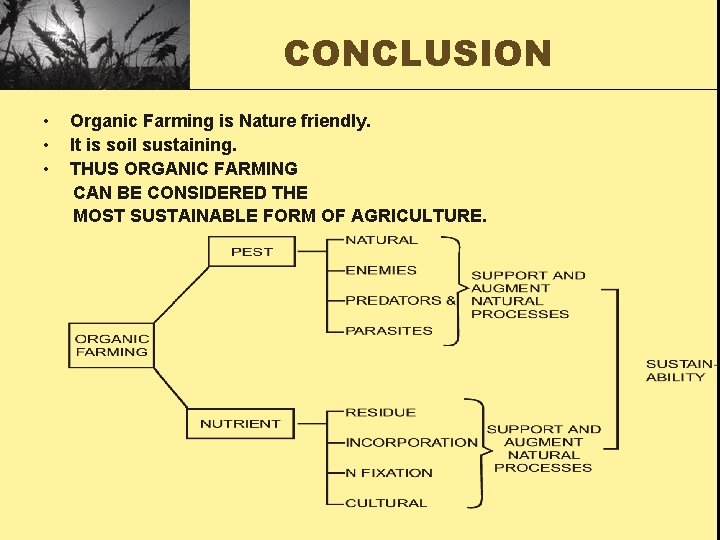
CONCLUSION • • • Organic Farming is Nature friendly. It is soil sustaining. THUS ORGANIC FARMING CAN BE CONSIDERED THE MOST SUSTAINABLE FORM OF AGRICULTURE.

THANK YOU
- Slides: 16