
Presentation by Felix Ritchie Bristol Business School Budapest
Presentation by Felix Ritchie Bristol Business School Budapest 21. 10. 16 The user as data detective
Pressures on data collection • More complexity in data sources o linked, multiple sources o data sourced from administrative systems o changing definitions • Greater demands for detail in aggregates • Greater demands for microdata • Limited resources at National Statistics Institutes (NSIs) and others o greater use of statistical editing

Quality/resource trade-offs Aggregate statistics End Means or End? Microdata • Difficult to satisfy all demands Resources
How can the user help? • Different things matter to microdata users o o outliers multivariate characteristics and breakdowns measurement error in respect of multivariate bias genuine data, not imputation or estimation subsets • Users bring different skills o o no adherence to quality or aggregation guidelines expertise on relationships between variables extended timelines different coding skills
Example: compliance with minimum wages • Statutory minimum wage in the UK • 3 survey datasets for checking compliance o ONS: employer and employee surveys o Department for Business: survey of apprentice pay • ONS validates its own data as usual o 1 extra rule: re-check response if wage appears to fall below the minimum • Low Pay Commission (LPC) analyses validated ONS data o complex code to break down data into sub-population estimates
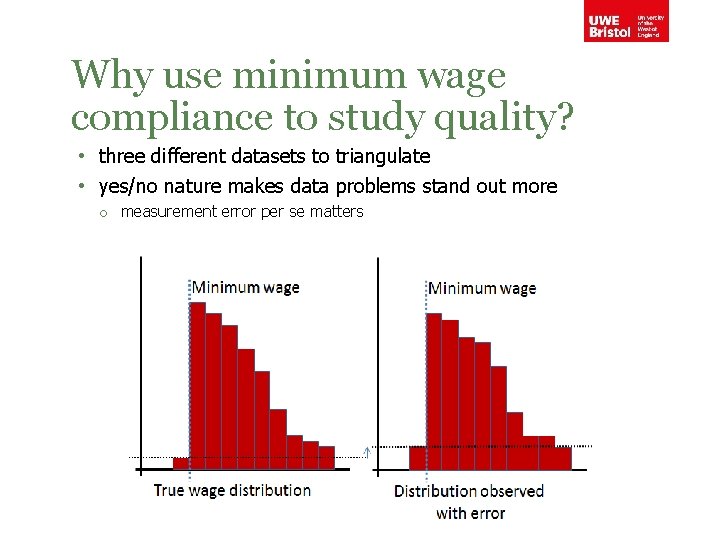
Why use minimum wage compliance to study quality? • three different datasets to triangulate • yes/no nature makes data problems stand out more o measurement error per se matters
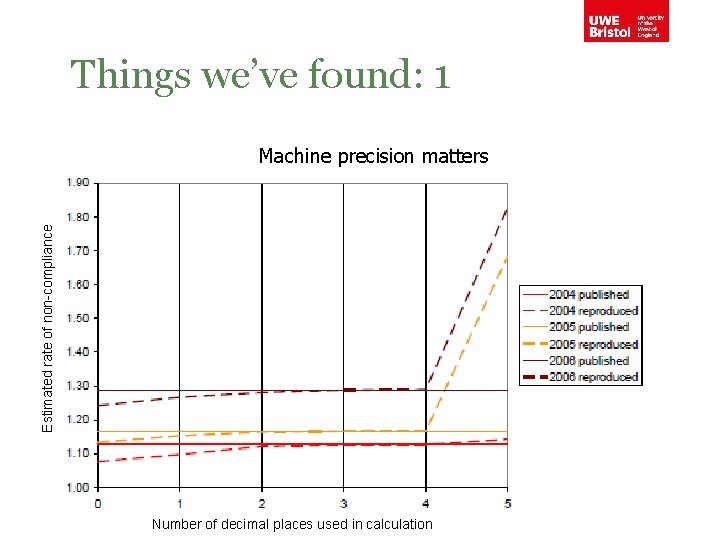
Things we’ve found: 1 Estimated rate of non-compliance Machine precision matters Number of decimal places used in calculation
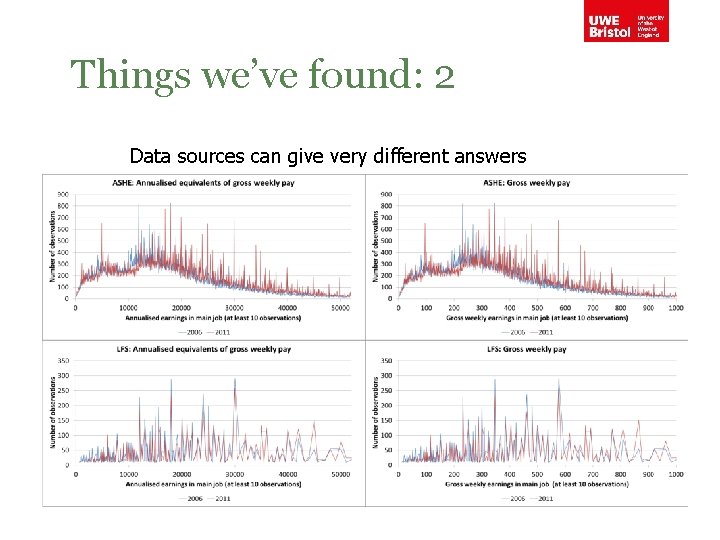
Things we’ve found: 2 Data sources can give very different answers
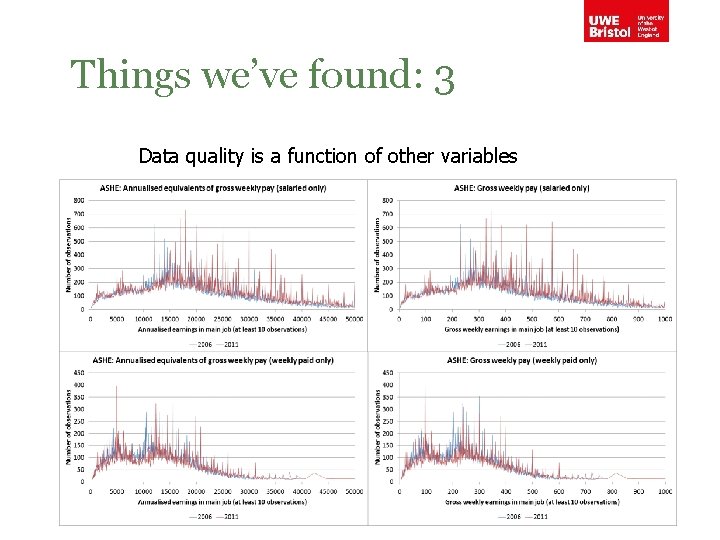
Things we’ve found: 3 Data quality is a function of other variables
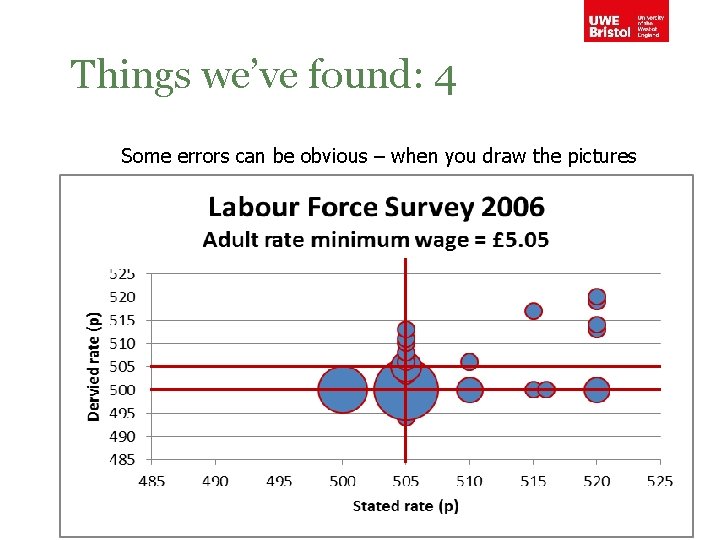
Things we’ve found: 4 Some errors can be obvious – when you draw the pictures
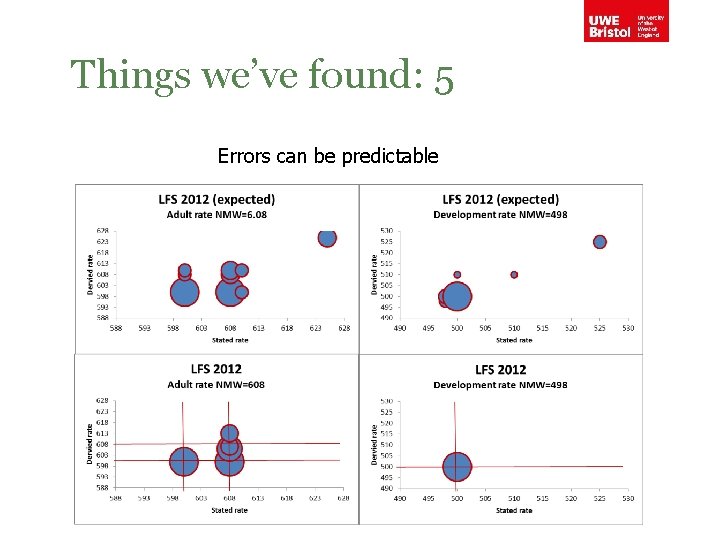
Things we’ve found: 5 Errors can be predictable
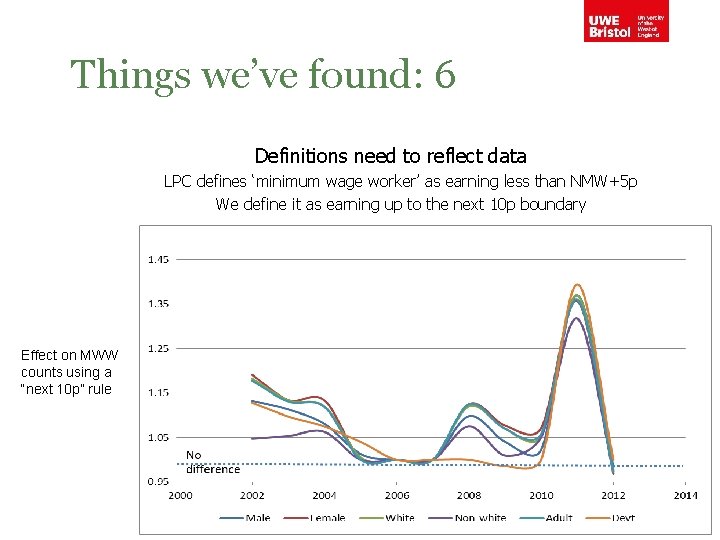
Things we’ve found: 6 Definitions need to reflect data LPC defines ‘minimum wage worker’ as earning less than NMW+5 p We define it as earning up to the next 10 p boundary Effect on MWW counts using a “next 10 p” rule
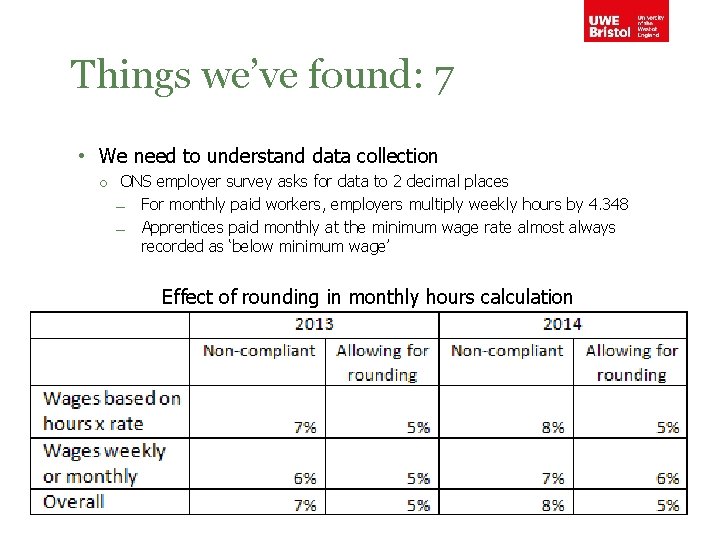
Things we’ve found: 7 • We need to understand data collection o ONS employer survey asks for data to 2 decimal places For monthly paid workers, employers multiply weekly hours by 4. 348 Apprentices paid monthly at the minimum wage rate almost always recorded as ‘below minimum wage’ Effect of rounding in monthly hours calculation
Lessons from other areas • In other work we’ve found o o o observations missing values systematically missing ‘impossible’ values occurring conflicts between sources some data has no value documentation lacking institutional knowledge lost • but generally microdata analysis confirms data quality • No reason to believe ONS better or worse than any other NSI…
What have we learned? • Problems with o data o aggregation o interpretation • Not amenable to NSI production systems o resources o dimensionality o purpose • Microdata users are o o expert persistent responsive to positive engagement cheap!
- Slides: 15