
Presentation by Dr Jo Hare Dr Jac Fennell
Presentation by Dr. Jo Hare & Dr Jac Fennell Lecturers in Service & Product Design 2021 Objects & Experiences
Last week’s topic For your chosen charity complete the following : - Analysis / Observations to insights - Persona - Refined Design Brief These go towards Pages 8, 9 & 10 of your ‘Toolkit of methods’
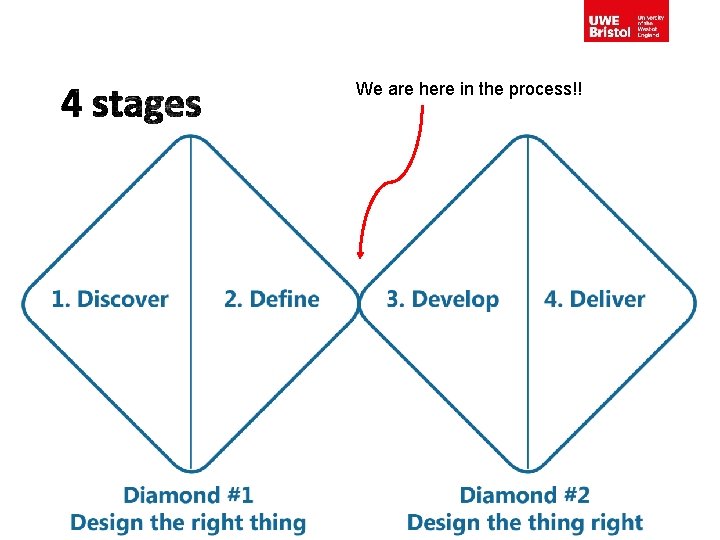
We are here in the process!!
![What do we do next? ! [METHOD – Idea generation] Goes towards ‘Toolkit of](http://slidetodoc.com/presentation_image_h2/7ac3338acc1bf78b20bf3b49faaf217f/image-4.jpg "What do we do next? ! [METHOD – Idea generation] Goes towards ‘Toolkit of")
What do we do next? ! [METHOD – Idea generation] Goes towards ‘Toolkit of methods’ p. 11 – 15
Phase 3: Idea Generation The Develop phase – diverge!
IDEAS lead to CONCEPTS What we mean by the terms ‘idea’ and ‘concept’: IDEA = fragmented thoughts, notes and sketches CONCEPT = multiple ideas brought together into a well-rounded proposal
120 + ideas leading to 3 – 5 concepts
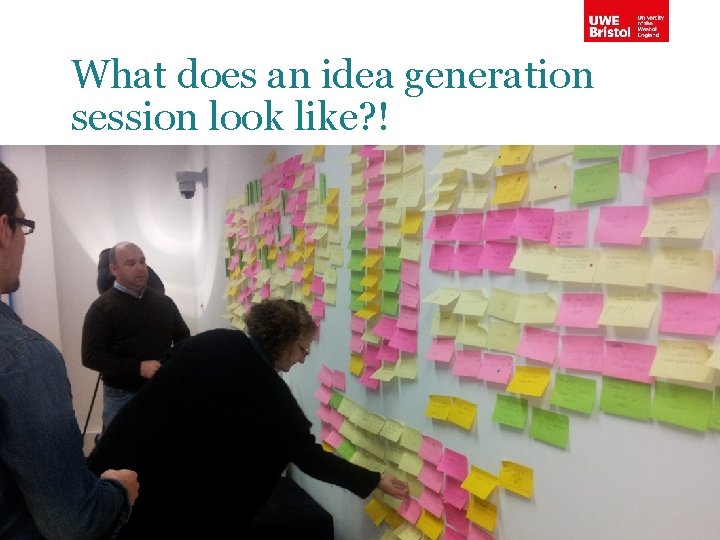
What does an idea generation session look like? !
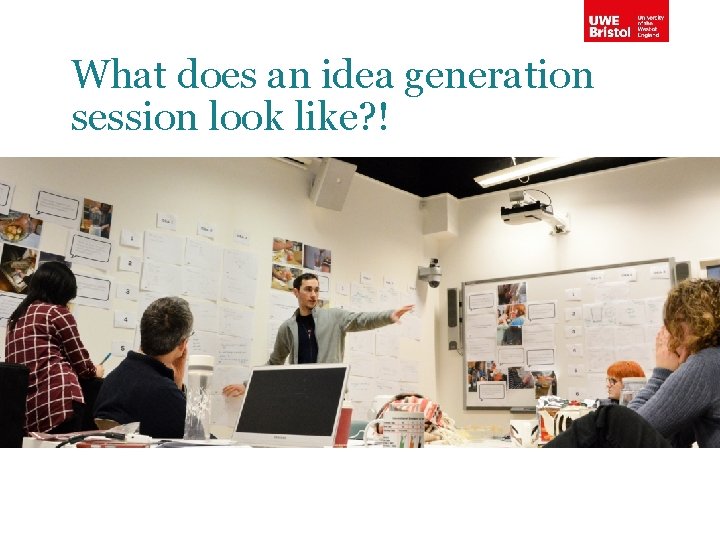
What does an idea generation session look like? !
What is your refined brief? Use this as your starting point…

Idea Generation ‘rules’
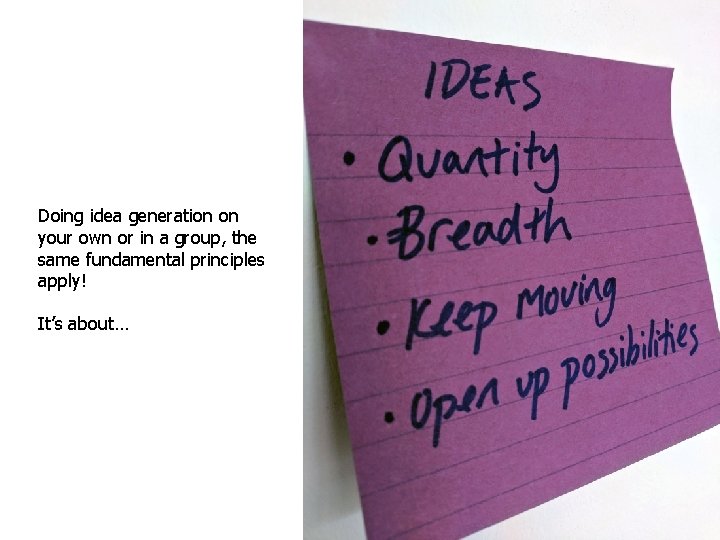
Doing idea generation on your own or in a group, the same fundamental principles apply! It’s about…
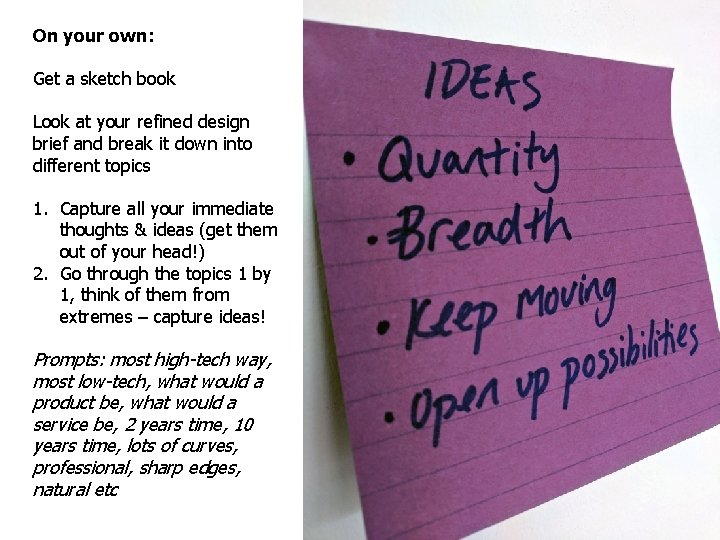
On your own: Get a sketch book Look at your refined design brief and break it down into different topics 1. Capture all your immediate thoughts & ideas (get them out of your head!) 2. Go through the topics 1 by 1, think of them from extremes – capture ideas! Prompts: most high-tech way, most low-tech, what would a product be, what would a service be, 2 years time, 10 years time, lots of curves, professional, sharp edges, natural etc
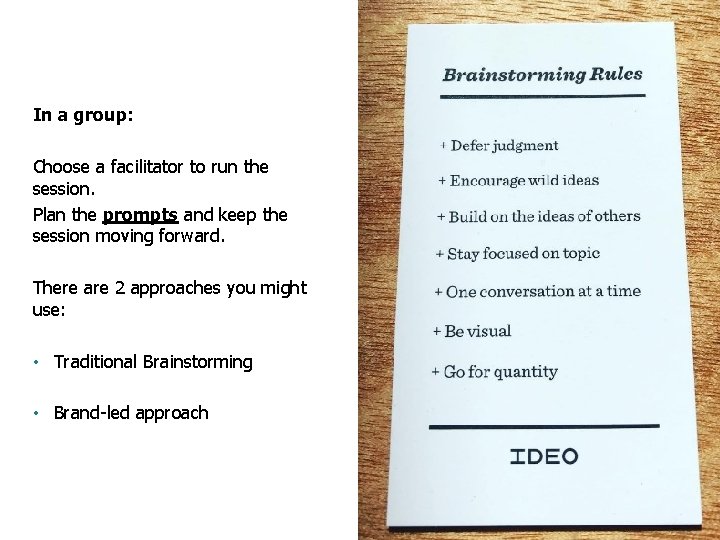
In a group: Choose a facilitator to run the session. Plan the prompts and keep the session moving forward. There are 2 approaches you might use: • Traditional Brainstorming • Brand-led approach
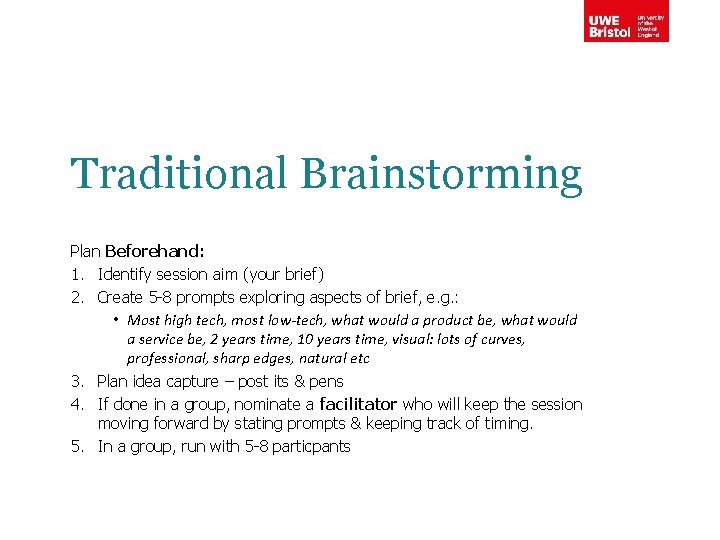
Traditional Brainstorming Plan Beforehand: 1. Identify session aim (your brief) 2. Create 5 -8 prompts exploring aspects of brief, e. g. : • Most high tech, most low-tech, what would a product be, what would a service be, 2 years time, 10 years time, visual: lots of curves, professional, sharp edges, natural etc 3. Plan idea capture – post its & pens 4. If done in a group, nominate a facilitator who will keep the session moving forward by stating prompts & keeping track of timing. 5. In a group, run with 5 -8 particpants
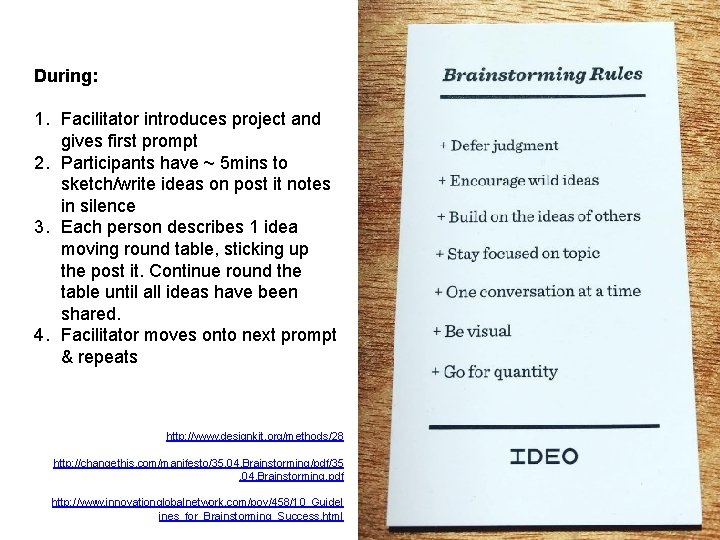
During: 1. Facilitator introduces project and gives first prompt 2. Participants have ~ 5 mins to sketch/write ideas on post it notes in silence 3. Each person describes 1 idea moving round table, sticking up the post it. Continue round the table until all ideas have been shared. 4. Facilitator moves onto next prompt & repeats http: //www. designkit. org/methods/28 http: //changethis. com/manifesto/35. 04. Brainstorming/pdf/35. 04. Brainstorming. pdf http: //www. innovationglobalnetwork. com/pov/458/10_Guidel ines_for_Brainstorming_Success. html
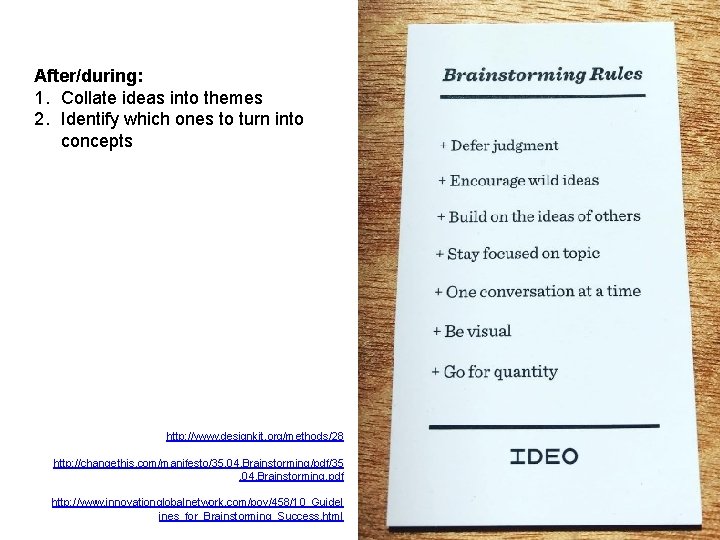
After/during: 1. Collate ideas into themes 2. Identify which ones to turn into concepts http: //www. designkit. org/methods/28 http: //changethis. com/manifesto/35. 04. Brainstorming/pdf/35. 04. Brainstorming. pdf http: //www. innovationglobalnetwork. com/pov/458/10_Guidel ines_for_Brainstorming_Success. html
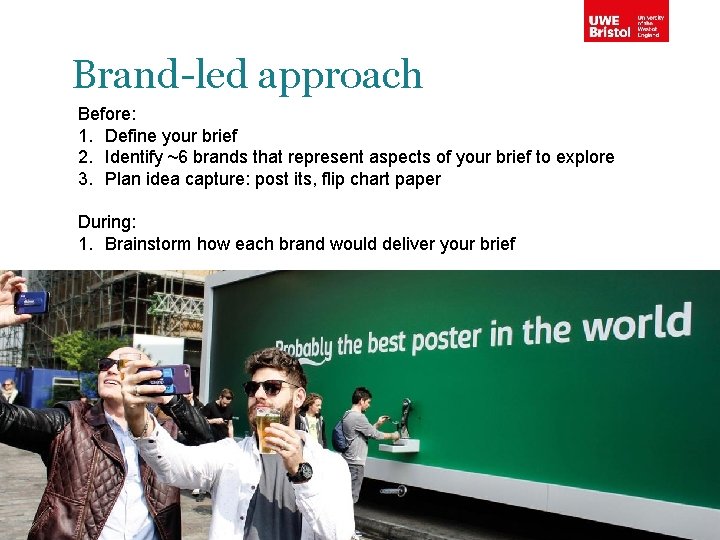
Brand-led approach Before: 1. Define your brief 2. Identify ~6 brands that represent aspects of your brief to explore 3. Plan idea capture: post its, flip chart paper During: 1. Brainstorm how each brand would deliver your brief
Brand-led approach For the charities brief, you could be inspired by thinking about how Uber, Disney, Ikea, Apple etc. might approach it. e. g. Uber is known for: o Know what’s going on o Agile o Value for money o Customizable o … How could that translate into designing a pop-up experience to encourage more people to donate to your charity?
Method: Idea generation ACTIVITY: Plan and conduct your idea generation session for your project. You may want to try the traditional brainstorm method or the brand led approach. We encourage you to do this as a small group, to help each other. Please note: there is opportunity to do an idea generation session in your tutorials (PD - 12 th or IA - 13 th April). Be prepared for this! Remember that your ideas should be informed by your refined design brief and all research to date. Goes towards ‘Toolkit of methods’ pages 11 – 15
Homework / self-directed study You’re now moving onto the ‘develop’ stage of the design process. Complete the following activities: - Idea generation – rules and planning Using the information provided, research and plan an idea generation session for your project. Pages 11 & 12 of your ‘Toolkit of methods’ - Inspiration Create an inspiration / mood board for your project to help inspire ideas. Page 13 of your ‘Toolkit of methods’ - Idea generation – do it! Run an idea generation session for your project. We can do this in your tutorials on 12 th / 13 th April – be prepared! Pages 14 & 15 of your ‘Toolkit of methods’
- Slides: 21