
PRESENTATION BELGIUM Language Customs and Traditions NATIVE LANGUAGE
PRESENTATION BELGIUM - Language - Customs and Traditions
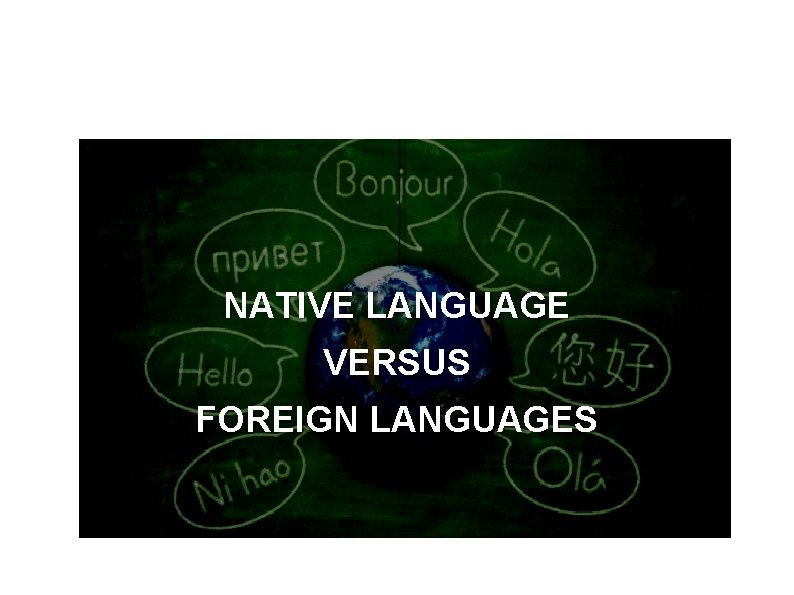
NATIVE LANGUAGE VERSUS FOREIGN LANGUAGES
Do young immigrants refuse to speak their parents' language?
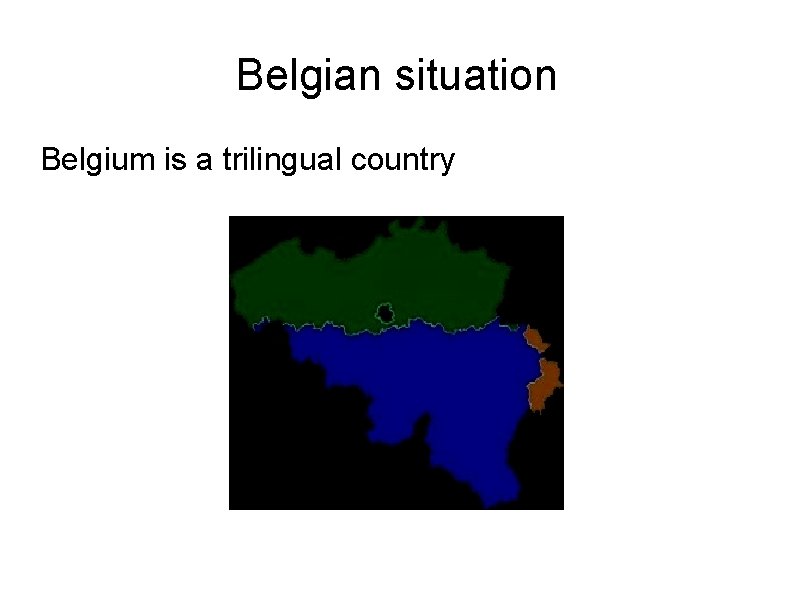
Belgian situation Belgium is a trilingual country
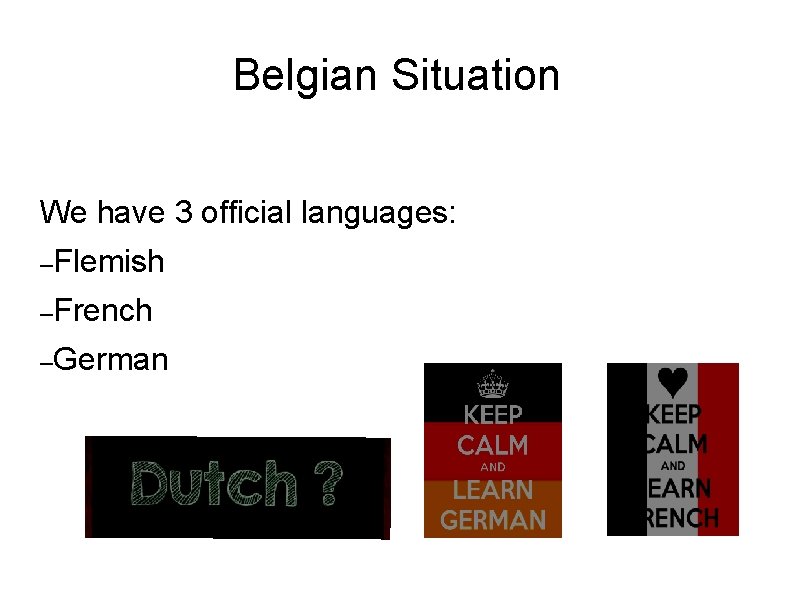
Belgian Situation We have 3 official languages: –Flemish –French –German
– The vast majority of the Belgian population is at least bilingual. – Flemish, French, English and German are taught at school. – The importance of English has increased over the passed decades.
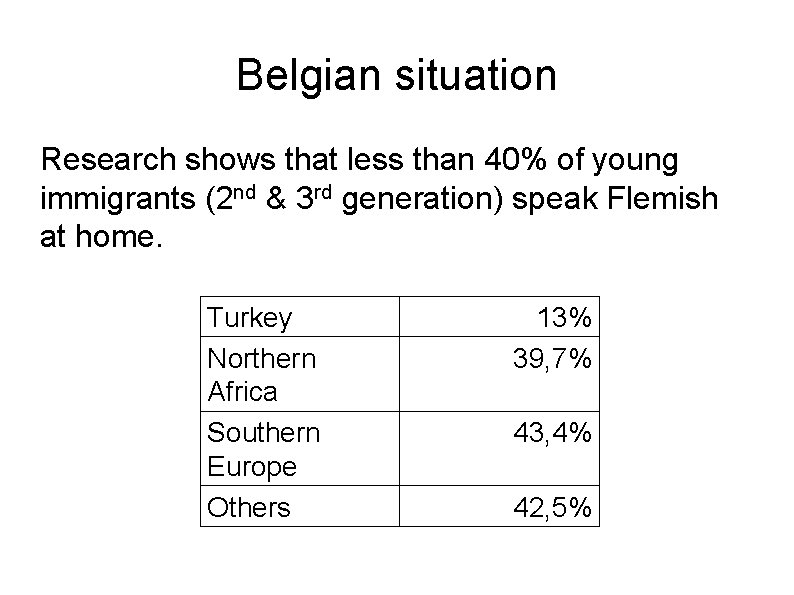
Belgian situation Research shows that less than 40% of young immigrants (2 nd & 3 rd generation) speak Flemish at home. Turkey Northern Africa Southern Europe Others 13% 39, 7% 43, 4% 42, 5%
Conclusion Young 2 nd and 3 rd generation immigrants do speak their parents' language in Belgium as well as foreign languages.

Customs and traditions The Belgian population has been ethnic culturally diverse since 1946, consisting of: – an ethnic cultural majority – different ethnic cultural minorities
A society of different ethnic cultural groups results in a process of ACCULTURATION. “Acculturation refers to those phenomena which result when groups of individuals having different cultures come into continuous first-hand contact, with subsequent changes in the original culture pattern of either or both groups” (Redfield, Linton & Herskovits, 1936)
Acculturation of migrants is determined by their attitude towards their own group/culture and towards the majority and their culture. – Involvement in their own group: high – low – Involvement in the majority group: high – low Successful acculturation = bi-culturalism
Different models John Berry's Model of Acculturation - Do I maintain my cultural identity? Or - Do I seek contact and do I participate in the daily life of the larger society? Bouhris’ Cultural Takeover Model - Do I wish to maintain the culture of my own ethnic cultural group? Or - Do I wish to take over the culture of the majority group? Hutnik's Model of Acculturation - Identification with your own ethnic cultural group Or - Identification with the majority group
Conclusions Young immigrants in Flanders: – want to maintain their own culture – want contact/participation – are ambivalent towards cultural takeover – define their identity based on their own group – reject a Belgian self definition. – do value/maintain their own traditions and culture. Is this integration or separation? It depends on which acculturation model is used.
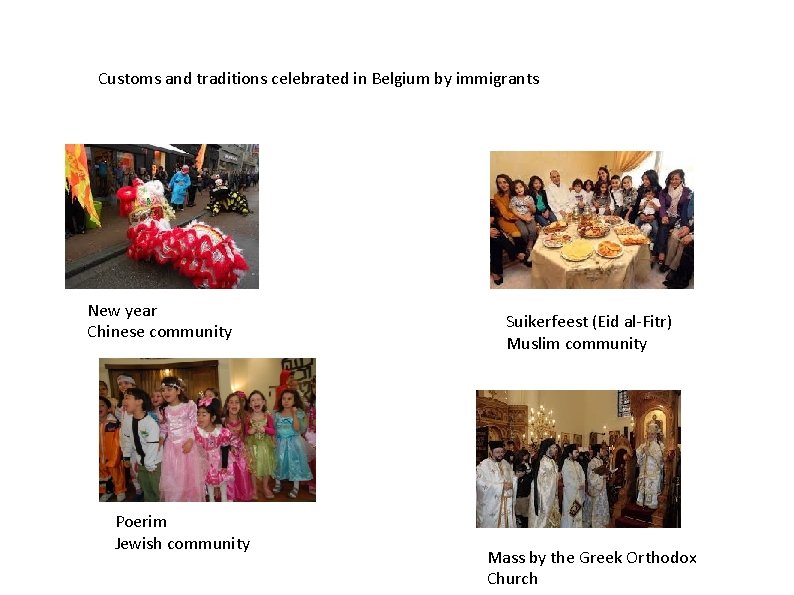
Customs and traditions celebrated in Belgium by immigrants New year Chinese community Poerim Jewish community Suikerfeest (Eid al-Fitr) Muslim community Mass by the Greek Orthodox Church
The End
- Slides: 15