
Presentation an introduction Meaning of presentation The act
- Slides: 12
Presentation: an introduction
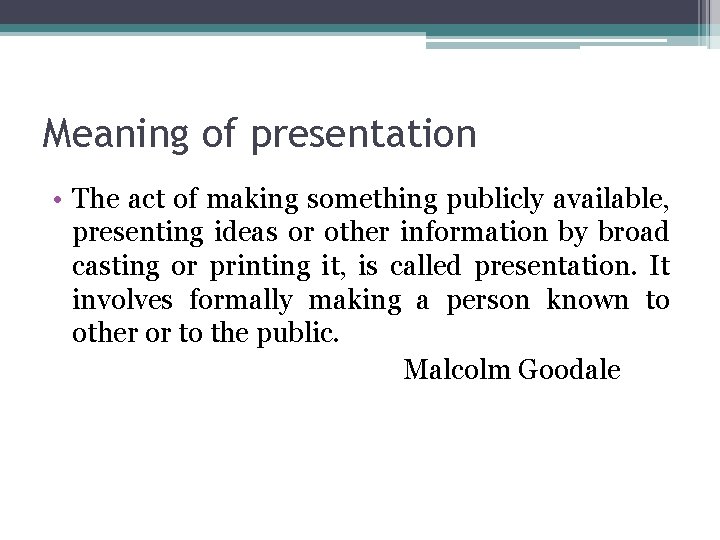
Meaning of presentation • The act of making something publicly available, presenting ideas or other information by broad casting or printing it, is called presentation. It involves formally making a person known to other or to the public. Malcolm Goodale
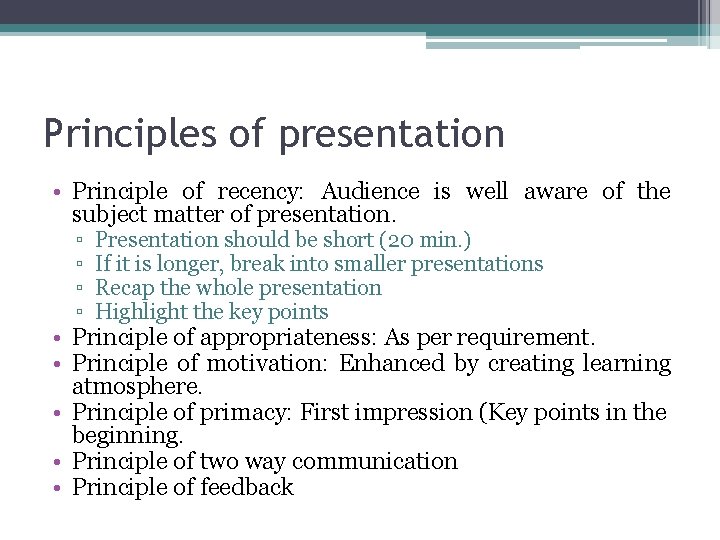
Principles of presentation • Principle of recency: Audience is well aware of the subject matter of presentation. ▫ ▫ Presentation should be short (20 min. ) If it is longer, break into smaller presentations Recap the whole presentation Highlight the key points • Principle of appropriateness: As per requirement. • Principle of motivation: Enhanced by creating learning atmosphere. • Principle of primacy: First impression (Key points in the beginning. • Principle of two way communication • Principle of feedback
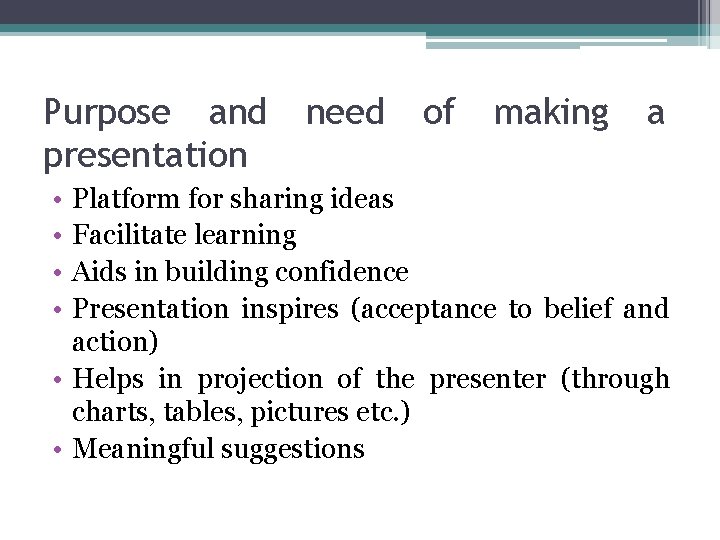
Purpose and presentation • • need of making a Platform for sharing ideas Facilitate learning Aids in building confidence Presentation inspires (acceptance to belief and action) • Helps in projection of the presenter (through charts, tables, pictures etc. ) • Meaningful suggestions
Why make presentations? • E-mails or written communication cannot replace oral communication • Telephonic talks cannot replace presentation (face to face) • Video conferences are replacing traditional modes of presentations. But it is used as a mode of discussion. • In tele-conferences there is no direct contact with the presenter. We can only hear but not see the presenter.
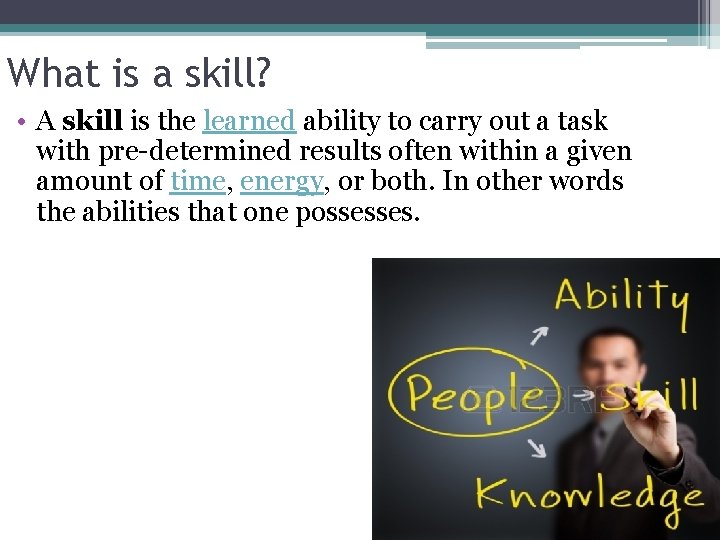
What is a skill? • A skill is the learned ability to carry out a task with pre-determined results often within a given amount of time, energy, or both. In other words the abilities that one possesses.
Concept of presentation skill • Presentation skill is a set of skills a person needs to offer both effective information presentations and effective training presentations. ▫ Accuracy ▫ Speed ▫ Quality
Process of presentation • Preparation ▫ Establishing current level of knowledge of the audience in the given topic ▫ Discussing skills with other experts ▫ Drafting a plan to be followed for presentation ▫ Preparing all presentation support materials ▫ Preparation of introduction • Demonstration: ▫ Present at normal speed ▫ Present again slowly ▫ Verbal instructions from the group • Student practice • Assessment
Forms of presentation • • Oral presentation Interactive poster presentation Round table discussion Multi paper sets: Organized by a lead person and will contain 4 -5 presentations under a common topic of interest to the group. The set will be submitted by the lead person. • Symposium: Same as above but the presenters in each group must be at least from two different countries. A symposium proposal should not be submitted as a collection of individual papers but rather than amalgamation of them. • Panel discussion • Workshop
Good or Bad presentations • The contents of presentations should be structured according to the needs, expectations and educational level of the audience. • Same presentation should not be used at another place. While basic contents remain the same, examples and voice modulations may be different. • It should be changed with change in the audience • Confidence in the presenter, the belief in the self and the topic can be additional factors that lead to success of the presentation.
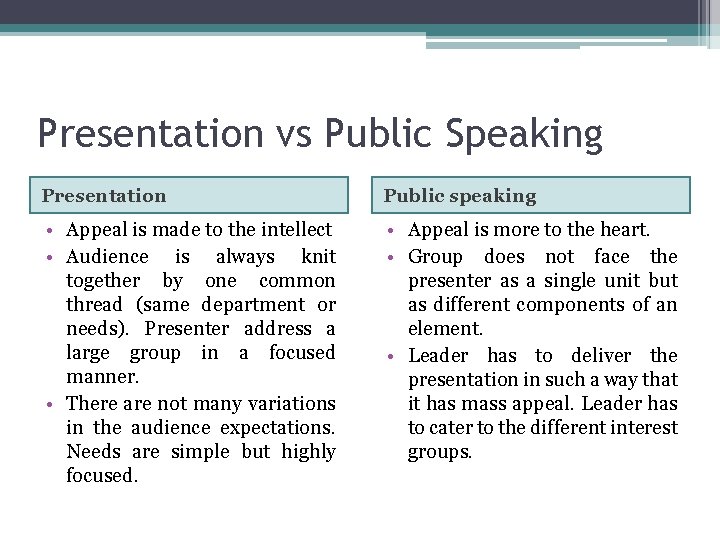
Presentation vs Public Speaking Presentation Public speaking • Appeal is made to the intellect • Audience is always knit together by one common thread (same department or needs). Presenter address a large group in a focused manner. • There are not many variations in the audience expectations. Needs are simple but highly focused. • Appeal is more to the heart. • Group does not face the presenter as a single unit but as different components of an element. • Leader has to deliver the presentation in such a way that it has mass appeal. Leader has to cater to the different interest groups.
Tips for making presentation • • • • Use simple visuals Look at the audience Show your personality Make them laugh Talk to your audience, not at them Be honest Do not over prepare Show some movement Watch what you say Differentiate yourself Less will impress Lift your language Centralize when you organize Make demands on your diction (choosing right words) Content