
Presentation 5 Phase B Fatigue Fracture Studies S
Presentation 5 Phase B - Fatigue & Fracture Studies S. J. Jung 1
Objective To improve the pavement design, a simple and dependable testing and validating procedure is needed to enhance the material design and prediction of pavement life. 2

Method comparison l l Number of loading is common variables Work with Cyclic loading Estimate fatigue information Work with energy concept 3
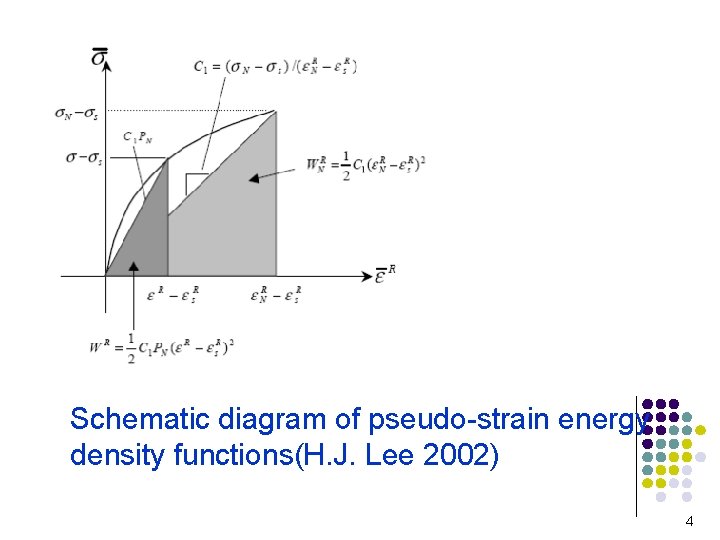
Schematic diagram of pseudo-strain energy density functions(H. J. Lee 2002) 4
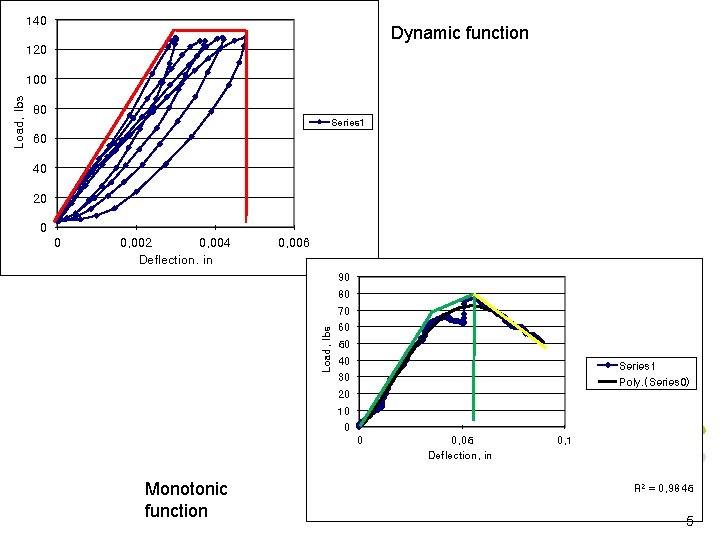
140 Dynamic function 120 80 Series 1 60 40 20 0 0 0, 002 0, 004 Deflection. in 0, 006 90 80 70 Load, lbs 100 60 50 40 Series 1 Poly. (Series 0) 30 20 10 0 0 Monotonic function 0, 05 Deflection, in 0, 1 R 2 = 0, 9845 5

Energy Comparison l Dynamic Approach Failure Energy (lb. in) 0. 21 for actual 0. 38 for duplication 0. 58 for under curve l Static Approach Notch (in) (lb. in) 0. 59 1. 03 1. 5 Failure Energy 5. 22 4. 56 2. 32 *** Difference caused the following reasons; sample, peak load, deformation, loading condition (Hz, temperature, etc) ** Calculation 6

Upgraded MTS system Testing the system and study the testing parameter with MTS 7
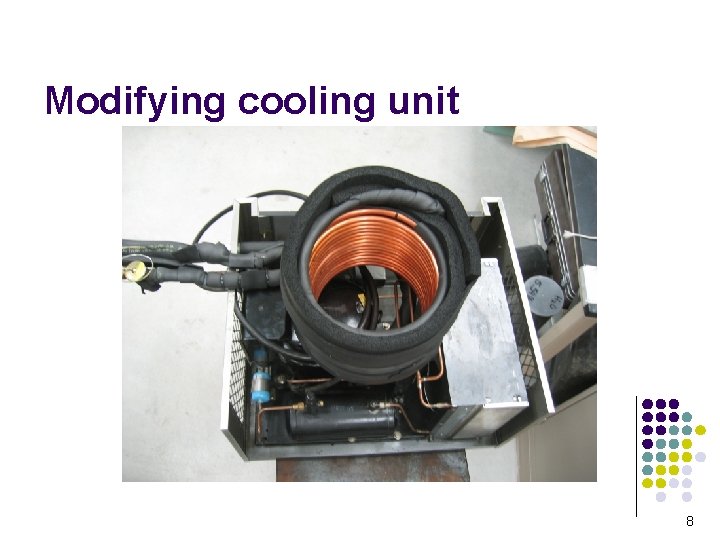
Modifying cooling unit 8
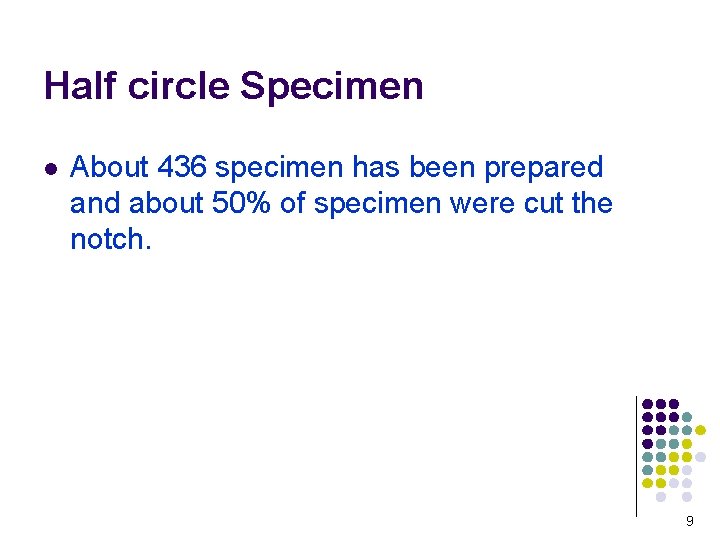
Half circle Specimen l About 436 specimen has been prepared and about 50% of specimen were cut the notch. 9
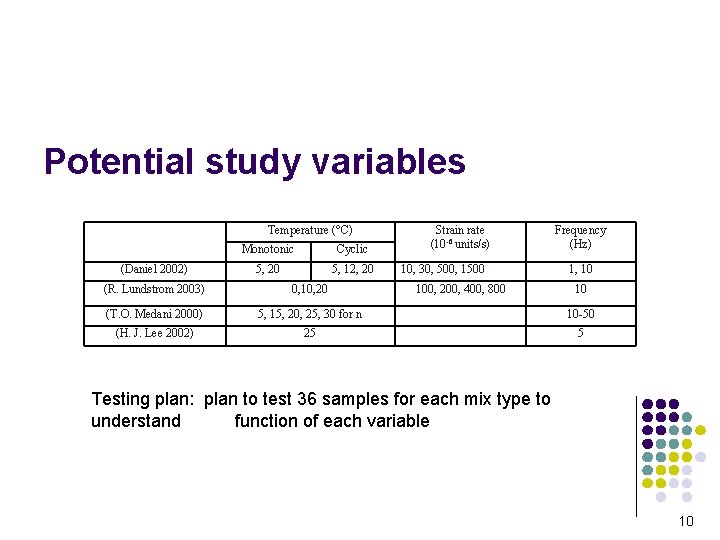
Potential study variables Temperature (°C) (Daniel 2002) Monotonic Cyclic 5, 20 5, 12, 20 Strain rate (10 -6 units/s) 10, 30, 500, 1500 100, 200, 400, 800 Frequency (Hz) 1, 10 (R. Lundstrom 2003) 0, 10, 20 10 (T. O. Medani 2000) 5, 15, 20, 25, 30 for n 10 -50 (H. J. Lee 2002) 25 5 Testing plan: plan to test 36 samples for each mix type to understand function of each variable 10
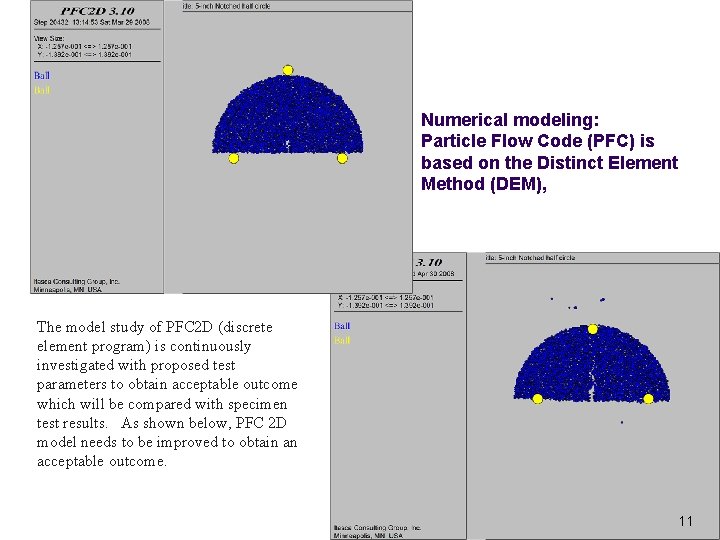
Numerical modeling: Particle Flow Code (PFC) is based on the Distinct Element Method (DEM), The model study of PFC 2 D (discrete element program) is continuously investigated with proposed test parameters to obtain acceptable outcome which will be compared with specimen test results. As shown below, PFC 2 D model needs to be improved to obtain an acceptable outcome. 11
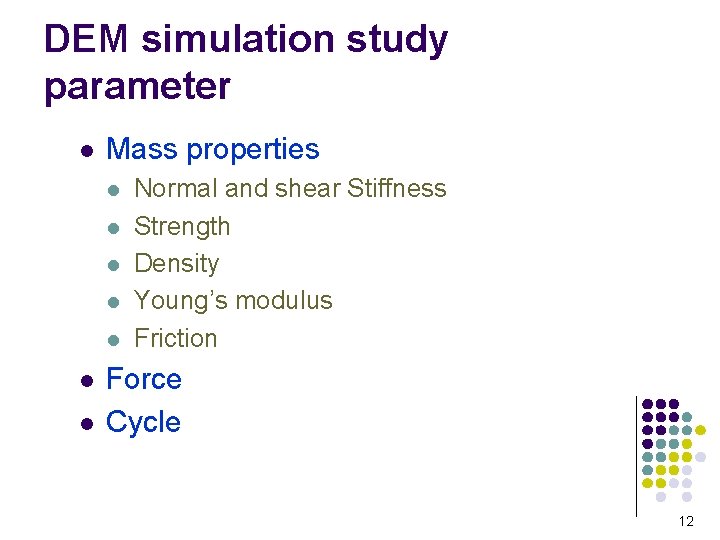
DEM simulation study parameter l Mass properties l l l l Normal and shear Stiffness Strength Density Young’s modulus Friction Force Cycle 12
- Slides: 12