
Present Tense Indicative Regular Irregular Stemchanging Regular verbs
Present Tense Indicative Regular, Irregular, Stem-changing

Regular verbs should be automatic for you: hablar yo hablo nosotros hablamos tú hablas vosotros habláis él, ella habla ellos hablan comer como comemos comes coméis comen vivir vivo vives vive vivimos vivís viven
Go here to do an assignment over regular verbs. (Considered part of the homework to turn in if I don’t make it classwork. )
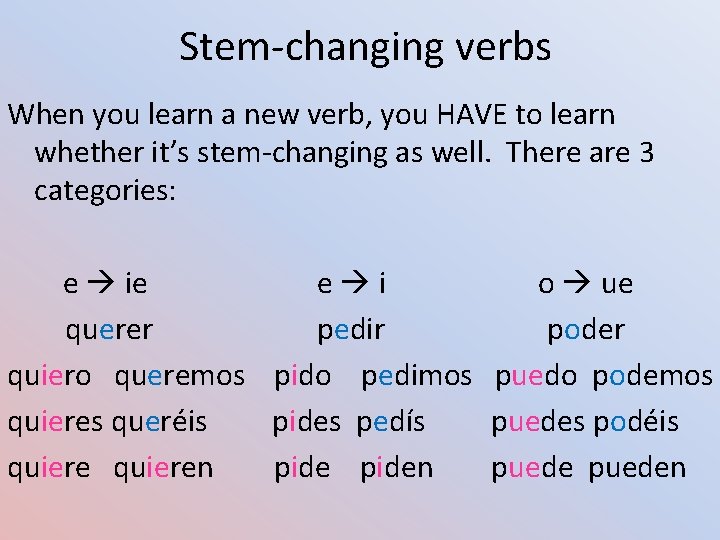
Stem-changing verbs When you learn a new verb, you HAVE to learn whether it’s stem-changing as well. There are 3 categories: e ie e i o ue querer pedir poder quiero queremos pido pedimos puedo podemos quieres queréis pides pedís puedes podéis quieren piden pueden
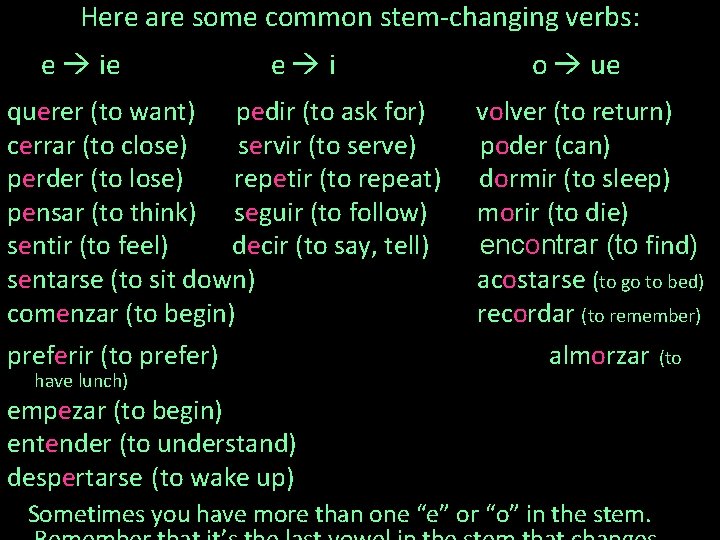
Here are some common stem-changing verbs: e ie e i querer (to want) pedir (to ask for) cerrar (to close) servir (to serve) perder (to lose) repetir (to repeat) pensar (to think) seguir (to follow) sentir (to feel) decir (to say, tell) sentarse (to sit down) comenzar (to begin) preferir (to prefer) have lunch) o ue volver (to return) poder (can) dormir (to sleep) morir (to die) encontrar (to find) acostarse (to go to bed) recordar (to remember) almorzar empezar (to begin) entender (to understand) despertarse (to wake up) Sometimes you have more than one “e” or “o” in the stem. (to
The stem-changing verbs on the previous page are some of the most common. But when you’ve learned others, & you will be learning more as you look them up for use in writing, BE SURE YOU NOTE WHETHER EVERY VERB YOU LOOK UP/LEARN IS STEM-CHANGING OR NOT. Duh question: figure out if “masticar” (to chew) is stemchanging. Duh answer: exactly which vowel in that word could you stemchange? Point: only words that have an e or o right before the –ar/-er/-ir can be stem-changing, so don’t bother trying to find out, if there’s no e or o there.
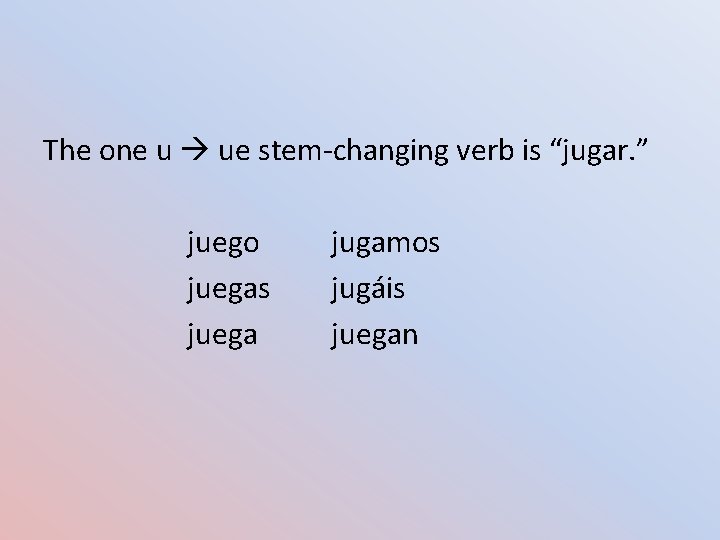
The one u ue stem-changing verb is “jugar. ” juego juegas juega jugamos jugáis juegan
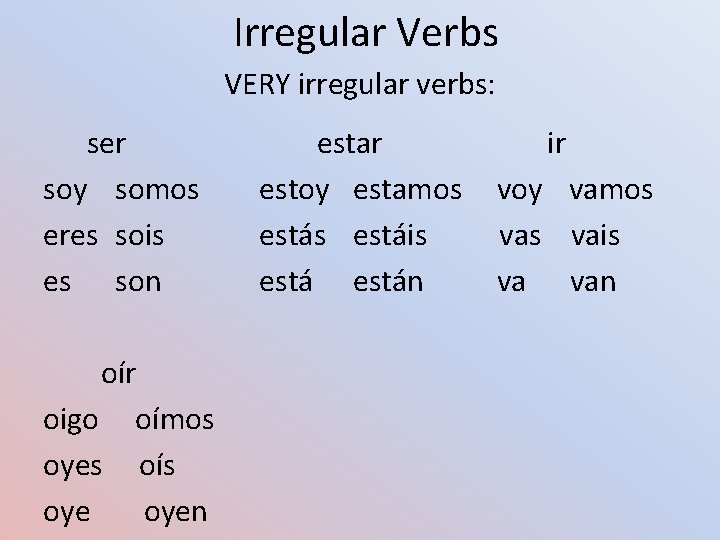
Irregular Verbs VERY irregular verbs: ser soy somos eres sois es son oír oigo oímos oyes oís oyen estar estoy estamos estáis están ir voy vamos vais va van
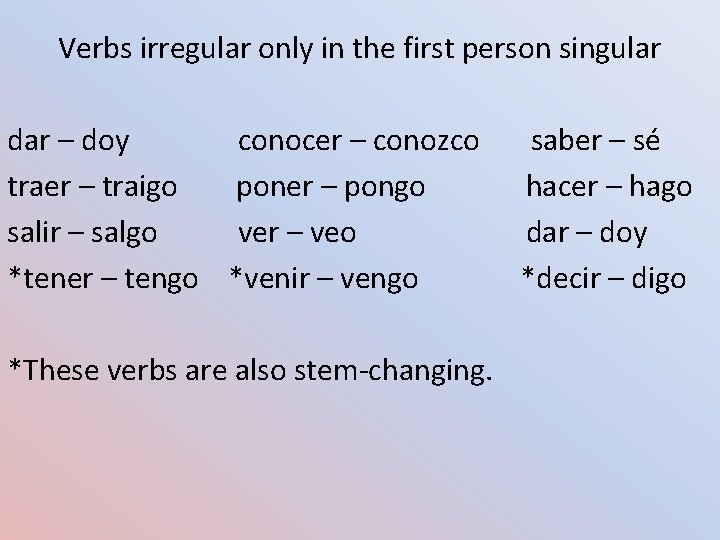
Verbs irregular only in the first person singular dar – doy conocer – conozco traer – traigo poner – pongo salir – salgo ver – veo *tener – tengo *venir – vengo *These verbs are also stem-changing. saber – sé hacer – hago dar – doy *decir – digo
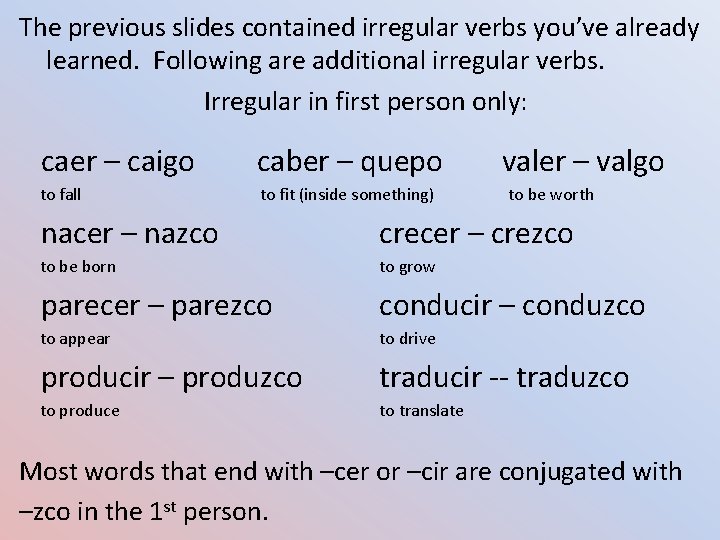
The previous slides contained irregular verbs you’ve already learned. Following are additional irregular verbs. Irregular in first person only: caer – caigo caber – quepo to fall to fit (inside something) valer – valgo to be worth nacer – nazco crecer – crezco to be born to grow parecer – parezco conducir – conduzco to appear to drive producir – produzco traducir -- traduzco to produce to translate Most words that end with –cer or –cir are conjugated with –zco in the 1 st person.
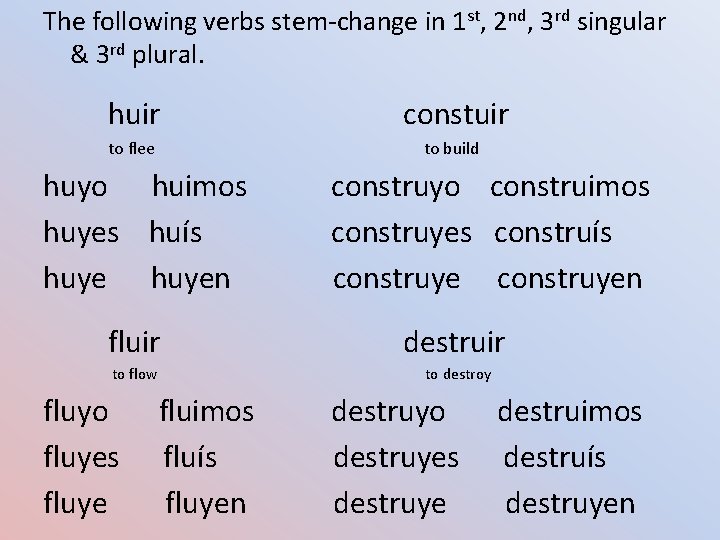
The following verbs stem-change in 1 st, 2 nd, 3 rd singular & 3 rd plural. huir constuir to flee to build huyo huimos huyes huís huyen construyo construimos construyes construís construyen fluir destruir to flow to destroy fluyo fluyes fluye fluimos fluís fluyen destruyo destruyes destruye destruimos destruís destruyen
ALL verbs that end in –uir are conjugated as the previous four. Note that oír, with the exception of the irregular yo form, is conjugated the same way.
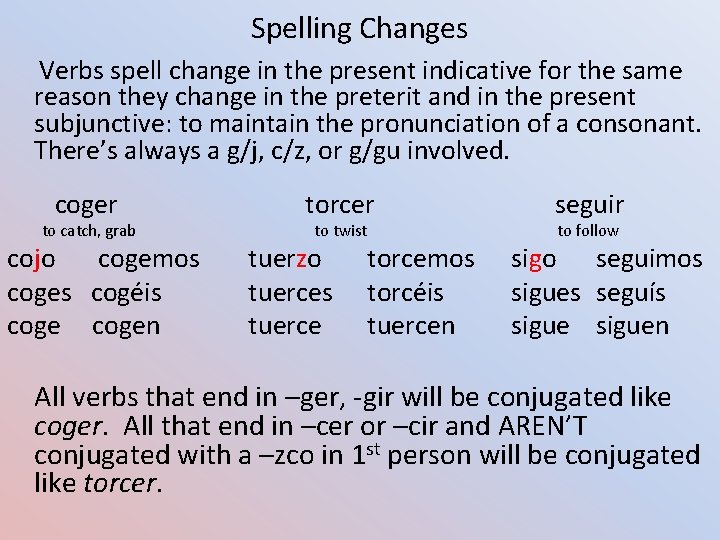
Spelling Changes Verbs spell change in the present indicative for the same reason they change in the preterit and in the present subjunctive: to maintain the pronunciation of a consonant. There’s always a g/j, c/z, or g/gu involved. coger to catch, grab cojo cogemos coges cogéis cogen torcer to twist tuerzo tuerces tuerce torcemos torcéis tuercen seguir to follow sigo seguimos sigues seguís siguen All verbs that end in –ger, -gir will be conjugated like coger. All that end in –cer or –cir and AREN’T conjugated with a –zco in 1 st person will be conjugated like torcer.
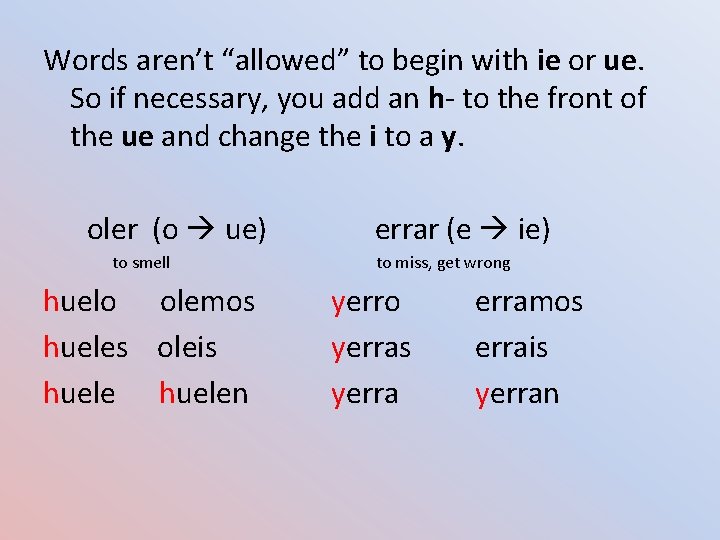
Words aren’t “allowed” to begin with ie or ue. So if necessary, you add an h- to the front of the ue and change the i to a y. oler (o ue) to smell huelo olemos hueles oleis huelen errar (e ie) to miss, get wrong yerro yerras yerramos errais yerran
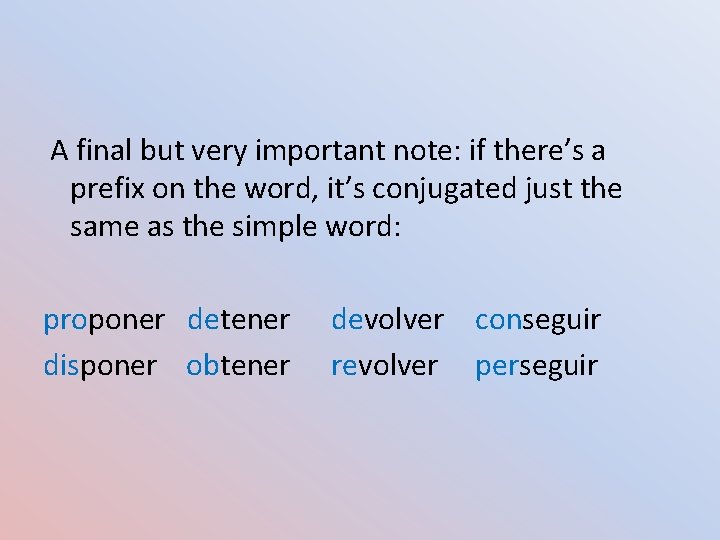
A final but very important note: if there’s a prefix on the word, it’s conjugated just the same as the simple word: proponer detener disponer obtener devolver conseguir revolver perseguir

PRACTICE
- Slides: 16