
Present Tense er and ir Verbs Singular forms
Present Tense -er and -ir Verbs Singular forms Plural forms
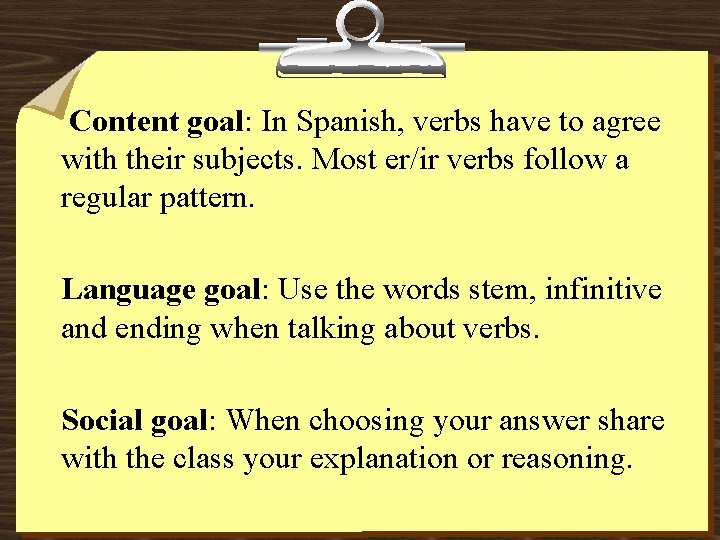
Content goal: In Spanish, verbs have to agree with their subjects. Most er/ir verbs follow a regular pattern. Language goal: Use the words stem, infinitive and ending when talking about verbs. Social goal: When choosing your answer share with the class your explanation or reasoning.
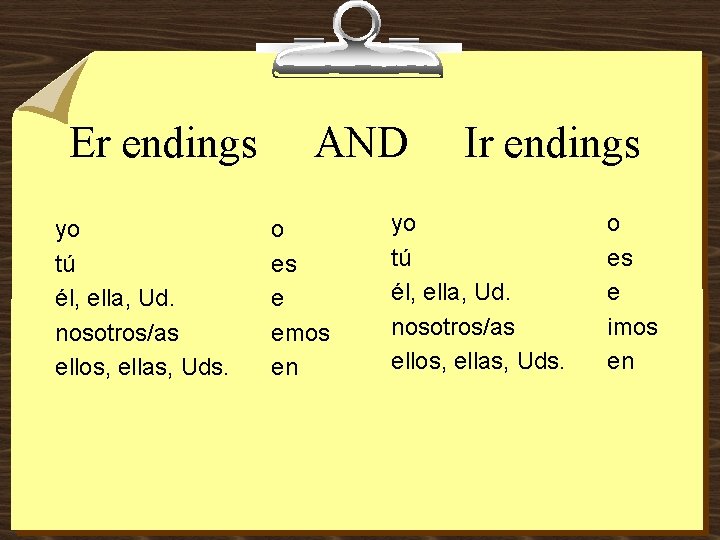
Er endings yo tú él, ella, Ud. nosotros/as ellos, ellas, Uds. AND o es e emos en Ir endings yo tú él, ella, Ud. nosotros/as ellos, ellas, Uds. o es e imos en
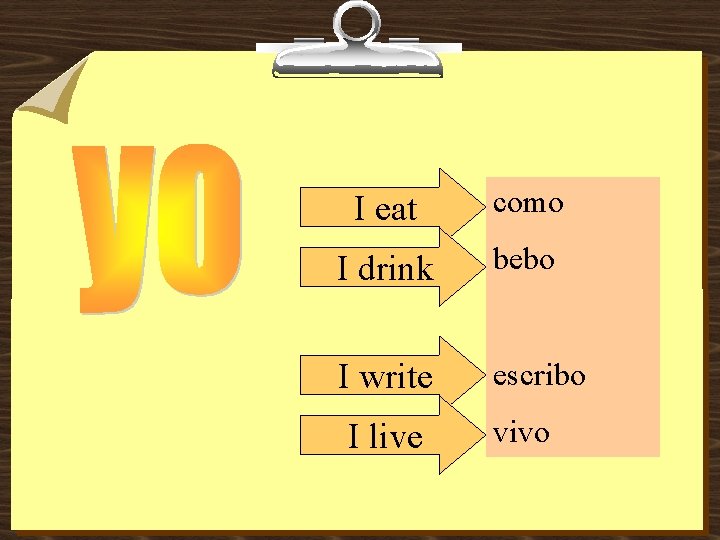
I eat como I drink bebo I write escribo I live vivo
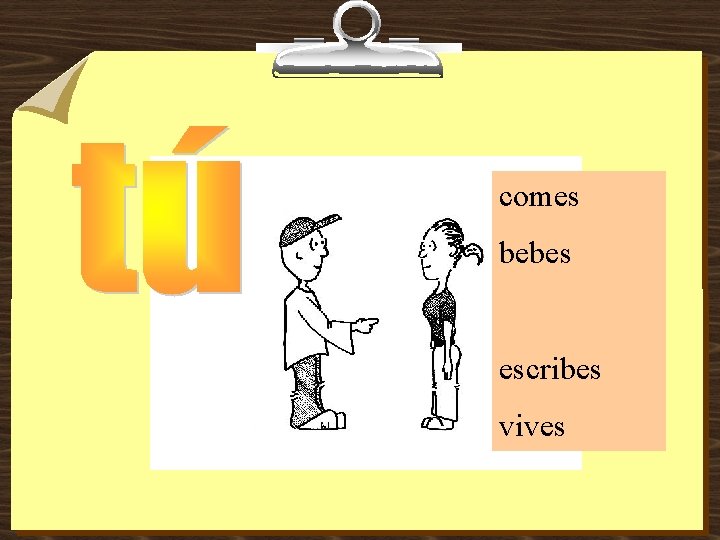
comes bebes escribes vives
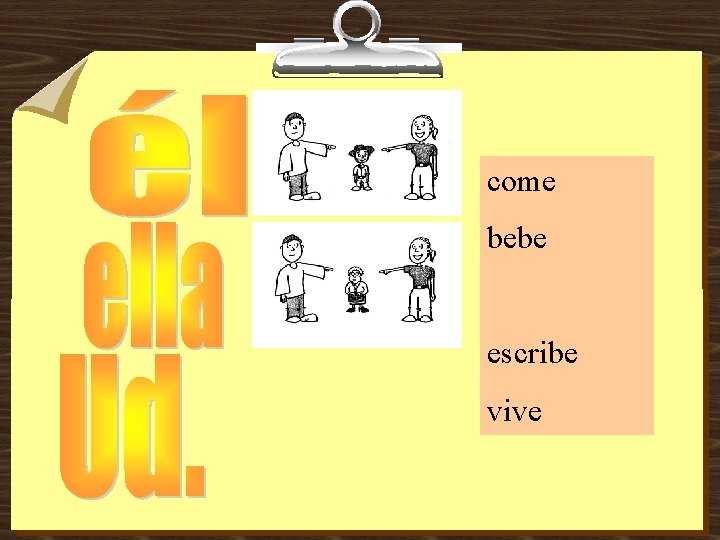
come bebe escribe vive
comemos bebemos escribimos vivimos
comen escriben viven
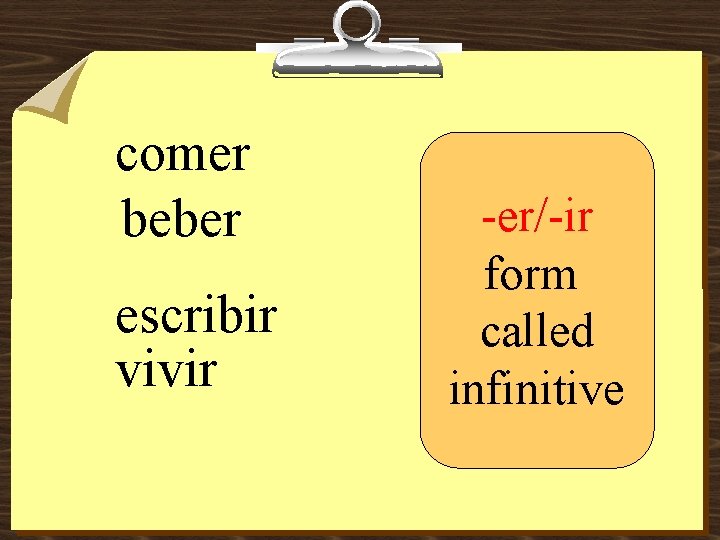
comer beber escribir vivir -er/-ir form called infinitive
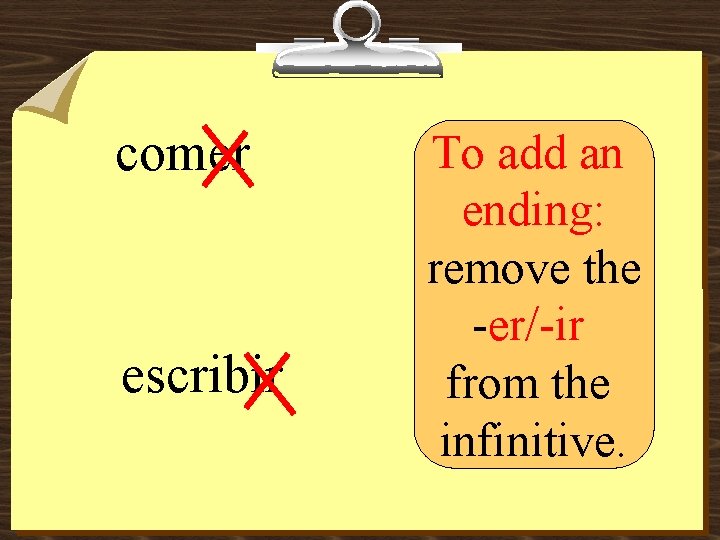
comer escribir To add an ending: remove the -er/-ir from the infinitive.
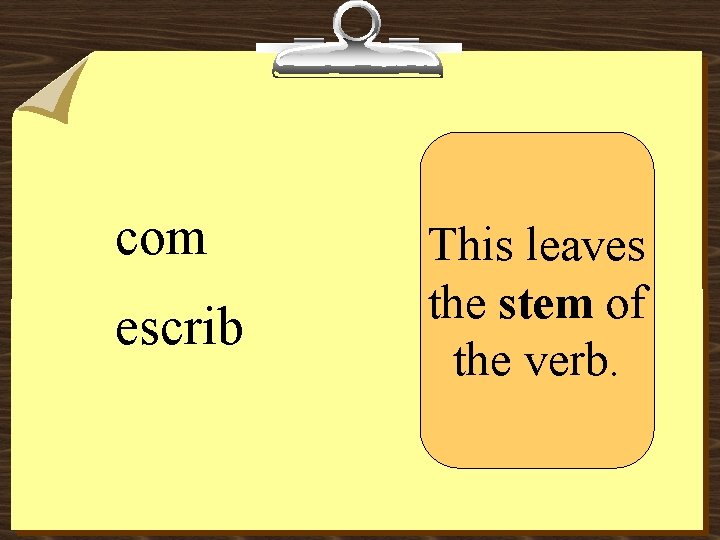
com escrib This leaves the stem of the verb.
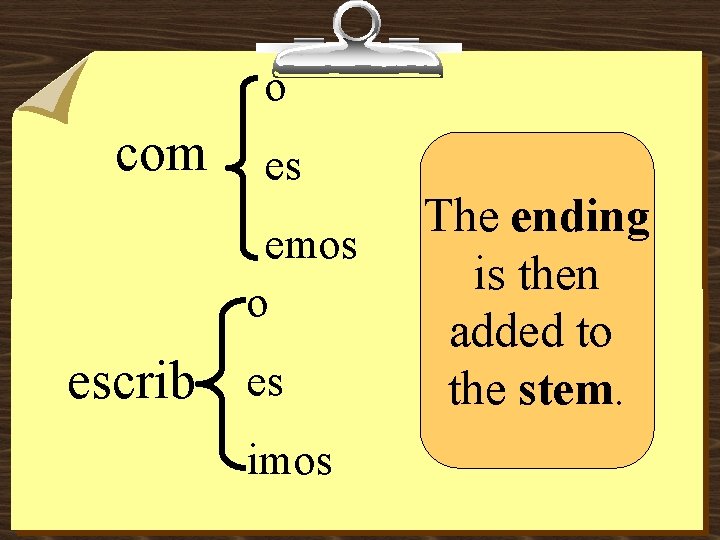
o com es emos o escrib es imos The ending is then added to the stem.
Content goal: In Spanish, verbs have to agree with their subjects. Most er/ir verbs follow a regular pattern. Language goal: Use the words stem, infinitive and ending when talking about verbs. Social goal: When choosing your answer share with the class your explanation or reasoning.
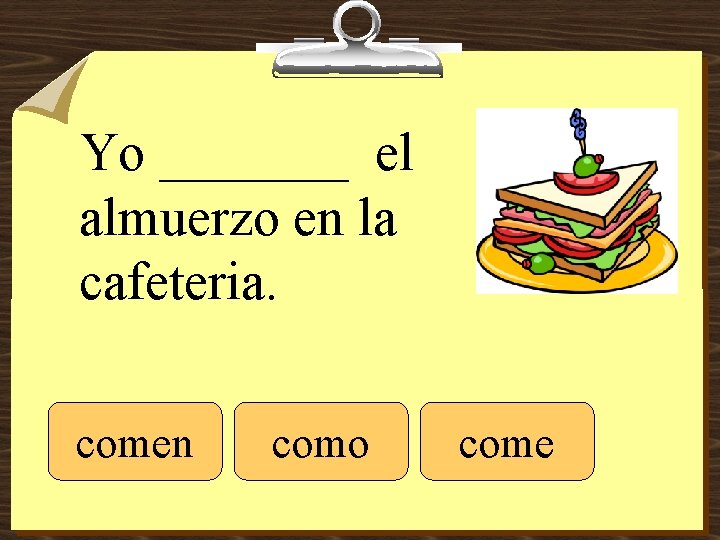
Yo _______ el almuerzo en la cafeteria. comen como come
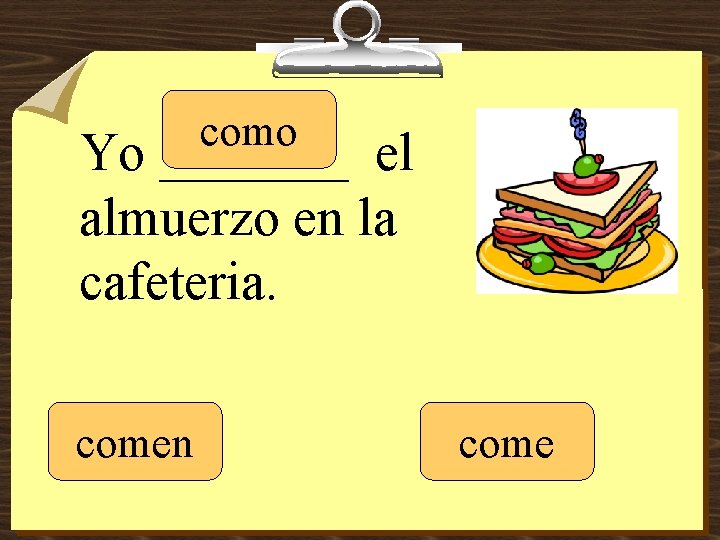
como Yo _______ el almuerzo en la cafeteria. comen come
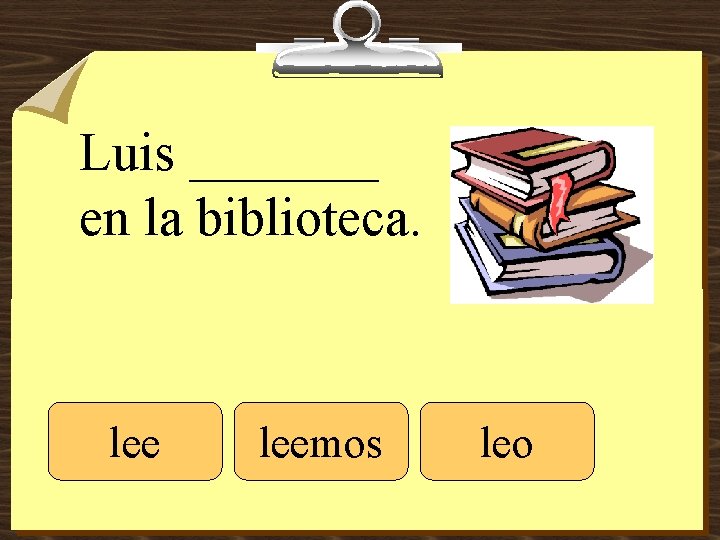
Luis _______ en la biblioteca. leemos leo
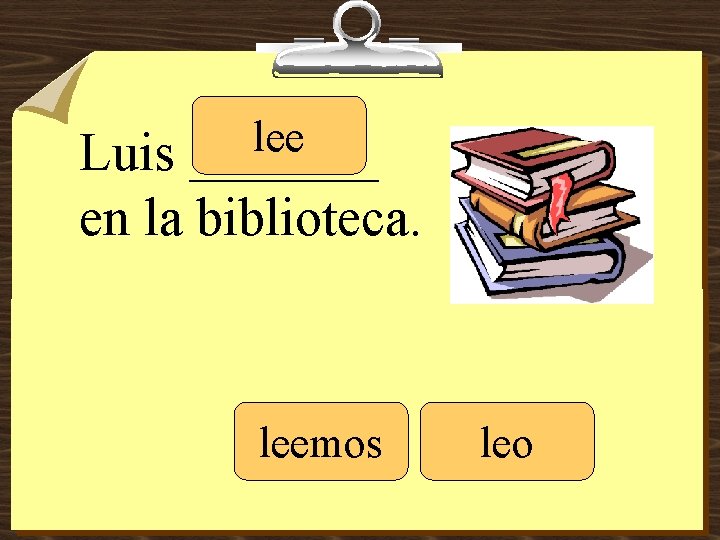
lee _______ Luis en la biblioteca. leemos leo
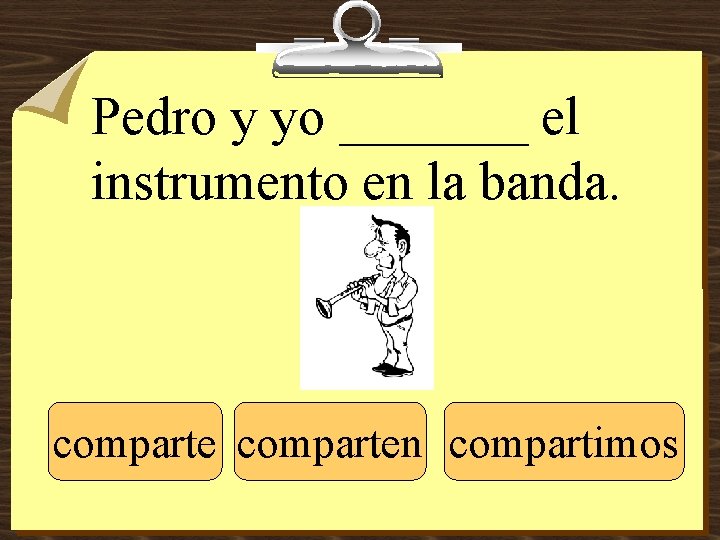
Pedro y yo _______ el instrumento en la banda. comparten compartimos
compartimos _____ Pedro y o yo el instrumento en la banda. comparten
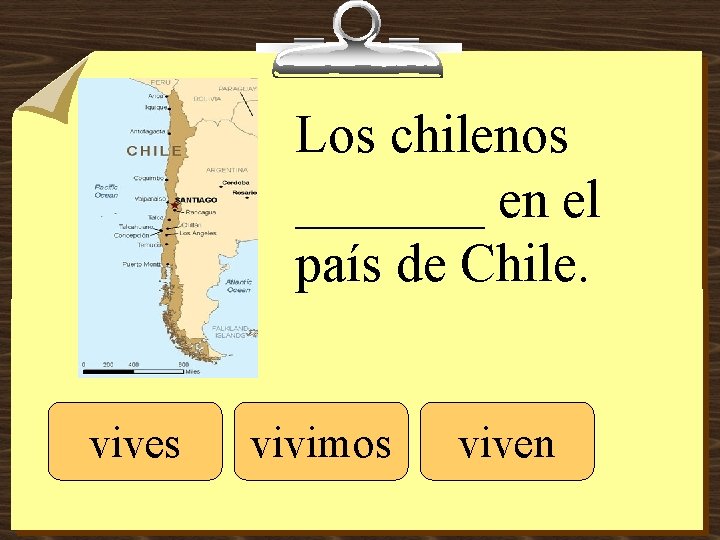
Los chilenos _______ en el país de Chile. vives vivimos viven
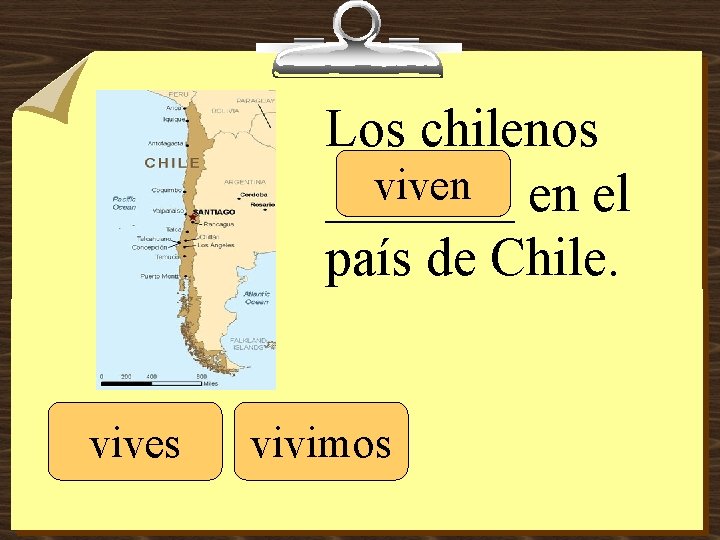
Los chilenos viven en el _______ país de Chile. vives vivimos
- Slides: 21