
Present Status of Chemical industrial Disaster Risk Management
- Slides: 41
Present Status of Chemical (industrial) Disaster Risk Management and future Strategies High frequency low consequence Low frequency high consequence Dr Rakesh Dubey Director Disaster Management Institute Bhopal October 21, 2010 at Hyderabad, AP rakeshddubey@hotmail. com 1
October 21, 2010 at Hyderabad, AP rakeshddubey@hotmail. com 2
October 21, 2010 at Hyderabad, AP rakeshddubey@hotmail. com 3
October 21, 2010 at Hyderabad, AP rakeshddubey@hotmail. com 4
Objective of the lecture • understand the philosophy of hazards and risk recognisition/assessment; • understand the philosophy and methods of control • understand suggest several methods of preventing and controlling hazards/risks in workplaces. October 21, 2010 at Hyderabad, AP rakeshddubey@hotmail. com 5
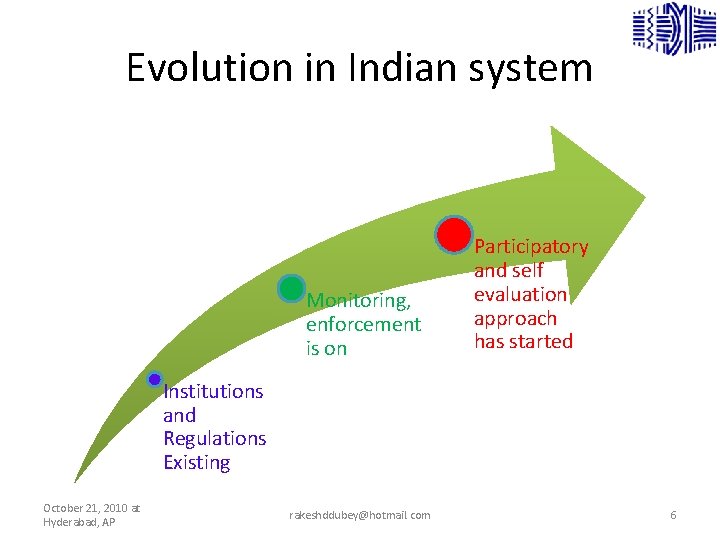
Evolution in Indian system Monitoring, enforcement is on Participatory and self evaluation approach has started Institutions and Regulations Existing October 21, 2010 at Hyderabad, AP rakeshddubey@hotmail. com 6
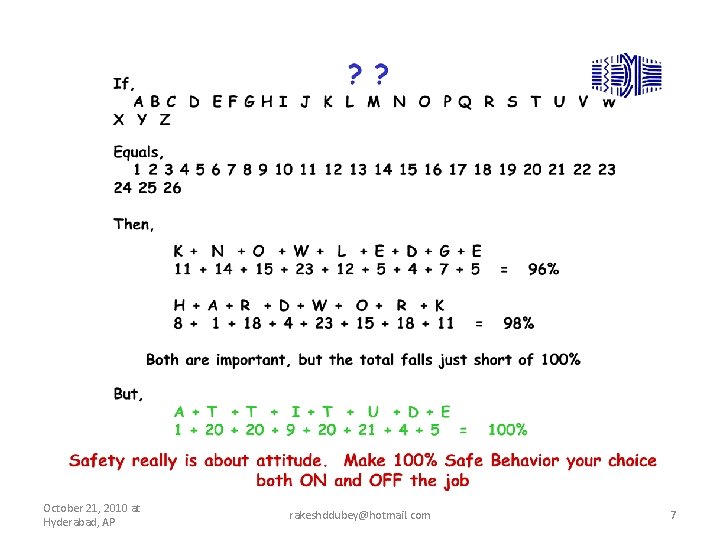
October 21, 2010 at Hyderabad, AP rakeshddubey@hotmail. com 7
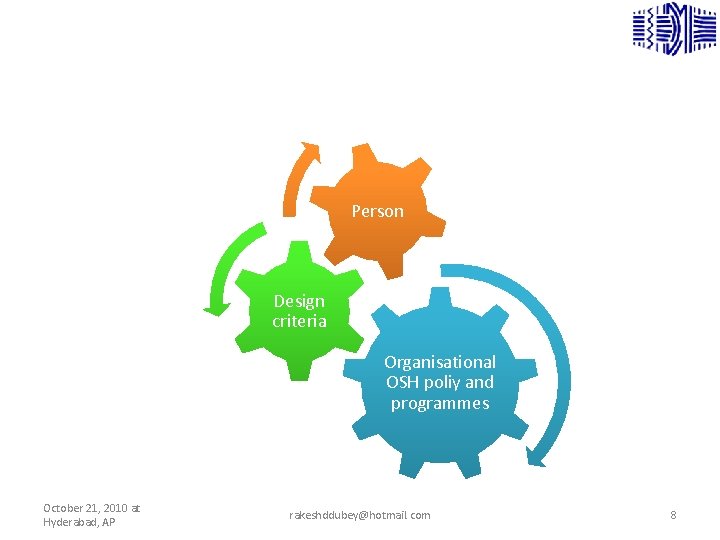
Person Design criteria Organisational OSH poliy and programmes October 21, 2010 at Hyderabad, AP rakeshddubey@hotmail. com 8
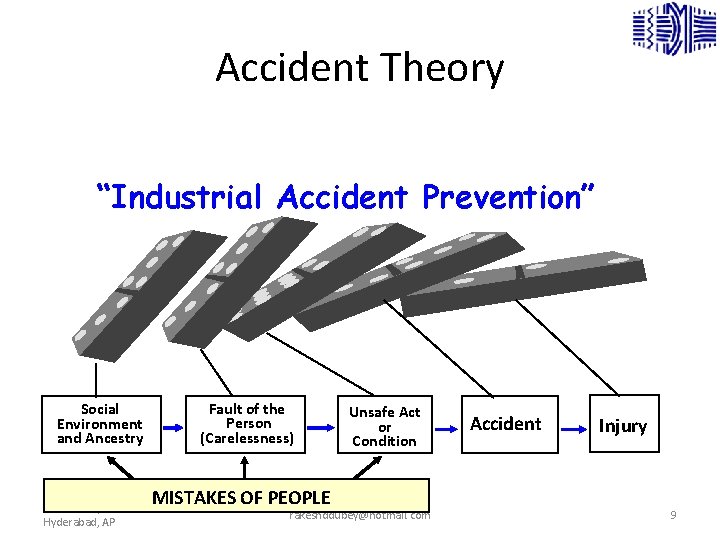
Accident Theory “Industrial Accident Prevention” Social Environment and Ancestry October 21, 2010 at Hyderabad, AP Fault of the Person (Carelessness) MISTAKES OF PEOPLE Unsafe Act or Condition rakeshddubey@hotmail. com Accident Injury 9
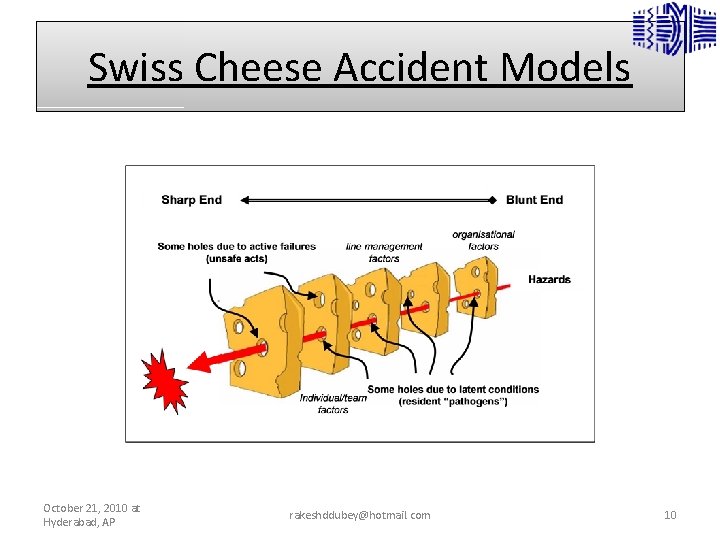
Swiss Cheese Accident Models October 21, 2010 at Hyderabad, AP rakeshddubey@hotmail. com 10
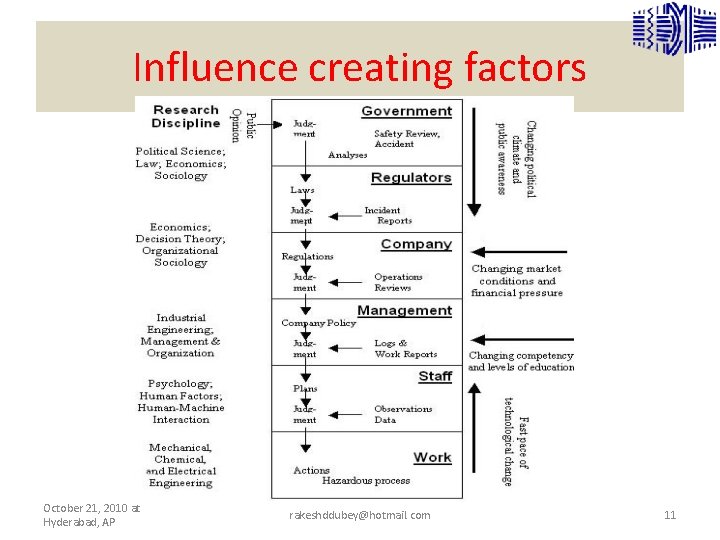
Influence creating factors October 21, 2010 at Hyderabad, AP rakeshddubey@hotmail. com 11
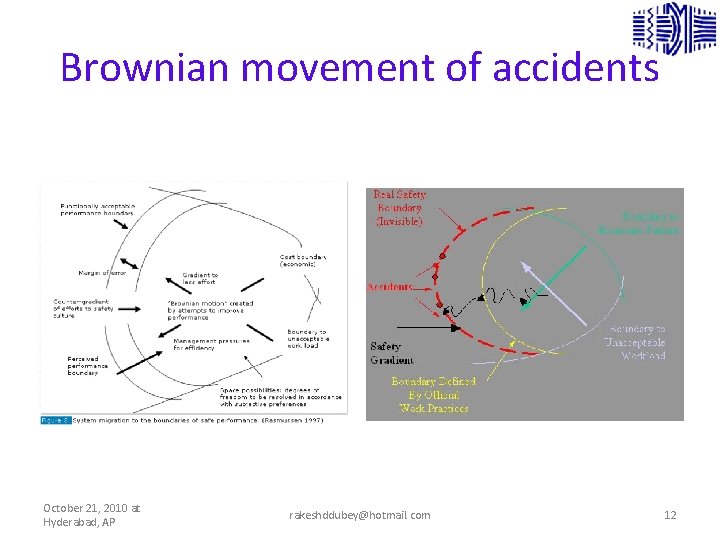
Brownian movement of accidents October 21, 2010 at Hyderabad, AP rakeshddubey@hotmail. com 12
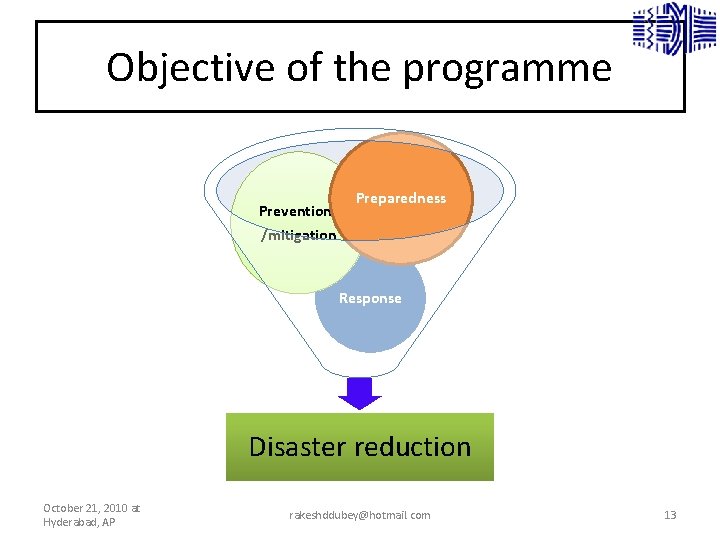
Objective of the programme Prevention/ /mitigation Preparedness Response Disaster reduction October 21, 2010 at Hyderabad, AP rakeshddubey@hotmail. com 13
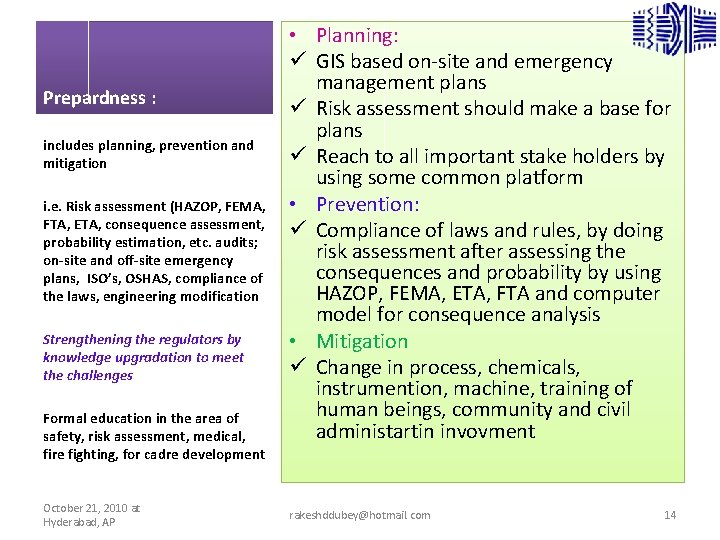
Prepardness : includes planning, prevention and mitigation i. e. Risk assessment (HAZOP, FEMA, FTA, ETA, consequence assessment, probability estimation, etc. audits; on-site and off-site emergency plans, ISO’s, OSHAS, compliance of the laws, engineering modification Strengthening the regulators by knowledge upgradation to meet the challenges Formal education in the area of safety, risk assessment, medical, fire fighting, for cadre development October 21, 2010 at Hyderabad, AP • Planning: ü GIS based on-site and emergency management plans ü Risk assessment should make a base for plans ü Reach to all important stake holders by using some common platform • Prevention: ü Compliance of laws and rules, by doing risk assessment after assessing the consequences and probability by using HAZOP, FEMA, ETA, FTA and computer model for consequence analysis • Mitigation ü Change in process, chemicals, instrumention, machine, training of human beings, community and civil administartin invovment rakeshddubey@hotmail. com 14
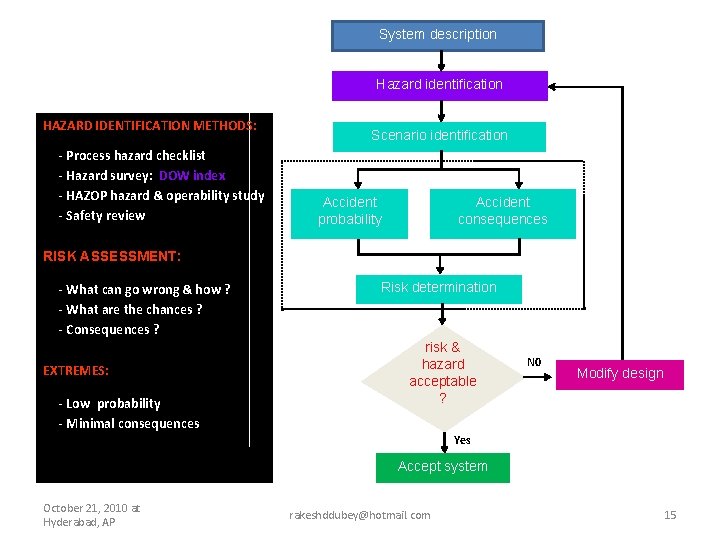
System description Hazard identification HAZARD IDENTIFICATION METHODS: - Process hazard checklist - Hazard survey: DOW index - HAZOP hazard & operability study - Safety review Scenario identification Accident probability Accident consequences RISK ASSESSMENT: - What can go wrong & how ? - What are the chances ? - Consequences ? EXTREMES: - Low probability - Minimal consequences Risk determination risk & hazard acceptable ? N 0 Modify design Yes Accept system October 21, 2010 at Hyderabad, AP rakeshddubey@hotmail. com 15
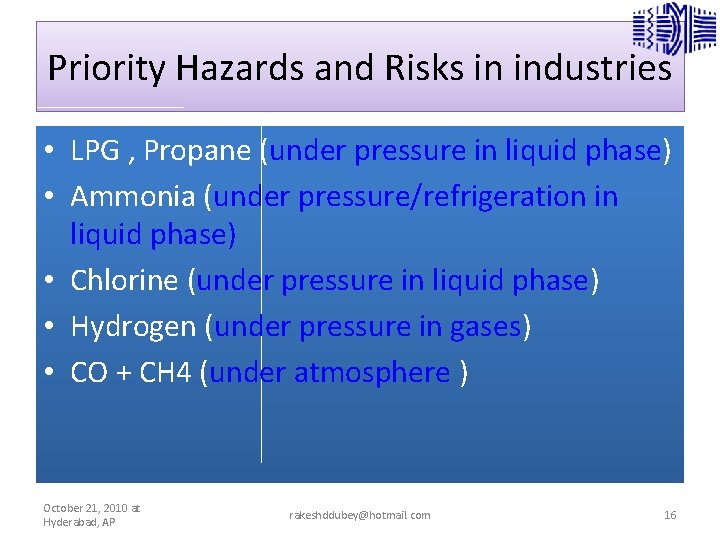
Priority Hazards and Risks in industries • LPG , Propane (under pressure in liquid phase) • Ammonia (under pressure/refrigeration in liquid phase) • Chlorine (under pressure in liquid phase) • Hydrogen (under pressure in gases) • CO + CH 4 (under atmosphere ) October 21, 2010 at Hyderabad, AP rakeshddubey@hotmail. com 16
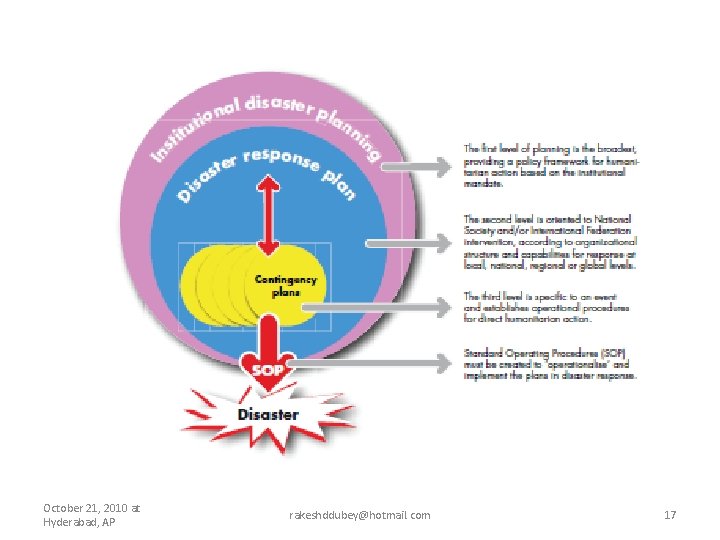
October 21, 2010 at Hyderabad, AP rakeshddubey@hotmail. com 17
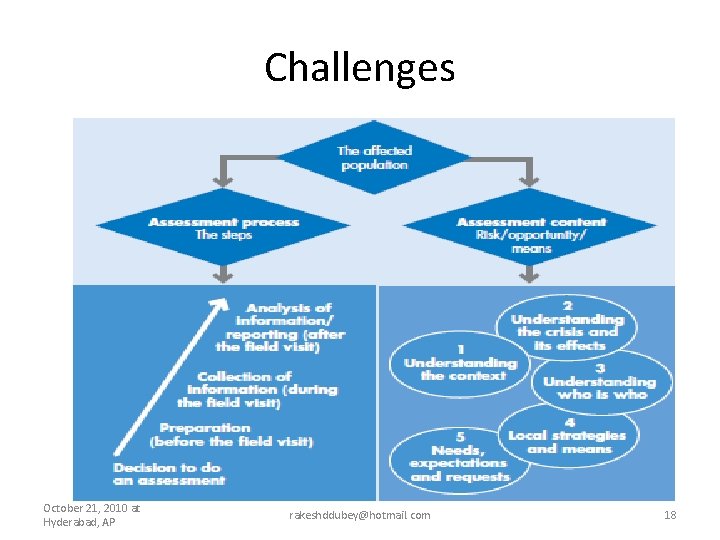
Challenges October 21, 2010 at Hyderabad, AP rakeshddubey@hotmail. com 18
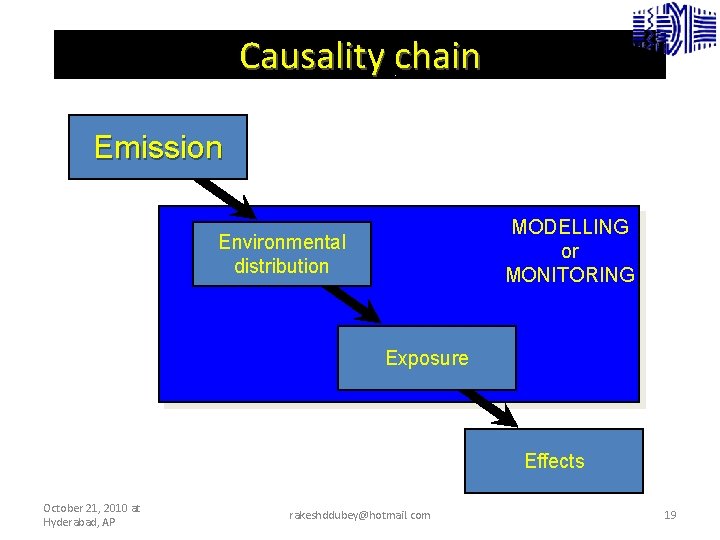
Causality chain Emission MODELLING or MONITORING Environmental distribution Exposure Effects October 21, 2010 at Hyderabad, AP rakeshddubey@hotmail. com 19
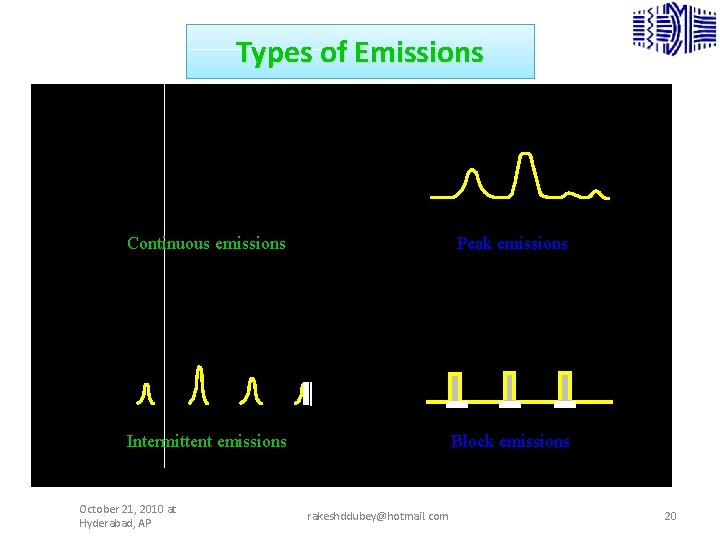
Types of Emissions Continuous emissions Peak emissions Intermittent emissions Block emissions October 21, 2010 at Hyderabad, AP rakeshddubey@hotmail. com 20
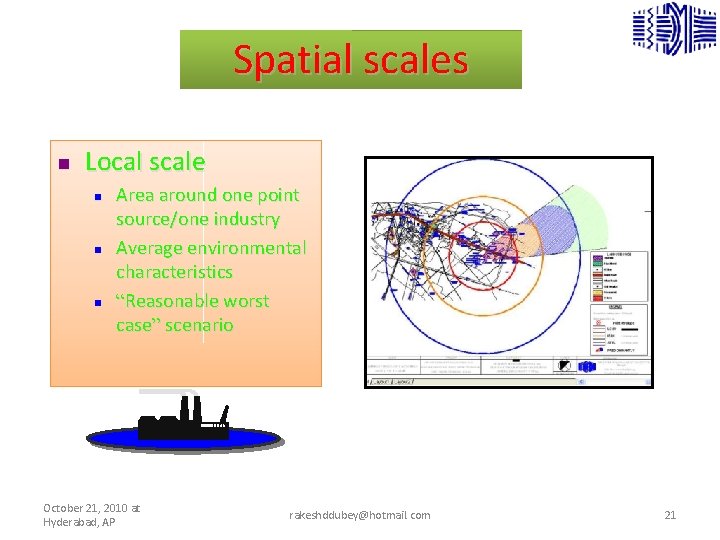
Spatial scales n Local scale n n n Area around one point source/one industry Average environmental characteristics “Reasonable worst case” scenario October 21, 2010 at Hyderabad, AP rakeshddubey@hotmail. com 21
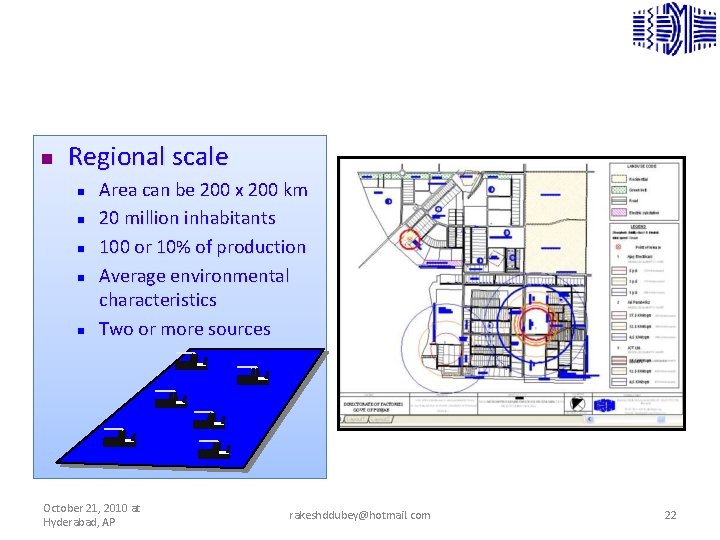
n Regional scale n n n Area can be 200 x 200 km 20 million inhabitants 100 or 10% of production Average environmental characteristics Two or more sources October 21, 2010 at Hyderabad, AP rakeshddubey@hotmail. com 22
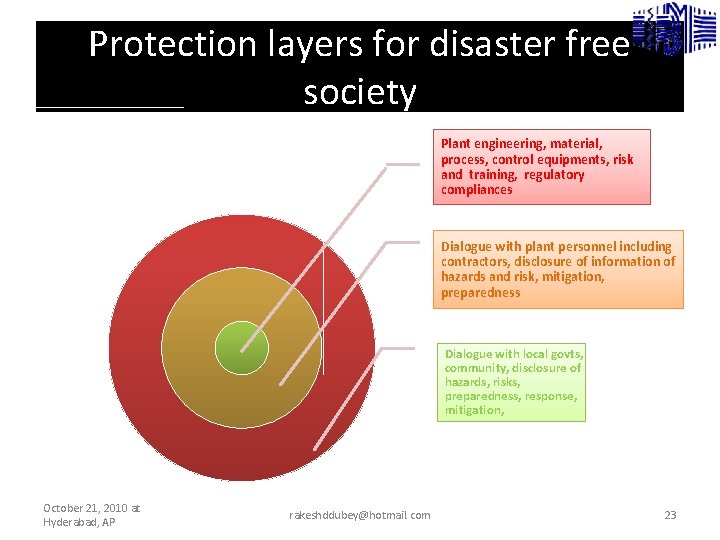
Protection layers for disaster free society Plant engineering, material, process, control equipments, risk and training, regulatory compliances Dialogue with plant personnel including contractors, disclosure of information of hazards and risk, mitigation, preparedness Dialogue with local govts, community, disclosure of hazards, risks, preparedness, response, mitigation, October 21, 2010 at Hyderabad, AP rakeshddubey@hotmail. com 23
Response Human behaviour, community involvement and participation in emergency process, response of fire fighters, medical response, police (law and order) eg Mock drills Compliance of regulations October 21, 2010 at Hyderabad, AP • Training ü Plant staff from top to bottom including the contractual labours, visitors, associates likes traders, suppliers consumers • Community ü Involvement of community in all important activities, disclosure of vital information with preparedness • National/state/local Governments ü Assessment of weakness in medical preparedness, fire fighting, law and order and corrective measures • Mockdrills ü By involving all stakeholders including, armed forces and NDRF rakeshddubey@hotmail. com 24
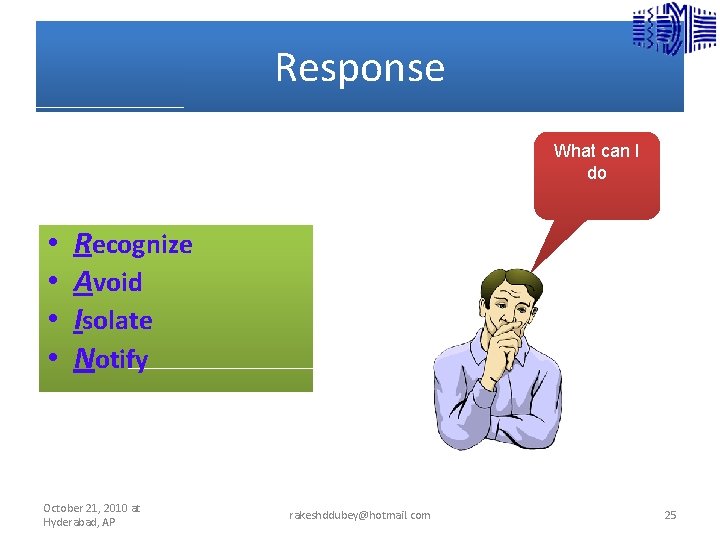
Response What can I do • • Recognize Avoid Isolate Notify October 21, 2010 at Hyderabad, AP rakeshddubey@hotmail. com 25
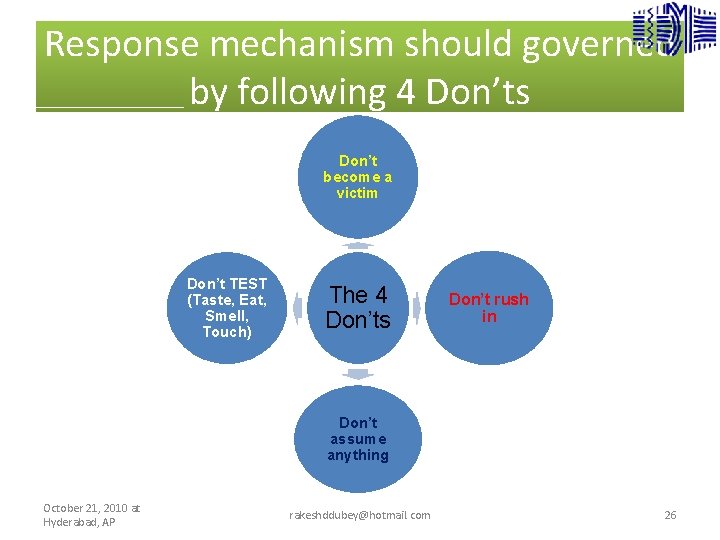
Response mechanism should governed by following 4 Don’ts Don’t become a victim Don’t TEST (Taste, Eat, Smell, Touch) The 4 Don’ts Don’t rush in Don’t assume anything October 21, 2010 at Hyderabad, AP rakeshddubey@hotmail. com 26
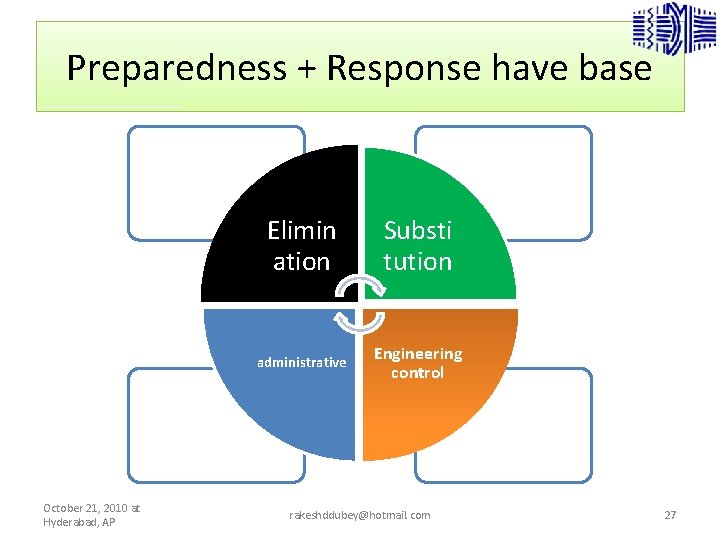
Preparedness + Response have base October 21, 2010 at Hyderabad, AP Elimin ation Substi tution administrative Engineering control rakeshddubey@hotmail. com 27
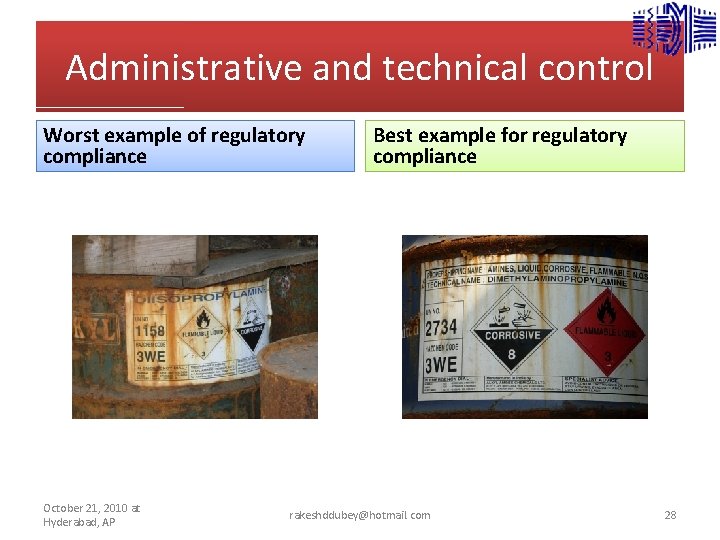
Administrative and technical control Worst example of regulatory compliance October 21, 2010 at Hyderabad, AP Best example for regulatory compliance rakeshddubey@hotmail. com 28
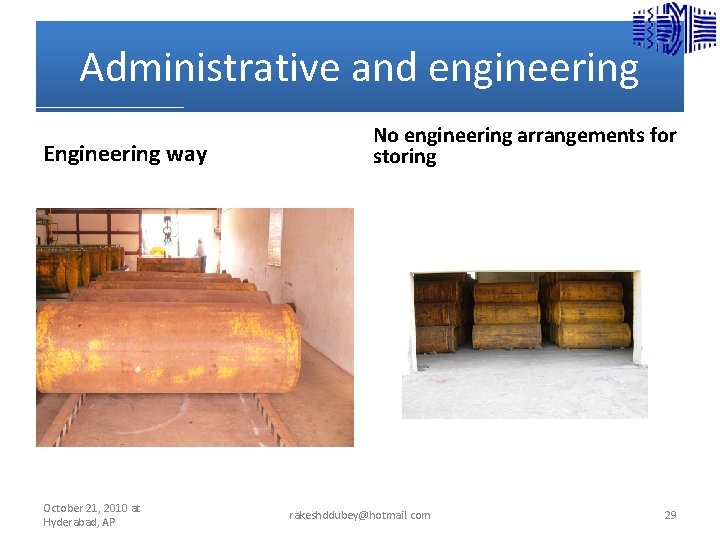
Administrative and engineering Engineering way October 21, 2010 at Hyderabad, AP No engineering arrangements for storing rakeshddubey@hotmail. com 29
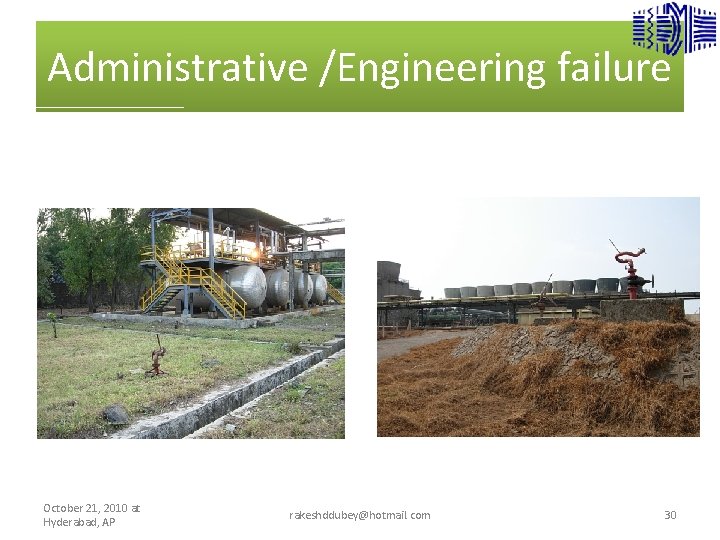
Administrative /Engineering failure October 21, 2010 at Hyderabad, AP rakeshddubey@hotmail. com 30
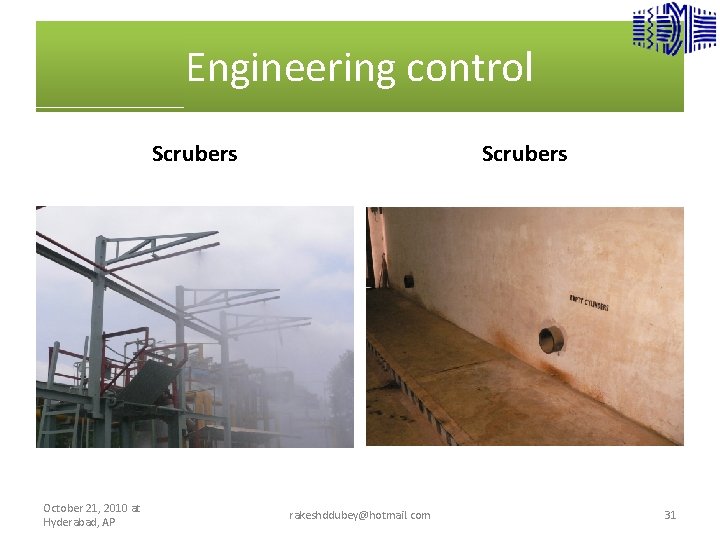
Engineering control Scrubers October 21, 2010 at Hyderabad, AP Scrubers rakeshddubey@hotmail. com 31
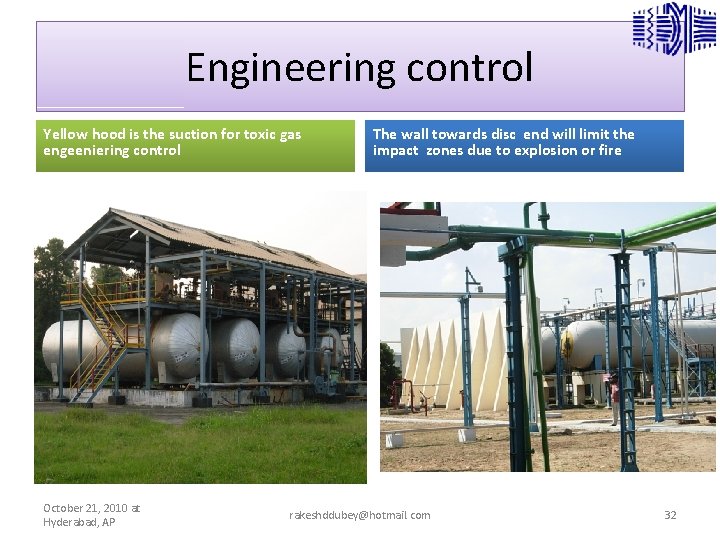
Engineering control Yellow hood is the suction for toxic gas engeeniering control October 21, 2010 at Hyderabad, AP The wall towards disc end will limit the impact zones due to explosion or fire rakeshddubey@hotmail. com 32
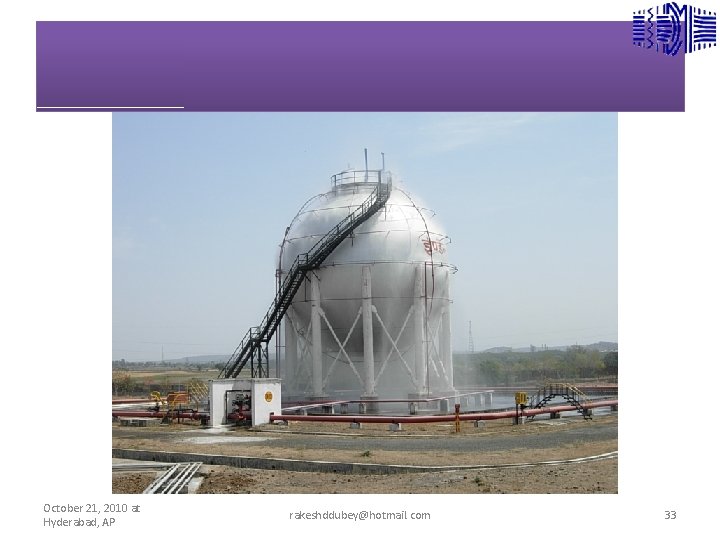
October 21, 2010 at Hyderabad, AP rakeshddubey@hotmail. com 33
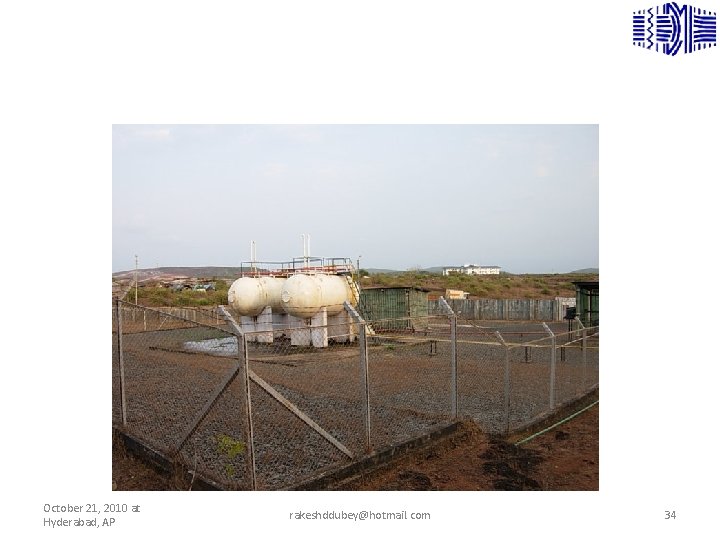
October 21, 2010 at Hyderabad, AP rakeshddubey@hotmail. com 34
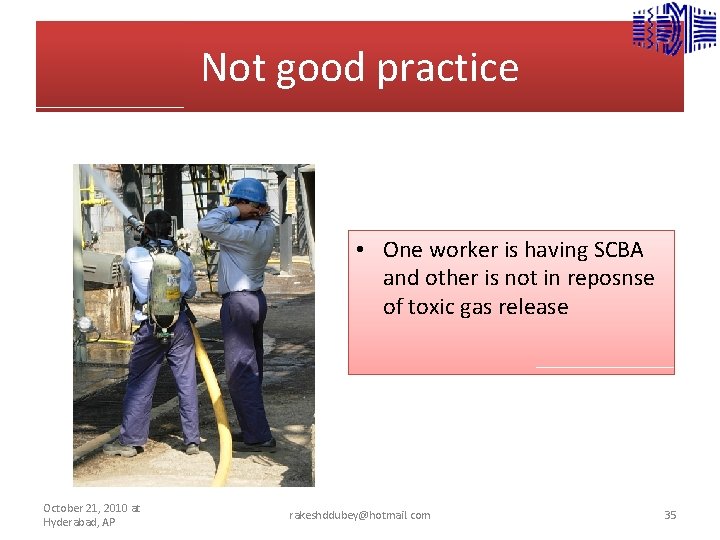
Not good practice • One worker is having SCBA and other is not in reposnse of toxic gas release October 21, 2010 at Hyderabad, AP rakeshddubey@hotmail. com 35
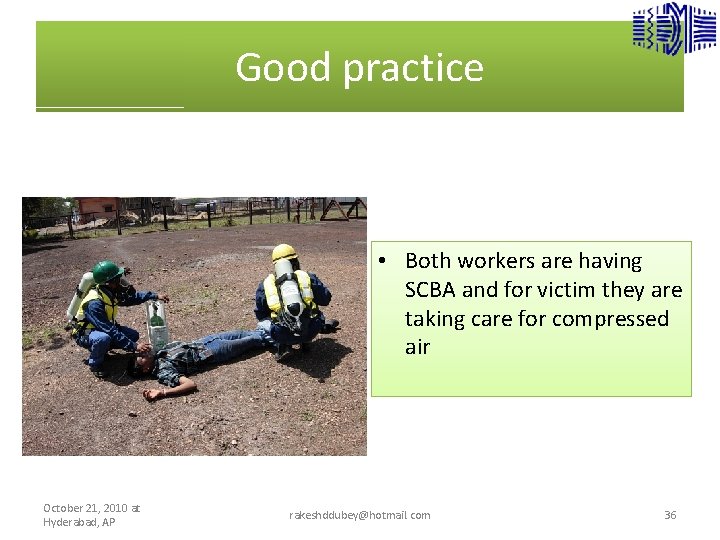
Good practice • Both workers are having SCBA and for victim they are taking care for compressed air October 21, 2010 at Hyderabad, AP rakeshddubey@hotmail. com 36
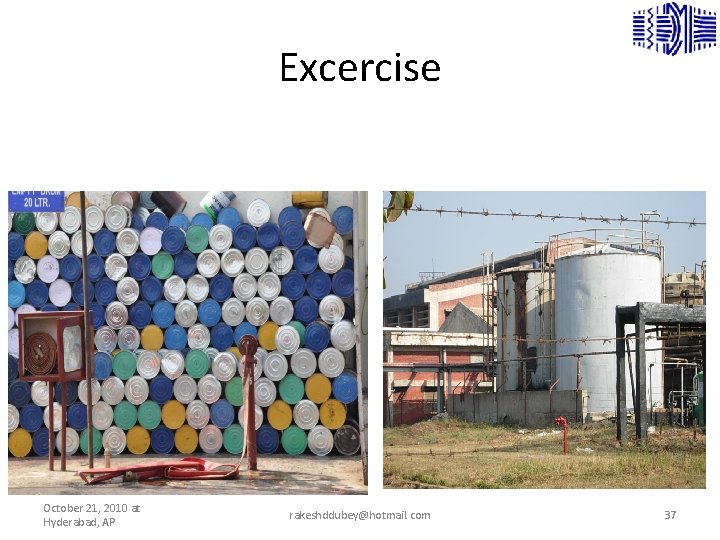
Excercise October 21, 2010 at Hyderabad, AP rakeshddubey@hotmail. com 37
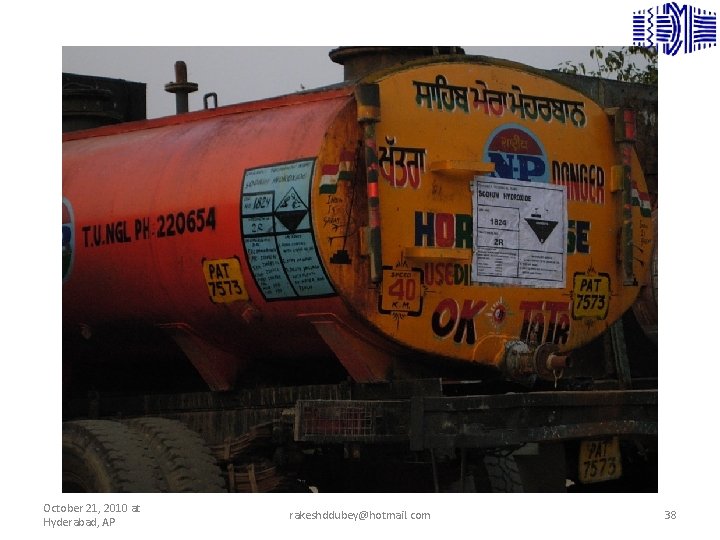
October 21, 2010 at Hyderabad, AP rakeshddubey@hotmail. com 38
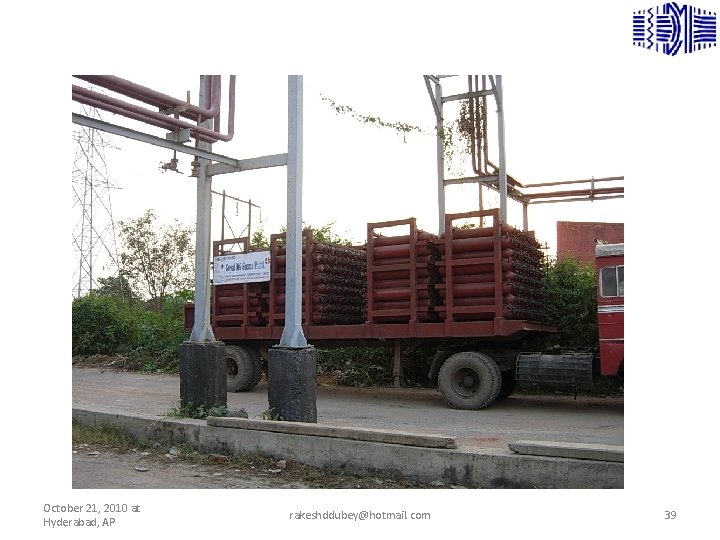
October 21, 2010 at Hyderabad, AP rakeshddubey@hotmail. com 39
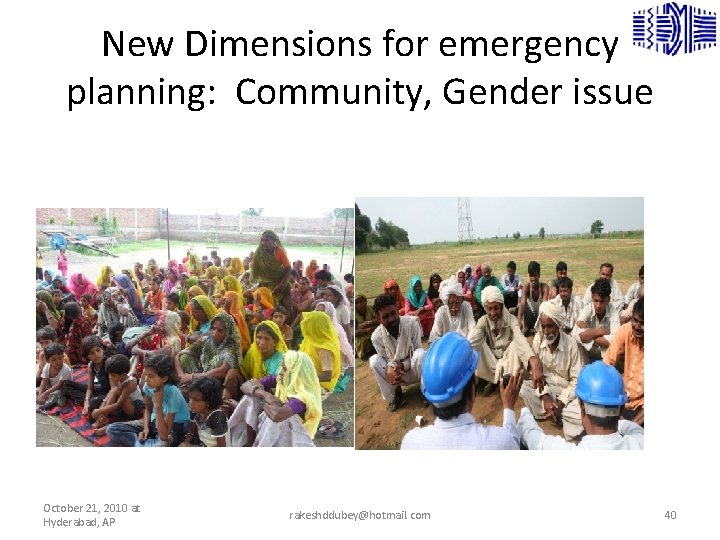
New Dimensions for emergency planning: Community, Gender issue October 21, 2010 at Hyderabad, AP rakeshddubey@hotmail. com 40
Journey continues www. hrdp-idrm. in rakeshddubey@hotmail. com October 21, 2010 at Hyderabad, AP rakeshddubey@hotmail. com 41