
PRESENT SIMPLE TENSE We use the Present Simple
- Slides: 7
PRESENT SIMPLE TENSE
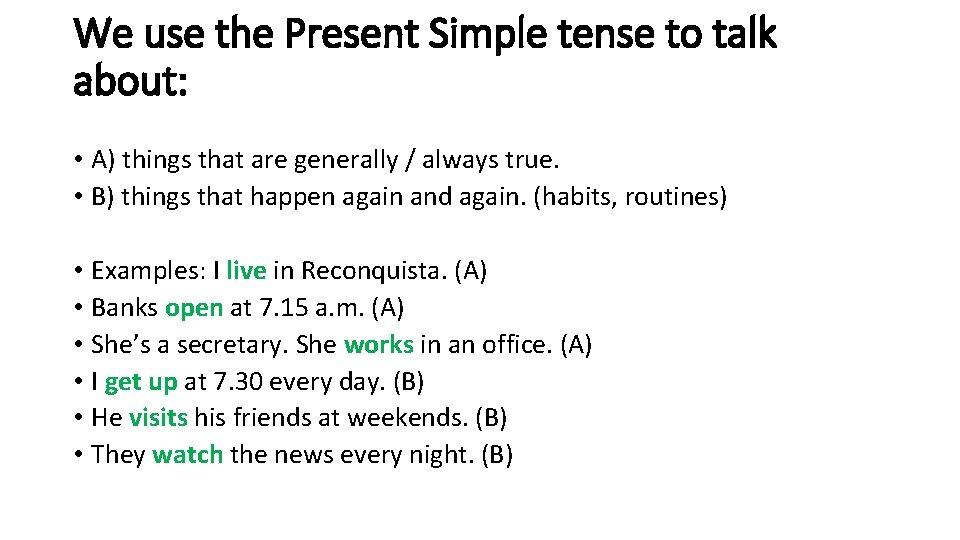
We use the Present Simple tense to talk about: • A) things that are generally / always true. • B) things that happen again and again. (habits, routines) • Examples: I live in Reconquista. (A) • Banks open at 7. 15 a. m. (A) • She’s a secretary. She works in an office. (A) • I get up at 7. 30 every day. (B) • He visits his friends at weekends. (B) • They watch the news every night. (B)
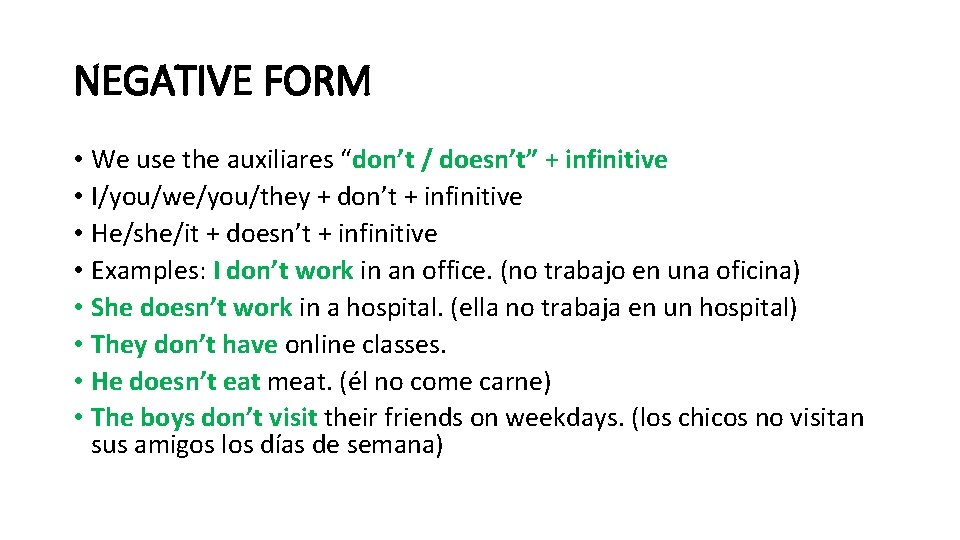
NEGATIVE FORM • We use the auxiliares “don’t / doesn’t” + infinitive • I/you/we/you/they + don’t + infinitive • He/she/it + doesn’t + infinitive • Examples: I don’t work in an office. (no trabajo en una oficina) • She doesn’t work in a hospital. (ella no trabaja en un hospital) • They don’t have online classes. • He doesn’t eat meat. (él no come carne) • The boys don’t visit their friends on weekdays. (los chicos no visitan sus amigos los días de semana)
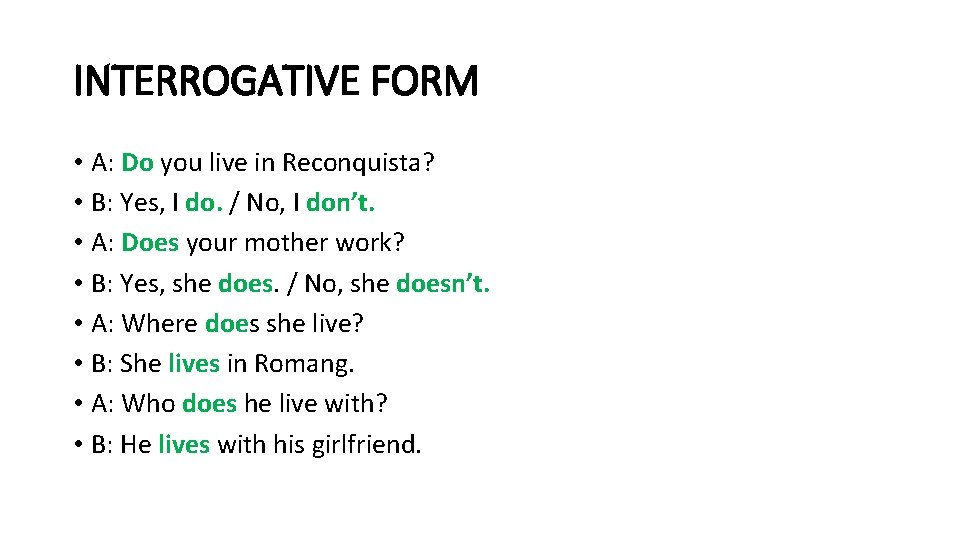
INTERROGATIVE FORM • A: Do you live in Reconquista? • B: Yes, I do. / No, I don’t. • A: Does your mother work? • B: Yes, she does. / No, she doesn’t. • A: Where does she live? • B: She lives in Romang. • A: Who does he live with? • B: He lives with his girlfriend.
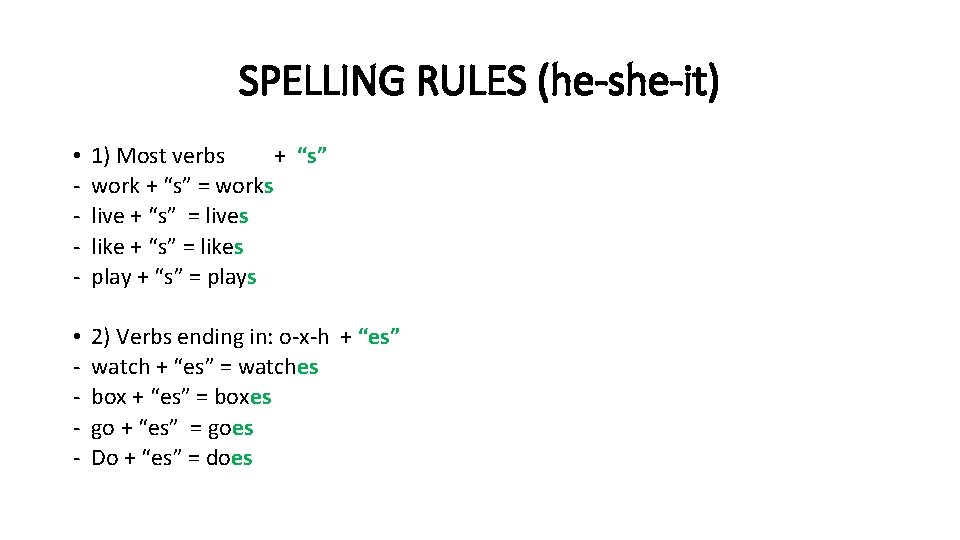
SPELLING RULES (he-she-it) • - 1) Most verbs + “s” work + “s” = works live + “s” = lives like + “s” = likes play + “s” = plays • - 2) Verbs ending in: o-x-h + “es” watch + “es” = watches box + “es” = boxes go + “es” = goes Do + “es” = does
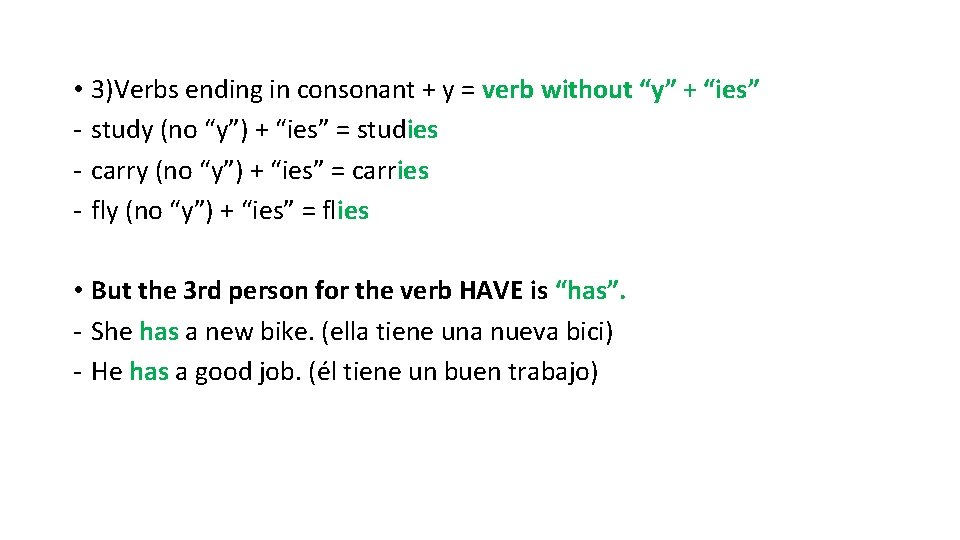
• 3)Verbs ending in consonant + y = verb without “y” + “ies” - study (no “y”) + “ies” = studies - carry (no “y”) + “ies” = carries - fly (no “y”) + “ies” = flies • But the 3 rd person for the verb HAVE is “has”. - She has a new bike. (ella tiene una nueva bici) - He has a good job. (él tiene un buen trabajo)
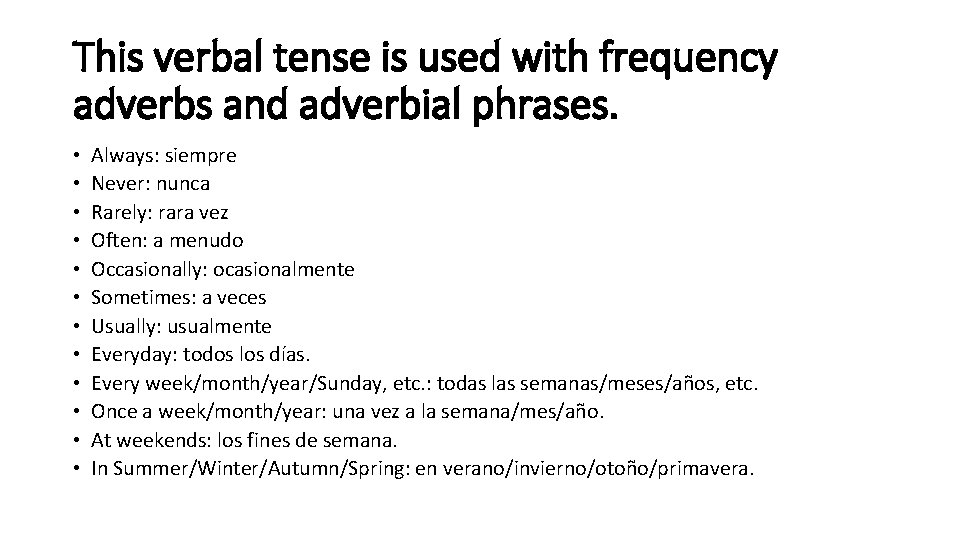
This verbal tense is used with frequency adverbs and adverbial phrases. • • • Always: siempre Never: nunca Rarely: rara vez Often: a menudo Occasionally: ocasionalmente Sometimes: a veces Usually: usualmente Everyday: todos los días. Every week/month/year/Sunday, etc. : todas las semanas/meses/años, etc. Once a week/month/year: una vez a la semana/mes/año. At weekends: los fines de semana. In Summer/Winter/Autumn/Spring: en verano/invierno/otoño/primavera.