
Present Simple or Habitual Present 1 Form 2
Present Simple or Habitual Present 1. Form. 2. Use. 3. Spelling rules.
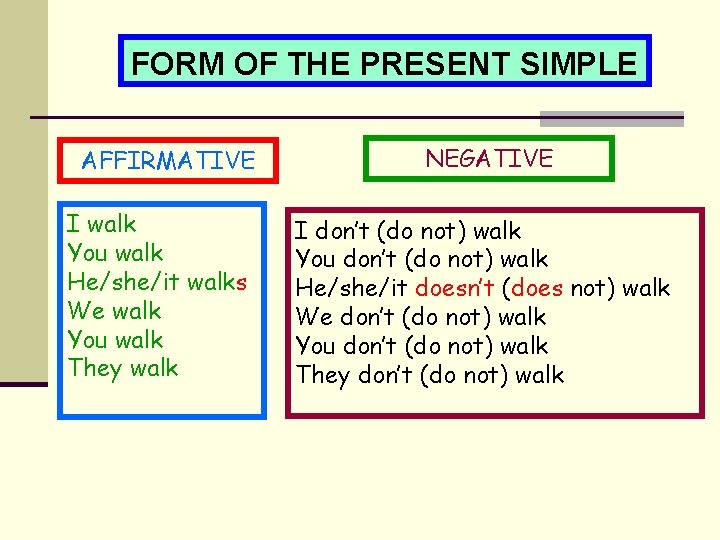
FORM OF THE PRESENT SIMPLE AFFIRMATIVE I walk You walk He/she/it walks We walk You walk They walk NEGATIVE I don’t (do not) walk You don’t (do not) walk He/she/it doesn’t (does not) walk We don’t (do not) walk You don’t (do not) walk They don’t (do not) walk
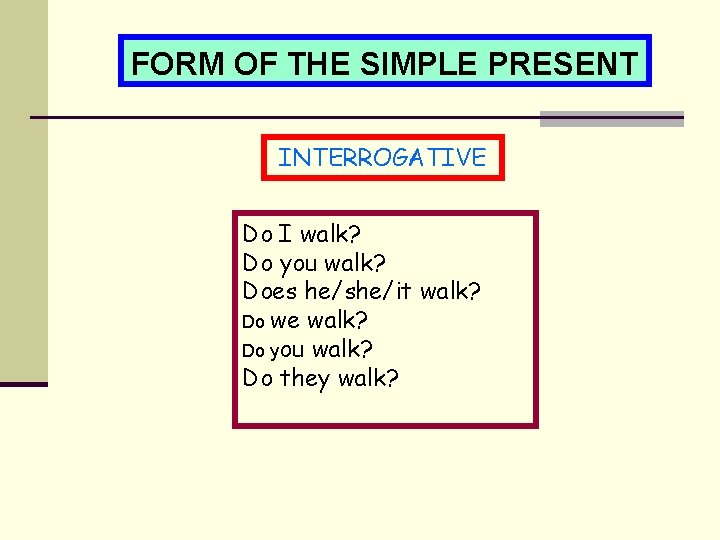
FORM OF THE SIMPLE PRESENT INTERROGATIVE Do I walk? Do you walk? Does he/she/it walk? Do we walk? Do you walk? Do they walk?
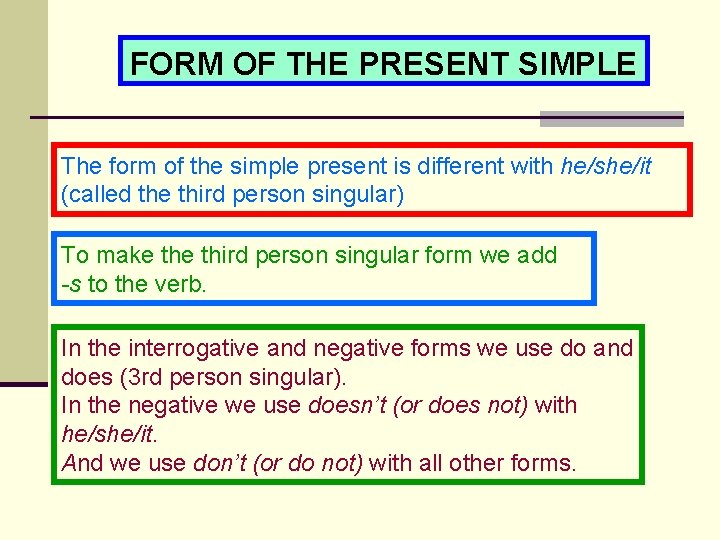
FORM OF THE PRESENT SIMPLE The form of the simple present is different with he/she/it (called the third person singular) To make third person singular form we add -s to the verb. In the interrogative and negative forms we use do and does (3 rd person singular). In the negative we use doesn’t (or does not) with he/she/it. And we use don’t (or do not) with all other forms.
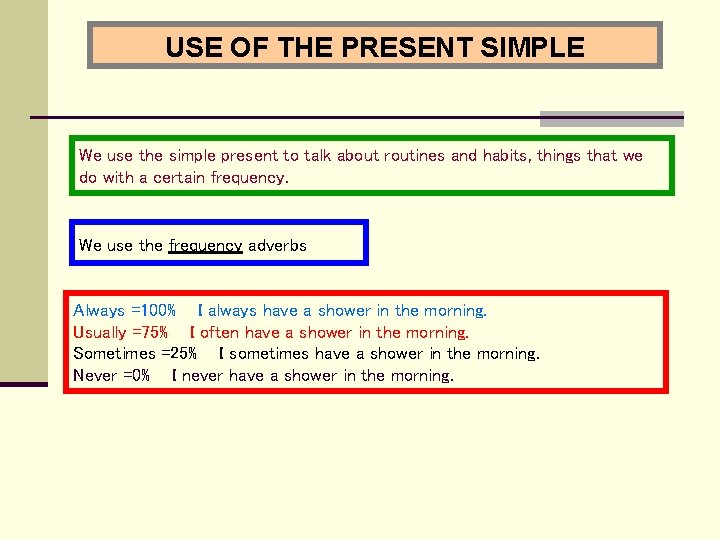
USE OF THE PRESENT SIMPLE We use the simple present to talk about routines and habits, things that we do with a certain frequency. We use the frequency adverbs Always =100% I always have a shower in the morning. Usually =75% I often have a shower in the morning. Sometimes =25% I sometimes have a shower in the morning. Never =0% I never have a shower in the morning.
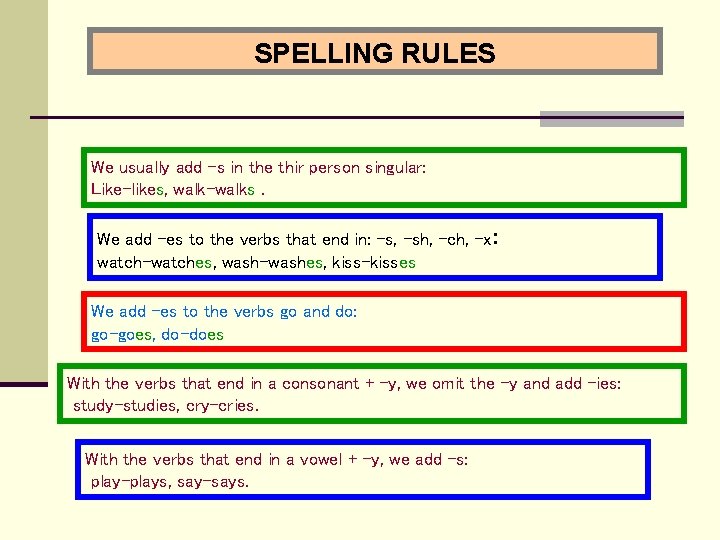
SPELLING RULES We usually add –s in the thir person singular: Like-likes, walk-walks. We add –es to the verbs that end in: –s, -sh, -ch, -x: watch-watches, wash-washes, kiss-kisses We add –es to the verbs go and do: go-goes, do-does With the verbs that end in a consonant + -y, we omit the –y and add –ies: study-studies, cry-cries. With the verbs that end in a vowel + -y, we add –s: play-plays, say-says.
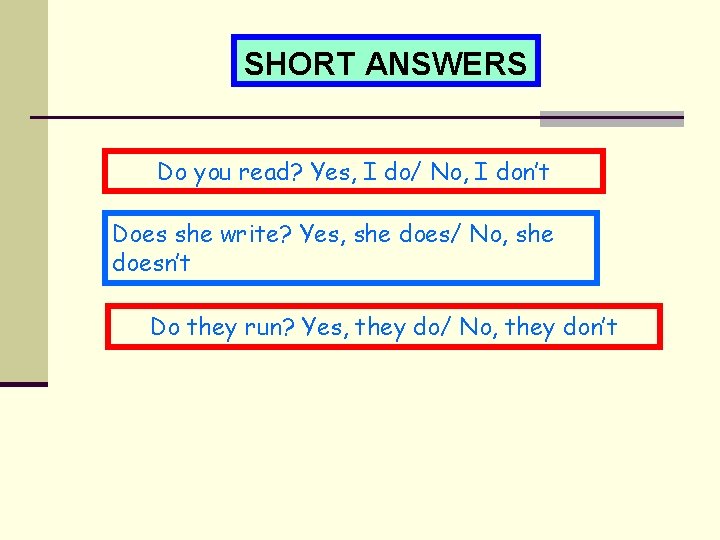
SHORT ANSWERS Do you read? Yes, I do/ No, I don’t Does she write? Yes, she does/ No, she doesn’t Do they run? Yes, they do/ No, they don’t
- Slides: 7