
Present Perfect Tense When and how to use
- Slides: 39
Present Perfect Tense When and how to use it.
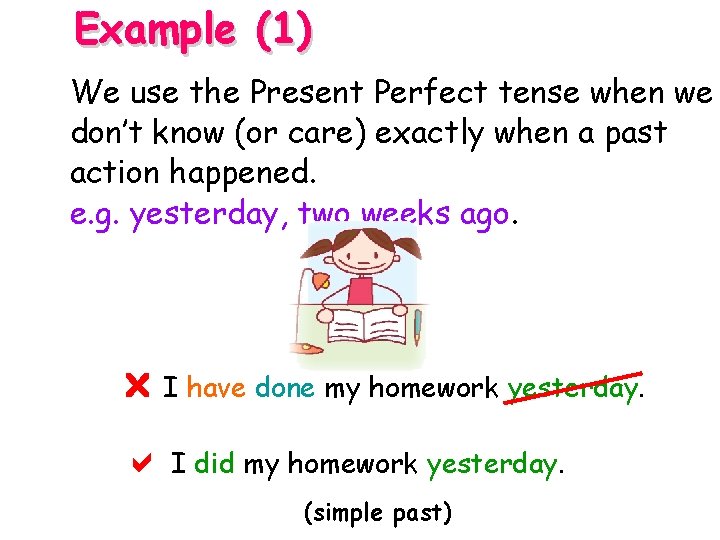
Example (1) We use the Present Perfect tense when we don’t know (or care) exactly when a past action happened. e. g. yesterday, two weeks ago. I have done my homework yesterday. I did my homework yesterday. (simple past)
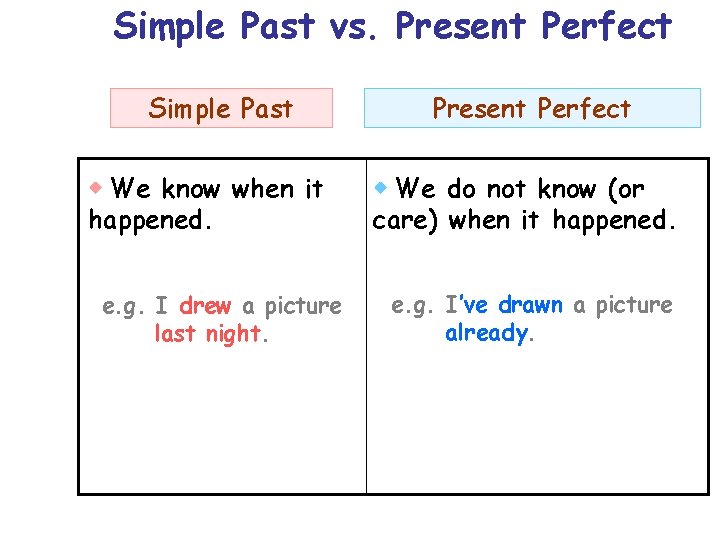
Simple Past vs. Present Perfect Simple Past We know when it happened. e. g. I drew a picture last night. Present Perfect We do not know (or care) when it happened. e. g. I’ve drawn a picture already.
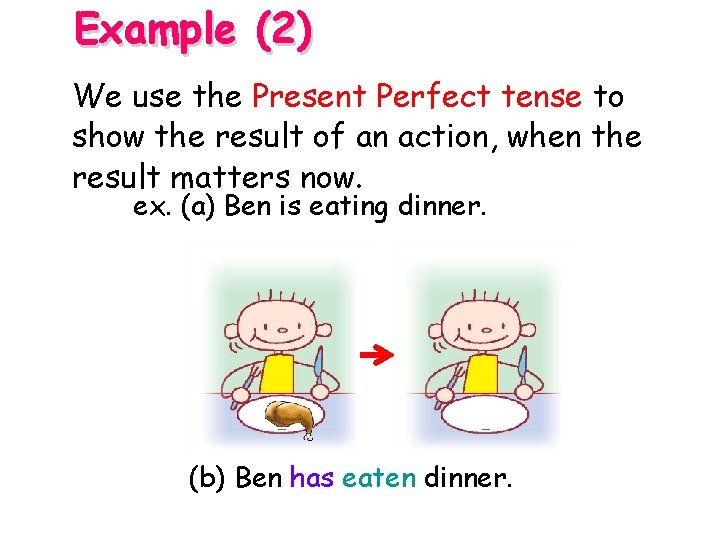
Example (2) We use the Present Perfect tense to show the result of an action, when the result matters now. ex. (a) Ben is eating dinner. (b) Ben has eaten dinner.
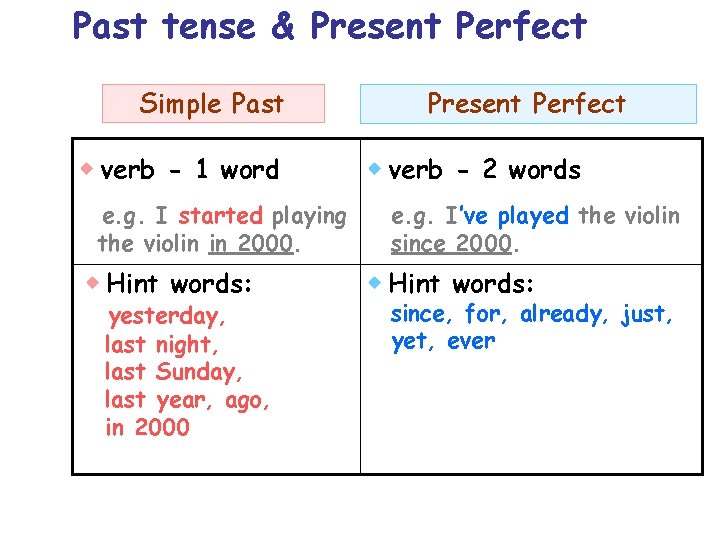
Past tense & Present Perfect Simple Past verb - 1 word e. g. I started playing the violin in 2000. Hint words: yesterday, last night, last Sunday, last year, ago, in 2000 Present Perfect verb - 2 words e. g. I’ve played the violin since 2000. Hint words: since, for, already, just, yet, ever
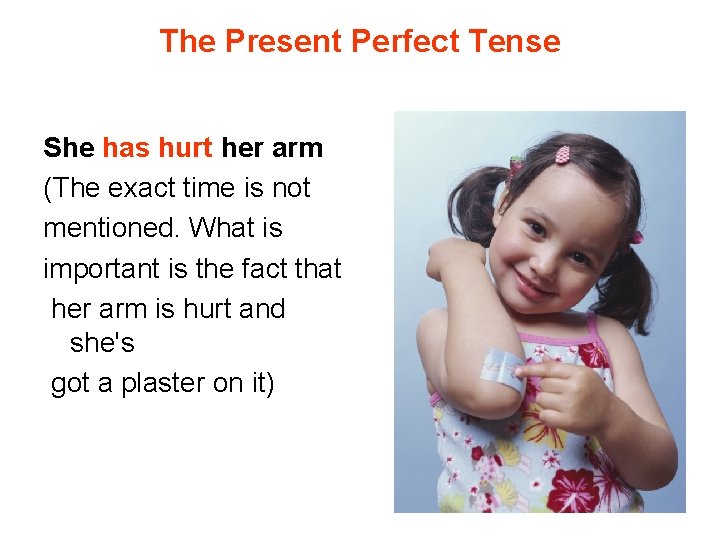
The Present Perfect Tense She has hurt her arm (The exact time is not mentioned. What is important is the fact that her arm is hurt and she's got a plaster on it)
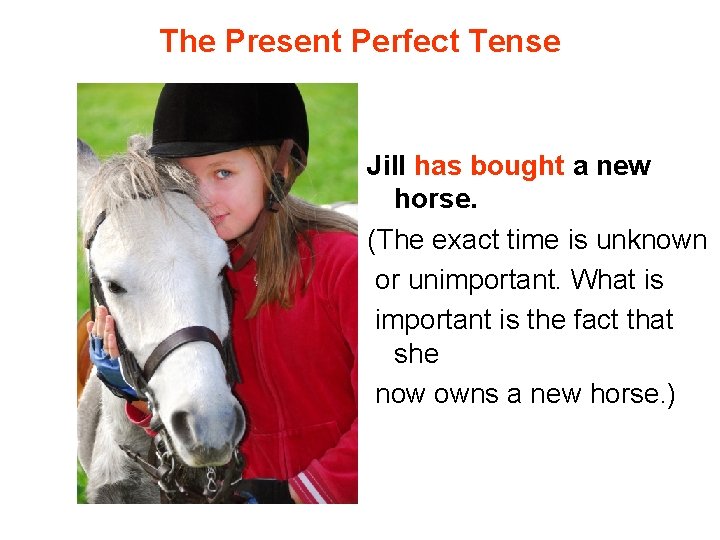
The Present Perfect Tense Jill has bought a new horse. (The exact time is unknown or unimportant. What is important is the fact that she now owns a new horse. )
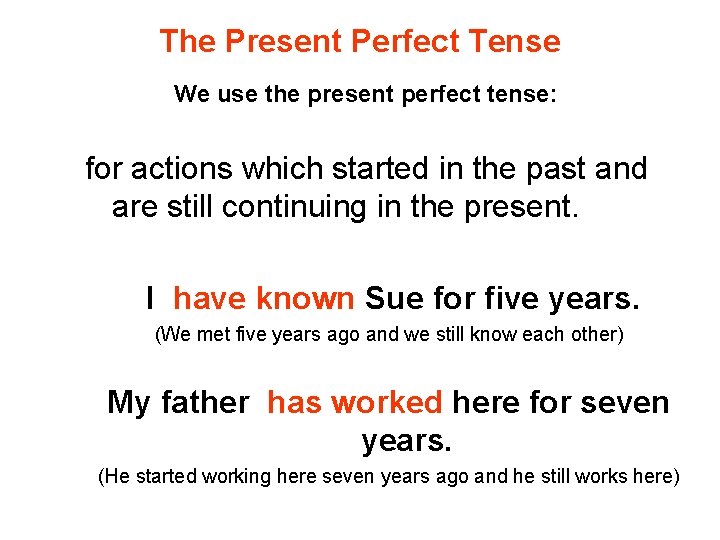
The Present Perfect Tense We use the present perfect tense: for actions which started in the past and are still continuing in the present. I have known Sue for five years. (We met five years ago and we still know each other) My father has worked here for seven years. (He started working here seven years ago and he still works here)
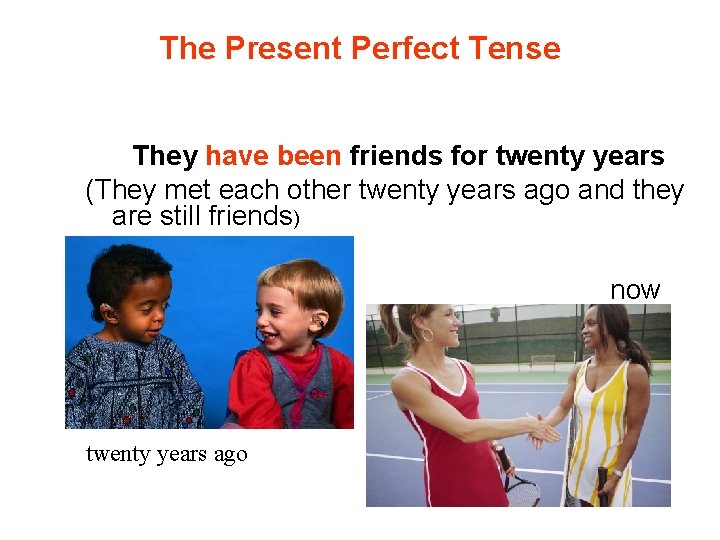
The Present Perfect Tense They have been friends for twenty years (They met each other twenty years ago and they are still friends) now twenty years ago
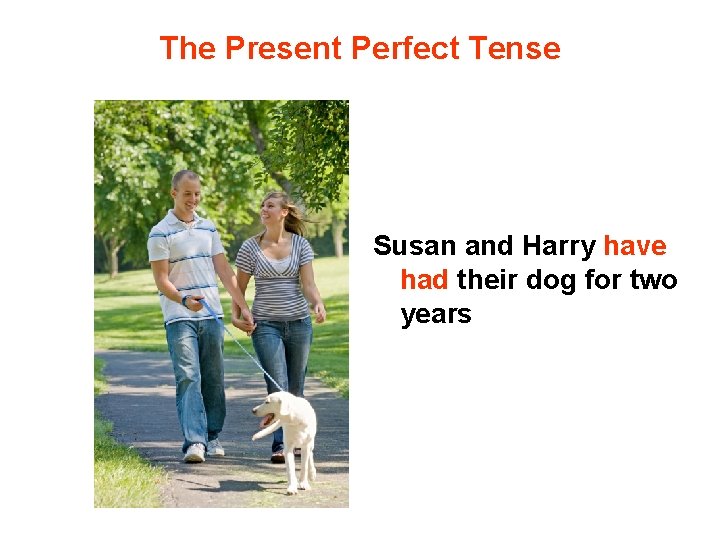
The Present Perfect Tense Susan and Harry have had their dog for two years
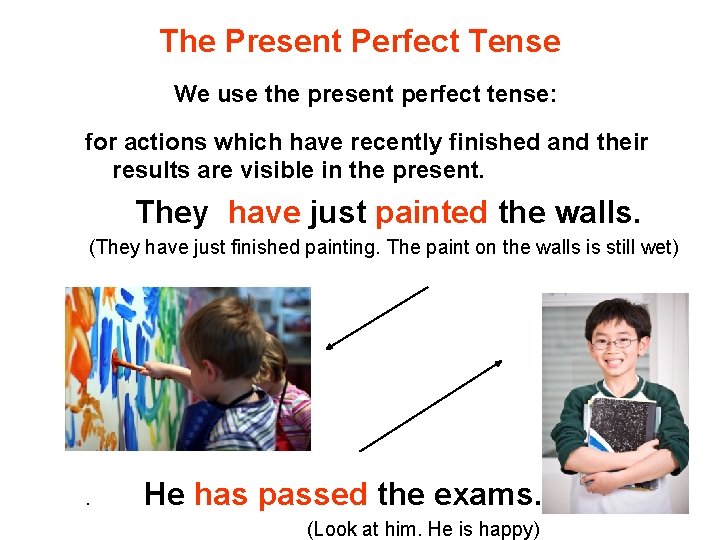
The Present Perfect Tense We use the present perfect tense: for actions which have recently finished and their results are visible in the present. They have just painted the walls. (They have just finished painting. The paint on the walls is still wet) . He has passed the exams. (Look at him. He is happy)
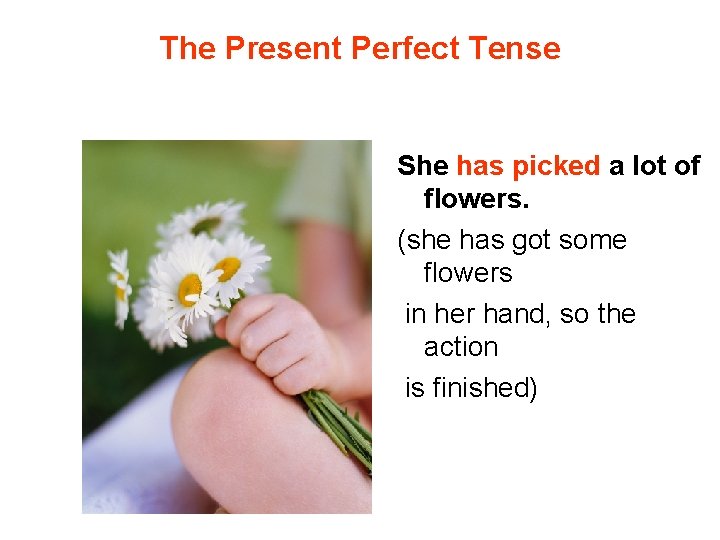
The Present Perfect Tense She has picked a lot of flowers. (she has got some flowers in her hand, so the action is finished)
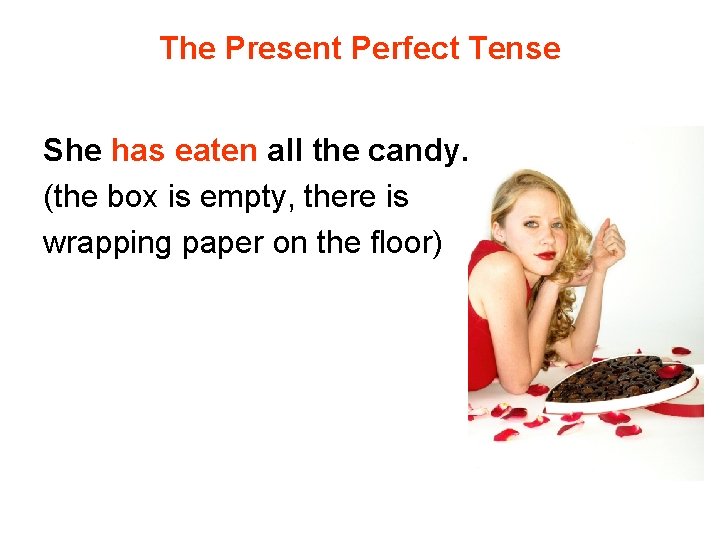
The Present Perfect Tense She has eaten all the candy. (the box is empty, there is wrapping paper on the floor)
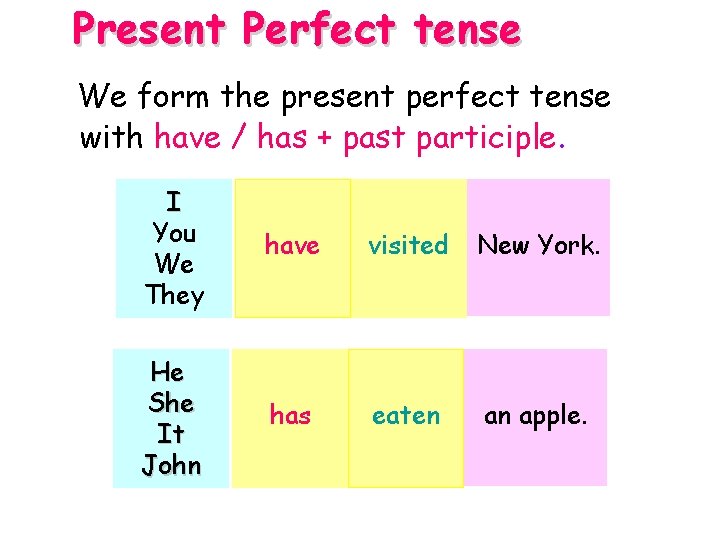
Present Perfect tense We form the present perfect tense with have / has + past participle. I You We They have visited New York. He She It John has eaten an apple.
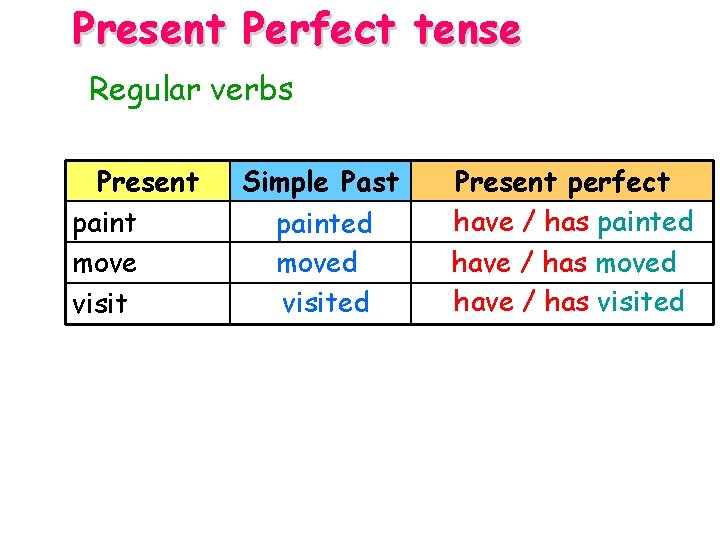
Present Perfect tense Regular verbs Present paint move visit Simple Past painted moved visited Present perfect have / has painted have / has moved have / has visited
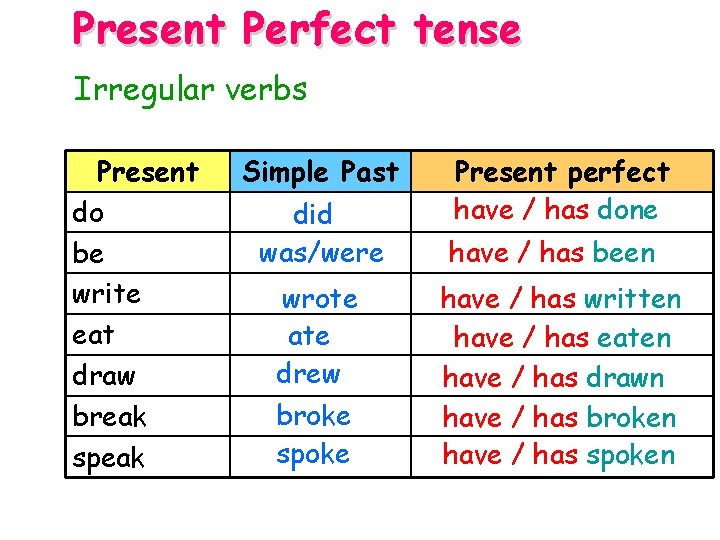
Present Perfect tense Irregular verbs Present do be write eat draw break speak Simple Past did was/were wrote ate drew broke spoke Present perfect have / has done have / has been have / has written have / has eaten have / has drawn have / has broken have / has spoken
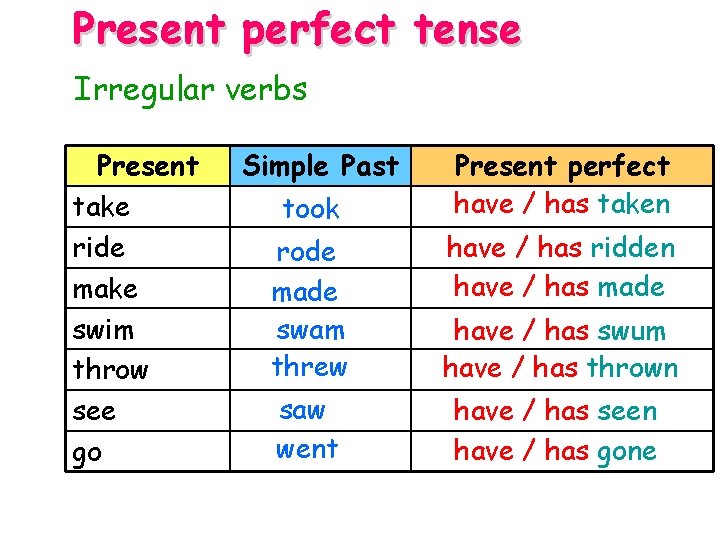
Present perfect tense Irregular verbs Present take ride make swim throw see go Simple Past took Present perfect have / has taken have / has ridden have / has made rode made swam threw have / has swum have / has thrown saw went have / has seen have / has gone
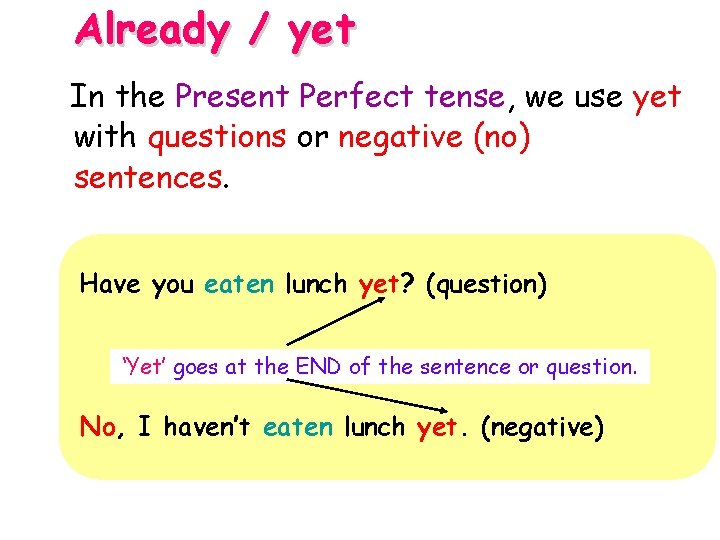
Already / yet In the Present Perfect tense, we use yet with questions or negative (no) sentences. Have you eaten lunch yet? (question) ‘Yet’ goes at the END of the sentence or question. No, I haven’t eaten lunch yet. (negative)
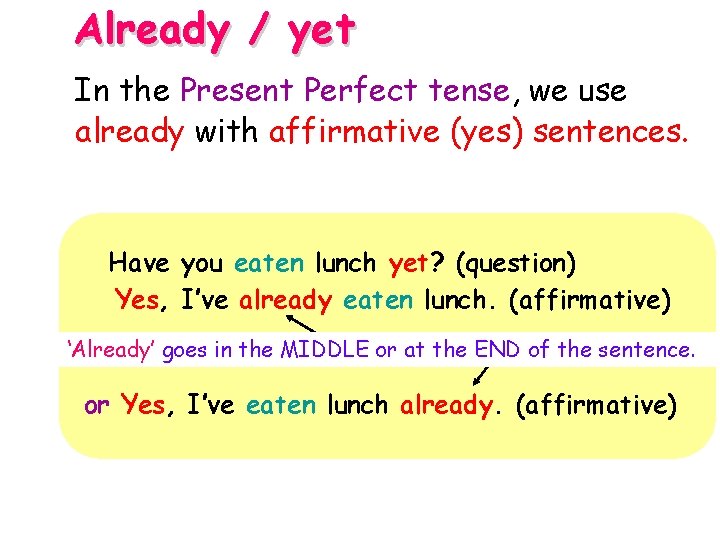
Already / yet In the Present Perfect tense, we use already with affirmative (yes) sentences. Have you eaten lunch yet? (question) Yes, I’ve already eaten lunch. (affirmative) ‘Already’ goes in the MIDDLE or at the END of the sentence. or Yes, I’ve eaten lunch already. (affirmative)
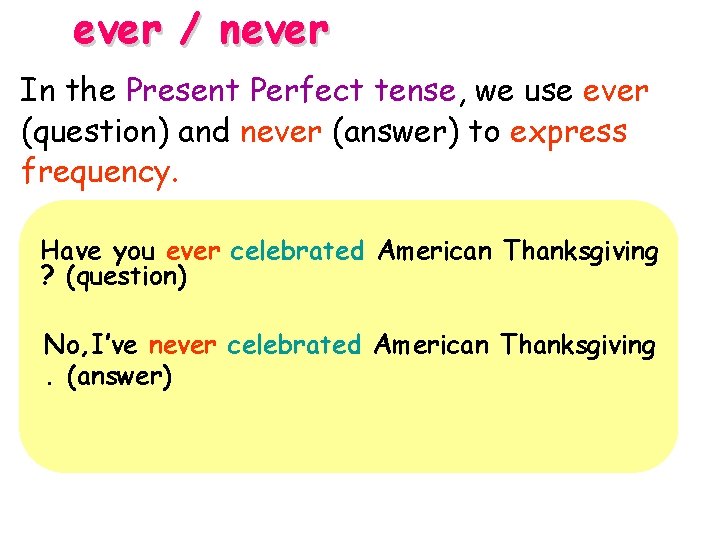
ever / never In the Present Perfect tense, we use ever (question) and never (answer) to express frequency. Have you ever celebrated American Thanksgiving ? (question) No, I’ve never celebrated American Thanksgiving. (answer)
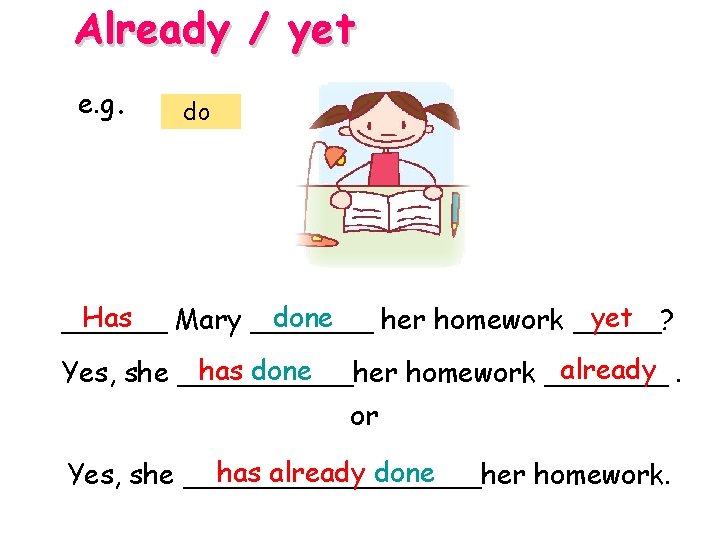
Already / yet e. g. do Has done yet ______ Mary _______ her homework _____? already. has done Yes, she _____her homework _______ or has already done Yes, she _________her homework.
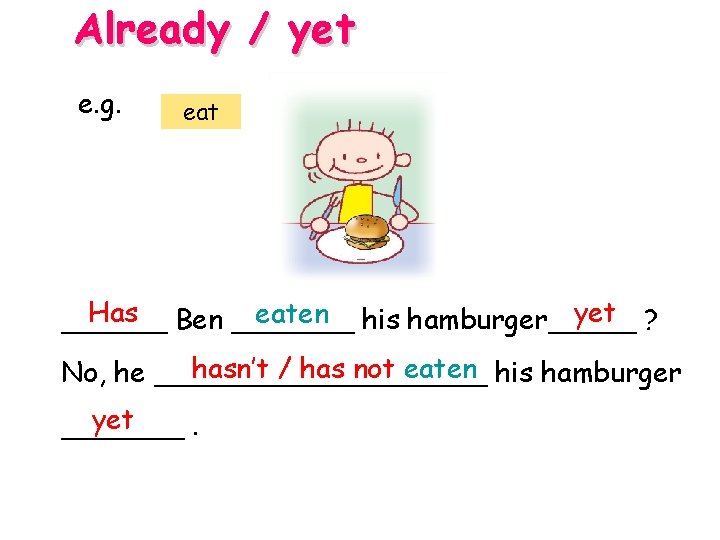
Already / yet e. g. eat Has Ben _______ yet ? eaten his hamburger______ hasn’t / has not eaten his hamburger No, he __________ yet _______.
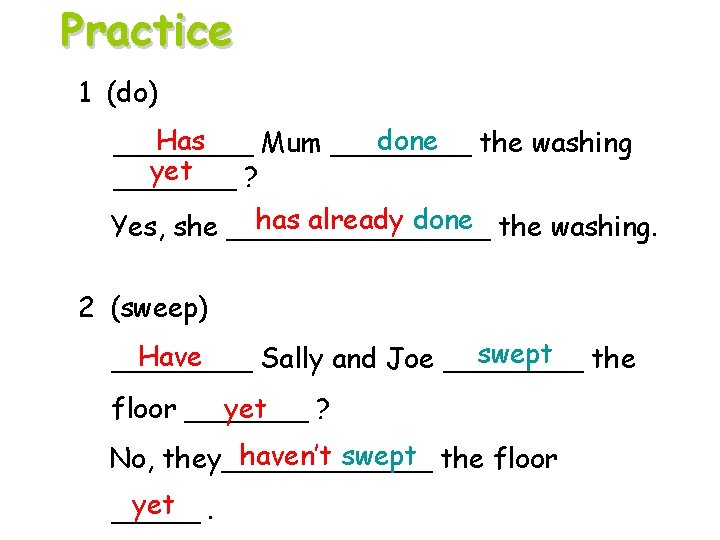
Practice 1 (do) Has done the washing ____ Mum ____ yet _______ ? has already done the washing. Yes, she ________ 2 (sweep) swept the Have ____ Sally and Joe ____ floor _______ ? yet haven’t swept the floor No, they______ yet. _____
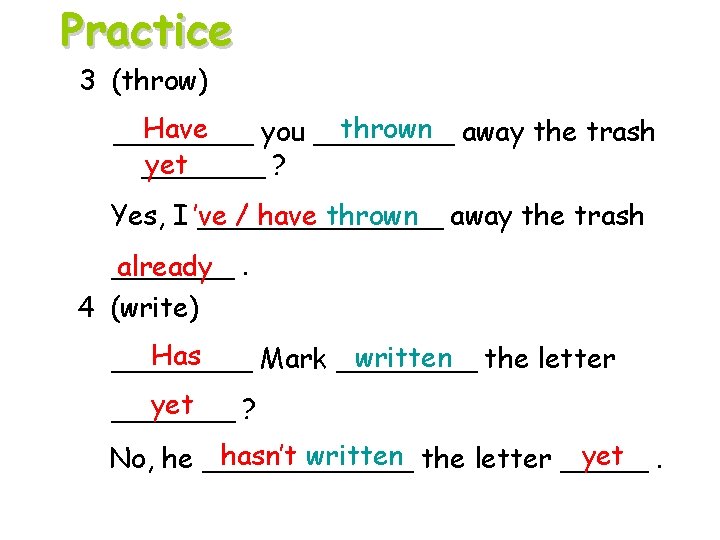
Practice 3 (throw) Have thrown away the trash ____ you ____ yet _______ ? / have thrown away the trash Yes, I ’ve _______ already. 4 (write) Has written the letter ____ Mark ____ yet _______ ? hasn’t written the letter _____ yet. No, he ______
More Uses for the Present Perfect Tense
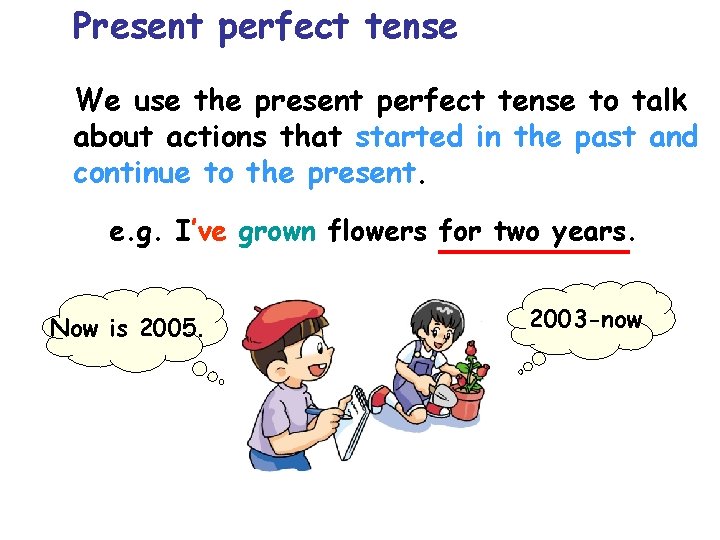
Present perfect tense We use the present perfect tense to talk about actions that started in the past and continue to the present. e. g. I’ve grown flowers for two years. Now is 2005. 2003 -now
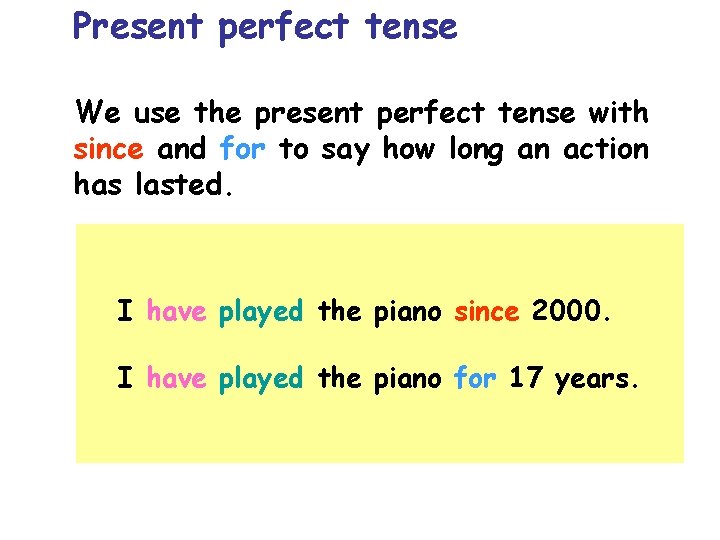
Present perfect tense We use the present perfect tense with since and for to say how long an action has lasted. I have played the piano since 2000. I have played the piano for 17 years.
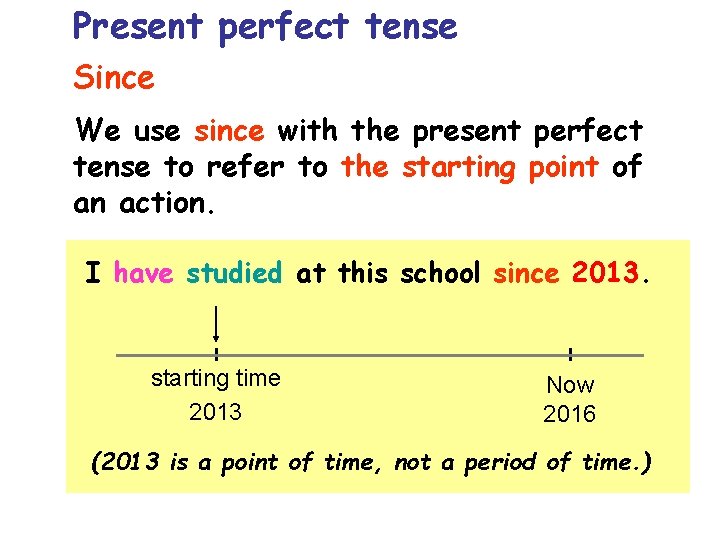
Present perfect tense Since We use since with the present perfect tense to refer to the starting point of an action. I have studied at this school since 2013. starting time 2013 Now 2016 (2013 is a point of time, not a period of time. )
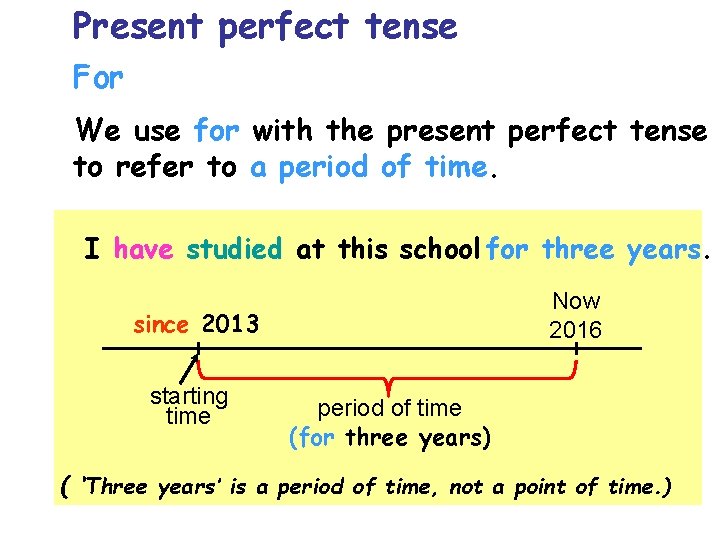
Present perfect tense For We use for with the present perfect tense to refer to a period of time. I have studied at this school for three years. Now 2016 since 2013 starting time period of time (for three years) ( ‘Three years’ is a period of time, not a point of time. )
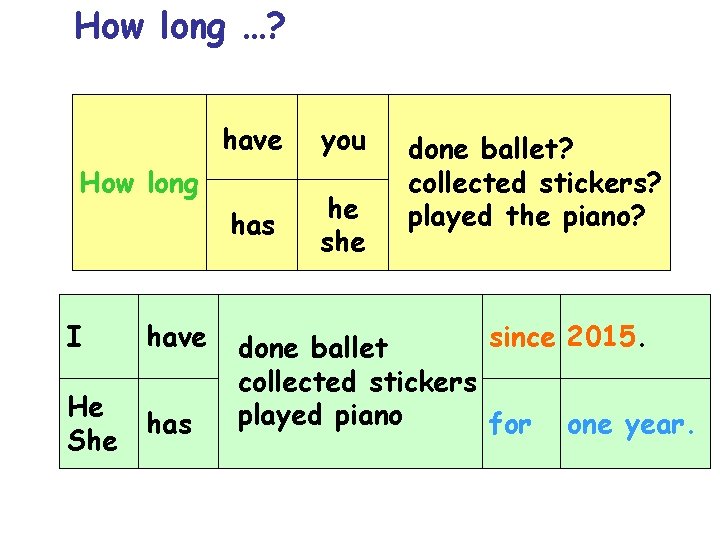
How long …? have you has he she How long I have He She has done ballet? collected stickers? played the piano? since 2015. done ballet collected stickers played piano for one year.
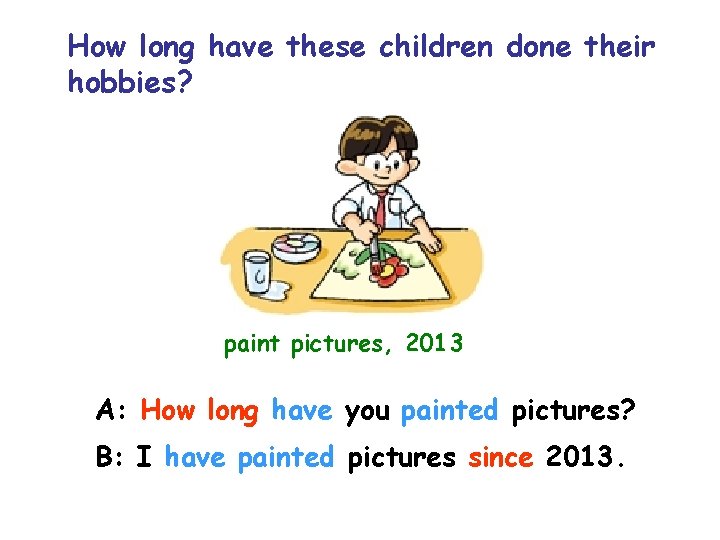
How long have these children done their hobbies? paint pictures, 2013 A: How long have you painted pictures? B: I have painted pictures since 2013.
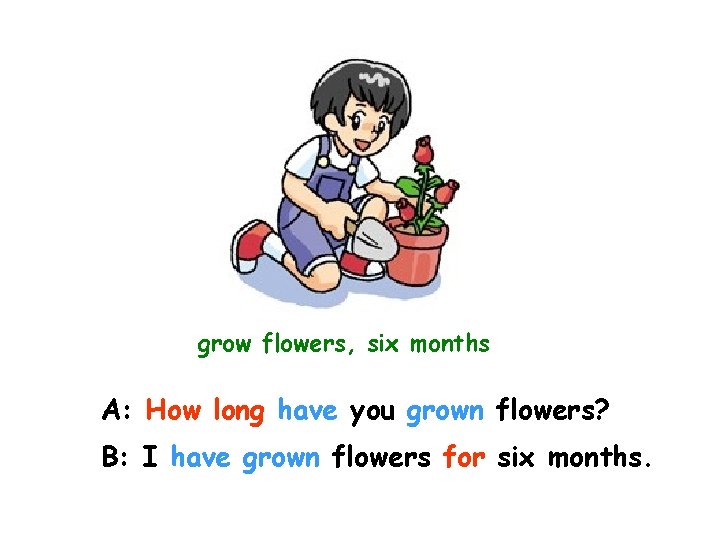
grow flowers, six months A: How long have you grown flowers? B: I have grown flowers for six months.
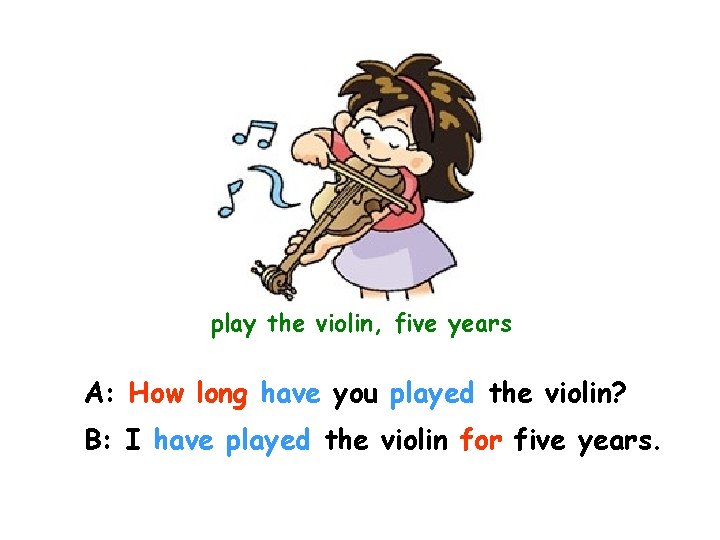
play the violin, five years A: How long have you played the violin? B: I have played the violin for five years.
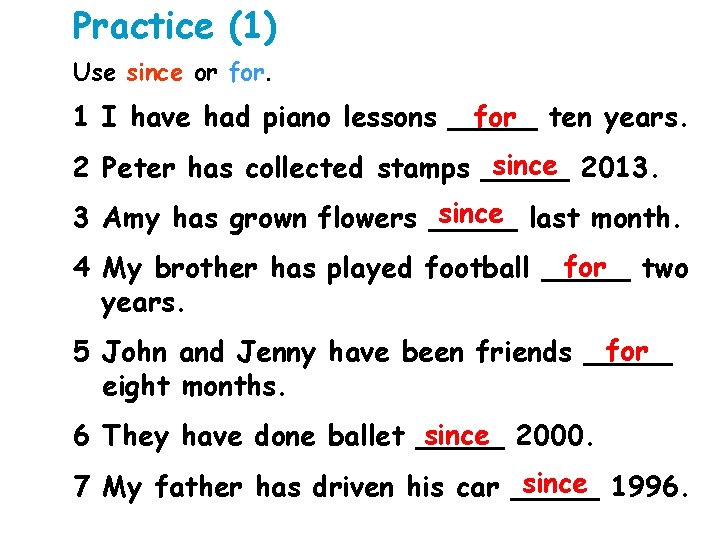
Practice (1) Use since or for ten years. 1 I have had piano lessons _____ since 2013. 2 Peter has collected stamps _____ since last month. 3 Amy has grown flowers _____ for two 4 My brother has played football _____ years. for 5 John and Jenny have been friends _____ eight months. since 2000. 6 They have done ballet _____ since 1996. 7 My father has driven his car _____
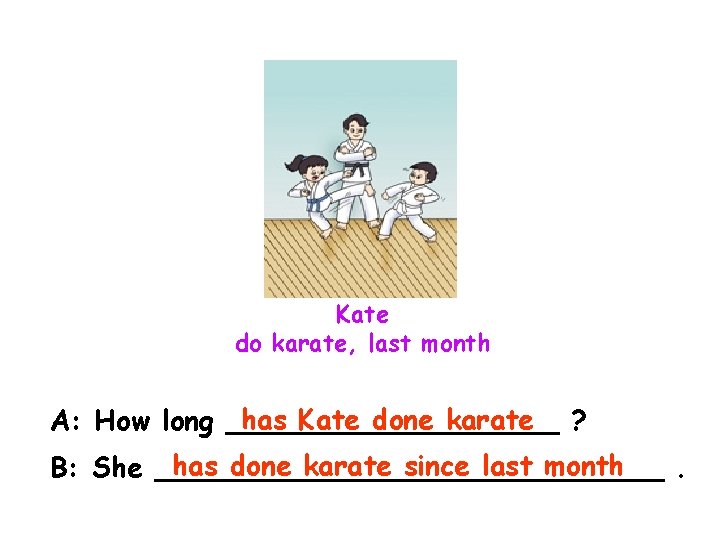
Kate do karate, last month has Kate done karate ? A: How long __________ has done karate since last month B: She _______________.
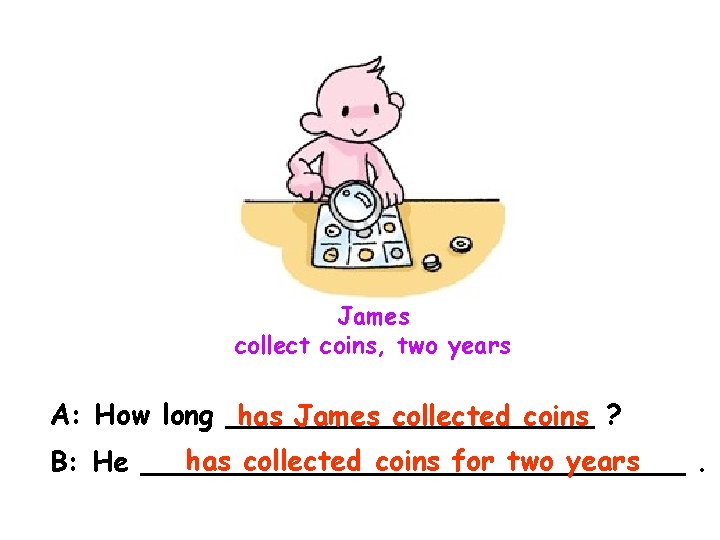
James collect coins, two years A: How long ___________ has James collected coins ? has collected coins for two years B: He ________________.
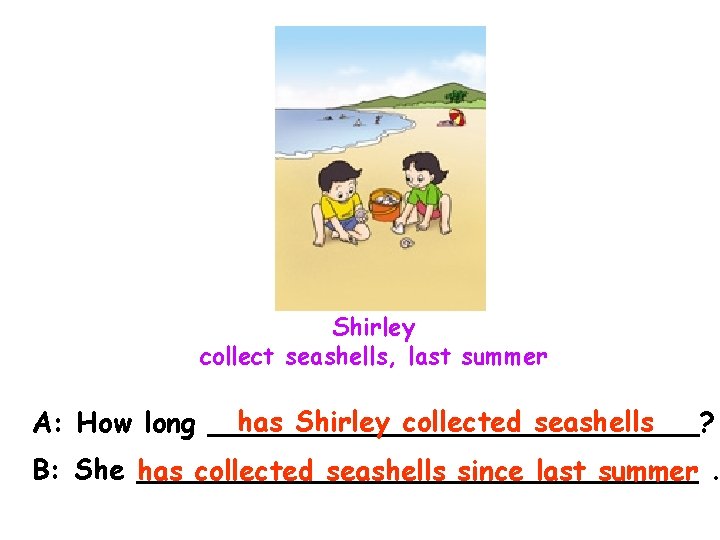
Shirley collect seashells, last summer has Shirley collected seashells A: How long ______________? B: She ________________ has collected seashells since last summer.
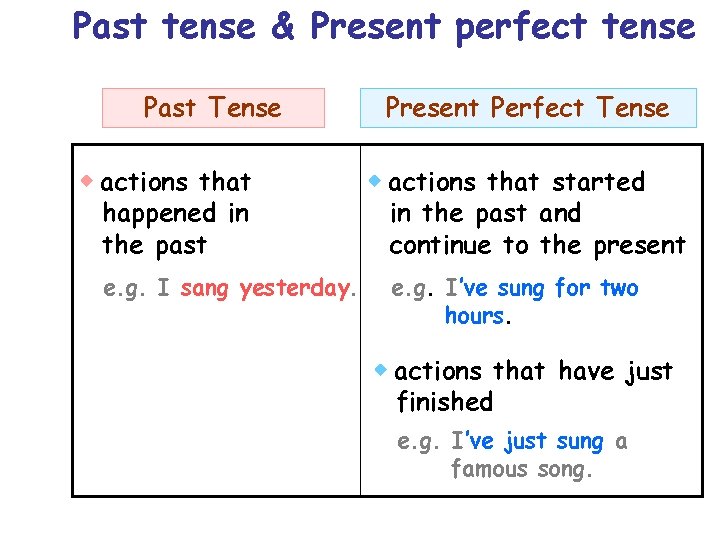
Past tense & Present perfect tense Past Tense actions that happened in the past e. g. I sang yesterday. Present Perfect Tense actions that started in the past and continue to the present e. g. I’ve sung for two hours. actions that have just finished e. g. I’ve just sung a famous song.
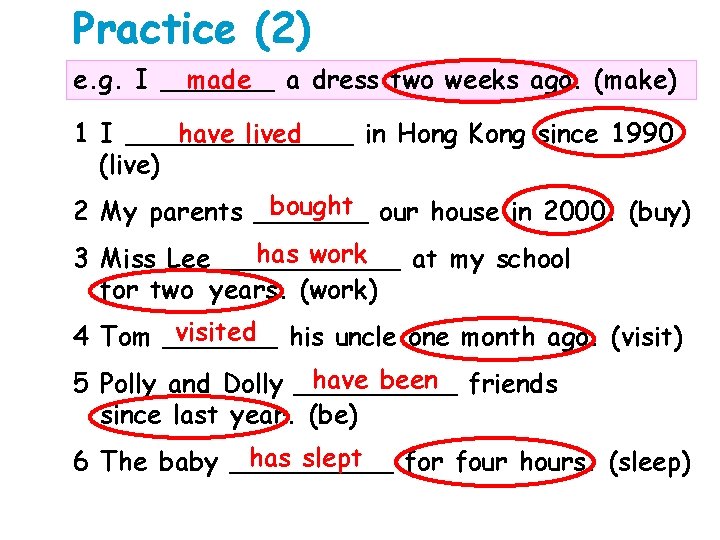
Practice (2) e. g. I _______ made a dress two weeks ago. (make) have lived 1 I _______ in Hong Kong since 1990. (live) bought our house in 2000. (buy) 2 My parents _______ has work 3 Miss Lee ______ at my school for two years. (work) visited his uncle one month ago. (visit) 4 Tom _______ have been friends 5 Polly and Dolly _____ since last year. (be) has slept 6 The baby _____ for four hours. (sleep)