
PRESENT PERFECT CONTINUOUS TENSE 1 Actions that started
- Slides: 6
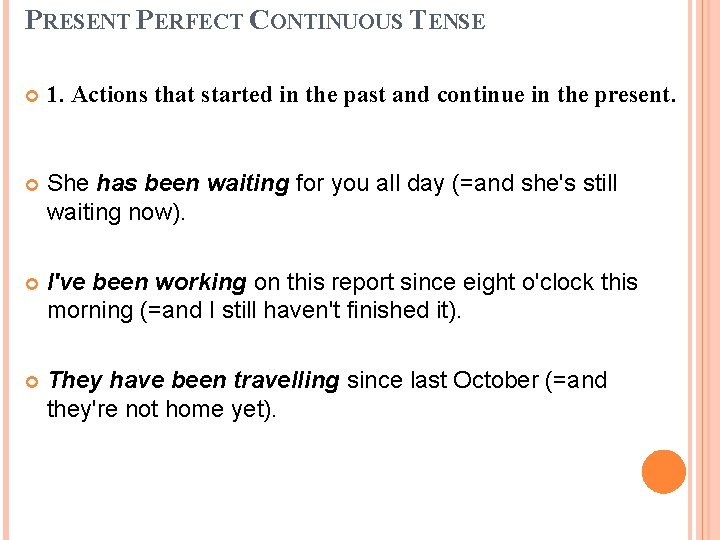
PRESENT PERFECT CONTINUOUS TENSE 1. Actions that started in the past and continue in the present. She has been waiting for you all day (=and she's still waiting now). I've been working on this report since eight o'clock this morning (=and I still haven't finished it). They have been travelling since last October (=and they're not home yet).
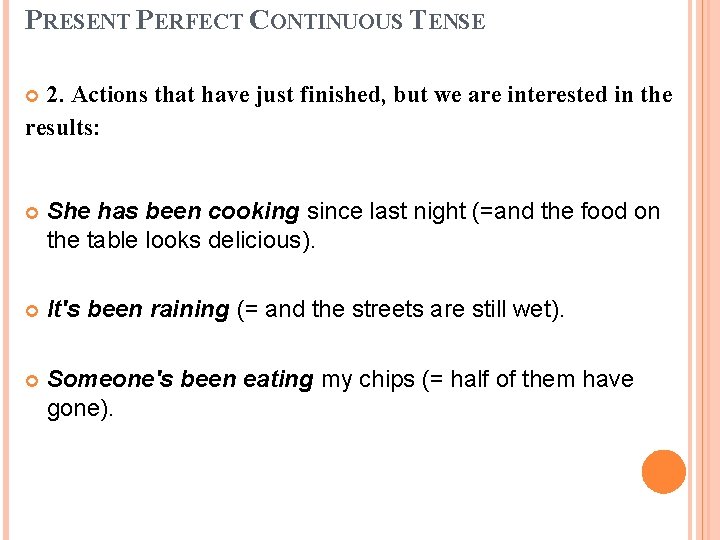
PRESENT PERFECT CONTINUOUS TENSE 2. Actions that have just finished, but we are interested in the results: She has been cooking since last night (=and the food on the table looks delicious). It's been raining (= and the streets are still wet). Someone's been eating my chips (= half of them have gone).
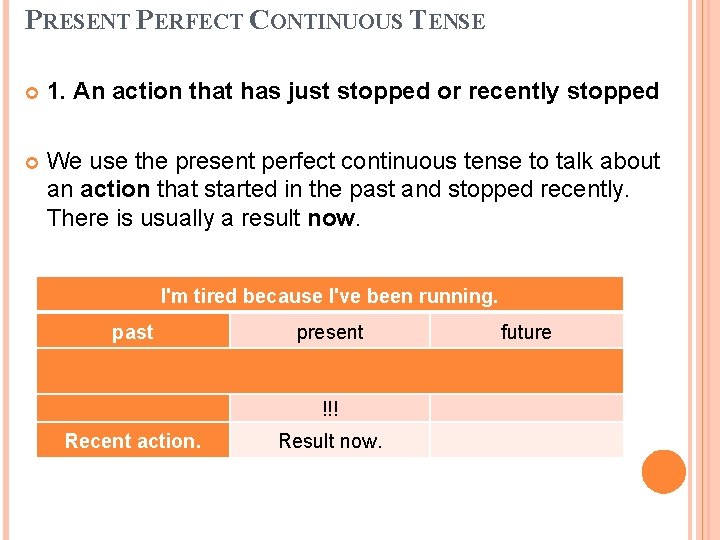
PRESENT PERFECT CONTINUOUS TENSE 1. An action that has just stopped or recently stopped We use the present perfect continuous tense to talk about an action that started in the past and stopped recently. There is usually a result now. I'm tired because I've been running. past present !!! Recent action. Result now. future
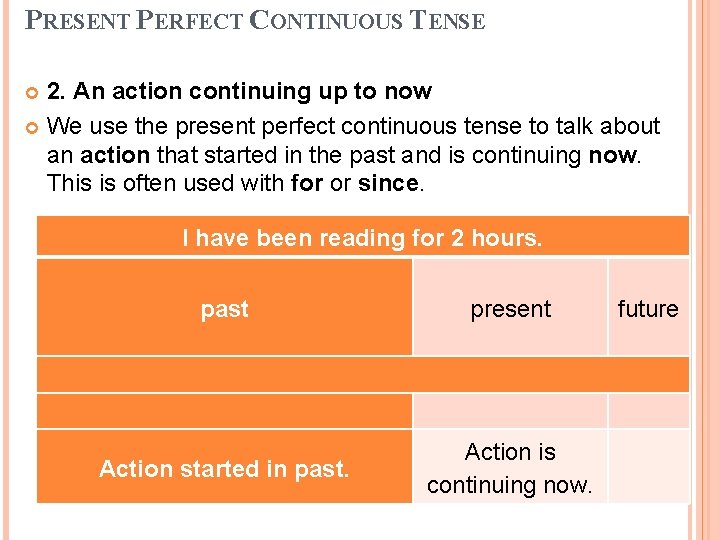
PRESENT PERFECT CONTINUOUS TENSE 2. An action continuing up to now We use the present perfect continuous tense to talk about an action that started in the past and is continuing now. This is often used with for or since. I have been reading for 2 hours. past present Action started in past. Action is continuing now. future
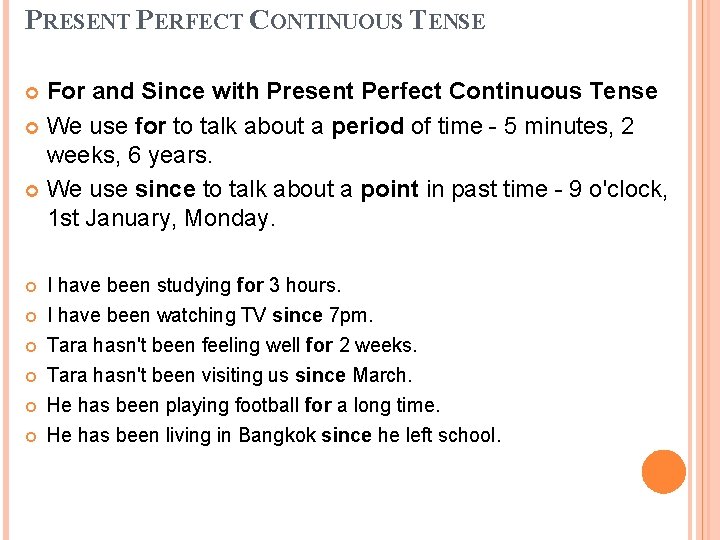
PRESENT PERFECT CONTINUOUS TENSE For and Since with Present Perfect Continuous Tense We use for to talk about a period of time - 5 minutes, 2 weeks, 6 years. We use since to talk about a point in past time - 9 o'clock, 1 st January, Monday. I have been studying for 3 hours. I have been watching TV since 7 pm. Tara hasn't been feeling well for 2 weeks. Tara hasn't been visiting us since March. He has been playing football for a long time. He has been living in Bangkok since he left school.
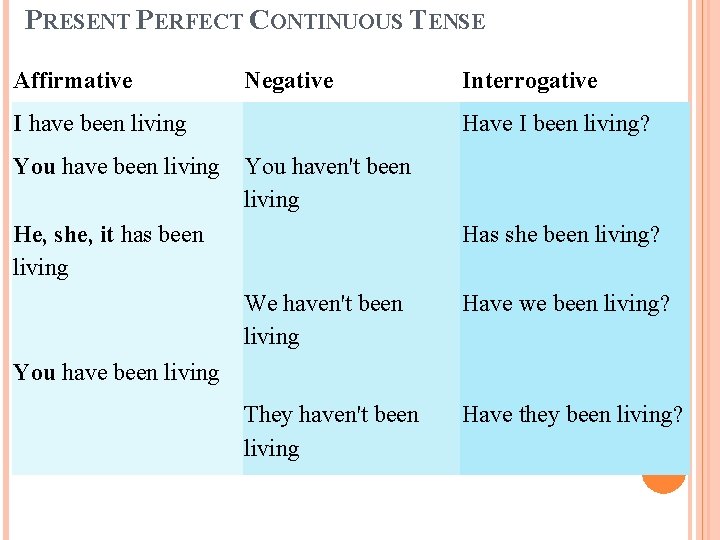
PRESENT PERFECT CONTINUOUS TENSE Affirmative Negative I have been living Interrogative Have I been living? You have been living You haven't been living He, she, it has been living We haven't been living You have been living They haven't been living Has she been living? Have we been living? Have they been living?