
Present Continuous Tense FORM S AMISARE VING SIGN

- Slides: 5
Present Continuous Tense FORM S + AM/IS/ARE + V-ING SIGN The Present Continuous usually goes with “now, at the present, at the moment, at this time…” USES The Present Continuous is used: - For an action in progress at the moment of speaking. EX: He is waiting for you outside now.
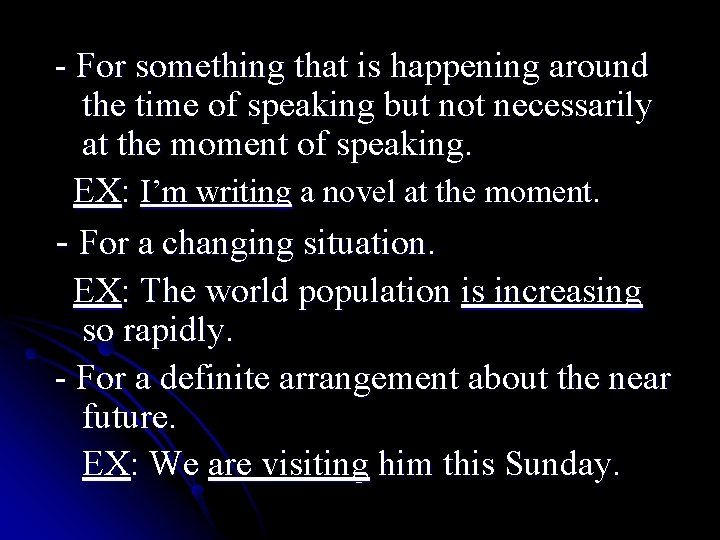
- For something that is happening around the time of speaking but not necessarily at the moment of speaking. EX: I’m writing a novel at the moment. - For a changing situation. EX: The world population is increasing so rapidly. - For a definite arrangement about the near future. EX: We are visiting him this Sunday.
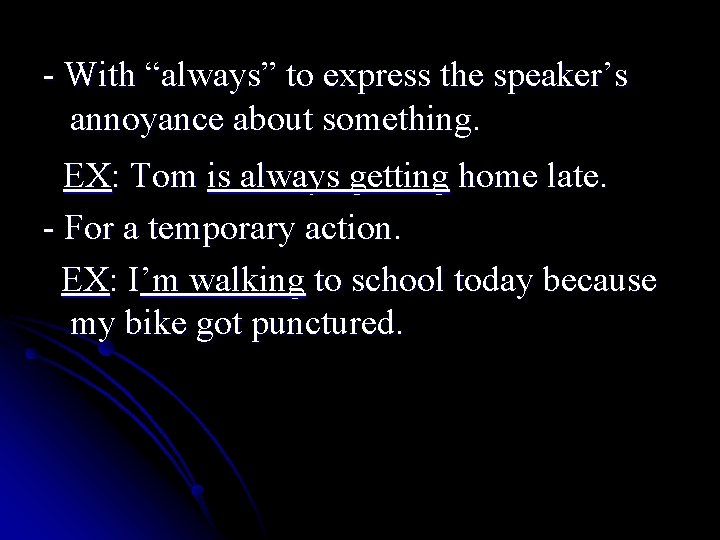
- With “always” to express the speaker’s annoyance about something. EX: Tom is always getting home late. - For a temporary action. EX: I’m walking to school today because my bike got punctured.
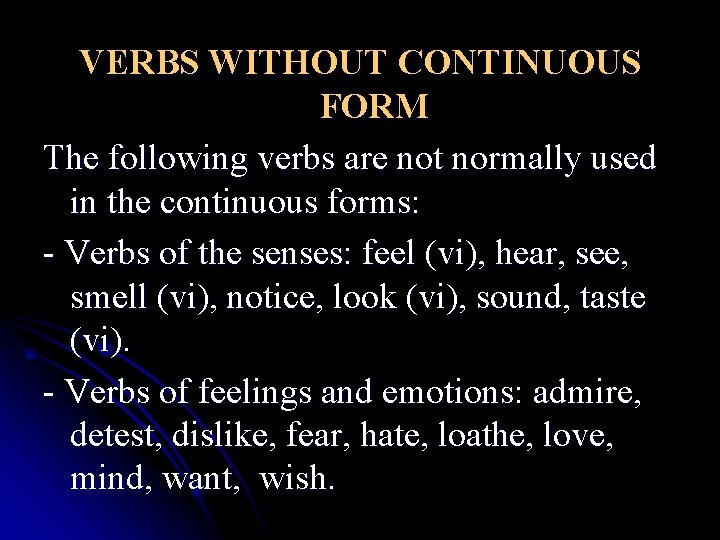
VERBS WITHOUT CONTINUOUS FORM The following verbs are not normally used in the continuous forms: - Verbs of the senses: feel (vi), hear, see, smell (vi), notice, look (vi), sound, taste (vi). - Verbs of feelings and emotions: admire, detest, dislike, fear, hate, loathe, love, mind, want, wish.
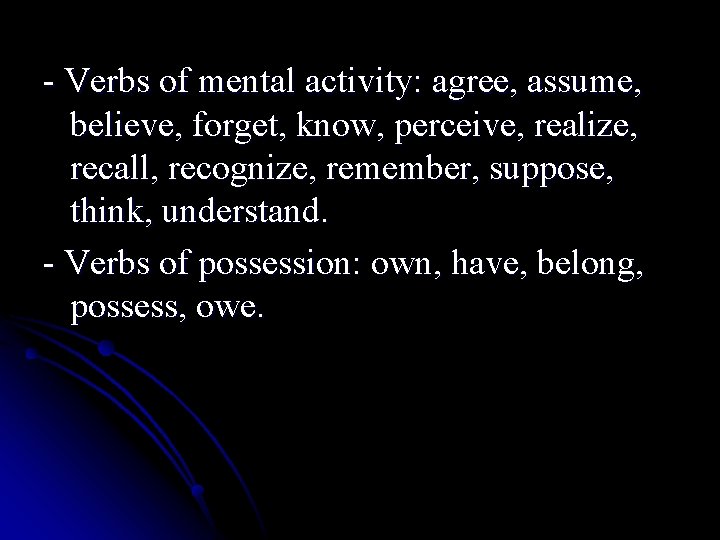
- Verbs of mental activity: agree, assume, believe, forget, know, perceive, realize, recall, recognize, remember, suppose, think, understand. - Verbs of possession: own, have, belong, possess, owe.