
Prescription Opioids Safe Storage and Disposal Training What
- Slides: 17
Prescription Opioids: Safe Storage and Disposal Training
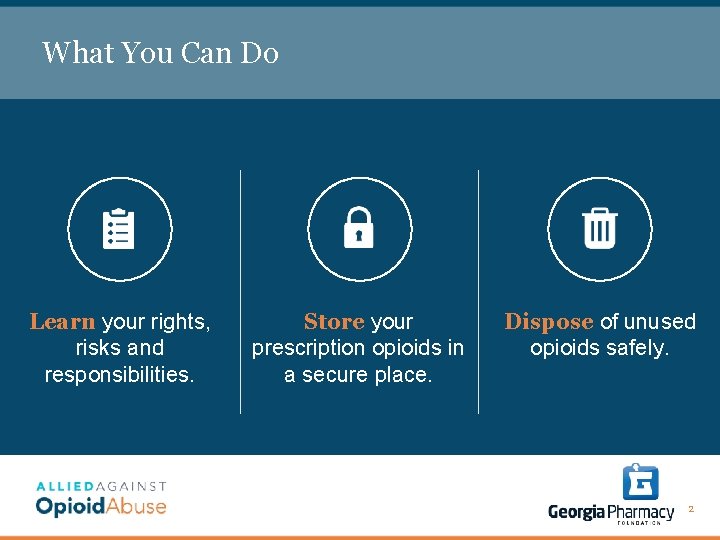
What You Can Do Learn your rights, risks and responsibilities. Store your prescription opioids in a secure place. Dispose of unused opioids safely. 2
What Are Opioids? Prescription opioids are strong, potentially addictive, painreducing medicines. Commonly prescribed opioids include: • Oxycodone • Fentanyl • Percocet • Dilaudid • Vicodin • Morphine • Hydrocodone 3
More than two-thirds of patients who have surgery do not use all of their painkillers and few safely store or dispose of these medications. Source: JAMA Surgery 4
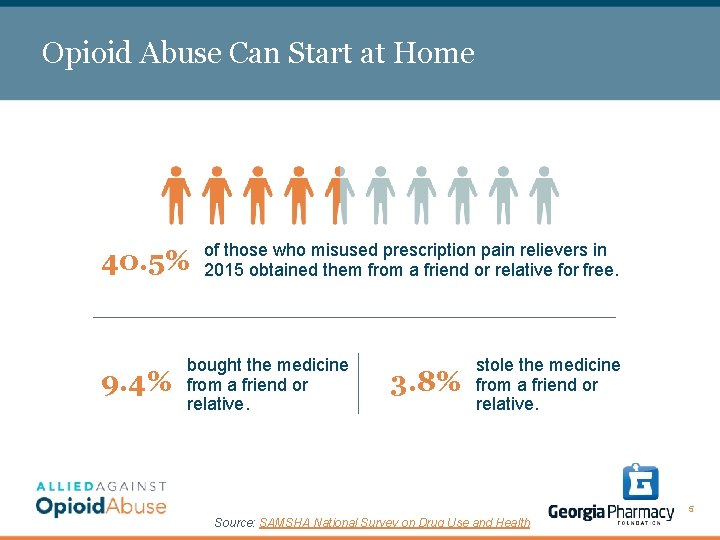
Opioid Abuse Can Start at Home 40. 5% 9. 4% of those who misused prescription pain relievers in 2015 obtained them from a friend or relative for free. bought the medicine from a friend or relative. 3. 8% stole the medicine from a friend or relative. 5 Source: SAMSHA National Survey on Drug Use and Health
Prescription Opioids: Do you know your rights, risks and responsibilities? 6
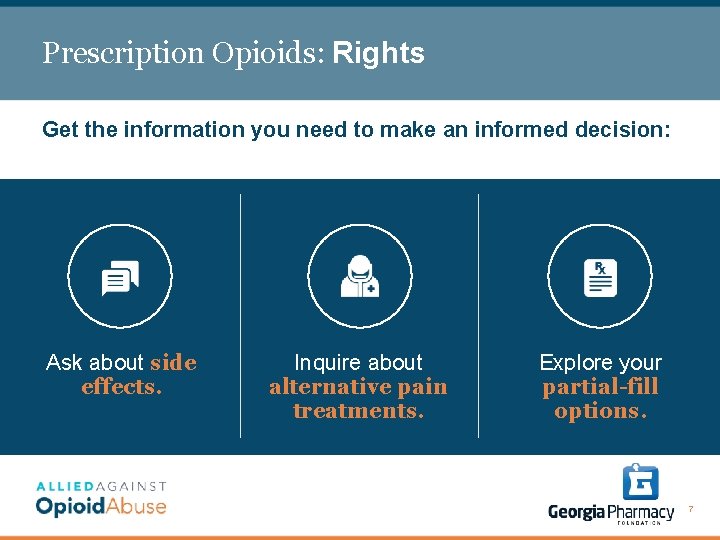
Prescription Opioids: Rights Get the information you need to make an informed decision: Ask about side effects. Inquire about alternative pain treatments. Explore your partial-fill options. 7
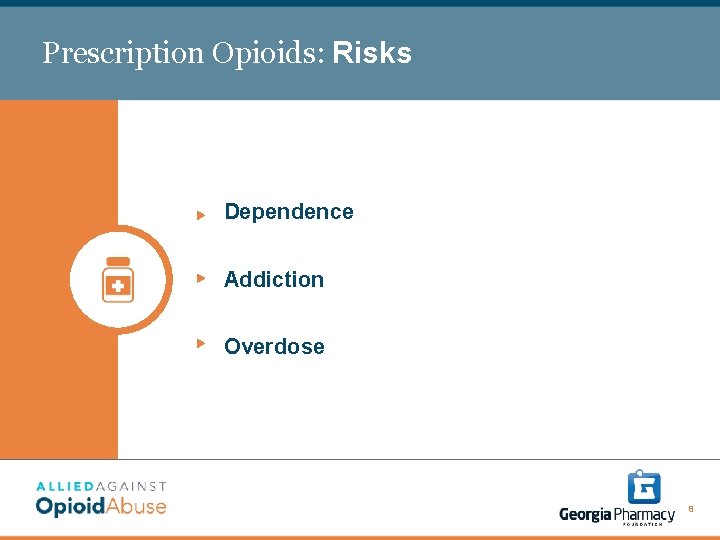
Prescription Opioids: Risks Dependence Addiction Overdose 8
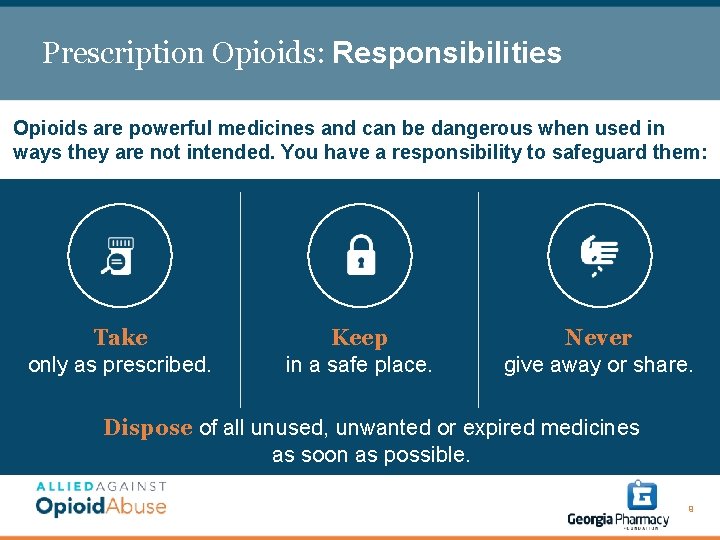
Prescription Opioids: Responsibilities Opioids are powerful medicines and can be dangerous when used in ways they are not intended. You have a responsibility to safeguard them: Take only as prescribed. Keep in a safe place. Never give away or share. Dispose of all unused, unwanted or expired medicines as soon as possible. 9
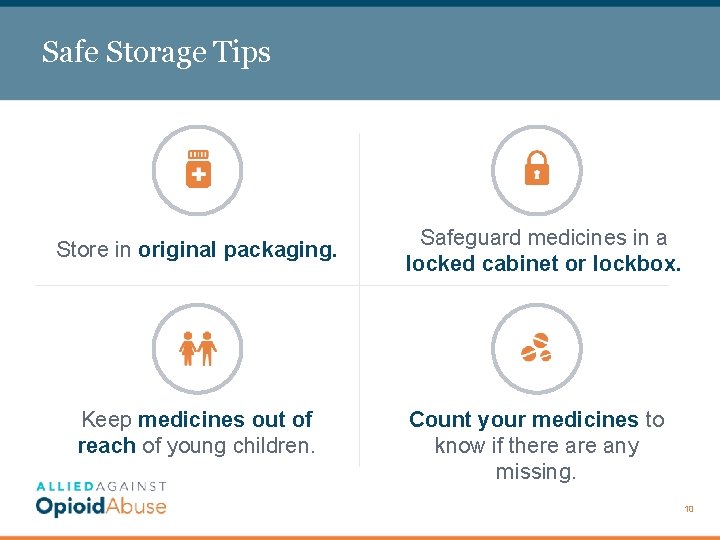
Safe Storage Tips Store in original packaging. Keep medicines out of reach of young children. Safeguard medicines in a locked cabinet or lockbox. Count your medicines to know if there any missing. 10
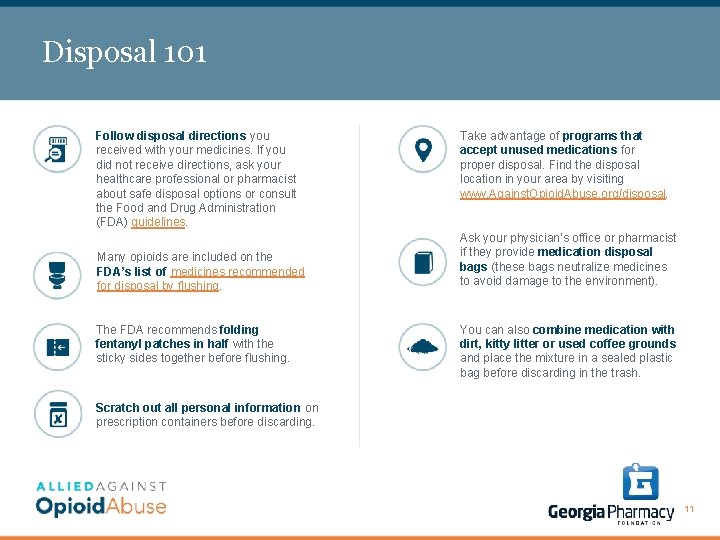
Disposal 101 Follow disposal directions you received with your medicines. If you did not receive directions, ask your healthcare professional or pharmacist about safe disposal options or consult the Food and Drug Administration (FDA) guidelines. Many opioids are included on the FDA’s list of medicines recommended for disposal by flushing. The FDA recommends folding fentanyl patches in half with the sticky sides together before flushing. Take advantage of programs that accept unused medications for proper disposal. Find the disposal location in your area by visiting www. Against. Opioid. Abuse. org/disposal. Ask your physician’s office or pharmacist if they provide medication disposal bags (these bags neutralize medicines to avoid damage to the environment). You can also combine medication with dirt, kitty litter or used coffee grounds and place the mixture in a sealed plastic bag before discarding in the trash. Scratch out all personal information on prescription containers before discarding. 11
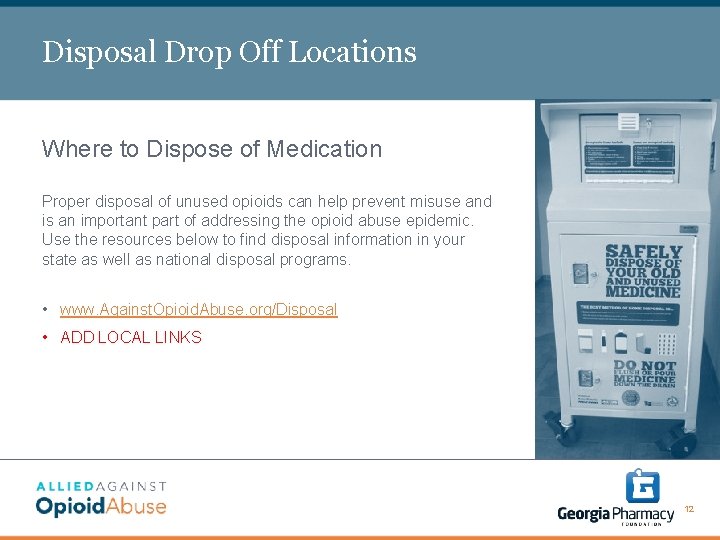
Disposal Drop Off Locations Where to Dispose of Medication Proper disposal of unused opioids can help prevent misuse and is an important part of addressing the opioid abuse epidemic. Use the resources below to find disposal information in your state as well as national disposal programs. • www. Against. Opioid. Abuse. org/Disposal • ADD LOCAL LINKS 12
At Home Disposal Options Prescription disposal bags and bottles can also be used for safe disposal. Once pills are introduced to the carbon contents of the bag and all instructions are followed, the drug becomes neutralized and can be disposed of in the trash. 13
Safe storage and disposal can help ensures your prescriptions do not end up in the wrong hands. 14
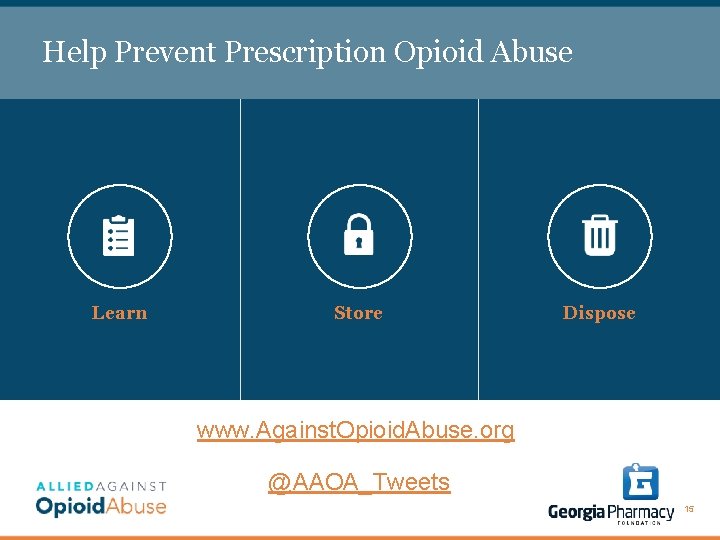
Help Prevent Prescription Opioid Abuse Learn Store Dispose www. Against. Opioid. Abuse. org @AAOA_Tweets 15
Questions? 16
Help Spread the Message #Against. Opioid. Abuse | @AAOA_Tweets 17