
Prescription Drugs Mr Prall Prescription Drugs introduction Prescription
- Slides: 29
Prescription Drugs Mr. Prall
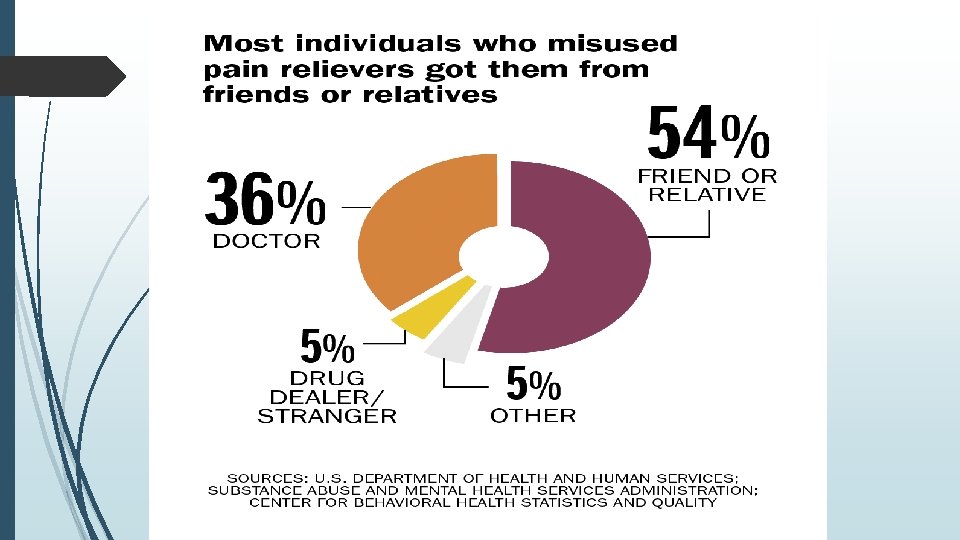
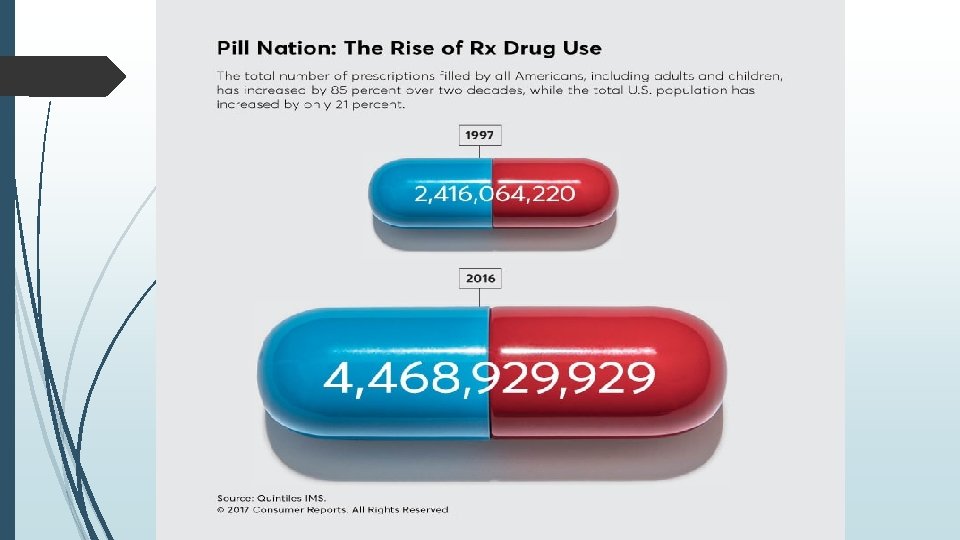
Prescription Drugs introduction *Prescription Drug – A pharmaceutical drug that legally requires a medical prescription to be dispensed. *After marijuana and alcohol, prescription drugs are the most commonly misused substances by Americans age 14 and older. Teens misuse prescription drugs for a number of reasons, such as to get high, to stop pain, or because they think it will help them with school work. Many teens get prescription drugs they misuse from friends and relatives, sometimes without the person knowing. Boys and girls tend to misuse some types of prescription drugs for different reasons. For example, boys are more likely to misuse prescription stimulants to get high, while girls tend to misuse them to stay alert or to lose weight. The most commonly abused prescription drugs are pain medications, sleeping pills, anti-anxiety medications and stimulants (used to treat attention deficit/hyperactivity disorders)
Prescription Drugs statistics The 2016 National Study on Drug Use and Health reported that an estimated 28. 6 million Americans age 12 and over used illicit drugs during the month prior to the study. In the US alone, an estimated 54 million people over the age of 12 have used prescription drugs for nonmedical reasons in their lifetime. The top three prescription drugs used by high school seniors in 2017 were: 1. Adderall (5. 5 percent), 2. Tranquilizers (4. 7 percent), 3. Prescription opioids(4. 2 percent). There’s been a significant decline in the misuse of prescription opioids among teens over the past 15 years. For example, Vicodin use among high school seniors dropped from 10. 5 percent in 2003 to 2 percent in 2017.
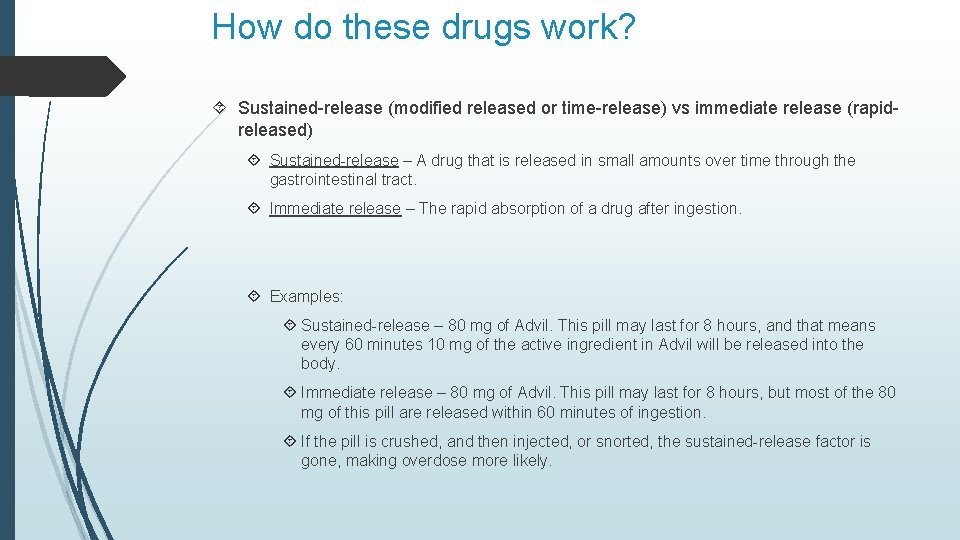
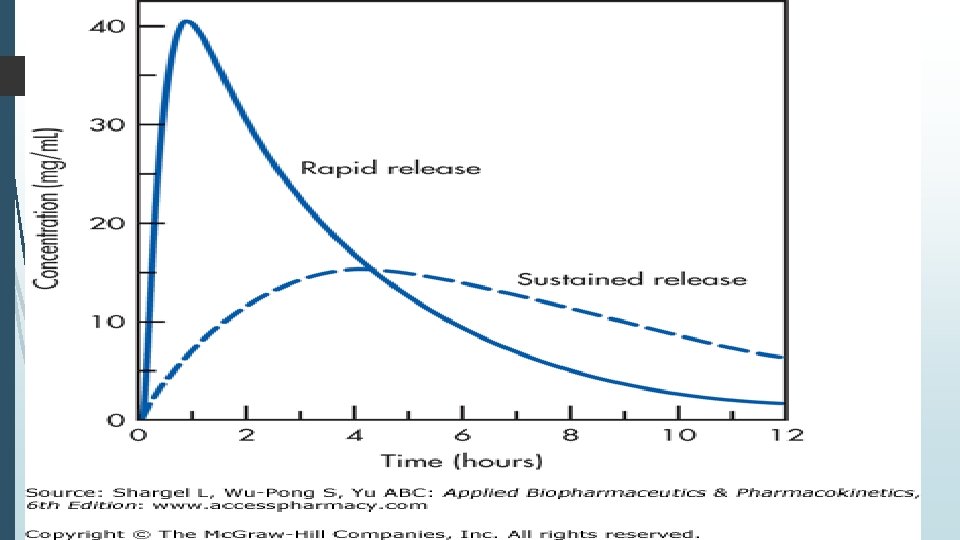
How do these drugs work? Sustained-release (modified released or time-release) vs immediate release (rapidreleased) Sustained-release – A drug that is released in small amounts over time through the gastrointestinal tract. Immediate release – The rapid absorption of a drug after ingestion. Examples: Sustained-release – 80 mg of Advil. This pill may last for 8 hours, and that means every 60 minutes 10 mg of the active ingredient in Advil will be released into the body. Immediate release – 80 mg of Advil. This pill may last for 8 hours, but most of the 80 mg of this pill are released within 60 minutes of ingestion. If the pill is crushed, and then injected, or snorted, the sustained-release factor is gone, making overdose more likely.
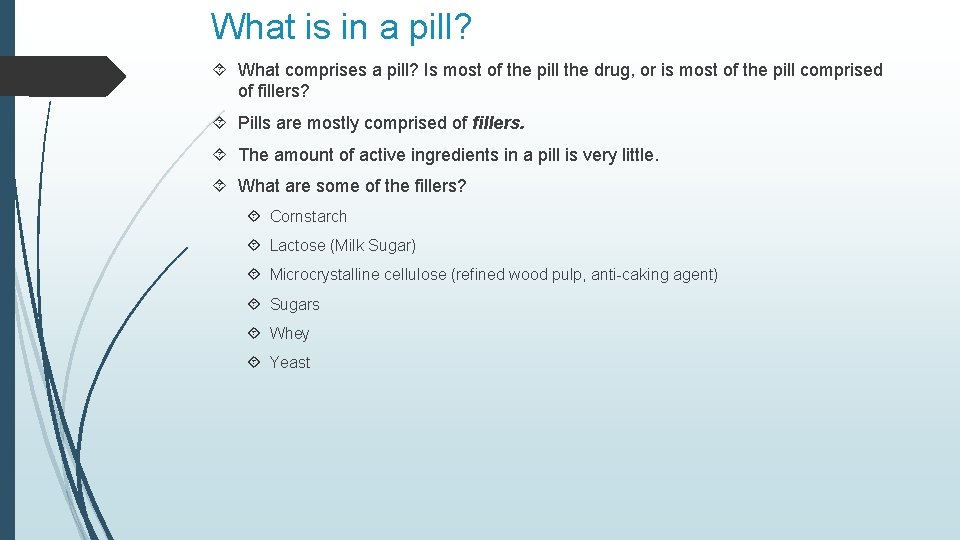
What is in a pill? What comprises a pill? Is most of the pill the drug, or is most of the pill comprised of fillers? Pills are mostly comprised of fillers. The amount of active ingredients in a pill is very little. What are some of the fillers? Cornstarch Lactose (Milk Sugar) Microcrystalline cellulose (refined wood pulp, anti-caking agent) Sugars Whey Yeast
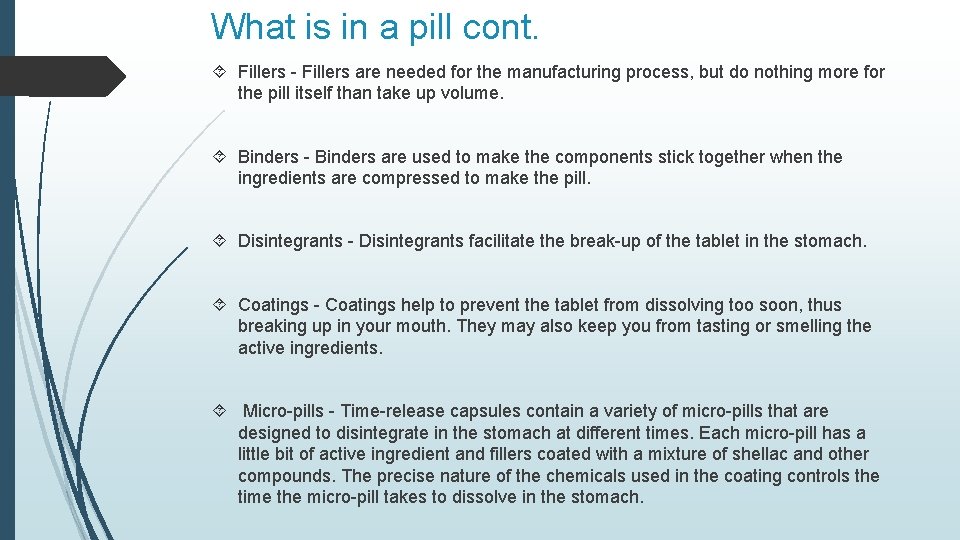
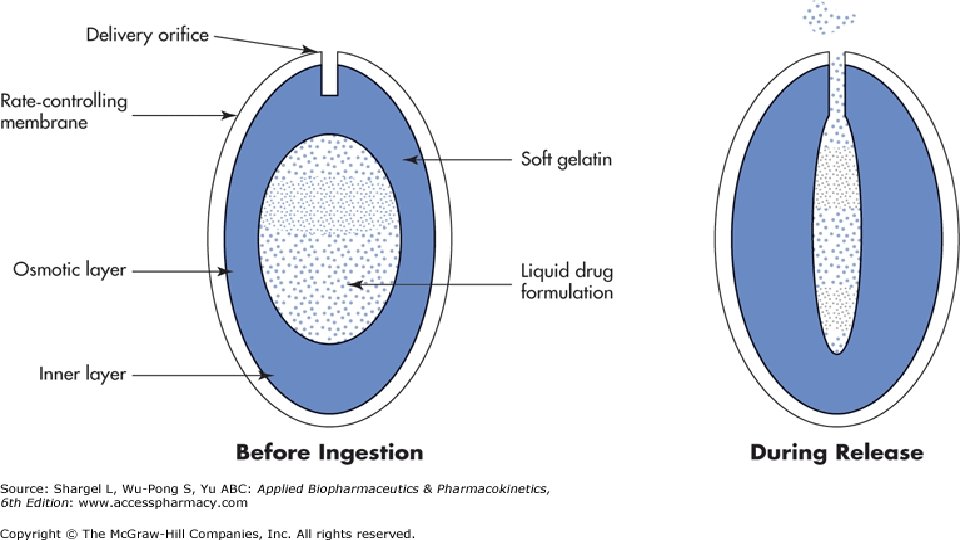
What is in a pill cont. Fillers - Fillers are needed for the manufacturing process, but do nothing more for the pill itself than take up volume. Binders - Binders are used to make the components stick together when the ingredients are compressed to make the pill. Disintegrants - Disintegrants facilitate the break-up of the tablet in the stomach. Coatings - Coatings help to prevent the tablet from dissolving too soon, thus breaking up in your mouth. They may also keep you from tasting or smelling the active ingredients. Micro-pills - Time-release capsules contain a variety of micro-pills that are designed to disintegrate in the stomach at different times. Each micro-pill has a little bit of active ingredient and fillers coated with a mixture of shellac and other compounds. The precise nature of the chemicals used in the coating controls the time the micro-pill takes to dissolve in the stomach.
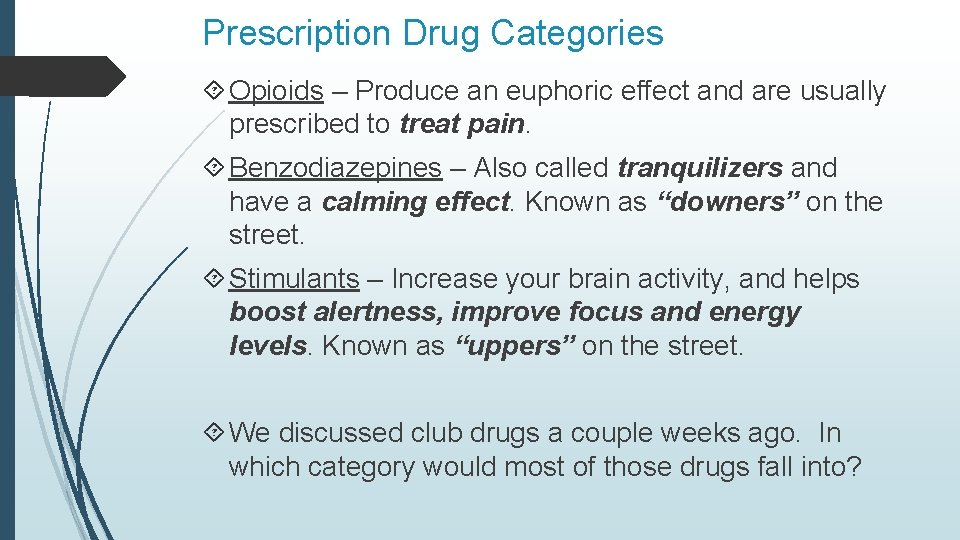
Prescription Drug Categories Opioids – Produce an euphoric effect and are usually prescribed to treat pain. Benzodiazepines – Also called tranquilizers and have a calming effect. Known as “downers” on the street. Stimulants – Increase your brain activity, and helps boost alertness, improve focus and energy levels. Known as “uppers” on the street. We discussed club drugs a couple weeks ago. In which category would most of those drugs fall into?
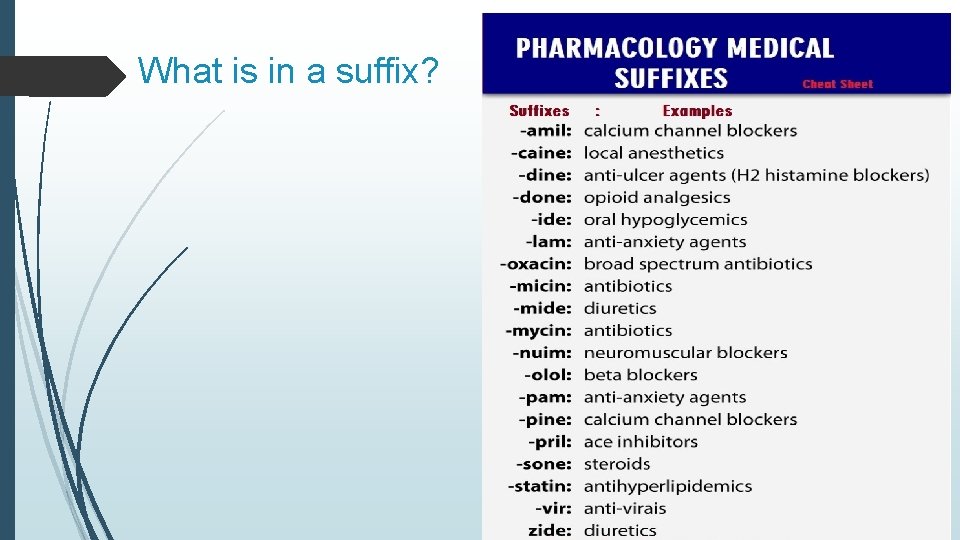
What is in a suffix?
Drugs that we will discussed Oxycontin (Oxycodone) Percocet Vicodin Demerol (Meperidine) Valium (Diazepam) Klonopin (Clonazepam) Xanax (Alprazolam) Ativan (Lorazepam) Ritalin Concerta Dexedrine Adderall Vynase
Opioids *Opioids - Any drug derived from opium. -Opiates are a natural pain remedy -Opioids are a synthetic pain remedy These pills are normally prescribed to people that were in car crashes, had surgeries, or experience back pain. A 2018 study done by the NIDA (National Institute of Drug Abuse) found that on average 115 people die in the United States each day from an opioid overdose. How do they work? They bind to opioid receptors in the brain, spinal cord and other areas of the body. They then reduce the amount of pain messages sent to the brain, and reduce the feelings of pain.
Opioid drugs. Demerol (Meperidine) Vicodin Percocet Oxycontin
Opioids cont. Demerol (Meperidine) – Prescribed for moderate to severe pain and comes in either tablet or syrup form. Vicodin – Used for moderate to moderately severe pain. Usually prescribed after oral surgery or some type of outpatient procedure. Normally comes in pill or liquid form. Contains the drug hydrocodone. Percocet – A combination of oxycodone (a generic form of Oxycontin) and acetaminophen (found in OTC pain relievers like Tylenol). Perc 30’s are some of the most commonly abused Percocet's amongst teens. Oxycontin (Oxycodone) – Prescribed for severe pain. Normally taken as a pill, but could be crushed and injected. According to Forbes Oxycontin generates $3 billions in revenue annually!
Benzodiazepines - A family of minor tranquilizers that act against anxiety and convulsions, and produce sedation and muscle relaxation. *Also known as tranquilizers. Benzodiazepines are depressants. They act on the CNS and produce sedation and muscle relaxation. In 1977 benzodiazepines were the most prescribed drug in the entire world. Prescribed for people that suffer from panic attacks, anxiety and insomnia (or other sleep disorders). Can also be used to treat alcohol withdrawal. They act on the GABA receptors of the brain. Barbiturates – Another classification of drug, that is very similar to benzodiazepines. They act on GABA alpha receptors. They act the same was as alcohol does on the brain. They stay in the body longer (3 -5 days), higher risk of addiction versus benzodiazepines. Still considered a depressant.
Benzodiazepines cont. Valium (Diazepam) Xanax (Alprazolam) Klonopin (Clonazepam) Ativan (Lorazepam) If a drug ends in “pam” or “lam” there is a good chance it will fall into the benzodiazepine family (depressant).
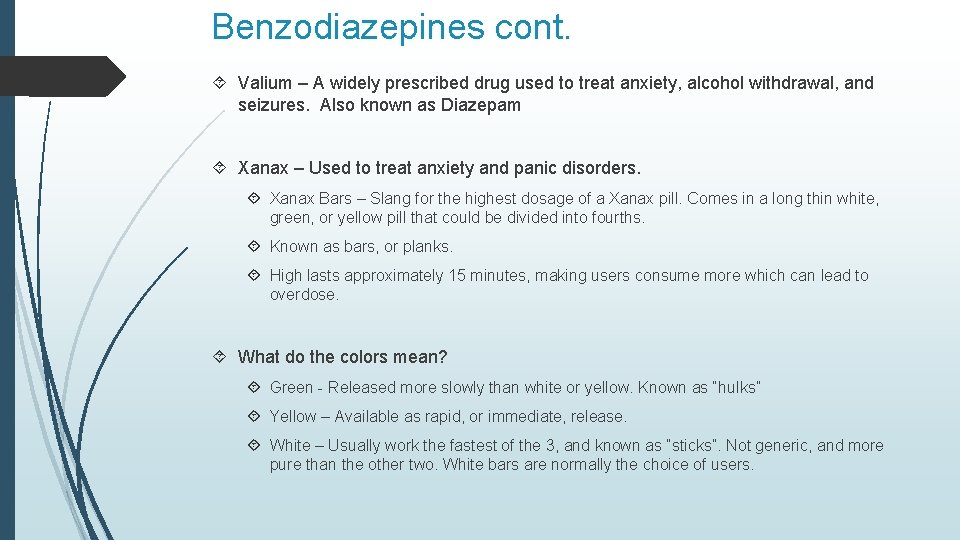
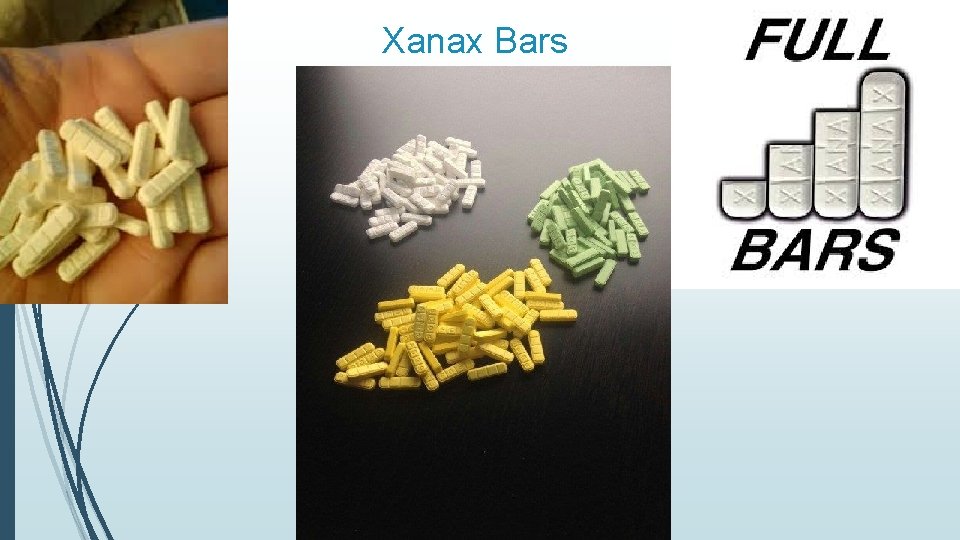
Benzodiazepines cont. Valium – A widely prescribed drug used to treat anxiety, alcohol withdrawal, and seizures. Also known as Diazepam Xanax – Used to treat anxiety and panic disorders. Xanax Bars – Slang for the highest dosage of a Xanax pill. Comes in a long thin white, green, or yellow pill that could be divided into fourths. Known as bars, or planks. High lasts approximately 15 minutes, making users consume more which can lead to overdose. What do the colors mean? Green - Released more slowly than white or yellow. Known as “hulks” Yellow – Available as rapid, or immediate, release. White – Usually work the fastest of the 3, and known as “sticks”. Not generic, and more pure than the other two. White bars are normally the choice of users.
Xanax Bars
Benzodiazepines cont. Klonopin (Clonazepam) – Given to individuals to help treat seizures and panic attacks. Ativan (Lorazepam) – Prescribed to individuals to treat anxiety. Don’t mix “benzos” with alcohol. Alcohol, and opiates, are two of the main drugs people will use while taking benzos. They believe it will enhance the effect they get from the pills. But it is extremely dangerous because… 1. Alcohol will be absorbed by the body before any of benzo drug, making the drug stay in the body longer, and users using more in that period of time. 2. Overdose. Combining two drugs that work on the CNS in the same way increases the chance for overdose.
Stimulants – Medicines generally used to treat attention deficit hyperactive disorder (ADHD) and narcolepsy. Stimulants – Sometimes called “uppers” increase alertness, attention energy, and control certain behavioral problems. Stimulants can be used to treat narcolepsy, and other sleeping disorders. There are 3 common types of stimulants: 1. Methylphenidate 2. Dextroamphetamines 3. Amphetamines We will learn about 3 chemical neurotransmitters of the brain that are affected by the 3 types of stimulants: 1. Dopamine (Reward and pleasure; eg. hugging your child, sex, eating your favorite meal). 2. Serotonin (Mood) 3. Norepinephrine (Associated with fight or flight, release glucose)
Stimulants cont. (Methylphenidate) Methylphenidate – Classified as a psychostimulant. Works by blocking the re-uptake of dopamine. *Methylphenidate only releases dopamine.
Stimulants cont. (Dextroamphetamine) Dextroamphetamines They affect dopamine levels as well as norepinephrine levels. It does not affect serotonin levels. This is the 2 nd most widely prescribed drug to people with ADHD.
Stimulants cont. (Amphetamine) Amphetamine – A psychostimulant drug that stimulates the CNS and basically speeds us up. Amphetamine increases the presence of three chemicals known as neurotransmitters: 1. Dopamine 2. Serotonin 3. Norepinephrine Why do we use a stimulant to treat ADHD? People with ADHD typically have lower levels of dopamine
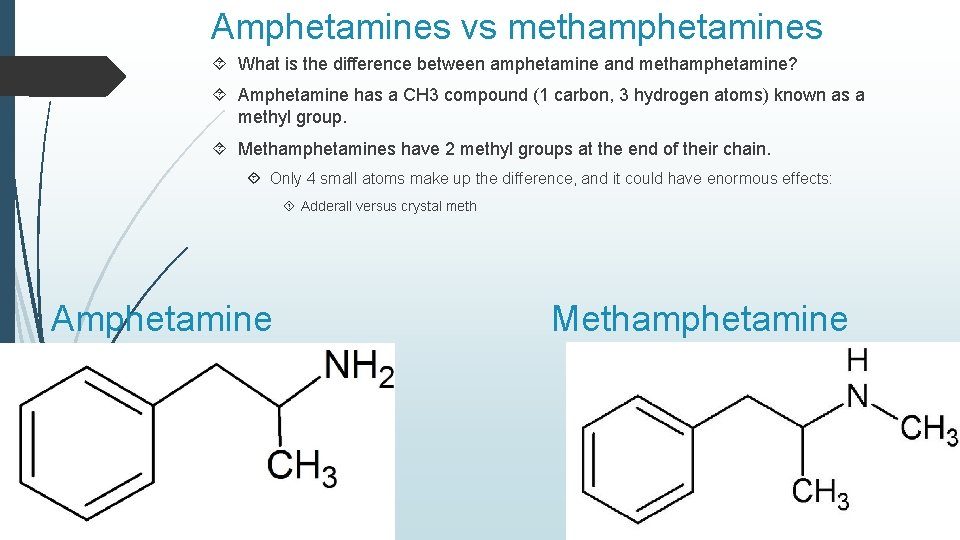
Amphetamines vs methamphetamines What is the difference between amphetamine and methamphetamine? Amphetamine has a CH 3 compound (1 carbon, 3 hydrogen atoms) known as a methyl group. Methamphetamines have 2 methyl groups at the end of their chain. Only 4 small atoms make up the difference, and it could have enormous effects: Adderall versus crystal meth Amphetamine Methamphetamine
Stimulants cont. Ritalin – Is a methylphenidate drug used to treat ADHD and narcolepsy and other sleeping disorders. *The most frequently prescribed medication for treatment of ADHD> Concerta - Is another methylphenidate drug used to treat ADHD and narcolepsy and other sleeping disorders. *The difference between Ritalin and concerta relies in strength, dosage, and how long you take the medication. They are both basically the same drug under different names. Dexedrine – A dextroamphetamine prescribed drug used to treat ADHD and narcolepsy. Adderall - – A prescribed drug to treat ADHD, and sometimes narcolepsy. It is a combination of two stimulants; amphetamine and dextroamphetamine. Vynase – An amphetamine prescribed drug used to treat ADHD and binge eating disorder. *The difference between Adderall and vynase is that vynase contains no amphetamine salts.
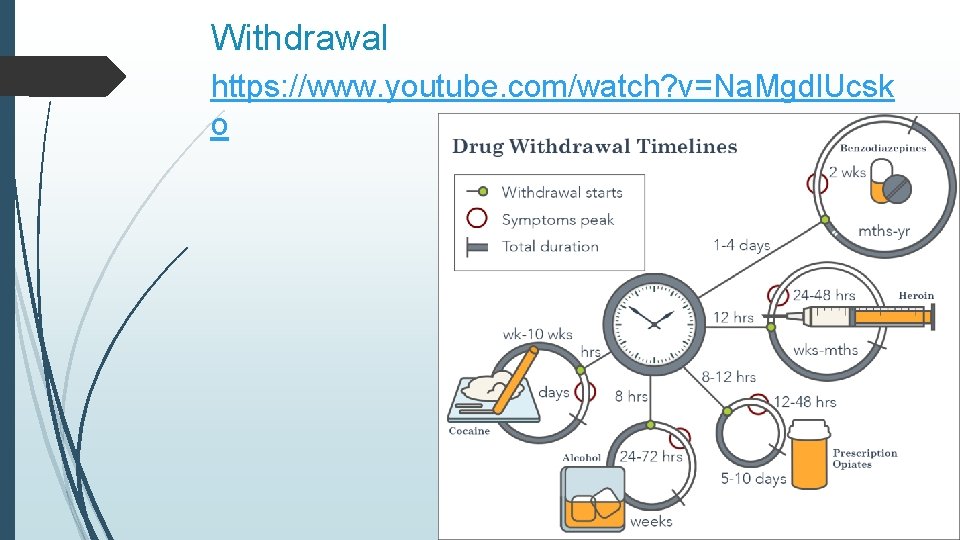
Withdrawal https: //www. youtube. com/watch? v=Na. Mgdl. Ucsk o
Where to get help? There are resources available to individuals who may want help due to an addiction. Clearbrook Treatment Center https: //www. clearbrookinc. com/ - Has been used by the show Intervention http: //www. marworth. org/ Located in Waverly PA SAMSA’s National Hotline https: //www. samhsa. gov/find-help/national-helpline