
Prescribing Naloxone and Promoting Safe Use of Opioids
Prescribing Naloxone and Promoting Safe Use of Opioids in Primary Care Jim Mercuri, LCSW UPMC New Kensington Family Health Center UPMC St. Margaret Family Medicine Residency Program Justin Thiry LSW UPMC Mc. Keesport Addiction Medicine Unit January 08, 2020
Disclosures None
Objectives • Recognize the scope of opioid abuse in our community • Understand significance of social determinants of health in addressing issues of substance abuse and dependence • Demonstrate naloxone prescribing as a harm reduction strategy in a primary care environment
Scope of the Problem • 2 million individuals with opioid analgesic use disorders • 4 -fold increase in opioid prescriptions for pain in the last 10 years • 276% increase in deaths from prescription opioids from 2000 in 2016 • 46 Americans die every day from overdose on prescription opioids CDC MMWR November 4, 2011 / 60(43); 1487 -1492 Coffin P, Banta-Green C. The Dueling Obligations of Opioid Stewardship. Ann Intern Med. 2014; 160(3): 198 -200.
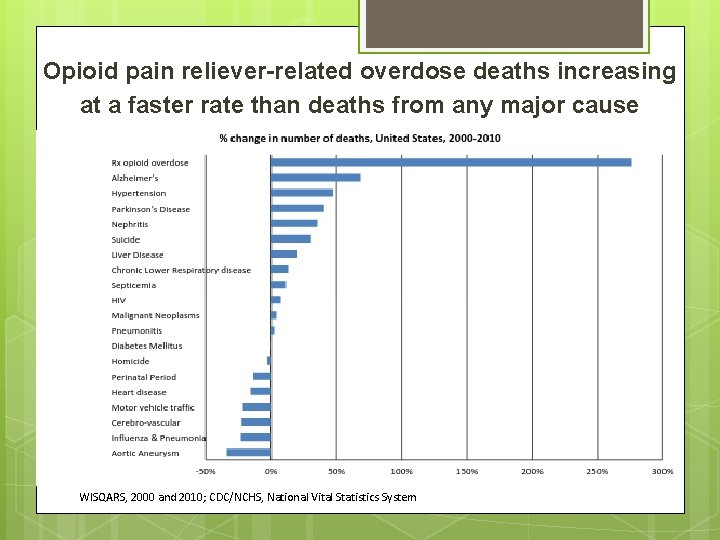
Opioid pain reliever-related overdose deaths increasing at a faster rate than deaths from any major cause WISQARS, 2000 and 2010; CDC/NCHS, National Vital Statistics System
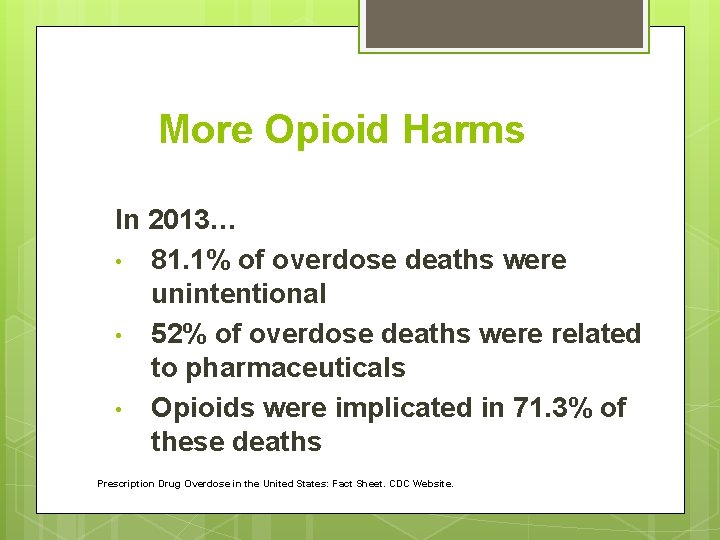
More Opioid Harms In 2013… • 81. 1% of overdose deaths were unintentional • 52% of overdose deaths were related to pharmaceuticals • Opioids were implicated in 71. 3% of these deaths Prescription Drug Overdose in the United States: Fact Sheet. CDC Website. http: //wkyufm. org
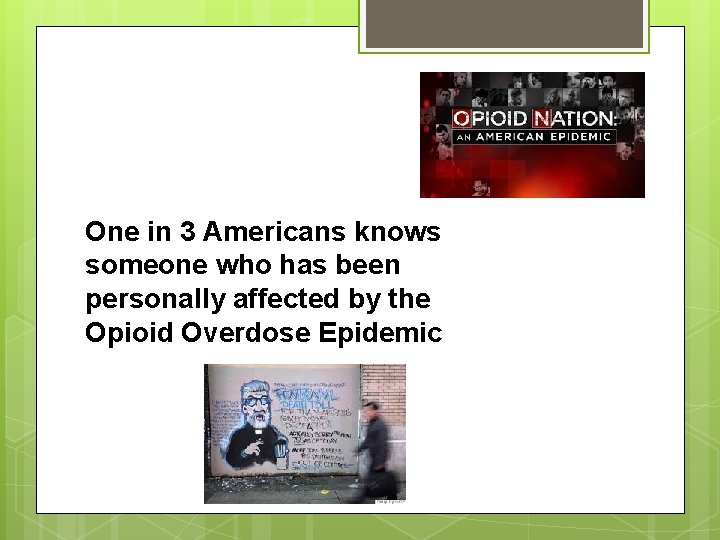
One in 3 Americans knows someone who has been personally affected by the Opioid Overdose Epidemic
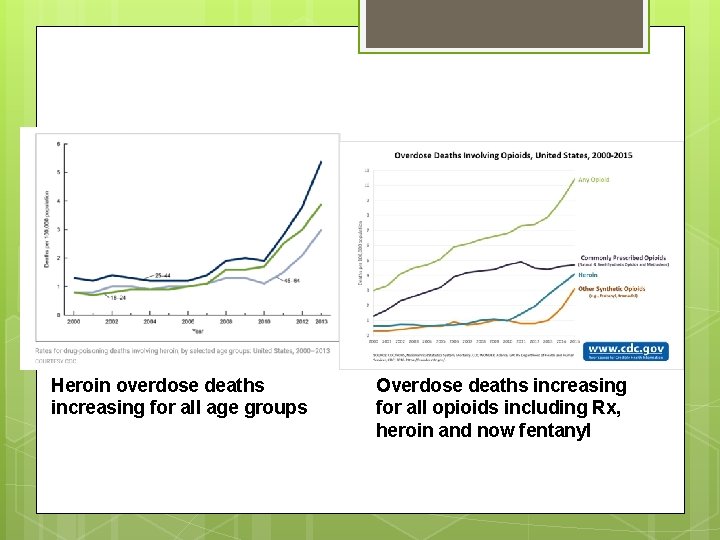
Heroin overdose deaths increasing for all age groups Overdose deaths increasing for all opioids including Rx, heroin and now fentanyl
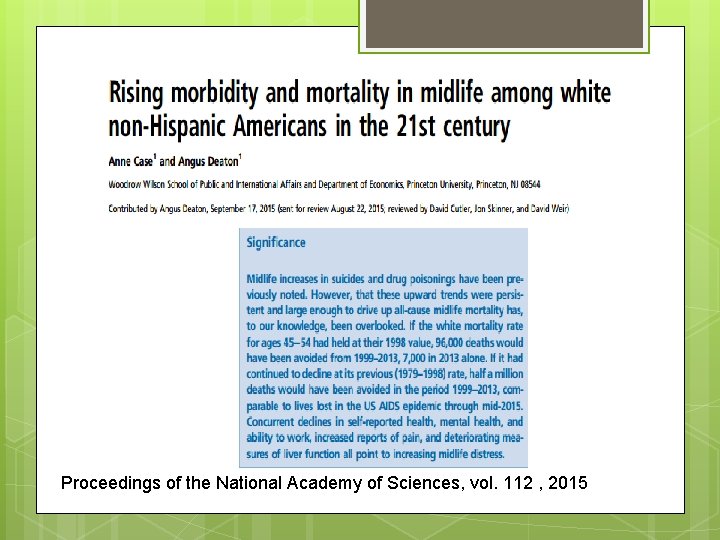
Proceedings of the National Academy of Sciences, vol. 112 , 2015
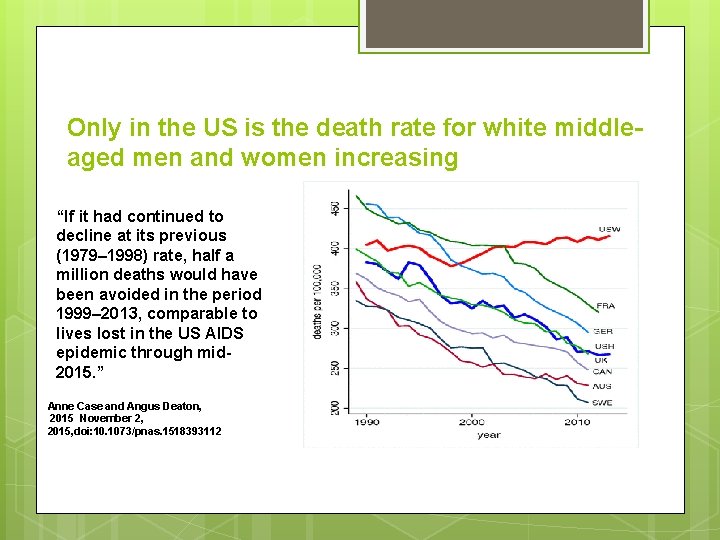
Only in the US is the death rate for white middleaged men and women increasing “If it had continued to decline at its previous (1979‒ 1998) rate, half a million deaths would have been avoided in the period 1999‒ 2013, comparable to lives lost in the US AIDS epidemic through mid 2015. ” Anne Case and Angus Deaton, 2015 November 2, 2015, doi: 10. 1073/pnas. 1518393112
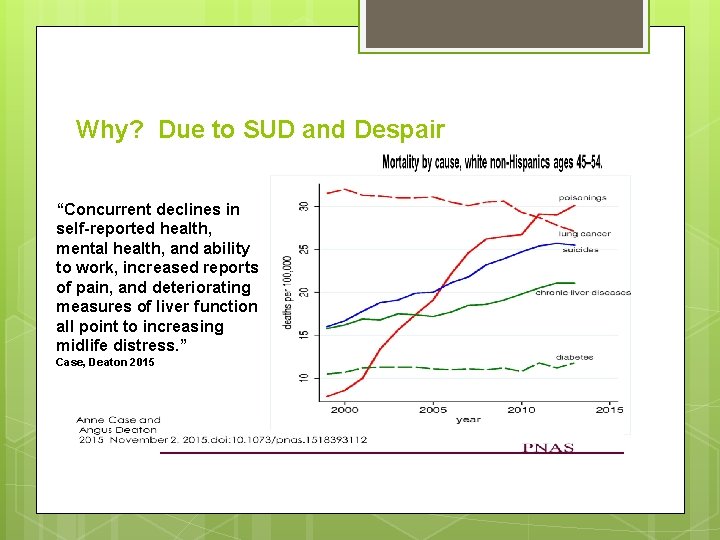
Why? Due to SUD and Despair “Concurrent declines in self-reported health, mental health, and ability to work, increased reports of pain, and deteriorating measures of liver function all point to increasing midlife distress. ” Case, Deaton 2015
How is the Opioid Overdose Epidemic Affecting Pennsylvania and Allegheny County?
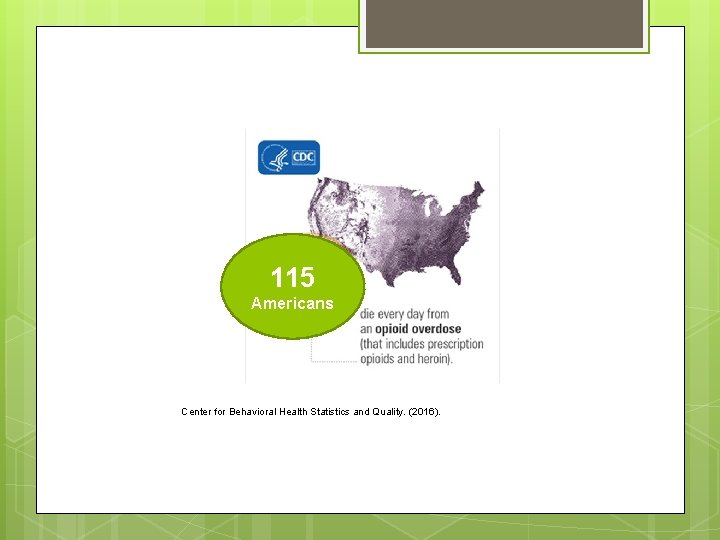
115 Americans Center for Behavioral Health Statistics and Quality. (2016).
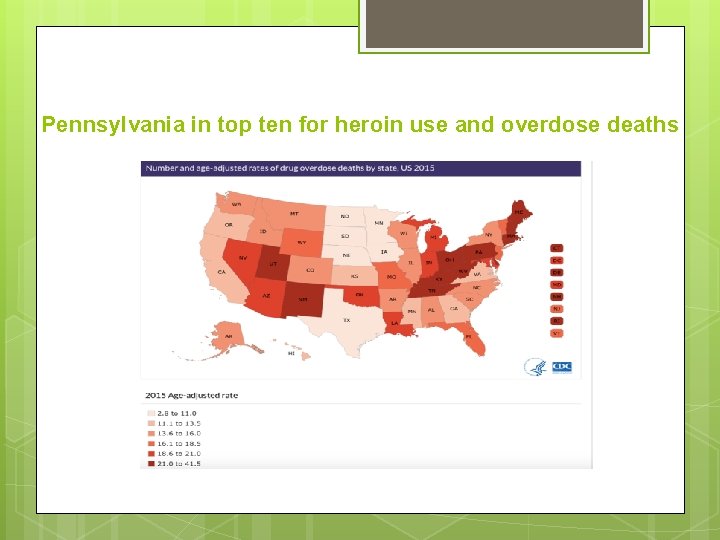
Pennsylvania in top ten for heroin use and overdose deaths
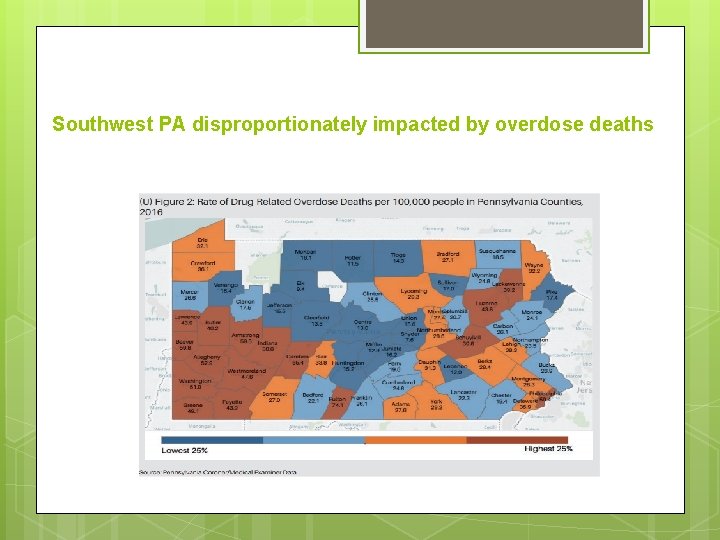
Southwest PA disproportionately impacted by overdose deaths
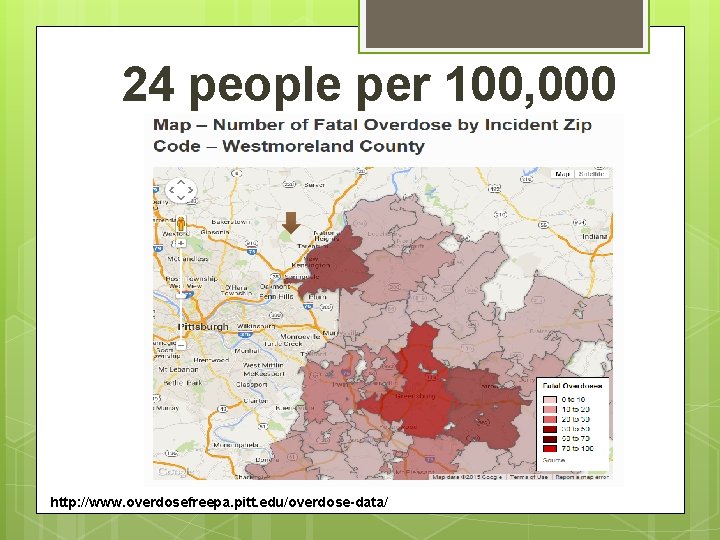
24 people per 100, 000 http: //www. overdosefreepa. pitt. edu/overdose-data/
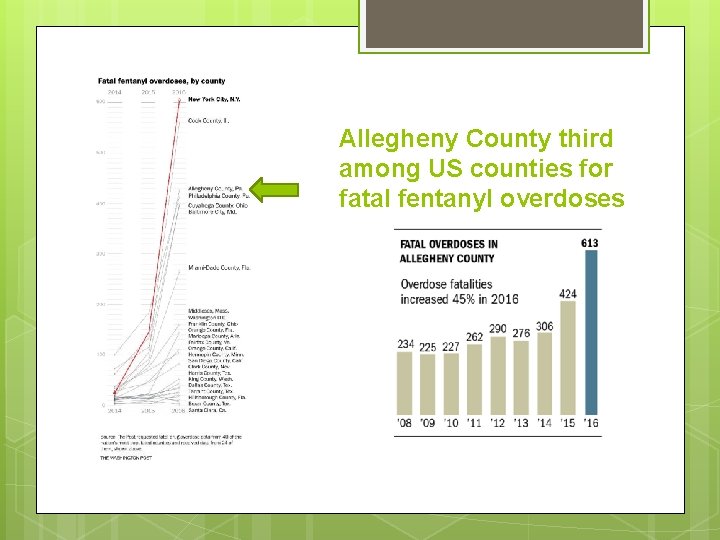
Allegheny County third among US counties for fatal fentanyl overdoses
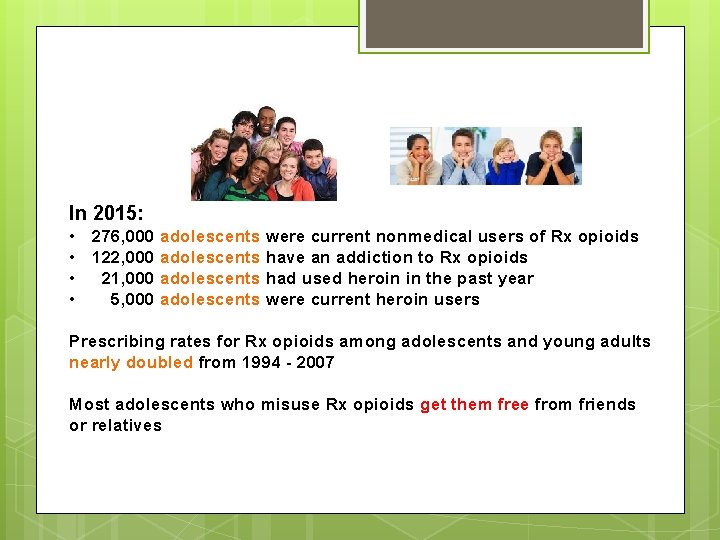
In 2015: • • 276, 000 adolescents were current nonmedical users of Rx opioids 122, 000 adolescents have an addiction to Rx opioids 21, 000 adolescents had used heroin in the past year 5, 000 adolescents were current heroin users Prescribing rates for Rx opioids among adolescents and young adults nearly doubled from 1994 - 2007 Most adolescents who misuse Rx opioids get them free from friends or relatives
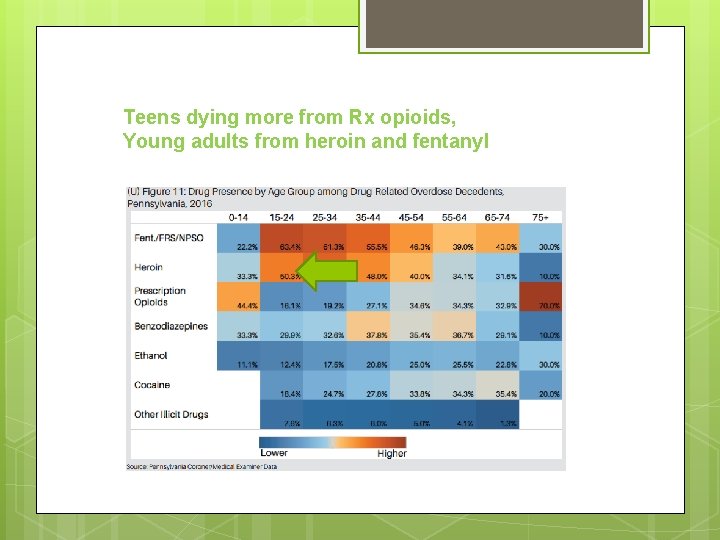
Teens dying more from Rx opioids, Young adults from heroin and fentanyl
How did we get here? ? • Dramatic increase in opioid Rx by medical professionals • Aggressive marketing of Rx opioids by Pharma that minimized addictive potential • Increase in opioid addiction with transition from Rx opioids to cheaper heroin • Introduction of fentanyl and other synthetic opioids • Social and cultural factors - isolation, despair, loss of “The American Dream”
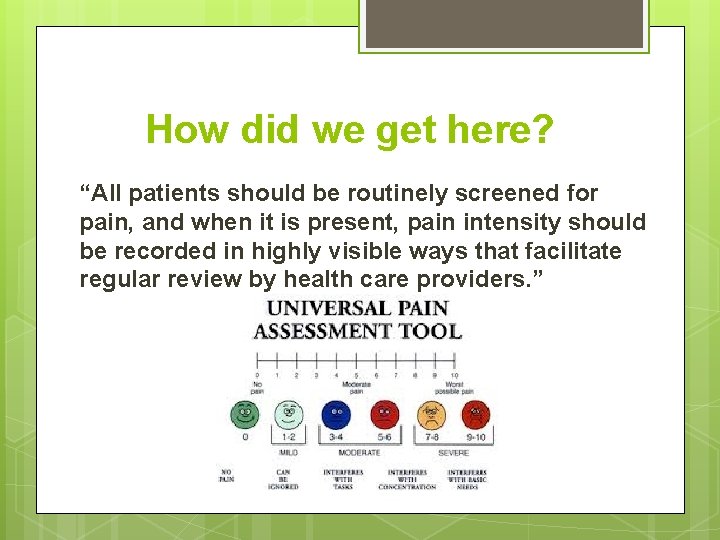
How did we get here? “All patients should be routinely screened for pain, and when it is present, pain intensity should be recorded in highly visible ways that facilitate regular review by health care providers. ”
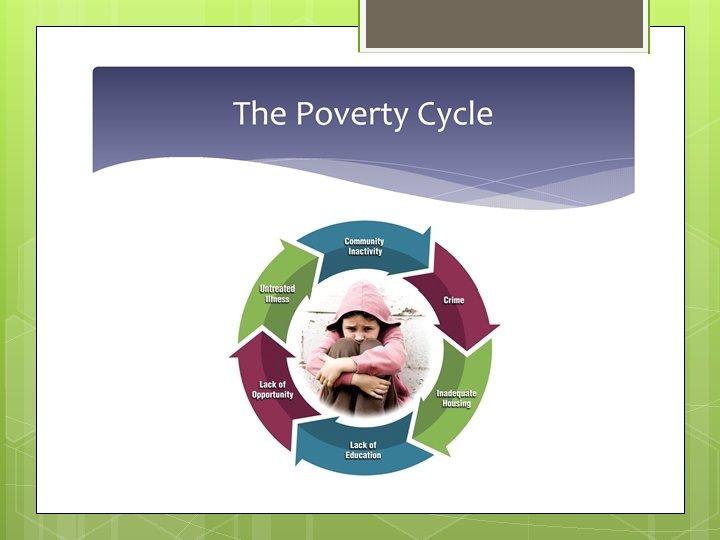
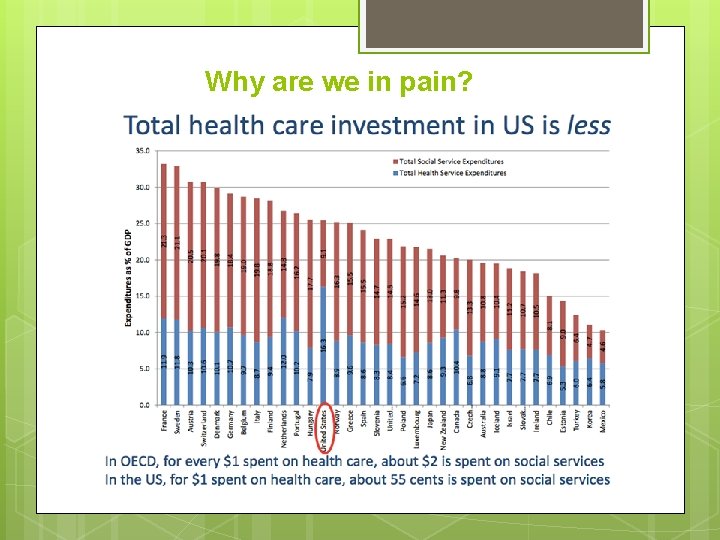
Why are we in pain?
Why are we in pain? ACE Matters
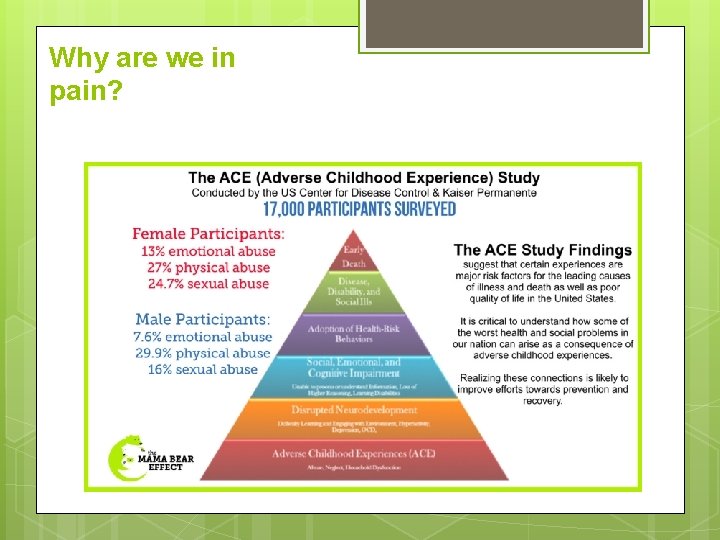
Why are we in pain?
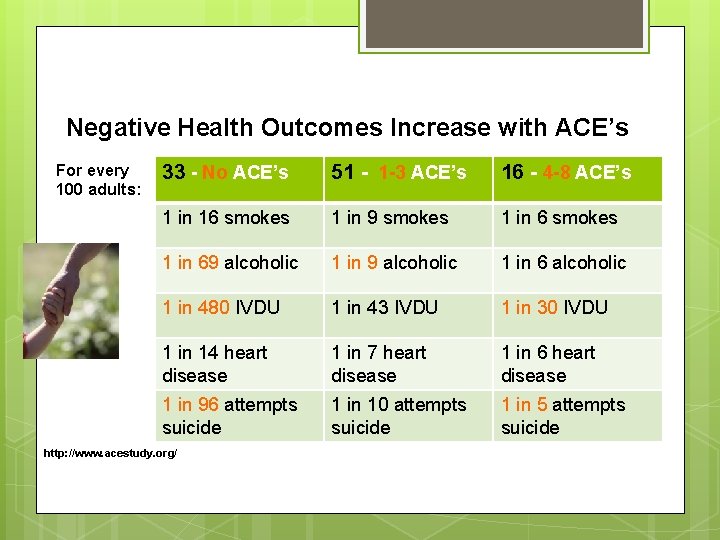
Negative Health Outcomes Increase with ACE’s For every 100 adults: 33 - No ACE’s 51 - 1 -3 ACE’s 16 - 4 -8 ACE’s 1 in 16 smokes 1 in 9 smokes 1 in 69 alcoholic 1 in 6 alcoholic 1 in 480 IVDU 1 in 43 IVDU 1 in 30 IVDU 1 in 14 heart disease 1 in 7 heart disease 1 in 6 heart disease 1 in 96 attempts suicide 1 in 10 attempts suicide 1 in 5 attempts suicide http: //www. acestudy. org/
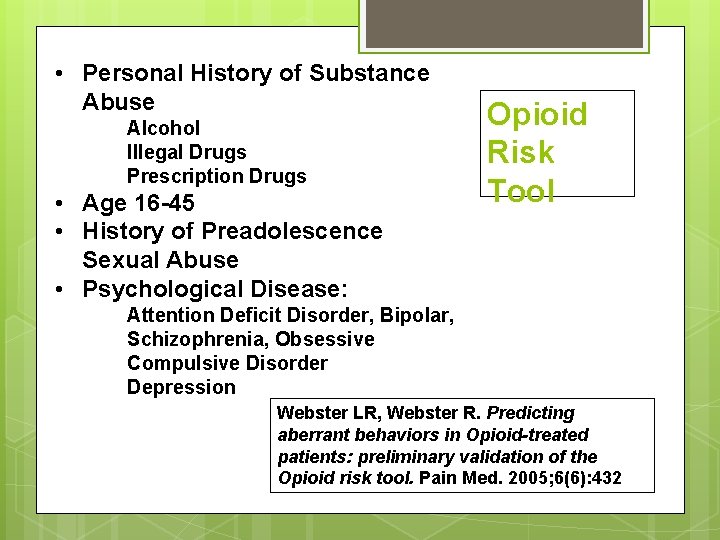
• Personal History of Substance Abuse Alcohol Illegal Drugs Prescription Drugs • Age 16 -45 • History of Preadolescence Sexual Abuse • Psychological Disease: Opioid Risk Tool Attention Deficit Disorder, Bipolar, Schizophrenia, Obsessive Compulsive Disorder Depression Webster LR, Webster R. Predicting aberrant behaviors in Opioid-treated patients: preliminary validation of the Opioid risk tool. Pain Med. 2005; 6(6): 432
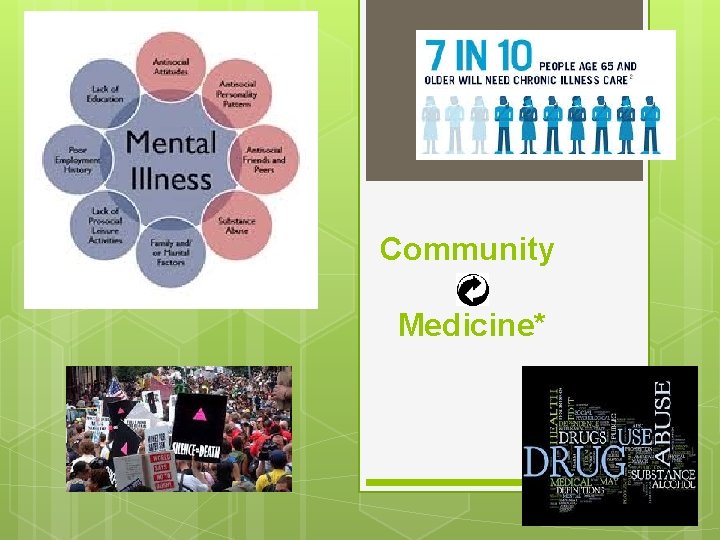
Community Medicine*
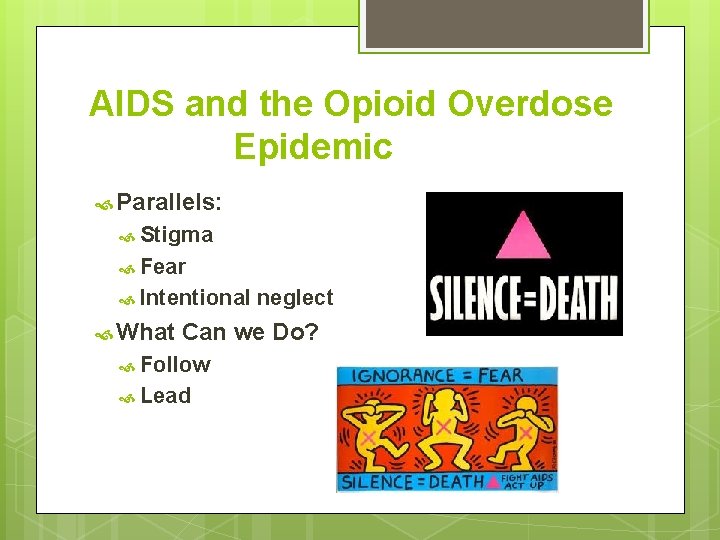
AIDS and the Opioid Overdose Epidemic Parallels: Stigma Fear Intentional neglect What Can we Do? Follow Lead
What can we do? Follow evidence- based guidelines Use screening tools (e. g. DIRE, ORT) Follow protocols and utilize agreements Urine testing Refer for nonpharmacologic rx Prescription drug monitoring programs (PDMP) Treat comorbid behavioral health issues Refer for substance abuse treatment Prescribe/distribute naloxone
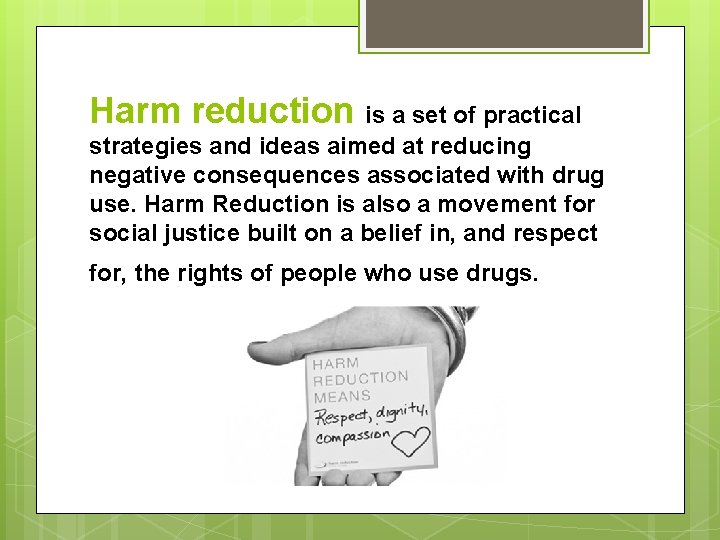
Harm reduction is a set of practical strategies and ideas aimed at reducing negative consequences associated with drug use. Harm Reduction is also a movement for social justice built on a belief in, and respect for, the rights of people who use drugs.
Defined by the WHO as: A concept aiming to prevent or reduce negative health consequences associated with certain behaviors Pragmatism – Are we going to eliminate drug use? Humanistic Values – Not approval but not moral judgment Focus on Harms – Not the use itself Balancing Costs and Benefits - Evaluation Priority of Immediate Goals
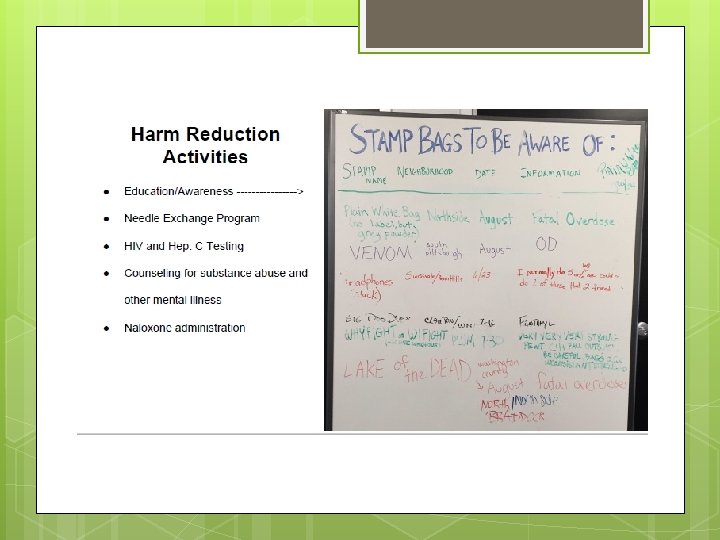
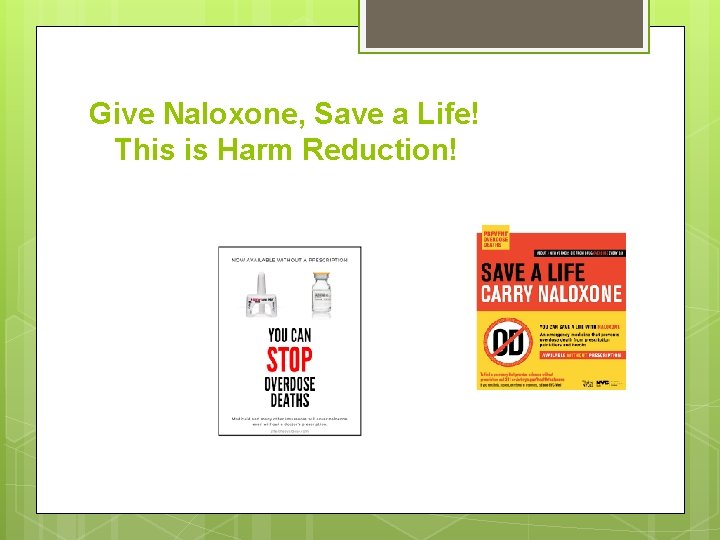
Give Naloxone, Save a Life! This is Harm Reduction!
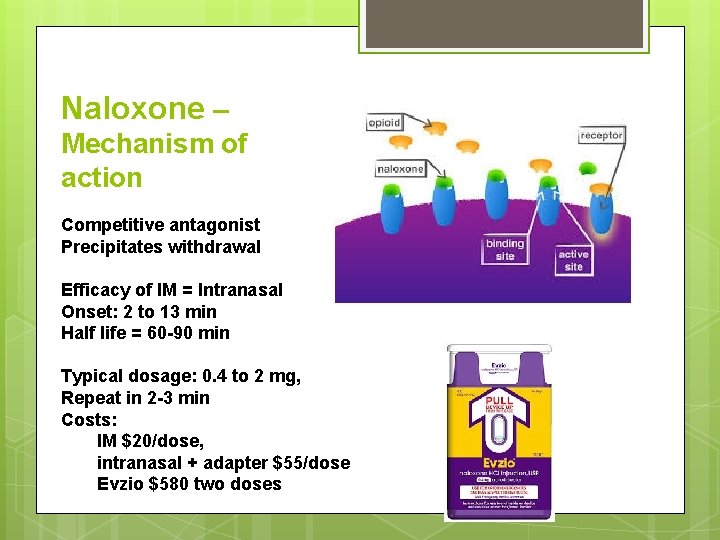
Naloxone – Mechanism of action Competitive antagonist Precipitates withdrawal Efficacy of IM = Intranasal Onset: 2 to 13 min Half life = 60 -90 min Typical dosage: 0. 4 to 2 mg, Repeat in 2 -3 min Costs: IM $20/dose, intranasal + adapter $55/dose Evzio $580 two doses
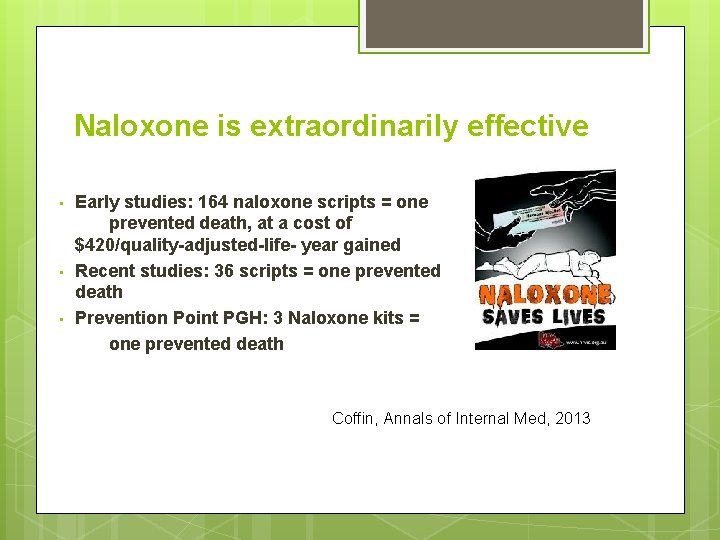
Naloxone is extraordinarily effective • • • Early studies: 164 naloxone scripts = one prevented death, at a cost of $420/quality-adjusted-life- year gained Recent studies: 36 scripts = one prevented death Prevention Point PGH: 3 Naloxone kits = one prevented death Coffin, Annals of Internal Med, 2013
Endorsement, Policy and Legal Support
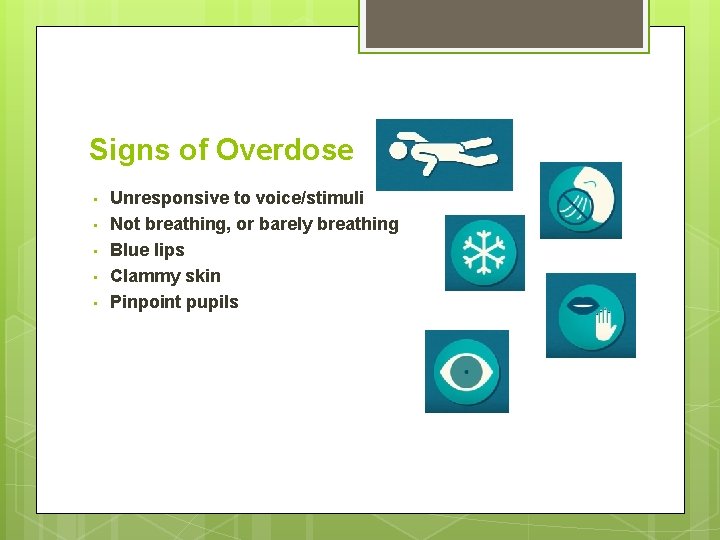
Signs of Overdose • • • Unresponsive to voice/stimuli Not breathing, or barely breathing Blue lips Clammy skin Pinpoint pupils
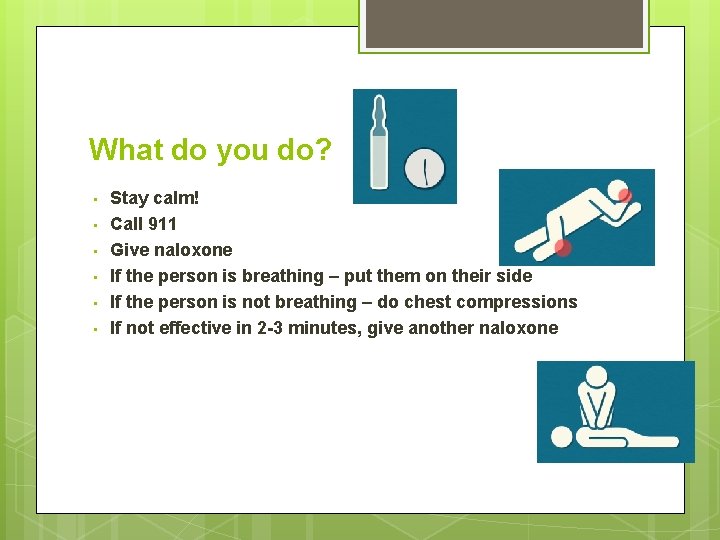
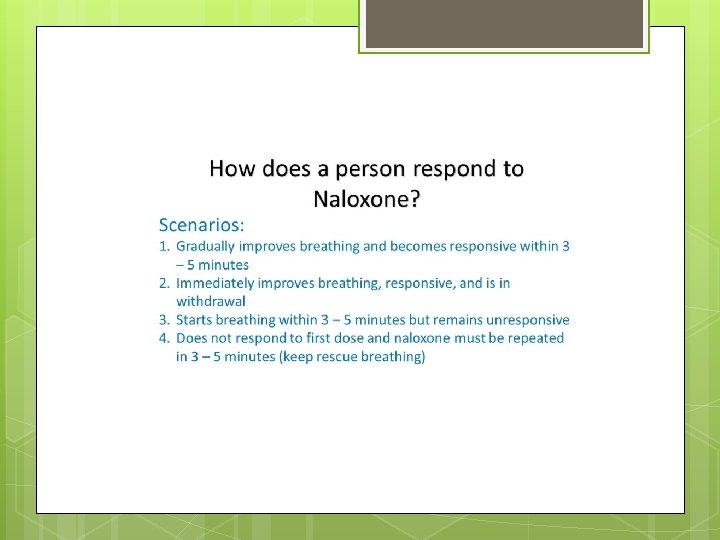
What do you do? • • • Stay calm! Call 911 Give naloxone If the person is breathing – put them on their side If the person is not breathing – do chest compressions If not effective in 2 -3 minutes, give another naloxone
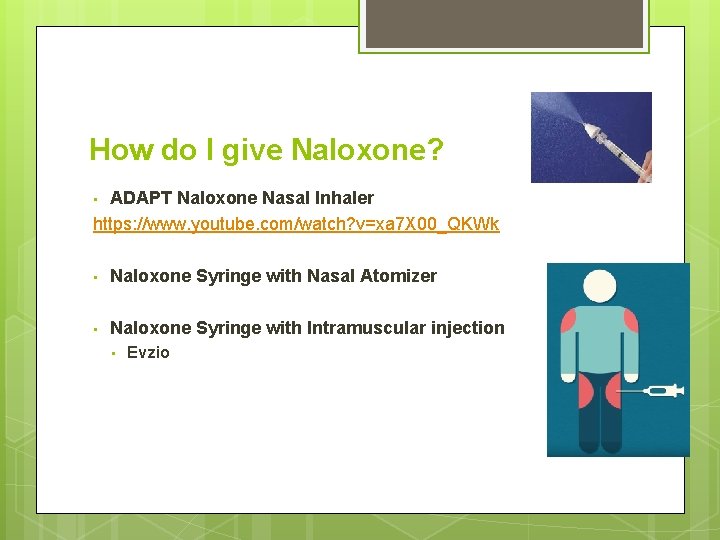
How do I give Naloxone? ADAPT Naloxone Nasal Inhaler https: //www. youtube. com/watch? v=xa 7 X 00_QKWk • • Naloxone Syringe with Nasal Atomizer • Naloxone Syringe with Intramuscular injection • Evzio
Barriers to Naloxone Distribution • Cost/Insurance Coverage • Naloxone availability • Stigma/Misperceptions • Availability of substance abuse treatment
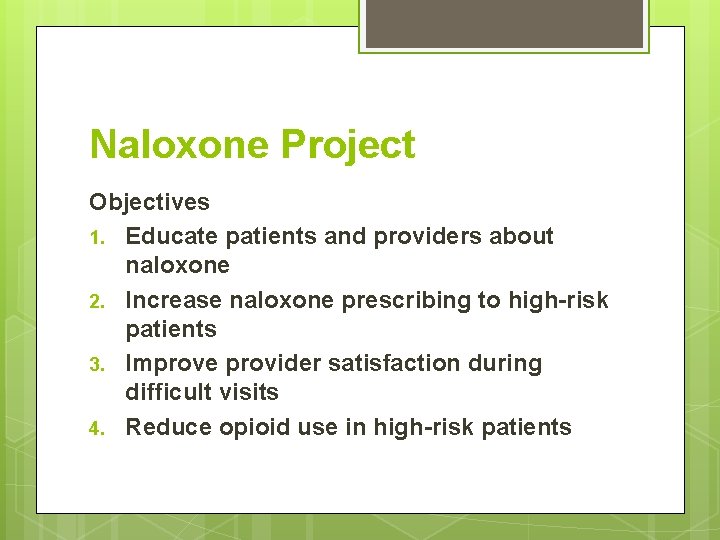
Naloxone Project Objectives 1. Educate patients and providers about naloxone 2. Increase naloxone prescribing to high-risk patients 3. Improve provider satisfaction during difficult visits 4. Reduce opioid use in high-risk patients
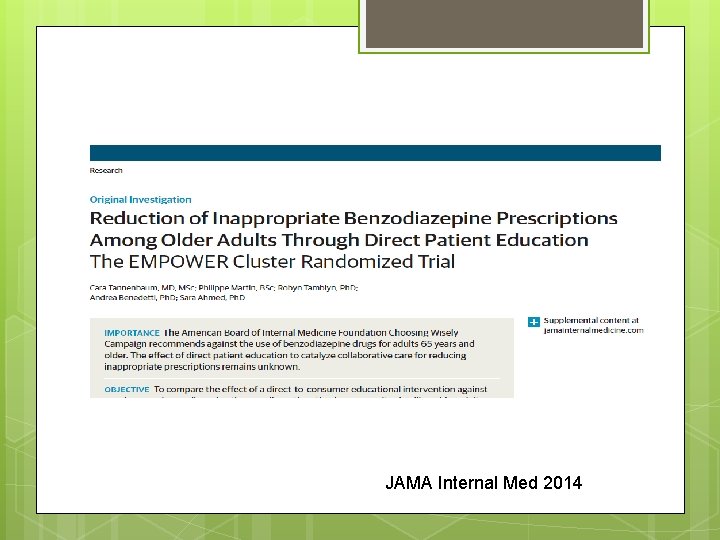
JAMA Internal Med 2014
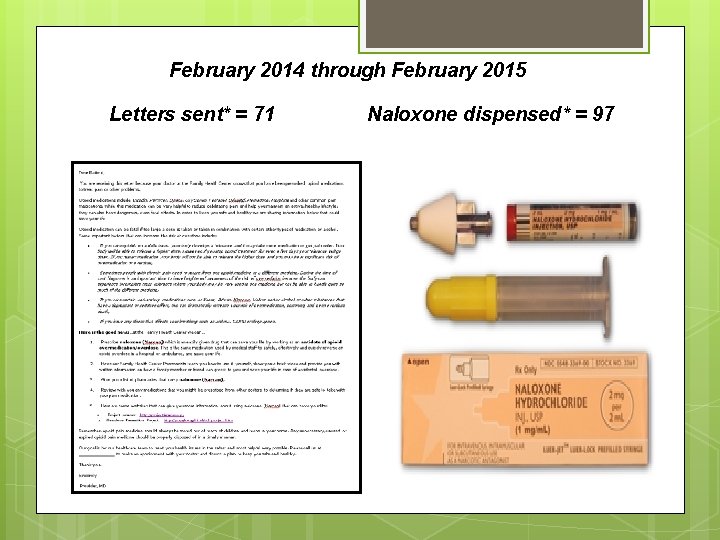
February 2014 through February 2015 Letters sent* = 71 Naloxone dispensed* = 97
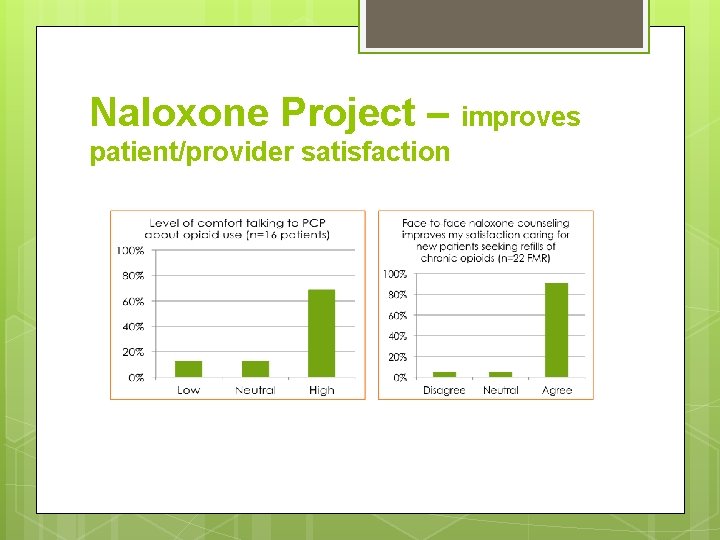
Naloxone Project – improves patient/provider satisfaction
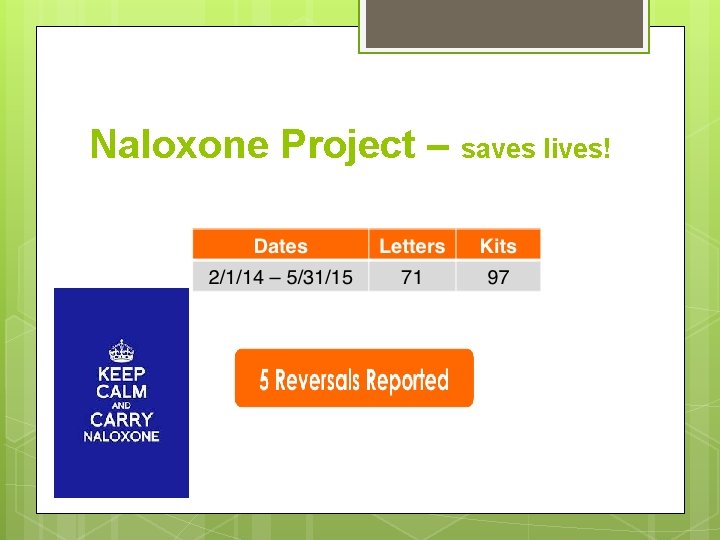
Naloxone Project – saves lives!
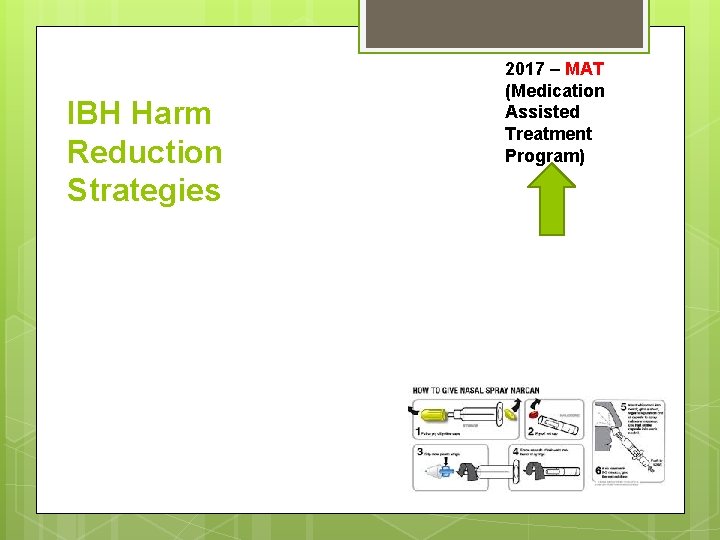
IBH Harm Reduction Strategies 2017 – MAT (Medication Assisted Treatment Program)
Leading Change Improve Access to Care: Non-pharmacologic approaches to pain (acupuncture, hypnosis, PT/OT) Behavioral health Addiction / Medication-Assisted Treatment that is timely and accessible Early parenting and family supports
Thank you • • • Nil Das, MD Marianne Koenig, Pharm. D Lucas Hill, Pharm. D Brittany Sphar, MD Jennie Jarrett, Pharm. D Ron O’Neill, Pharm. D Matt Diiulio, DO Jonathan Robbins, MD Mary Popovich RN and FHC Staff Alice Bell, LCSW Prevention Point PGH Beth Nolan, Ph. D, Pitt School of Public Health Gerald Cochran, Ph. D, Pitt School of SW
- Slides: 53