
PreReformation Roman Catholic Church the early Christian Church
- Slides: 19
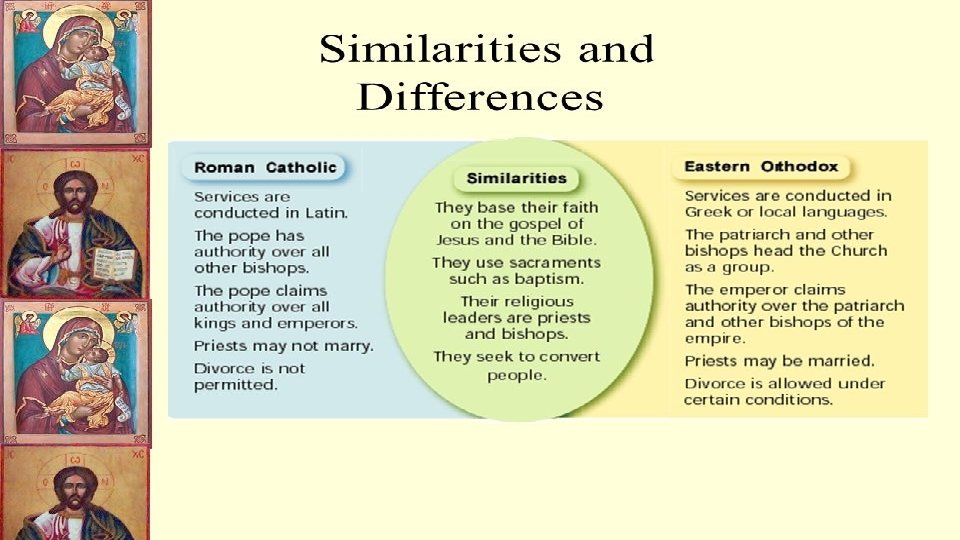
Pre-Reformation • Roman Catholic Church – the early Christian Church • 11 th century – distinction between Roman Catholic Church and the Eastern Orthodox Church (Constantinople)
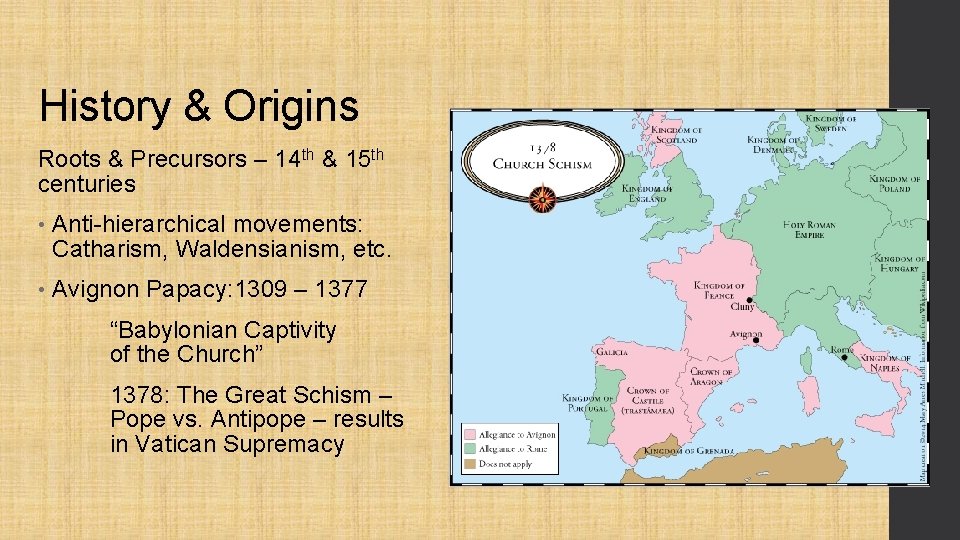
History & Origins Roots & Precursors – 14 th & 15 th centuries • Anti-hierarchical movements: Catharism, Waldensianism, etc. • Avignon Papacy: 1309 – 1377 “Babylonian Captivity of the Church” 1378: The Great Schism – Pope vs. Antipope – results in Vatican Supremacy
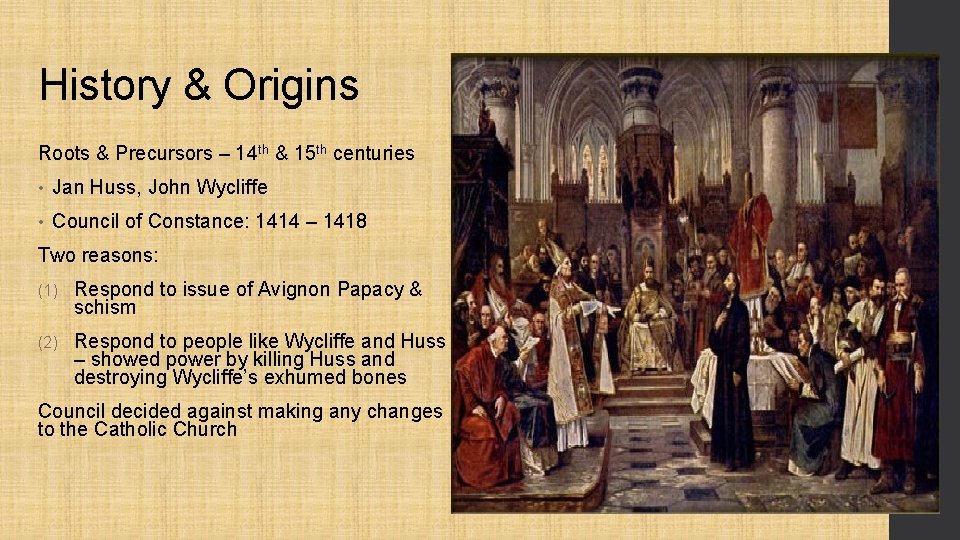
History & Origins Roots & Precursors – 14 th & 15 th centuries • Jan Huss, John Wycliffe • Council of Constance: 1414 – 1418 Two reasons: (1) Respond to issue of Avignon Papacy & schism (2) Respond to people like Wycliffe and Huss – showed power by killing Huss and destroying Wycliffe’s exhumed bones Council decided against making any changes to the Catholic Church
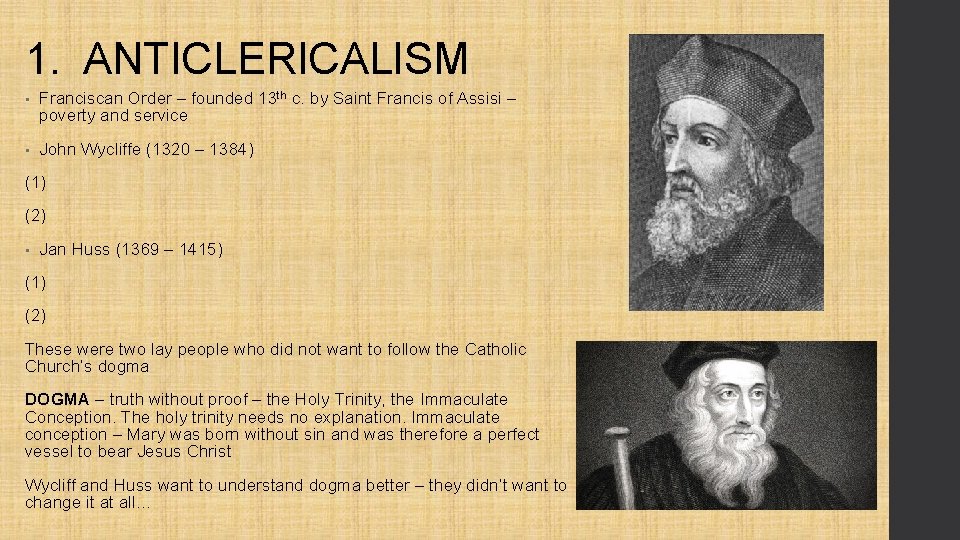
1. ANTICLERICALISM • Franciscan Order – founded 13 th c. by Saint Francis of Assisi – poverty and service • John Wycliffe (1320 – 1384) (1) (2) • Jan Huss (1369 – 1415) (1) (2) These were two lay people who did not want to follow the Catholic Church’s dogma DOGMA – truth without proof – the Holy Trinity, the Immaculate Conception. The holy trinity needs no explanation. Immaculate conception – Mary was born without sin and was therefore a perfect vessel to bear Jesus Christ Wycliff and Huss want to understand dogma better – they didn’t want to change it at all…
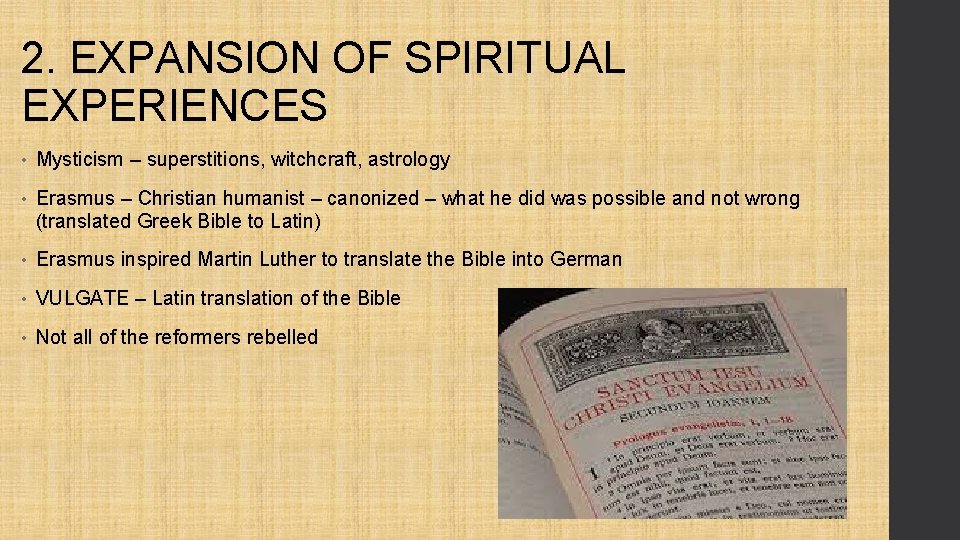
2. EXPANSION OF SPIRITUAL EXPERIENCES • Mysticism – superstitions, witchcraft, astrology • Erasmus – Christian humanist – canonized – what he did was possible and not wrong (translated Greek Bible to Latin) • Erasmus inspired Martin Luther to translate the Bible into German • VULGATE – Latin translation of the Bible • Not all of the reformers rebelled
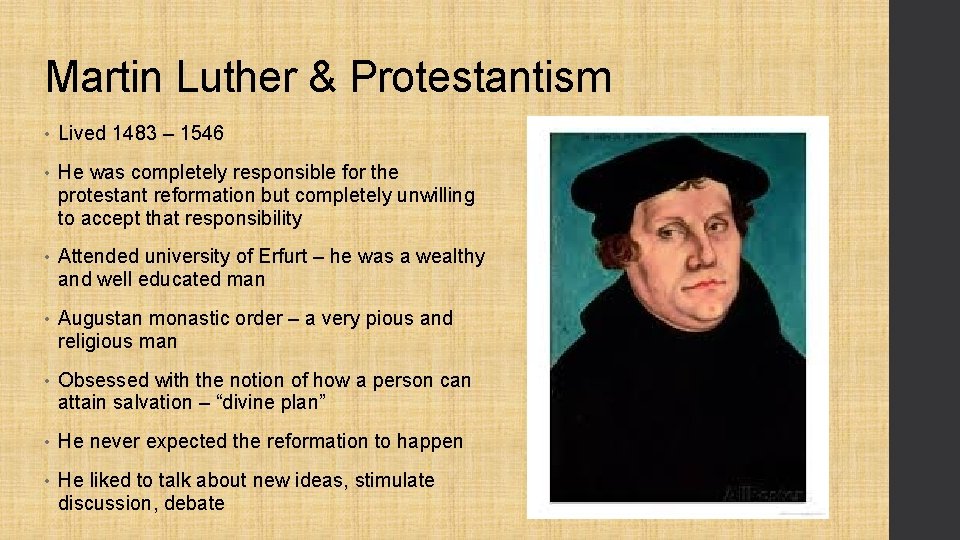
Martin Luther & Protestantism • Lived 1483 – 1546 • He was completely responsible for the protestant reformation but completely unwilling to accept that responsibility • Attended university of Erfurt – he was a wealthy and well educated man • Augustan monastic order – a very pious and religious man • Obsessed with the notion of how a person can attain salvation – “divine plan” • He never expected the reformation to happen • He liked to talk about new ideas, stimulate discussion, debate
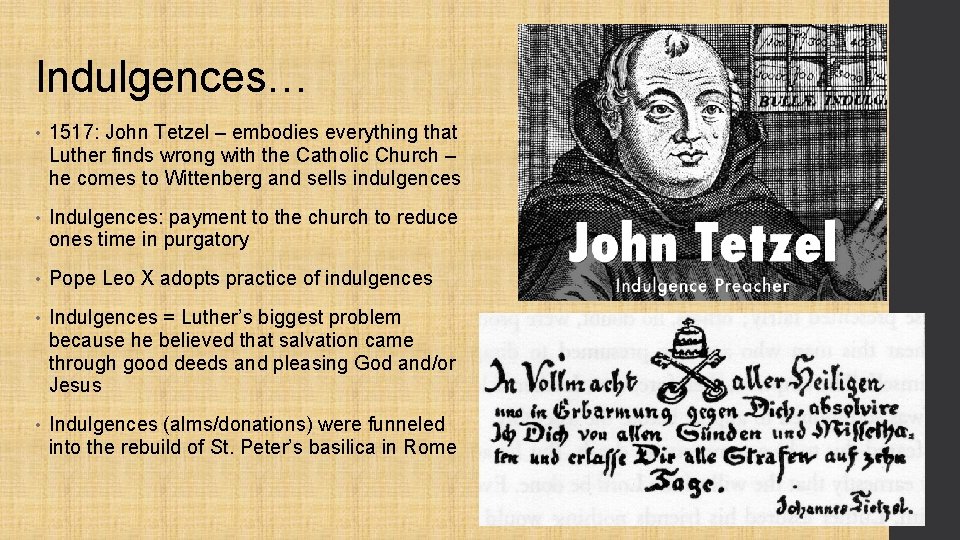
Indulgences… • 1517: John Tetzel – embodies everything that Luther finds wrong with the Catholic Church – he comes to Wittenberg and sells indulgences • Indulgences: payment to the church to reduce ones time in purgatory • Pope Leo X adopts practice of indulgences • Indulgences = Luther’s biggest problem because he believed that salvation came through good deeds and pleasing God and/or Jesus • Indulgences (alms/donations) were funneled into the rebuild of St. Peter’s basilica in Rome
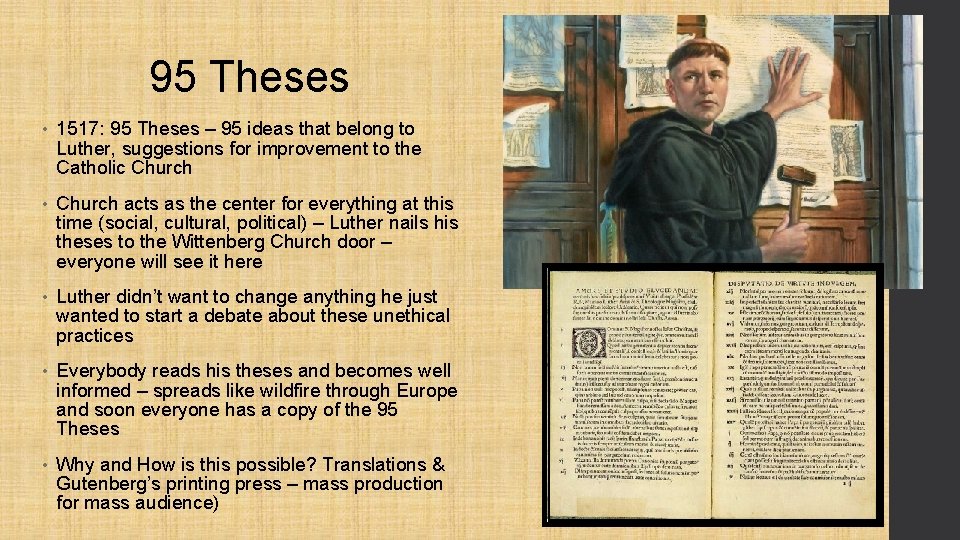
95 Theses • 1517: 95 Theses – 95 ideas that belong to Luther, suggestions for improvement to the Catholic Church • Church acts as the center for everything at this time (social, cultural, political) – Luther nails his theses to the Wittenberg Church door – everyone will see it here • Luther didn’t want to change anything he just wanted to start a debate about these unethical practices • Everybody reads his theses and becomes well informed – spreads like wildfire through Europe and soon everyone has a copy of the 95 Theses • Why and How is this possible? Translations & Gutenberg’s printing press – mass production for mass audience)
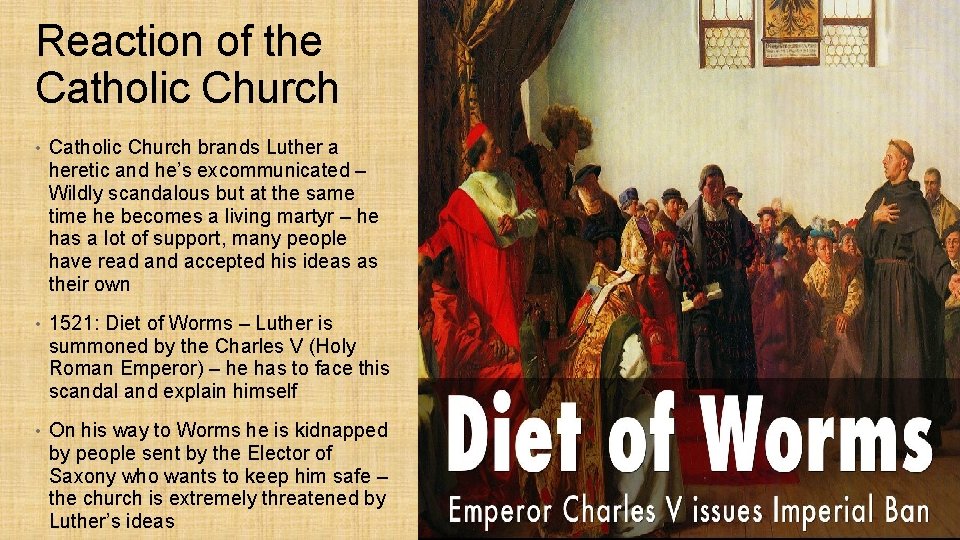
Reaction of the Catholic Church • Catholic Church brands Luther a heretic and he’s excommunicated – Wildly scandalous but at the same time he becomes a living martyr – he has a lot of support, many people have read and accepted his ideas as their own • 1521: Diet of Worms – Luther is summoned by the Charles V (Holy Roman Emperor) – he has to face this scandal and explain himself • On his way to Worms he is kidnapped by people sent by the Elector of Saxony who wants to keep him safe – the church is extremely threatened by Luther’s ideas
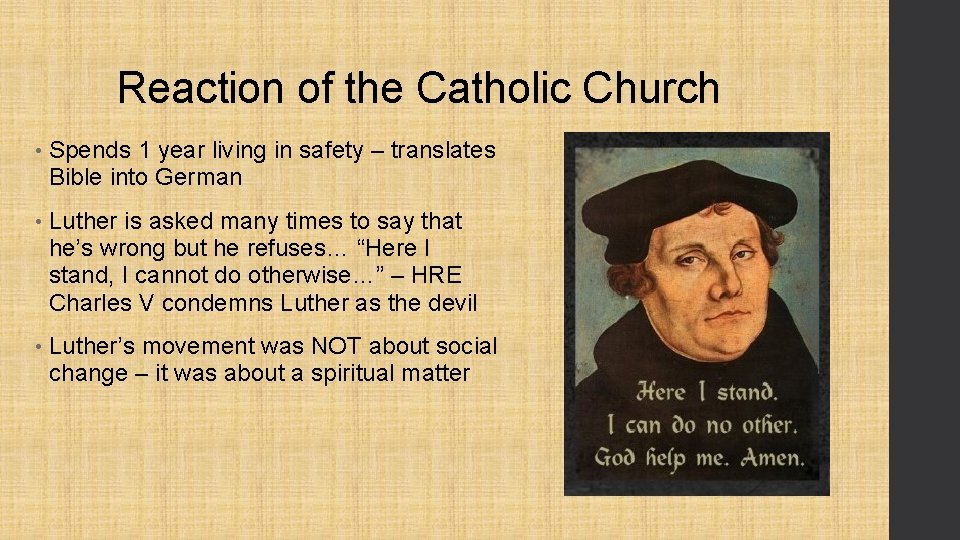
Reaction of the Catholic Church • Spends 1 year living in safety – translates Bible into German • Luther is asked many times to say that he’s wrong but he refuses… “Here I stand, I cannot do otherwise…” – HRE Charles V condemns Luther as the devil • Luther’s movement was NOT about social change – it was about a spiritual matter
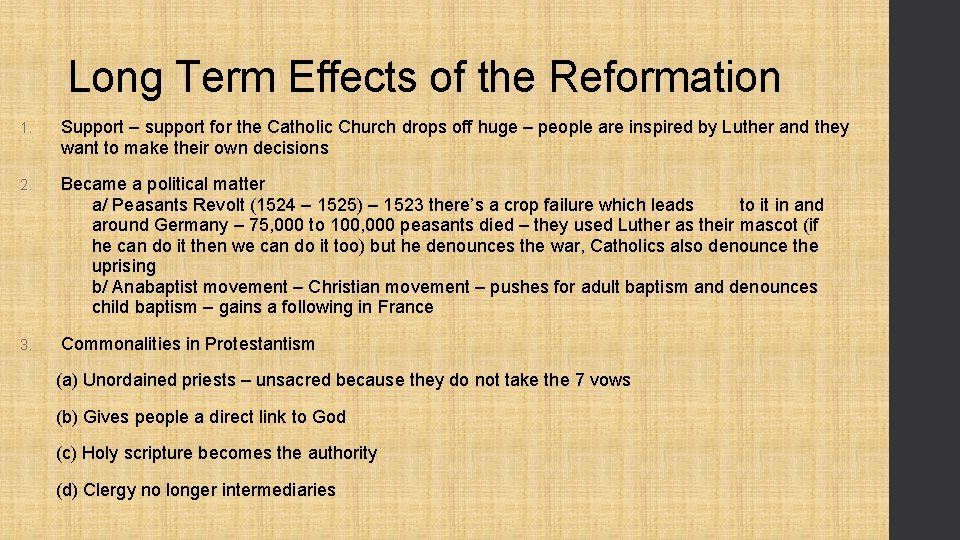
Long Term Effects of the Reformation 1. Support – support for the Catholic Church drops off huge – people are inspired by Luther and they want to make their own decisions 2. Became a political matter a/ Peasants Revolt (1524 – 1525) – 1523 there’s a crop failure which leads to it in and around Germany – 75, 000 to 100, 000 peasants died – they used Luther as their mascot (if he can do it then we can do it too) but he denounces the war, Catholics also denounce the uprising b/ Anabaptist movement – Christian movement – pushes for adult baptism and denounces child baptism – gains a following in France 3. Commonalities in Protestantism (a) Unordained priests – unsacred because they do not take the 7 vows (b) Gives people a direct link to God (c) Holy scripture becomes the authority (d) Clergy no longer intermediaries
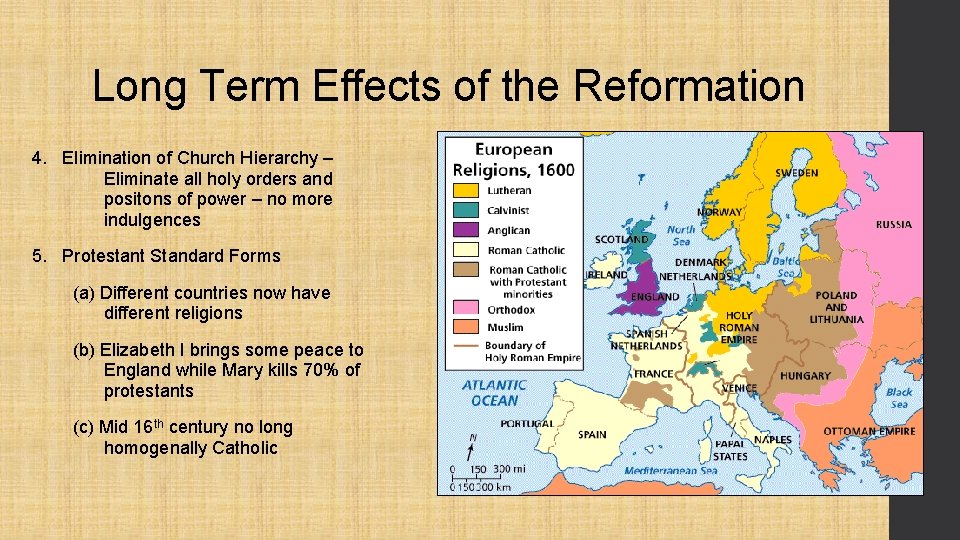
Long Term Effects of the Reformation 4. Elimination of Church Hierarchy – Eliminate all holy orders and positons of power – no more indulgences 5. Protestant Standard Forms (a) Different countries now have different religions (b) Elizabeth I brings some peace to England while Mary kills 70% of protestants (c) Mid 16 th century no long homogenally Catholic
Summation: Luther and the Protestant Reformation - Crash Course World History (watch to 11: 08)
Card Sort Activity • Using cue cards, write down the following words and/or phrases • Based on what we’ve learned today we’re going to play a match game Objective: Match the cards based on cause and effect Which causes lead to which consequences during the Reformation?
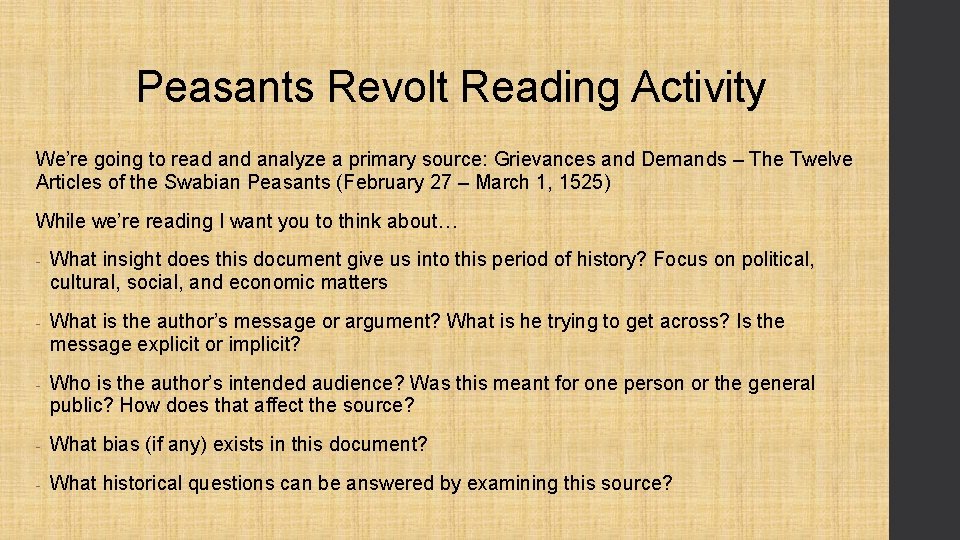
Peasants Revolt Reading Activity We’re going to read analyze a primary source: Grievances and Demands – The Twelve Articles of the Swabian Peasants (February 27 – March 1, 1525) While we’re reading I want you to think about… - What insight does this document give us into this period of history? Focus on political, cultural, social, and economic matters - What is the author’s message or argument? What is he trying to get across? Is the message explicit or implicit? - Who is the author’s intended audience? Was this meant for one person or the general public? How does that affect the source? - What bias (if any) exists in this document? - What historical questions can be answered by examining this source?
Movie: Elizabeth the Golden Age • https: //solarmovie. sc/movie/elizabeth-the-golden-age-12112/494483 -8/watching. html
Homework • Finish up your assignment – be prepared to present on Thursday • Watch Elizabeth – THE GOLDEN AGE (2011) Next Class… 1/ Assignment 1 – Presentation 2/ English Reformation – Henry VIII, Elizabeth I