
Preparing for the Subjectlevel TEF Understanding your data

Preparing for the Subject-level TEF: Understanding your data Debby Cotton and Jane Collings Teaching and Learning Support

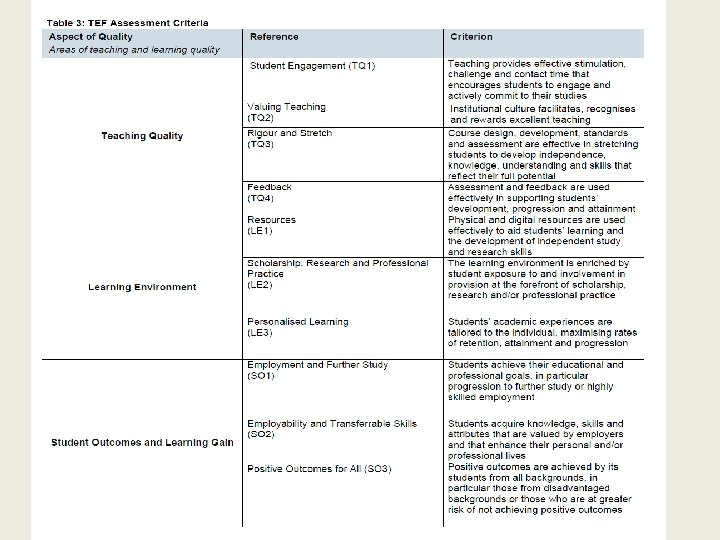
The Teaching Excellence Framework (TEF) In an effort to enhance the status of teaching in HE, the UK government introduced a Teaching Excellence Framework (TEF) which aims to recognise and reward universities which provide excellent learning and teaching. Universities which participate are awarded a Bronze, Silver or Gold rating
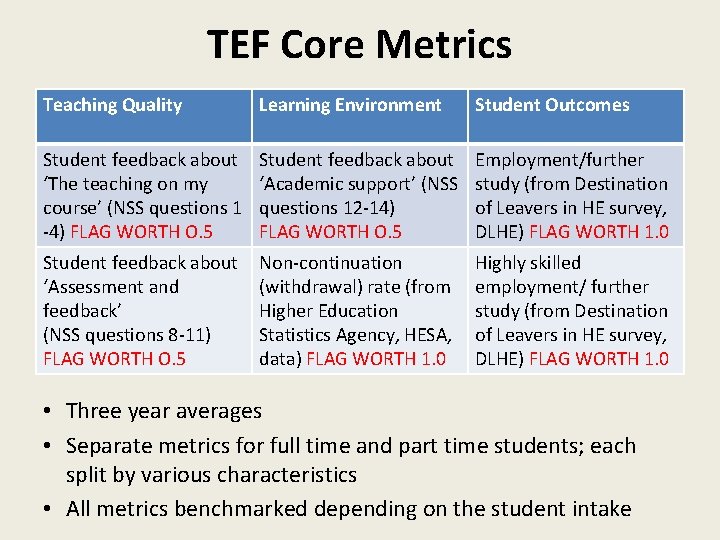
TEF Core Metrics Teaching Quality Learning Environment Student Outcomes Student feedback about ‘The teaching on my course’ (NSS questions 1 -4) FLAG WORTH O. 5 Student feedback about ‘Academic support’ (NSS questions 12 -14) FLAG WORTH O. 5 Employment/further study (from Destination of Leavers in HE survey, DLHE) FLAG WORTH 1. 0 Student feedback about ‘Assessment and feedback’ (NSS questions 8 -11) FLAG WORTH O. 5 Non-continuation (withdrawal) rate (from Higher Education Statistics Agency, HESA, data) FLAG WORTH 1. 0 Highly skilled employment/ further study (from Destination of Leavers in HE survey, DLHE) FLAG WORTH 1. 0 • Three year averages • Separate metrics for full time and part time students; each split by various characteristics • All metrics benchmarked depending on the student intake
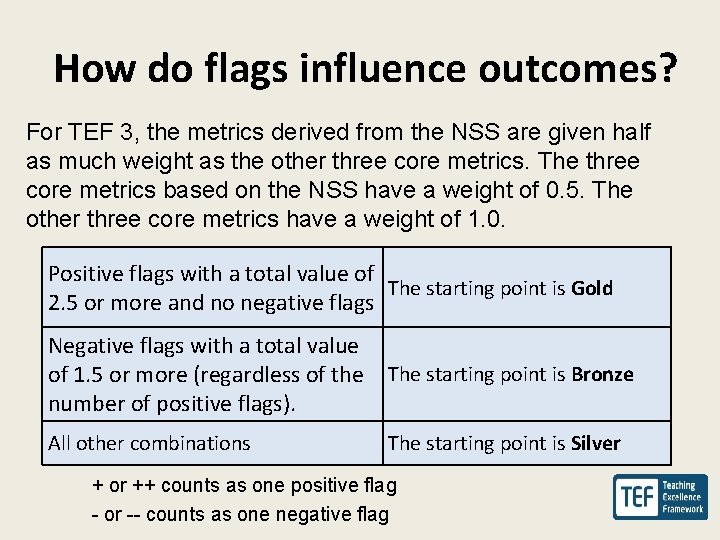
How do flags influence outcomes? For TEF 3, the metrics derived from the NSS are given half as much weight as the other three core metrics. The three core metrics based on the NSS have a weight of 0. 5. The other three core metrics have a weight of 1. 0. Positive flags with a total value of The starting point is Gold 2. 5 or more and no negative flags Negative flags with a total value of 1. 5 or more (regardless of the The starting point is Bronze number of positive flags). All other combinations The starting point is Silver + or ++ counts as one positive flag - or -- counts as one negative flag
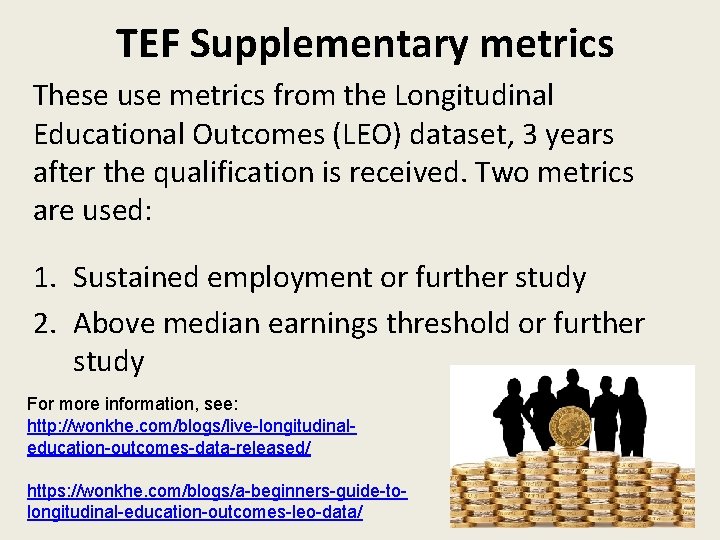
TEF Supplementary metrics These use metrics from the Longitudinal Educational Outcomes (LEO) dataset, 3 years after the qualification is received. Two metrics are used: 1. Sustained employment or further study 2. Above median earnings threshold or further study For more information, see: http: //wonkhe. com/blogs/live-longitudinaleducation-outcomes-data-released/ https: //wonkhe. com/blogs/a-beginners-guide-tolongitudinal-education-outcomes-leo-data/
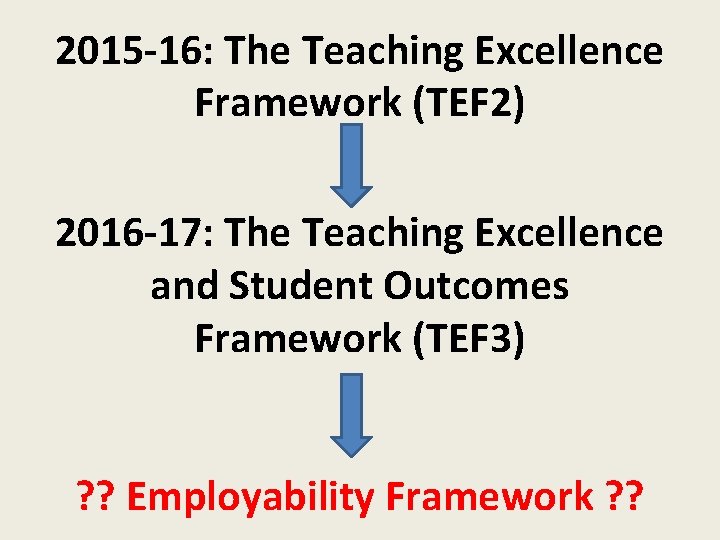
2015 -16: The Teaching Excellence Framework (TEF 2) 2016 -17: The Teaching Excellence and Student Outcomes Framework (TEF 3) ? ? Employability Framework ? ?
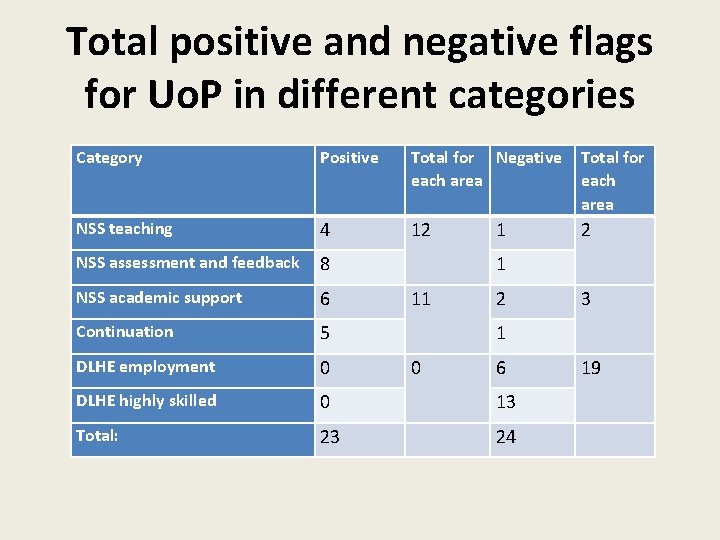
Total positive and negative flags for Uo. P in different categories Category Positive Total for Negative each area Total for each area NSS teaching 4 12 2 NSS assessment and feedback 8 NSS academic support 6 Continuation 5 DLHE employment 0 DLHE highly skilled 0 Total: 23 1 1 11 2 3 1 0 6 19 13 24
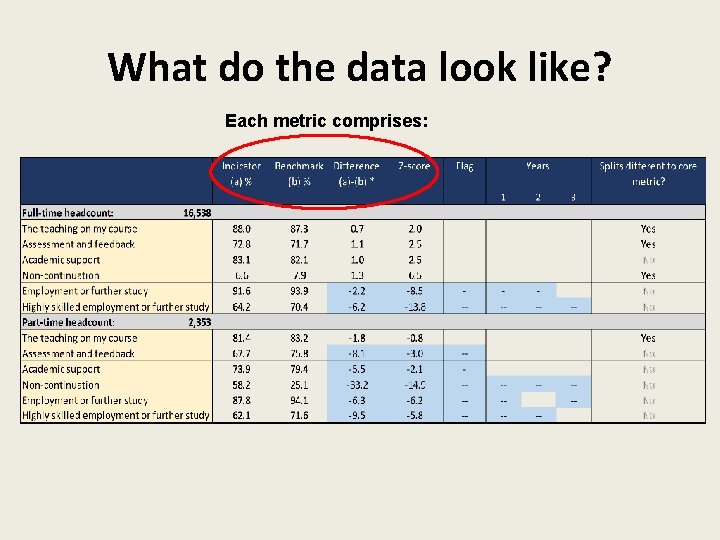
What do the data look like? Each metric comprises:
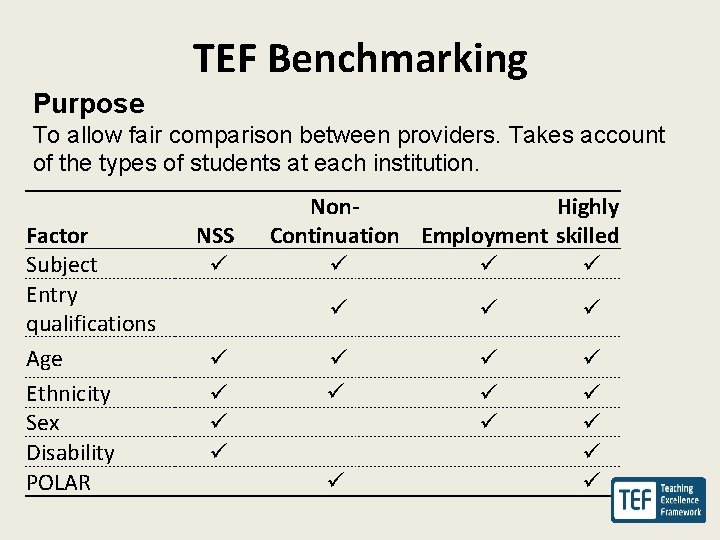
TEF Benchmarking Purpose To allow fair comparison between providers. Takes account of the types of students at each institution. Factor Subject Entry qualifications Age Ethnicity Sex Disability POLAR NSS ü Non. Highly Continuation Employment skilled ü ü ü ü ü ü
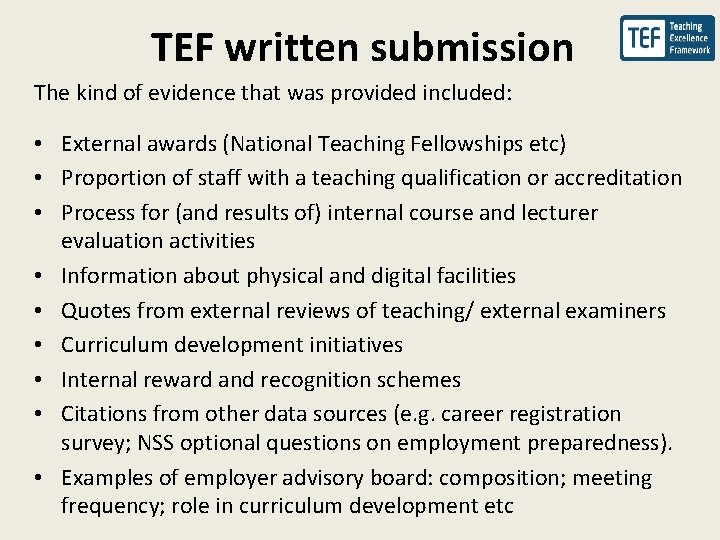
TEF written submission The kind of evidence that was provided included: • External awards (National Teaching Fellowships etc) • Proportion of staff with a teaching qualification or accreditation • Process for (and results of) internal course and lecturer evaluation activities • Information about physical and digital facilities • Quotes from external reviews of teaching/ external examiners • Curriculum development initiatives • Internal reward and recognition schemes • Citations from other data sources (e. g. career registration survey; NSS optional questions on employment preparedness). • Examples of employer advisory board: composition; meeting frequency; role in curriculum development etc

TEF written submission • External input into programmes (visiting speakers from industry; subject specific skills; use of professionally-relevant software) • Links with industry and local employers • Range of opportunities open to students from the curriculum to co-curricular and extra-curricular activities – especially if verifiable for the HEAR. • Examples of authentic (real-world) assessment approaches in the subject (e. g. writing a blog; curating a set of objects in a local museum; developing industry relevant products etc) • Description of how careers and employability embedded in the curriculum; links to skills development framework • Support for developing employability skills within the subject area and wider university Careers and Employability Service
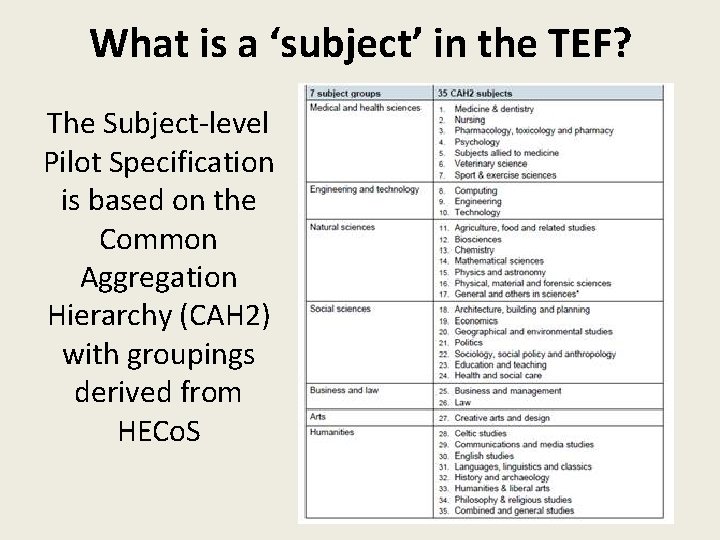
What is a ‘subject’ in the TEF? The Subject-level Pilot Specification is based on the Common Aggregation Hierarchy (CAH 2) with groupings derived from HECo. S
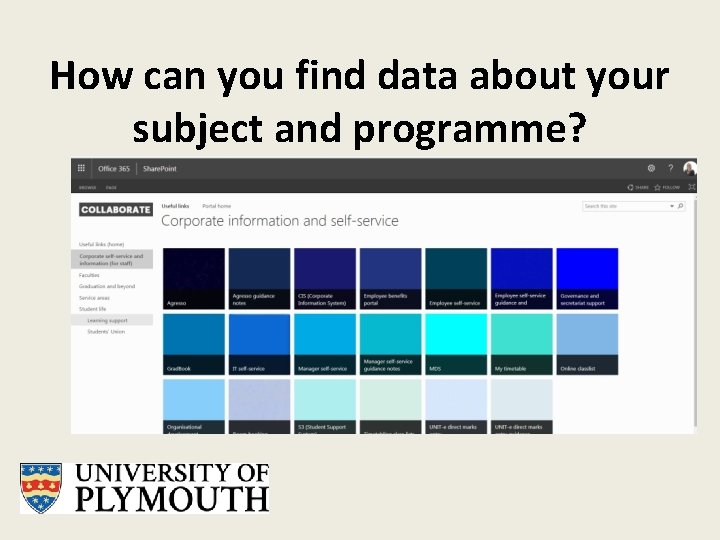
How can you find data about your subject and programme?
Corporate Information System • Corporate Information System is a central repository of commonly used reports • Can be located at https: //cis. plymouth. ac. uk • Alternatively, via the intranet – Select Useful links, then select Corporate Self service and Information, then CIS
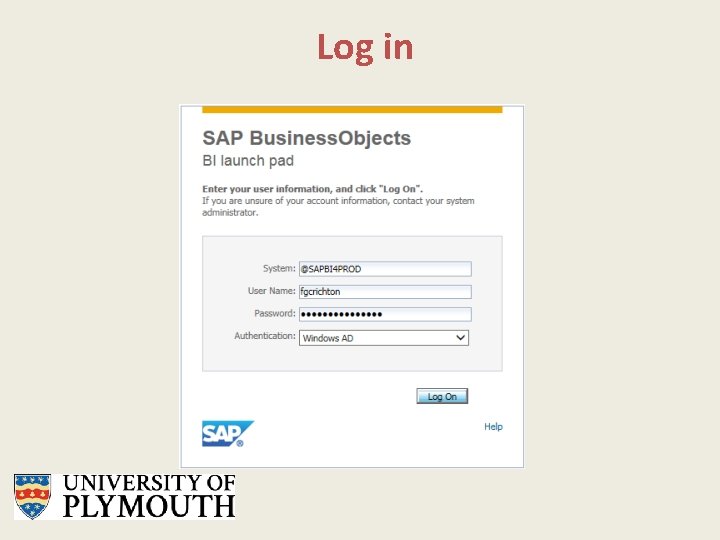
Log in
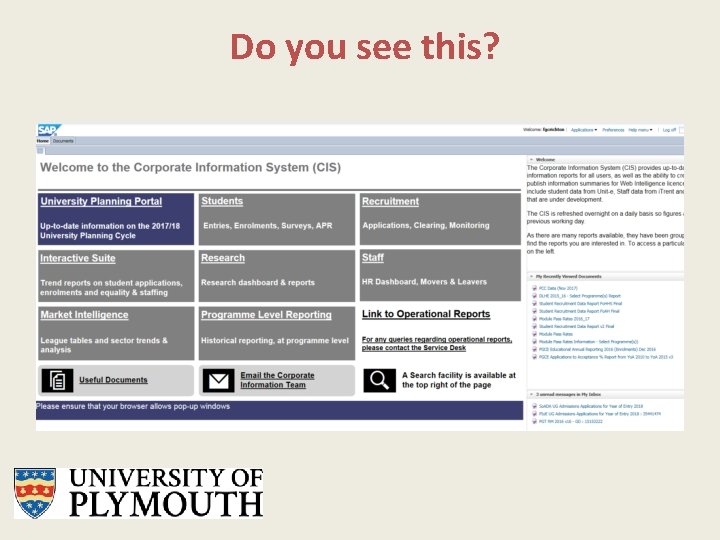
Do you see this?
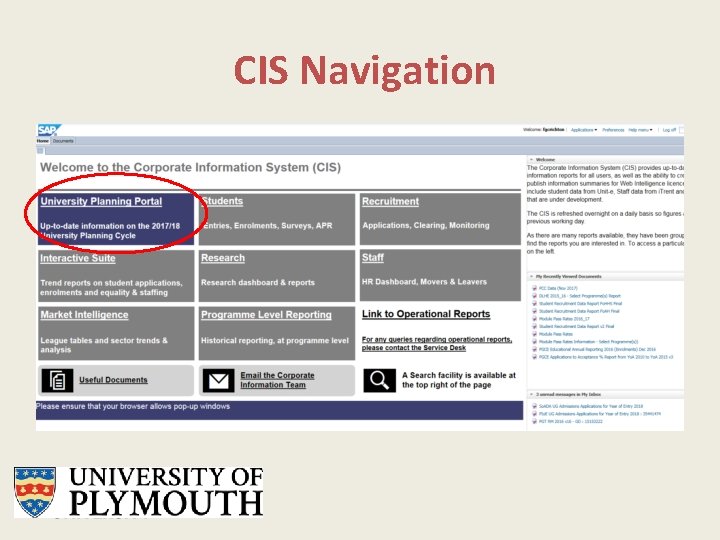
CIS Navigation
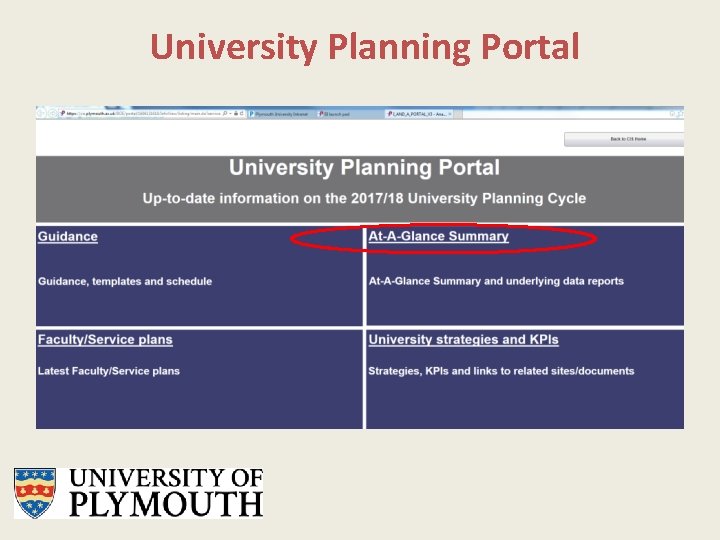
University Planning Portal
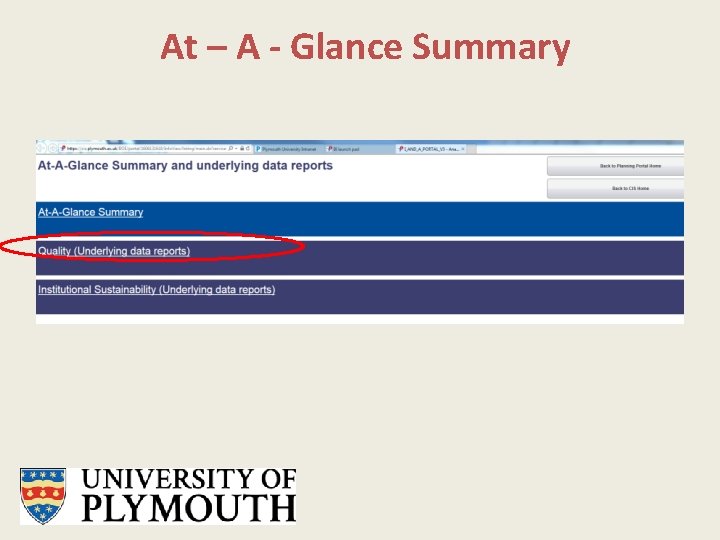
At – A - Glance Summary
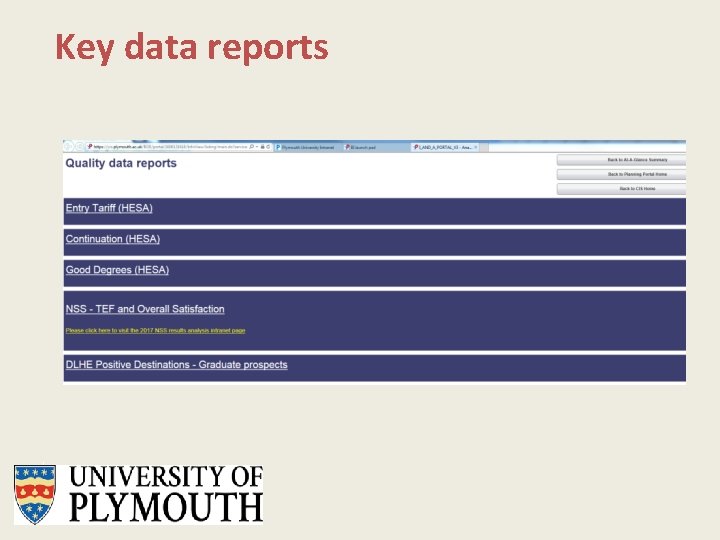
Key data reports
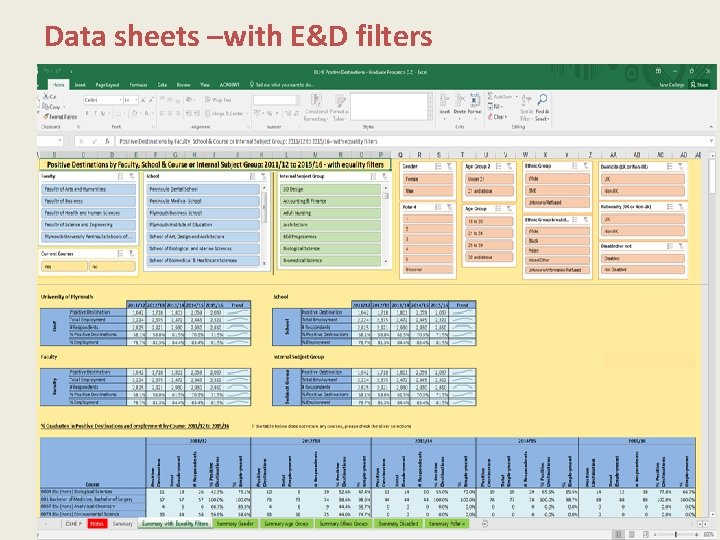
Data sheets –with E&D filters
Example • Look at the print-out of Biosciences TEF metrics provided. Compare the benchmarks for this subject group to the data-set printed from CIS on the reverse side • Thinking about subject-level TEF, where (and how) should this programme focus their efforts? • If you have a computer, you can do this for your own programme instead. Just ask for a copy of the relevant subject benchmark
In small groups discuss … • What steps you have taken to improve teaching or employability in your programme/ subject area? • How have you evaluated their success?
Thank you for listening! If you want to find out more about the subject level TEF, the specification can be found at: https: //www. gov. uk/government/publications/tea ching-excellence-framework-subject-level-pilotspecification
- Slides: 25