
Prepared by Ghada Salahat Wejdan Hatim Mena Omar
Prepared by Ghada Salahat Wejdan Hatim Mena Omar
Outline • Explain some technologies to improve 5 G network. • Two-tier Architectures. • CRN Based Architectures. • D-D Communication Architectures. • Energy-Efficient Architectures. • 5 G is the combination between those Architectures.
Motivations The main motivation of going toward the fifth generation is to: • Support more than one hundred billion connections. • Increasing the capacity a thousand times. • Increasing the data rate up to 10 Gbit/s speeds. • Make the latency less than 1 ms.
Review Of Project 1 • Technology Evolution. • Challenges and Application Of 5 G Network. • Communication Concepts. • MATLAB Simulation.
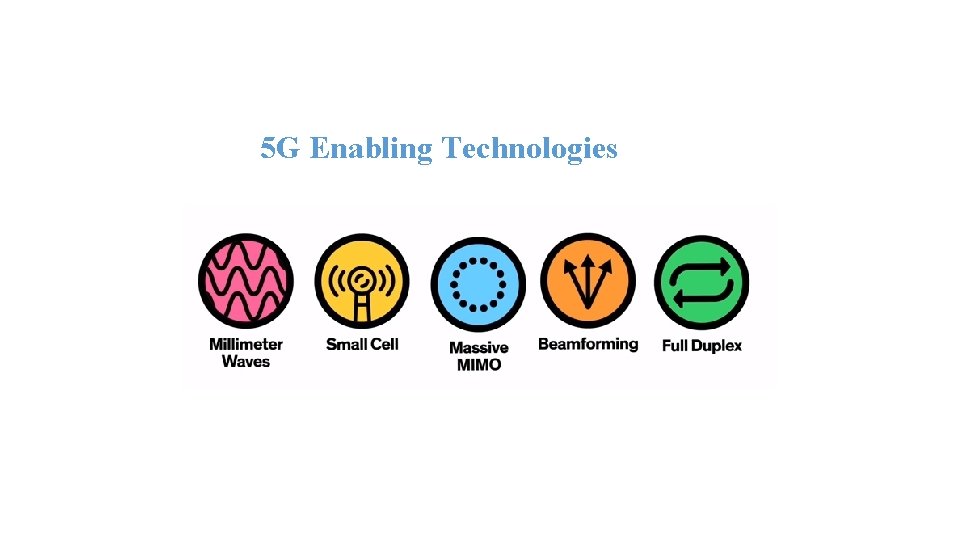
5 G Enabling Technologies
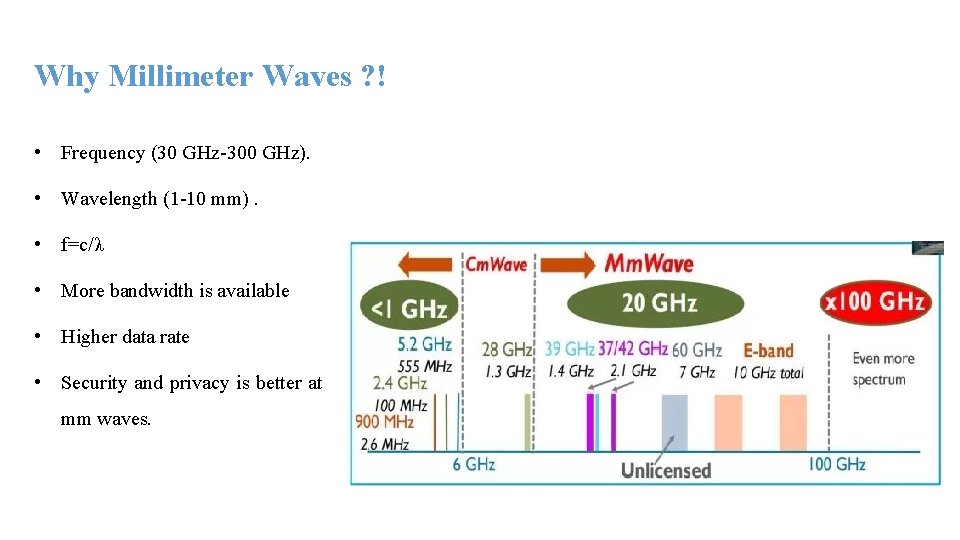
Why Millimeter Waves ? ! • Frequency (30 GHz-300 GHz). • Wavelength (1 -10 mm). • f=c/λ • More bandwidth is available • Higher data rate • Security and privacy is better at mm waves.
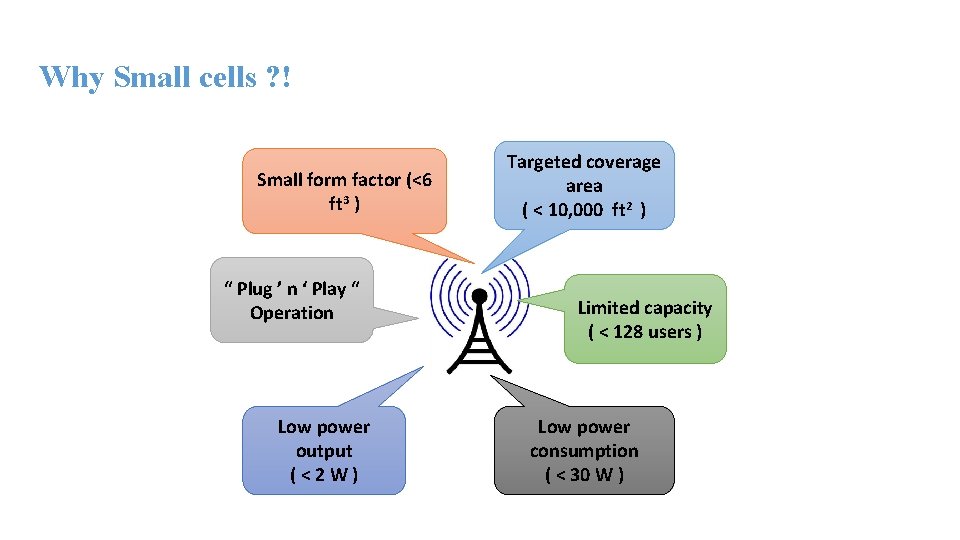
Why Small cells ? ! Small form factor (<6 ft 3 ) “ Plug ’ n ‘ Play “ Operation Low power output (<2 W) Targeted coverage area ( < 10, 000 ft 2 ) Limited capacity ( < 128 users ) Low power consumption ( < 30 W )
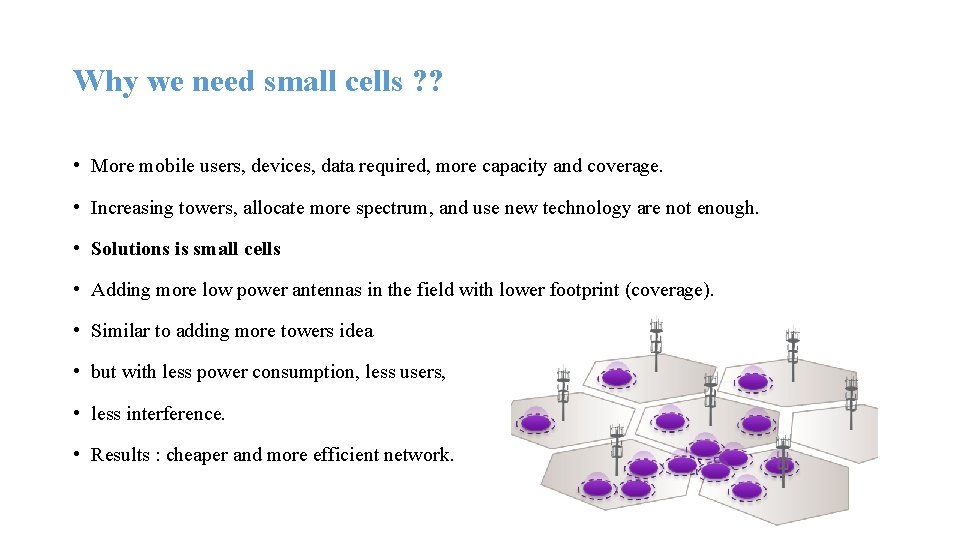
Why we need small cells ? ? • More mobile users, devices, data required, more capacity and coverage. • Increasing towers, allocate more spectrum, and use new technology are not enough. • Solutions is small cells • Adding more low power antennas in the field with lower footprint (coverage). • Similar to adding more towers idea • but with less power consumption, less users, • less interference. • Results : cheaper and more efficient network.
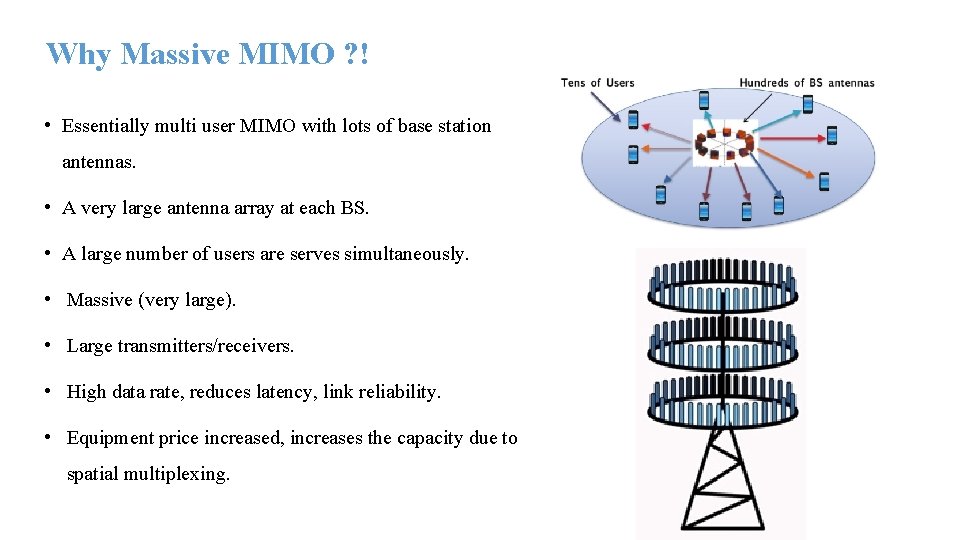
Why Massive MIMO ? ! • Essentially multi user MIMO with lots of base station antennas. • A very large antenna array at each BS. • A large number of users are serves simultaneously. • Massive (very large). • Large transmitters/receivers. • High data rate, reduces latency, link reliability. • Equipment price increased, increases the capacity due to spatial multiplexing.
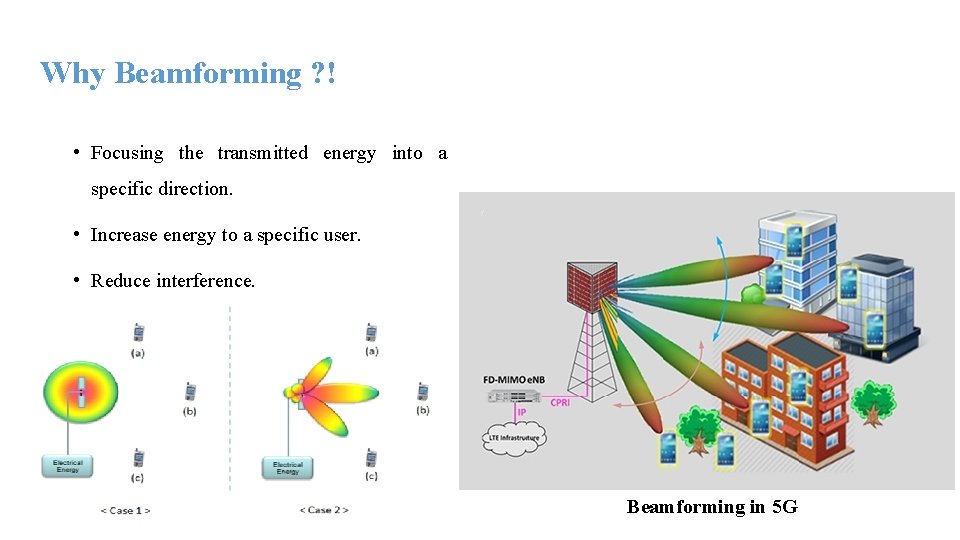
Why Beamforming ? ! • Focusing the transmitted energy into a specific direction. • Increase energy to a specific user. • Reduce interference. Beamforming in 5 G
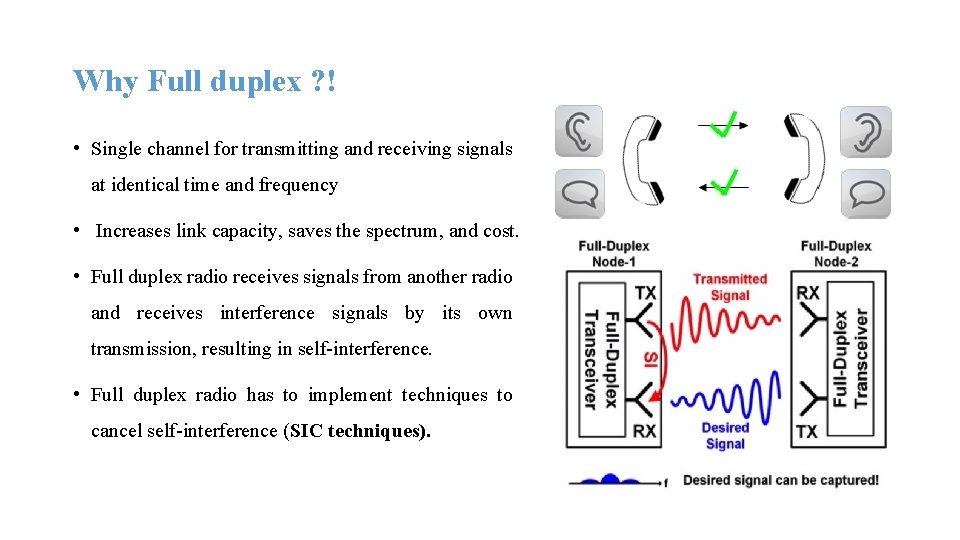
Why Full duplex ? ! • Single channel for transmitting and receiving signals at identical time and frequency • Increases link capacity, saves the spectrum, and cost. • Full duplex radio receives signals from another radio and receives interference signals by its own transmission, resulting in self-interference. • Full duplex radio has to implement techniques to cancel self-interference (SIC techniques).
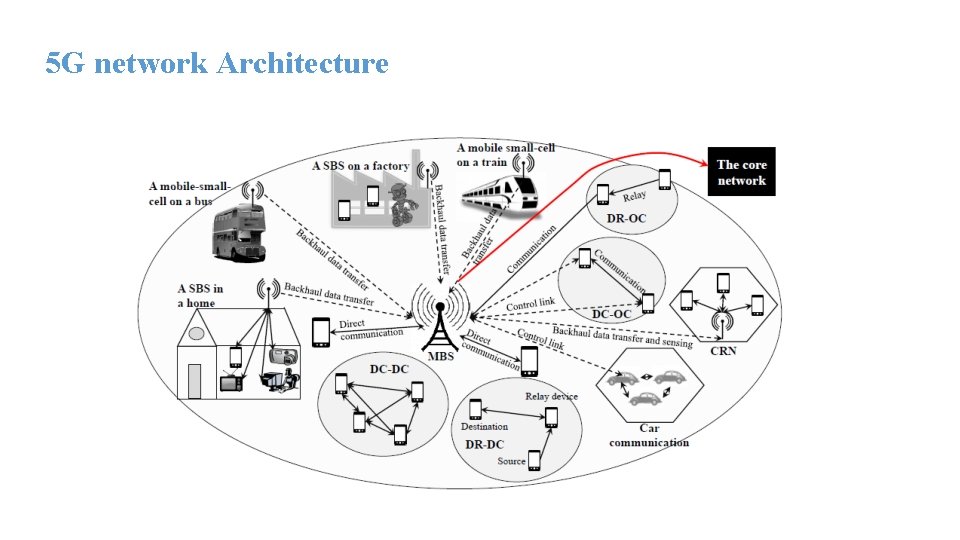
Architectures for the future 5 G Proposed Architectures for 5 G: • Tow-tire Architecture. • Cognitive Radio Network based Architectures. • Device-to-Device Communication Architectures. • Energy-Efficient Architectures for 5 G Networks.
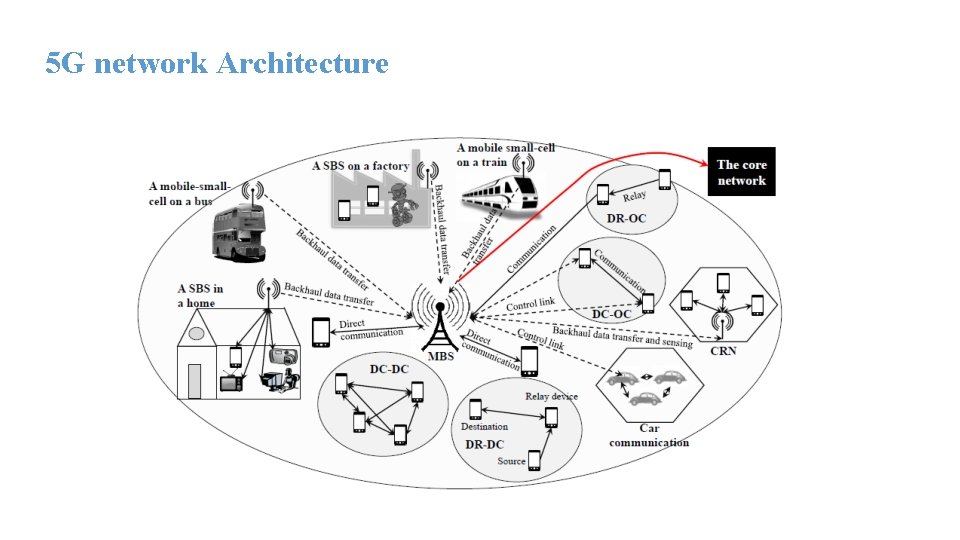
5 G network Architecture
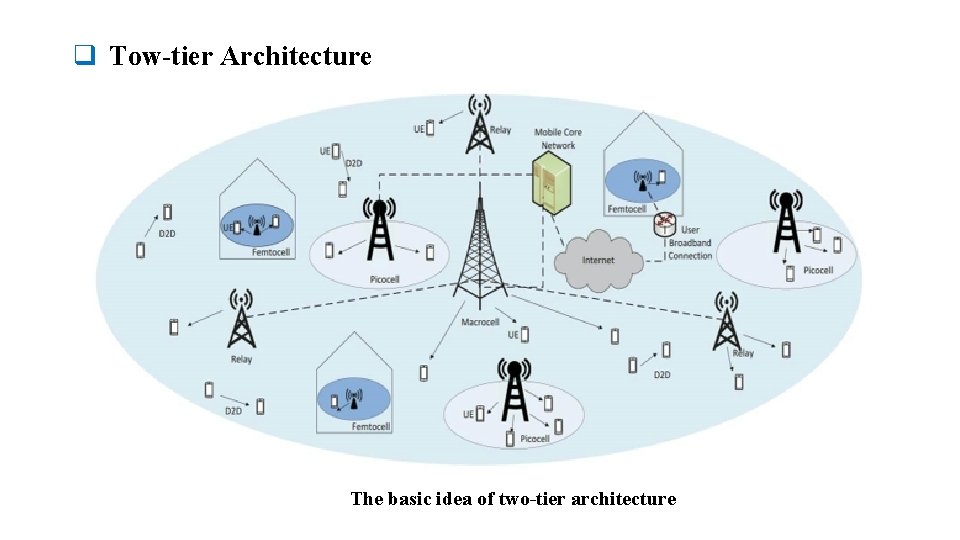
q Tow-tier Architecture The basic idea of two-tier architecture
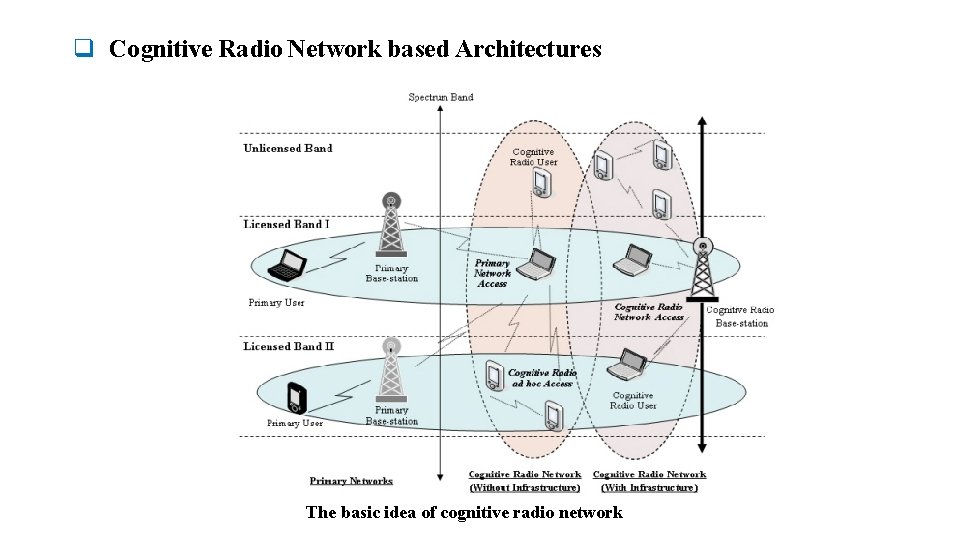
q Cognitive Radio Network based Architectures The basic idea of cognitive radio network
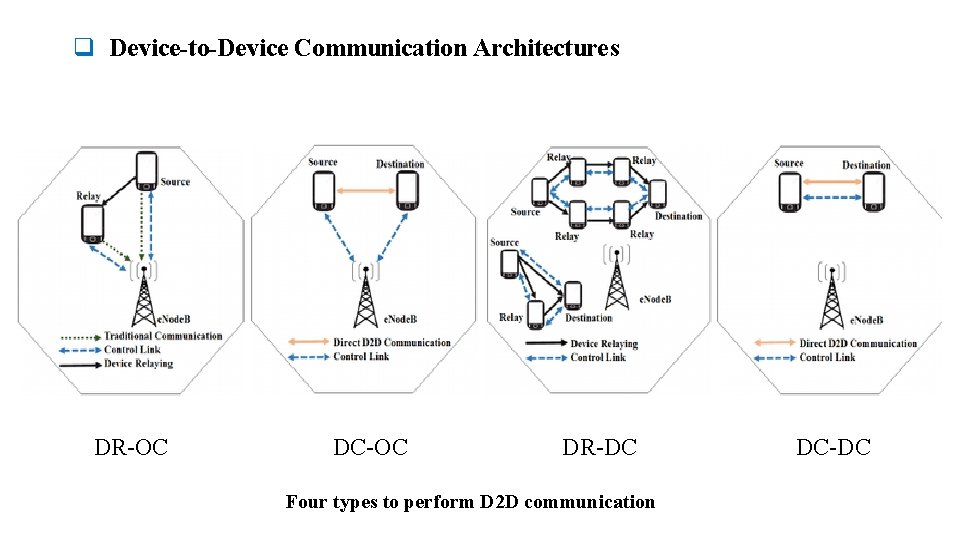
q Device-to-Device Communication Architectures DR-OC DC-OC DR-DC Four types to perform D 2 D communication DC-DC
q Energy-Efficient Architectures How to save energy ? • User centric 5 G Network • Decoupling of signaling and data • UE connected to SBS • Energy harvesting device • Interference Management
5 G network Architecture
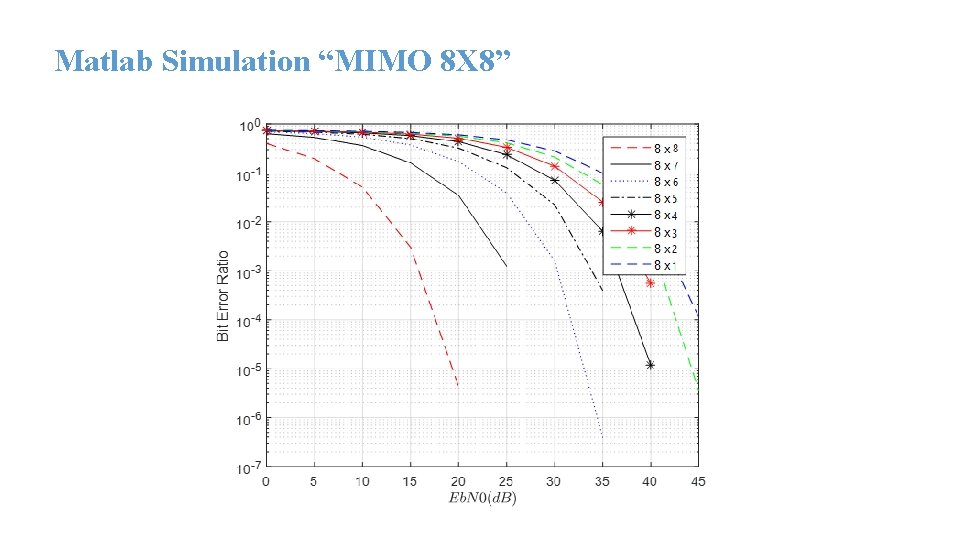
Matlab Simulation “MIMO 8 X 8”
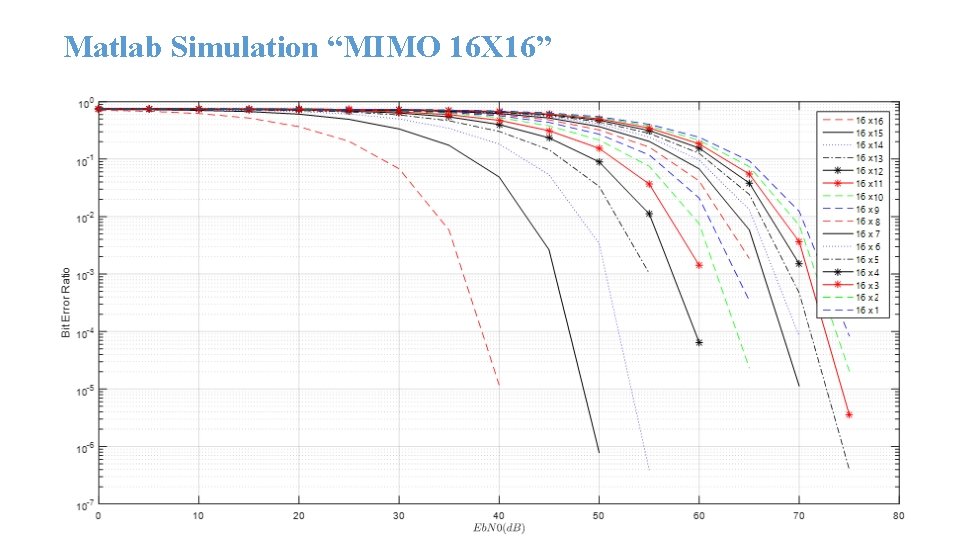
Matlab Simulation “MIMO 16 X 16”

- Slides: 21