
Preparation properties and reactions of acyl chlorides Acyl
- Slides: 7
Preparation, properties and reactions of acyl chlorides
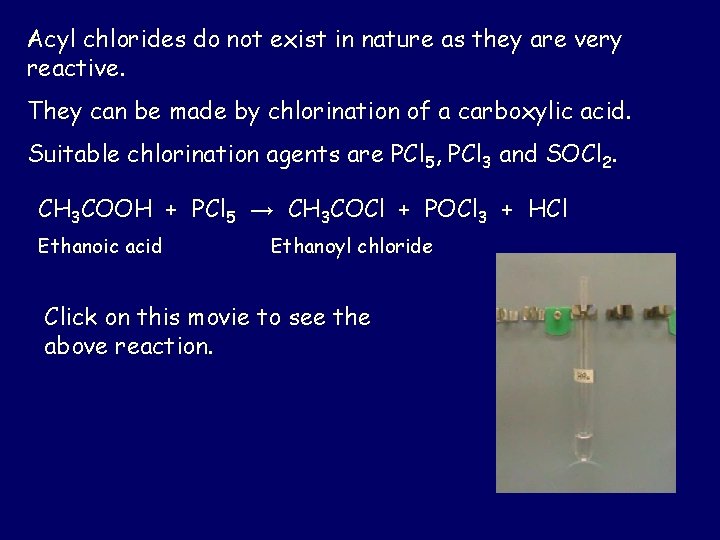
Acyl chlorides do not exist in nature as they are very reactive. They can be made by chlorination of a carboxylic acid. Suitable chlorination agents are PCl 5, PCl 3 and SOCl 2. CH 3 COOH + PCl 5 → CH 3 COCl + POCl 3 + HCl Ethanoic acid Ethanoyl chloride Click on this movie to see the above reaction.
The only acyl chloride you are likely to meet is ethanoyl chloride, a colourless liquid which boils at 55 °C. Ethanoyl chloride decomposes on contact with water, forming ethanoic acid and hydrochloric acid: CH 3 COCl + H 2 O → CH 3 COOH + HCl
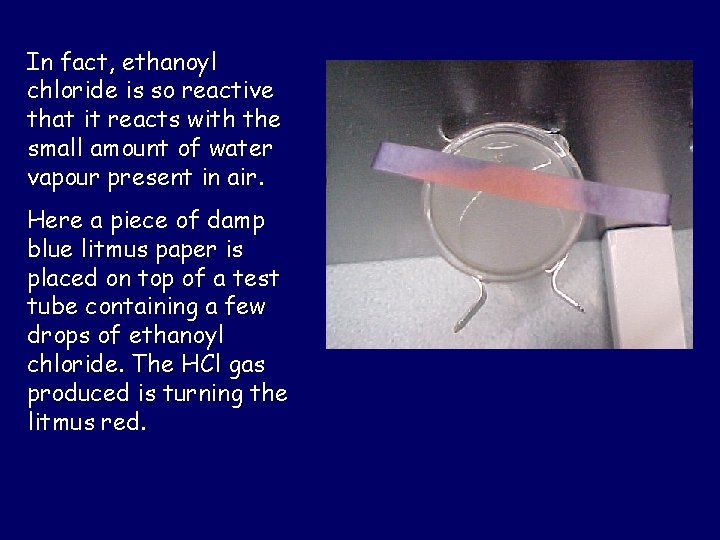
In fact, ethanoyl chloride is so reactive that it reacts with the small amount of water vapour present in air. Here a piece of damp blue litmus paper is placed on top of a test tube containing a few drops of ethanoyl chloride. The HCl gas produced is turning the litmus red.
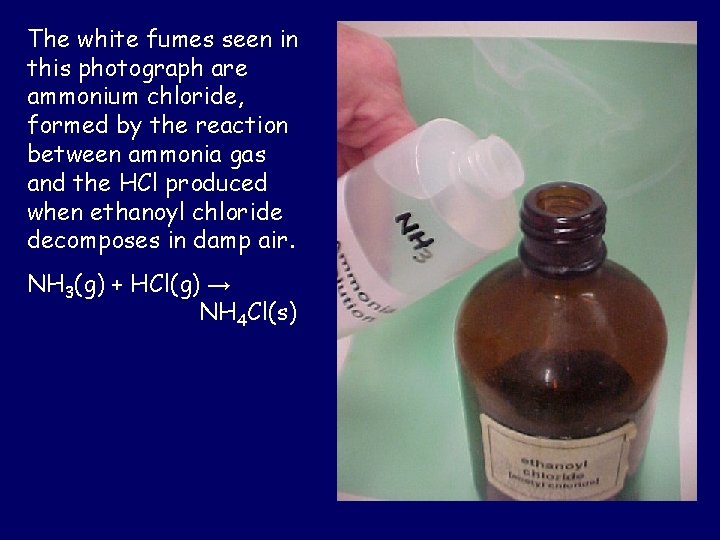
The white fumes seen in this photograph are ammonium chloride, formed by the reaction between ammonia gas and the HCl produced when ethanoyl chloride decomposes in damp air. NH 3(g) + HCl(g) → NH 4 Cl(s)
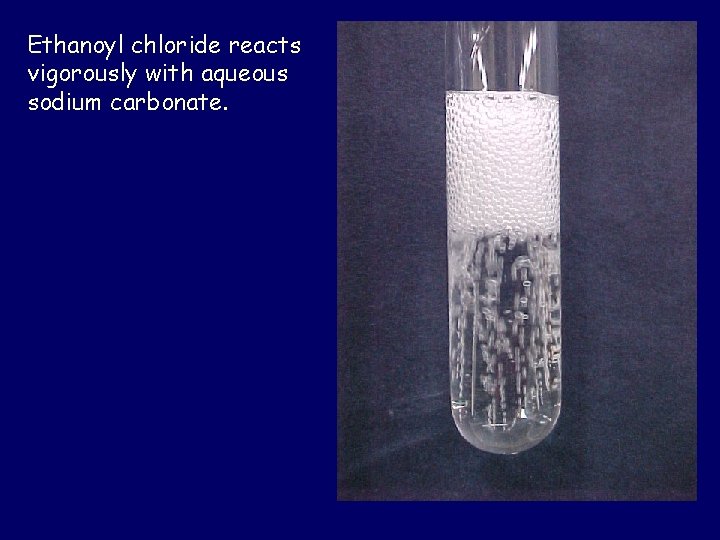
Ethanoyl chloride reacts vigorously with aqueous sodium carbonate.
Even a closed bottle of ethanoyl chloride will slowly produce HCl(g), especially if stored in a damp environment. The acidic gas tends to react with the labels on chemical bottles, making them unreadable — so now you know where all those ‘but the labels have fallen off the bottles’ unknown reagent questions come from! Because they are so reactive, acyl chlorides are useful in the preparation of reagents such as amides and esters, and in making polyesters and polyamides (nylon).