
Prenatal Development From Conception to Birth Maturation Biological
Prenatal Development From Conception to Birth
Maturation: Biological growth processes that enable orderly changes in behavior, relatively uninfluenced by experience. Prenatal development Other examples?
Critical (or Sensitive) Periods: An optimal period shortly after birth when an organism’s exposure to certain stimuli or experiences produces proper development. Prenatal development Other examples?
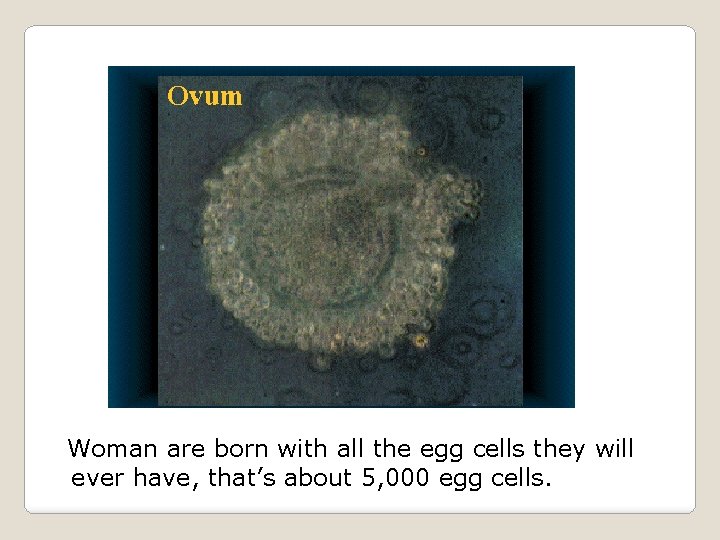
Woman are born with all the egg cells they will ever have, that’s about 5, 000 egg cells.
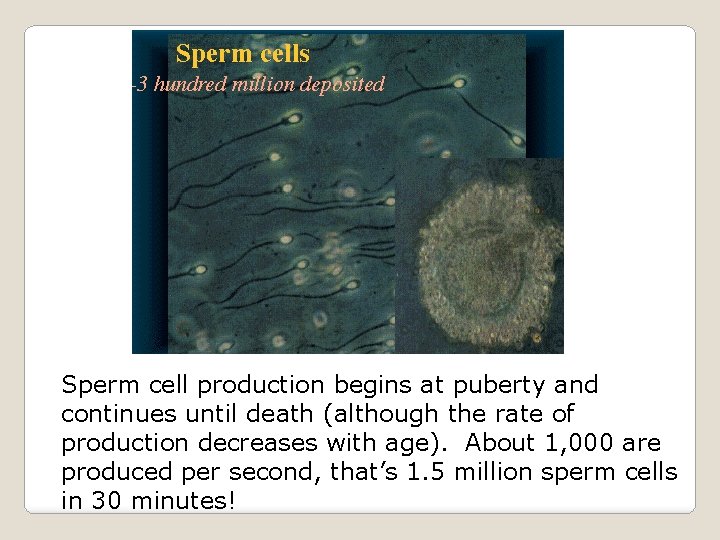
Sperm cell production begins at puberty and continues until death (although the rate of production decreases with age). About 1, 000 are produced per second, that’s 1. 5 million sperm cells in 30 minutes!
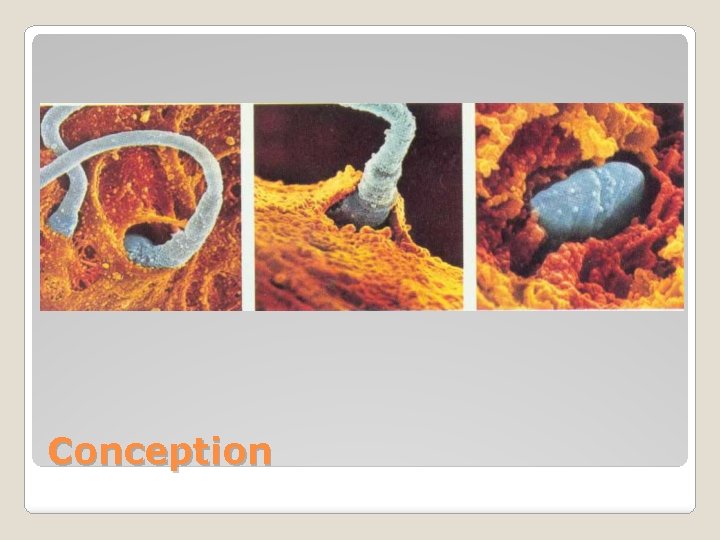
Conception
Three stages of prenatal development: 1) zygote (fertilization – 2 weeks) 2) embryo (2 – 8 weeks) 3) fetus (9 – 40 weeks)
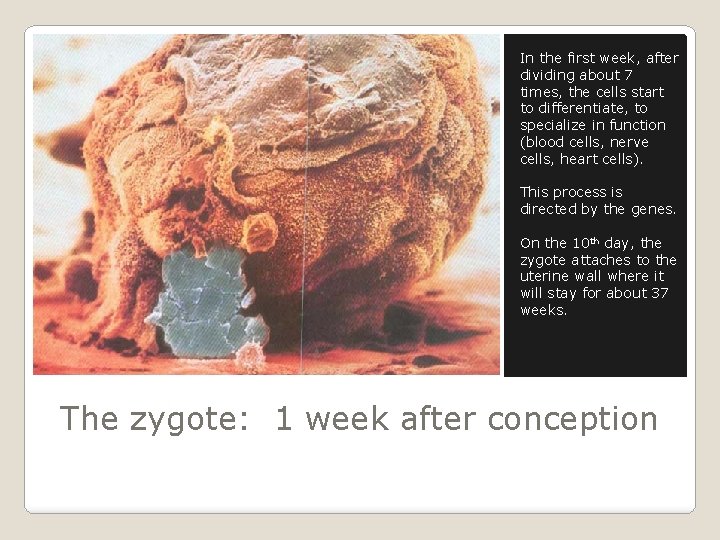
In the first week, after dividing about 7 times, the cells start to differentiate, to specialize in function (blood cells, nerve cells, heart cells). This process is directed by the genes. On the 10 th day, the zygote attaches to the uterine wall where it will stay for about 37 weeks. The zygote: 1 week after conception
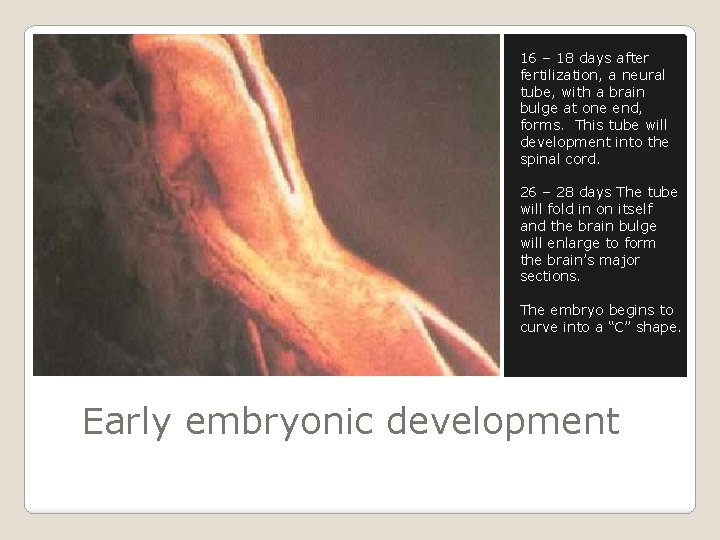
16 – 18 days after fertilization, a neural tube, with a brain bulge at one end, forms. This tube will development into the spinal cord. 26 – 28 days The tube will fold in on itself and the brain bulge will enlarge to form the brain’s major sections. The embryo begins to curve into a “C” shape. Early embryonic development
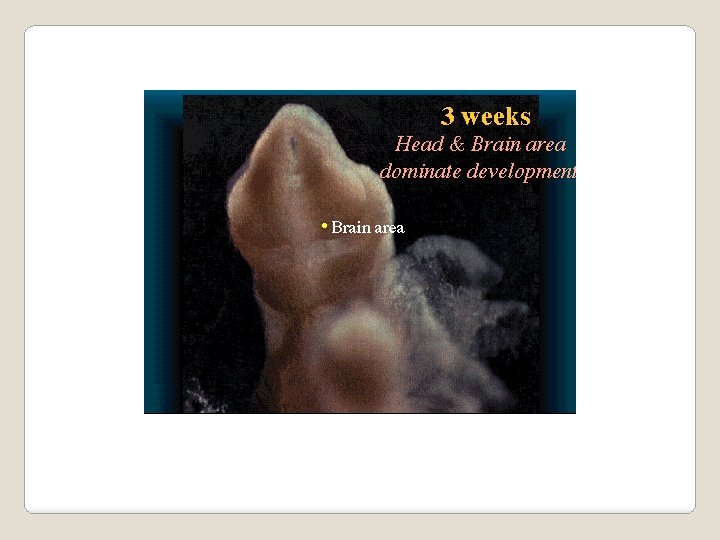
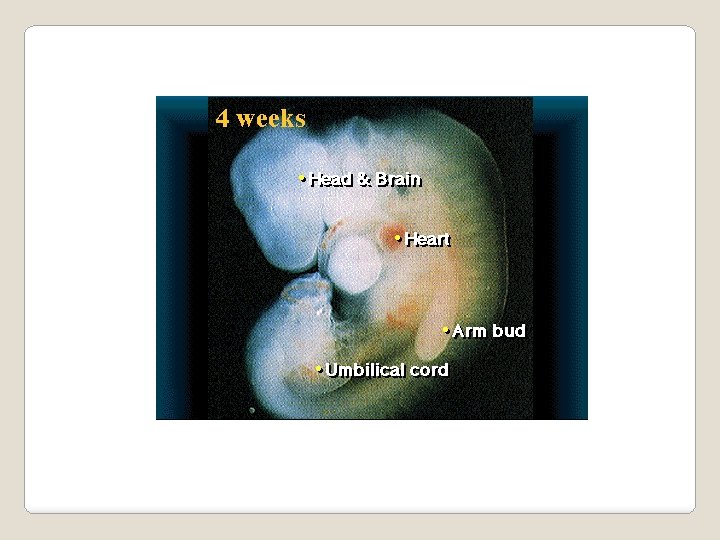
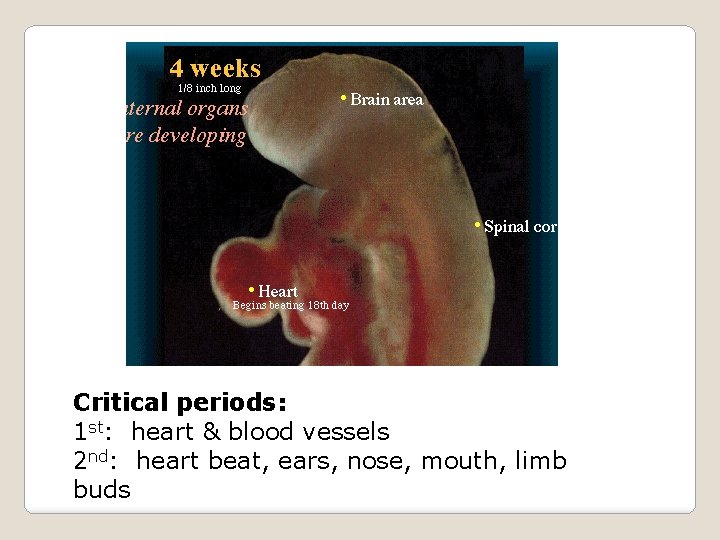
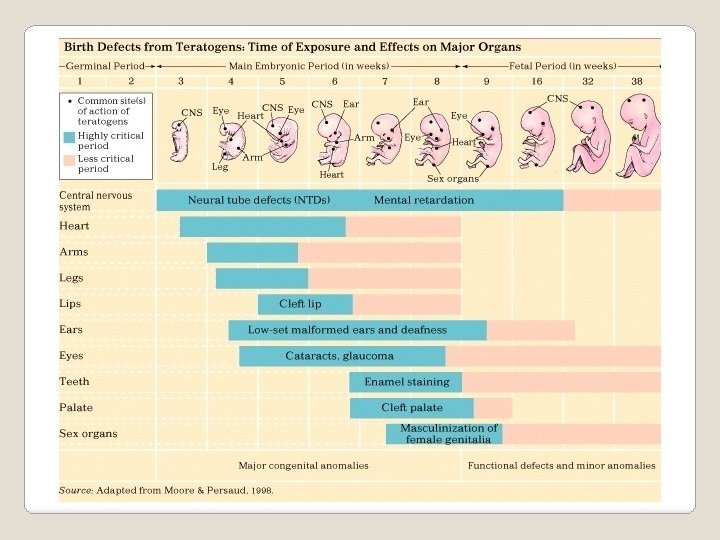
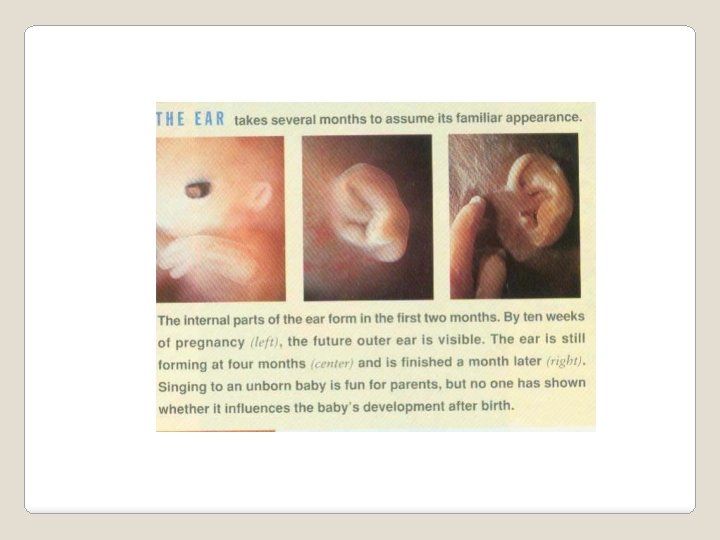
Critical periods: 1 st: heart & blood vessels 2 nd: heart beat, ears, nose, mouth, limb buds
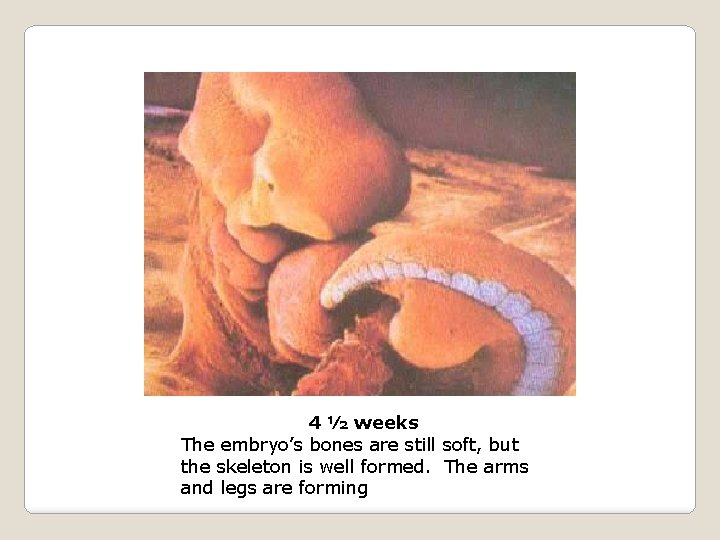
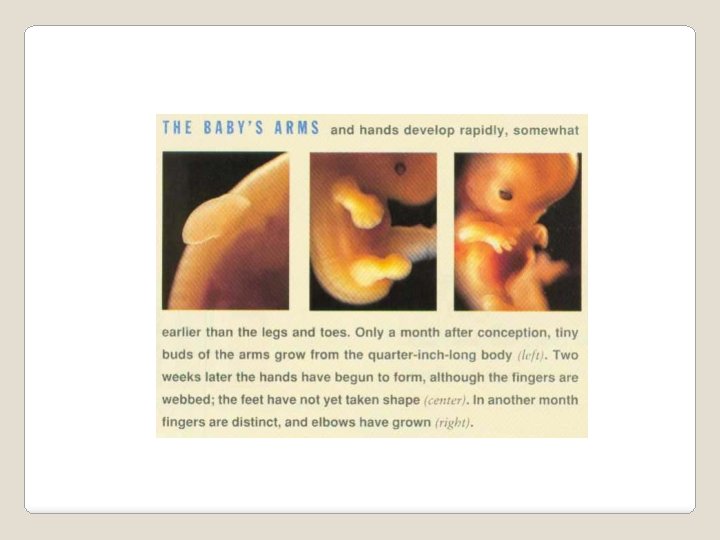
4 ½ weeks The embryo’s bones are still soft, but the skeleton is well formed. The arms and legs are forming
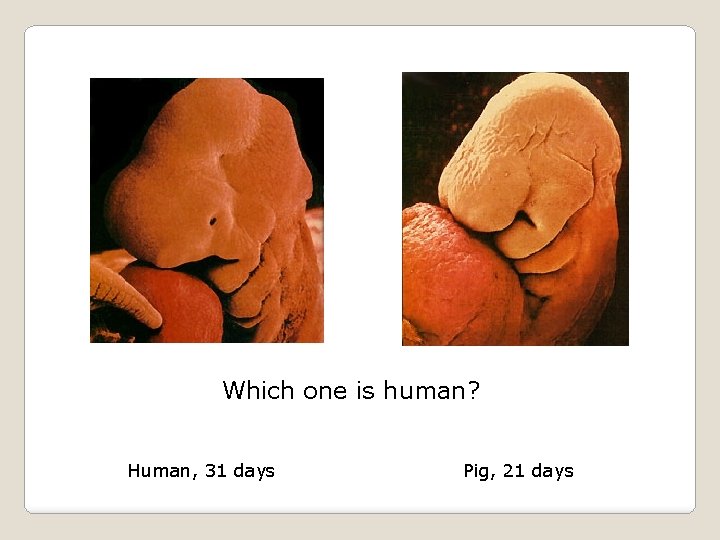
Which one is human? Human, 31 days Pig, 21 days
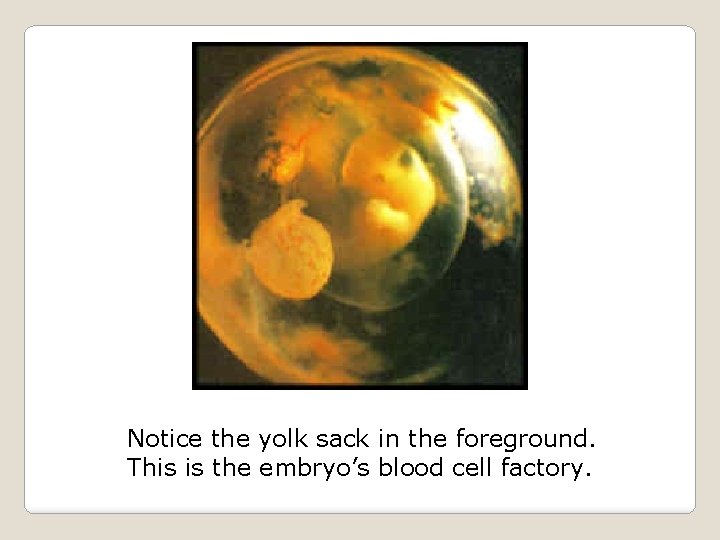
Notice the yolk sack in the foreground. This is the embryo’s blood cell factory.
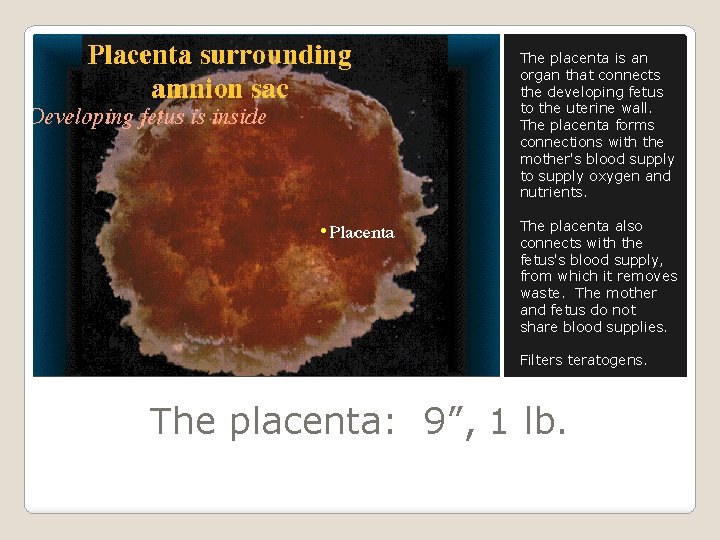
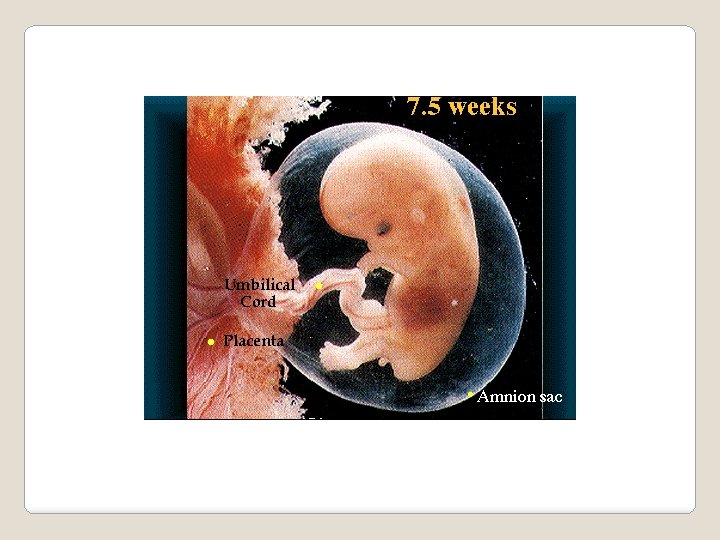
The placenta is an organ that connects the developing fetus to the uterine wall. The placenta forms connections with the mother's blood supply to supply oxygen and nutrients. The placenta also connects with the fetus's blood supply, from which it removes waste. The mother and fetus do not share blood supplies. Filters teratogens. The placenta: 9”, 1 lb.
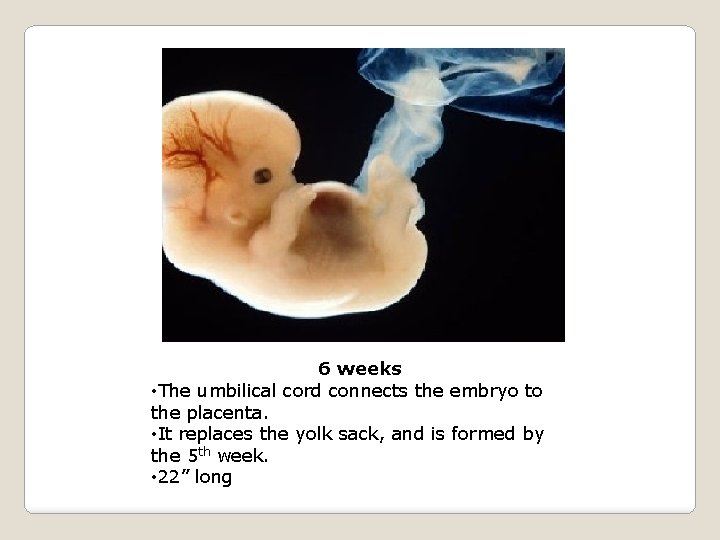
6 weeks • The umbilical cord connects the embryo to the placenta. • It replaces the yolk sack, and is formed by the 5 th week. • 22” long
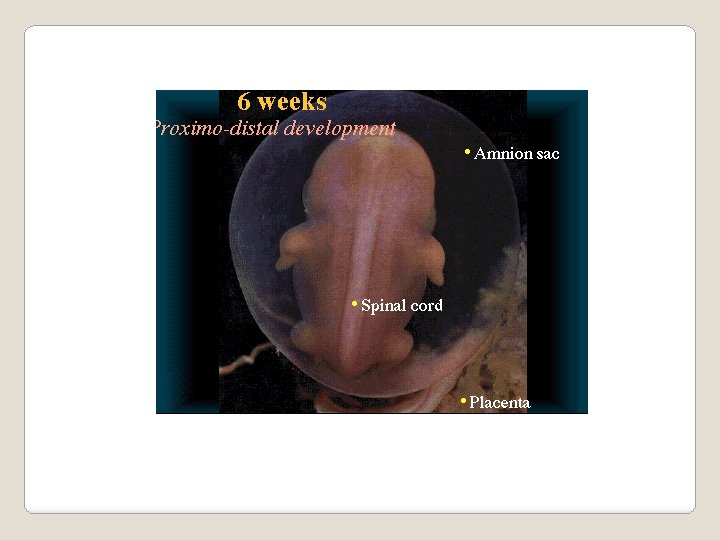
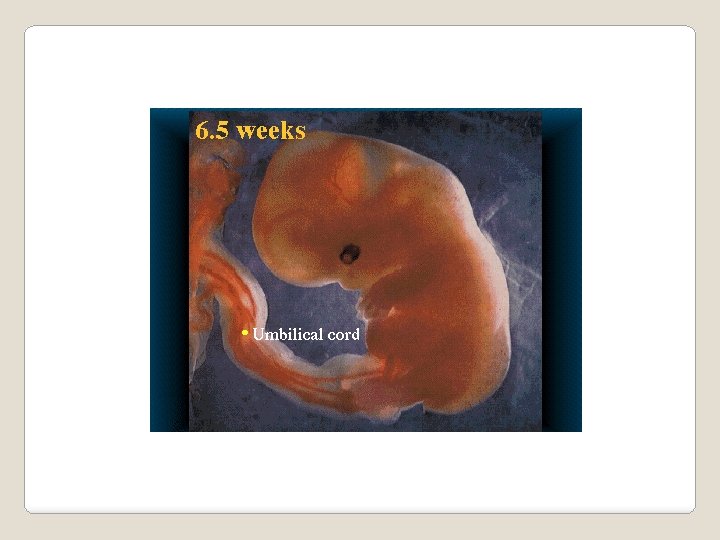
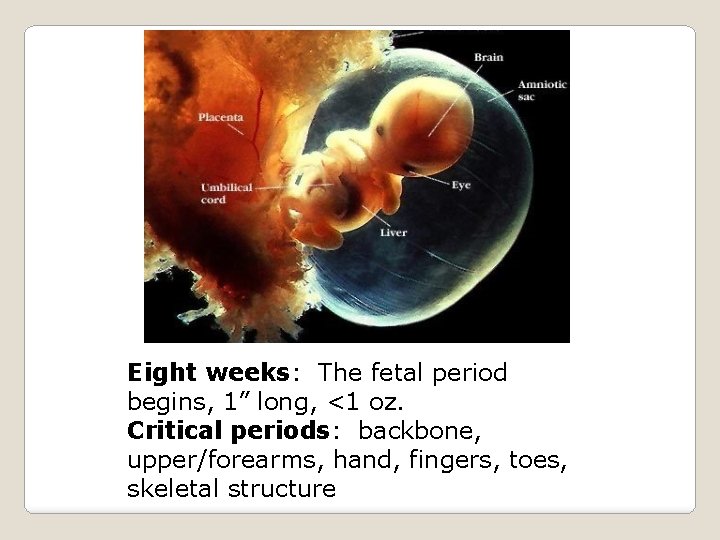
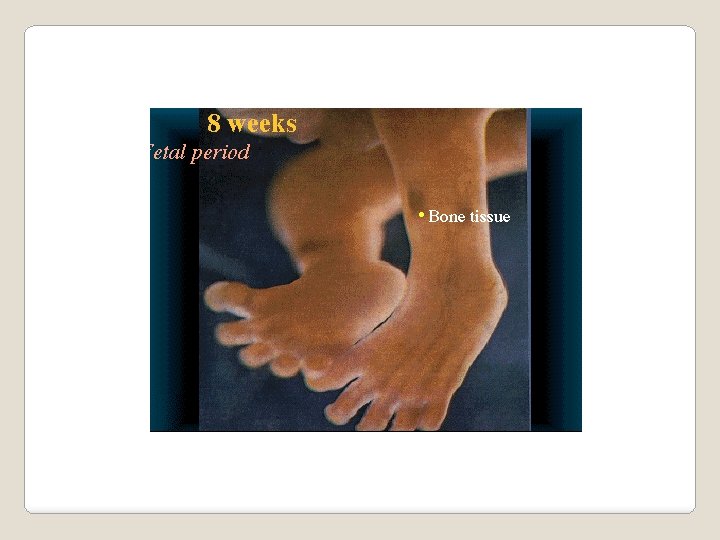
Eight weeks: The fetal period begins, 1” long, <1 oz. Critical periods: backbone, upper/forearms, hand, fingers, toes, skeletal structure
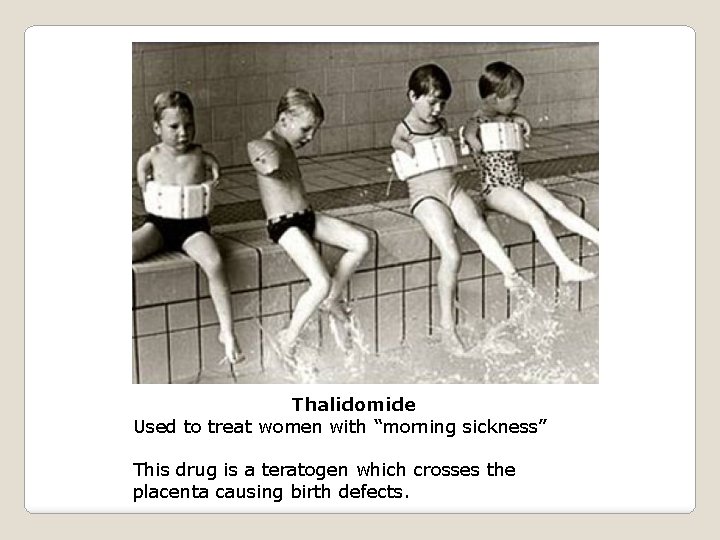
Thalidomide Used to treat women with “morning sickness” This drug is a teratogen which crosses the placenta causing birth defects.
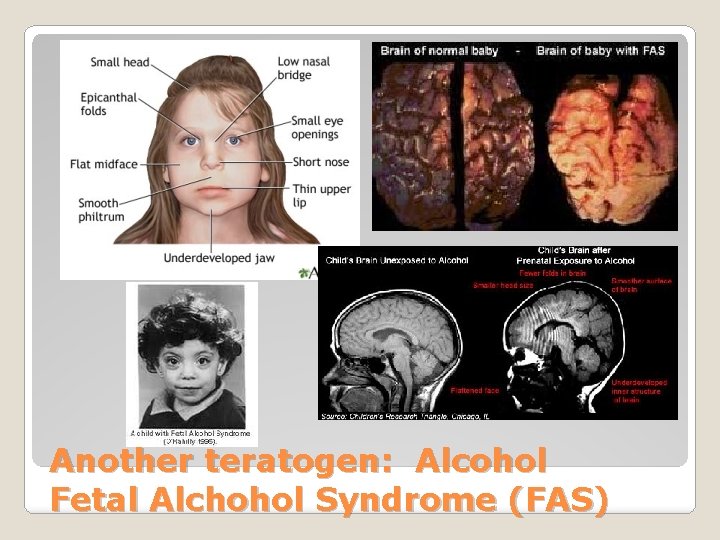
Another teratogen: Alcohol Fetal Alchohol Syndrome (FAS)
Teratogens and Their Effects on the Developing Brain and Mind The Mind #12 http: //www. learner. org/resources/series 15 0. html? pop=yes&pid=1619
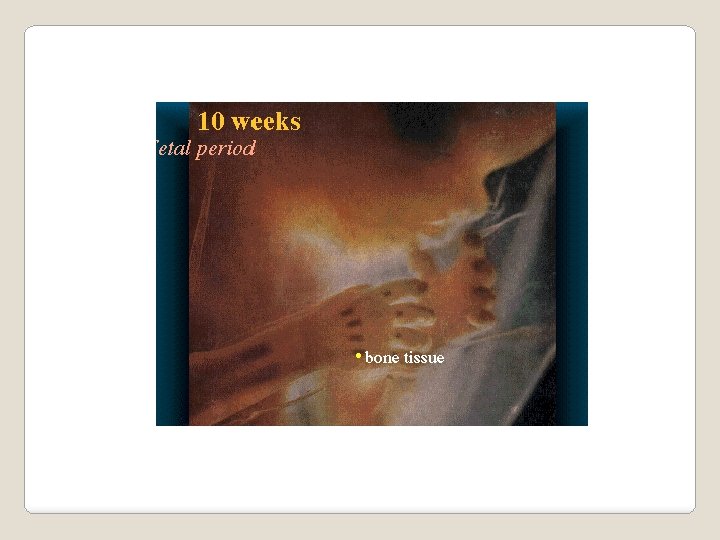
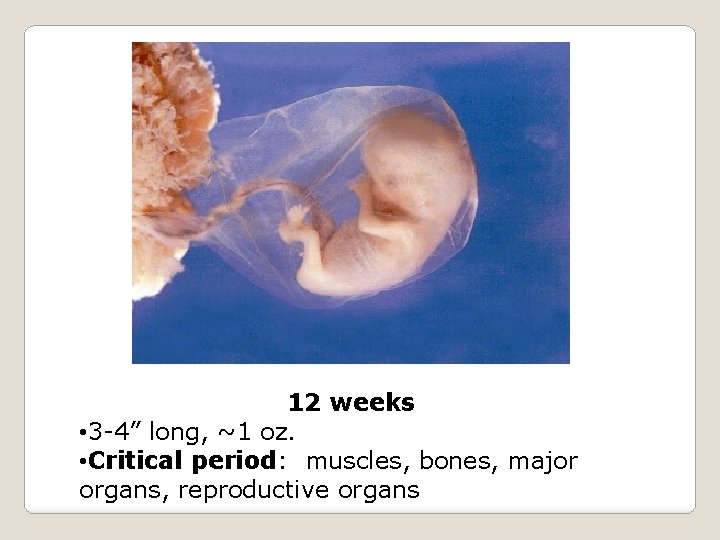
12 weeks • 3 -4” long, ~1 oz. • Critical period: muscles, bones, major organs, reproductive organs

12 weeks
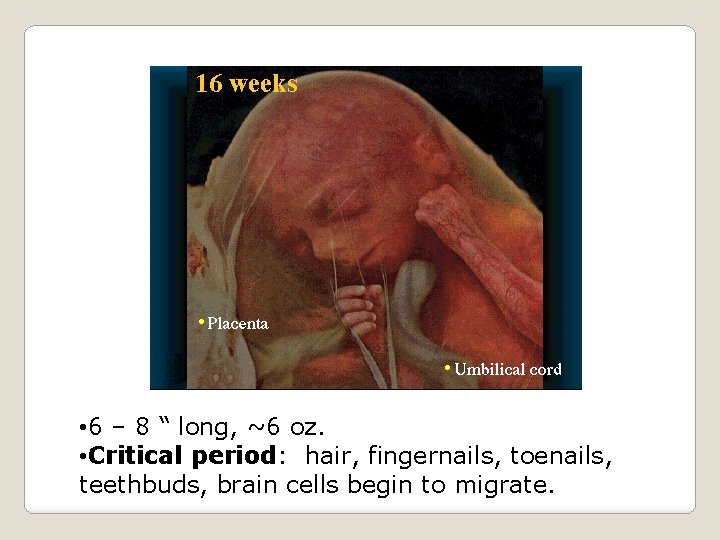
• 6 – 8 “ long, ~6 oz. • Critical period: hair, fingernails, toenails, teethbuds, brain cells begin to migrate.
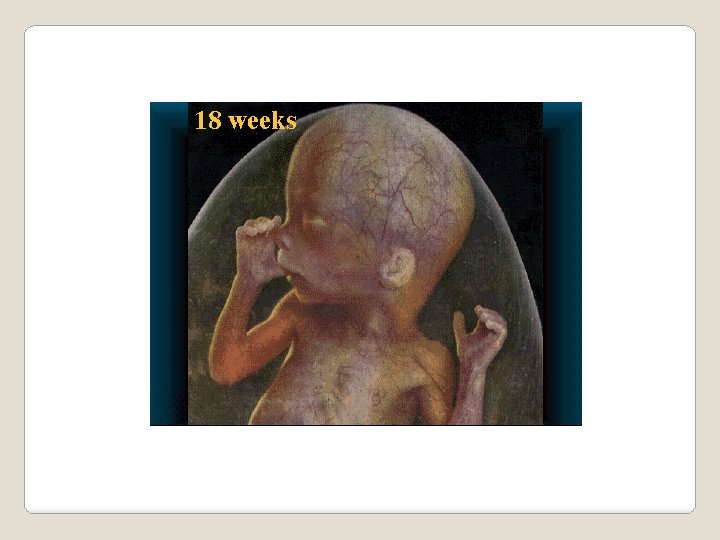

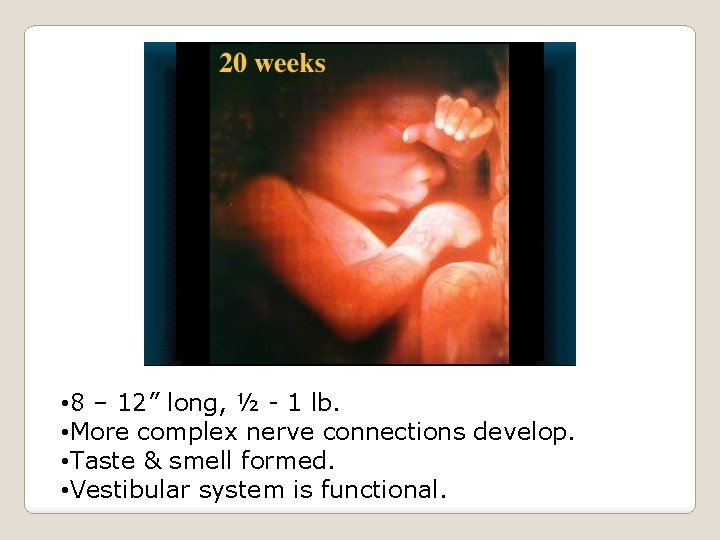
• 8 – 12” long, ½ - 1 lb. • More complex nerve connections develop. • Taste & smell formed. • Vestibular system is functional.
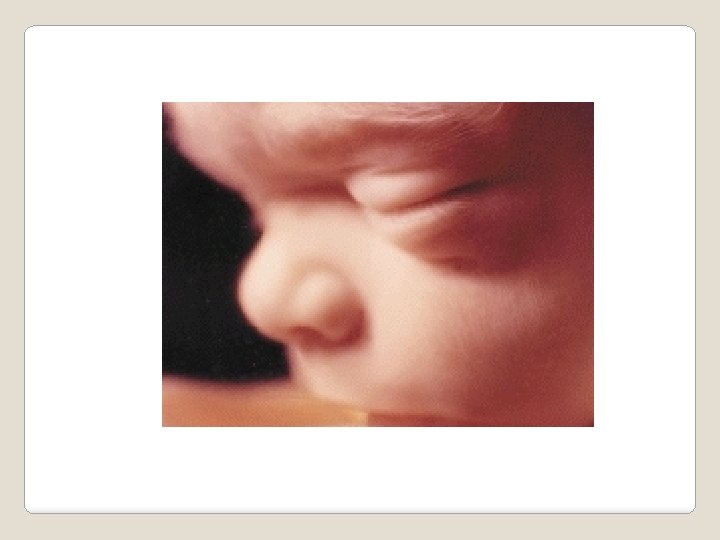
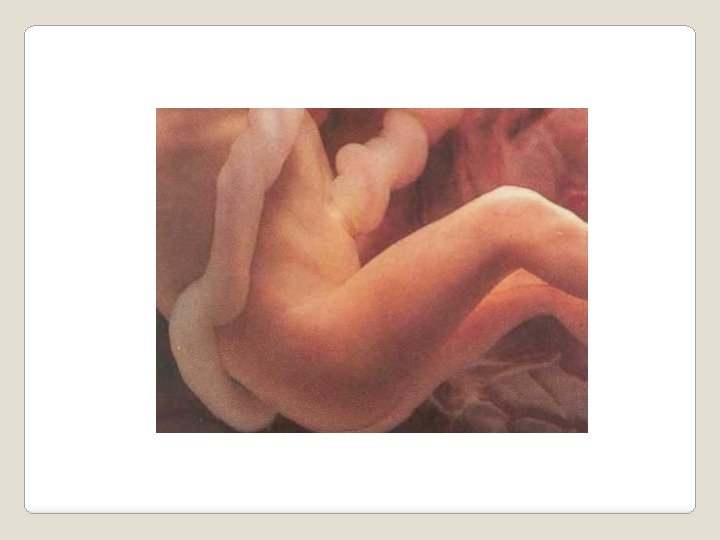
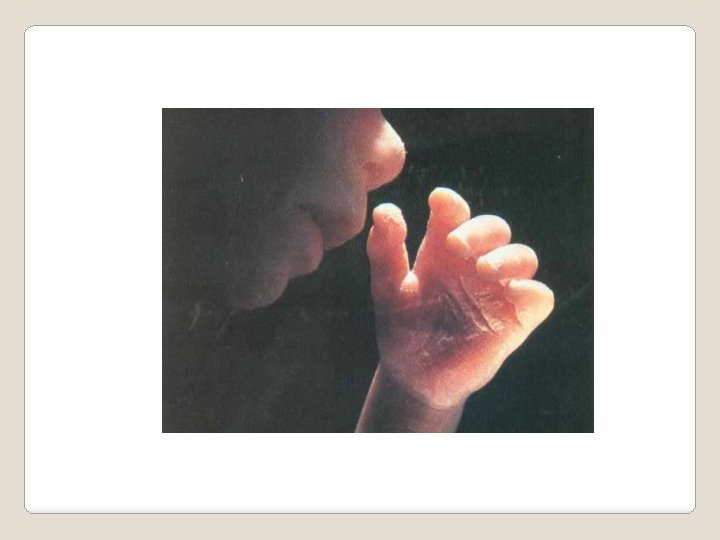
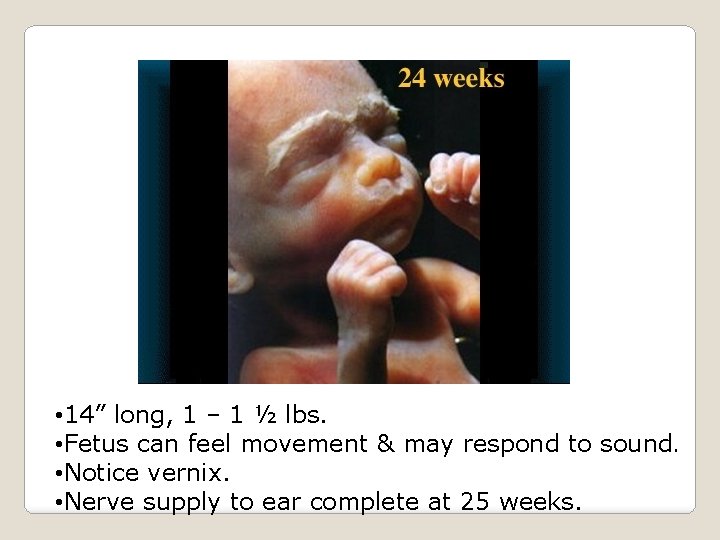
• 14” long, 1 – 1 ½ lbs. • Fetus can feel movement & may respond to sound. • Notice vernix. • Nerve supply to ear complete at 25 weeks.
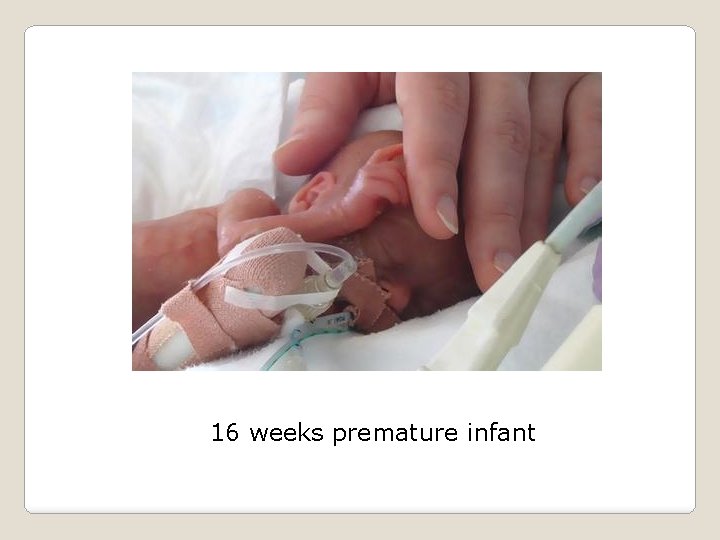
16 weeks premature infant
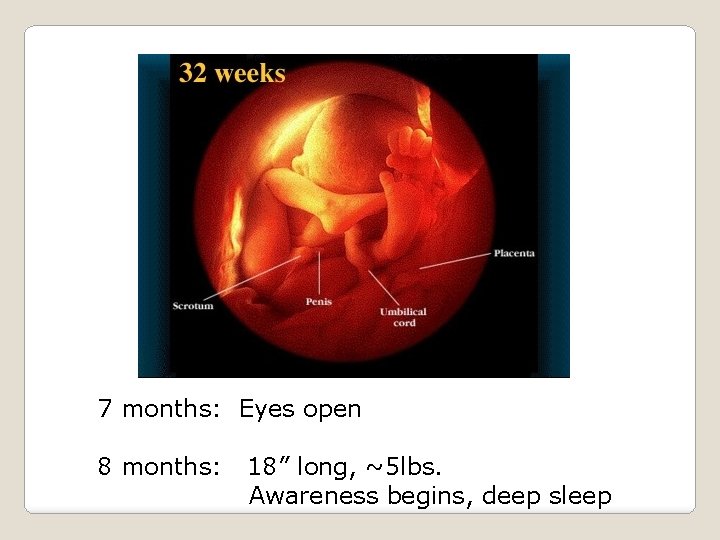
7 months: Eyes open 8 months: 18” long, ~5 lbs. Awareness begins, deep sleep
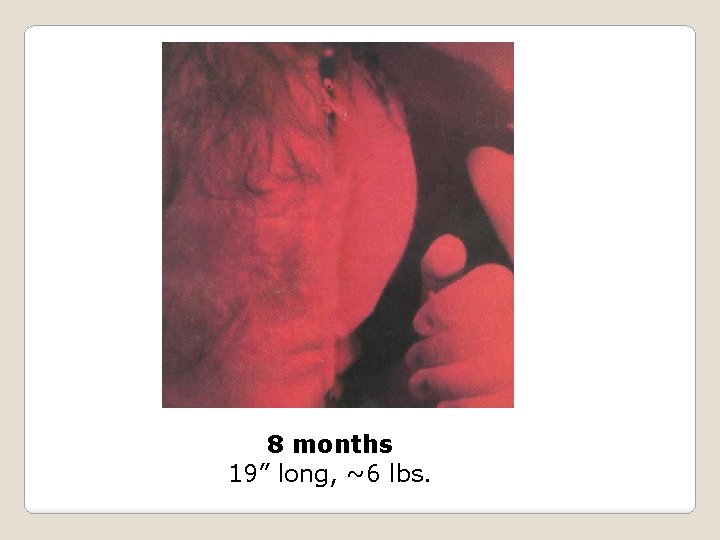
8 months 19” long, ~6 lbs.
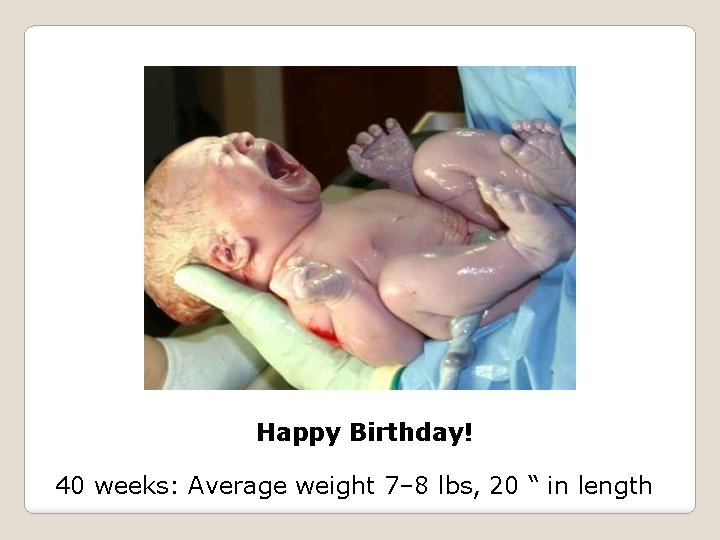
Happy Birthday! 40 weeks: Average weight 7– 8 lbs, 20 “ in length
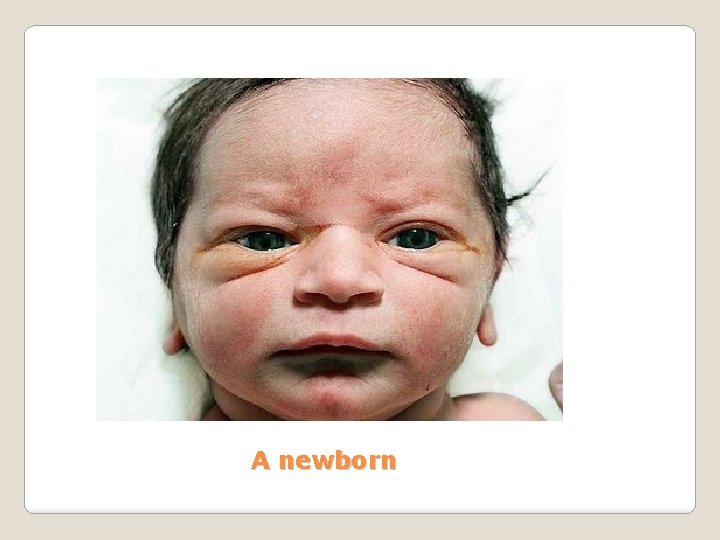
A newborn
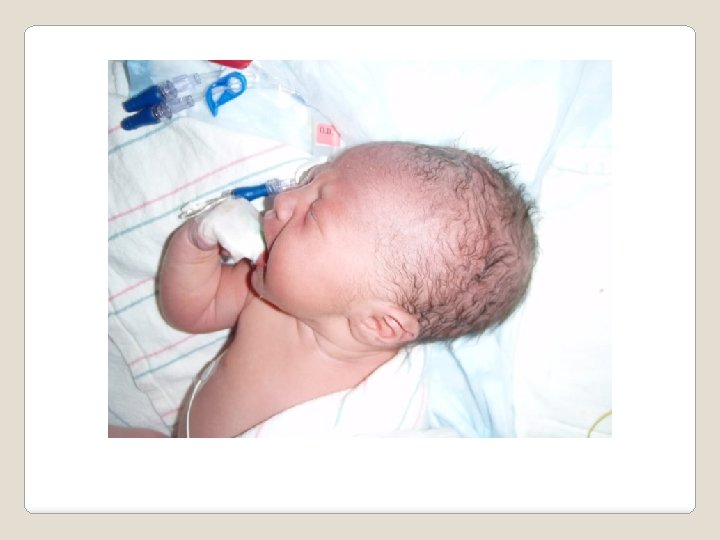

Kate Whitlock (now THAT’s a cute baby!)
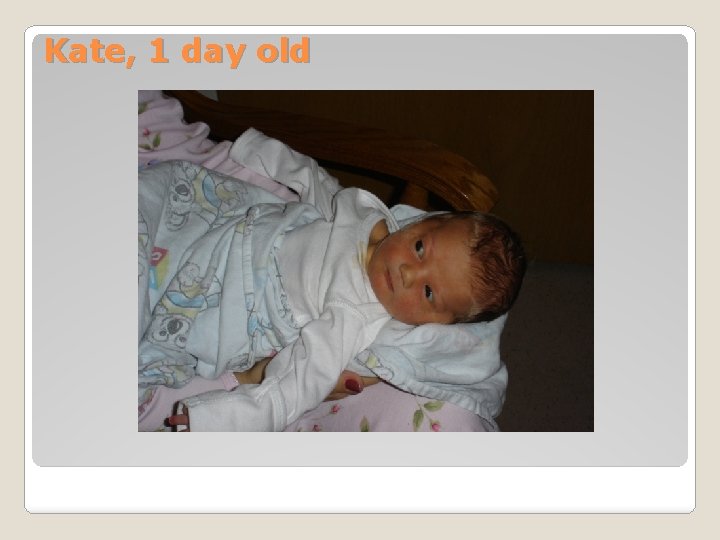
Kate, 1 day old
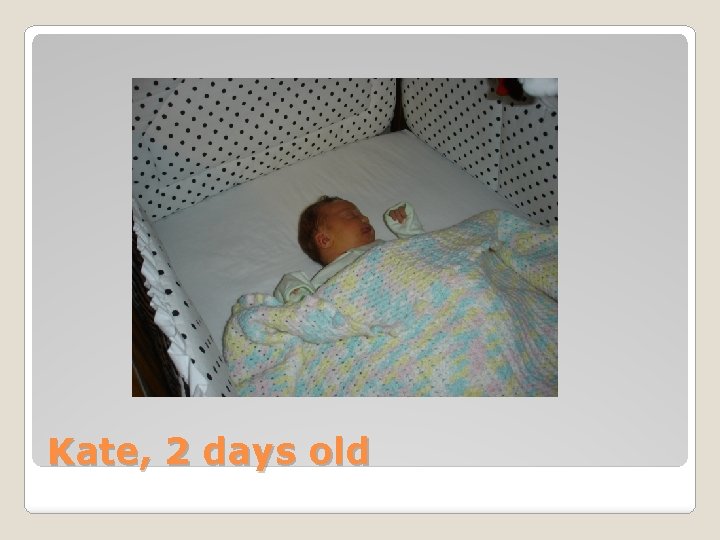
Kate, 2 days old
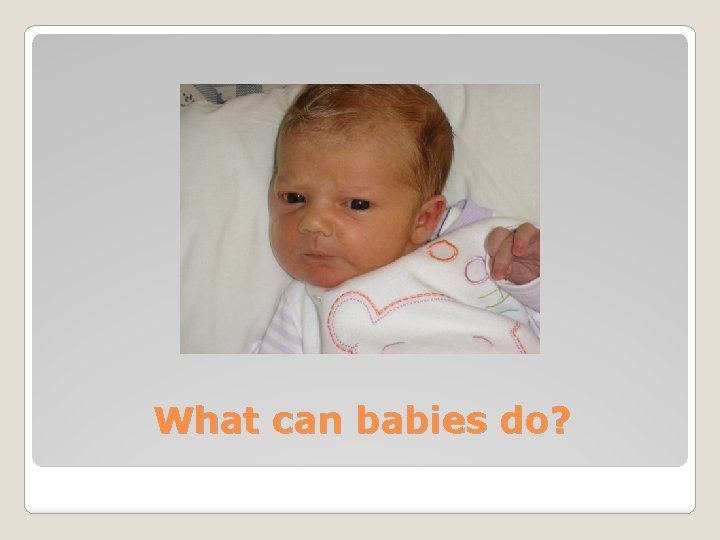
What can babies do?
- Slides: 49