
Prenatal Care Module A NUR 106 Spring 2005




- Slides: 100
Prenatal Care – Module A NUR 106 Spring, 2005
Anatomical Landmarks n Female n Male
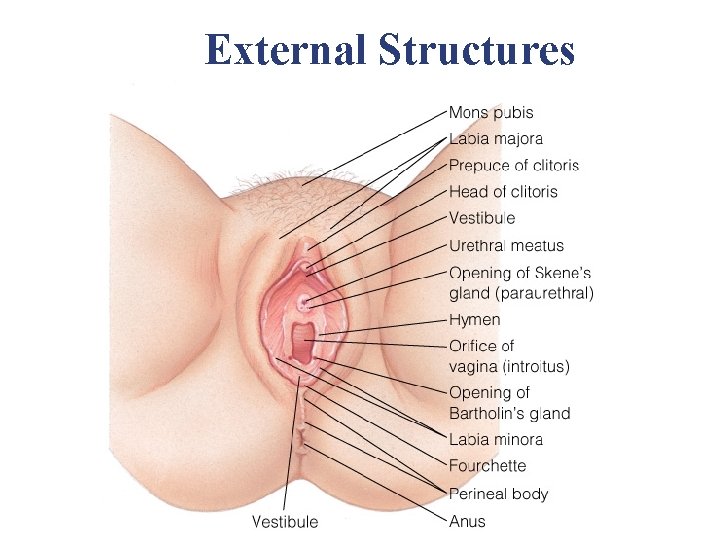
External Structures
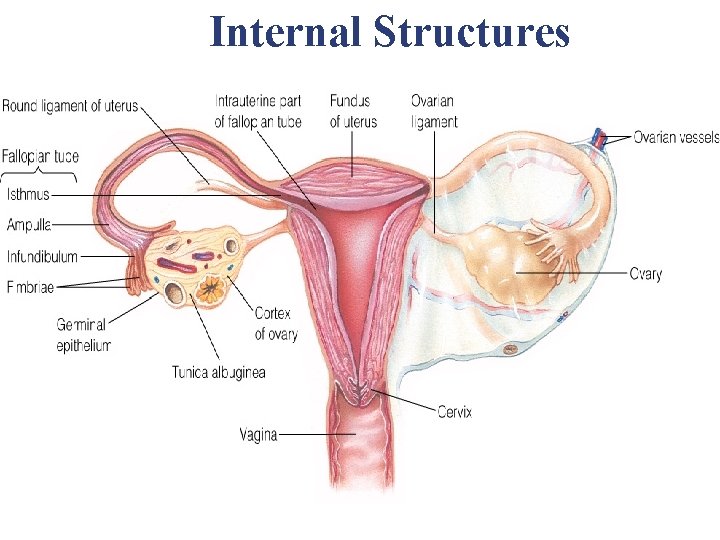
Internal Structures
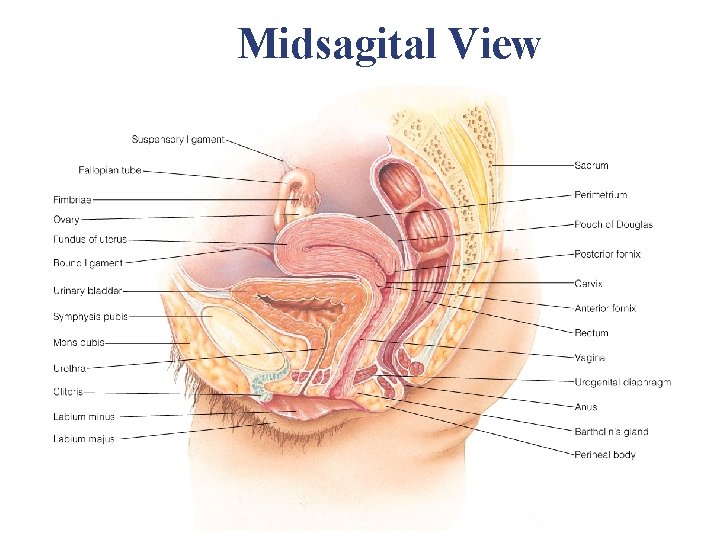
Midsagital View
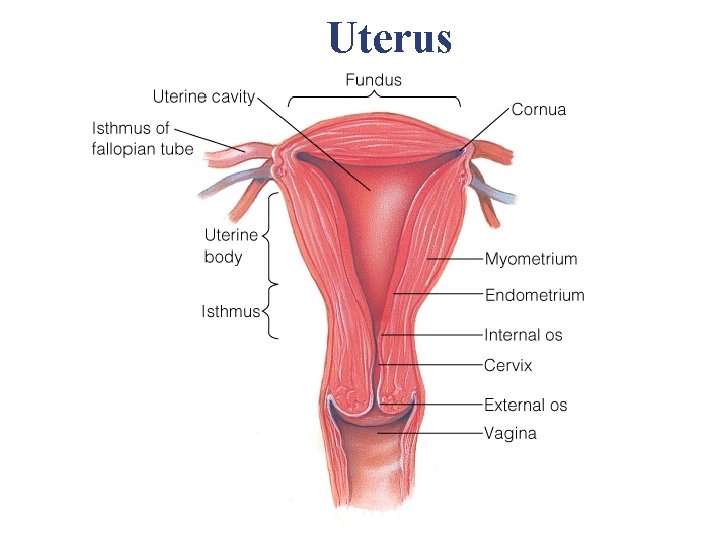
Uterus
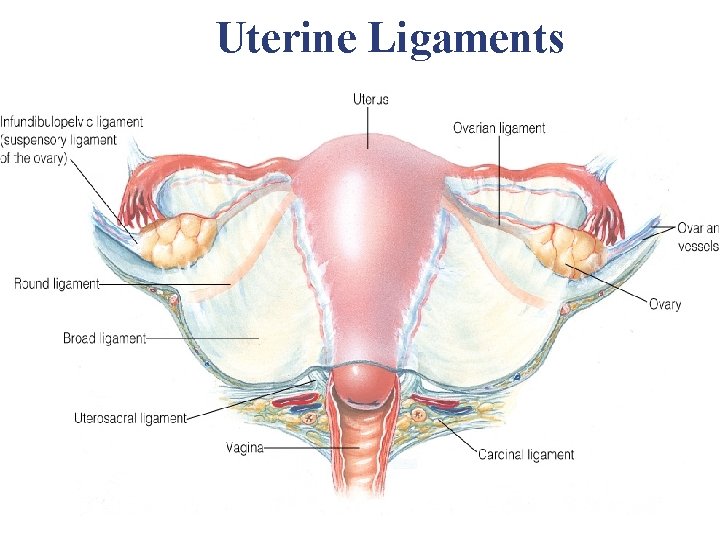
Uterine Ligaments
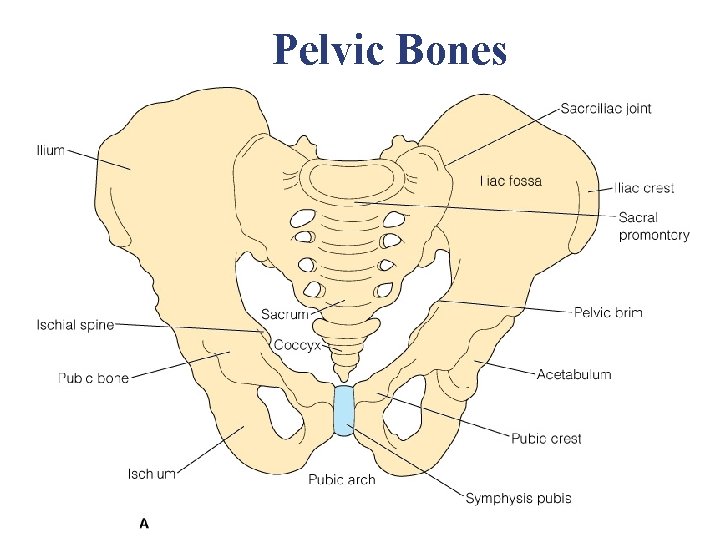
Pelvic Bones
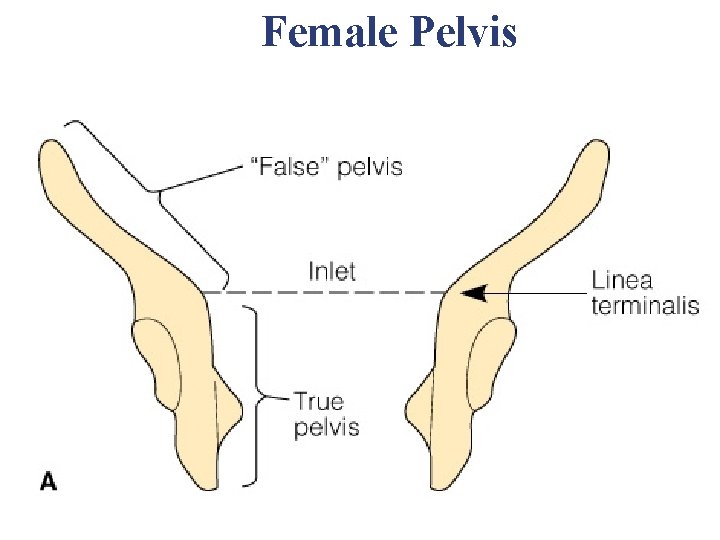
Female Pelvis
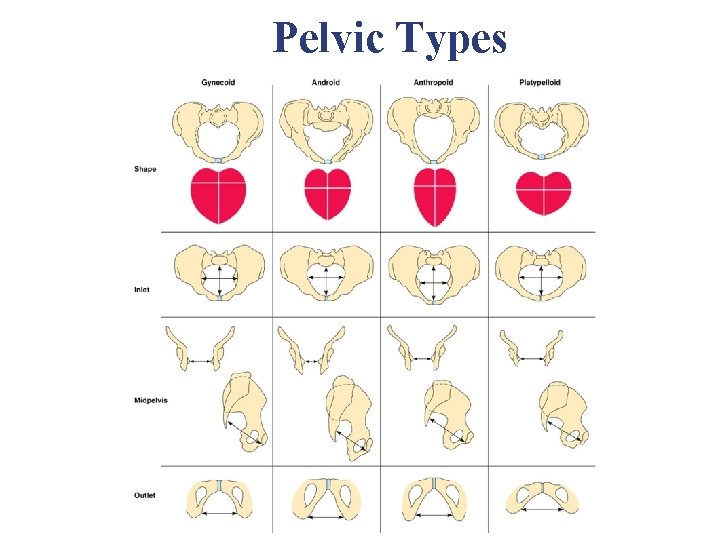
Pelvic Types
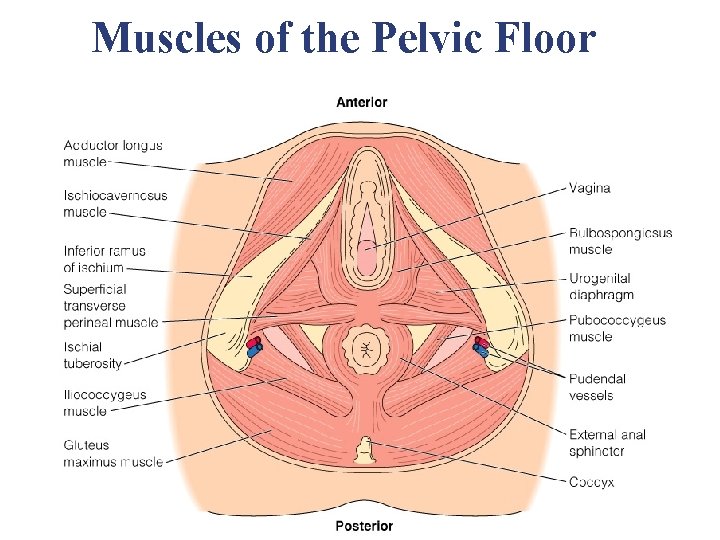
Muscles of the Pelvic Floor
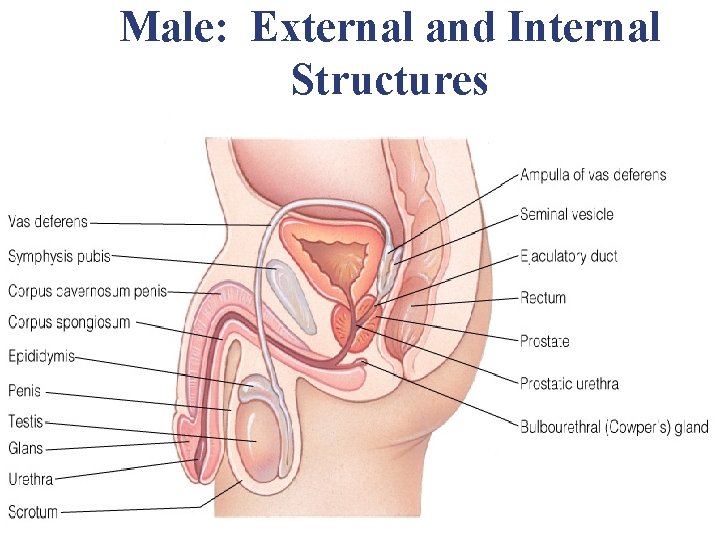
Male: External and Internal Structures
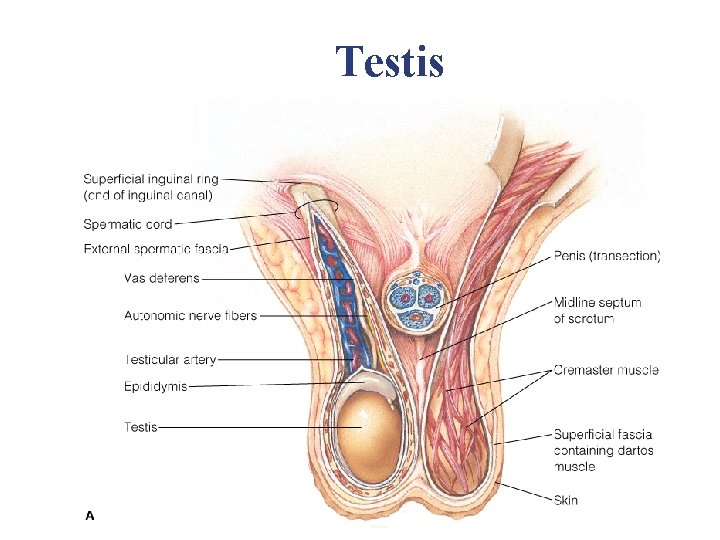
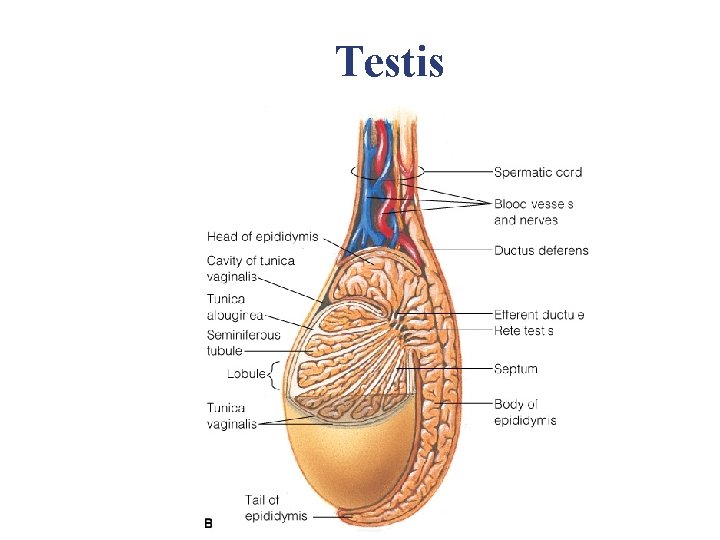
Testis
Testis
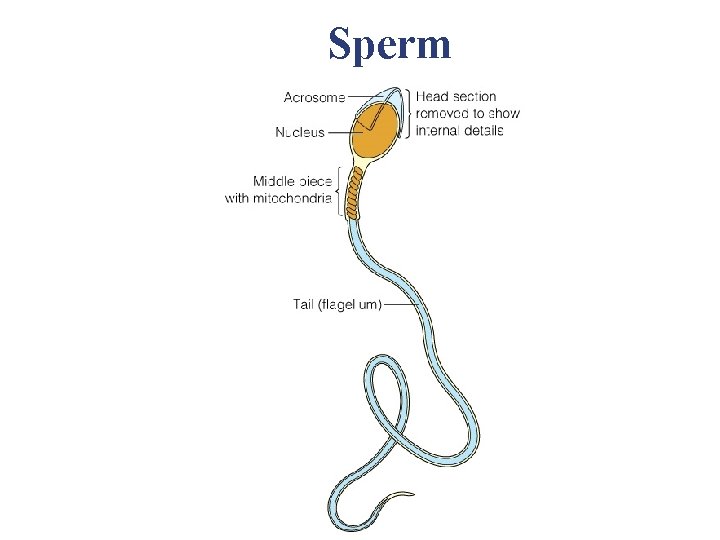
Sperm
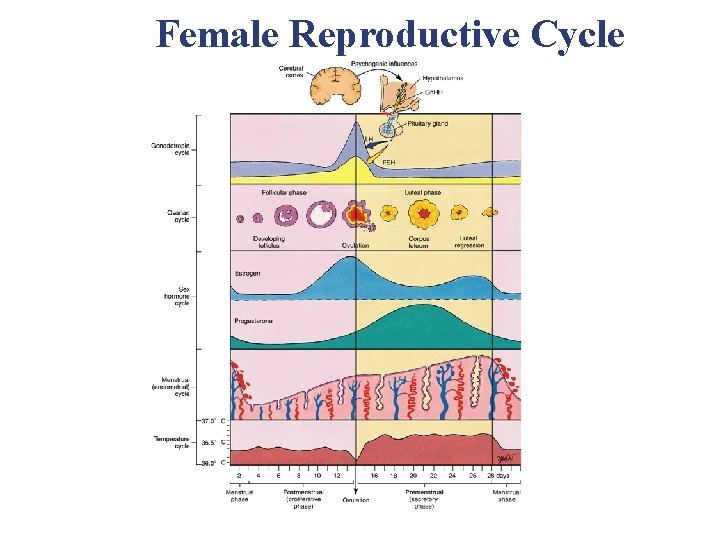
Female Reproductive Cycle n n n Ovulation Menstruation n Menarche Climacteric n Menopause
Female Reproductive Cycle
Conception and Fetal Development n n n Nine Month Miracle of Life Internet sites
Conception n Fertility n Sexual intercourse n Pregnancy
Genetics n n n Chromosomes n Autosomal n Sex Chromosomal syndromes Modes of inheritance
Patterns of Inheritance n Dominant n Recessive n X-linked
Nursing Responsibilities n n n Identify families at risk Education Liaison Support / Crisis intervention Continuity of care
Teratogens n n n n Tobacco Alcohol Marijuana Cocaine Heroin Anticonvulsants Anticoagulants Acne medications
Reproductive Ethics n n n n Maternal-fetal conflict Abortion Intrauterine fetal surgery Reproductive assistance Embryonic stem cell research Human genome project Cord blood banking
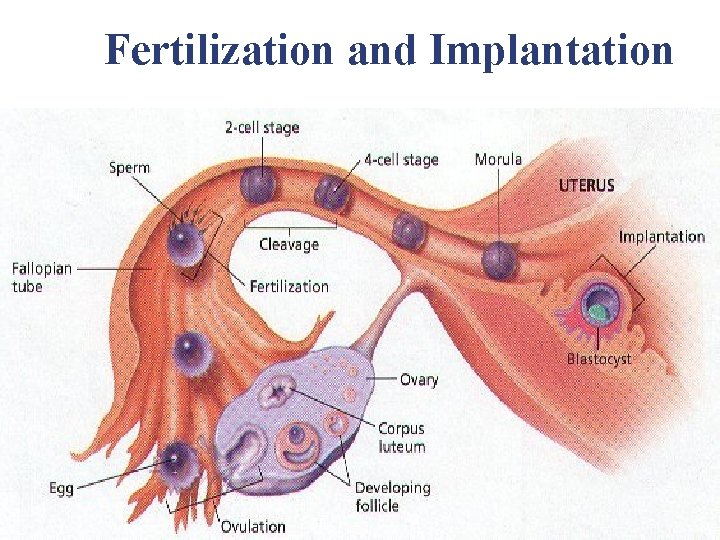
Fertilization n n One spermatozoon enters the ovum Two nuclei containing the parents’ chromosomes merge Occurs in the outer third of the fallopian tube Sex is determined
Multifetal Pregnancy n Dizygotic twinning -- fraternal n Monozygotic twinning -- identical
Implantation n n Nidation Gradual process Occurs between 6 th / 7 th and 10 th days Upper part of posterior uterine wall Placenta develops
Fertilization and Implantation
Amniotic Membranes n n Amnion (inner) Chorion (outer) Enclose fetus in amniotic fluid Protects fetus from infectious organisms
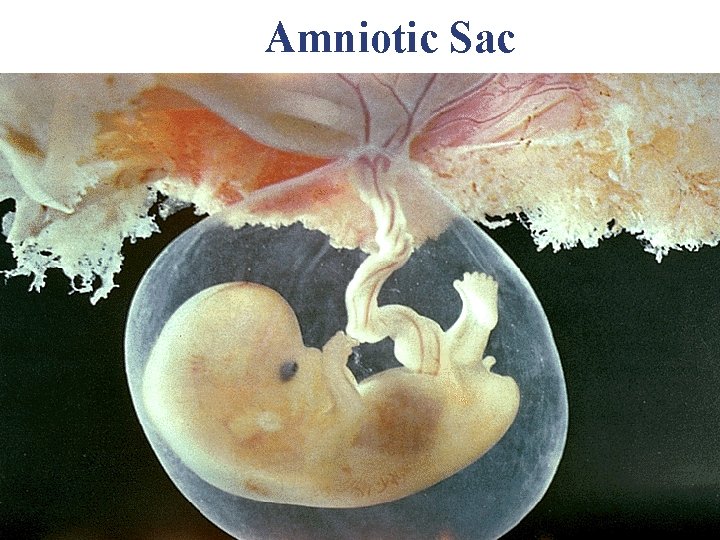
Amniotic Sac
Amniotic Fluid n n n Clear, slightly yellow, alkaline fluid Approximately 1 liter at term Derived from n Maternal plasma n Cells of the amnion n Fetal fluids from lung, skin, fetal urine
Functions of Amniotic Fluid n n n n Cushions fetus from trauma Facilitates fetal movement Facilitates symmetrical growth Regulates intrauterine temperature Provides source of oral fluid Cushions umbilical cord Receptacle for fetal substances
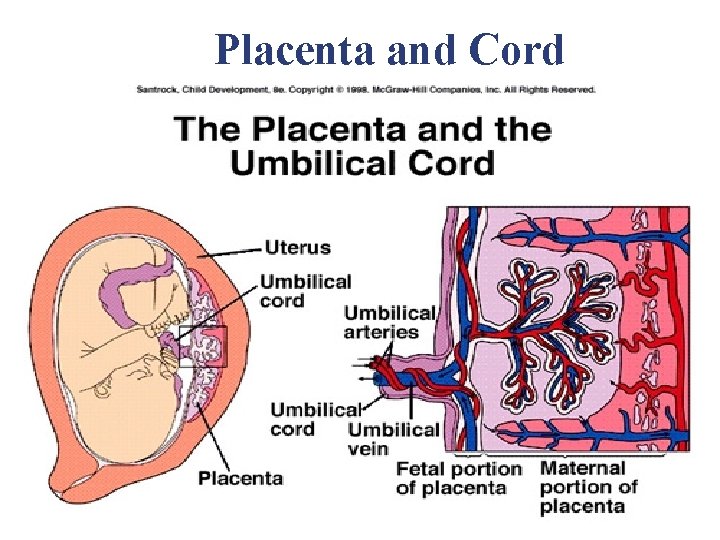
Placenta / Function n n n Fully functional by week 12 Respiration Nutrition Waste removal Protection Endocrine
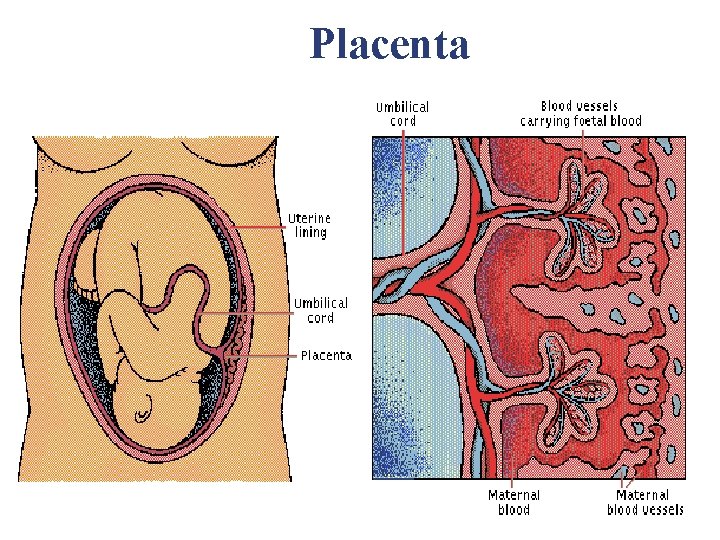
Placenta
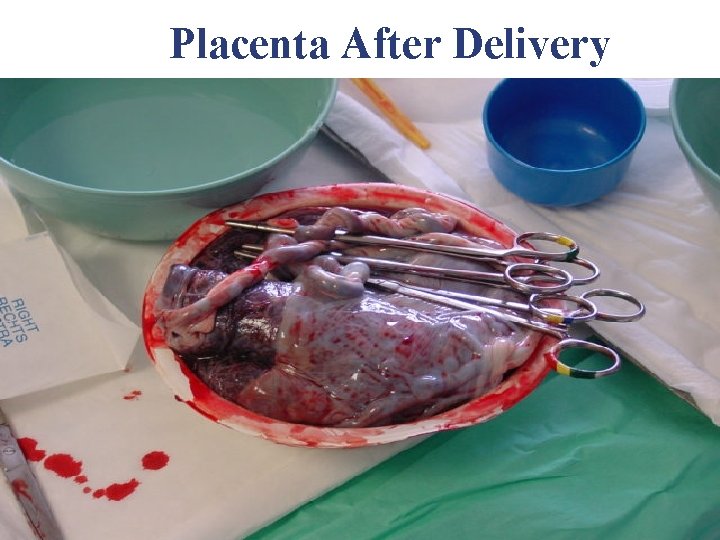
Placenta After Delivery
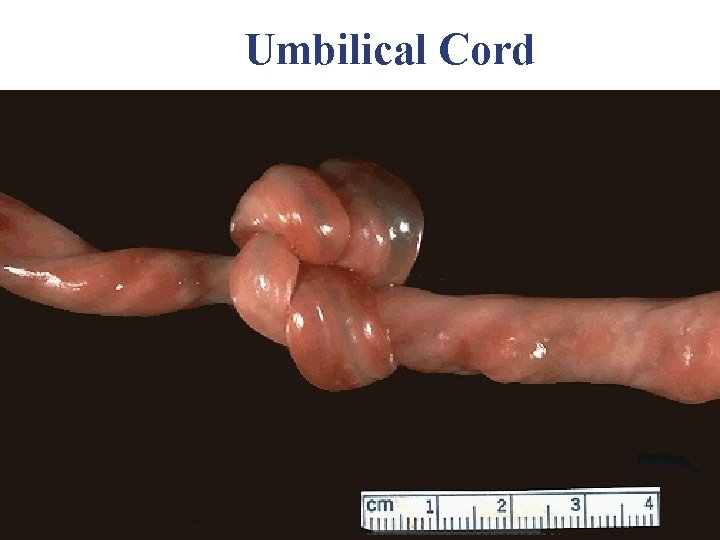
Umbilical Cord n n One vein Two arteries Wharton’s jelly Amnion
Placenta and Cord
Umbilical Cord
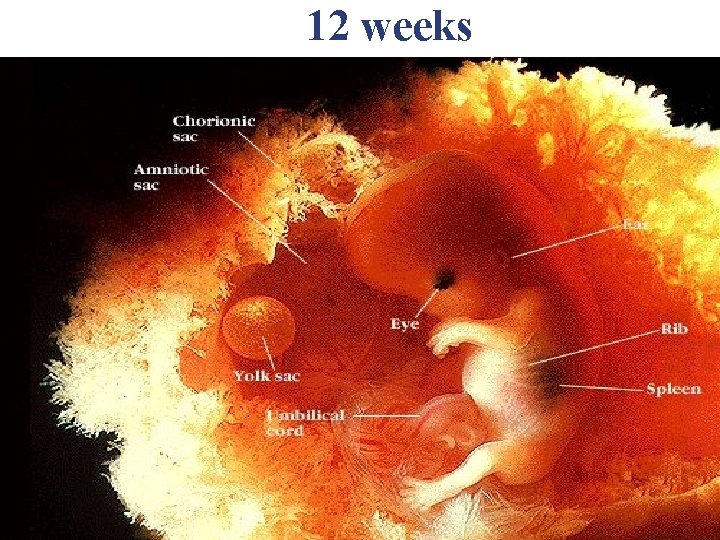
12 weeks
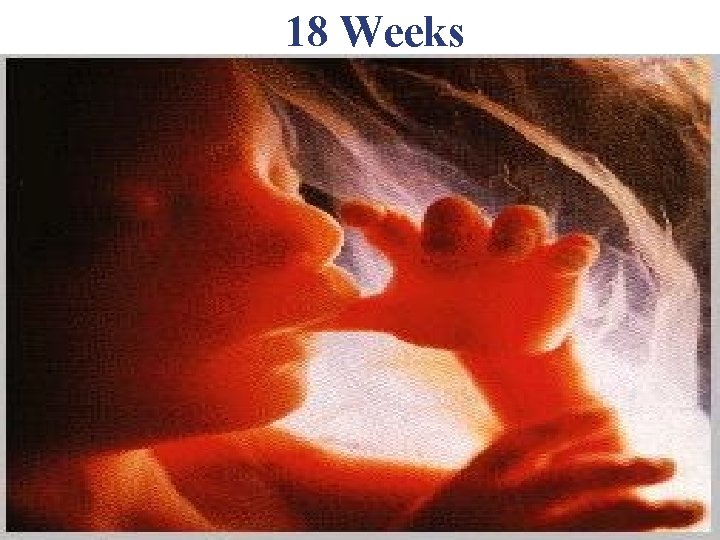
18 Weeks
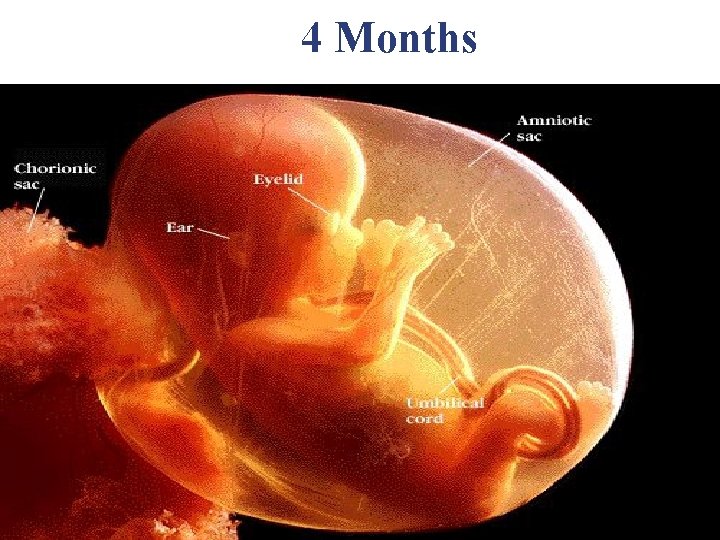
4 Months
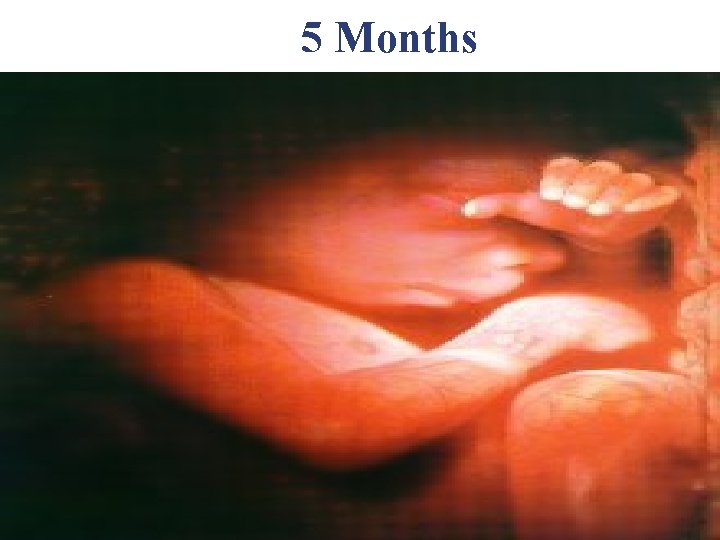
5 Months
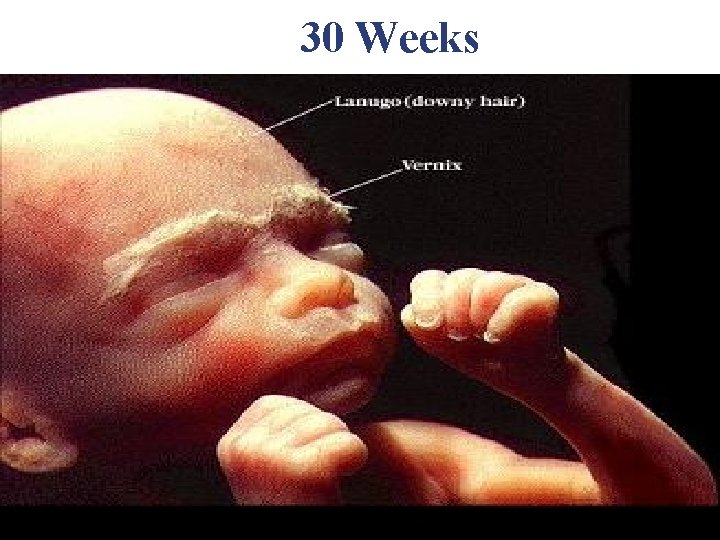
30 Weeks
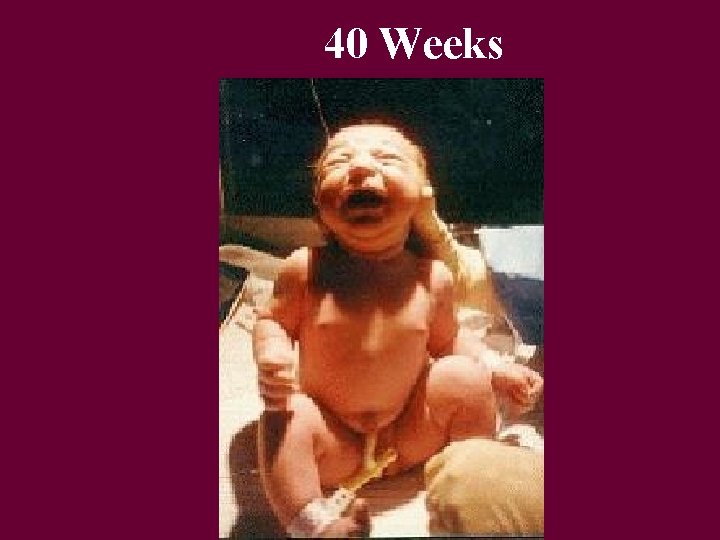
40 Weeks
Fetal Development n Preembryonic or ovum n Embryonic n Fetal
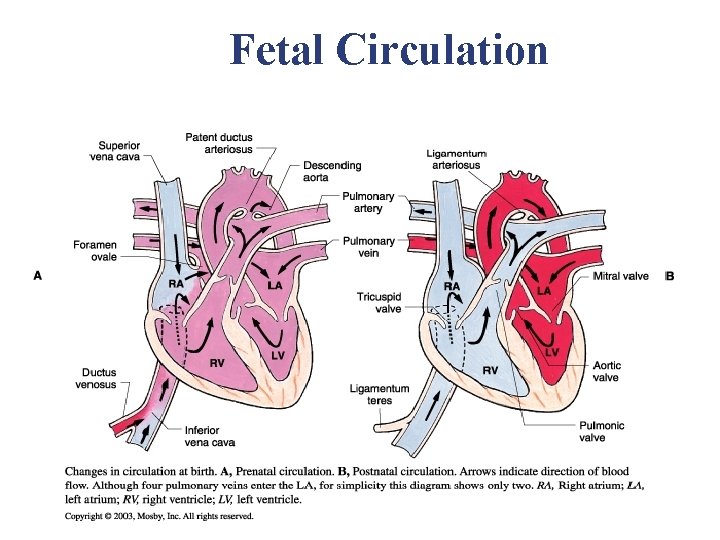
Fetal Circulation n Ductus venosus n Ductus arteriosus n Foramen ovale
Fetal Circulation
Factors Affecting Fetal Development n Exposure to teratogens n Maternal health habits and lifestyle n Paternal health habits and exposure to environmental influences
Physiological Changes During Pregnancy n n n Uterus Ligaments Cervix n Chadwick’s n Goodell’s n Hegar’s Breast n Montgomery tubercles Skin
Circulatory System n n n n Increases up to 50% Pseudoanemia Iron requirements increased Increase in size Blood pressure changes Fibrinogen increases Mechanical circulatory effects
Supine Hypotension Syndrome
Respiratory System n n n Thoracic cage Oxygen consumption increases Hyperventilation Respiratory alkalosis Mucosal edema
Digestive System n n Nausea / vomiting Constipation Flatulence / heartburn Gallstones
Urinary System n n Kidneys n Function increases n Renal threshold for sugar reduced Bladder and ureters n Blood supply increased n Pressure n Atonia
Joints, Bones, Teeth, and Gums n n n Pelvic cartilages Gait Uterus Posture changes Teeth Gums
Endocrine System n n Placenta n HCG n HPL n Estrogen n Progesterone Pituitary Adrenal Thyroid
Signs of Pregnancy n Presumptive – Subjective n Probable – Objective n Positive -- Diagnostic
Signs of Pregnancy: S, O, or D n n n n n Amenorrhea Goodell’s sign Fetal heart sounds Urinary frequency Positive pregnancy test Nausea and vomiting Enlargement of the abdomen Quickening Palpable fetal movements Braxton Hicks contractions
How would you explain the differences between the subjective (presumptive), objective (probable), and diagnostic (positive) signs of pregnancy to an expectant mother?
Maternal Psychosocial Changes n n n First trimester n Ambivalent Second trimester n Baby becomes real n Maternal introspection Third trimester n Begins to think of baby as separate being n Restless n Self-centered
Rubin’s Maternal Tasks n n Seeking safe passage Securing acceptance Learning to give of self Committing self to child
Paternal Psychosocial Changes n n n First trimester n Excitement over virility n Financial concerns n Energetic n Exhibit symptoms with wife Second trimester n More confident n Concerns about wife’s changes / introspection Third trimester n Rivalry with fetus n Interest in himself n Fantasizes about child
Factors Affecting Psychological Response n n n n Body image Personal characteristics Financial situation Cultural expectations Emotional security Support from significant others Changes in sexuality Role of the father and siblings
Preparation for Parenthood n Preconception n Childbearing decisions n Prenatal education n Childbirth preparation
Childbirth Education n n Provides information on pregnancy and childbirth to facilitate optimal decision making Classes for special groups Importance of exercise during pregnancy Selection of birthing process Infant care
First Trimester n n n Physical and psychosocial changes of pregnancy Self-care in pregnancy Protecting and nurturing the fetus Choosing a care provider and birth setting Prenatal exercise Relief of common early pregnancy discomforts
Second Trimester n Planning for breast-feeding n Sexuality in pregnancy n Relief of common later-pregnancy discomforts
Third Trimester n n n Preparation for childbirth Development of a birth plan Relaxation techniques Postpartum self-care Infant stimulation Infant care and safety
Goals of Prenatal Care n n n Safe birth Health promotion Self-care Provide physical care Provide anticipatory guidance
Risk Factors / Reproductive Outcomes n n n n Maternal age Parity Socioeconomic status Ethnicity Geographic factors Behavioral and Lifestyle risks Health risks Previous pregnancies
Role of Nurse n n n Physical assessment Identify and reevaluate risk factors Teach self-care Nutrition counseling Promote family’s adaptation to pregnancy
Prenatal Visits n Every 4 weeks for first 28 to 32 weeks n Every 2 weeks from 32 to 36 weeks n Every week from 36 to 40 weeks
Terminology n Gravida n Multipara n Nulligravida n Nullipara n Primigravida n Abortion n Multigravida n Gestational age n Para n Fertilization age n Primipara
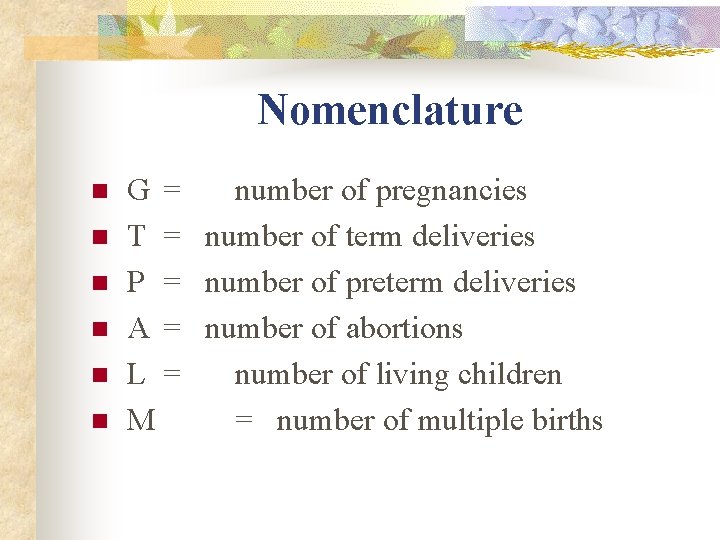
Nomenclature n n n G = number of pregnancies T = number of term deliveries P = number of preterm deliveries A = number of abortions L = number of living children M = number of multiple births
Nägele’s Rule First Day of Last Menstrual Period Minus 3 months Plus 7 days
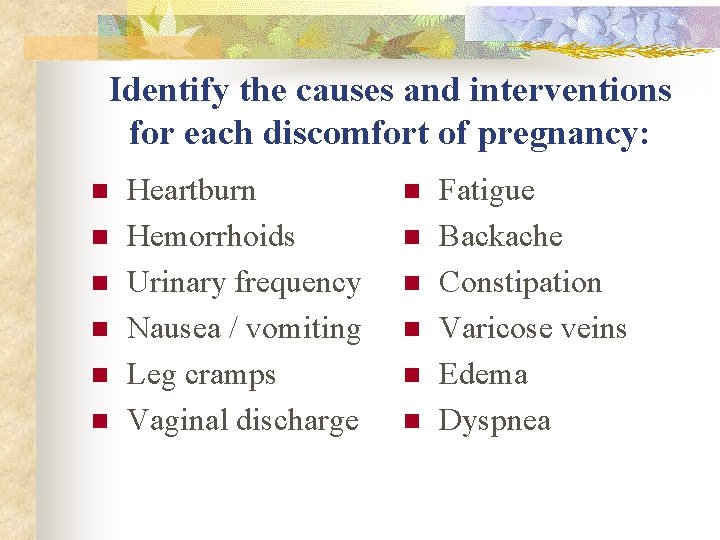
Identify the causes and interventions for each discomfort of pregnancy: n n n Heartburn Hemorrhoids Urinary frequency Nausea / vomiting Leg cramps Vaginal discharge n n n Fatigue Backache Constipation Varicose veins Edema Dyspnea
Why is a positive pregnancy test not a positive sign of pregnancy?
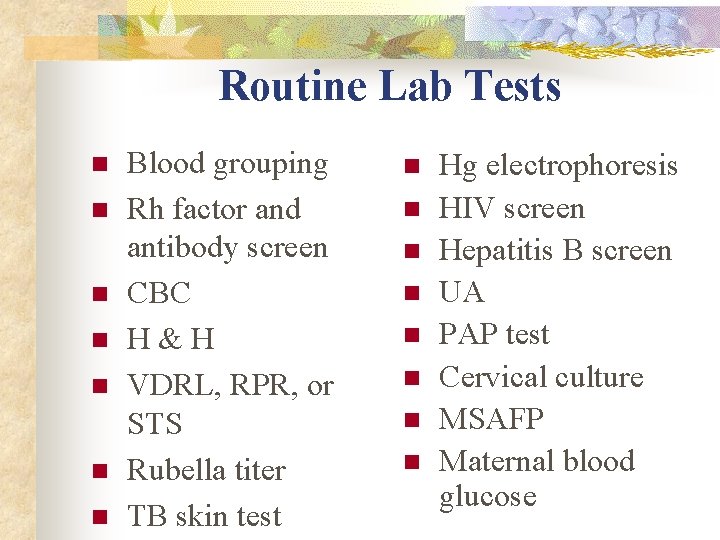
Routine Lab Tests n n n n Blood grouping Rh factor and antibody screen CBC H&H VDRL, RPR, or STS Rubella titer TB skin test n n n n Hg electrophoresis HIV screen Hepatitis B screen UA PAP test Cervical culture MSAFP Maternal blood glucose
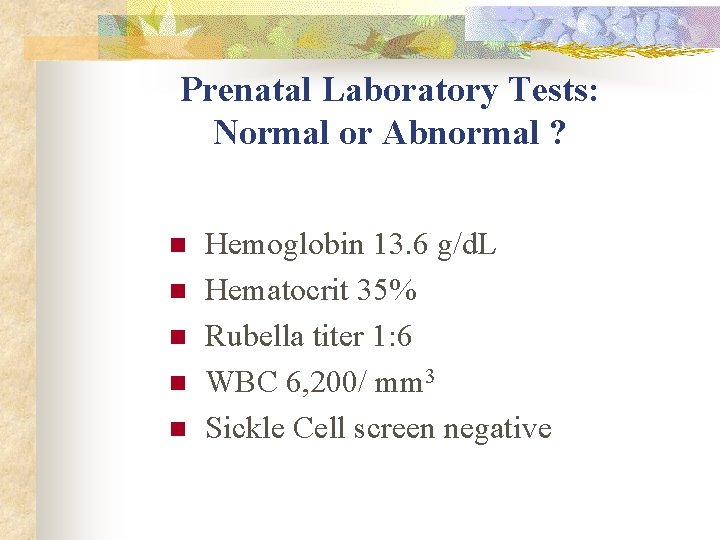
Prenatal Laboratory Tests: Normal or Abnormal ? n n n Hemoglobin 13. 6 g/d. L Hematocrit 35% Rubella titer 1: 6 WBC 6, 200/ mm 3 Sickle Cell screen negative
Prenatal Self-Care Measures n n n Breast tenderness Leg cramps Nausea Constipation Backache
Risk Factors n n n Definition Social / Personal Preexisting medical disorders Obstetric considerations Problems associated with current pregnancy
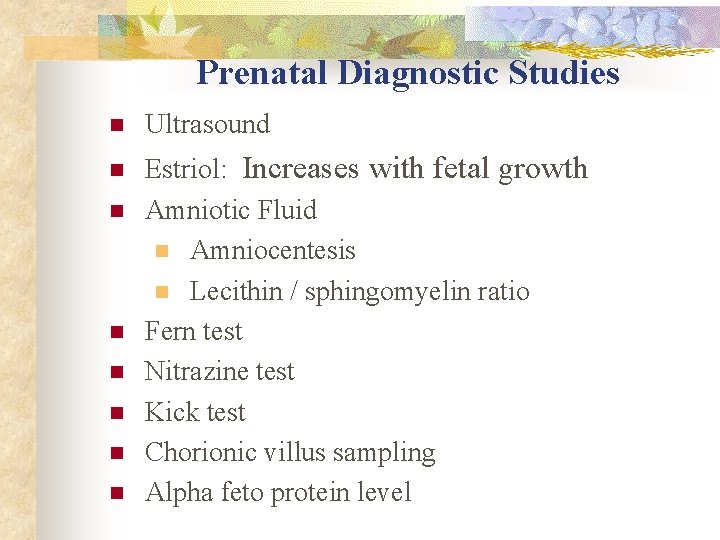
Prenatal Diagnostic Studies n Ultrasound n Estriol: Increases with fetal growth Amniotic Fluid n Amniocentesis n Lecithin / sphingomyelin ratio Fern test Nitrazine test Kick test Chorionic villus sampling Alpha feto protein level n n n
Level I Ultrasound n n n n n Basic Detect gestational sac (5 weeks after LMP) Identify number of fetuses Document fetal life Detect gross fetal structural anomalies Estimate gestational age Determine fetal position Locate the placenta Estimate amniotic fluid volume Evaluate maternal pelvic masses
Level II Ultrasound n n n Evaluate gestational age Measure fetal growth Perform specific examinations of the brain, heart, kidney, and cord insertion Quantify amniotic fluid volume Determine placental location Performed after 18 weeks
List two advantages of prenatal ultrasound assessment for the mother and fetus.
Tests of Fetal Well-Being n n n Ultrasound Amniocentesis Nonstress Test (NST) Contraction Stress Test (CST) Breast Self-Stimulation Test (BSST)
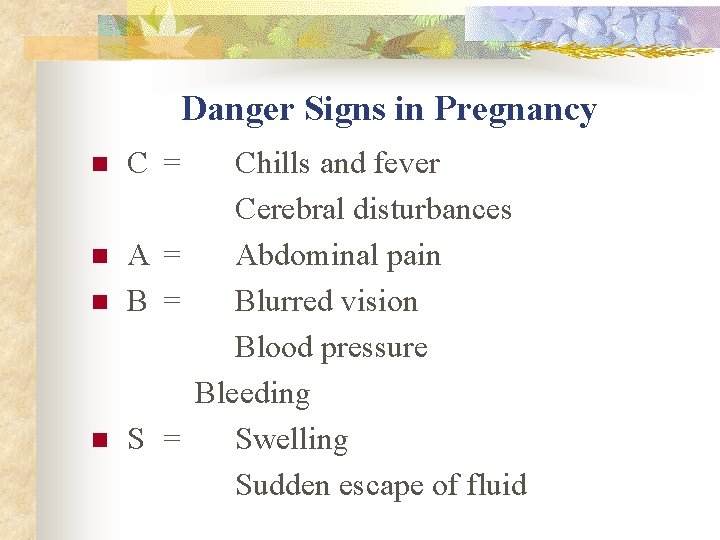
Danger Signs in Pregnancy n n C = Chills and fever Cerebral disturbances A = Abdominal pain B = Blurred vision Blood pressure Bleeding S = Swelling Sudden escape of fluid
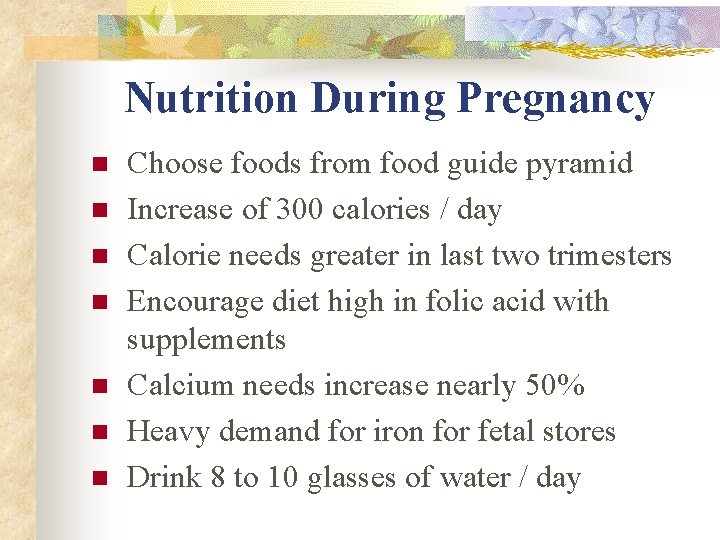
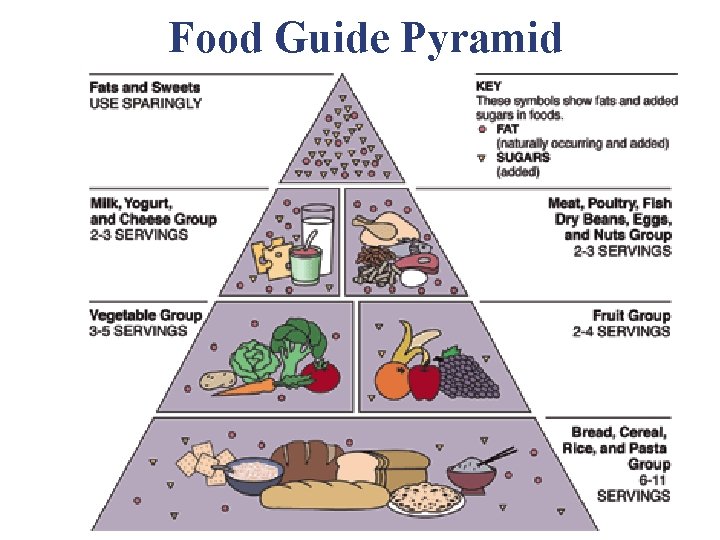
Nutrition During Pregnancy n n n n Choose foods from food guide pyramid Increase of 300 calories / day Calorie needs greater in last two trimesters Encourage diet high in folic acid with supplements Calcium needs increase nearly 50% Heavy demand for iron for fetal stores Drink 8 to 10 glasses of water / day
Food Guide Pyramid
Vegetarianism n n n Need ample and complete proteins from dairy products and eggs Protein from brown rice and whole wheat, legumes, nuts, cooked and fresh vegetables and fruits Vitamin B 12 supplement
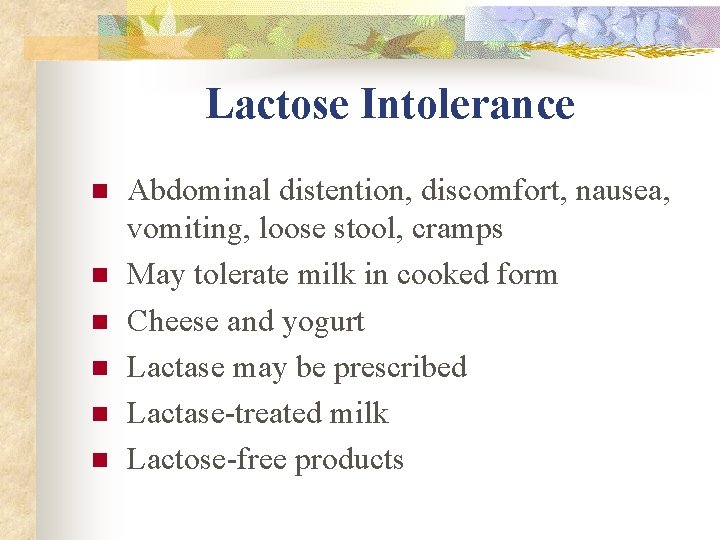
Lactose Intolerance n n n Abdominal distention, discomfort, nausea, vomiting, loose stool, cramps May tolerate milk in cooked form Cheese and yogurt Lactase may be prescribed Lactase-treated milk Lactose-free products
Pica n n n Non-nutritive eating Associated with poverty and inadequate diets Iron deficiency anemia
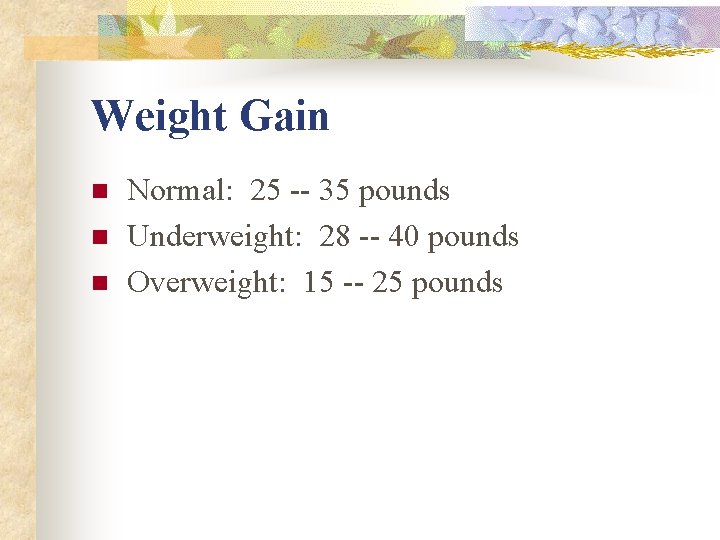
Weight Gain n Normal: 25 -- 35 pounds Underweight: 28 -- 40 pounds Overweight: 15 -- 25 pounds
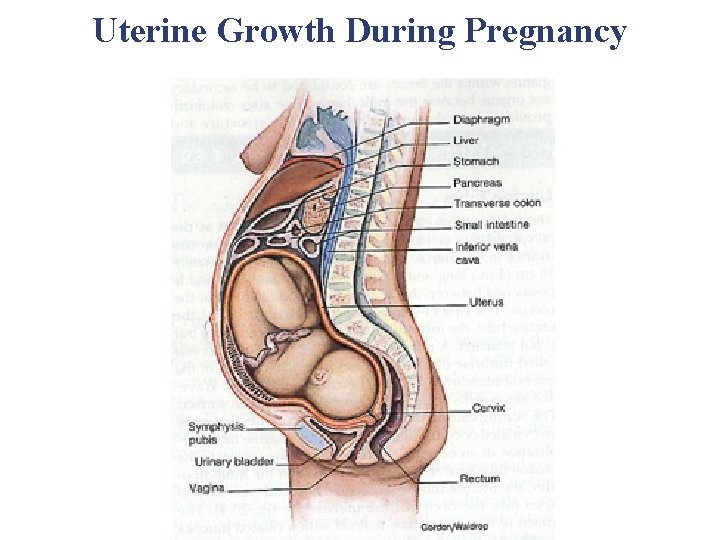
Uterine Growth During Pregnancy F
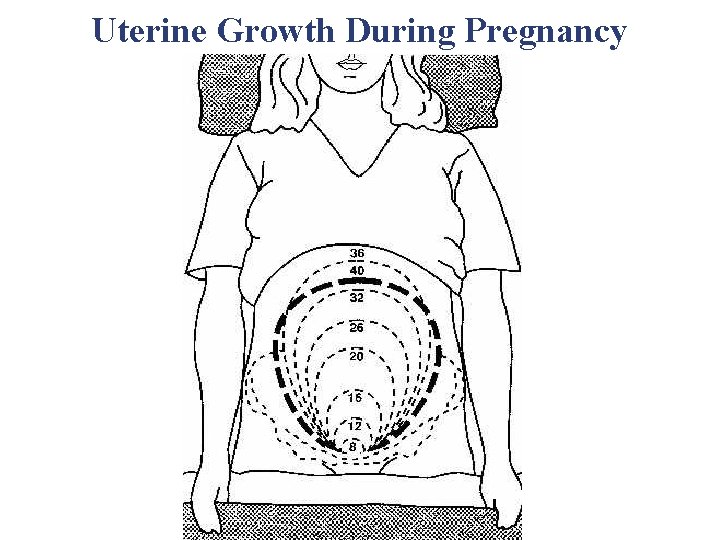
Uterine Growth During Pregnancy
What is the average pattern of weight gain during each trimester of pregnancy?
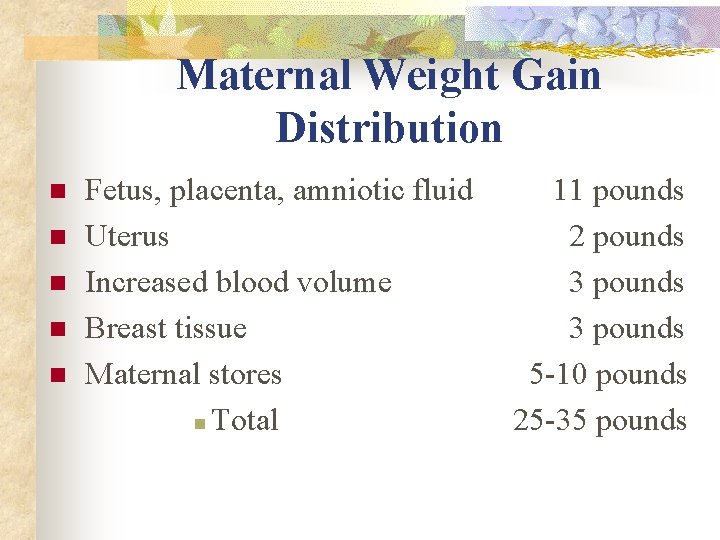
Maternal Weight Gain Distribution n n Fetus, placenta, amniotic fluid Uterus Increased blood volume Breast tissue Maternal stores n Total 11 pounds 2 pounds 3 pounds 5 -10 pounds 25 -35 pounds
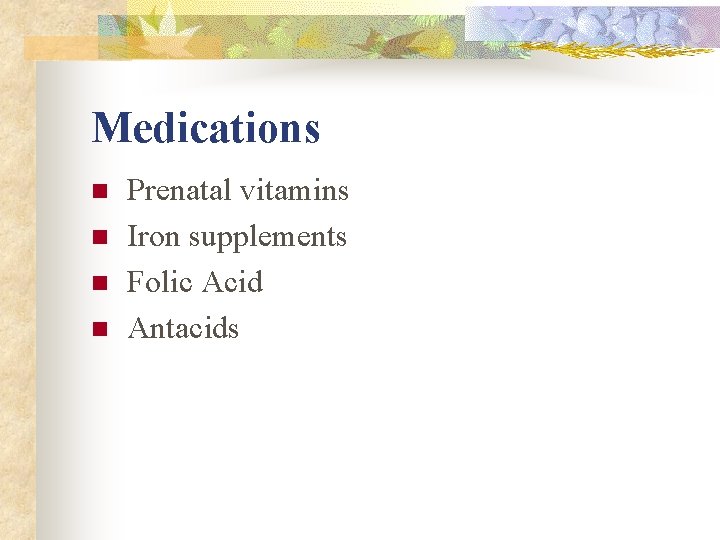
Medications n n Prenatal vitamins Iron supplements Folic Acid Antacids
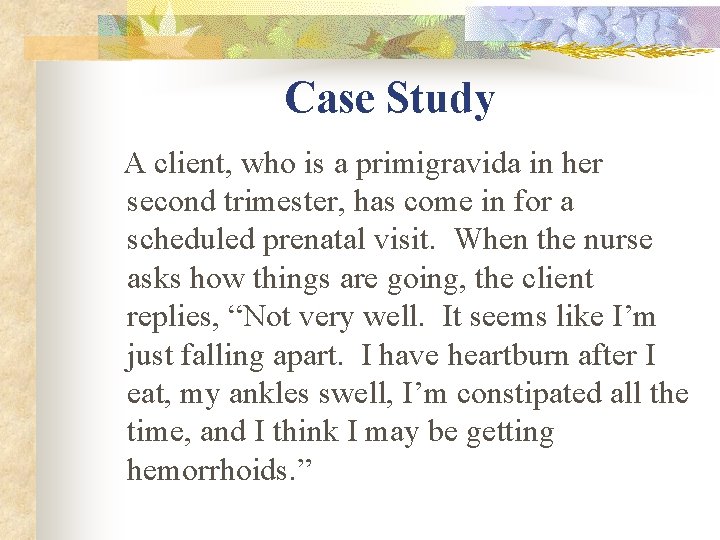
Case Study A client, who is a primigravida in her second trimester, has come in for a scheduled prenatal visit. When the nurse asks how things are going, the client replies, “Not very well. It seems like I’m just falling apart. I have heartburn after I eat, my ankles swell, I’m constipated all the time, and I think I may be getting hemorrhoids. ”