
PreMongol China THE TANG AND THE SONG DYNASTIES
- Slides: 7
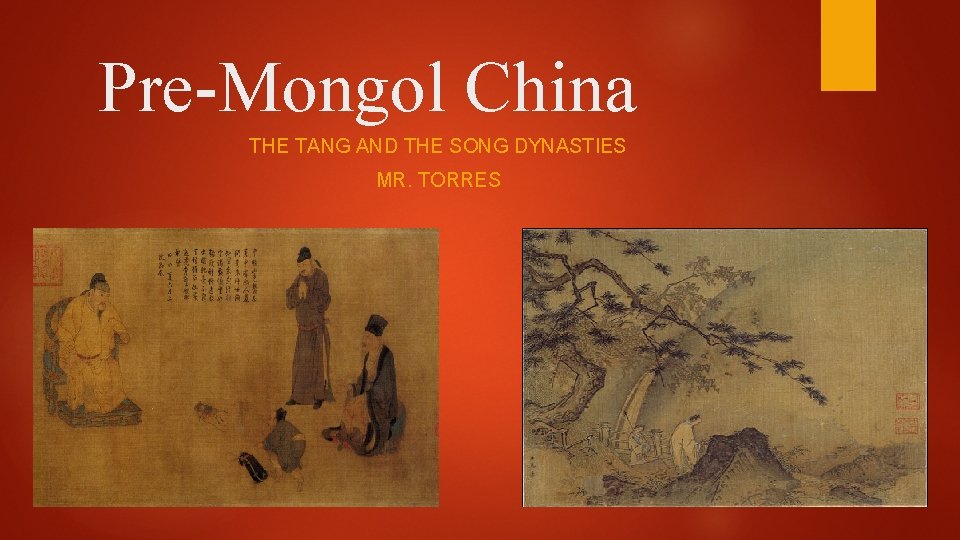
Pre-Mongol China THE TANG AND THE SONG DYNASTIES MR. TORRES
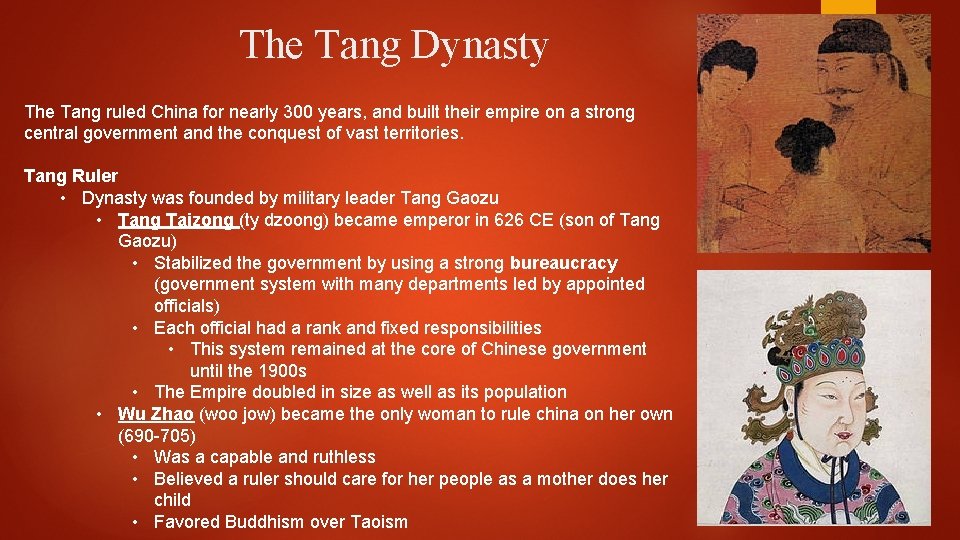
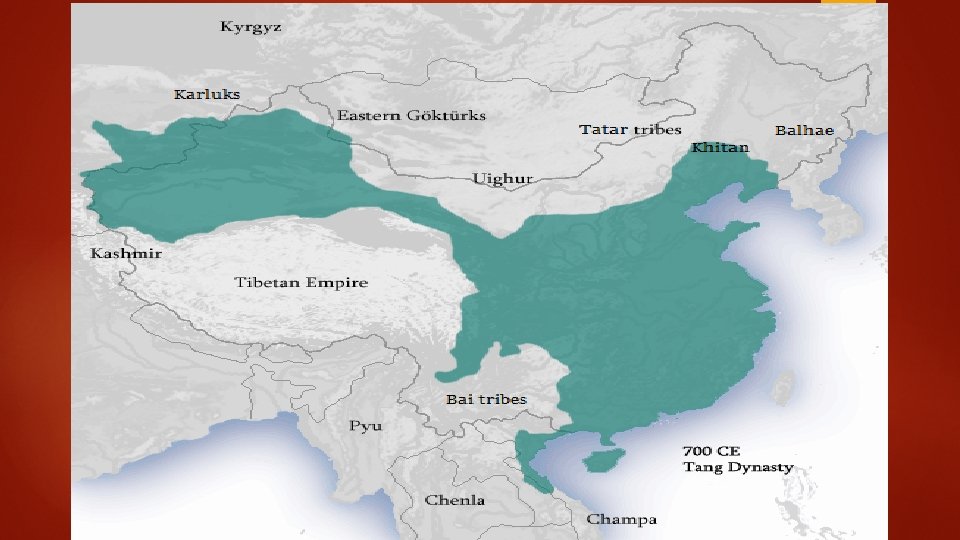
The Tang Dynasty The Tang ruled China for nearly 300 years, and built their empire on a strong central government and the conquest of vast territories. Tang Ruler • Dynasty was founded by military leader Tang Gaozu • Tang Taizong (ty dzoong) became emperor in 626 CE (son of Tang Gaozu) • Stabilized the government by using a strong bureaucracy (government system with many departments led by appointed officials) • Each official had a rank and fixed responsibilities • This system remained at the core of Chinese government until the 1900 s • The Empire doubled in size as well as its population • Wu Zhao (woo jow) became the only woman to rule china on her own (690 -705) • Was a capable and ruthless • Believed a ruler should care for her people as a mother does her child • Favored Buddhism over Taoism
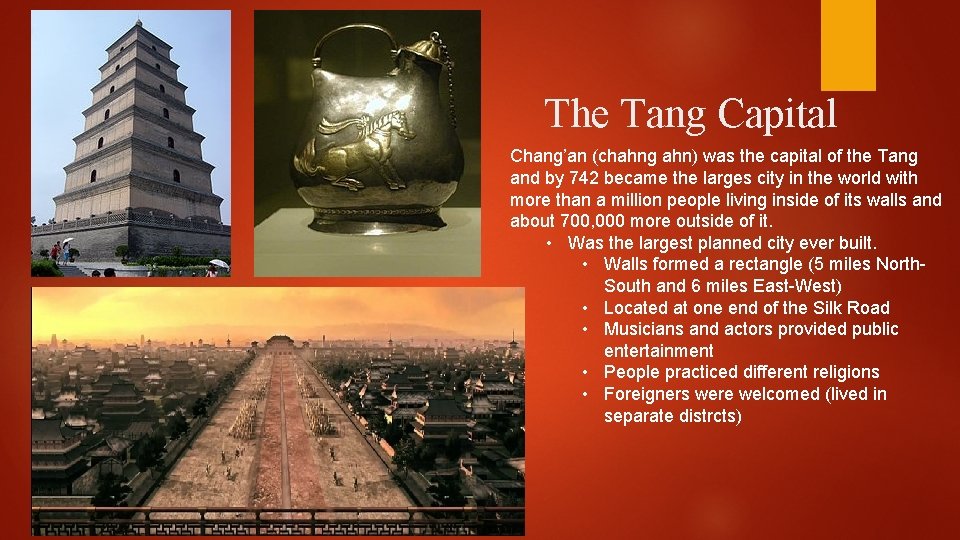
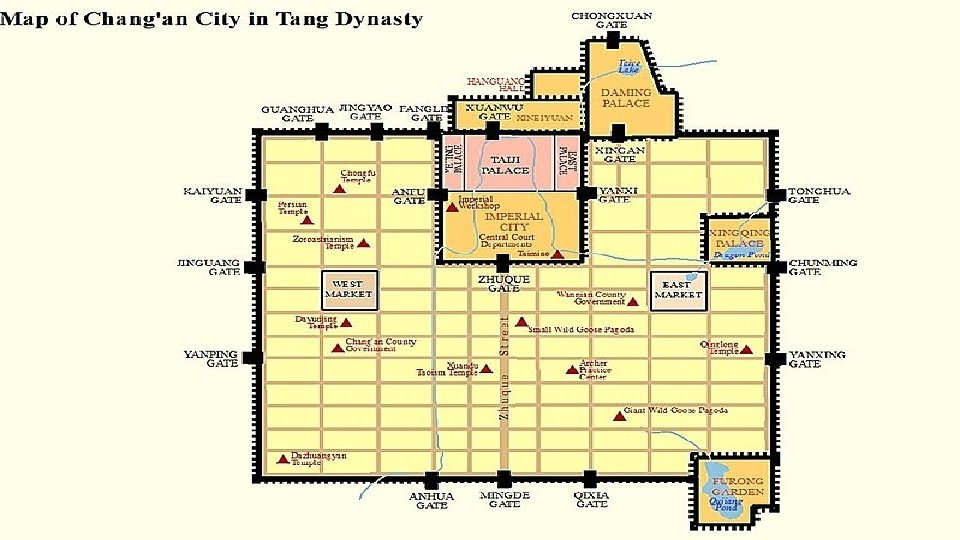
The Tang Capital Chang’an (chahng ahn) was the capital of the Tang and by 742 became the larges city in the world with more than a million people living inside of its walls and about 700, 000 more outside of it. • Was the largest planned city ever built. • Walls formed a rectangle (5 miles North. South and 6 miles East-West) • Located at one end of the Silk Road • Musicians and actors provided public entertainment • People practiced different religions • Foreigners were welcomed (lived in separate distrcts)
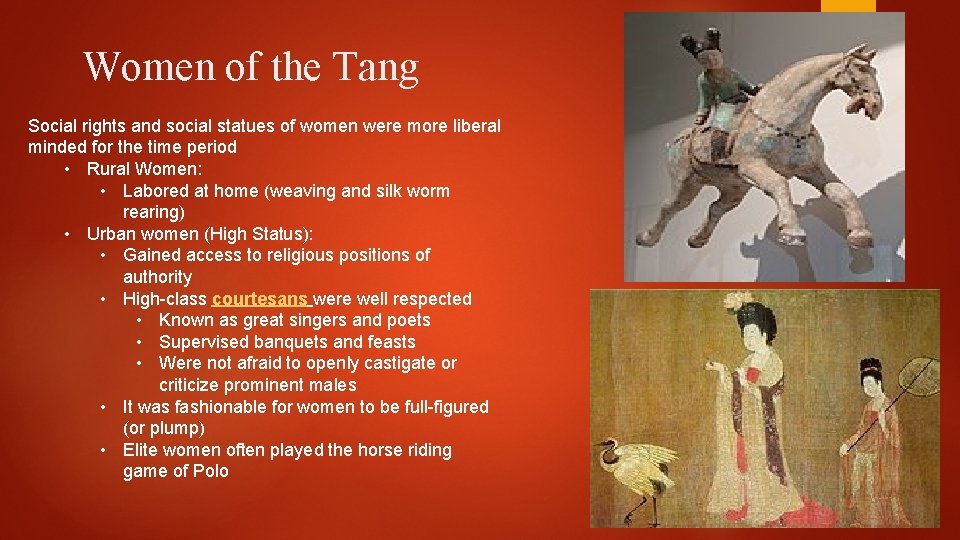
Women of the Tang Social rights and social statues of women were more liberal minded for the time period • Rural Women: • Labored at home (weaving and silk worm rearing) • Urban women (High Status): • Gained access to religious positions of authority • High-class courtesans were well respected • Known as great singers and poets • Supervised banquets and feasts • Were not afraid to openly castigate or criticize prominent males • It was fashionable for women to be full-figured (or plump) • Elite women often played the horse riding game of Polo
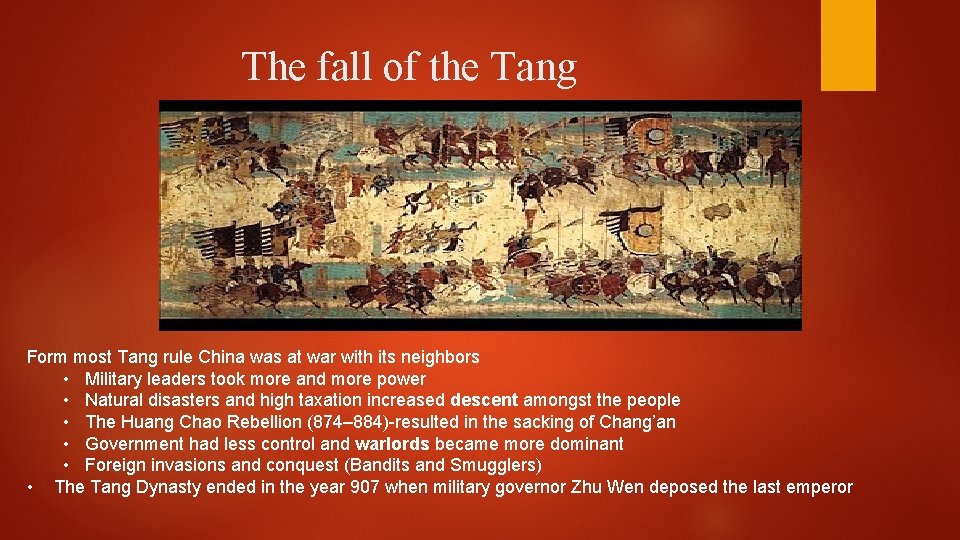
The fall of the Tang Form most Tang rule China was at war with its neighbors • Military leaders took more and more power • Natural disasters and high taxation increased descent amongst the people • The Huang Chao Rebellion (874– 884)-resulted in the sacking of Chang’an • Government had less control and warlords became more dominant • Foreign invasions and conquest (Bandits and Smugglers) • The Tang Dynasty ended in the year 907 when military governor Zhu Wen deposed the last emperor