
PREMENSTRUAL SYNDROME DEFINITION Include both physical and psychological
PREMENSTRUAL SYNDROME
DEFINITION Include both physical and psychological symptoms, whose incidence is related to the menstrual cycle. Symptoms are experienced cyclically, usually from 2 to 14 days before the start of menstruation.
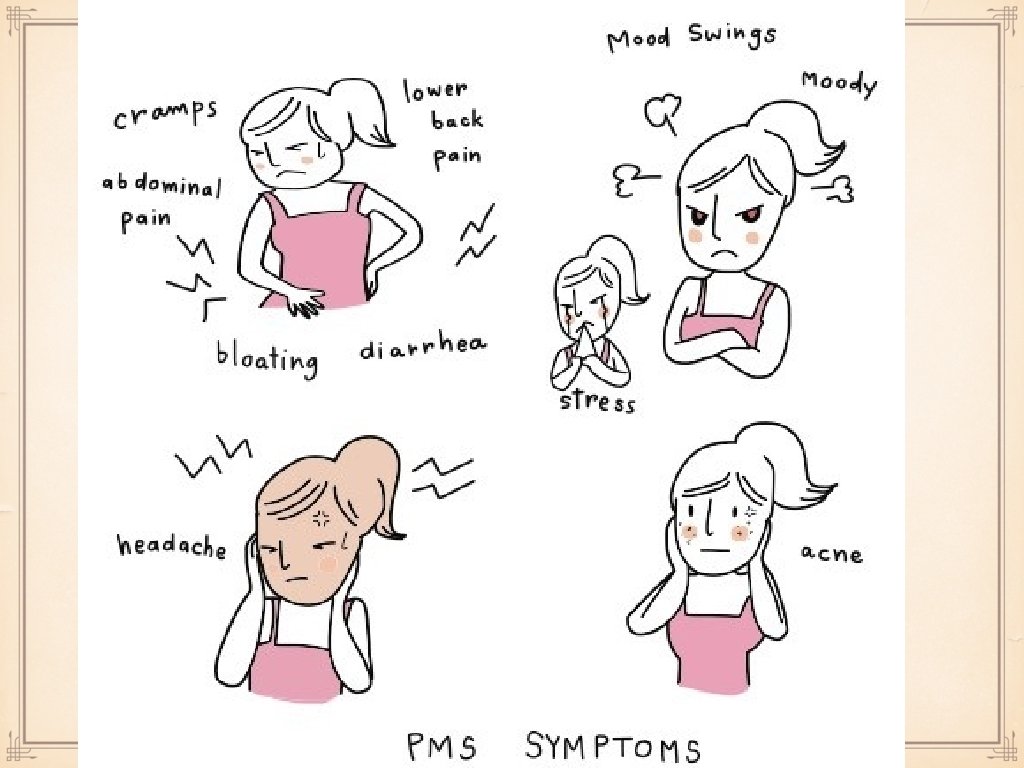
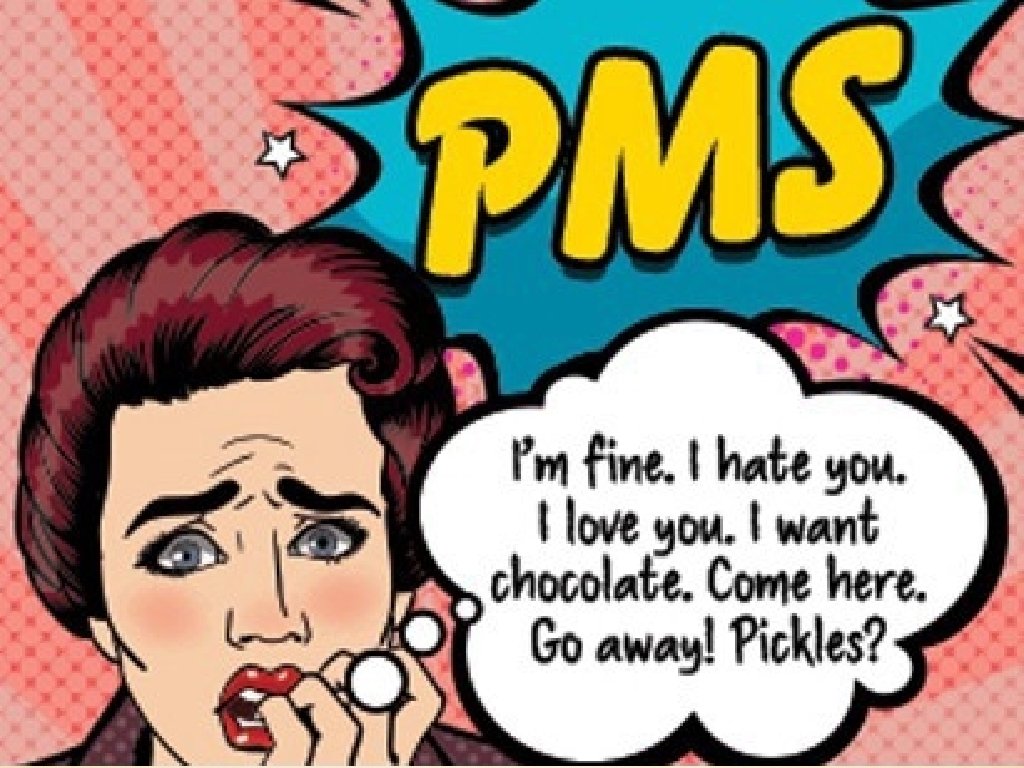
SYMPTOMS Psychological symptoms include depressed mood, mood swings, anxiety, irritability and loss of confidence. Lack of libido, difficulty in concentrating, forgetfulness and tiredness may also occur. Physical symptoms include bloating and breast pain. Behavioral symptoms include reduced cognitive ability and aggression.
SEVERITY In mild PMS, symptoms do not interfere with the woman’s personal, social and professional life. In moderate PMS, symptoms interfere with the woman’s personal, social and professional life, and daily functioning is possible. In severe PMS, the woman withdraws from social and professional activities and cannot function normally.
MANAGEMENT Often explanation, reassurance and support may be all that are required. A third-generation combined oral contraceptive may be prescribed for sever cases, which are thought to reduce symptoms of PMS.
Sometimes SSRI antidepressants such as fluoxetine are prescribed, which appear to reduce mood swings. Talking therapies such as cognitive behavioural therapy (CBT) may also be helpful. lifestyle advice that includes to take regular, frequent (2– 3 hourly), small, balanced meals rich in complex carbohydrates to reduce symptoms of bloating.
Regular exercise is said to give relief from symptoms, and regular sleep will also help with mood Smoking cessation and moderation in alcohol consumption are also sensible.

COMPLEMENTARY THERAPIES AND DIETARY SUPPLEMENTS
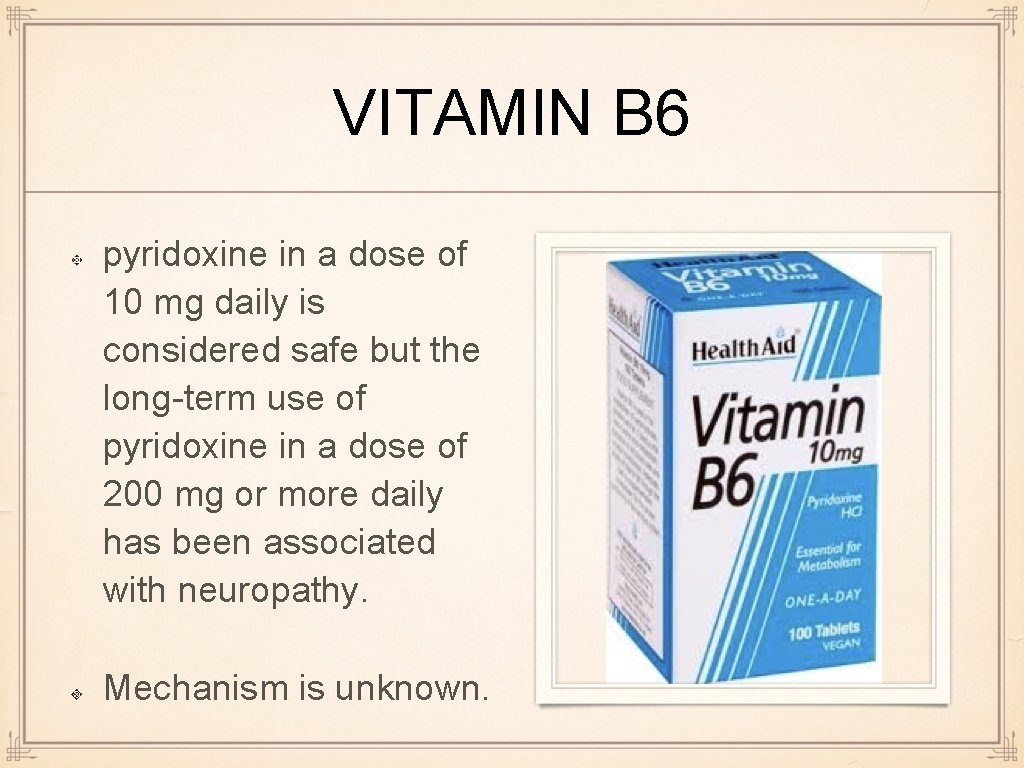
VITAMIN B 6 pyridoxine in a dose of 10 mg daily is considered safe but the long-term use of pyridoxine in a dose of 200 mg or more daily has been associated with neuropathy. Mechanism is unknown.
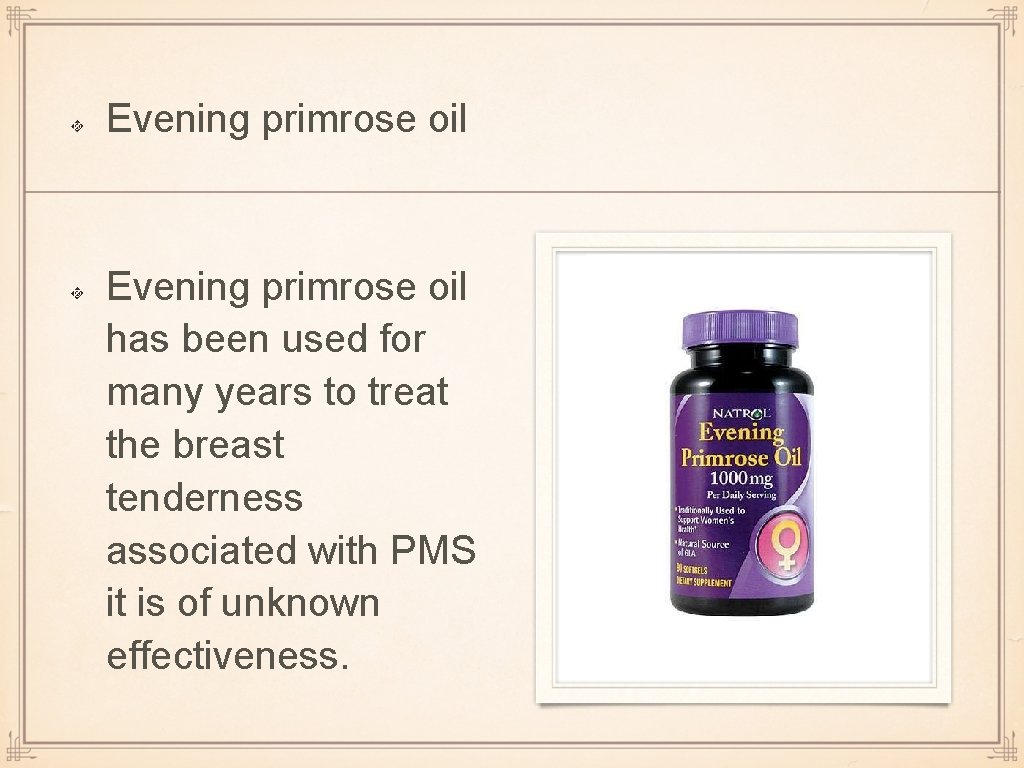
Evening primrose oil has been used for many years to treat the breast tenderness associated with PMS it is of unknown effectiveness.
mechanism of action of evening primrose oil is said to be linked to effects on prostaglandins, particularly in increasing the level of prostaglandin E, which appears to be depleted in some women with PMS.

- Slides: 14