
Preliminary Detailed Design Review Phase I Assembly Stations
Preliminary Detailed Design Review Phase I: Assembly Stations 1 -5 P 13458: Dresser-Rand Compressor Assembly Line Team Members: Lauren Kraft –Project Manager, Nick Feng – IE Cole Bowden – ME, Shawn Moseley – ME
Agenda �Key Objectives of this Review �Problem Statement �Preliminary Detailed Design of Caster System: �Caster Design �Cart Design �Universal Frame Interface �Frame and Caster Plate Stress Analysis �Design Risks Identified �Detailed Design Needs �Ergonomic Justification �Process Layout Update �Economic Analysis �Project Outlook & Timeline
Key Objectives of this Review Prototype Design Overall Process layout �Catch mistakes �Receive feedback on �Improve design from current layout �Consider alternatives and application of lean principles �What are we missing? operator feedback �Specs (needs) are addressed �Risks are addressed �Decisions are made to further design
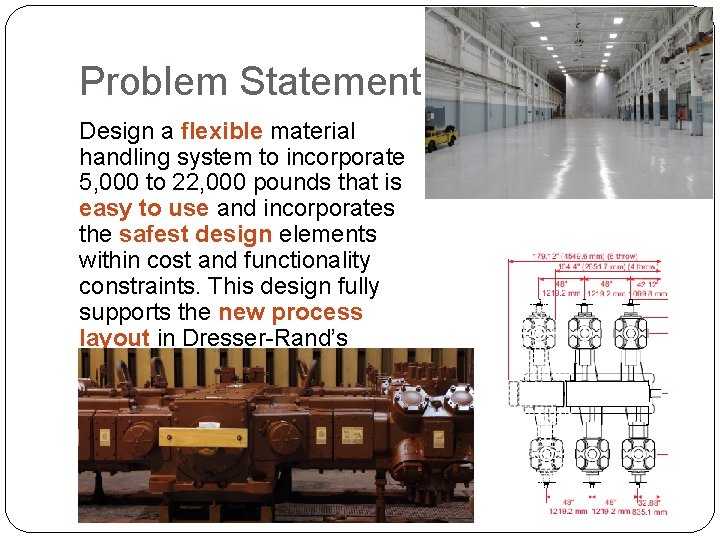
Problem Statement Design a flexible material handling system to incorporate 5, 000 to 22, 000 pounds that is easy to use and incorporates the safest design elements within cost and functionality constraints. This design fully supports the new process layout in Dresser-Rand’s strategic project.
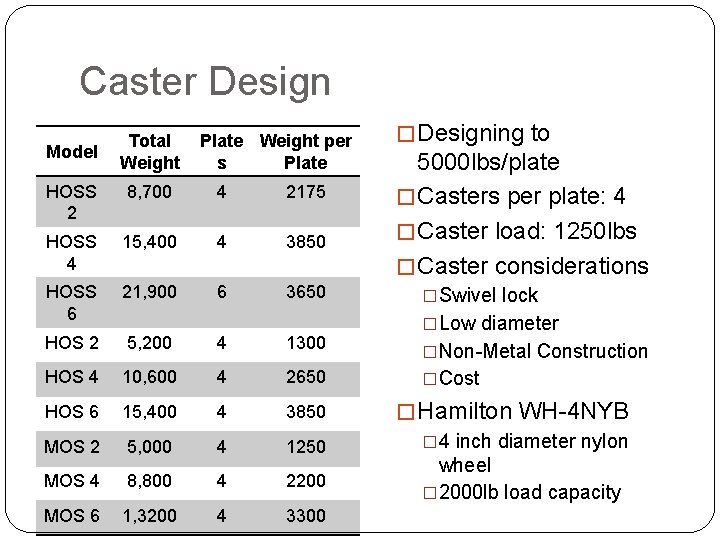
Caster Design Model Total Weight Plate Weight per s Plate HOSS 2 8, 700 4 2175 HOSS 4 15, 400 4 3850 HOSS 6 21, 900 6 3650 HOS 2 5, 200 4 1300 HOS 4 10, 600 4 2650 HOS 6 15, 400 4 3850 MOS 2 5, 000 4 1250 MOS 4 8, 800 4 2200 MOS 6 1, 3200 4 3300 � Designing to 5000 lbs/plate � Casters per plate: 4 � Caster load: 1250 lbs � Caster considerations �Swivel lock �Low diameter �Non-Metal Construction �Cost � Hamilton WH-4 NYB � 4 inch diameter nylon wheel � 2000 lb load capacity
Swivel Lock Casters �Locking casters allow for strict 2 directional motion �Each caster must be turned and locked by hand � 4 unidirectional caster sets will over-constrain the system �Solves guidance issue �Creates a directional control issue �Creates an ergonomics issue

Preliminary Cart Design
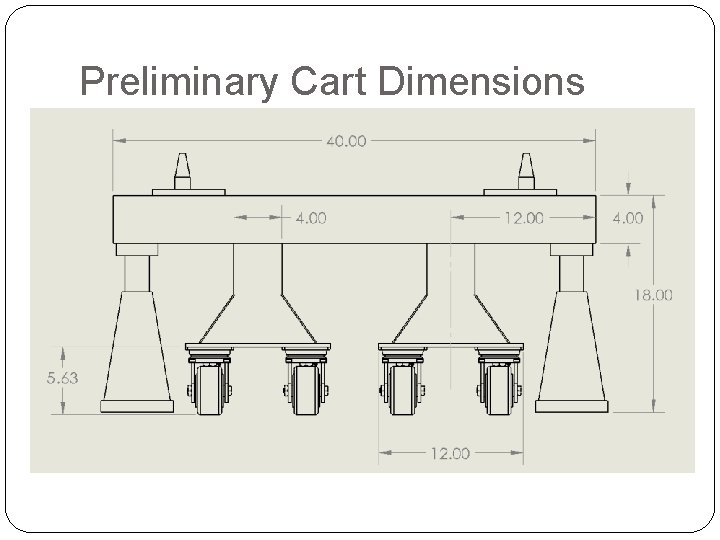
Preliminary Cart Dimensions
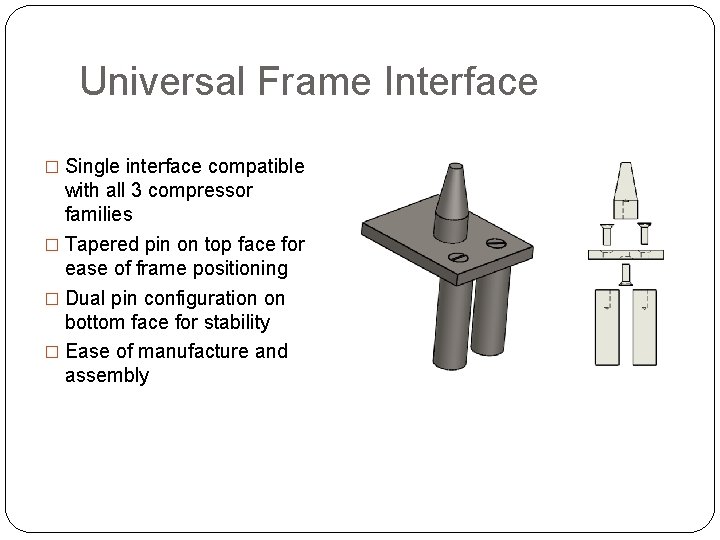
Universal Frame Interface � Single interface compatible with all 3 compressor families � Tapered pin on top face for ease of frame positioning � Dual pin configuration on bottom face for stability � Ease of manufacture and assembly
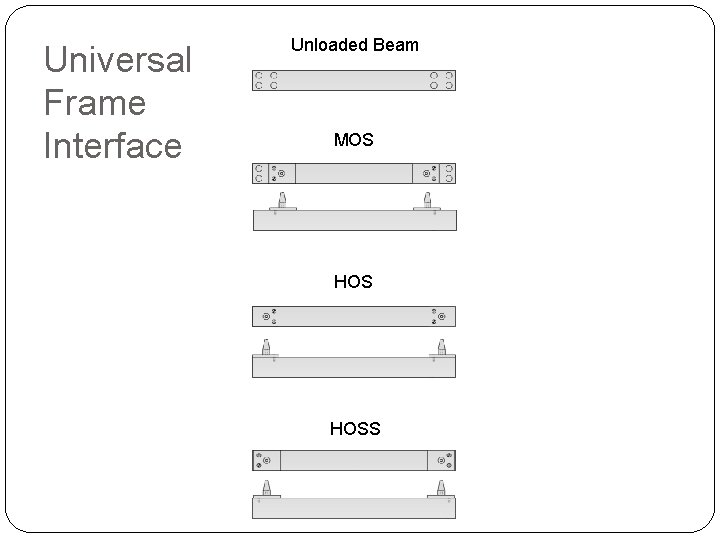
Universal Frame Interface Unloaded Beam MOS HOSS
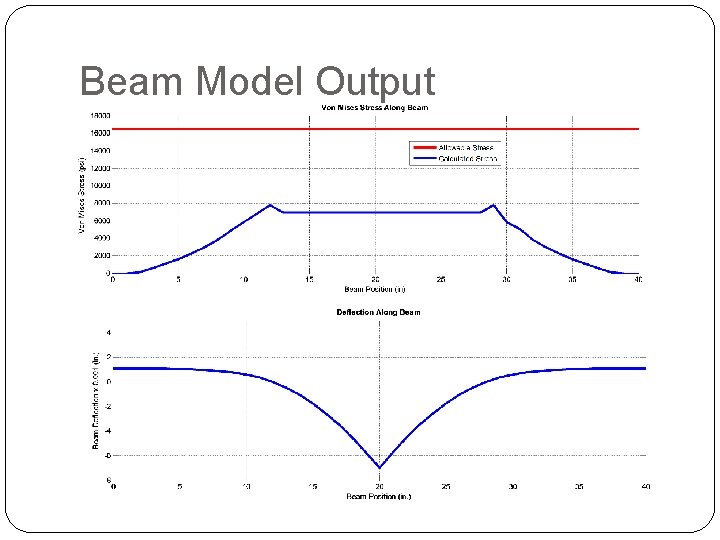
Beam Model Output
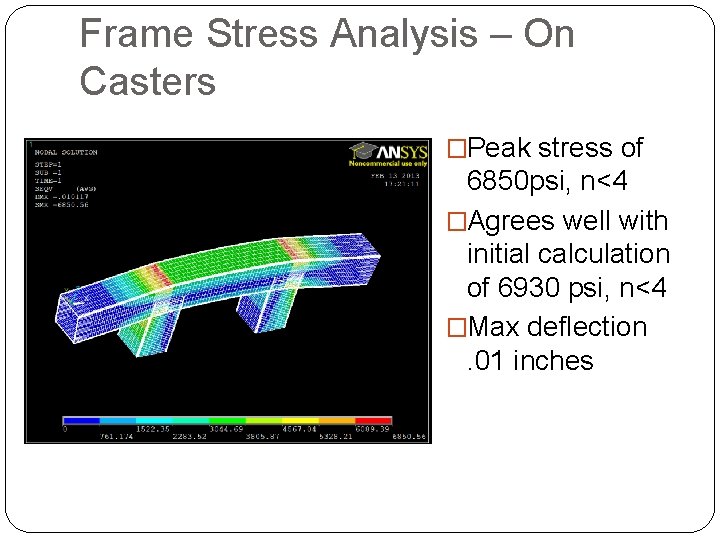
Frame Stress Analysis – On Casters �Peak stress of 6850 psi, n<4 �Agrees well with initial calculation of 6930 psi, n<4 �Max deflection. 01 inches
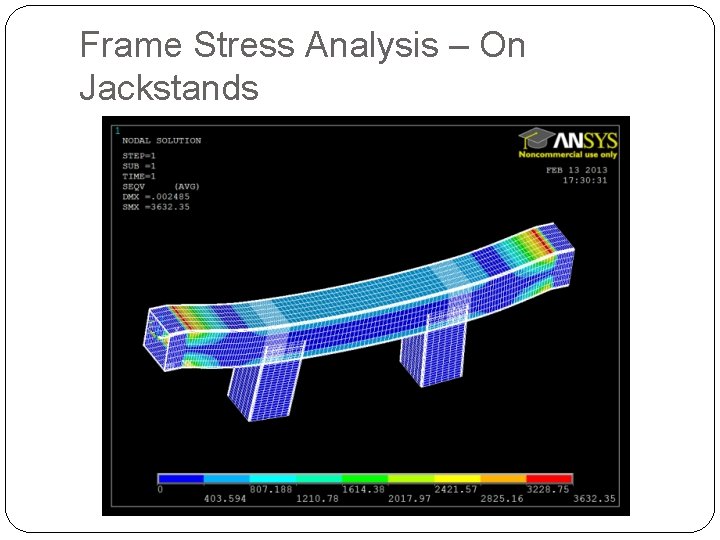
Frame Stress Analysis – On Jackstands
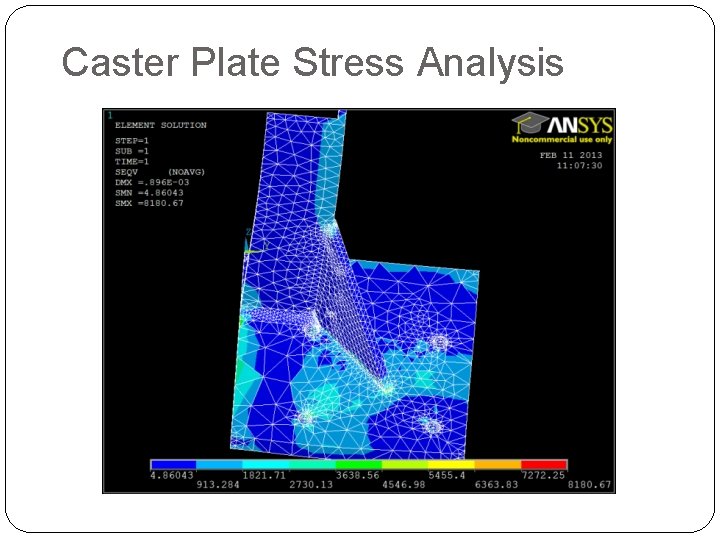
Caster Plate Stress Analysis
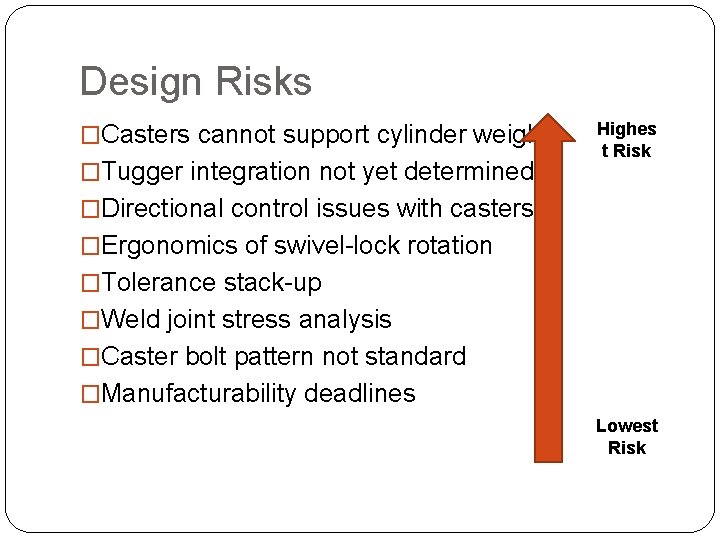
Design Risks �Casters cannot support cylinder weights �Tugger integration not yet determined Highes t Risk �Directional control issues with casters �Ergonomics of swivel-lock rotation �Tolerance stack-up �Weld joint stress analysis �Caster bolt pattern not standard �Manufacturability deadlines Lowest Risk
Detailed Design Needs �Dimensioned frame drawings with tolerance �Design safety standards (if applicable) �Finalized cylinder attach decisions �Finalized caster decisions �Casters or air bearings decision
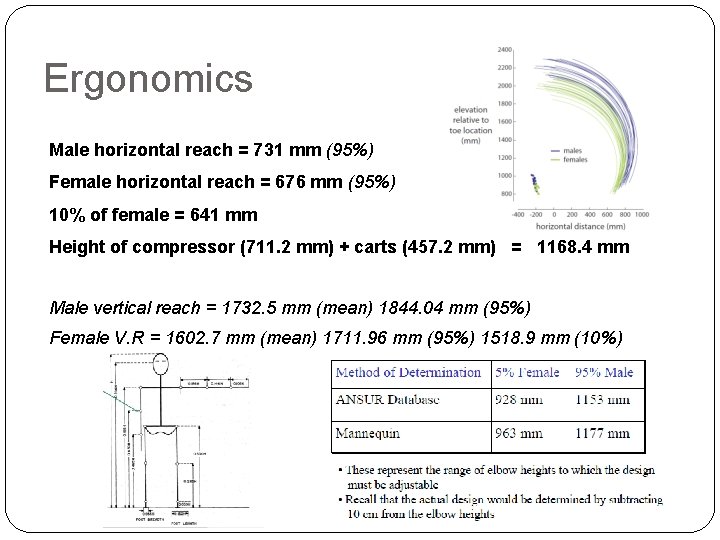
Ergonomics Male horizontal reach = 731 mm (95%) Female horizontal reach = 676 mm (95%) 10% of female = 641 mm Height of compressor (711. 2 mm) + carts (457. 2 mm) = 1168. 4 mm Male vertical reach = 1732. 5 mm (mean) 1844. 04 mm (95%) Female V. R = 1602. 7 mm (mean) 1711. 96 mm (95%) 1518. 9 mm (10%)
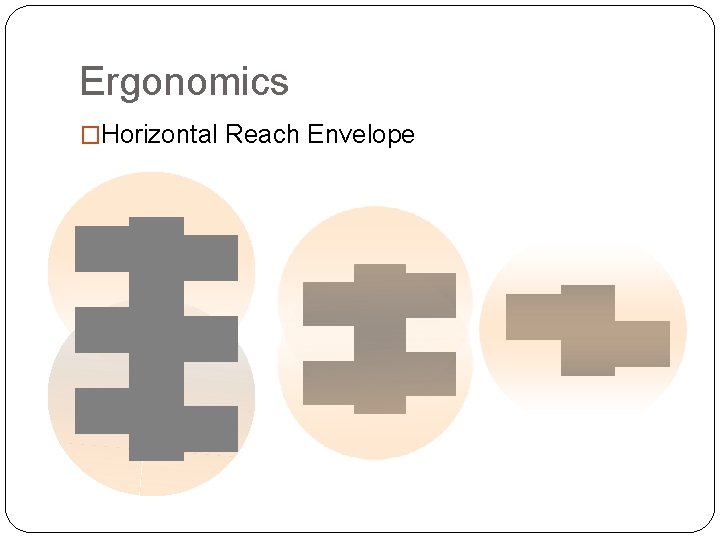
Ergonomics �Horizontal Reach Envelope
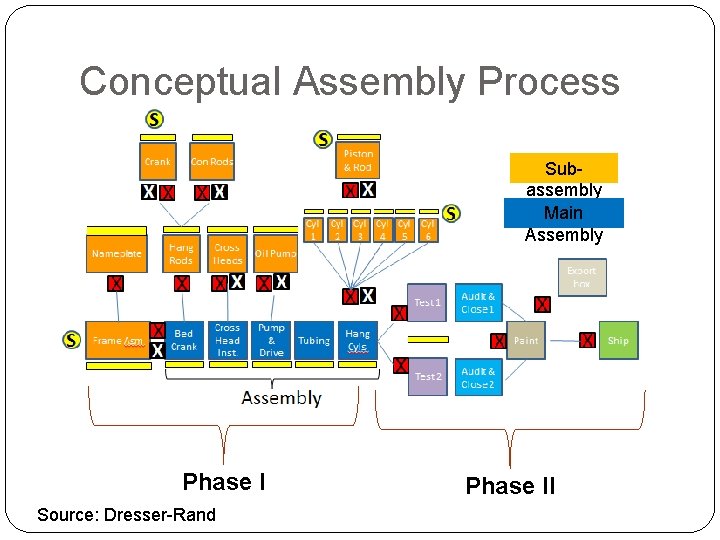
Conceptual Assembly Process Subassembly Main Assembly Phase I Source: Dresser-Rand Phase II

Process Layout
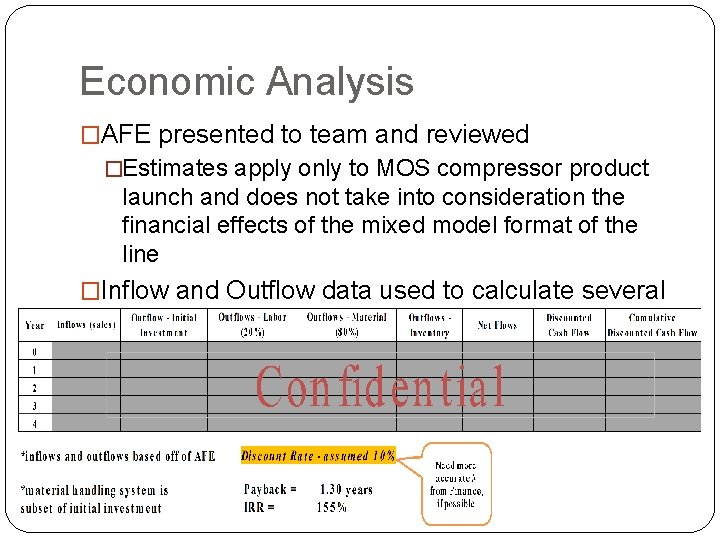
Economic Analysis �AFE presented to team and reviewed �Estimates apply only to MOS compressor product launch and does not take into consideration the financial effects of the mixed model format of the line �Inflow and Outflow data used to calculate several figures to justify the pursuit of this project
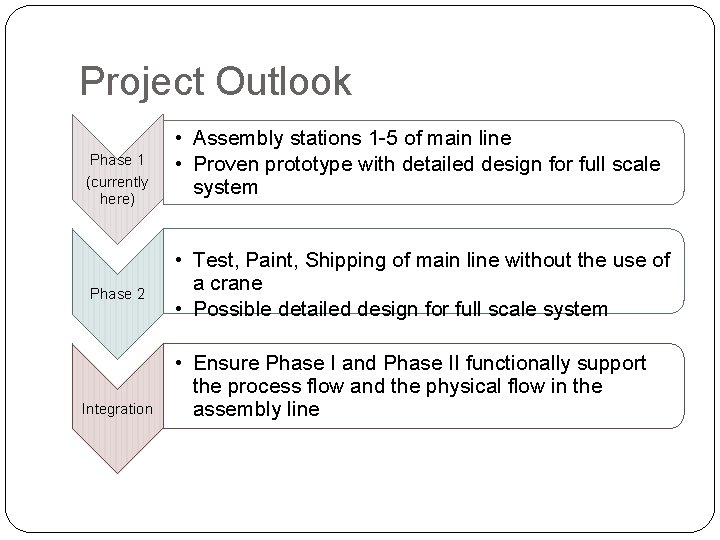
Project Outlook Phase 1 (currently here) Phase 2 Integration • Assembly stations 1 -5 of main line • Proven prototype with detailed design for full scale system • Test, Paint, Shipping of main line without the use of a crane • Possible detailed design for full scale system • Ensure Phase I and Phase II functionally support the process flow and the physical flow in the assembly line
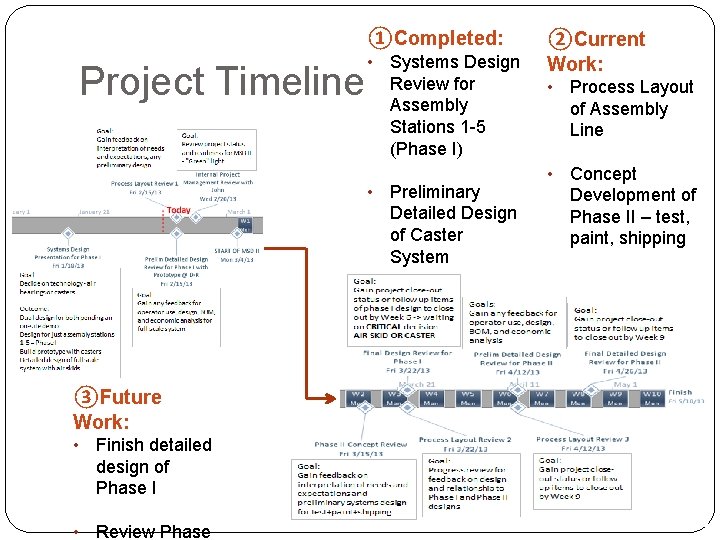
①Completed: Project Timeline • Systems Design Review for Assembly Stations 1 -5 (Phase I) • Preliminary Detailed Design of Caster System ③Future Work: • Finish detailed design of Phase I • Review Phase ②Current Work: • Process Layout of Assembly Line • Concept Development of Phase II – test, paint, shipping
- Slides: 23