
PREK CHILD DEVELOPMENT CASE STUDY Lindsey Shotwell TTE

- Slides: 41
PRE-K CHILD DEVELOPMENT CASE STUDY Lindsey Shotwell TTE 303 – Gaches University of Arizona
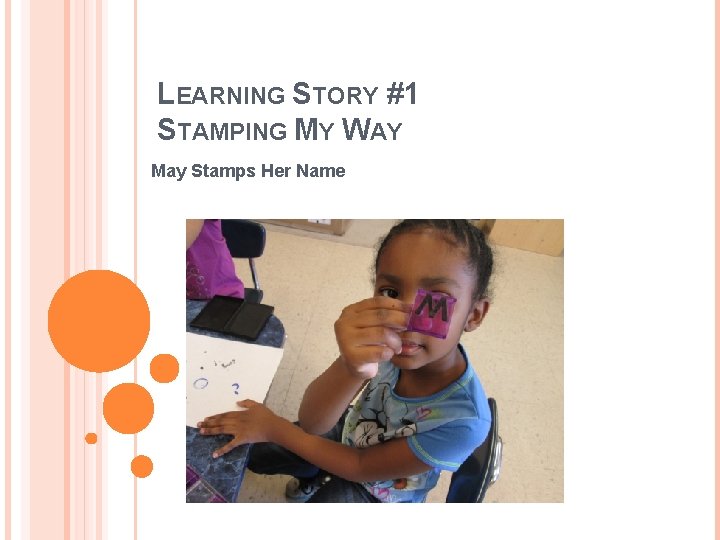
LEARNING STORY #1 STAMPING MY WAY May Stamps Her Name
We introduced stamps in the Literacy Center in the classroom today; May helped us identify the materials when the teachers asked if anyone knew what they were.
May went to the Literacy Center during free exploration and pulled the lowercase letter stamps over to her to work with.
May tested the materials by choosing a letter and putting it in the ink and transferring it to the paper she had in front of her to see how it would look, she did this a couple times with a few different letters.
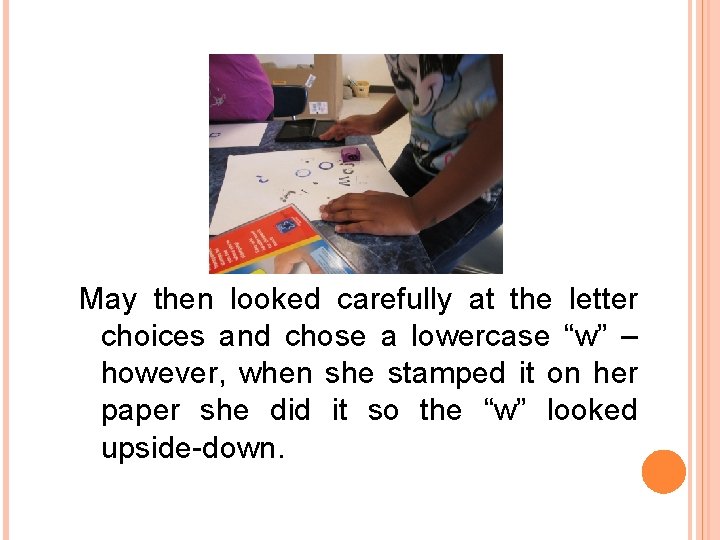
May then looked carefully at the letter choices and chose a lowercase “w” – however, when she stamped it on her paper she did it so the “w” looked upside-down.
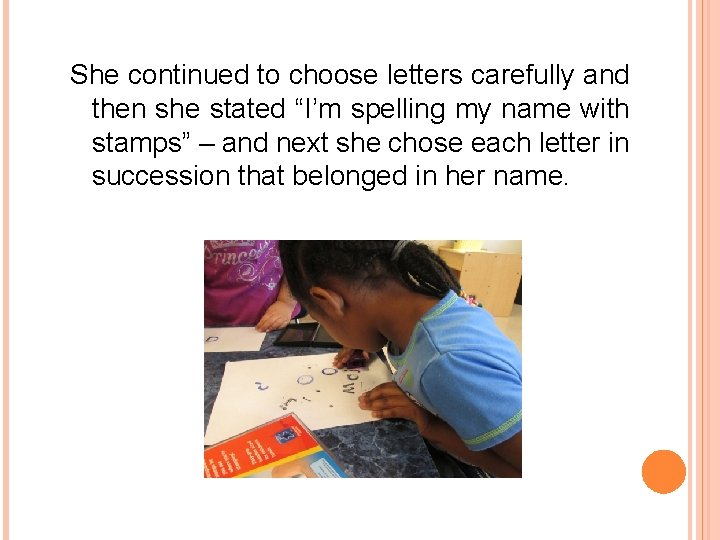
She continued to choose letters carefully and then she stated “I’m spelling my name with stamps” – and next she chose each letter in succession that belonged in her name.
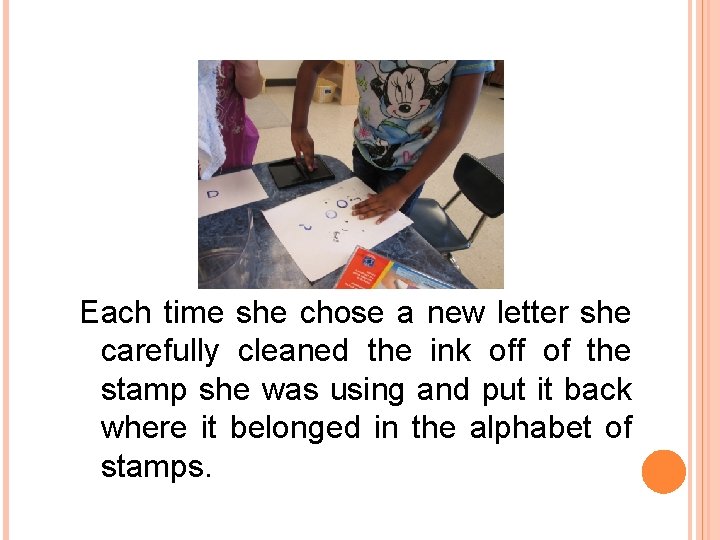
Each time she chose a new letter she carefully cleaned the ink off of the stamp she was using and put it back where it belonged in the alphabet of stamps.
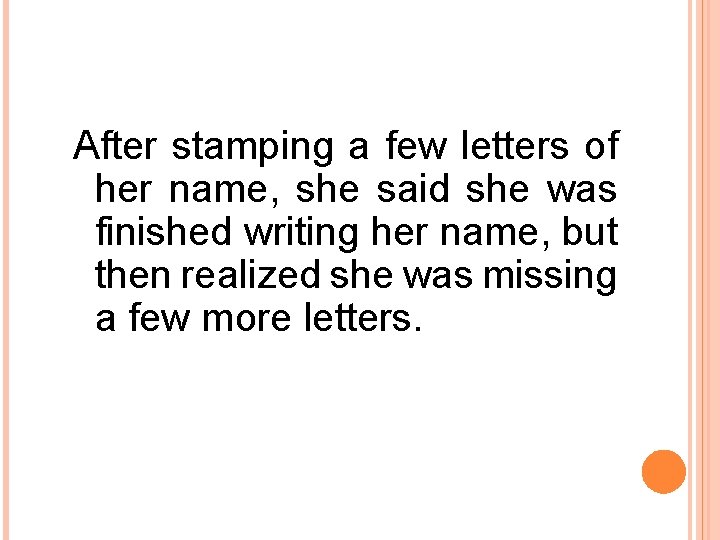
After stamping a few letters of her name, she said she was finished writing her name, but then realized she was missing a few more letters.
She put the rest of her name near the top of the paper, she had been stamping the beginning portion on the bottom and then decided she was finished using the stamps.
WHAT THIS MEANS: May, you worked with a new material and really grasped what it meant to follow the rules that were created that day and were able to remember all of the steps – choosing one at a time, stamping carefully as to try to keep ink off your finger, wiping the ink off the stamp when you were done, and putting it back in the correct spot. You were focused on creating your name and even realized that even though you selected a “w” stamp, when turned upside down it looked like the capital “M” that you work hard at creating when you write your name. You were being an excellent observer and writer, paying attention to the details and remembering what the letters looked like and picking them out in a cluster of other letters.
OPPORTUNITIES AND POSSIBILITIES: May has a great understanding of how to spell her name and indentifying letters and the succession in which they must go. Working with May on recognizing other letters and encouraging her to spell new words could be a great next step because she is really able to grasp what it means to put letters together to make a word.
CHILD’S VOICE “I was careful with the stamps. ” “It makes me happy to work with stamps. ” “I stamp with stamps at daycare, but I stamp animals, not letters. ” -May
FAMILY’S VOICE “It’s a creative way to help them identify words and with the pictures, too. ” “It’s a creative visual for learning her letters, using stamps. ” “It’s great that she could pick out what her name’s letters are and use them correctly!” -Mom
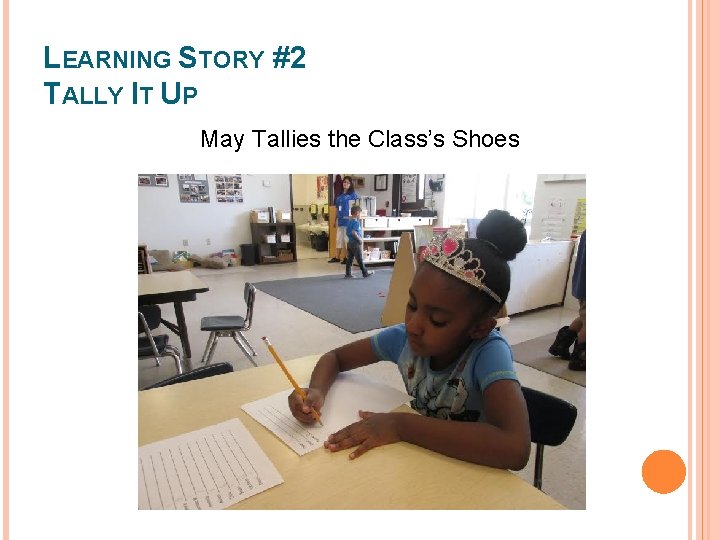
LEARNING STORY #2 TALLY IT UP May Tallies the Class’s Shoes
Today we read a book shoes, the children in have been very excited their shoes all year long, wanted to talk more different types of shoes about class about so we about
After reading the story about different types of shoes, the children went to journal about shoes and we had prepared an activity for those who wanted to explore a new way to look at shoes
May was very interested in that paper we had prepared and asked what it was and if she could try; we told her it was a survey to use to see how many shoes we had in the classroom that day
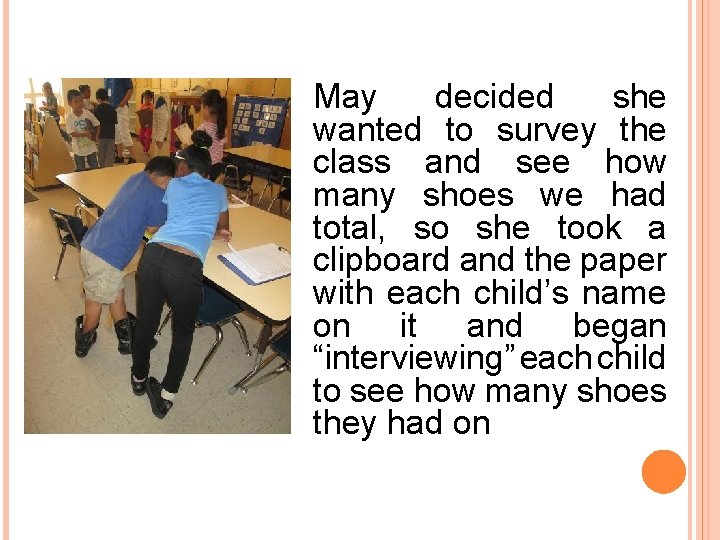
May decided she wanted to survey the class and see how many shoes we had total, so she took a clipboard and the paper with each child’s name on it and began “interviewing” each child to see how many shoes they had on
May carefully went down the list of names, asking teacher for help when she didn’t recognize the name and ask who the name belonged to and then quickly went back to her list and her survey
May realized about half way through the survey that she was tallying two tally marks for each child, and began to see the pattern of two shoes (or tallies) per child
Even though she noticed the pattern and was able make an estimated guess that each child would have two shoes and two tallies on her page, she still made sure to interview each child, just in case
Once May was finished tallying the amount of shoes for each child, she wanted to count all of the tally marks on her page to see how many shoes we had in the classroom altogether
With a small amount of help from the teacher, she was able to count all 19 children’s tally marks and was able to count all the way to 38 to get her total amount of shoes
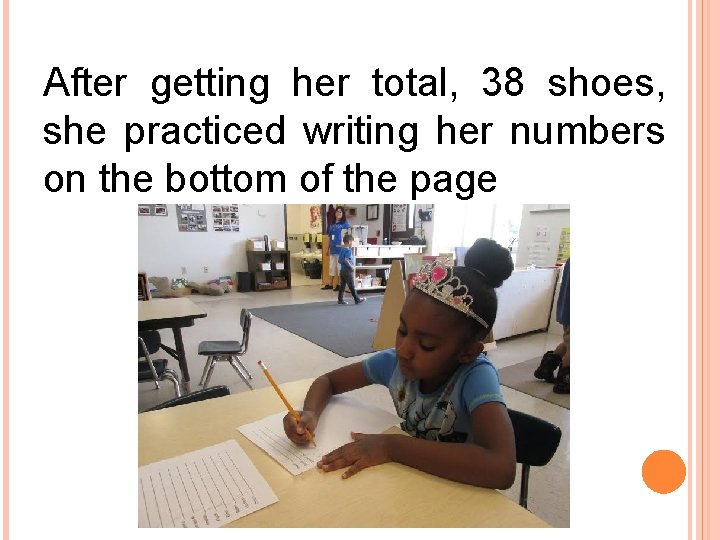
After getting her total, 38 shoes, she practiced writing her numbers on the bottom of the page
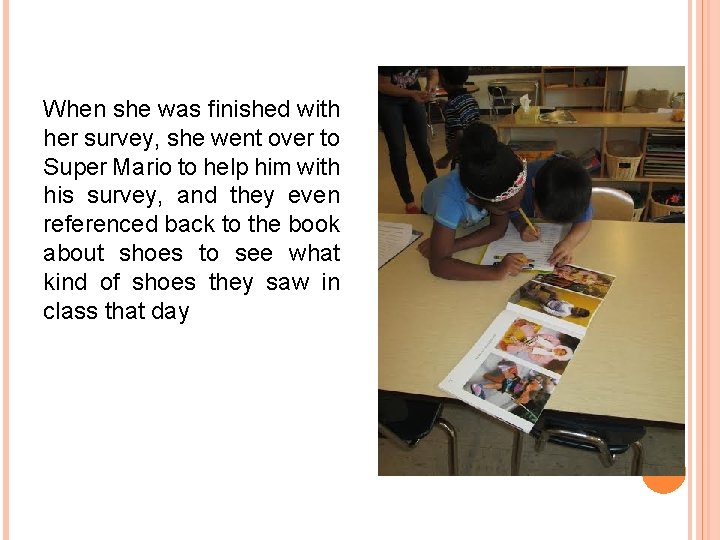
When she was finished with her survey, she went over to Super Mario to help him with his survey, and they even referenced back to the book about shoes to see what kind of shoes they saw in class that day
WHAT THIS MEANS: May, you were able to take a new concept, tallying on a survey, and did the work all on your own to collect the data. Just like a mathematician, you were able to observe what the survey called for and then in the end you analyzed your data you collected to get a solution to the question of how many shoes were in the classroom. You were also able to collaborate, work together with, other students to double check your work and help them with their data, just like mathematicians do sometimes. You were great at observing your surroundings and you were persistent in your task.
OPPORTUNITIES AND POSSIBILITIES May gained a clear understanding about how to represent objects with tally marks and it would be great to see her continue to help other children who may have a hard time making tally marks or understanding their purpose as we work with this concept more. Challenging May to work with tallies more so that she can master this concept and moving forward in helping her count to higher numbers would be a great next step for her.
CHILD’S VOICE “It was awesome because I never saw a survey before. ” “It makes me happy and excited that I love math and math materials. ” “Math is my favorite because I had never done it before. ” -May
FAMILY’S VOICE “It’s great that she’s exploring new ways to look at math. ” “She was willing to try out something new which can be hard, so I’m proud of her. ” -Mom
MAY’S DEVELOPMENT The five domains of children’s development
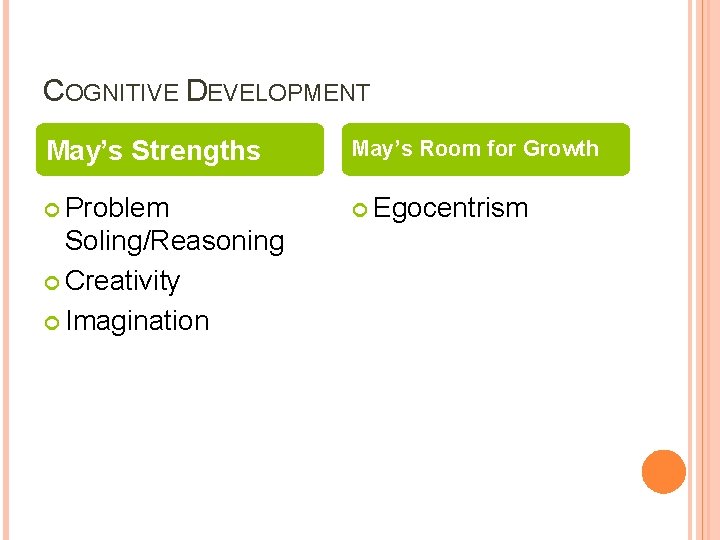
COGNITIVE DEVELOPMENT May’s Strengths May’s Room for Growth Problem Egocentrism Soling/Reasoning Creativity Imagination
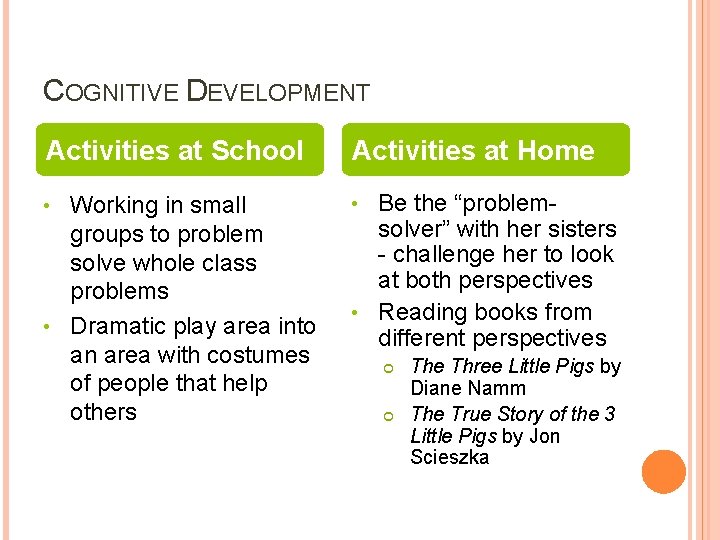
COGNITIVE DEVELOPMENT Activities at School Activities at Home Working in small groups to problem solve whole class problems • Dramatic play area into an area with costumes of people that help others • • Be the “problemsolver” with her sisters - challenge her to look at both perspectives • Reading books from different perspectives The Three Little Pigs by Diane Namm The True Story of the 3 Little Pigs by Jon Scieszka
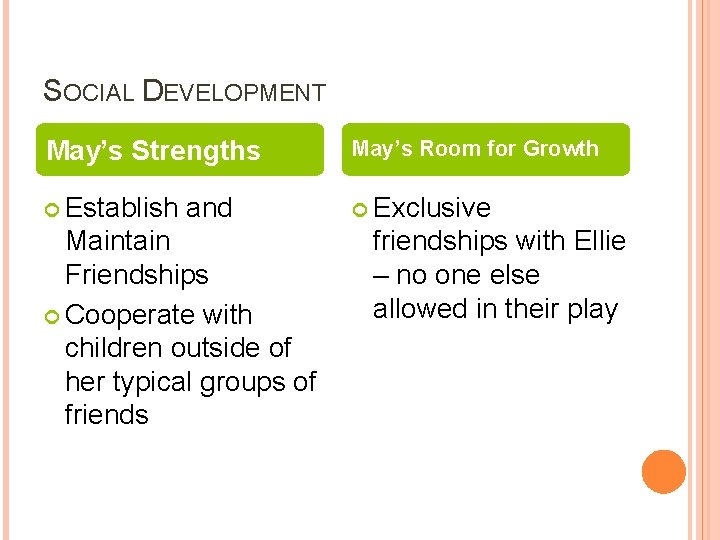
SOCIAL DEVELOPMENT May’s Strengths May’s Room for Growth Establish Exclusive and Maintain Friendships Cooperate with children outside of her typical groups of friendships with Ellie – no one else allowed in their play
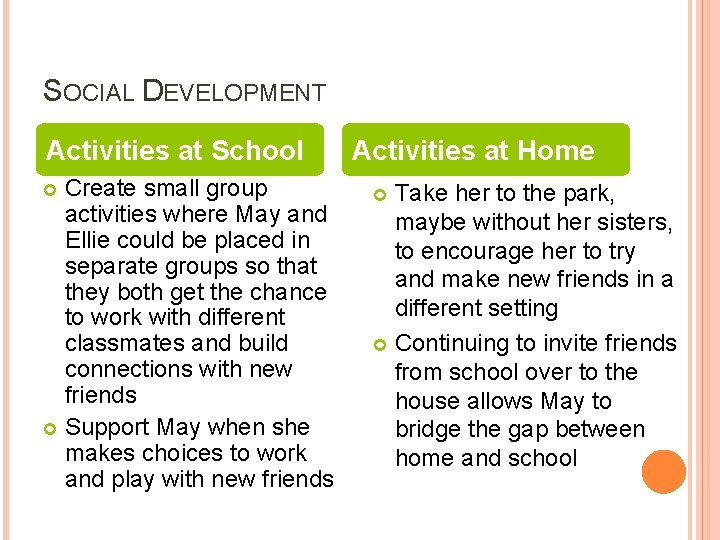
SOCIAL DEVELOPMENT Activities at School Create small group activities where May and Ellie could be placed in separate groups so that they both get the chance to work with different classmates and build connections with new friends Support May when she makes choices to work and play with new friends Activities at Home Take her to the park, maybe without her sisters, to encourage her to try and make new friends in a different setting Continuing to invite friends from school over to the house allows May to bridge the gap between home and school
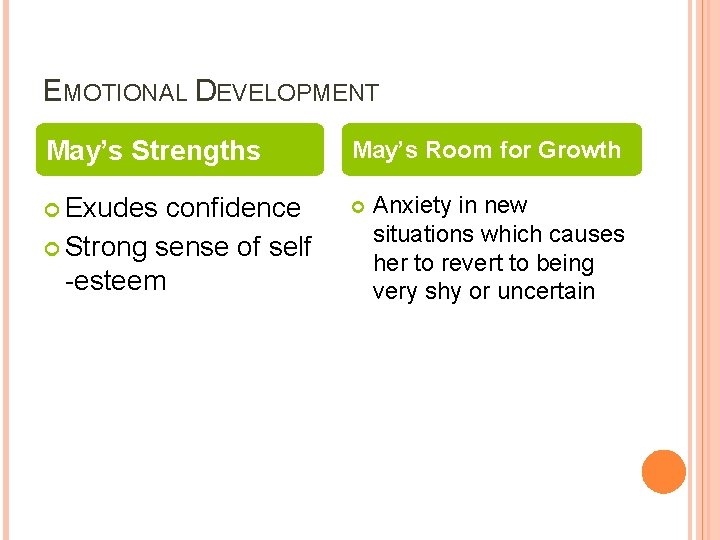
EMOTIONAL DEVELOPMENT May’s Strengths May’s Room for Growth Exudes confidence Strong sense of self -esteem Anxiety in new situations which causes her to revert to being very shy or uncertain
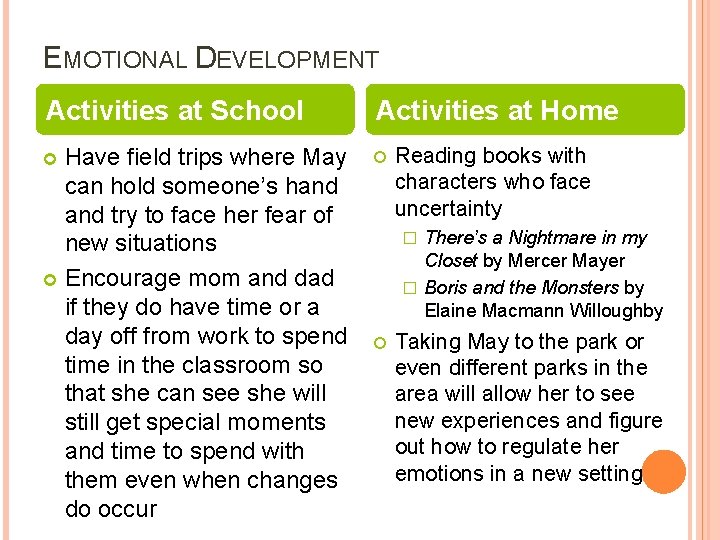
EMOTIONAL DEVELOPMENT Activities at School Activities at Home Have field trips where May can hold someone’s hand try to face her fear of new situations Encourage mom and dad if they do have time or a day off from work to spend time in the classroom so that she can see she will still get special moments and time to spend with them even when changes do occur Reading books with characters who face uncertainty There’s a Nightmare in my Closet by Mercer Mayer � Boris and the Monsters by Elaine Macmann Willoughby � Taking May to the park or even different parks in the area will allow her to see new experiences and figure out how to regulate her emotions in a new setting
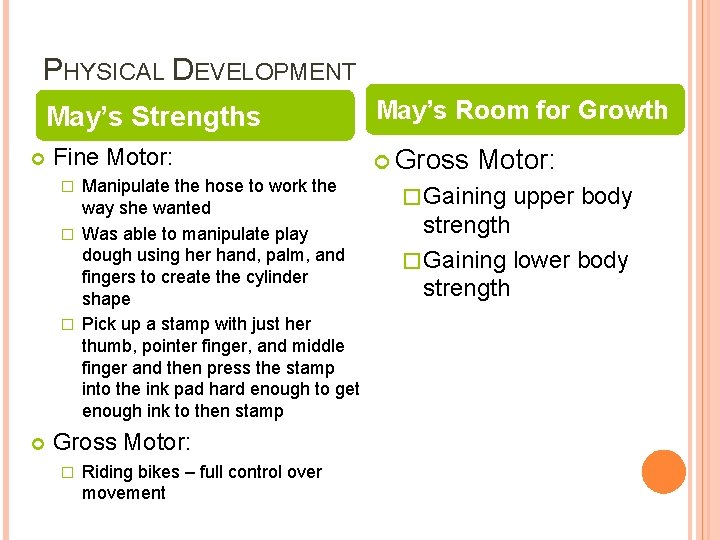
PHYSICAL DEVELOPMENT May’s Strengths Fine Motor: Manipulate the hose to work the way she wanted � Was able to manipulate play dough using her hand, palm, and fingers to create the cylinder shape � Pick up a stamp with just her thumb, pointer finger, and middle finger and then press the stamp into the ink pad hard enough to get enough ink to then stamp � Gross Motor: � Riding bikes – full control over movement May’s Room for Growth Gross Motor: � Gaining upper body strength � Gaining lower body strength
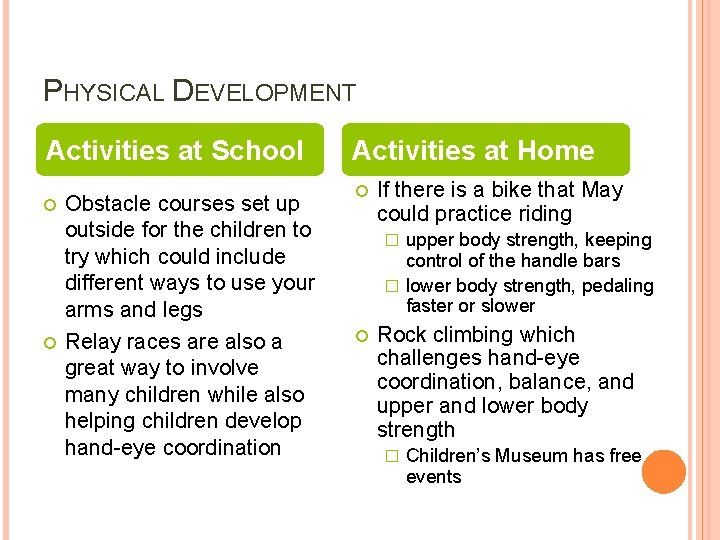
PHYSICAL DEVELOPMENT Activities at School Obstacle courses set up outside for the children to try which could include different ways to use your arms and legs Relay races are also a great way to involve many children while also helping children develop hand-eye coordination Activities at Home If there is a bike that May could practice riding upper body strength, keeping control of the handle bars � lower body strength, pedaling faster or slower � Rock climbing which challenges hand-eye coordination, balance, and upper and lower body strength � Children’s Museum has free events
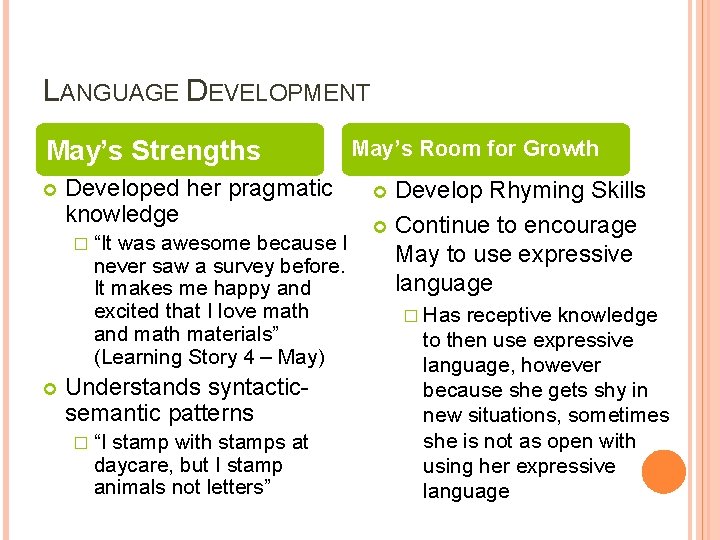
LANGUAGE DEVELOPMENT May’s Strengths Developed her pragmatic knowledge � “It was awesome because I never saw a survey before. It makes me happy and excited that I love math and math materials” (Learning Story 4 – May) Understands syntacticsemantic patterns � “I stamp with stamps at daycare, but I stamp animals not letters” May’s Room for Growth Develop Rhyming Skills Continue to encourage May to use expressive language � Has receptive knowledge to then use expressive language, however because she gets shy in new situations, sometimes she is not as open with using her expressive language
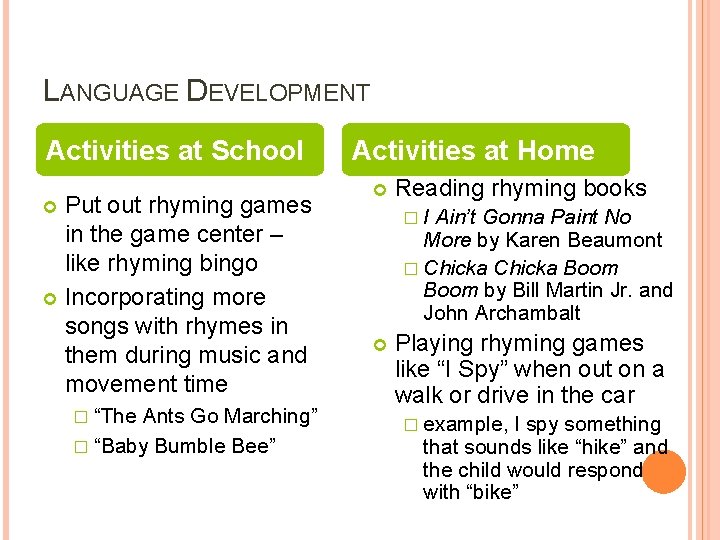
LANGUAGE DEVELOPMENT Activities at School Put out rhyming games in the game center – like rhyming bingo Incorporating more songs with rhymes in them during music and movement time � “The Ants Go Marching” � “Baby Bumble Bee” Activities at Home Reading rhyming books �I Ain’t Gonna Paint No More by Karen Beaumont � Chicka Boom by Bill Martin Jr. and John Archambalt Playing rhyming games like “I Spy” when out on a walk or drive in the car � example, I spy something that sounds like “hike” and the child would respond with “bike”