
Preinvasive Cervical Neoplasia Meral Aban MD Professor of
Preinvasive Cervical Neoplasia Meral Aban MD. Professor of OBS&GYN
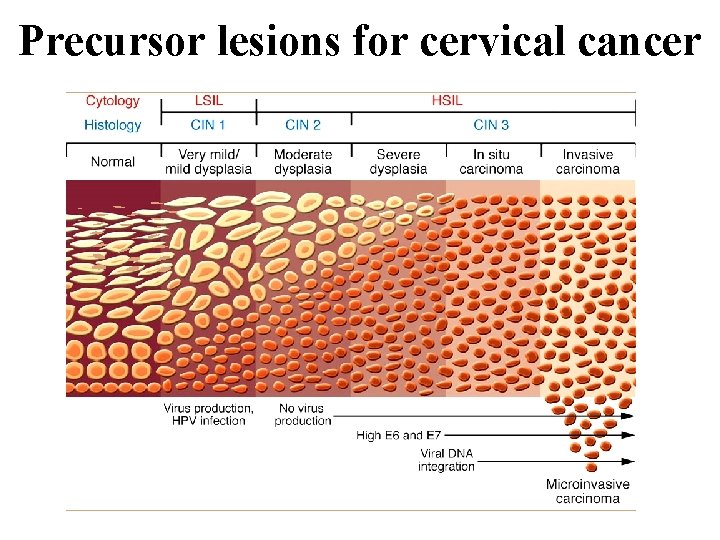
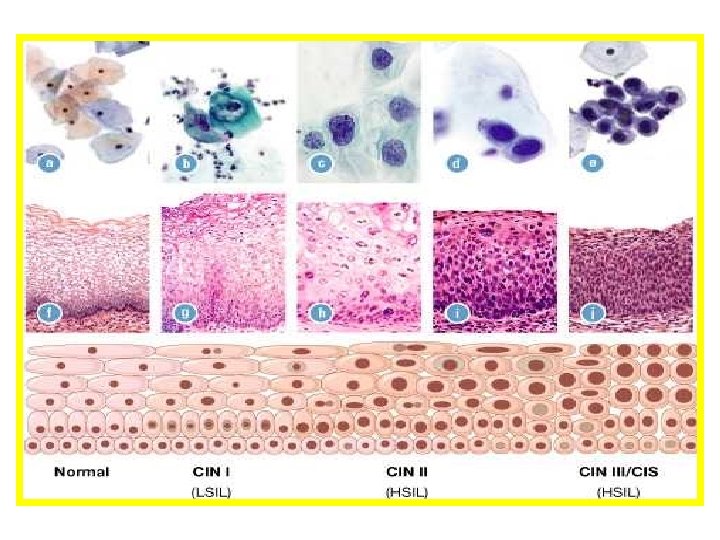
Cervical Intraepithelial Neoplasia (CIN) • CIN I: Mild dysplasia • CIN II: Moderate dysplasia • CIN III: Severe dysplasia - CIS Precursor lesions for cervical cancer
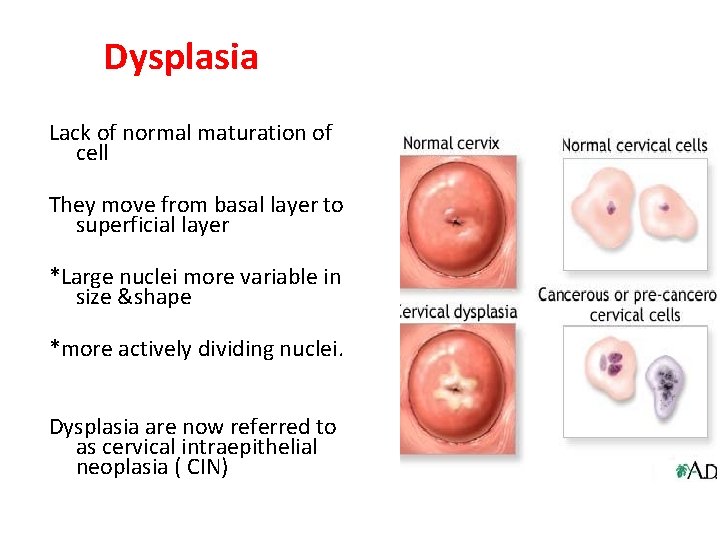
Dysplasia Lack of normal maturation of cell They move from basal layer to superficial layer *Large nuclei more variable in size &shape *more actively dividing nuclei. Dysplasia are now referred to as cervical intraepithelial neoplasia ( CIN)
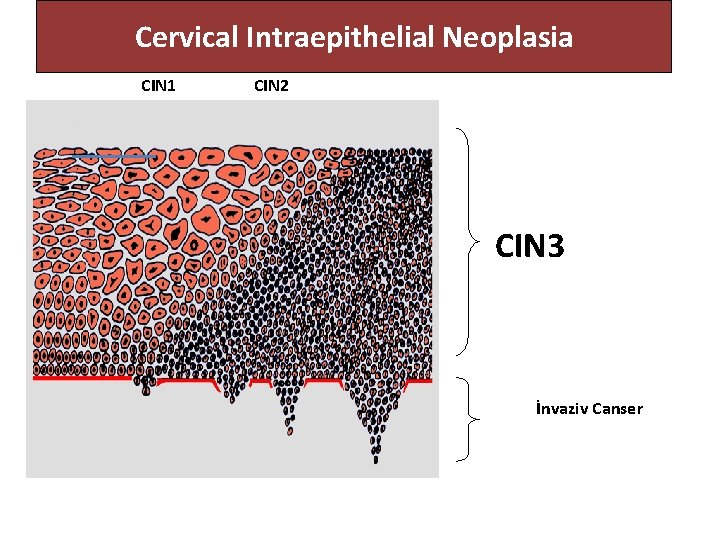
Cervical Intraepithelial Neoplasia CIN 1 CIN 2 CIN 3 İnvaziv Canser
Etiology • HPV DNA is (+) in 99. 7 % of cervical cancer cases
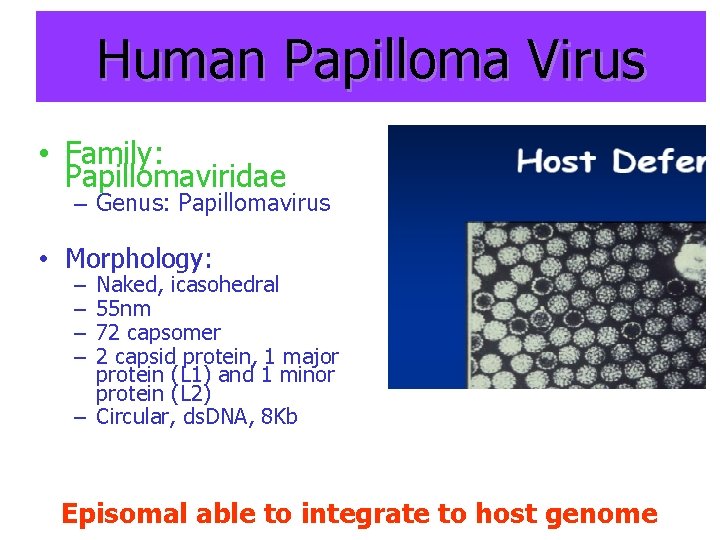
Human Papilloma Virus • Family: Papillomaviridae – Genus: Papillomavirus • Morphology: Naked, icasohedral 55 nm 72 capsomer 2 capsid protein, 1 major protein (L 1) and 1 minor protein (L 2) – Circular, ds. DNA, 8 Kb – – Episomal able to integrate to host genome
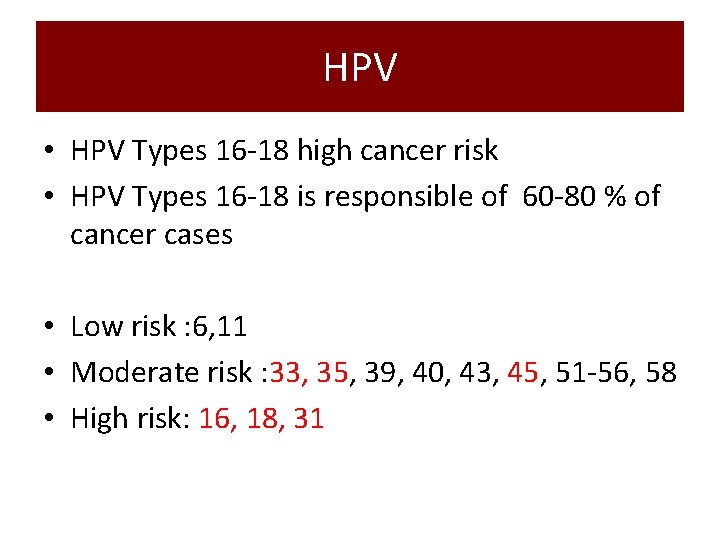
HPV • HPV Types 16 -18 high cancer risk • HPV Types 16 -18 is responsible of 60 -80 % of cancer cases • Low risk : 6, 11 • Moderate risk : 33, 35, 39, 40, 43, 45, 51 -56, 58 • High risk: 16, 18, 31
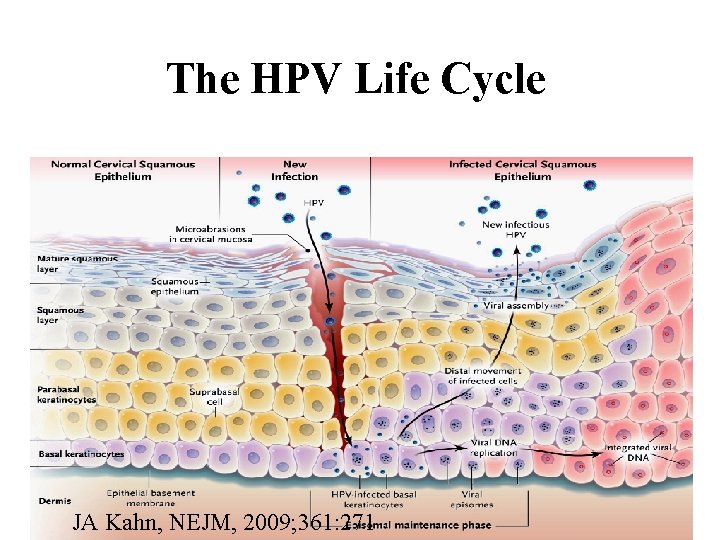
The HPV Life Cycle JA Kahn, NEJM, 2009; 361: 271
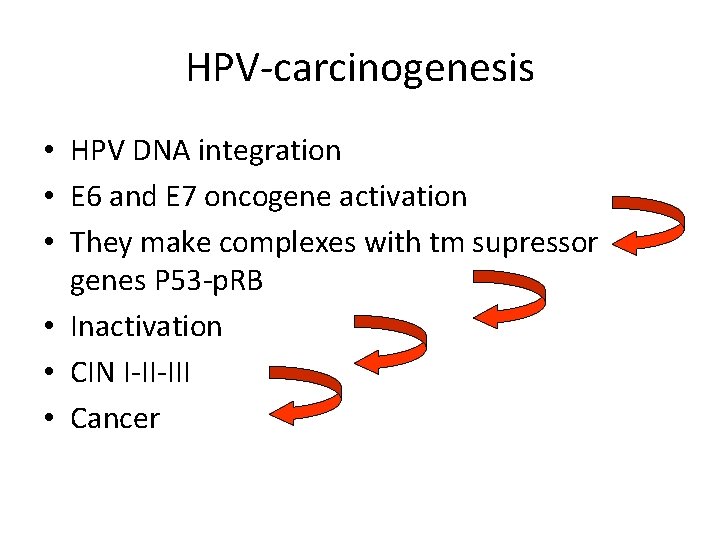
HPV-carcinogenesis • HPV DNA integration • E 6 and E 7 oncogene activation • They make complexes with tm supressor genes P 53 -p. RB • Inactivation • CIN I-II-III • Cancer
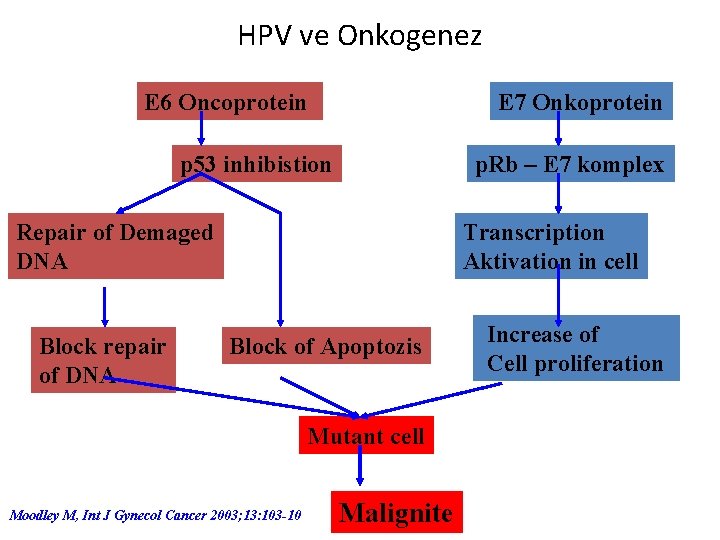
HPV ve Onkogenez E 6 Oncoprotein E 7 Onkoprotein p 53 inhibistion p. Rb – E 7 komplex Repair of Demaged DNA Block repair of DNA Transcription Aktivation in cell Block of Apoptozis Mutant cell Moodley M, Int J Gynecol Cancer 2003; 13: 103 -10 Malignite Increase of Cell proliferation
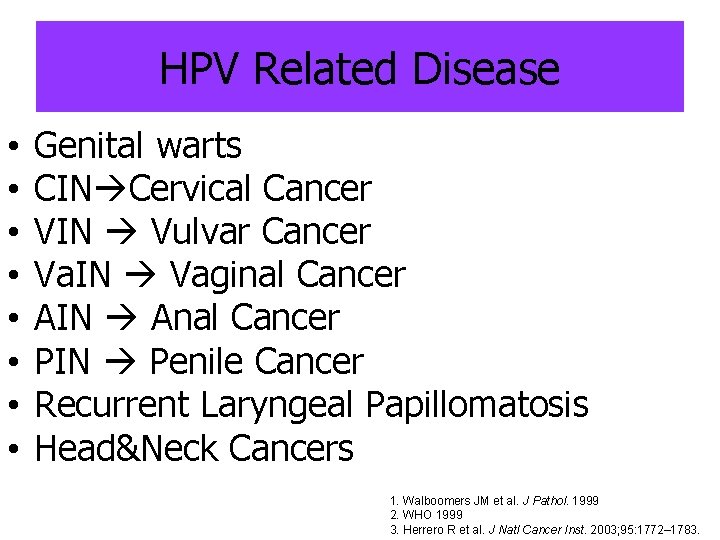
HPV Related Disease • • Genital warts CIN Cervical Cancer VIN Vulvar Cancer Va. IN Vaginal Cancer AIN Anal Cancer PIN Penile Cancer Recurrent Laryngeal Papillomatosis Head&Neck Cancers 1. Walboomers JM et al. J Pathol. 1999 2. WHO 1999 3. Herrero R et al. J Natl Cancer Inst. 2003; 95: 1772– 1783.
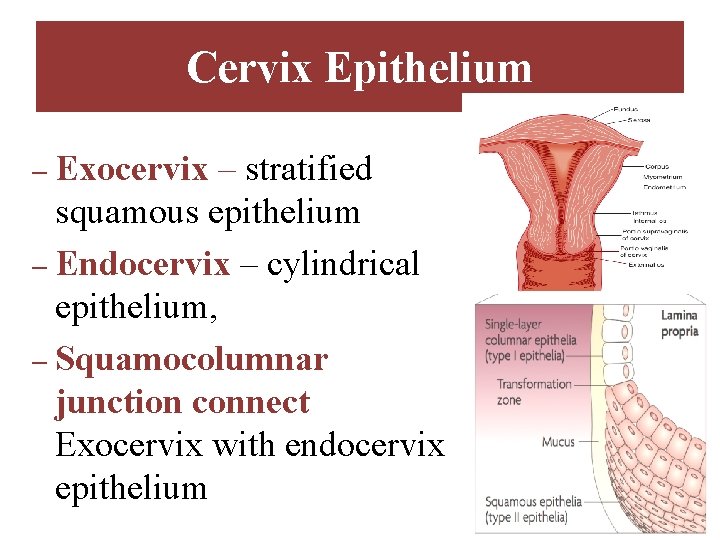
Cervix Epithelium – Exocervix – stratified squamous epithelium – Endocervix – cylindrical epithelium, – Squamocolumnar junction connect Exocervix with endocervix epithelium
Origine of CIN • 80 -85 % Transformation zone • 15 -20 % Ectocervical region
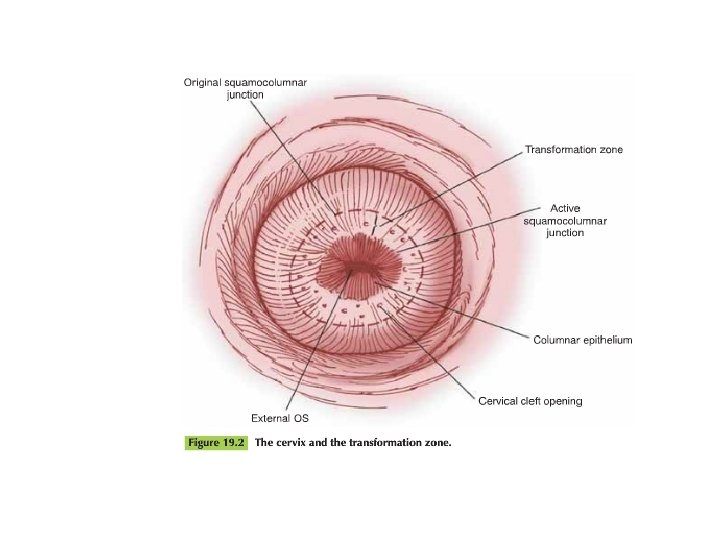
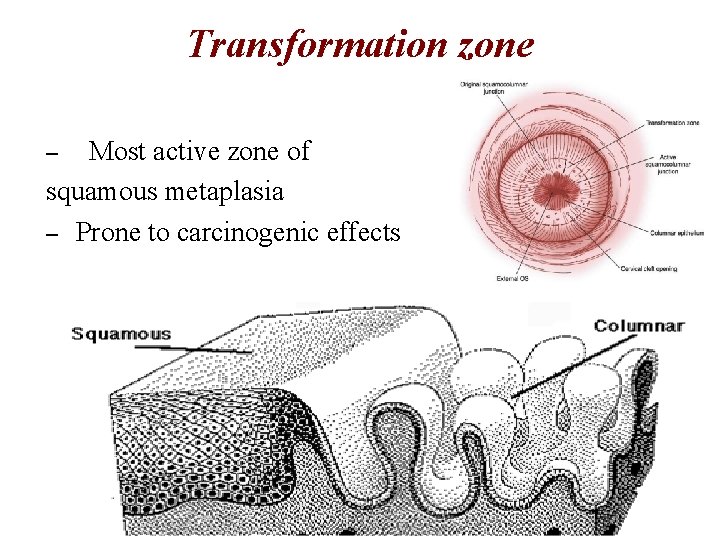
Transformation zone Most active zone of squamous metaplasia – Prone to carcinogenic effects –
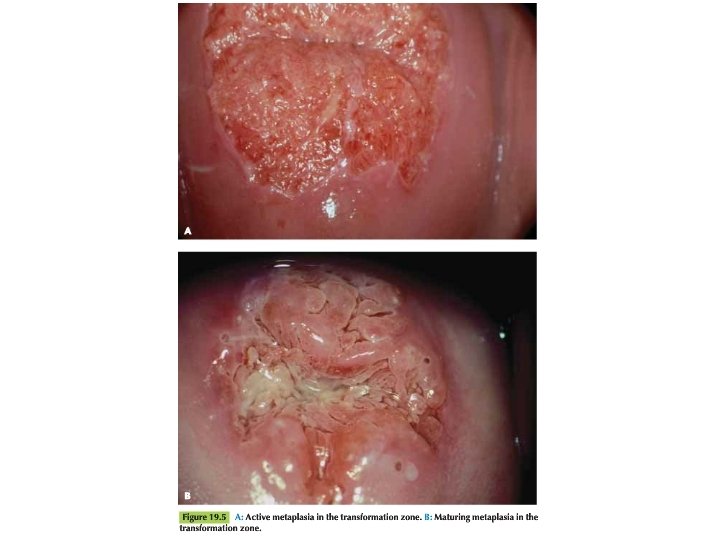
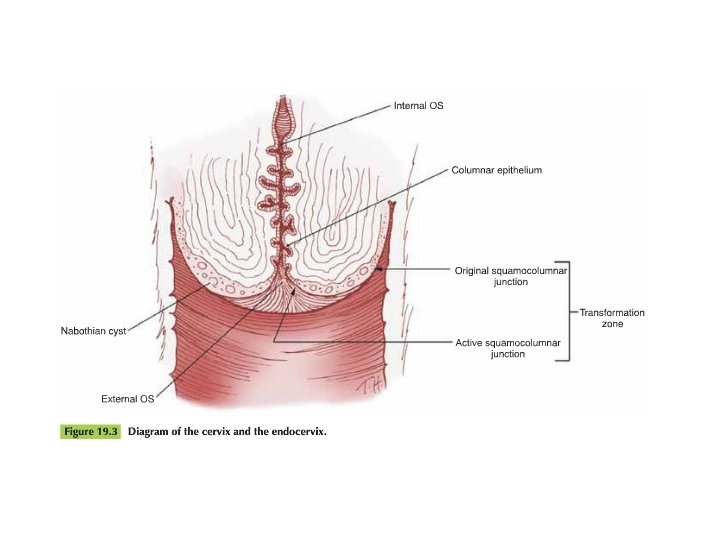
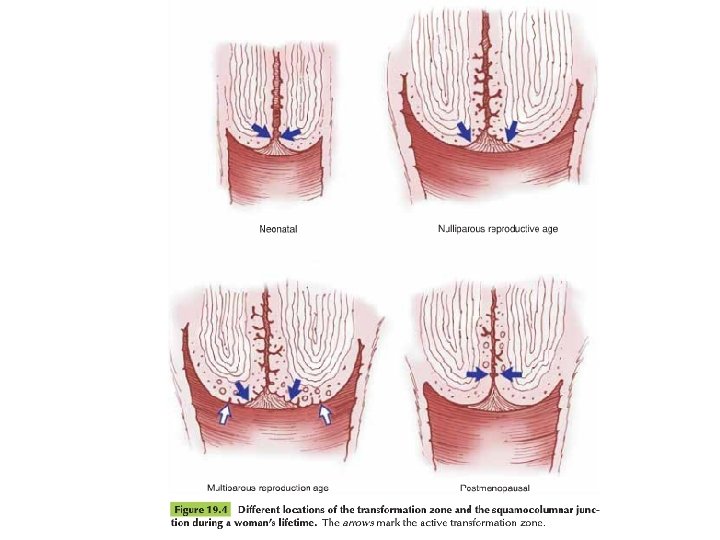
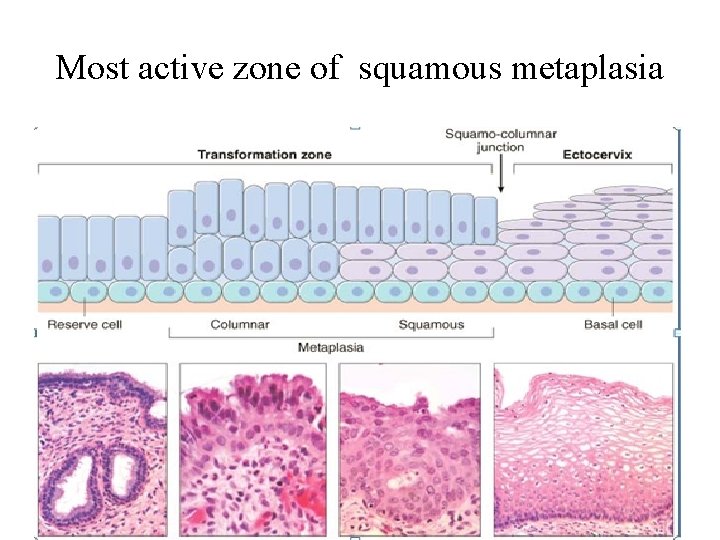
Most active zone of squamous metaplasia
Precursor lesions for cervical cancer
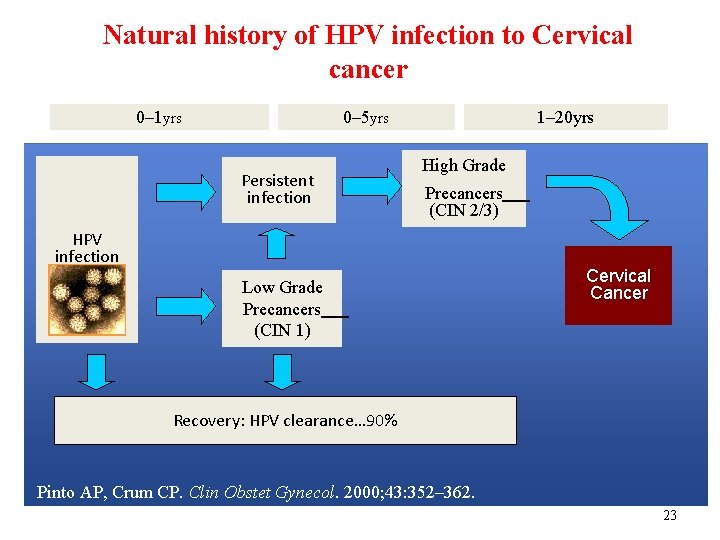
Natural history of HPV infection to Cervical cancer 0– 1 yrs 0– 5 yrs Persistent infection 1– 20 yrs High Grade Precancers (CIN 2/3) HPV infection Low Grade Precancers (CIN 1) Cervical Cancer Recovery: HPV clearance… 90% Pinto AP, Crum CP. Clin Obstet Gynecol. 2000; 43: 352– 362. 23
Natural History of Preinvazive Disease About 15% of low- grade dysplasias will progress within 2 years About 1/3 of high- grade dysplasias will progress within 10 years if not treated. High- grade dysplasia is detected up to 10 years before invazive carcinoma develops. Low- grade dysplasia and genital warts have a pick incidence in the 20 s High-grade dysplasia peks in the mid- 30 s Invaziv cervical carcinoma is most often sees after age 40.
Diagnosis • Cytology ( pap smear) • Colposcopy • Biopsy
History of the Conventional Pap Smear • Developed by Dr. George N. Papanicolaou in 1940’s • Most common cancer screening test • Key part of annual gynecologic examination Ferris et al. Modern Colposcopy. 2004: 2 -4, 49. Photo accessed from http: //www. cytology-iac. org/Cytopaths/1998/cyto. Fall 98. htm 26
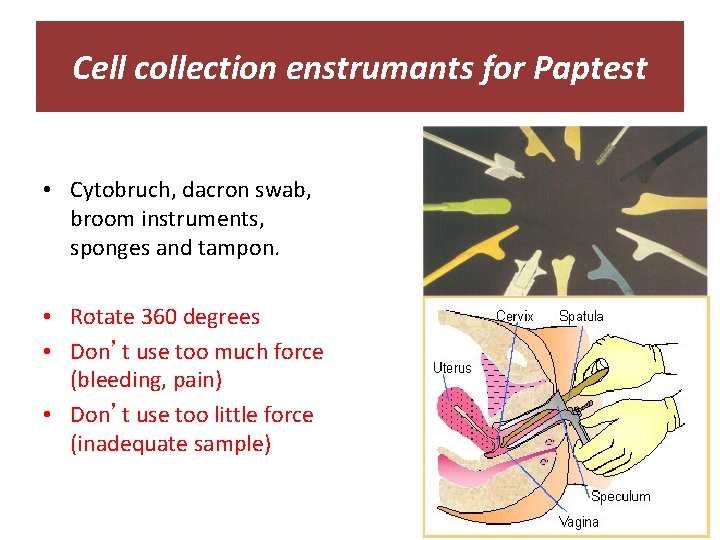
Cell collection enstrumants for Paptest • Cytobruch, dacron swab, broom instruments, sponges and tampon. • Rotate 360 degrees • Don’t use too much force (bleeding, pain) • Don’t use too little force (inadequate sample)
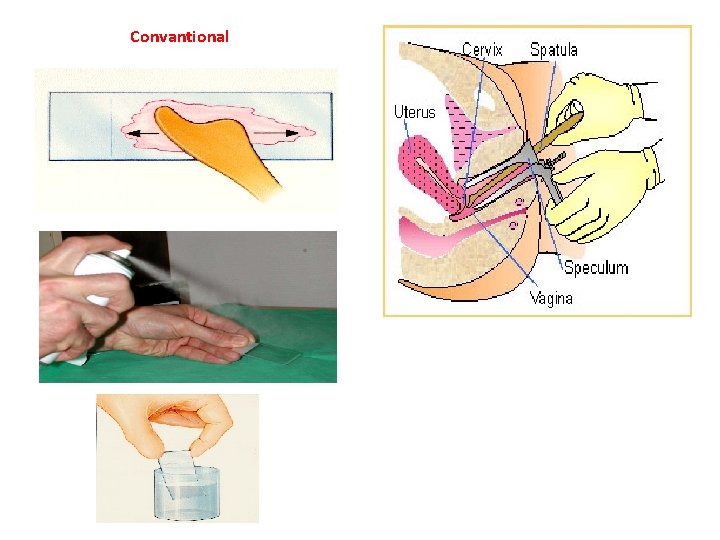
Convantional Liquıd base
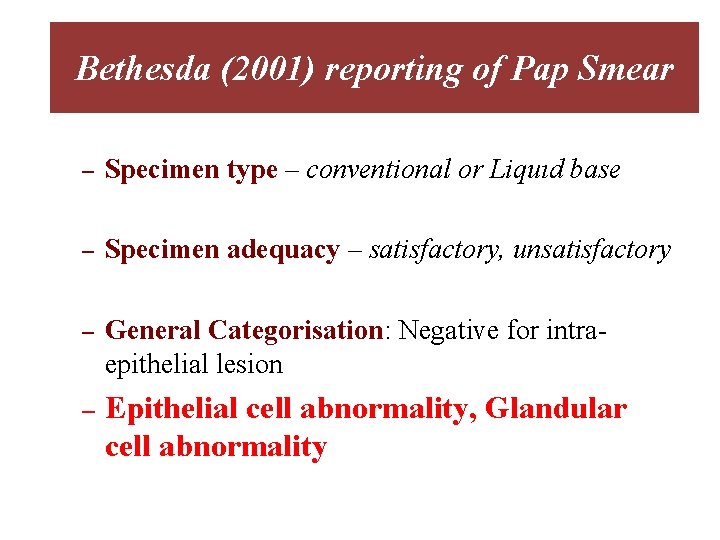
Bethesda (2001) reporting of Pap Smear – Specimen type – conventional or Liquıd base – Specimen adequacy – satisfactory, unsatisfactory – General Categorisation: Negative for intraepithelial lesion – Epithelial cell abnormality, Glandular cell abnormality
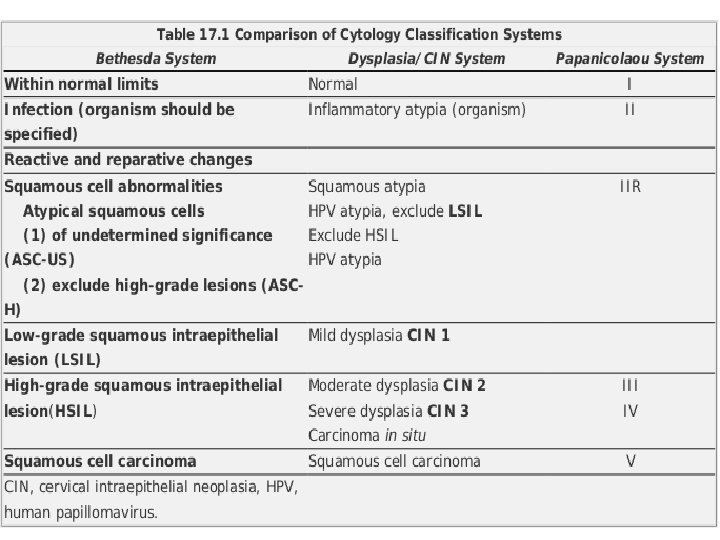
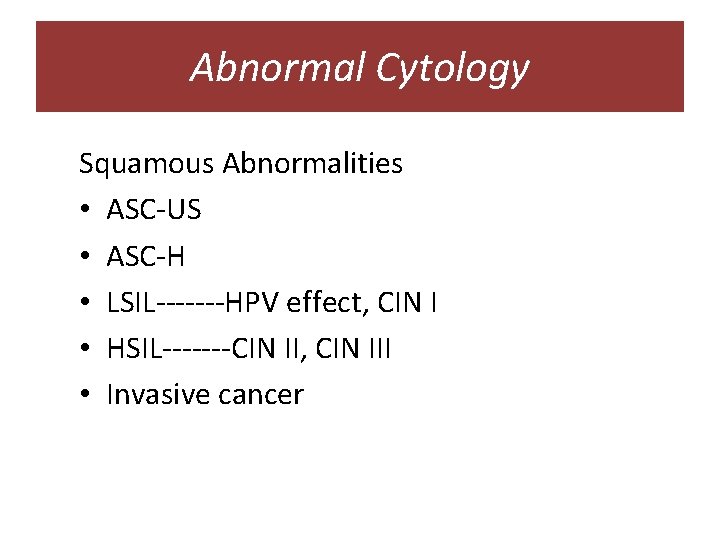
Abnormal Cytology Squamous Abnormalities • ASC-US • ASC-H • LSIL-------HPV effect, CIN I • HSIL-------CIN II, CIN III • Invasive cancer
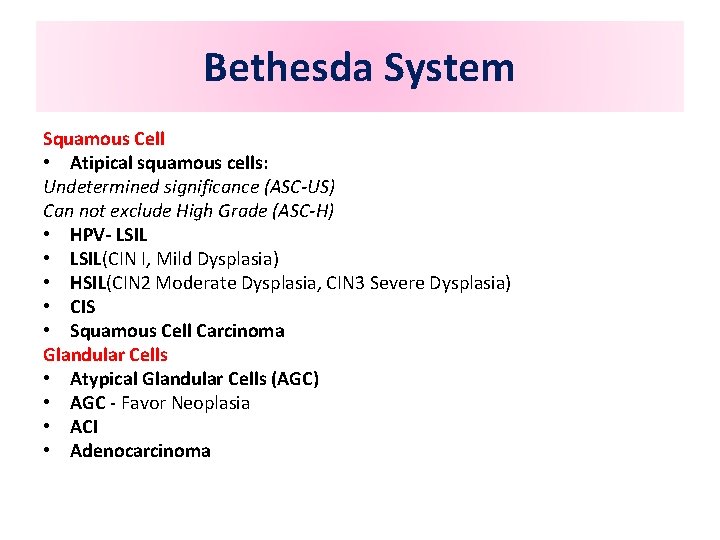
Bethesda System Squamous Cell • Atipical squamous cells: Undetermined significance (ASC-US) Can not exclude High Grade (ASC-H) • HPV- LSIL • LSIL(CIN I, Mild Dysplasia) • HSIL(CIN 2 Moderate Dysplasia, CIN 3 Severe Dysplasia) • CIS • Squamous Cell Carcinoma Glandular Cells • Atypical Glandular Cells (AGC) • AGC - Favor Neoplasia • ACI • Adenocarcinoma
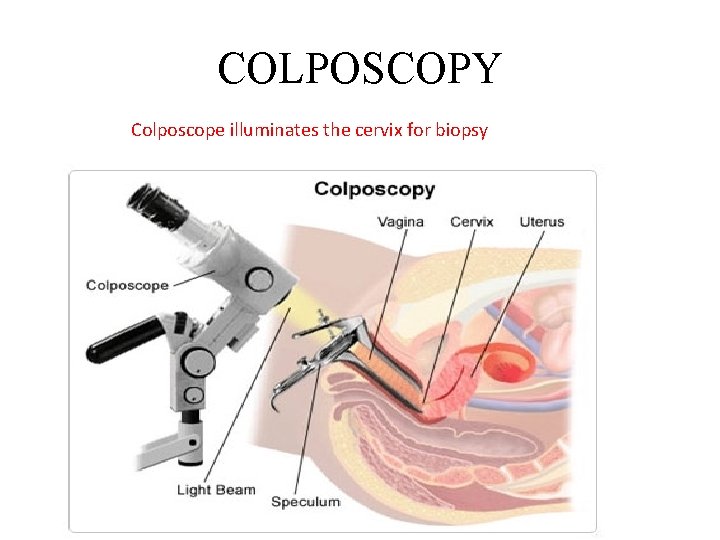
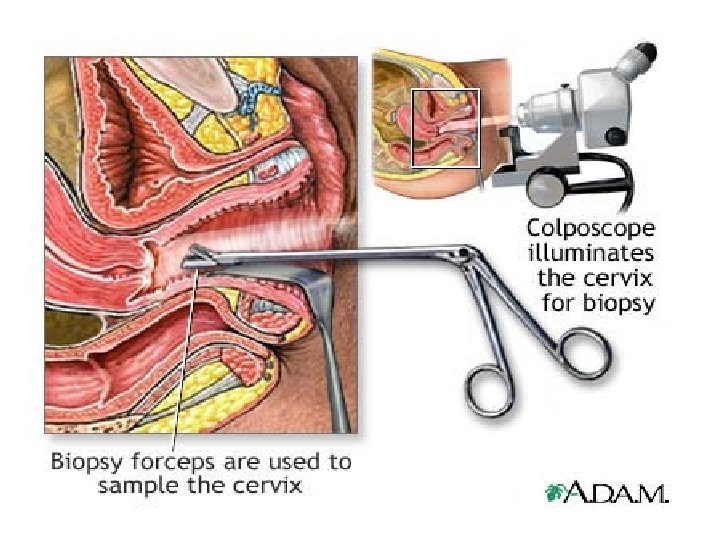
COLPOSCOPY Colposcope illuminates the cervix for biopsy
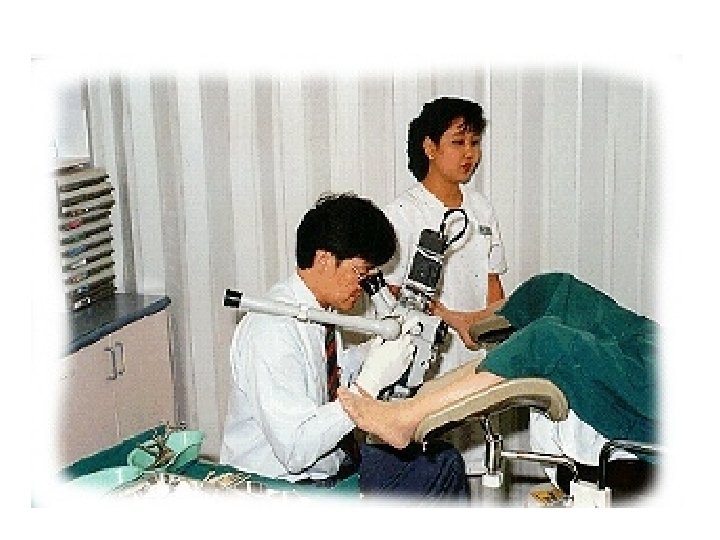
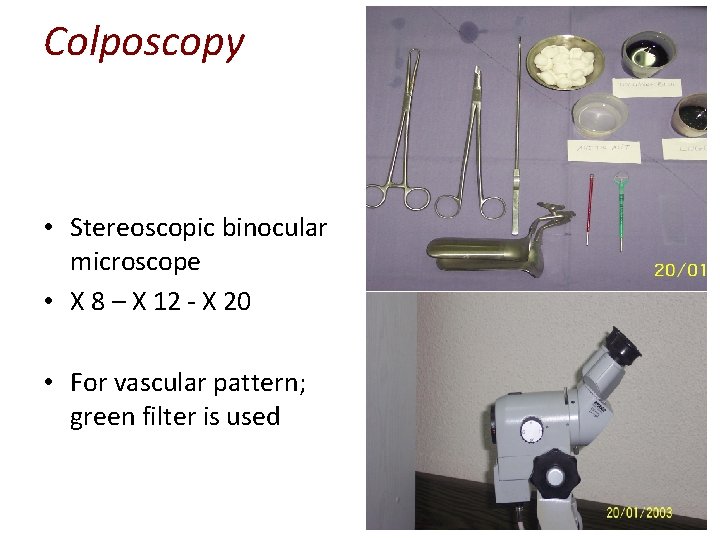
Colposcopy • Stereoscopic binocular microscope • X 8 – X 12 - X 20 • For vascular pattern; green filter is used
Colposcopy • Direct vision • Acetic acid, 3 -5% • Acetowhite epithelium: acetic acid coagulates protein of the nucleus and cytoplasm; make protein opaque and white • Lugol test
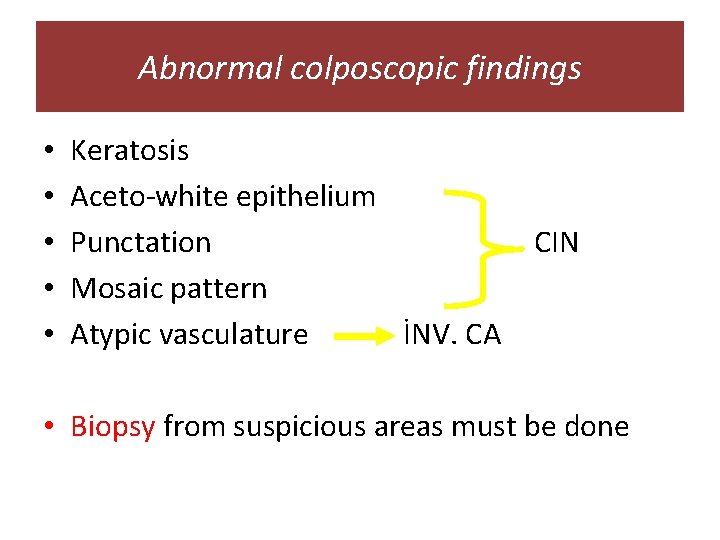
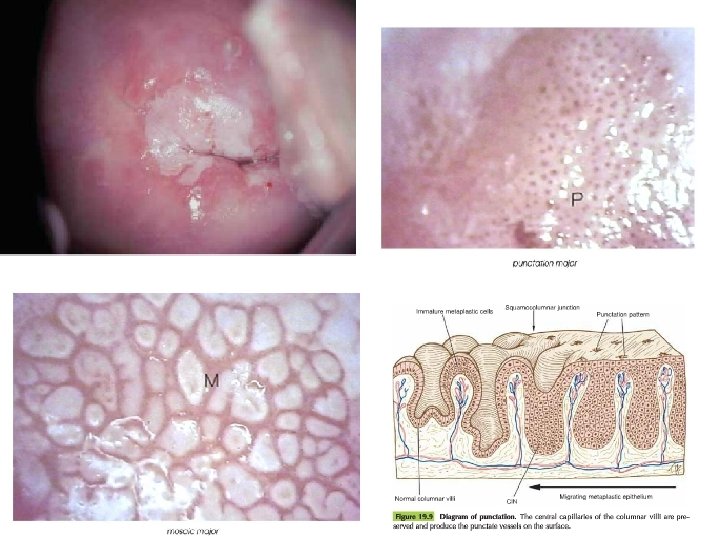
Abnormal colposcopic findings • • • Keratosis Aceto-white epithelium Punctation Mosaic pattern Atypic vasculature İNV. CA CIN • Biopsy from suspicious areas must be done
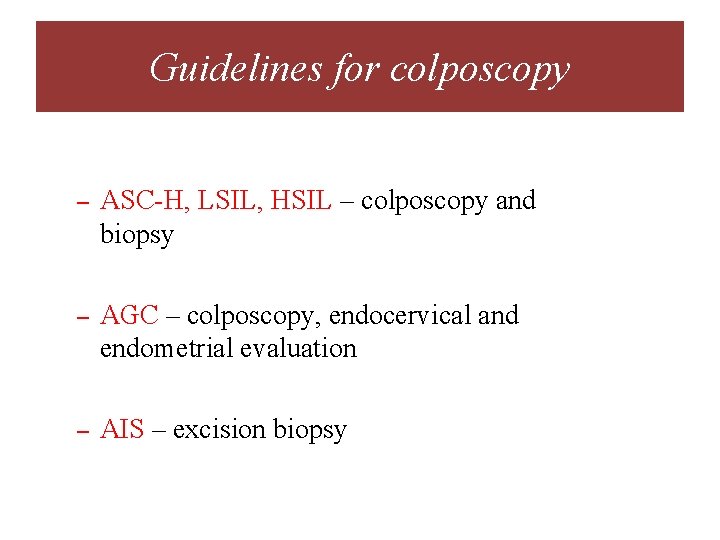
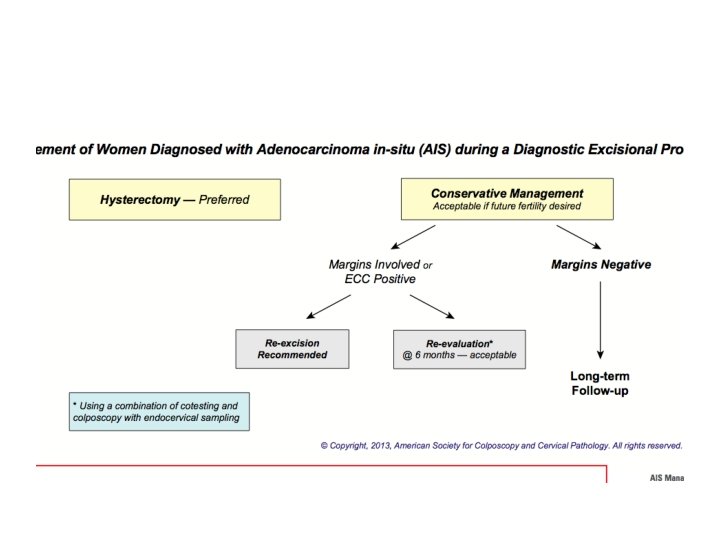
Guidelines for colposcopy – ASC-H, LSIL, HSIL – colposcopy and biopsy – AGC – colposcopy, endocervical and endometrial evaluation – AIS – excision biopsy
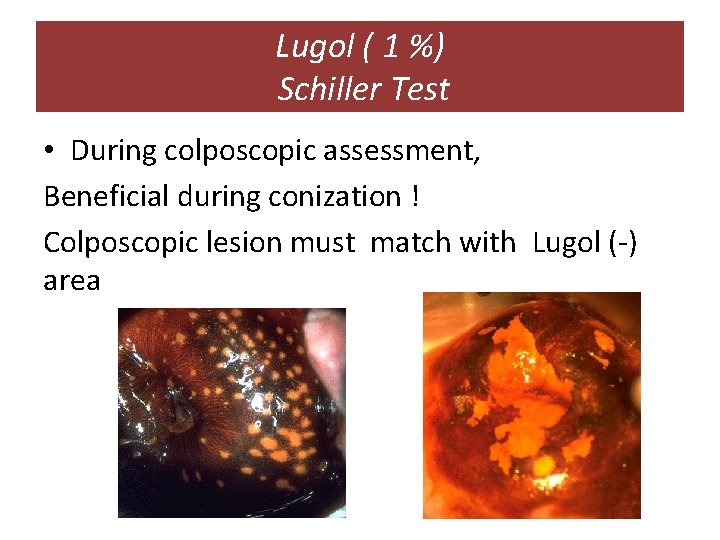
Lugol ( 1 %) Schiller Test • During colposcopic assessment, Beneficial during conization ! Colposcopic lesion must match with Lugol (-) area
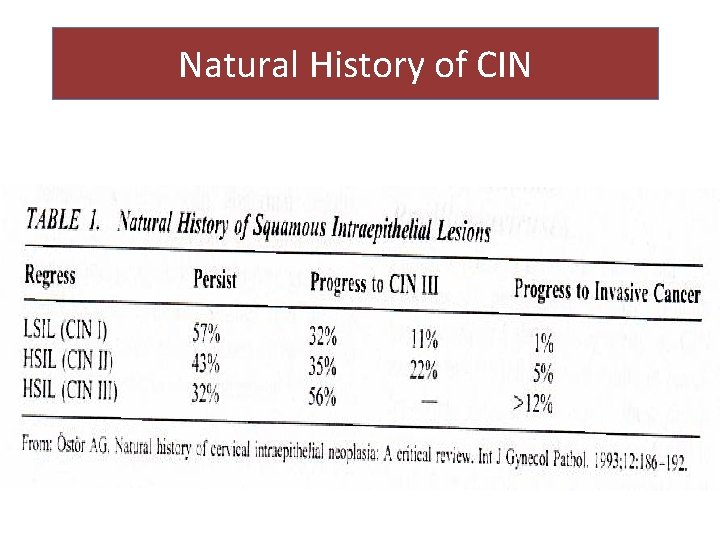
Natural History of CIN
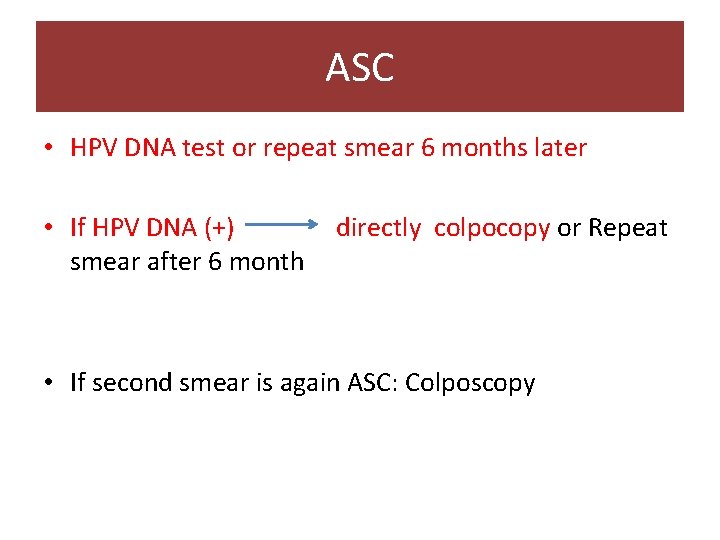
ASC • HPV DNA test or repeat smear 6 months later • If HPV DNA (+) smear after 6 month directly colpocopy or Repeat • If second smear is again ASC: Colposcopy
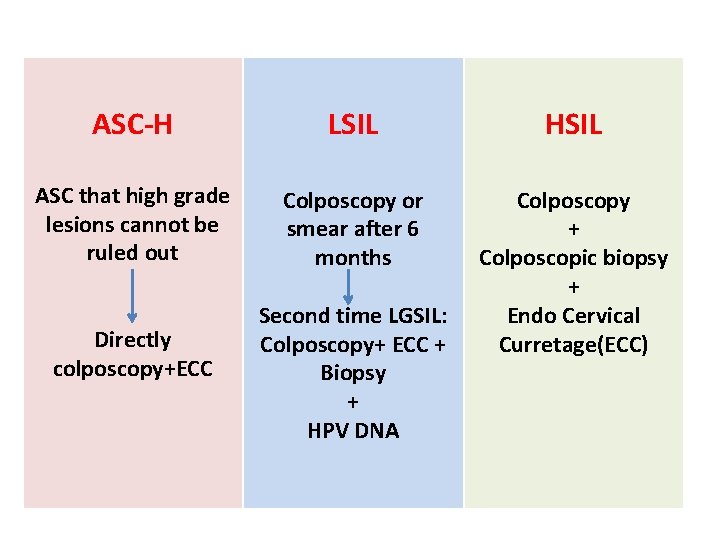
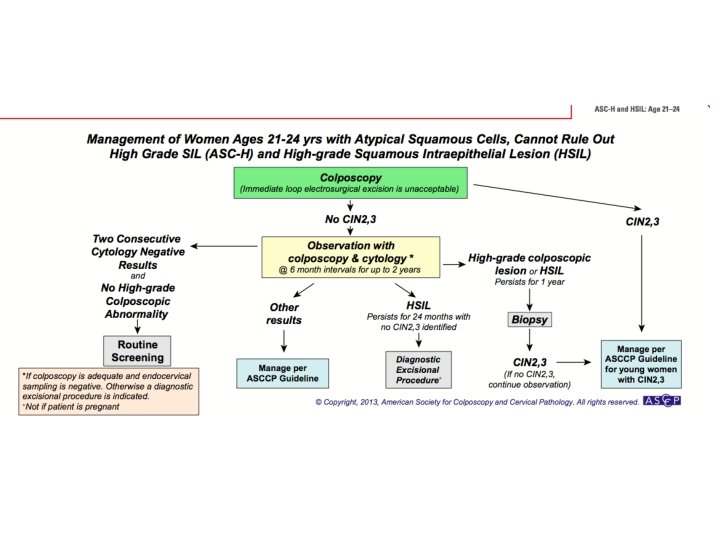
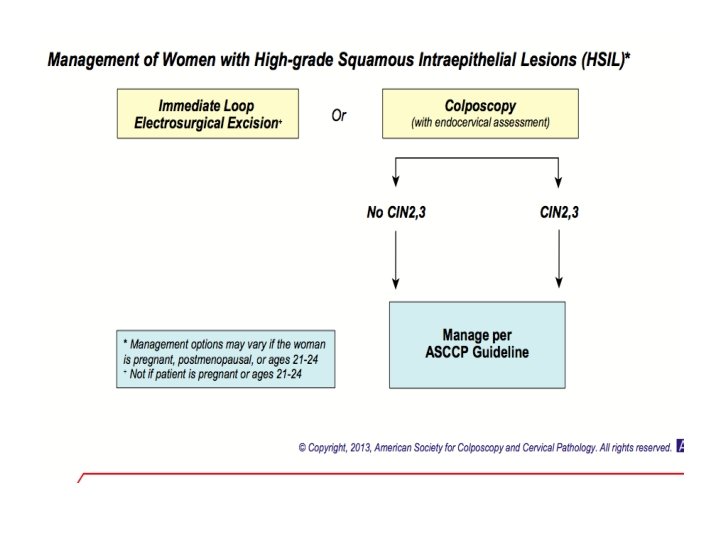
ASC-H LSIL HSIL ASC that high grade lesions cannot be ruled out Colposcopy or smear after 6 months Colposcopy + Colposcopic biopsy + Endo Cervical Curretage(ECC) Directly colposcopy+ECC Second time LGSIL: Colposcopy+ ECC + Biopsy + HPV DNA
AGC • < age 35 Colposcopy + ECC • > age 35, Colposcopy+ECC+D&C
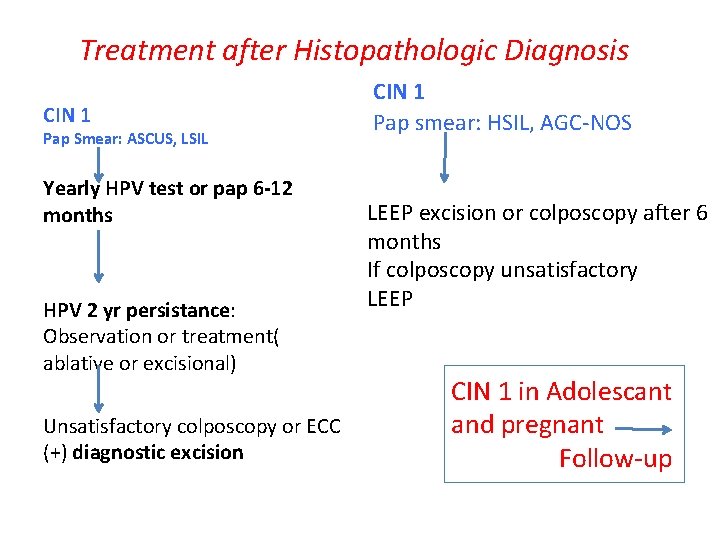
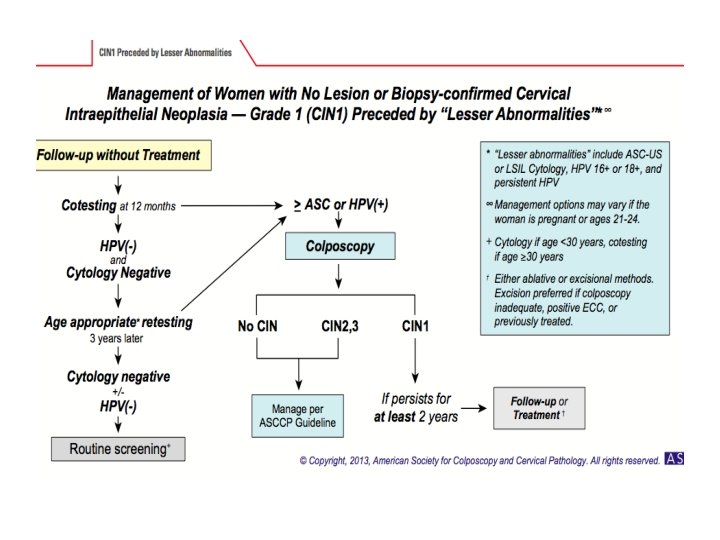
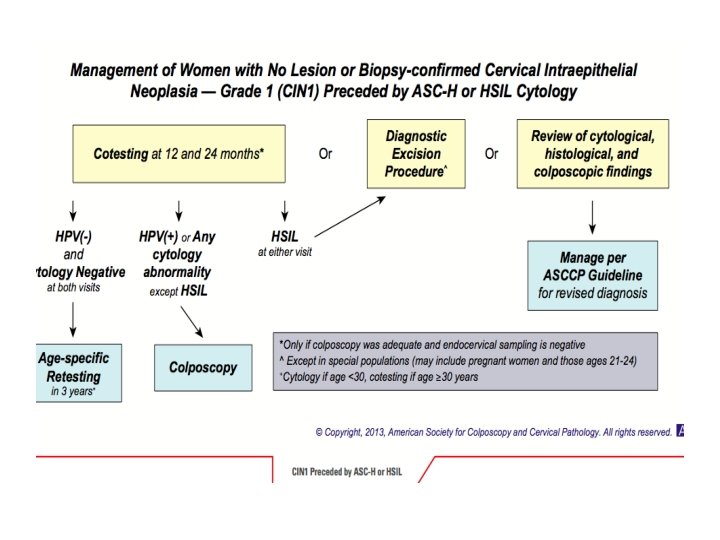
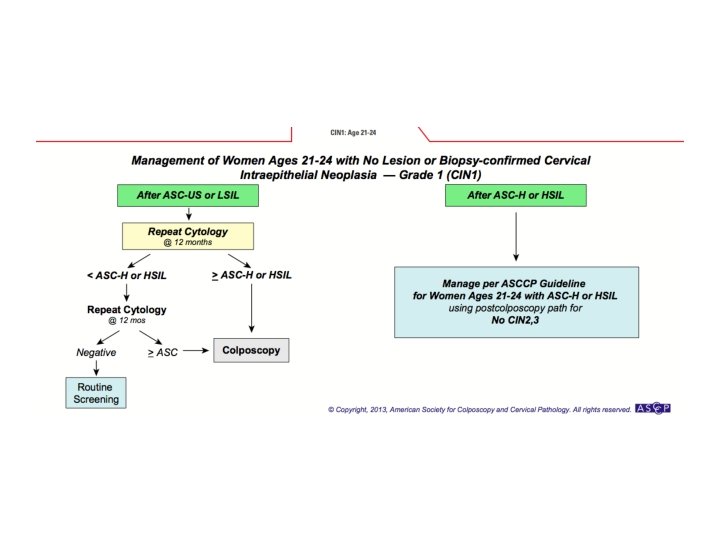
Treatment after Histopathologic Diagnosis CIN 1 Pap Smear: ASCUS, LSIL Yearly HPV test or pap 6 -12 months HPV 2 yr persistance: Observation or treatment( ablative or excisional) Unsatisfactory colposcopy or ECC (+) diagnostic excision CIN 1 Pap smear: HSIL, AGC-NOS LEEP excision or colposcopy after 6 months If colposcopy unsatisfactory LEEP CIN 1 in Adolescant and pregnant Follow-up
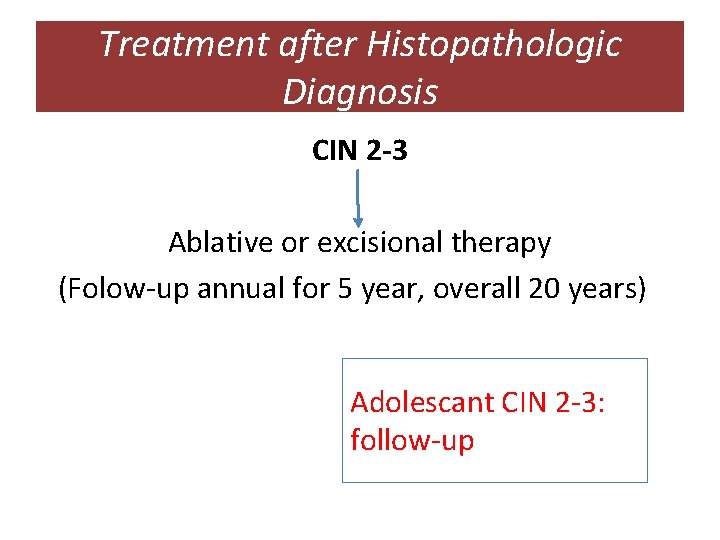
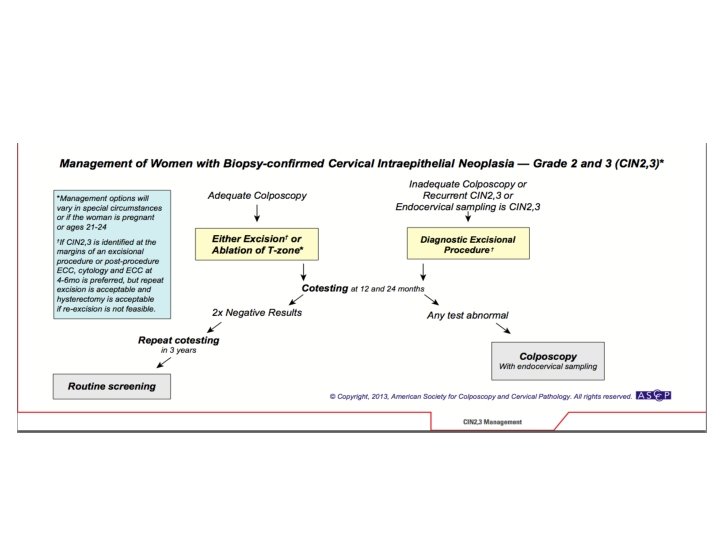
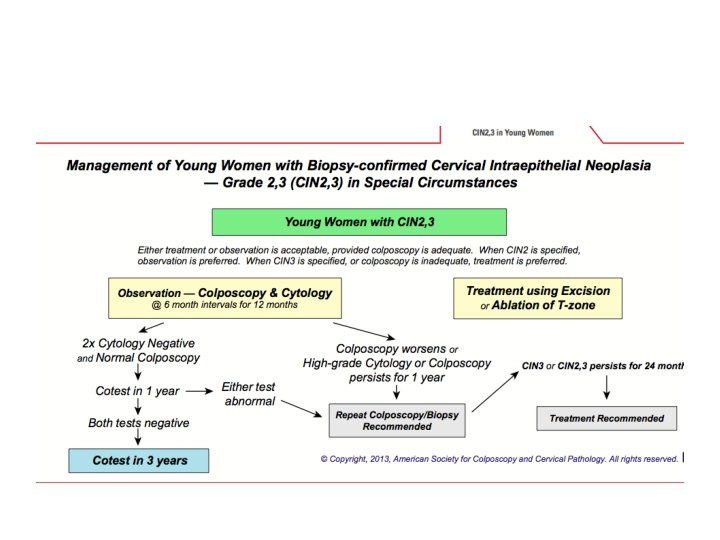
Treatment after Histopathologic Diagnosis CIN 2 -3 Ablative or excisional therapy (Folow-up annual for 5 year, overall 20 years) Adolescant CIN 2 -3: follow-up
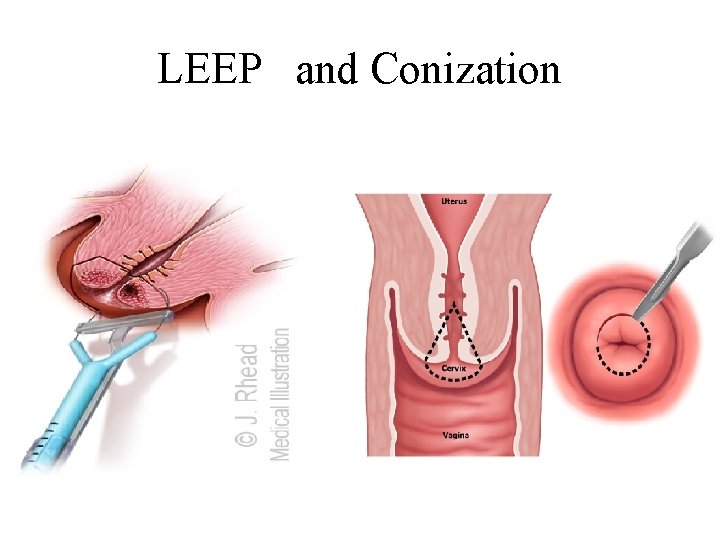
LEEP and Conization
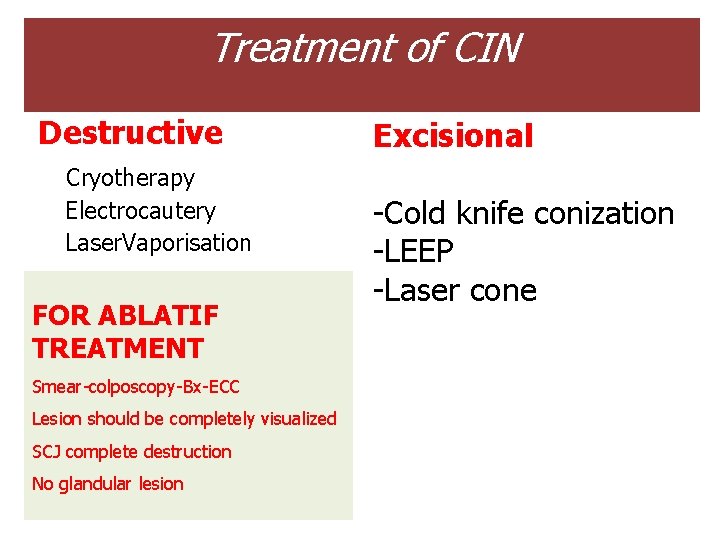
Treatment of CIN Destructive Cryotherapy q Electrocautery q Laser. Vaporisation FOR ABLATIF TREATMENT Smear-colposcopy-Bx-ECC Lesion should be completely visualized SCJ complete destruction No glandular lesion Excisional -Cold knife conization -LEEP -Laser cone
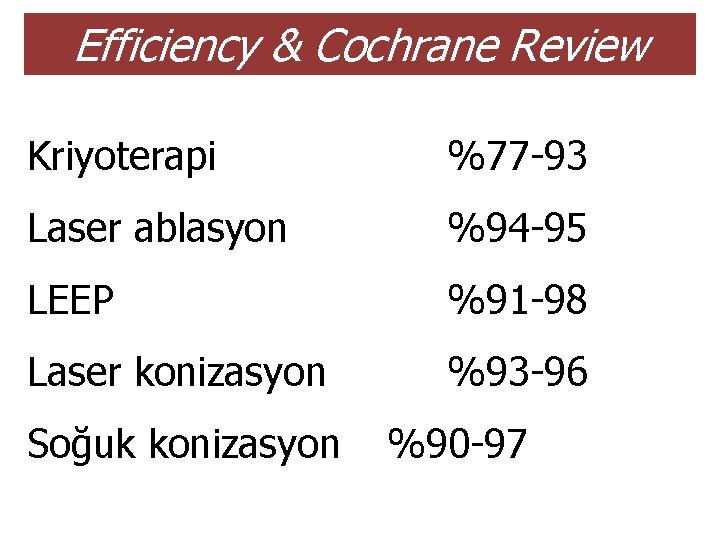
Efficiency & Cochrane Review Kriyoterapi %77 -93 Laser ablasyon %94 -95 LEEP %91 -98 Laser konizasyon %93 -96 Soğuk konizasyon %90 -97
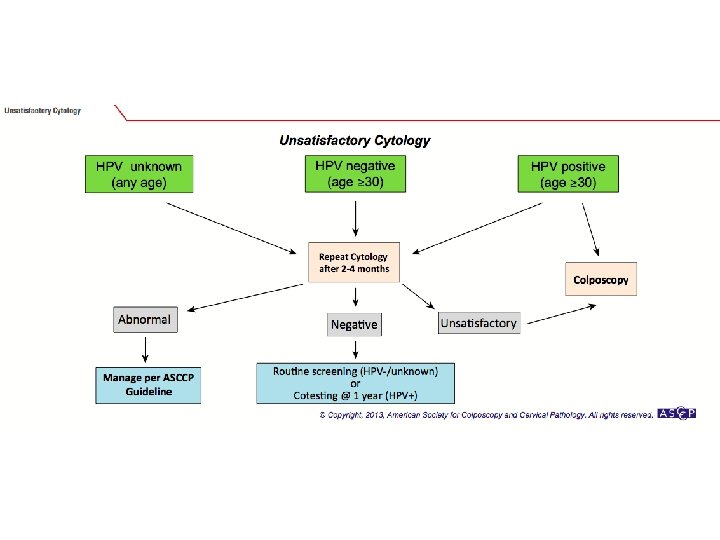
Management of Abnormal Cytology Therefore, in 2012 the American Society for Colposcopy and Cervical Pathology (ASCCP), together with its 24 partner professional societies, Federal agencies, and international organizations, began the process of revising the 2006 management guidelines.
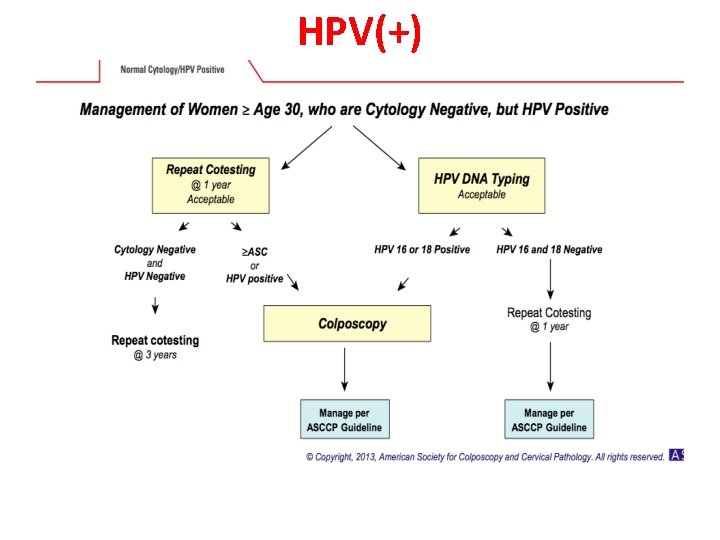
HPV(+)
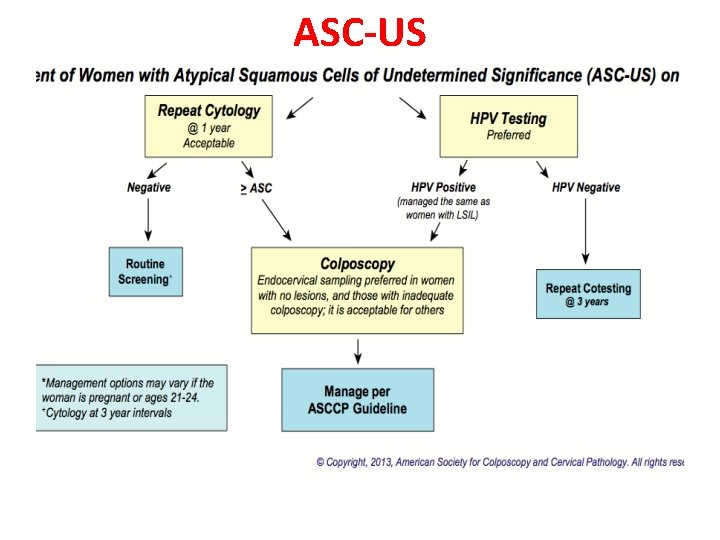
ASC-US
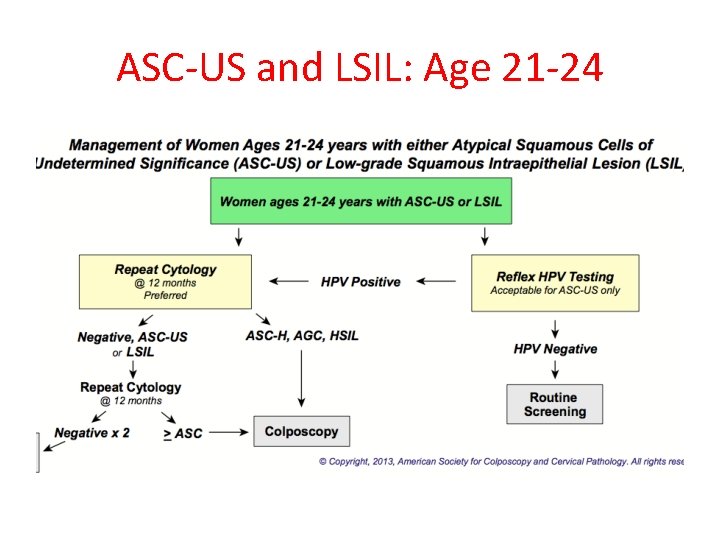
ASC-US and LSIL: Age 21 -24
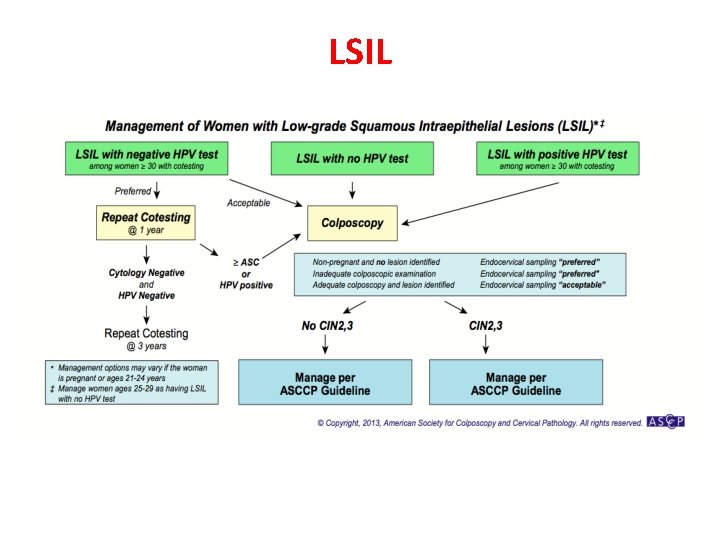
LSIL
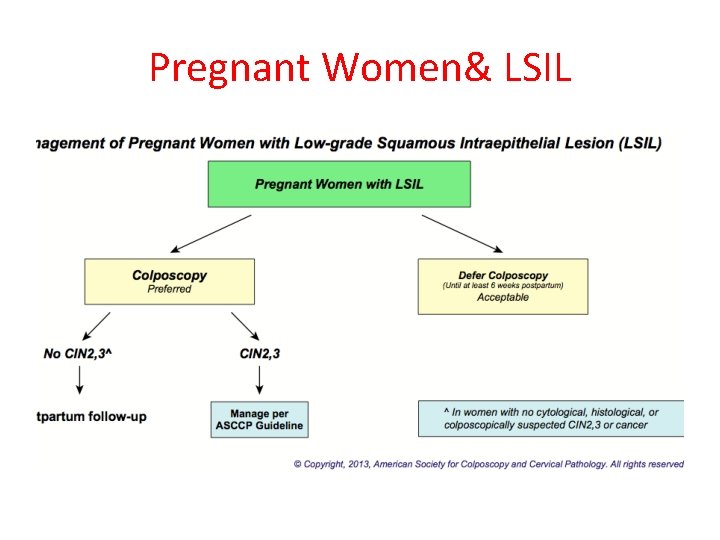
Pregnant Women& LSIL
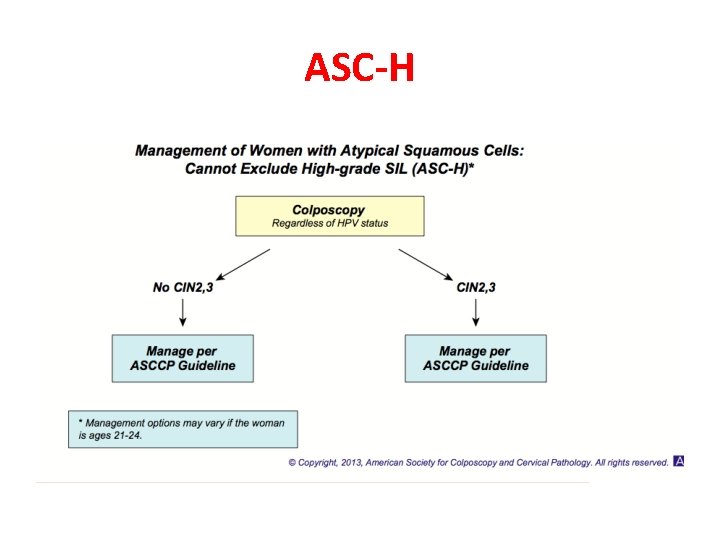
ASC-H
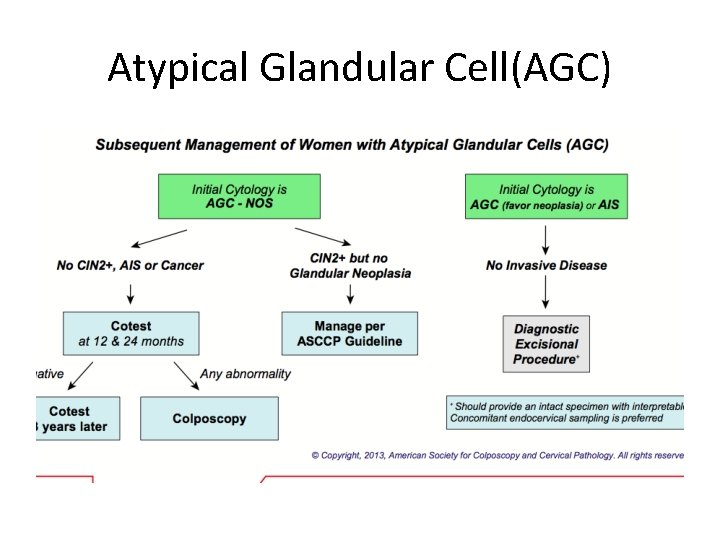
Atypical Glandular Cell(AGC)
- Slides: 69