
PreIndustrial Society Farming Cottage Industry Inefficient land use
- Slides: 18
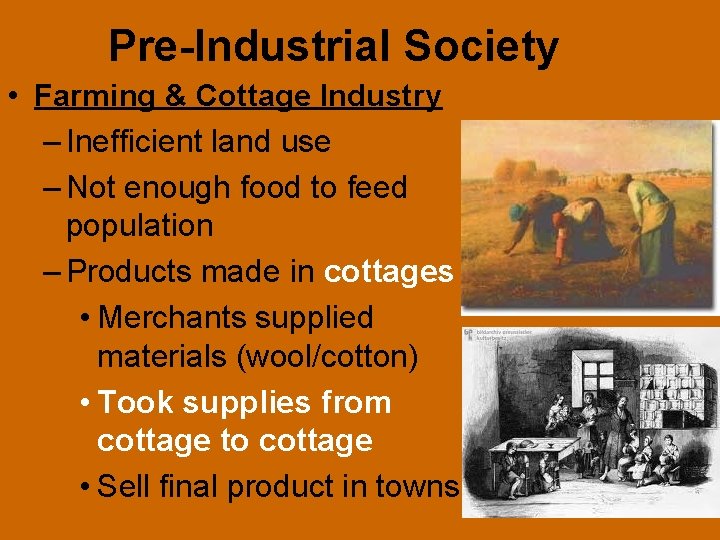
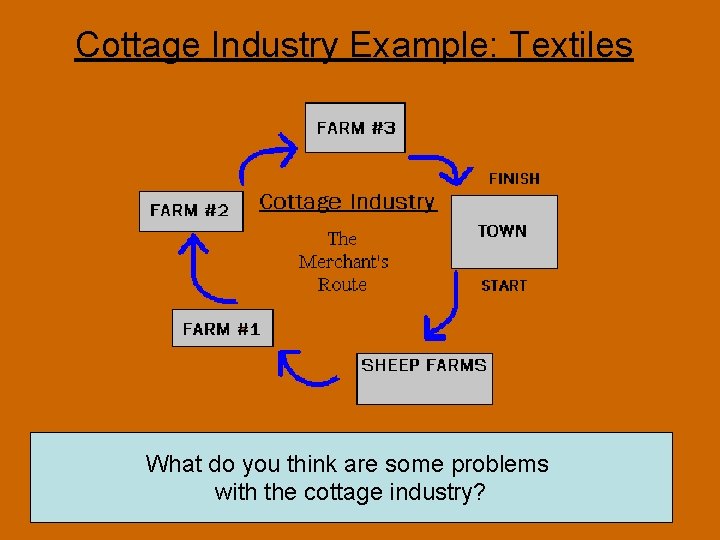
Pre-Industrial Society • Farming & Cottage Industry – Inefficient land use – Not enough food to feed population – Products made in cottages • Merchants supplied materials (wool/cotton) • Took supplies from cottage to cottage • Sell final product in towns
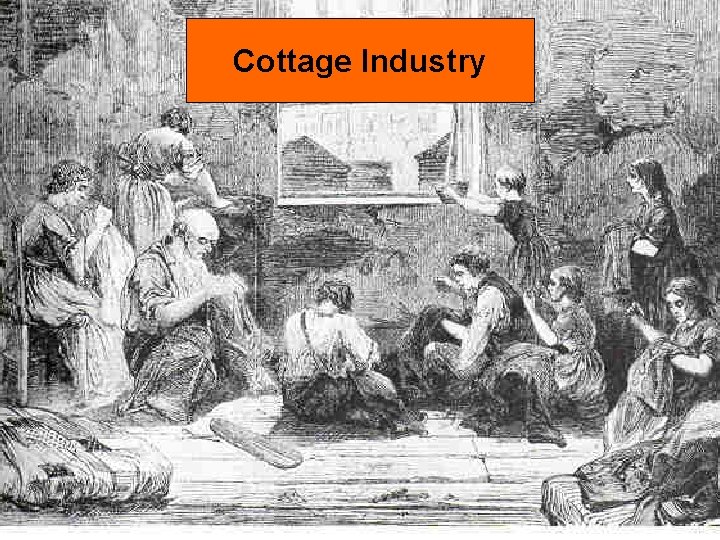
Cottage Industry
Cottage Industry Example: Textiles What do you think are some problems with the cottage industry?
Changes to Production… • Agricultural Revolution –New methods of farming = more food with less workers –Population grows (why? ) –Peasants lose jobs (why? )
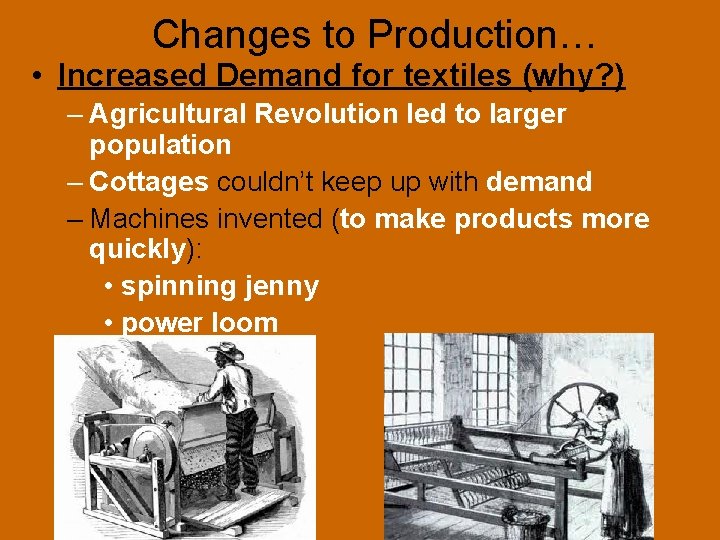
Changes to Production… • Increased Demand for textiles (why? ) – Agricultural Revolution led to larger population – Cottages couldn’t keep up with demand – Machines invented (to make products more quickly): • spinning jenny • power loom • cotton gin
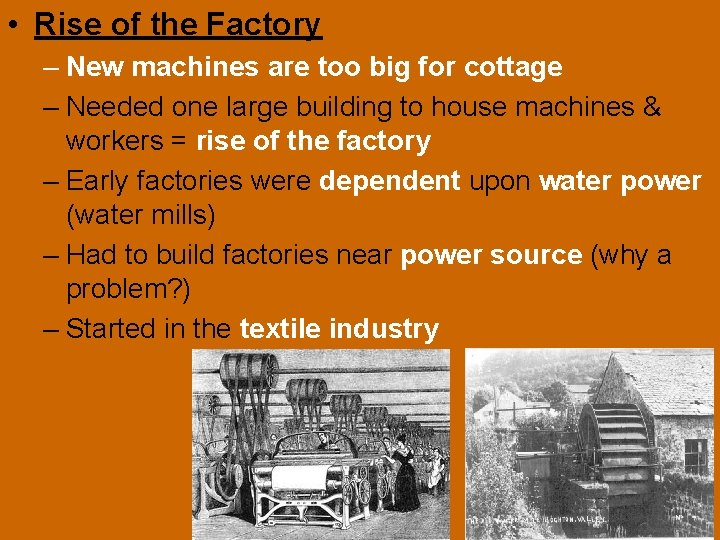
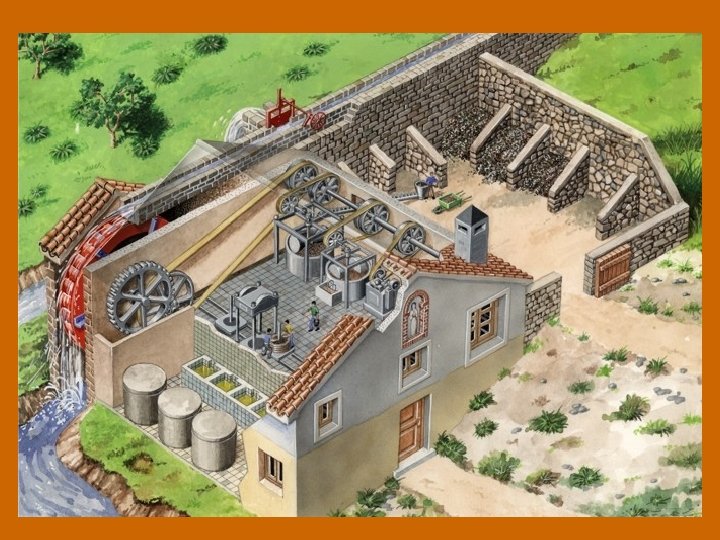
• Rise of the Factory – New machines are too big for cottage – Needed one large building to house machines & workers = rise of the factory – Early factories were dependent upon water power (water mills) – Had to build factories near power source (why a problem? ) – Started in the textile industry
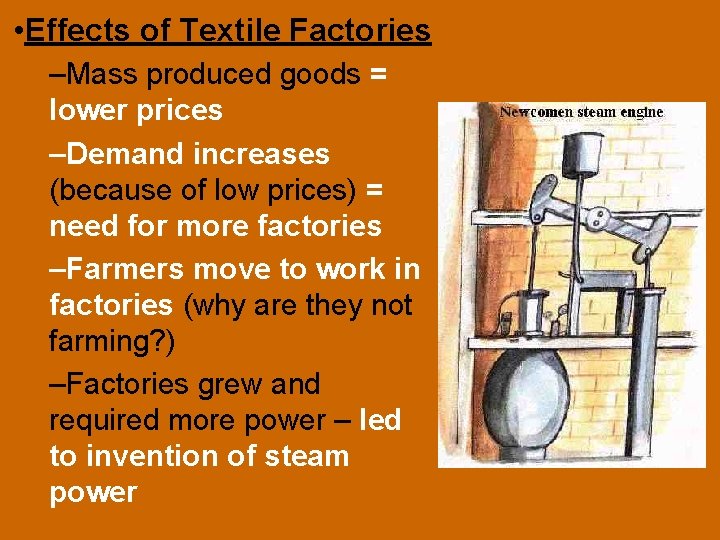
• Effects of Textile Factories –Mass produced goods = lower prices –Demand increases (because of low prices) = need for more factories –Farmers move to work in factories (why are they not farming? ) –Factories grew and required more power – led to invention of steam power
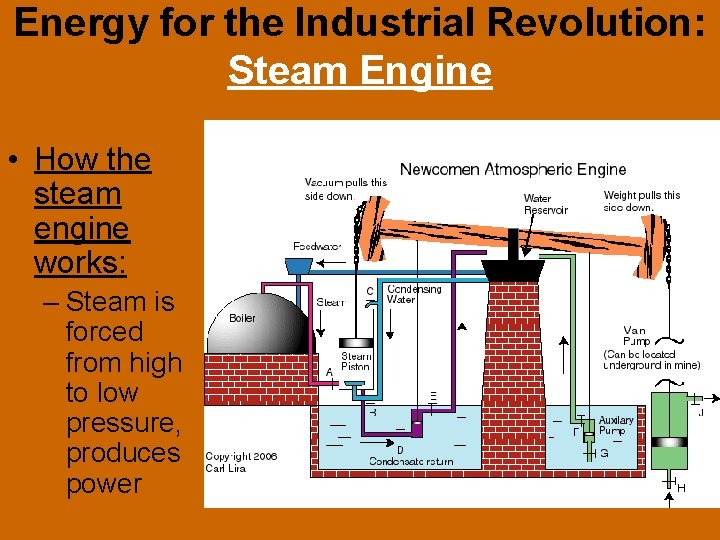
Energy for the Industrial Revolution: Steam Engine • How the steam engine works: – Steam is forced from high to low pressure, produces power
• Effects of the steam engine – Requires enormous amounts of coal (to fuel steam engine) – Requires iron for tools, machinery, transportation – No longer dependent upon water power – Increases textile production & leads to new inventions in various industries • Examples: –Bessemer Process –Improved Transportation
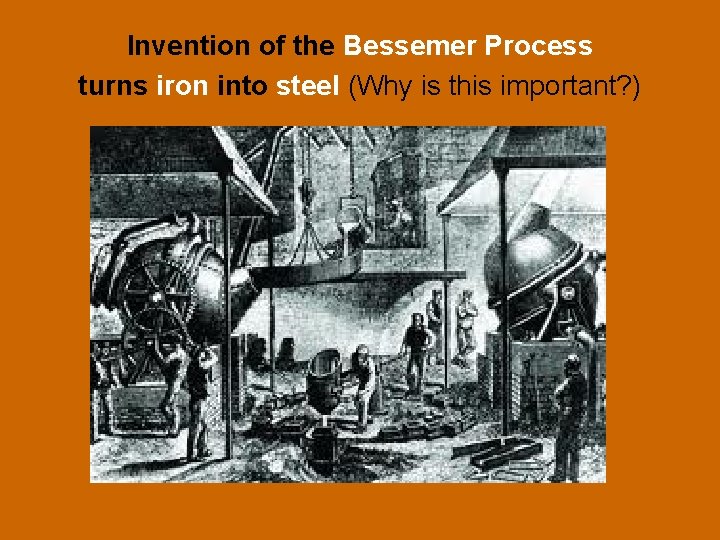
Invention of the Bessemer Process turns iron into steel (Why is this important? )
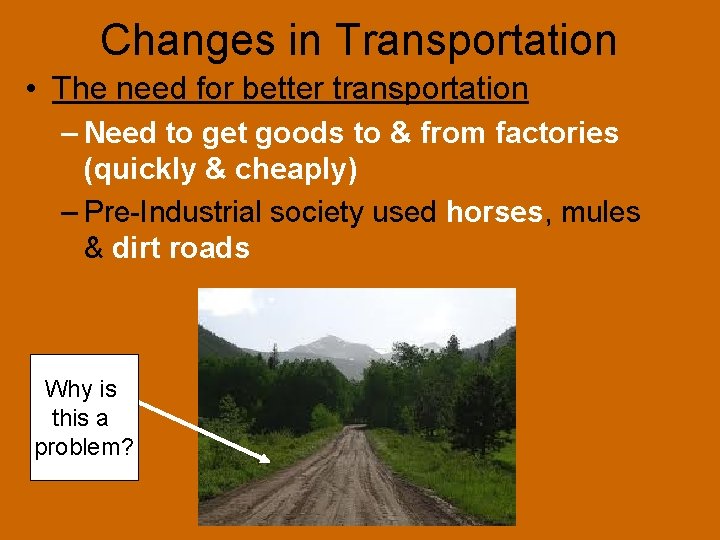
Changes in Transportation • The need for better transportation – Need to get goods to & from factories (quickly & cheaply) – Pre-Industrial society used horses, mules & dirt roads Why is this a problem?
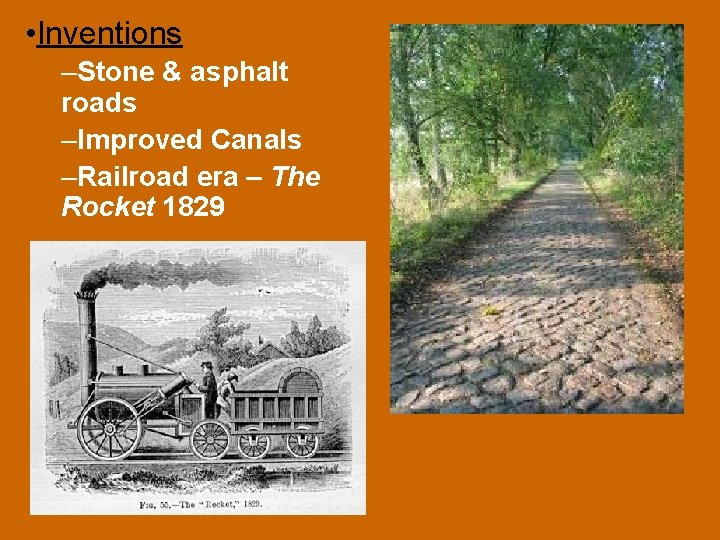
• Inventions –Stone & asphalt roads –Improved Canals –Railroad era – The Rocket 1829
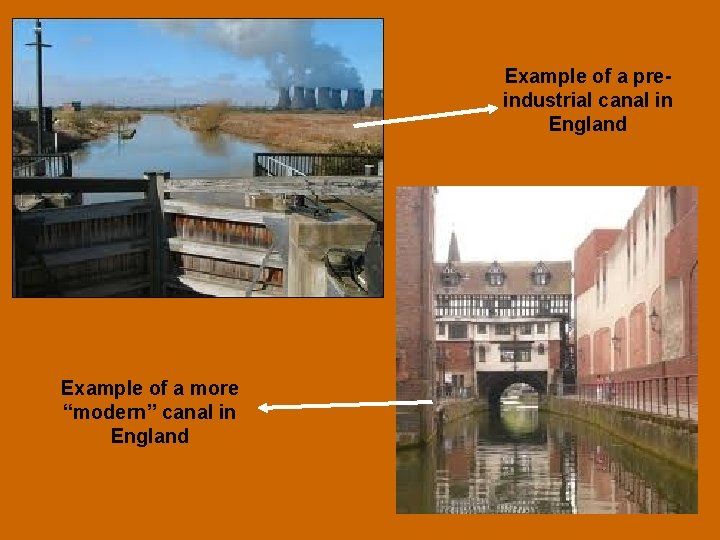
Example of a preindustrial canal in England Example of a more “modern” canal in England
Effects of Industrialization on Transportation • Steamships & Trains: – Cheaper transportation increased production, trade, and profits – England had the most powerful navy in the world – fueled other industries • • • Coal Steam engines Iron Steel Manufactured products
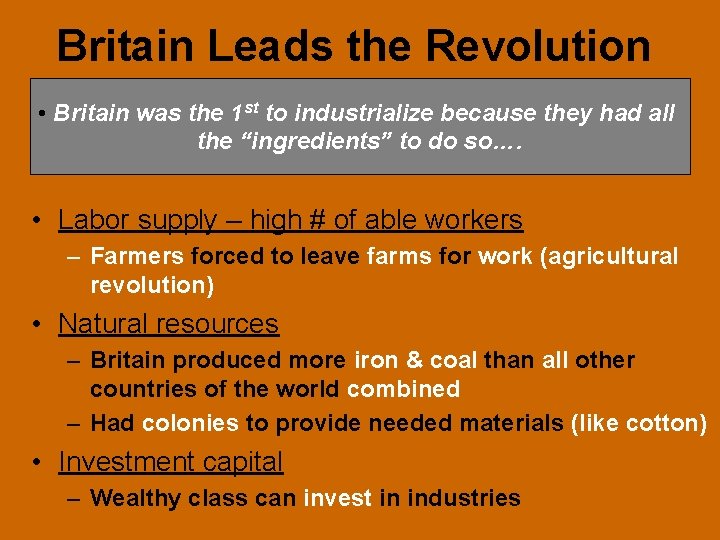
Britain Leads the Revolution • Britain was the 1 st to industrialize because they had all the “ingredients” to do so…. • Labor supply – high # of able workers – Farmers forced to leave farms for work (agricultural revolution) • Natural resources – Britain produced more iron & coal than all other countries of the world combined – Had colonies to provide needed materials (like cotton) • Investment capital – Wealthy class can invest in industries
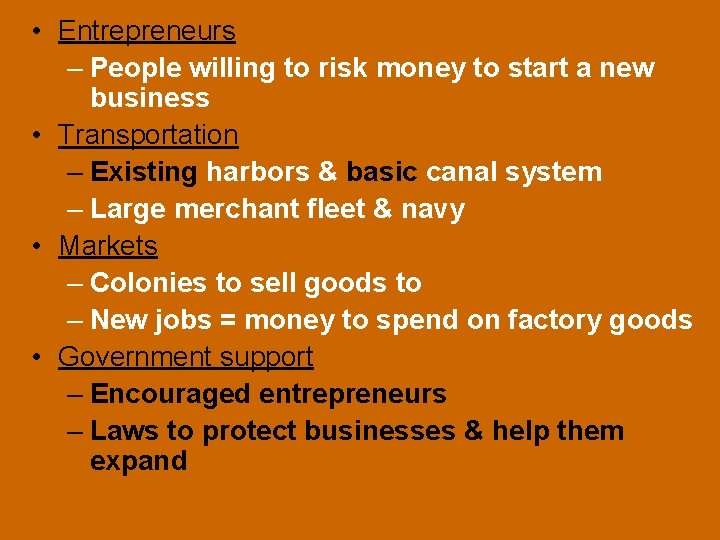
• Entrepreneurs – People willing to risk money to start a new business • Transportation – Existing harbors & basic canal system – Large merchant fleet & navy • Markets – Colonies to sell goods to – New jobs = money to spend on factory goods • Government support – Encouraged entrepreneurs – Laws to protect businesses & help them expand