
Prehistory to Early Civilizations Introduction l Human origin
- Slides: 15
Prehistory to Early Civilizations
Introduction l Human origin – 2. 5 million years ago l l Out of Africa thesis Paleolithic (Old Stone) Age – 2. 5 million to 12000 BCE l Simple tools – increase in size, brain capacity – Homo erectus
Late Paleolithic Developments Homo sapiens – 120, 000 years ago – killed off others? Population growth required change – 1 square mile to hunt/gather for 2 people Greatest achievement – spread over earth l l l l Fire/animal skin 14, 000 Great ice age ended Tools – sharpen animal bones, rafts Domesticated animals B. Knowledge based on cave paintings, tool remains, burial sites
Neolithic (New Stone) Revolution l l Neolithic (New Stone) Age Revolution Agriculture changed everything – could support more people (beginning of modern history) l l Causes of Agriculture 1. 2. 3. l Settle one spot – focus on economic, political, religious goals Population increase – better climate Big game animals decreasing – hunting yield declined Gradual change – harvesting wild grains to planting seeds New animals domesticated – pigs, sheep, goats, cattle l l Meat, skins, dairy Advantage to Europe? Access to most animals…
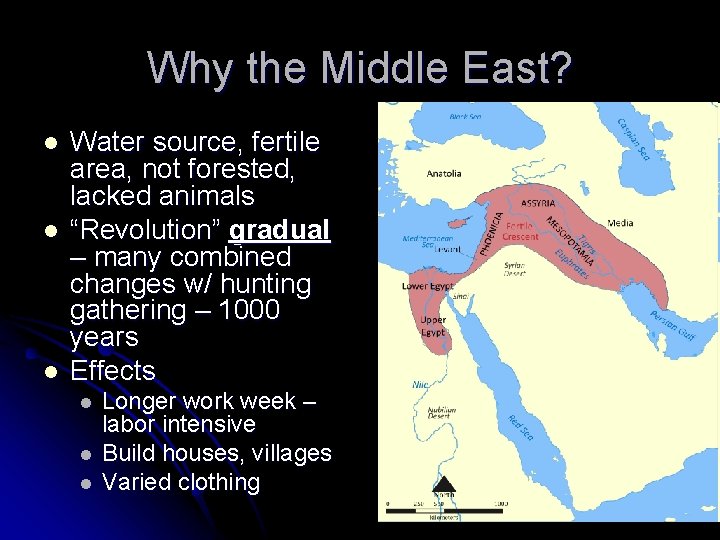
Why the Middle East? l l l Water source, fertile area, not forested, lacked animals “Revolution” gradual – many combined changes w/ hunting gathering – 1000 years Effects l l l Longer work week – labor intensive Build houses, villages Varied clothing
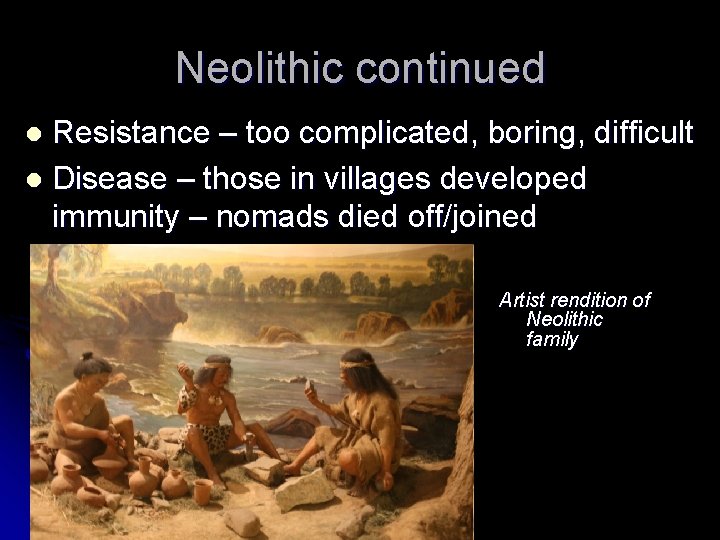
Neolithic continued Resistance – too complicated, boring, difficult l Disease – those in villages developed immunity – nomads died off/joined l Artist rendition of Neolithic family
Civilization l Hunter/gatherer – no bigger than 60 – food runs out l l Other options – slash and burn Benefits of settling 1. 2. Houses, wells, improvements used by future, irrigation Irrigation/defense required work together – organization from above
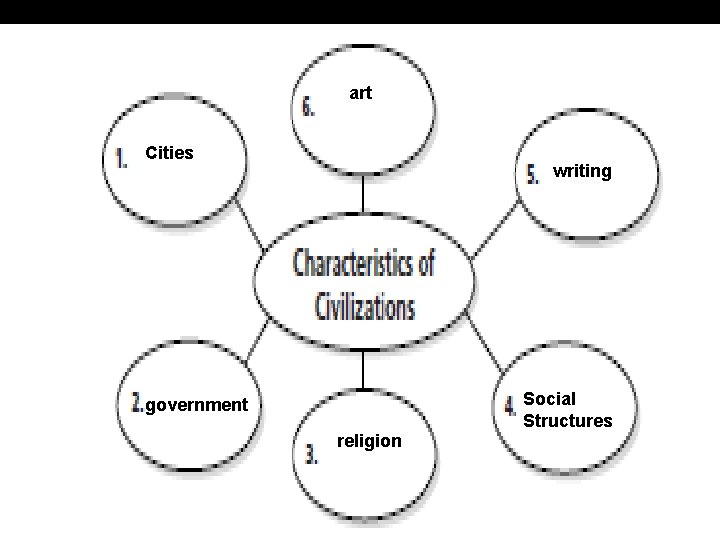
art Cities writing Social Structures government religion
The Idea of Civilization in World History Perspective l Differences between civilized and barbaric/savages long held l l Related to fear of invasion/outsiders common Civilis – of the citizens – Latin l l Chinese – cultural, not biological or racial – could adapt American Indians – feared Chichimecs – sons of the dog Rome – urban dwellers vs. forest/desert dwellers Greece – barbarians
Ethnocentrism l l Historians initially – cultural differences, then 19 th century racial differences Some races more inventive, moral, courageous, artistic l l Savage to civilized – white, yellow, red, brown, black Social Darwinism – historiography l l Justified European expansion – White Man’s Burden Ethnocentrism
Open-minded approach l Other approach – civilization just one form of social organization l All societies produce cultures, though might lack food surplus/specialization l All peoples capable – but lack resources, historical circumstances, desire
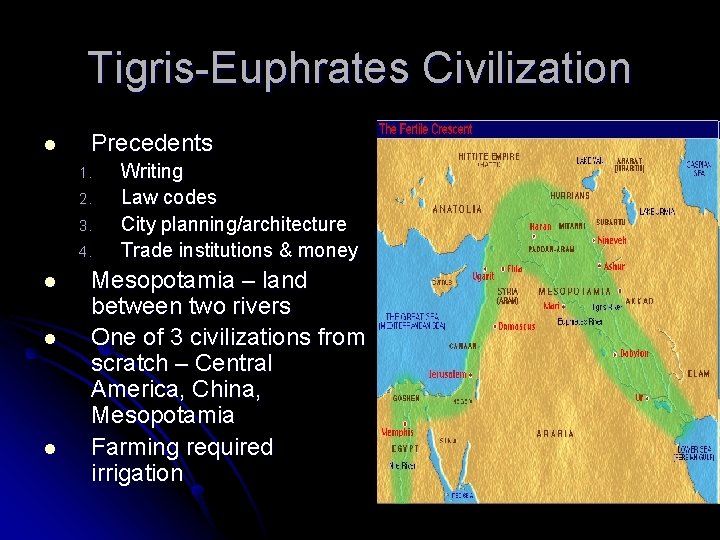
Tigris-Euphrates Civilization l Precedents 1. 2. 3. 4. l l l Writing Law codes City planning/architecture Trade institutions & money Mesopotamia – land between two rivers One of 3 civilizations from scratch – Central America, China, Mesopotamia Farming required irrigation
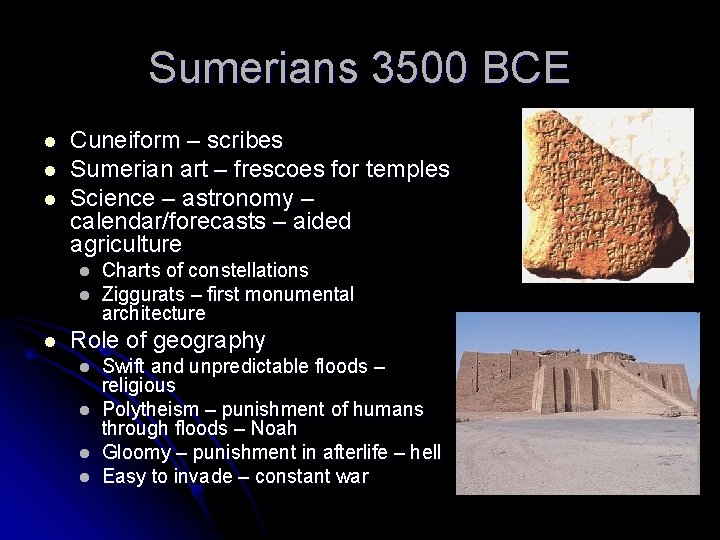
Sumerians 3500 BCE l l l Cuneiform – scribes Sumerian art – frescoes for temples Science – astronomy – calendar/forecasts – aided agriculture l l l Charts of constellations Ziggurats – first monumental architecture Role of geography l l Swift and unpredictable floods – religious Polytheism – punishment of humans through floods – Noah Gloomy – punishment in afterlife – hell Easy to invade – constant war
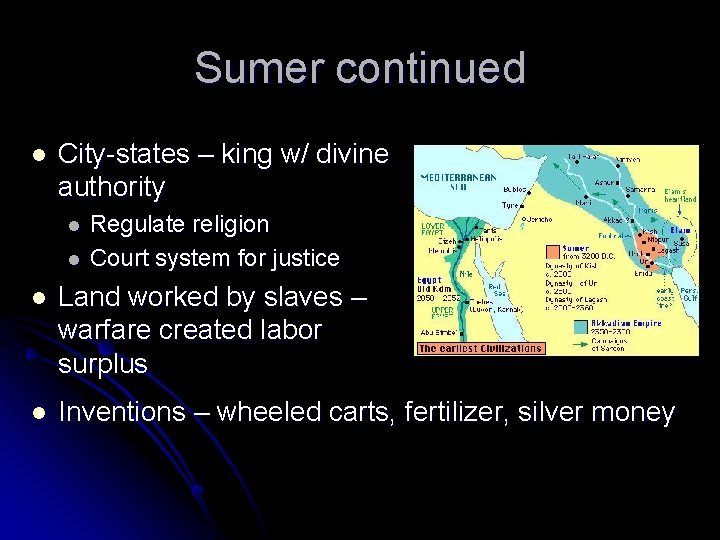
Sumer continued l City-states – king w/ divine authority l l Regulate religion Court system for justice l Land worked by slaves – warfare created labor surplus l Inventions – wheeled carts, fertilizer, silver money
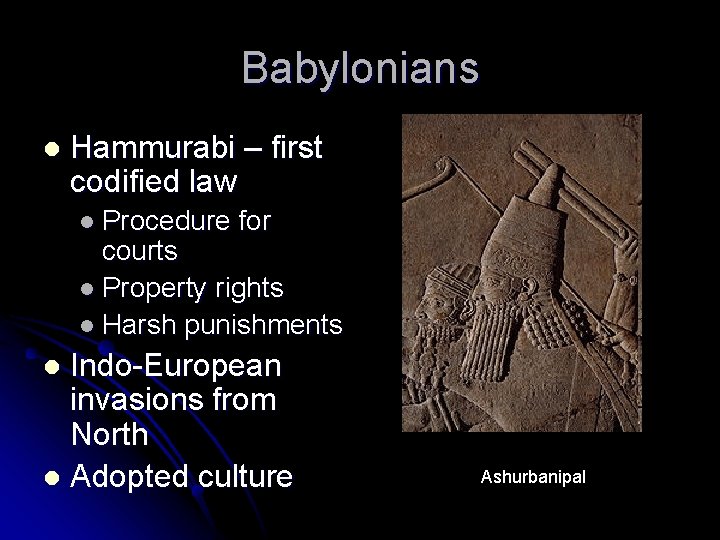
Babylonians l Hammurabi – first codified law l Procedure for courts l Property rights l Harsh punishments Indo-European invasions from North l Adopted culture l Ashurbanipal