
Prehistory Events Art and Architecture Dating Conventions and

- Slides: 49
Prehistory Events, Art and Architecture
Dating Conventions and Abbreviations B. C. =before Christ B. C. E. =before the Common Era A. D. =Anno Domini (the year of our Lord) C. E. =Common Era c. or ca. = circa C. =century
Prehistory u u u 2, 000 BCE – first tool making hominids (homo habilis) 1, 900, 000 BCE – homo erectus appears first hominids that walk upright 315, 000 BCE – first modern humans appear in Africa(homo sapiens) 200, 000 -100, 000 BCE – other types of homo sapiens sub species appear (Neanderthals, Rhodesiensis, Heidelbergensis, Denisova, Red Deer cave people) 100, 000 BCE – first evidence of religious practices (serious burials) 50, 000 BCE – fully modern language appears (vocal cords in skeletal remains)
Prehistory u u u 40, 000 BCE – small portable stone figures first appear (sculptures), some cave painting (Indonesia, France) 35, 000 – 10, 000 BCE – homo sapiens become dominant species over Neandertal and others 28, 000 BCE – first known large series of European cave paintings appear at Chauvet in France 15, 000 – 10, 000 BCE – Lascaux and Altamira cave paintings in France and Spain respectively appear 9000 BCE – animals begin to be domesticated 8000 BCE – agriculture and animals domesticated cause the Neolithic Agricultural Revolution
Prehistory 9000 -7500 BCE – Jericho develops as world’s oldest continuously inhabited city u 7000 BCE – Pottery develops u 3300 BCE – earliest writing develops in Mesopotamia (Sumer) – ends prehistoric period begins historic period u 3000 BCE – Bronze Age begins in Mesopotamia u 2300 BCE – by this point most cultures have moved into the Bronze Age – end of Stone Age u
Three Eras of Prehistory u u u Paleolithic – Old Stone Age – 40, 000 – 10, 000 BCE Characterized by nomadic hunting and gathering, no permanent dwellings. Mesolithic – Middle Stone Age – 10, 000 – 8, 000 BCE Characterized by early domestication of animals; hunting and fishing settlements begin Neolithic – New Stone Age – 8, 000 – 2, 300 BCE Development of full scale agriculture and settlements
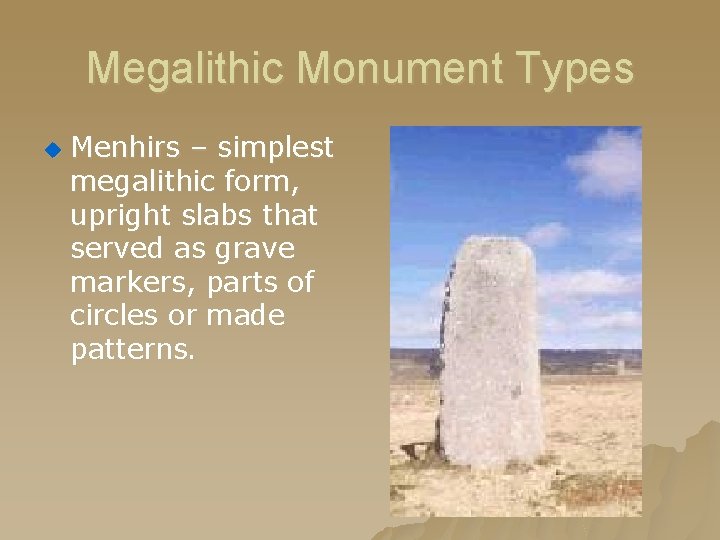
Megalithic Monument Types u Menhirs – simplest megalithic form, upright slabs that served as grave markers, parts of circles or made patterns.
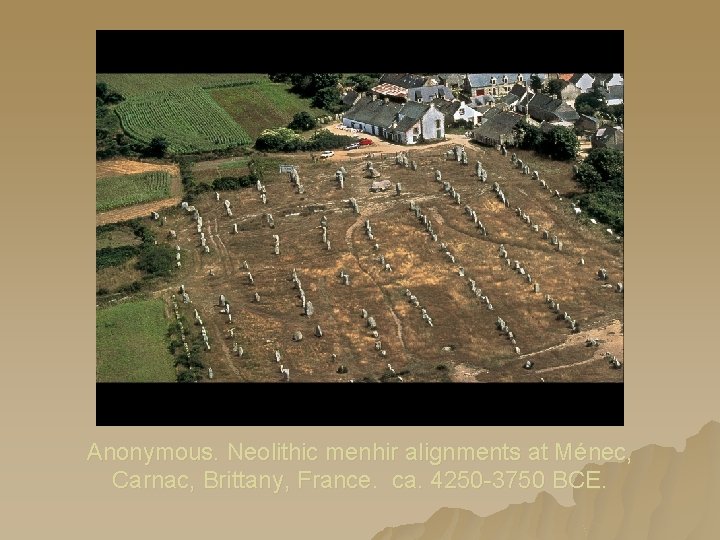
Anonymous. Neolithic menhir alignments at Ménec, Carnac, Brittany, France. ca. 4250 -3750 BCE.
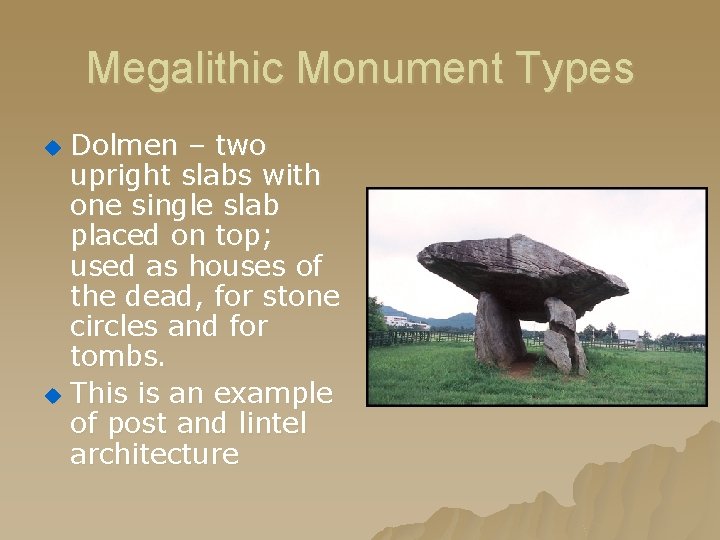
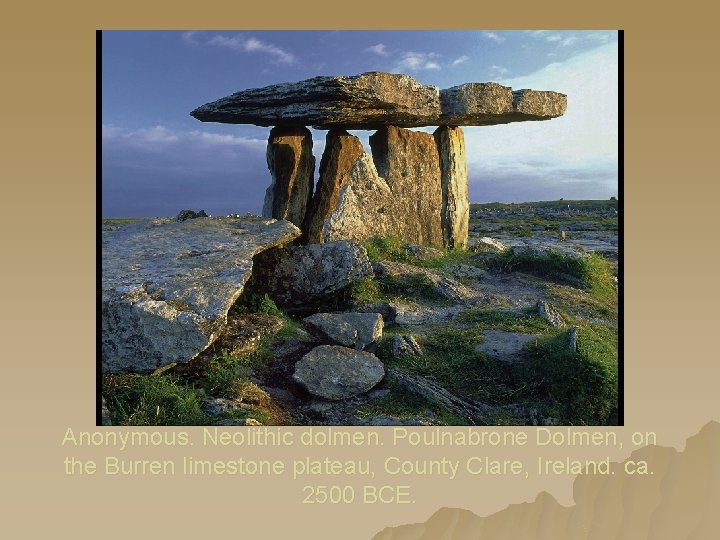
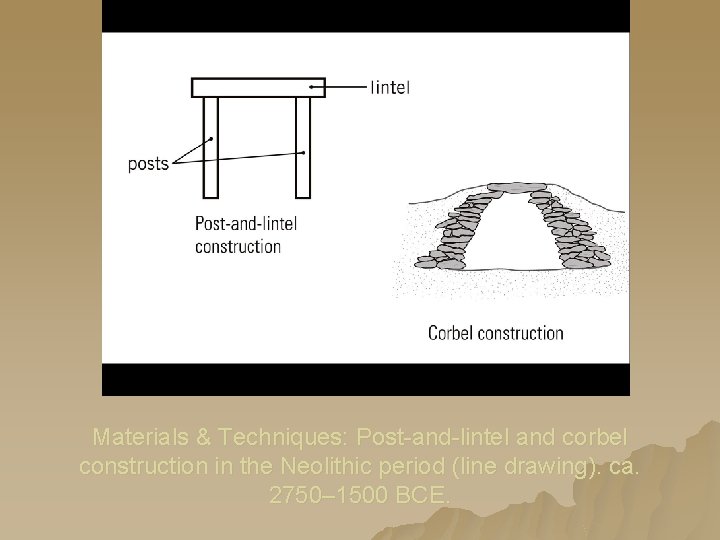
Megalithic Monument Types Dolmen – two upright slabs with one single slab placed on top; used as houses of the dead, for stone circles and for tombs. u This is an example of post and lintel architecture u
Anonymous. Neolithic dolmen. Poulnabrone Dolmen, on the Burren limestone plateau, County Clare, Ireland. ca. 2500 BCE.
Materials & Techniques: Post-and-lintel and corbel construction in the Neolithic period (line drawing). ca. 2750– 1500 BCE.
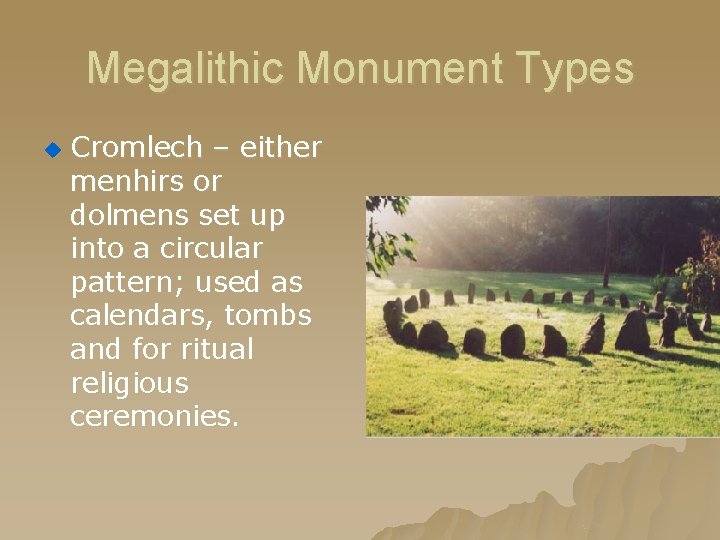
Megalithic Monument Types u Cromlech – either menhirs or dolmens set up into a circular pattern; used as calendars, tombs and for ritual religious ceremonies.
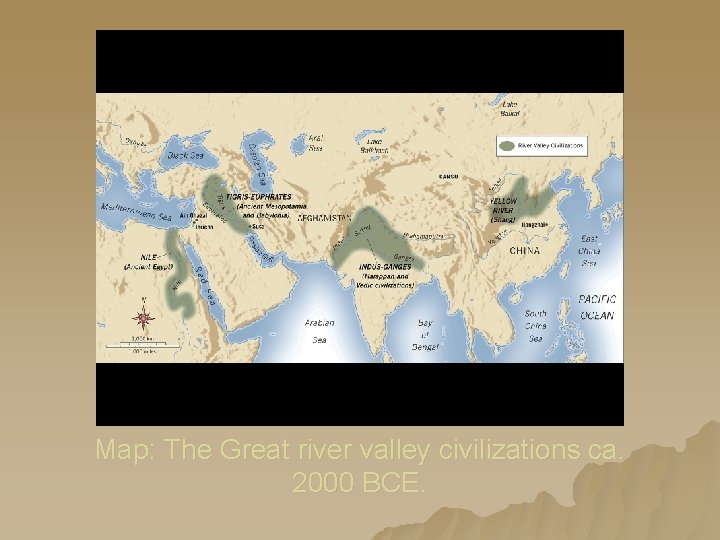
River Valley Civilizations u Tigris and Euphrates River Valley – Mesopotamian Civilization u Nile River Valley – Egyptian Civilization u Indus River Valley – Indian Civilization u Yang Tze (Yellow) River Valley – Chinese Civilization
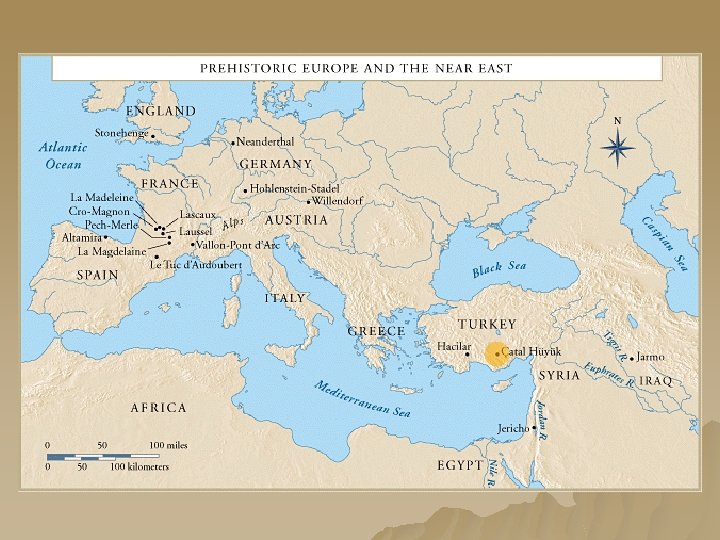
Map: The Great river valley civilizations ca. 2000 BCE.
How the Art Work Slides Look u u u Title Date created (if known) City created in (if known) Style (Painting, etc) Artist (if applicable) Important Information (lots of test questions come from here)
Paleolithic Art Characteristics u Tends to be more realistic rather than abstract u Sculptures are usually small and portable u Humans rarely depicted u Focus on natural not spiritual world
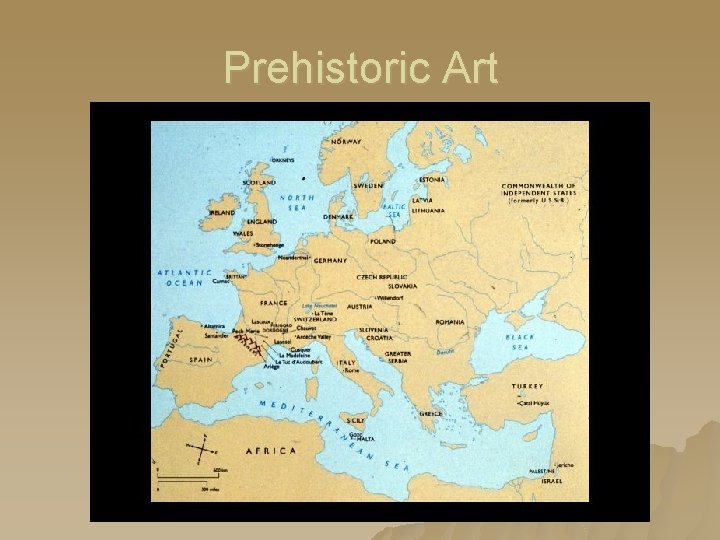
Prehistoric Art
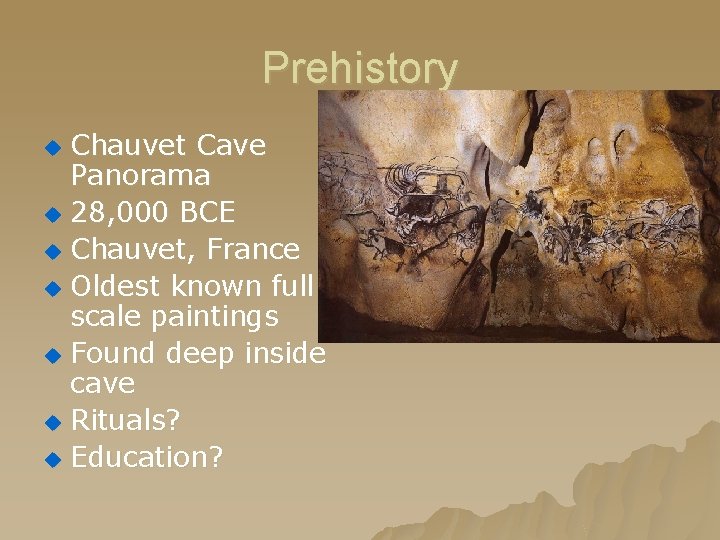
Prehistory Chauvet Cave Panorama u 28, 000 BCE u Chauvet, France u Oldest known full scale paintings u Found deep inside cave u Rituals? u Education? u
Paleolithic Cave Art u u u u u In the absence of a written history, there are only educated, well-reasoned suppositions regarding art’s meaning and function. Assembling the clues, archaeologists know the following about Old Stone Age people and their art: 1) People lived near the entrances of caves. 2) Wall murals are found in the deepest recesses within the caves. 3) The vast majority of the images are of animals. 4) Many of the images have been nicked, suggesting that spears or arrows may have been hurled at them. 5) The images seem to be superimposed one over another, suggesting that they may have been executed at different times and perhaps over long periods of time as opposed to a single decorative campaign resulting in a single unified artistic design. 6) Most of the European caves are found in southern France and north western Spain. – The most famous of the more than 130 caves found in the region of the Pyrenees are Chauvet, Lascaux and Altamira. – Recent discoveries of ever more remote caverns within Chauvet have revealed older yet very sophisticated cave paintings, thus challenging the idea that Paleolithic art skills progressed in a linear manner. 7) Prehistoric artists often incorporated natural rock formations on cave walls, sometimes incising lines. 8) Sticks of charcoal and naturally occurring minerals (such as red iron oxide) were commonly used for the drawings. Tallow was at times mixed with the minerals, making a kind of ancient oil pastel. 19
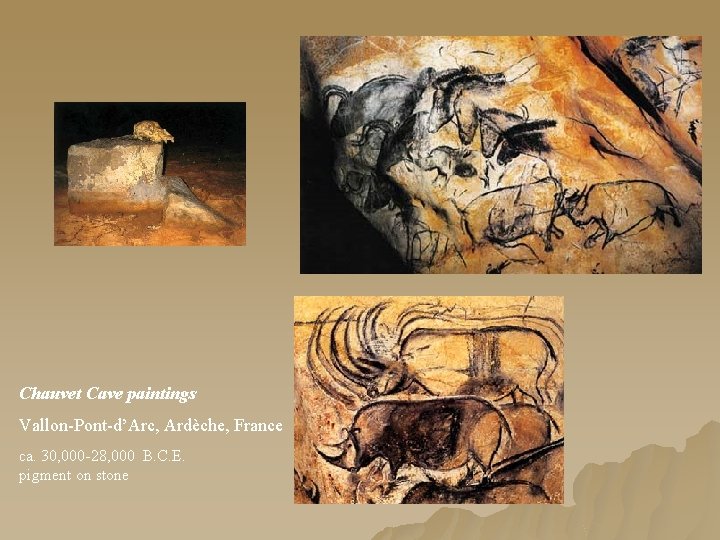
Chauvet Cave paintings Vallon-Pont-d’Arc, Ardèche, France ca. 30, 000 -28, 000 B. C. E. pigment on stone
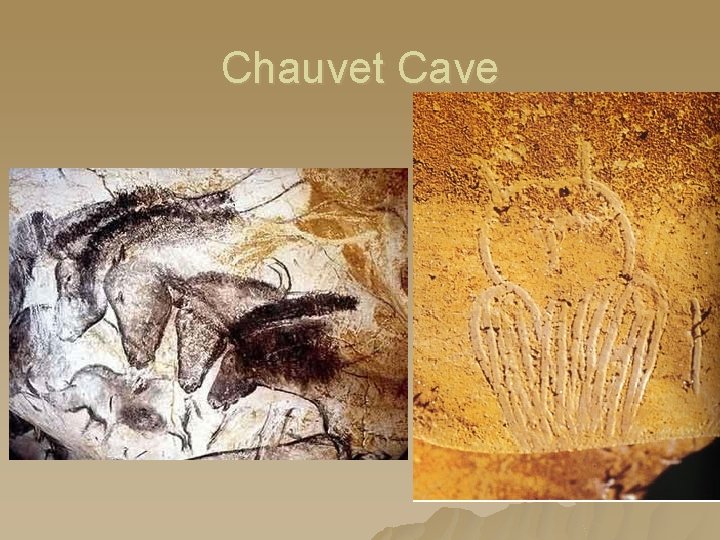
Chauvet Cave
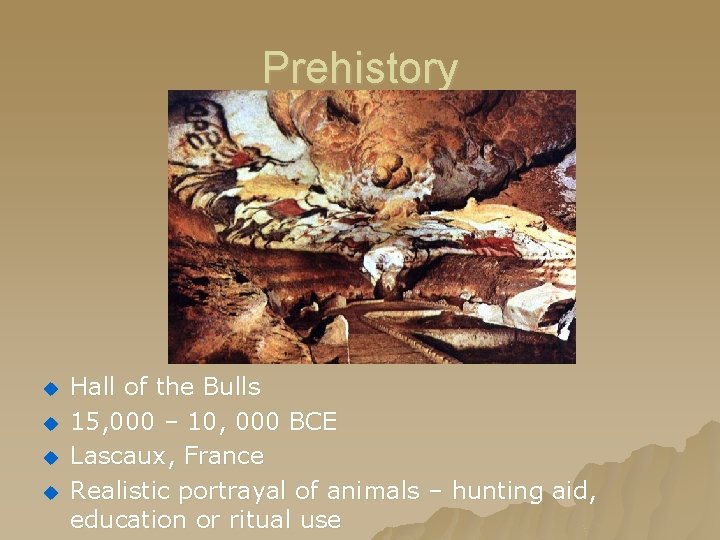
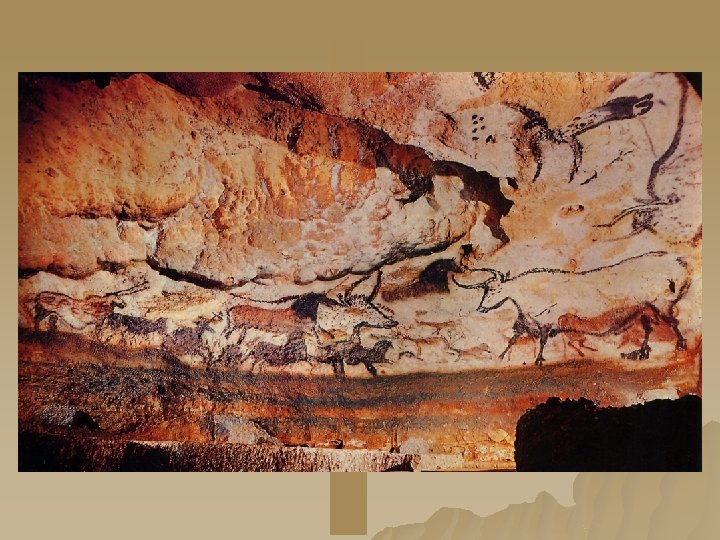
Prehistory u u Hall of the Bulls 15, 000 – 10, 000 BCE Lascaux, France Realistic portrayal of animals – hunting aid, education or ritual use
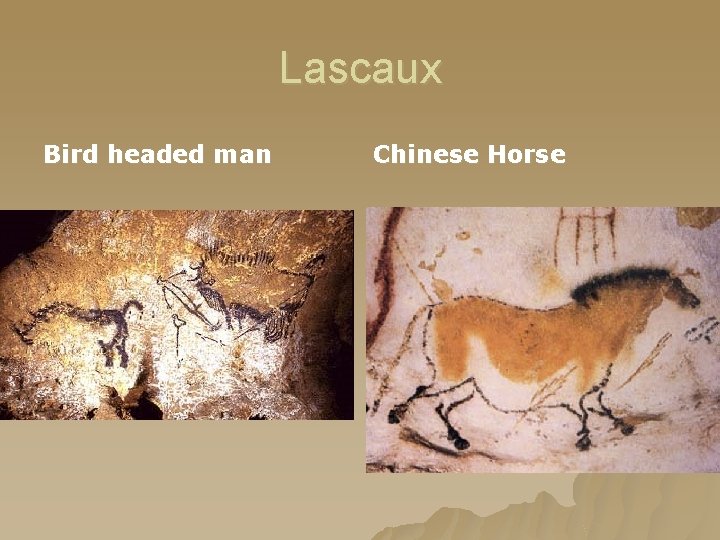
Lascaux Bird headed man Chinese Horse
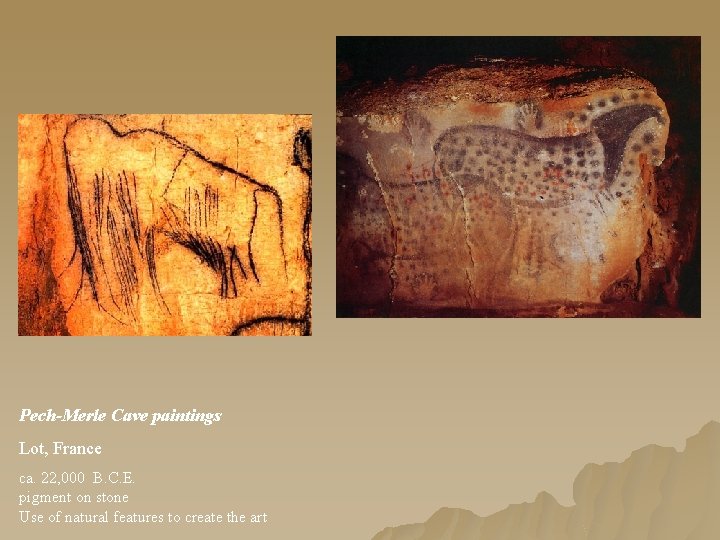
Pech-Merle Cave paintings Lot, France ca. 22, 000 B. C. E. pigment on stone Use of natural features to create the art
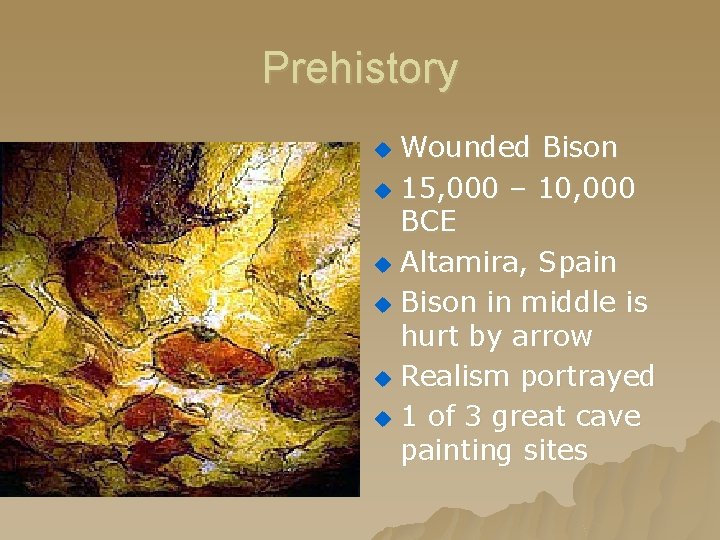
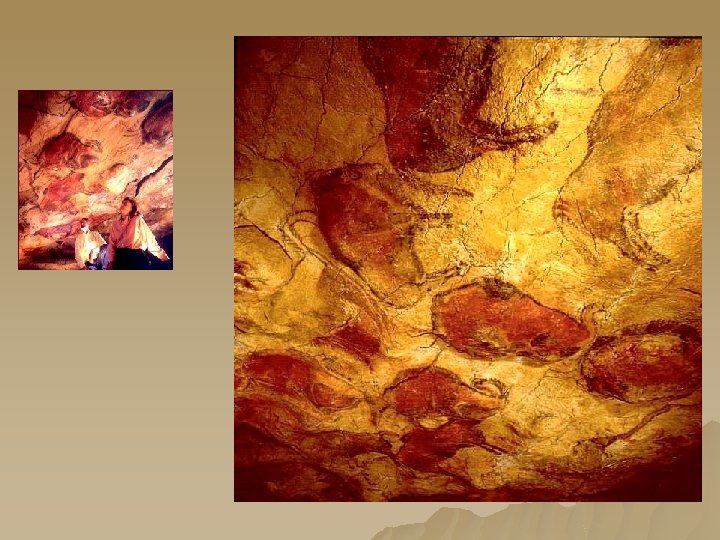
Prehistory Wounded Bison u 15, 000 – 10, 000 BCE u Altamira, Spain u Bison in middle is hurt by arrow u Realism portrayed u 1 of 3 great cave painting sites u
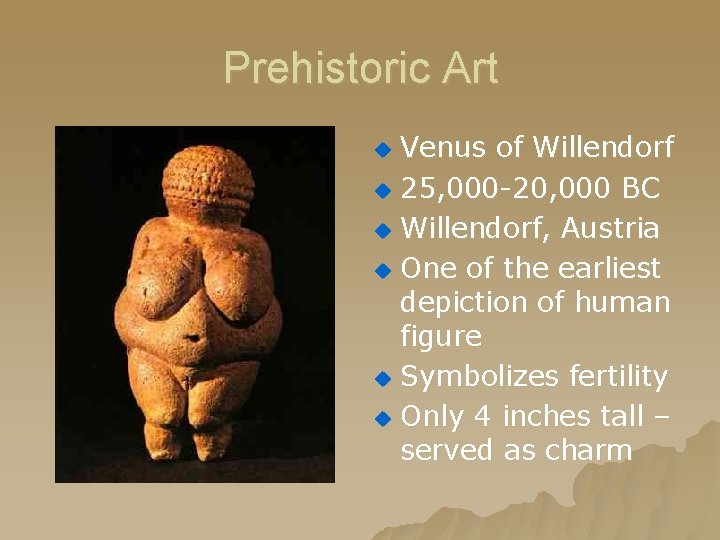
Prehistoric Art Venus of Willendorf u 25, 000 -20, 000 BC u Willendorf, Austria u One of the earliest depiction of human figure u Symbolizes fertility u Only 4 inches tall – served as charm u
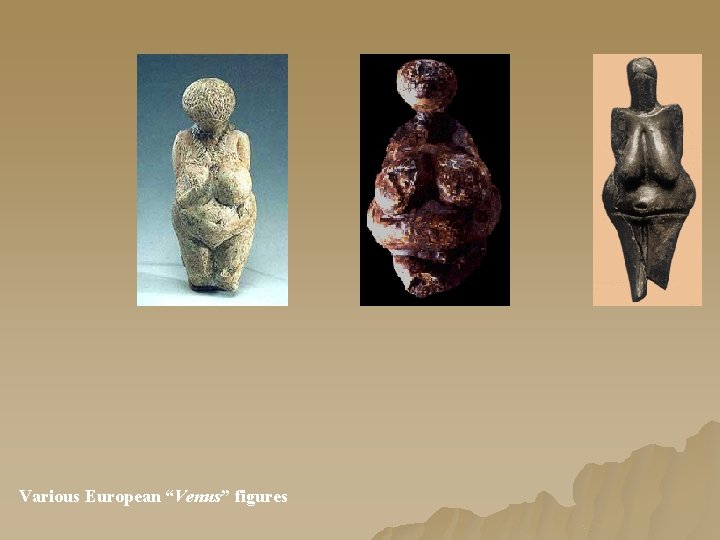
Various European “Venus” figures
Neolithic Art Characteristics u Tends to be more abstract than realistic u Architecture develops u Art for utilitarian purposes u Humans depicted frequently u More focus on the spiritual aspects of life
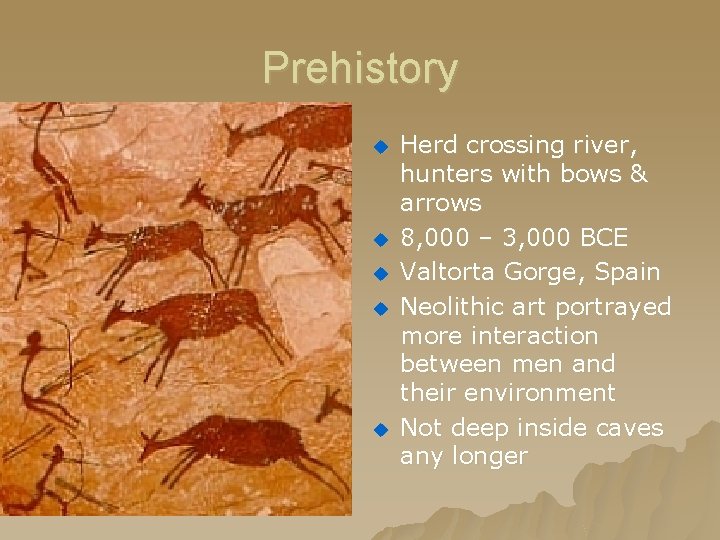
Prehistory u u u Herd crossing river, hunters with bows & arrows 8, 000 – 3, 000 BCE Valtorta Gorge, Spain Neolithic art portrayed more interaction between men and their environment Not deep inside caves any longer
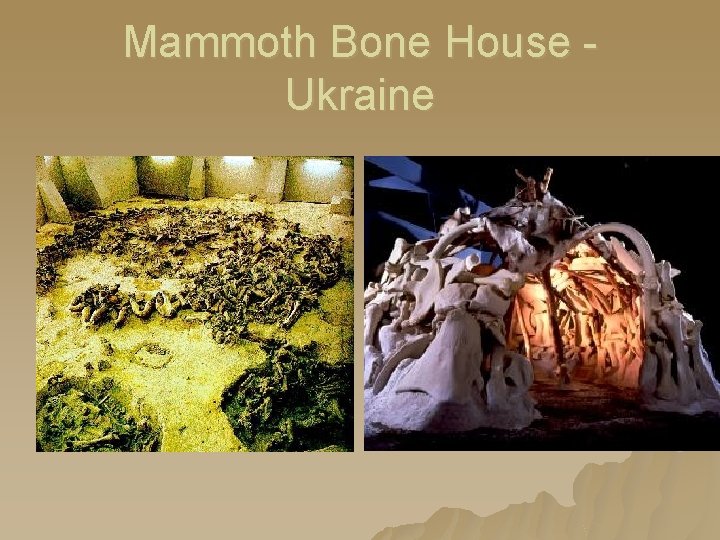
Mammoth Bone House Ukraine
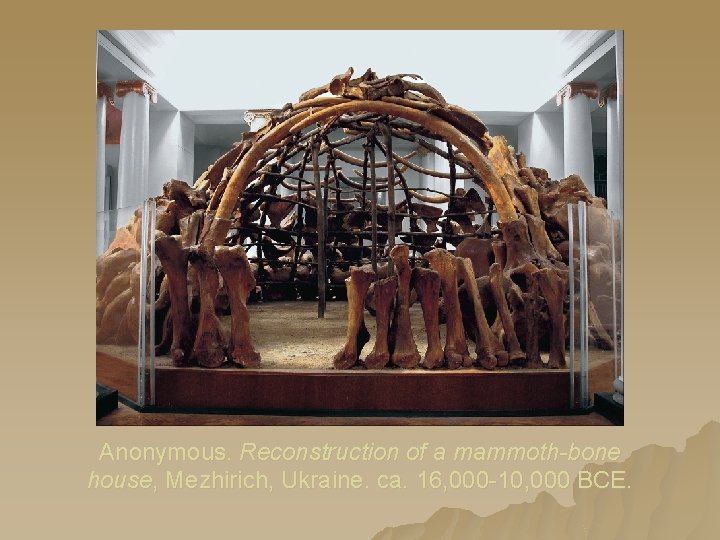
Anonymous. Reconstruction of a mammoth-bone house, Mezhirich, Ukraine. ca. 16, 000 -10, 000 BCE.
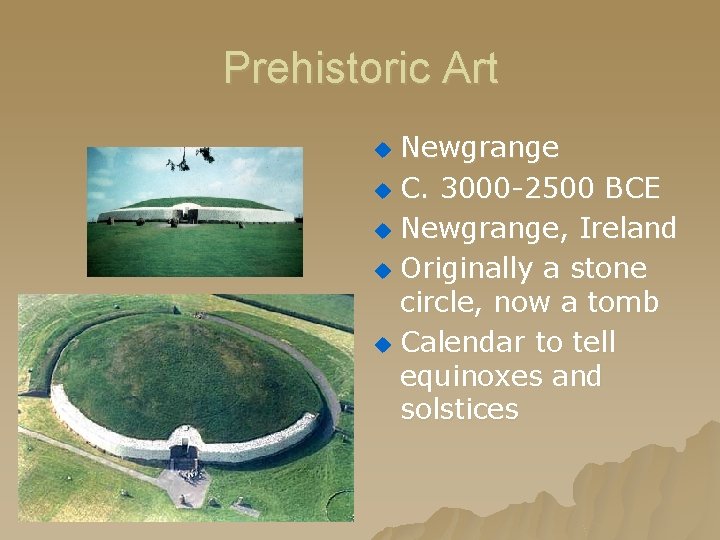
Prehistoric Art Newgrange u C. 3000 -2500 BCE u Newgrange, Ireland u Originally a stone circle, now a tomb u Calendar to tell equinoxes and solstices u
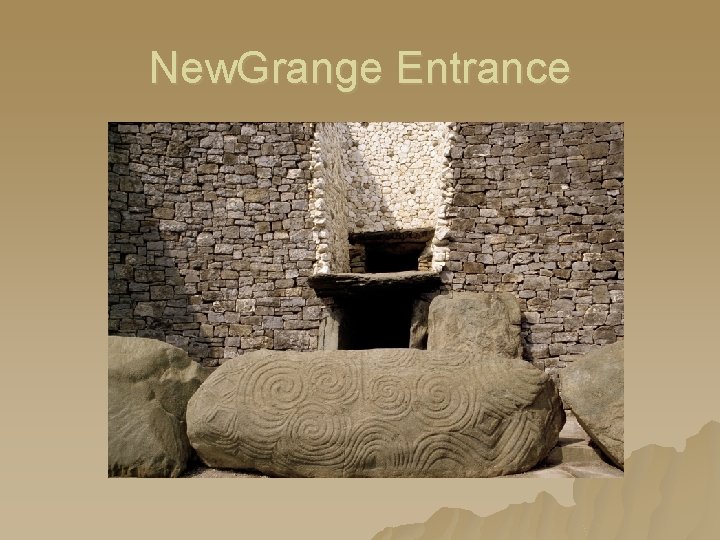
New. Grange Entrance
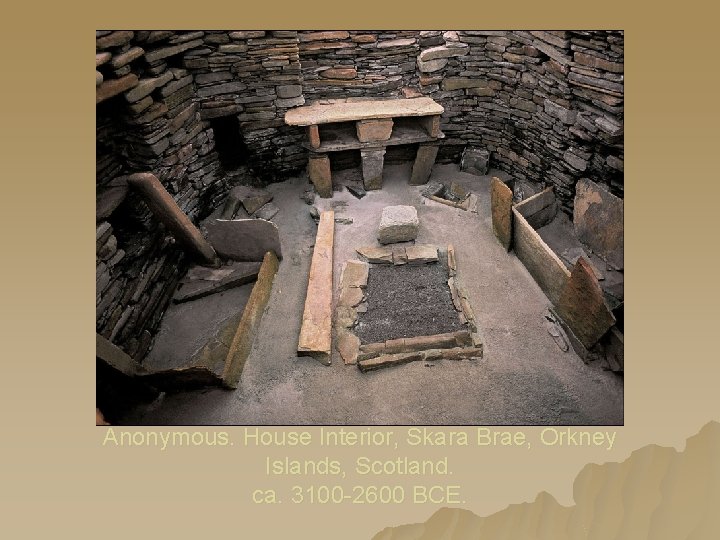
Anonymous. House Interior, Skara Brae, Orkney Islands, Scotland. ca. 3100 -2600 BCE.
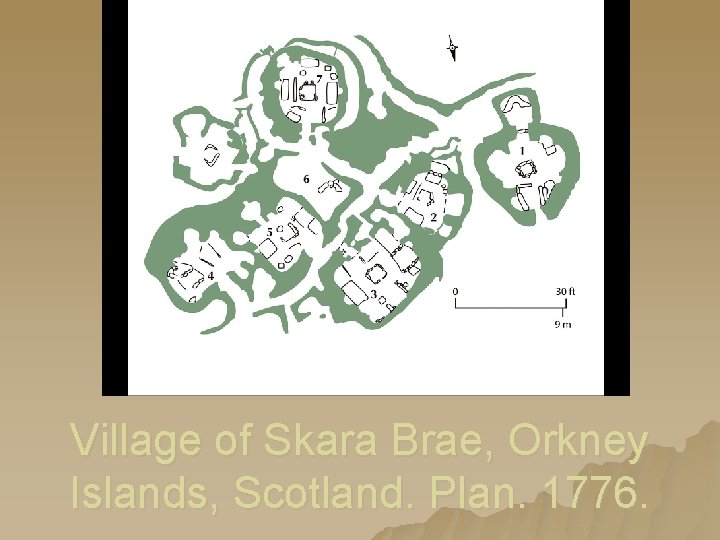
Village of Skara Brae, Orkney Islands, Scotland. Plan. 1776.
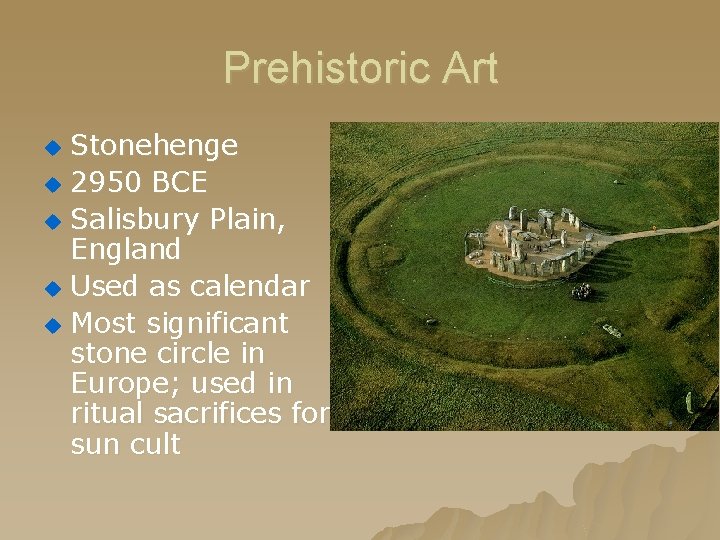
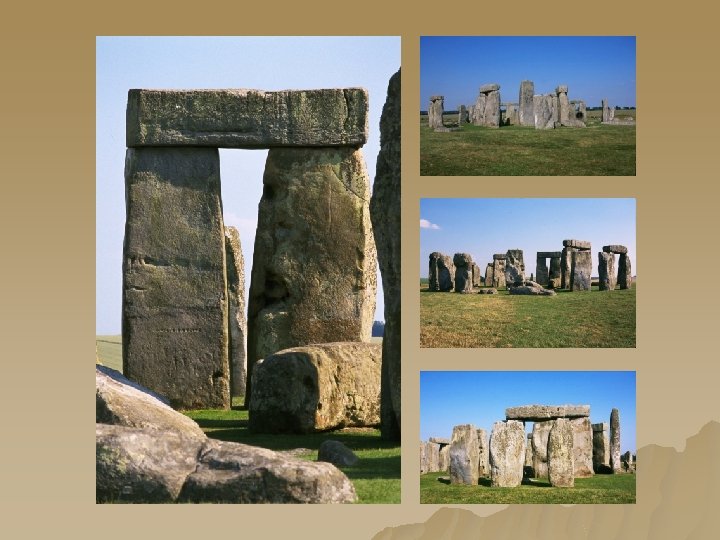
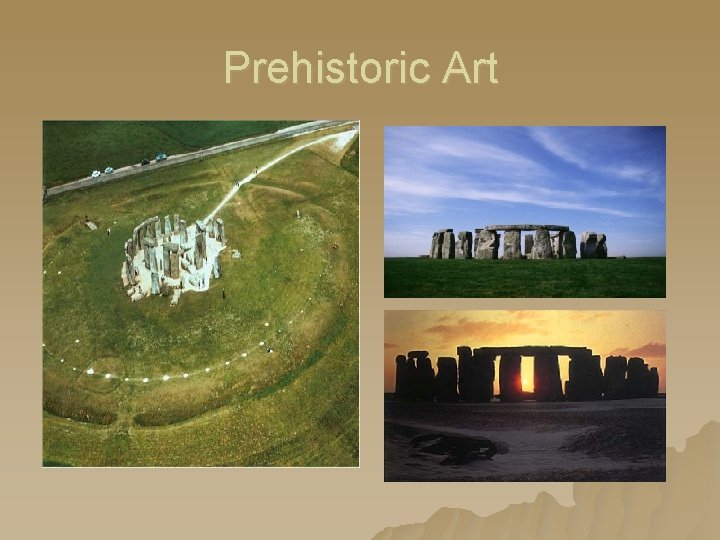
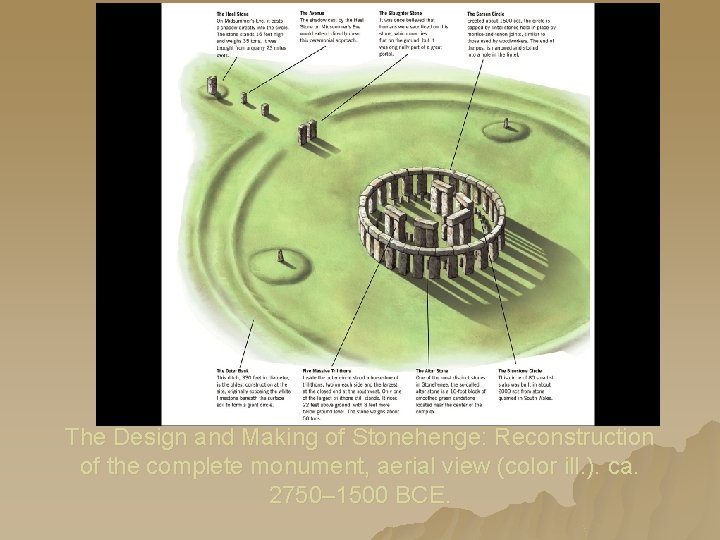
Prehistoric Art Stonehenge u 2950 BCE u Salisbury Plain, England u Used as calendar u Most significant stone circle in Europe; used in ritual sacrifices for sun cult u
Prehistoric Art
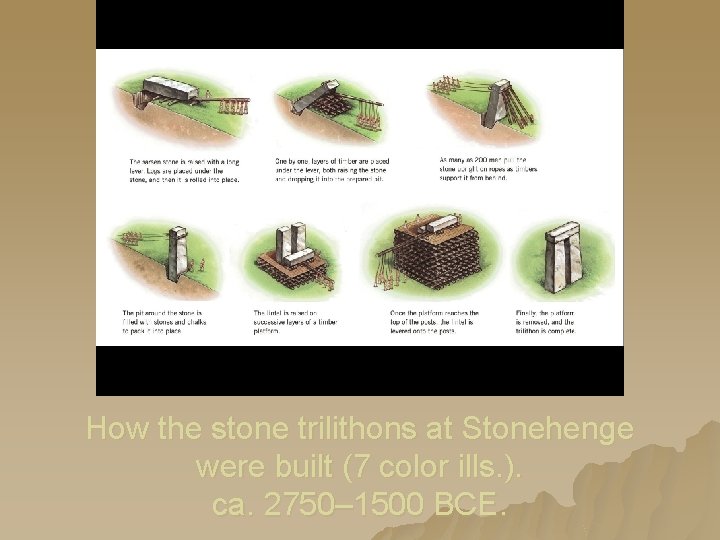
How the stone trilithons at Stonehenge were built (7 color ills. ). ca. 2750– 1500 BCE.
The Design and Making of Stonehenge: Reconstruction of the complete monument, aerial view (color ill. ). ca. 2750– 1500 BCE.
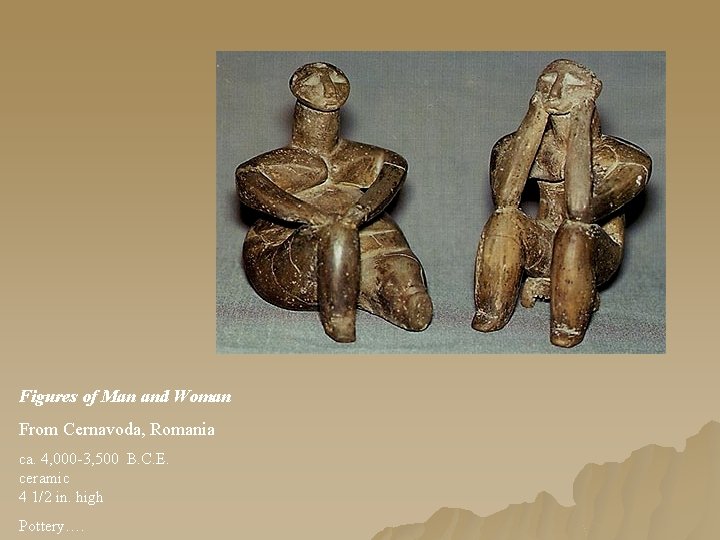
Figures of Man and Woman From Cernavoda, Romania ca. 4, 000 -3, 500 B. C. E. ceramic 4 1/2 in. high Pottery….
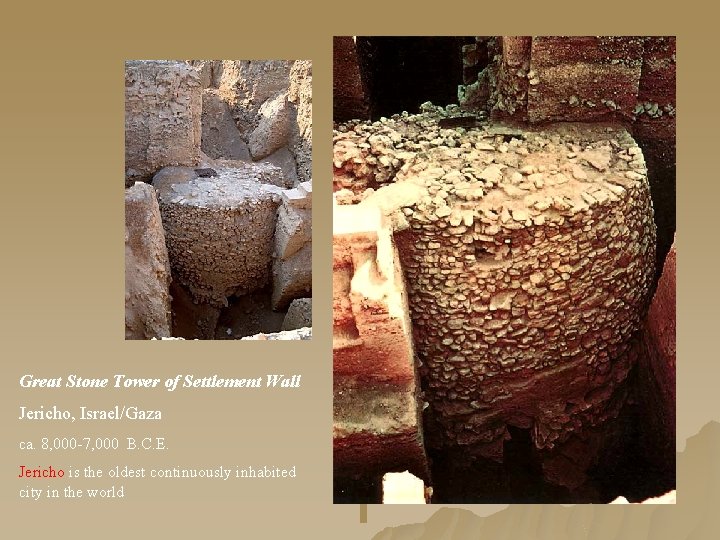
Great Stone Tower of Settlement Wall Jericho, Israel/Gaza ca. 8, 000 -7, 000 B. C. E. Jericho is the oldest continuously inhabited city in the world
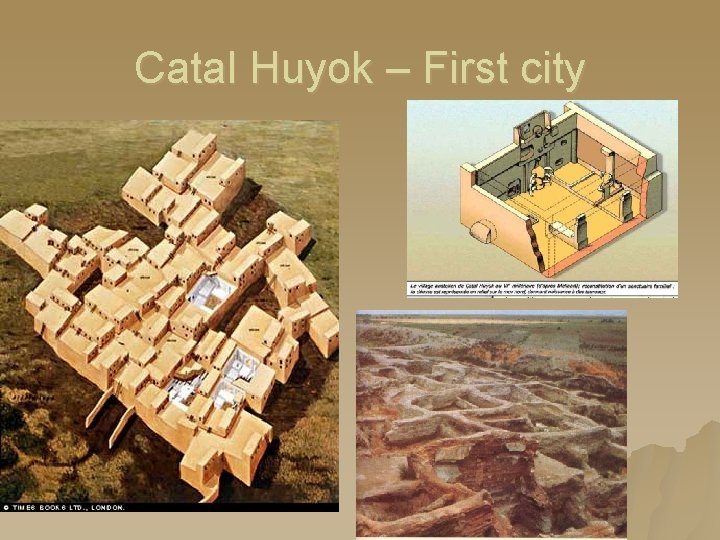
Catal Huyok – First city
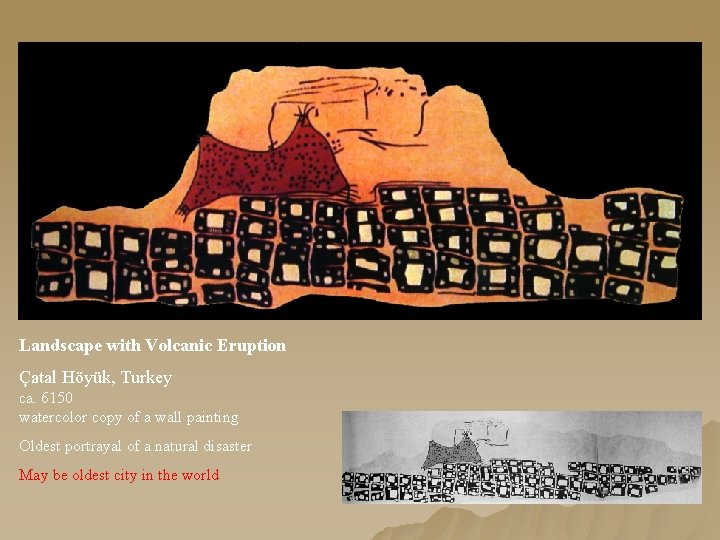
Landscape with Volcanic Eruption Çatal Höyük, Turkey ca. 6150 watercolor copy of a wall painting Oldest portrayal of a natural disaster May be oldest city in the world
Prehistoric Art u The End u Next lecture: Ancient Near East