
Prehistoric People The time before recorded history Timeline
Prehistoric People The time before recorded history
Timeline – BC: Before Christ – BC is also referred to as BCE (Before Current Era) – AD: Anno Domini (In the year of the Lord) – AD is also referred to as CE (Current Era) – BC years work like negative numbers, counting backwards – The further in history, the higher the year – *Don’t forget to account for 2000 years AD when determining BC years – 7500 years ago = About 5500 BC
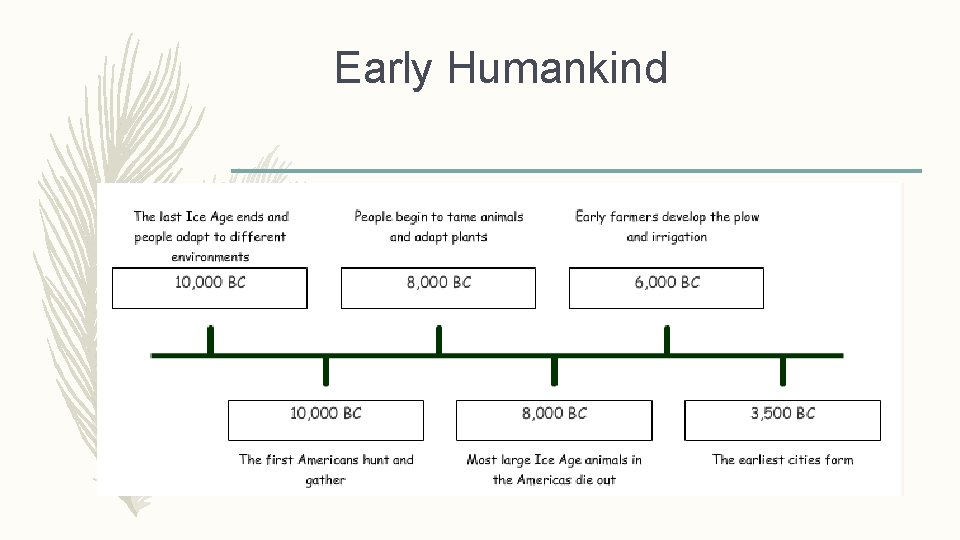
Early Humankind
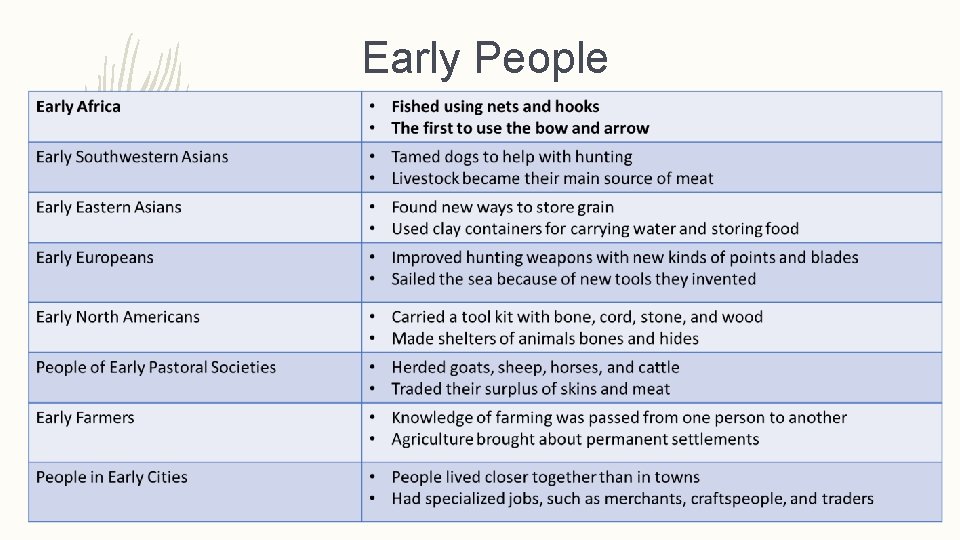
Early People
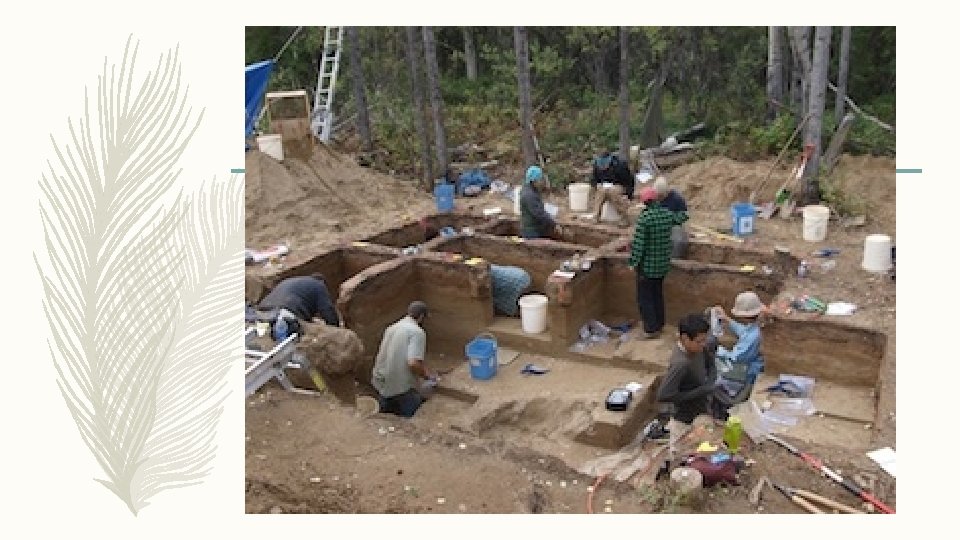
Uncovering the Past – Artifacts: Objects made by people. Artifacts can be tools, instruments, items of art, clothing, pottery, weapons, or anything made by humans in past civilizations. – Fossils: Remains, such as bones, of once living animals and humans. – Theories: Accepted explanations about life in the distant past – Archaeology: The study of things that earlier people left behind. Archeologists study the remains of ancient campsites, shelters, and other buildings. – Excavate: to dig or to scoop out earth – What information can artifacts and fossils provide?
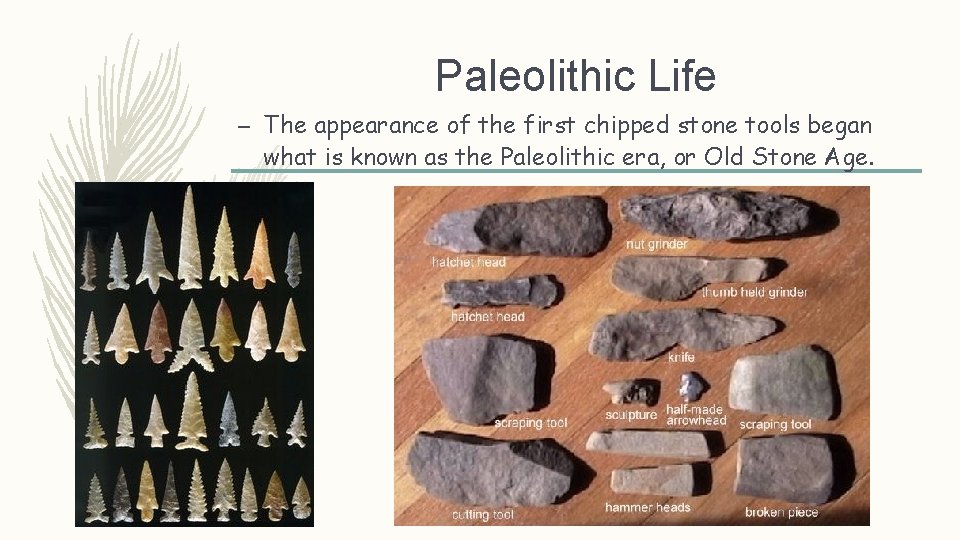
Paleolithic Life – The appearance of the first chipped stone tools began what is known as the Paleolithic era, or Old Stone Age.
Paleolithic Era – This period is about 2. 5 million years old and ended about 10, 000 years ago. – Man discovers fire around 800, 000 years ago, which changes their diet, gives them a warmth, and protects them from predators. – These humans chipped stones to makes tools, which they used to chop, scrape, and do other tasks. – These humans lived in Africa, main in grassy areas near water sources and trees. – They ate mostly plants and some meat, which they got by hunting or pieces left behind by animals. – Another group of humans in Africa began to make better tools, including stone hand axes for chopping and for digging up roots to eat. – Later, they made spears from wood for hunting. – They mastered the use of fire. They cooked food, kept away wild animals, and stayed warm in colder places. – They communicated with hand arm movements and simple sounds. Some may have developed some speech, making it easier to work better and travel farther in groups.
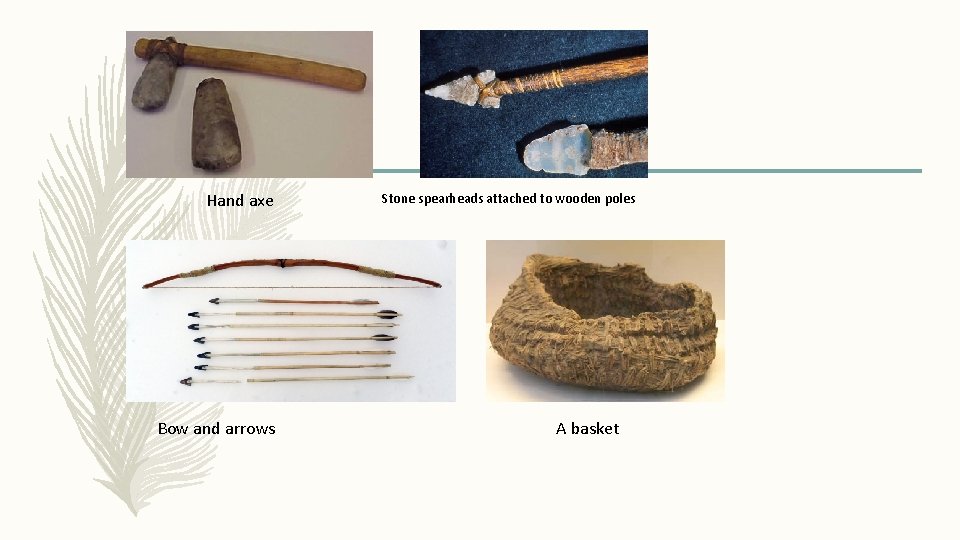
Hand axe Bow and arrows Stone spearheads attached to wooden poles A basket
Paleolithic People – These people were hunters and gathers. – They probably divided labor to feed themselves, with men hunting and women gathering berries, nuts, and plants. – They were nomads, moving from place to survive in small groups. – They followed grazing animals, and they changed locations based on the growing season—when plants stopped growing, they would move again. – They did not have permanent homes and built new shelters wherever they went.
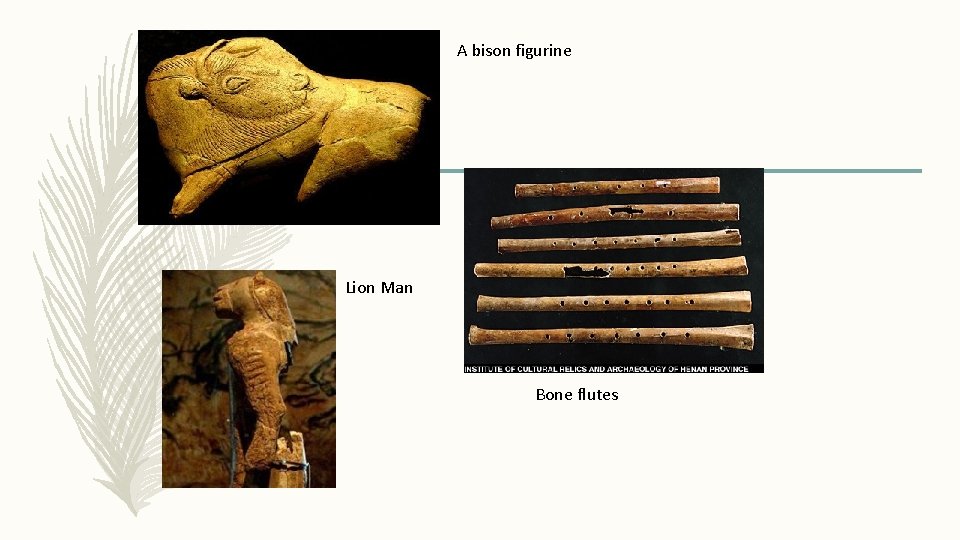
A bison figurine Lion Man Bone flutes
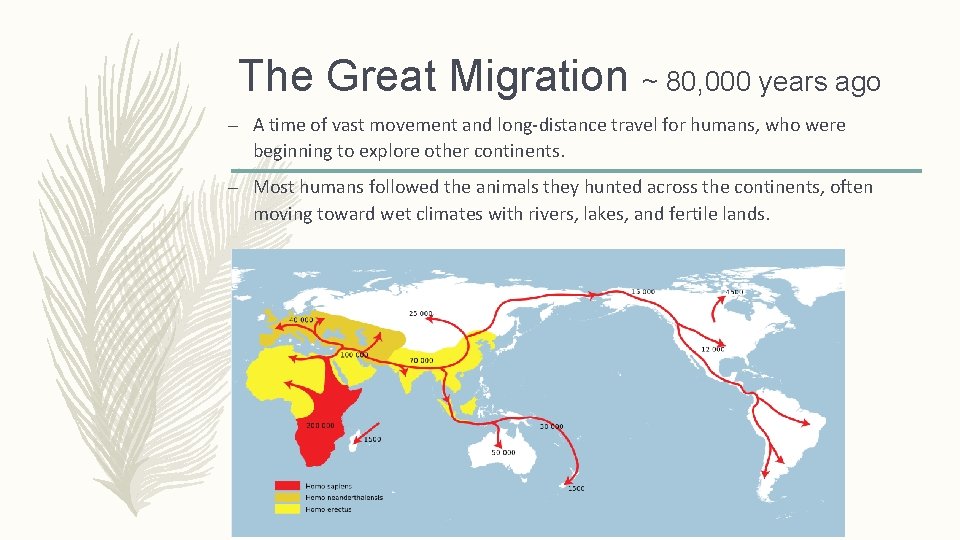
The Great Migration ~ 80, 000 years ago – A time of vast movement and long-distance travel for humans, who were beginning to explore other continents. – Most humans followed the animals they hunted across the continents, often moving toward wet climates with rivers, lakes, and fertile lands.
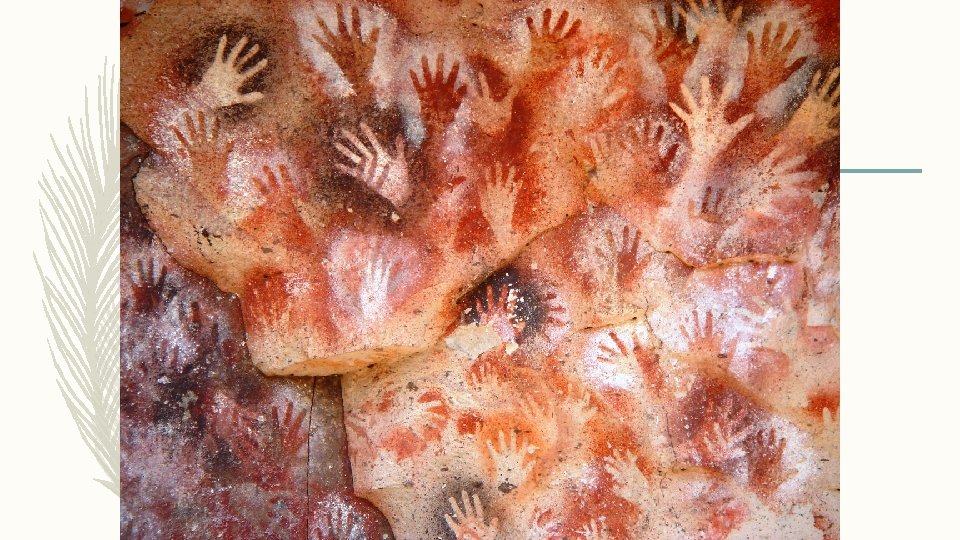
Art – A form of communication – Probably used for telling stories and sharing myths – Sometimes, hunting strategies were drawn on the walls of a cave – Stone lamps filled with animal fat would light the caves – Mixed with various mineral ores, artists used fats to create reds, yellows, and blacks – They would use their fingers to draw on the walls of the caves or they would use sticks, leaves , and hollow reeds to blow paint through – Sometimes they left their handprints as a signature
http: //www. thalo. com/articles/view/62 7/the_cave_paintings_of_lascaux_fiel d_museum
- Slides: 15