
Prehistoric Art The Birth of Art Prehistoric Art
Prehistoric Art “The Birth of Art”
Prehistoric Art c. 30, 000 - 2, 000 BCE c. = circa, means around BCE=Before Common Era • “prehistoric” indicates that the culture that produced the artwork did not have a written language. • Occurred during the Paleolithic Era Greek= Palaios “Old” Lithos, “Stone”
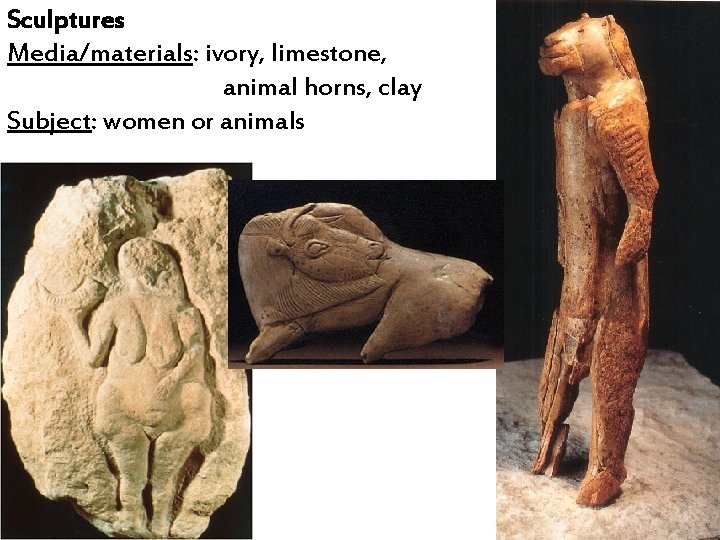
Sculptures Media/materials: ivory, limestone, animal horns, clay Subject: women or animals
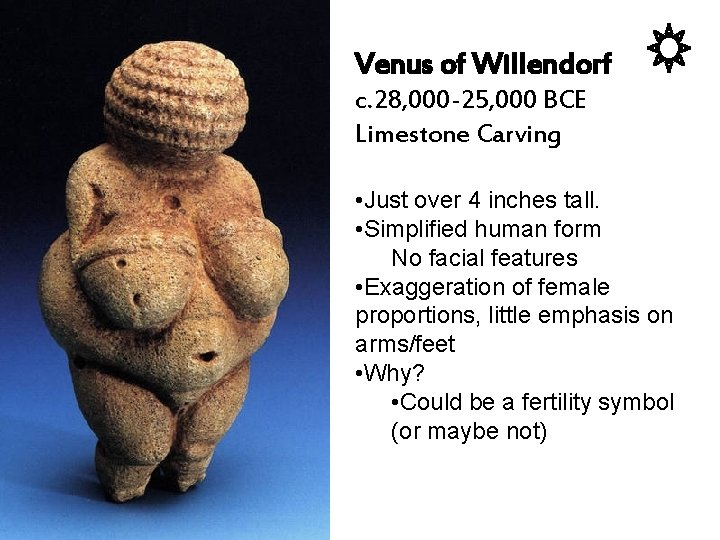
Venus of Willendorf c. 28, 000 -25, 000 BCE Limestone Carving • Just over 4 inches tall. • Simplified human form No facial features • Exaggeration of female proportions, little emphasis on arms/feet • Why? • Could be a fertility symbol (or maybe not)
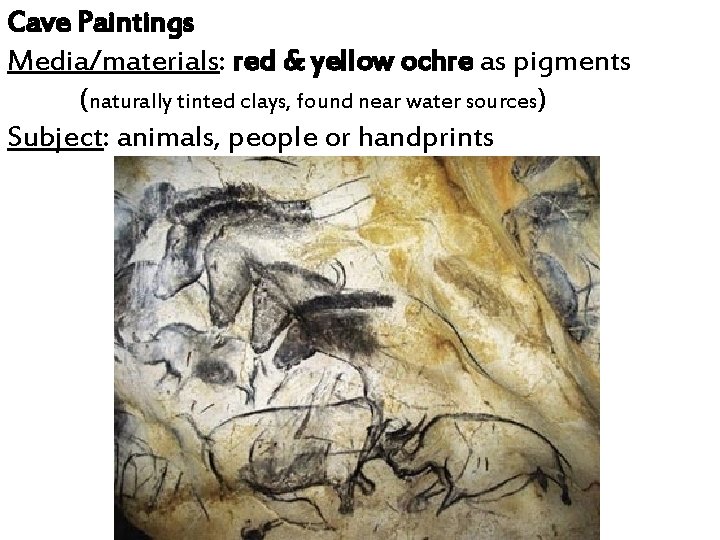
Cave Paintings Media/materials: red & yellow ochre as pigments (naturally tinted clays, found near water sources) Subject: animals, people or handprints
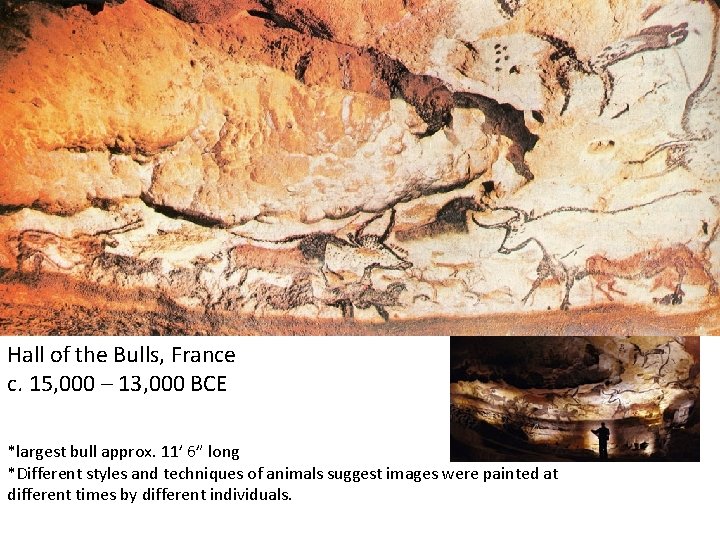
Hall of the Bulls, France c. 15, 000 – 13, 000 BCE *largest bull approx. 11’ 6” long *Different styles and techniques of animals suggest images were painted at different times by different individuals.
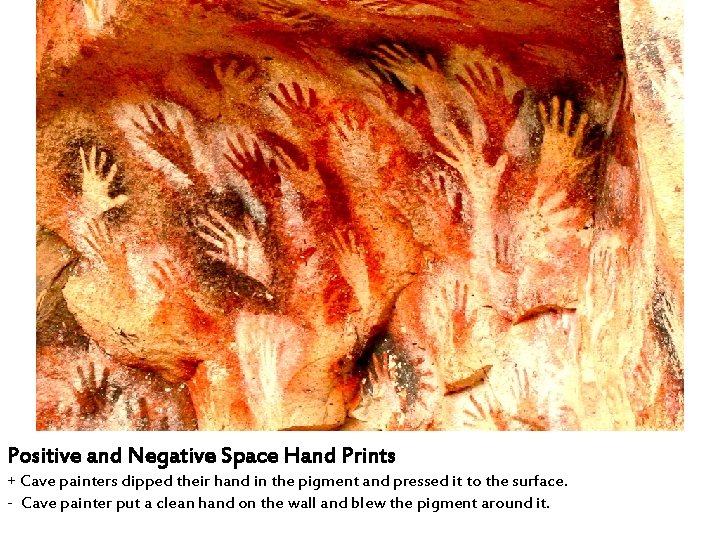
Positive and Negative Space Hand Prints + Cave painters dipped their hand in the pigment and pressed it to the surface. - Cave painter put a clean hand on the wall and blew the pigment around it.

Megaliths “Great Stones” Massive architectures of rough-cut stones seen throughout Europe (some stones as big as 17 ft. tall and up to 50 tons) Henges (circular stone monuments) are found only in Britain the most famous being….
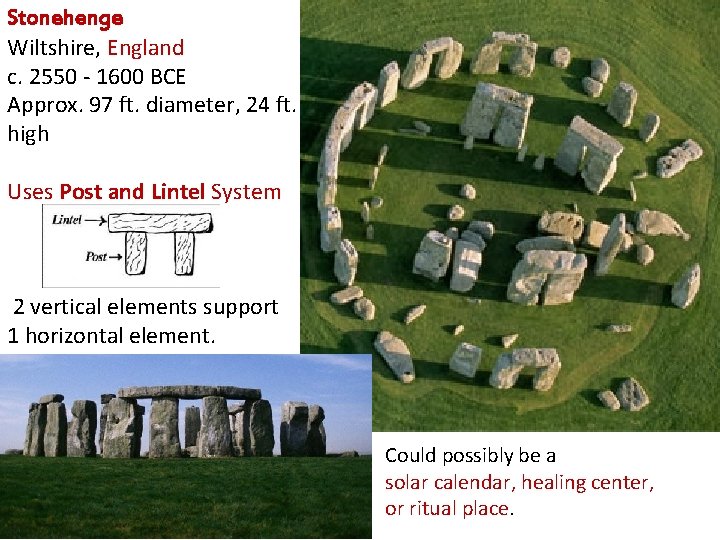
Stonehenge Wiltshire, England c. 2550 - 1600 BCE Approx. 97 ft. diameter, 24 ft. high Uses Post and Lintel System 2 vertical elements support 1 horizontal element. Could possibly be a solar calendar, healing center, or ritual place.
- Slides: 9