
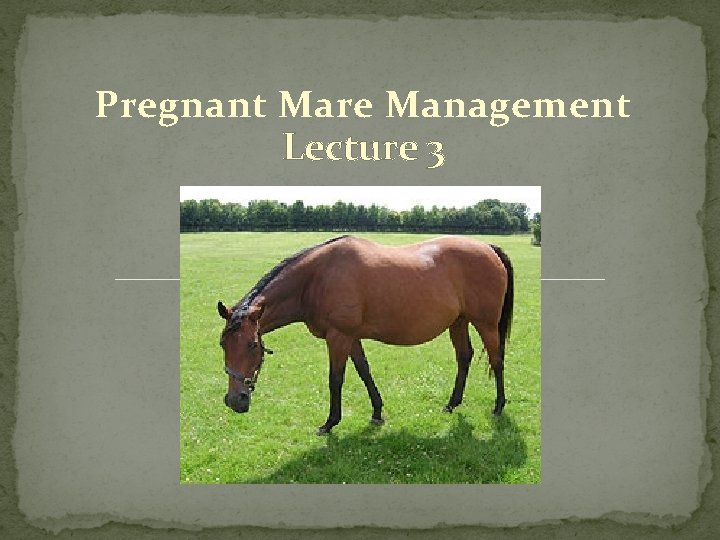
Pregnant Mare Management Lecture 3 Management Proper mare
- Slides: 23
Pregnant Mare Management Lecture 3
Management �Proper mare management is essential: � To ensure the birth of a live foal �Mare classifications: � Pregnant � Open � Barren � Maiden � Wet
Mare Classifications �Pregnant mares � Will foal in current season �Open mares � Not pregnant and not bred in previous or current season �Barren mares � Not pregnant but bred in the previous or current season �Maiden mares � Never been bred �Wet mares � Nursing a foal
Barren Mares �What causes a mare to become barren? � Old Age � Poor Breeding Conformation � Uterine Infection � Improper Nutrition � Other �At 16 yrs of age a mare’s reproductive abilities begin to decrease
Barren Mares �Poor breeding conformation increases with age �Pneumovagina or “windsucking” � Primary cause of uterine infections � Caslicks can be used to correct �What are the major cause of infertility? � Uterine infections
Body Condition �To breed efficiently, mares must be � In proper body condition �Poor nutrition results in thin mares �Lower energy intake before foaling appears to � Delay time of ovulation (post-foaling) by as much as a week �Pregnancy rates at 60 to 90 days are less for thin mares (foal heat)
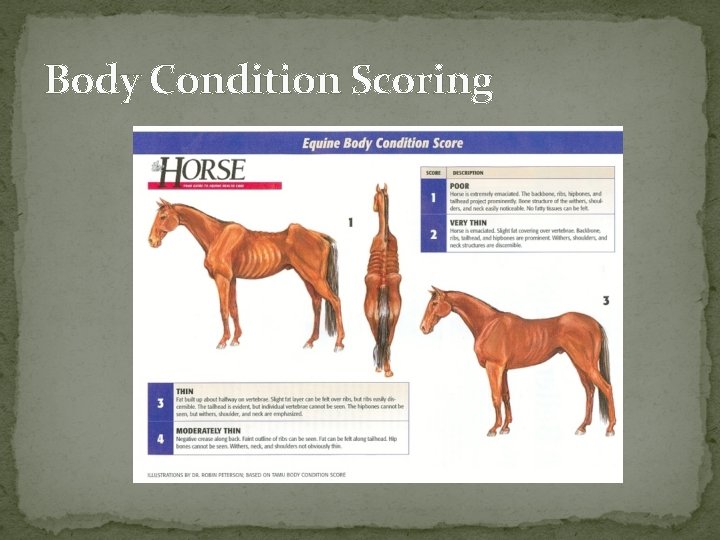
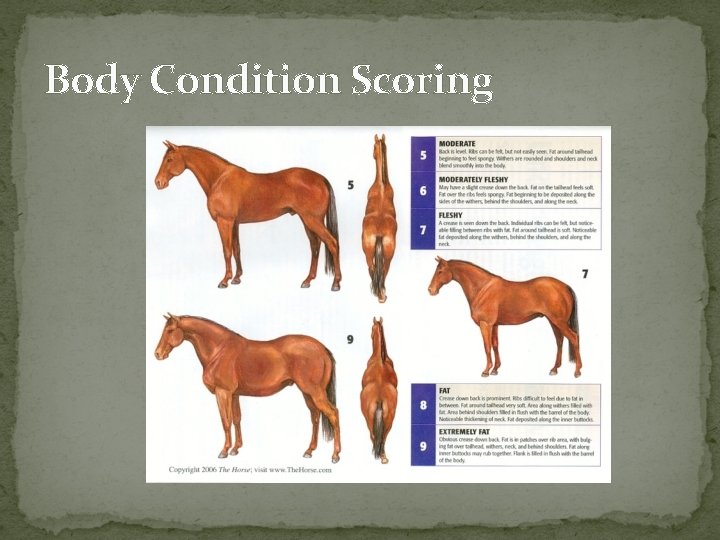
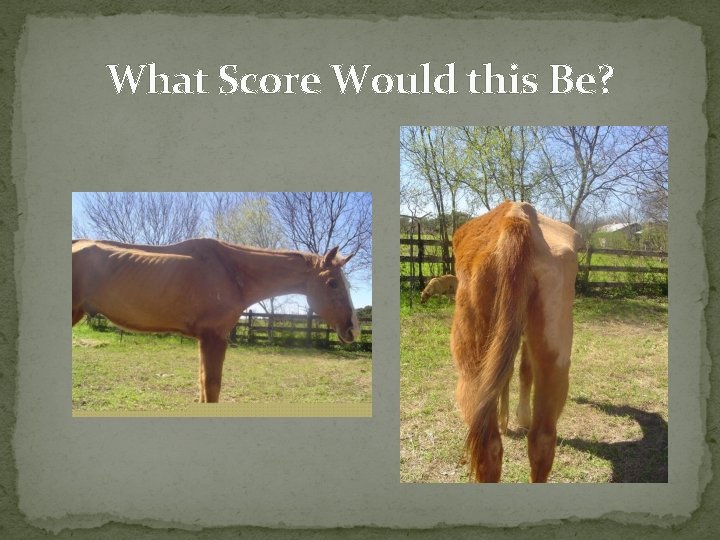
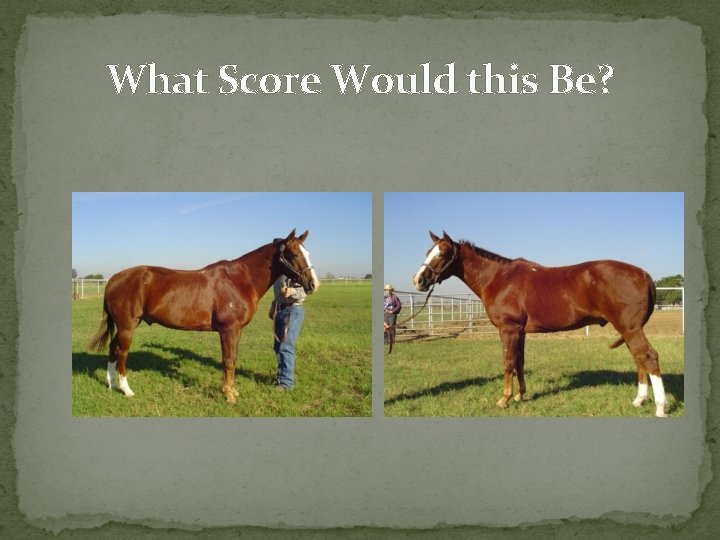
Body Condition �Body condition score is an excellent management tool � Correlates to body fat (1 to 9) � 1 = extremely emaciated � 9 = extremely obese �On a scale of 1 to 9, mares should be between 5. 5 and 7. 5
Body Condition Scoring
Body Condition Scoring
What Score Would this Be?
What Score Would this Be?
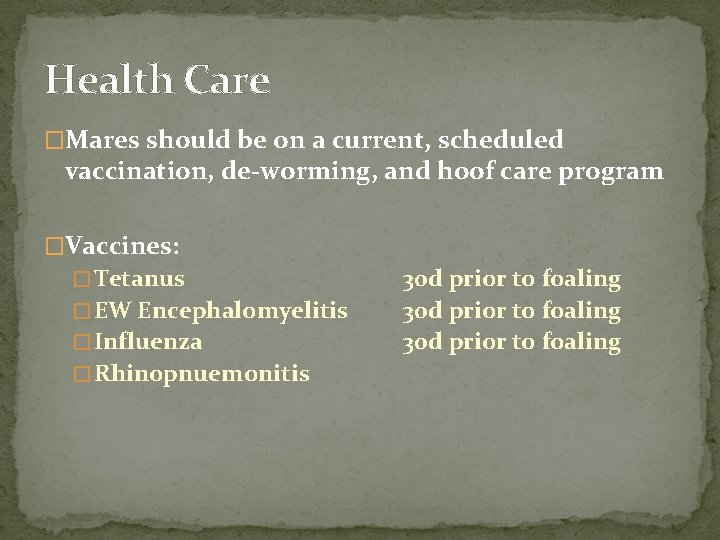
Health Care �Mares should be on a current, scheduled vaccination, de-worming, and hoof care program �Vaccines: � Tetanus � EW Encephalomyelitis � Influenza � Rhinopnuemonitis 30 d prior to foaling
Health Care �Rhinopneuomonitis �Respiratory Form �Abortion Form �Can cause abortion as early as fourth month of pregnancy �Most occur in last four months �Pregnant mares should be vaccinated annually �Should be vaccinated during Third, fifth, seventh, and ninth month
Health Care �Vaccines in some areas for: � West Nile Virus � Rabies � Botulism � Strangles �Regular de-worming throughout pregnancy except in last 30 days �No unnecessary drugs during first 60 days nor last 30 days
Feeding �First 8 months � Maintenance �Increased needs during last 3 mo. Of gestation and lactation �Many mares are grazed on pasture during early pregnancy
Feeding �If proper body condition is maintained � Grain may be unnecessary in early pregnancy �Weight fluctuations should be avoided �Dystocia � Cattle vs. Horses
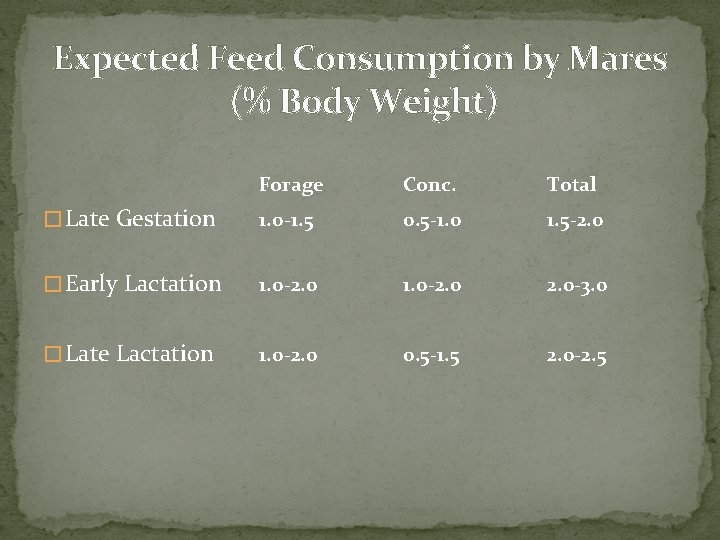
Expected Feed Consumption by Mares (% Body Weight) Forage Conc. Total � Late Gestation 1. 0 -1. 5 0. 5 -1. 0 1. 5 -2. 0 � Early Lactation 1. 0 -2. 0 -3. 0 � Late Lactation 1. 0 -2. 0 0. 5 -1. 5 2. 0 -2. 5
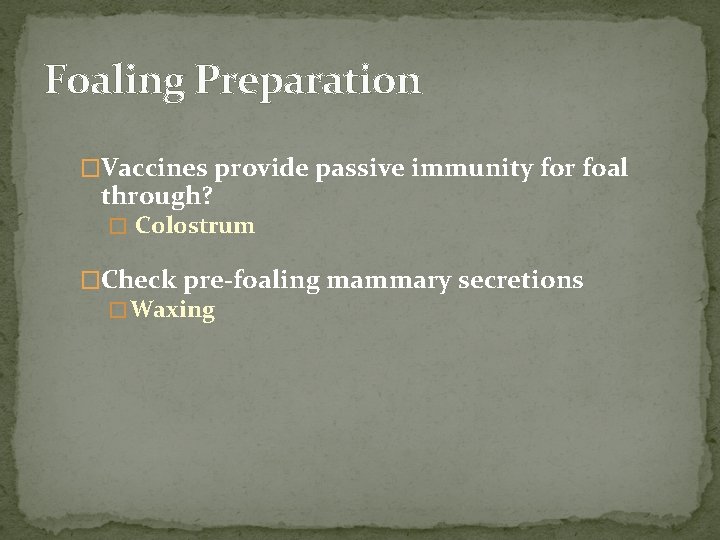
Foaling Preparation �Vaccines provide passive immunity for foal through? � Colostrum �Check pre-foaling mammary secretions � Waxing
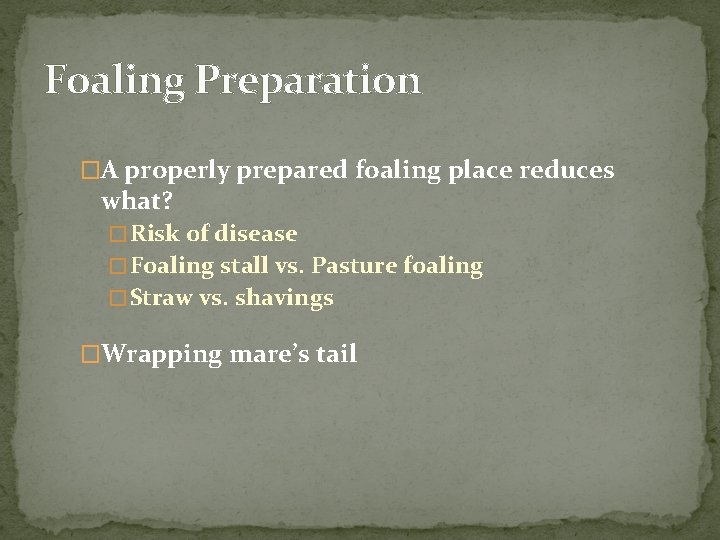
Foaling Preparation �A properly prepared foaling place reduces what? � Risk of disease � Foaling stall vs. Pasture foaling � Straw vs. shavings �Wrapping mare’s tail
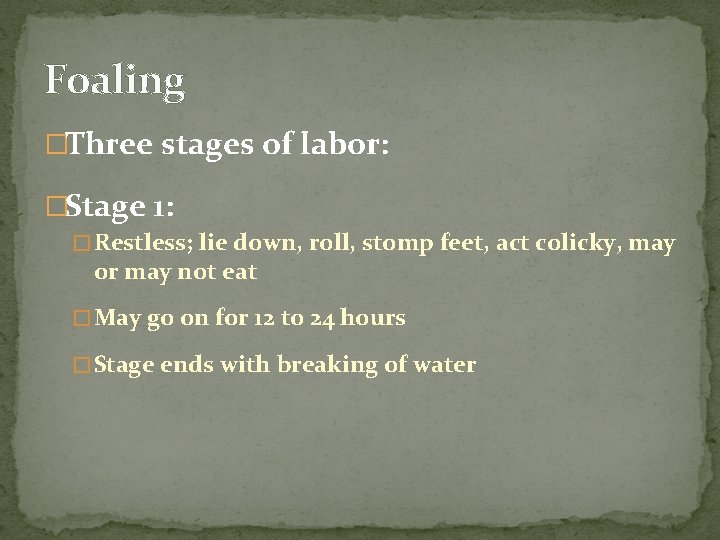
Foaling �Three stages of labor: �Stage 1: � Restless; lie down, roll, stomp feet, act colicky, may or may not eat � May go on for 12 to 24 hours � Stage ends with breaking of water
Foaling �Stage 2: � Birth occurs � Most foals are born in 20 to 30 minutes � Fetal placenta containing foal separates from uterus during process � Birth must occur rapidly at this point to prevent hypoxia
Foaling �Stage 3: � Uterus shrinks and placenta is expelled � Placenta should be expelled naturally � After expelled, should be examined � If still attached after 2 to 3 hours call veterinarian � Retained placenta can cause serious complications
After Foaling �Foal will weigh � ~10% of mare’s body weight �Navel should be treated with solution �Nursing should be observed �Enema is suggested to remove meconium �Foal Heat Breeding �Weaning