
Pregnancy Sexual Intercourse The reproductive process in which
- Slides: 24
Pregnancy
Sexual Intercourse § The reproductive process in which the penis is inserted into the vagina and through which a new human life may begin
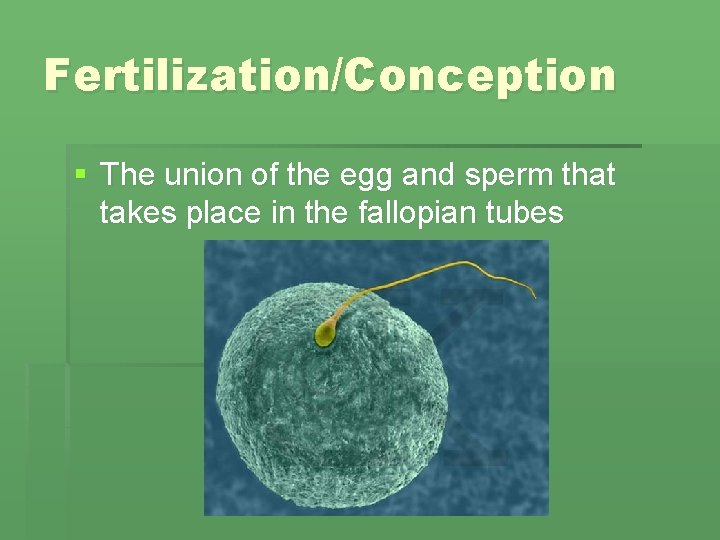
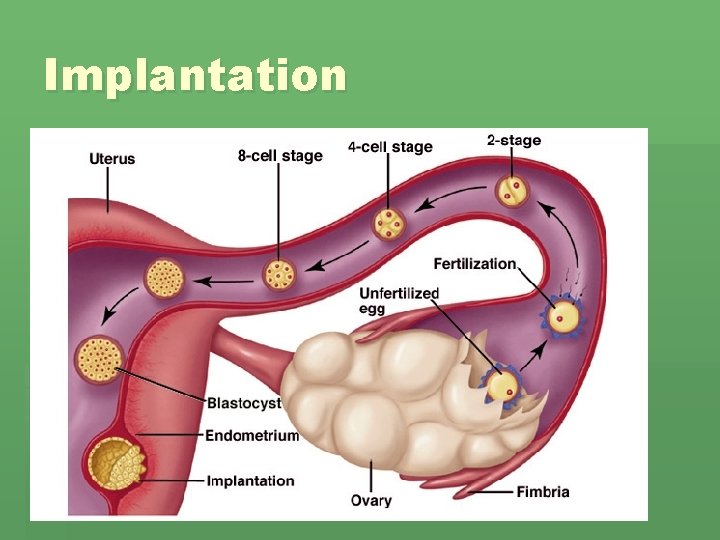
Fertilization/Conception § The union of the egg and sperm that takes place in the fallopian tubes
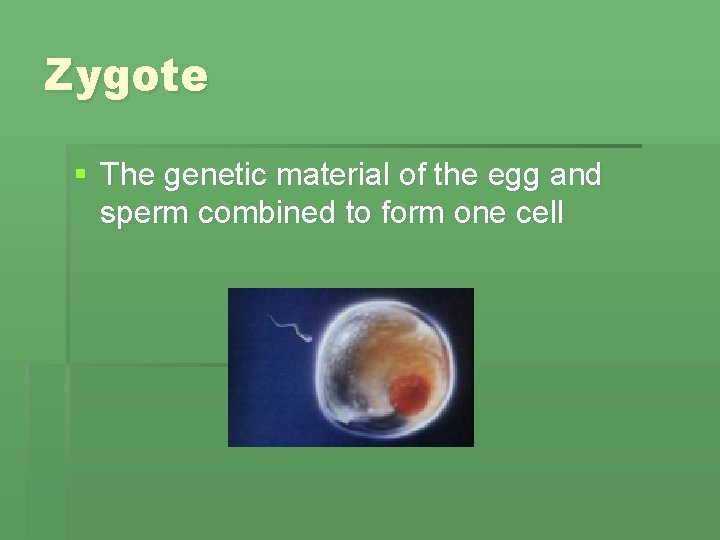
Zygote § The genetic material of the egg and sperm combined to form one cell
Implantation § The attachment of the fertilized egg to the uterus § The egg is now known as a blastocyte, attaches to one of the walls in the upper 1/3 of the uterus § This happens within 3 to 5 days of fertilization § Once implantation has happened a women is said to be pregnant
Implantation
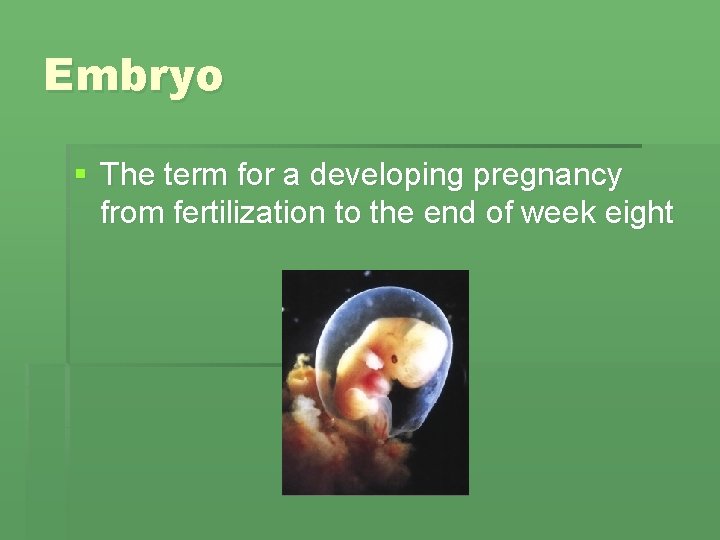
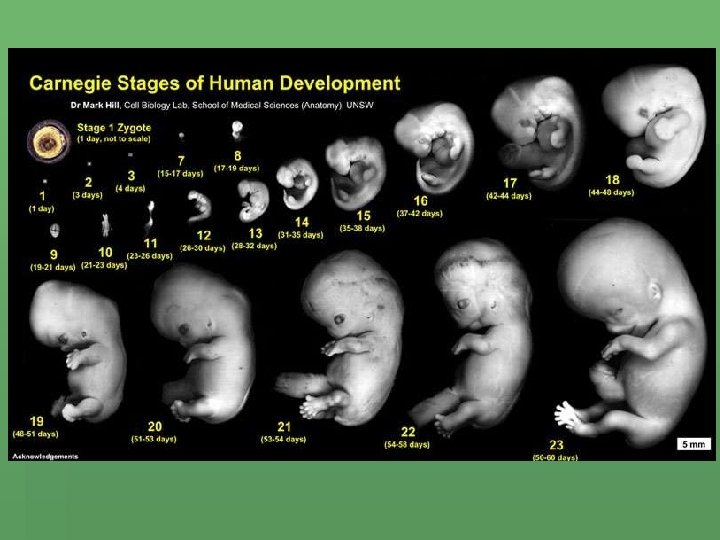
Embryo § The term for a developing pregnancy from fertilization to the end of week eight
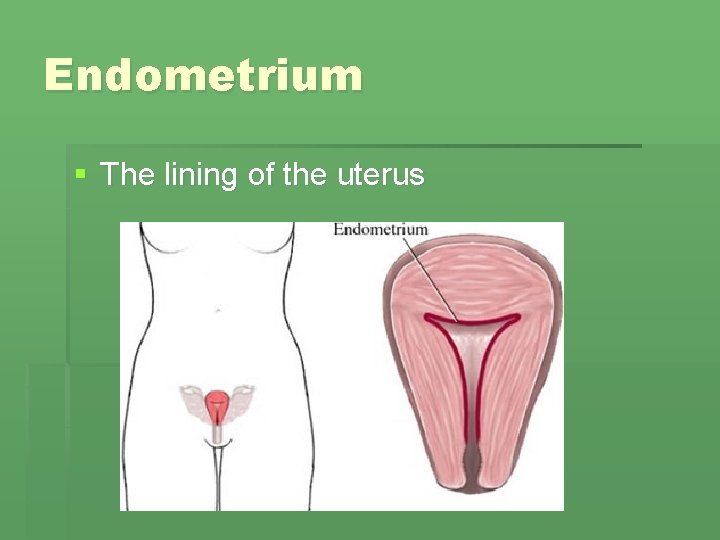
Endometrium § The lining of the uterus
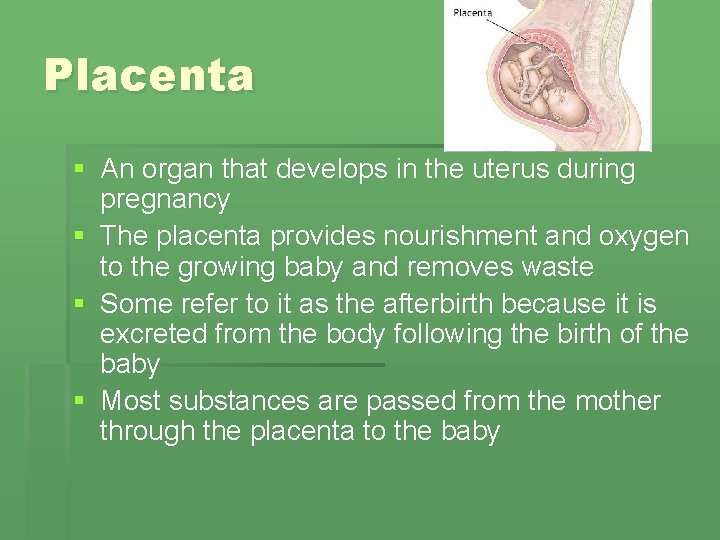
Placenta § An organ that develops in the uterus during pregnancy § The placenta provides nourishment and oxygen to the growing baby and removes waste § Some refer to it as the afterbirth because it is excreted from the body following the birth of the baby § Most substances are passed from the mother through the placenta to the baby
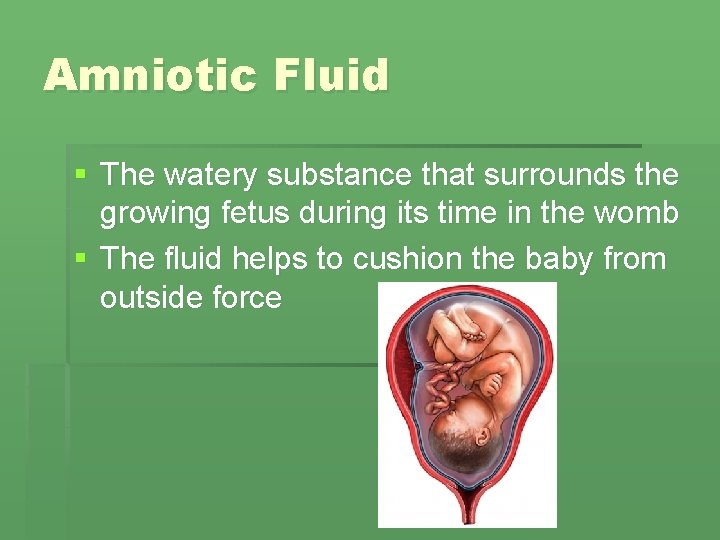
Amniotic Fluid § The watery substance that surrounds the growing fetus during its time in the womb § The fluid helps to cushion the baby from outside force
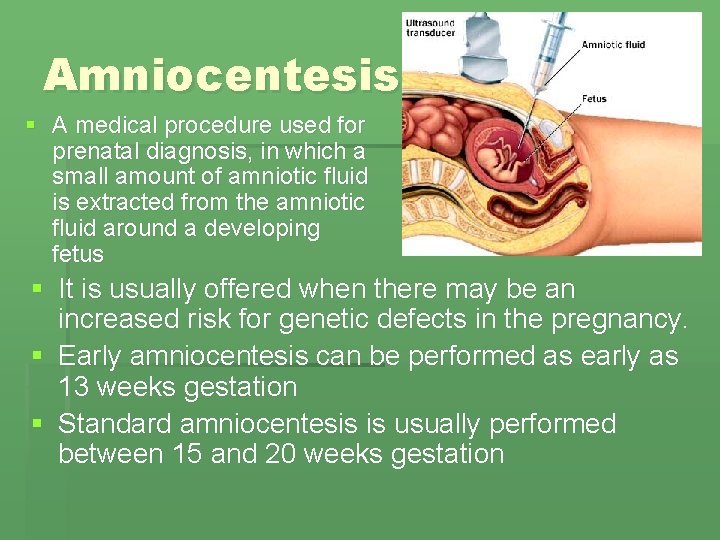
Amniocentesis § A medical procedure used for prenatal diagnosis, in which a small amount of amniotic fluid is extracted from the amniotic fluid around a developing fetus § It is usually offered when there may be an increased risk for genetic defects in the pregnancy. § Early amniocentesis can be performed as early as 13 weeks gestation § Standard amniocentesis is usually performed between 15 and 20 weeks gestation
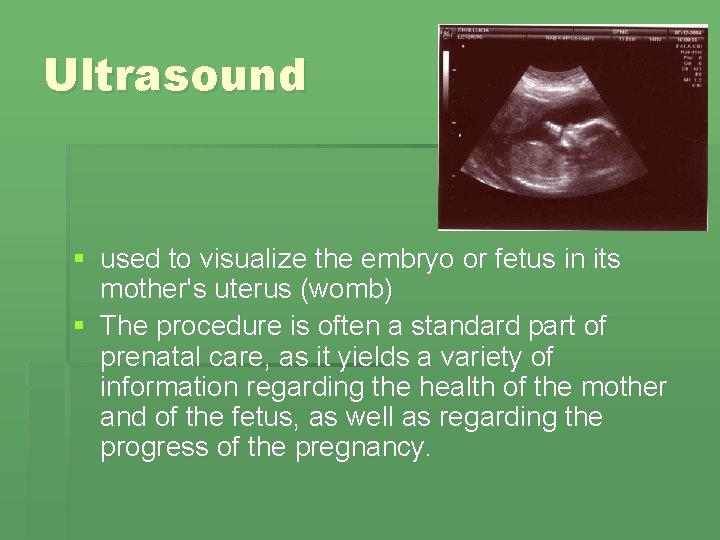
Ultrasound § used to visualize the embryo or fetus in its mother's uterus (womb) § The procedure is often a standard part of prenatal care, as it yields a variety of information regarding the health of the mother and of the fetus, as well as regarding the progress of the pregnancy.
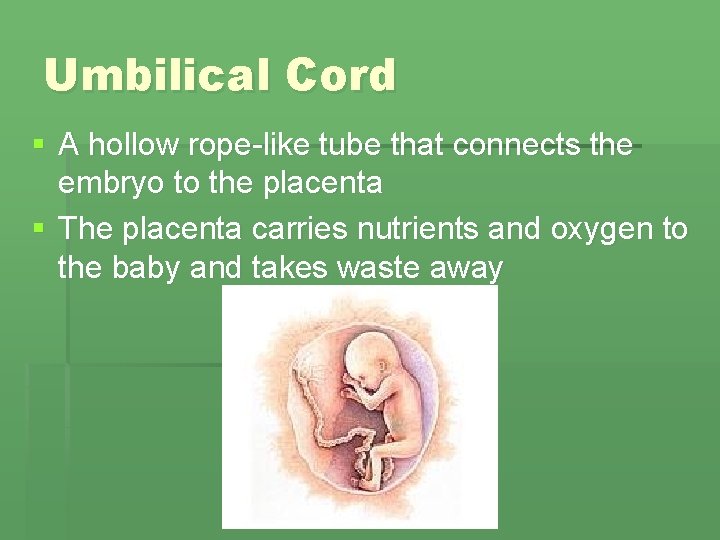
Umbilical Cord § A hollow rope-like tube that connects the embryo to the placenta § The placenta carries nutrients and oxygen to the baby and takes waste away
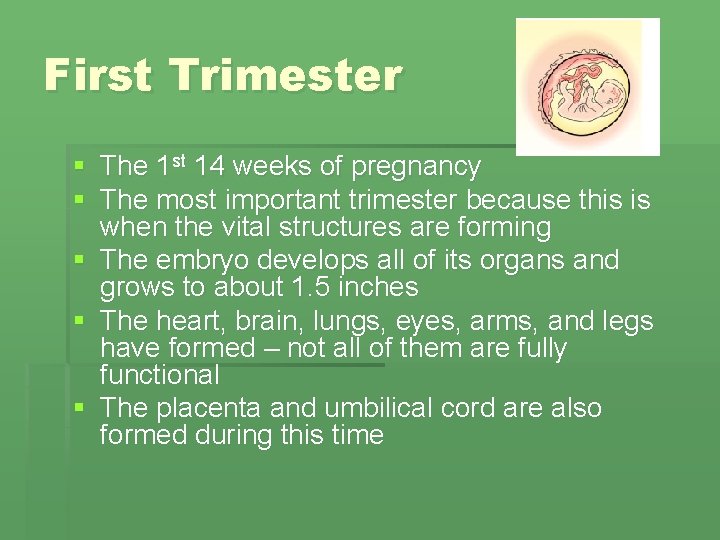
First Trimester § The 1 st 14 weeks of pregnancy § The most important trimester because this is when the vital structures are forming § The embryo develops all of its organs and grows to about 1. 5 inches § The heart, brain, lungs, eyes, arms, and legs have formed – not all of them are fully functional § The placenta and umbilical cord are also formed during this time
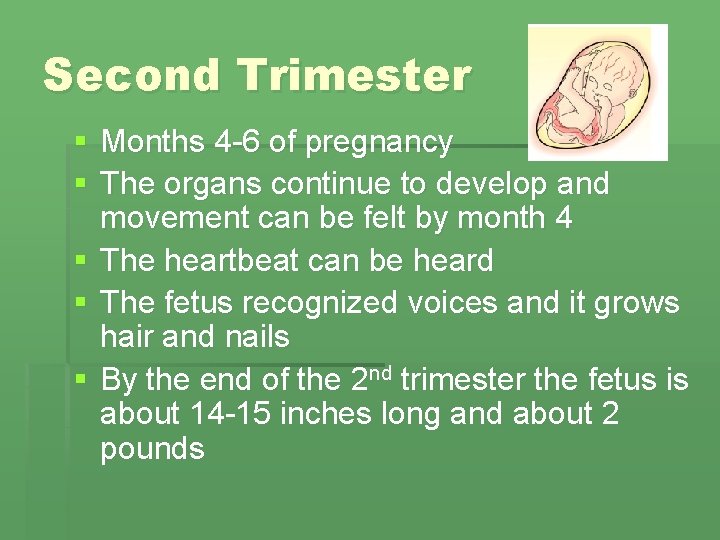
Second Trimester § Months 4 -6 of pregnancy § The organs continue to develop and movement can be felt by month 4 § The heartbeat can be heard § The fetus recognized voices and it grows hair and nails § By the end of the 2 nd trimester the fetus is about 14 -15 inches long and about 2 pounds
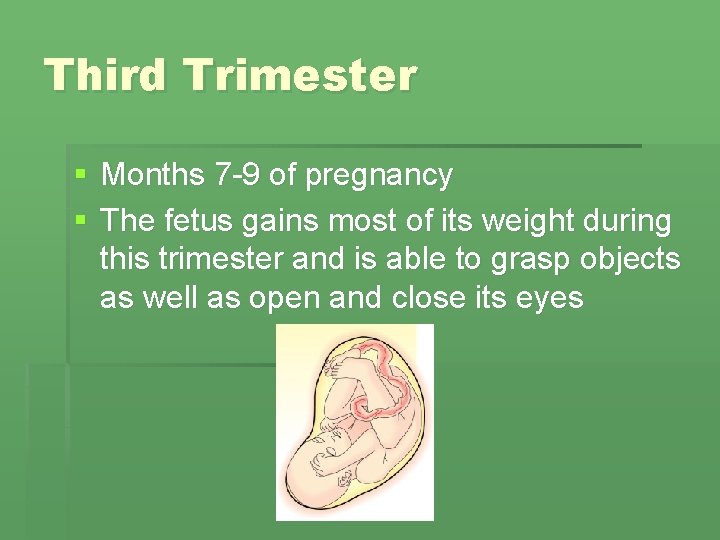
Third Trimester § Months 7 -9 of pregnancy § The fetus gains most of its weight during this trimester and is able to grasp objects as well as open and close its eyes
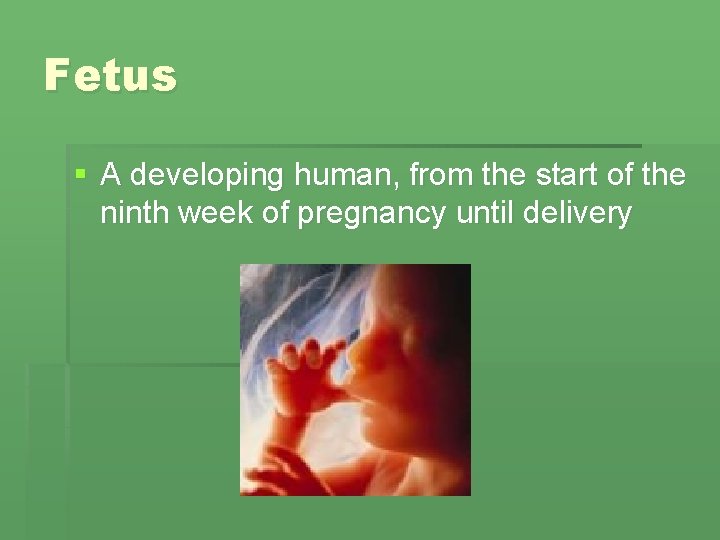
Fetus § A developing human, from the start of the ninth week of pregnancy until delivery
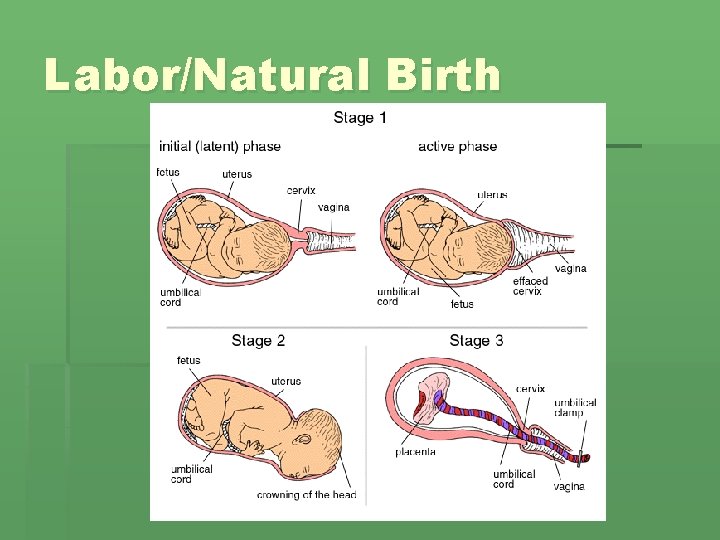
Labor/Natural Birth § the culmination of a human pregnancy with the emergence of a newborn infant/s from the mother's uterus. § Natural Birth which is most common is when the baby is delivered through the vagina § First stage: contractions/dilation § Second stage: delivery § Third stage: placenta/afterbirth
Labor/Natural Birth
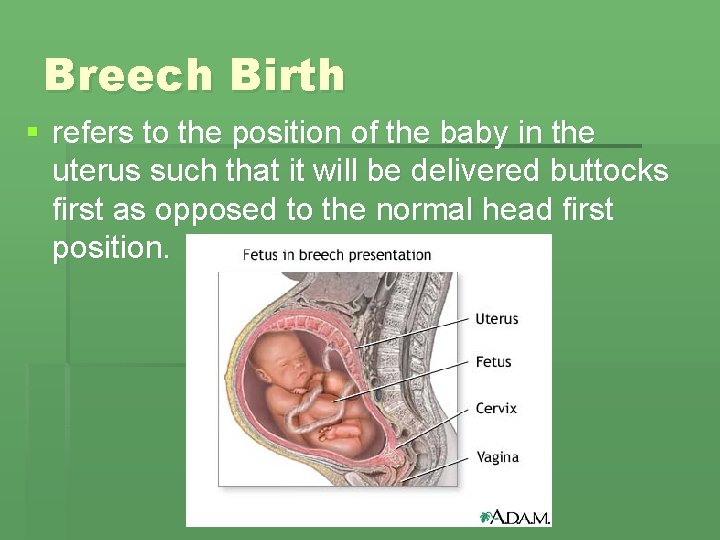
Breech Birth § refers to the position of the baby in the uterus such that it will be delivered buttocks first as opposed to the normal head first position.
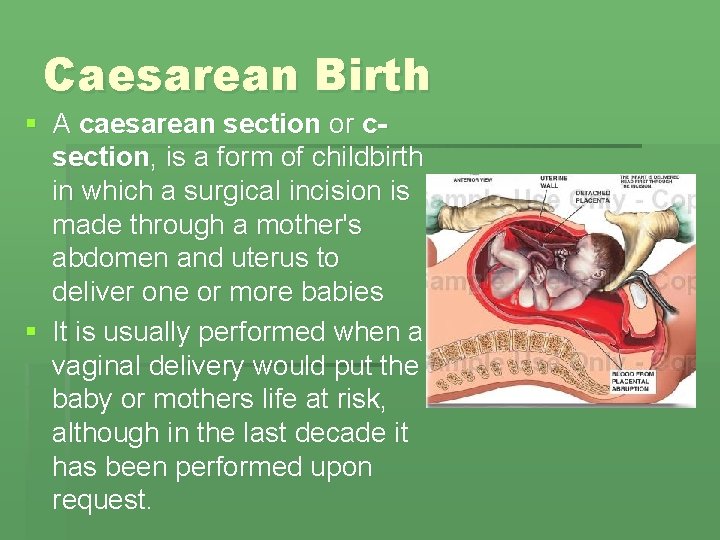
Caesarean Birth § A caesarean section or csection, is a form of childbirth in which a surgical incision is made through a mother's abdomen and uterus to deliver one or more babies § It is usually performed when a vaginal delivery would put the baby or mothers life at risk, although in the last decade it has been performed upon request.
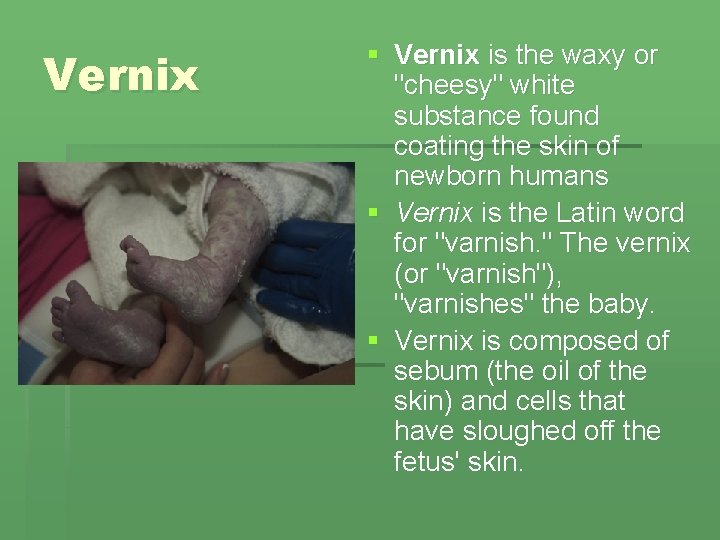
Vernix § Vernix is the waxy or "cheesy" white substance found coating the skin of newborn humans § Vernix is the Latin word for "varnish. " The vernix (or "varnish"), "varnishes" the baby. § Vernix is composed of sebum (the oil of the skin) and cells that have sloughed off the fetus' skin.
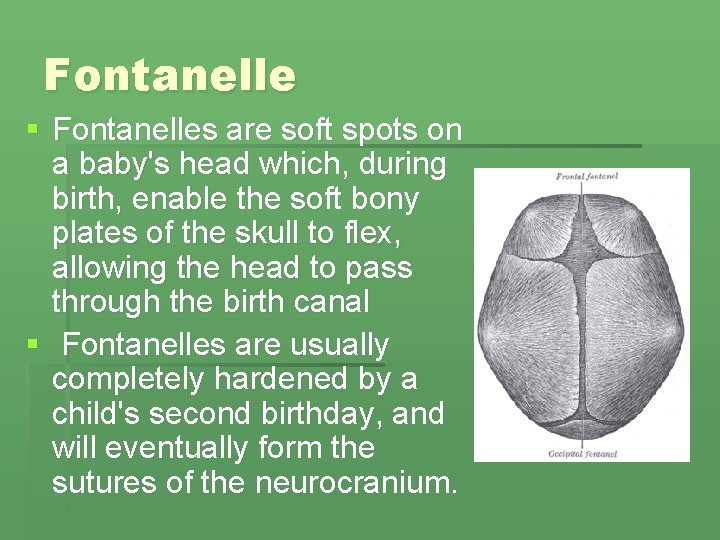
Fontanelle § Fontanelles are soft spots on a baby's head which, during birth, enable the soft bony plates of the skull to flex, allowing the head to pass through the birth canal § Fontanelles are usually completely hardened by a child's second birthday, and will eventually form the sutures of the neurocranium.