
Pregnancy Induced Autoimmune Hemolytic Anemia An interesting phenomenon


- Slides: 50
Pregnancy Induced Autoimmune Hemolytic Anemia An interesting phenomenon of rare numbers. Meghan E. Kapp, MD MS 30 June 2014
Hemolytic Anemia Red Blood Cells are destroyed and removed from the bloodstream before their normal lifespan is over Incidence 4 cases per 1000
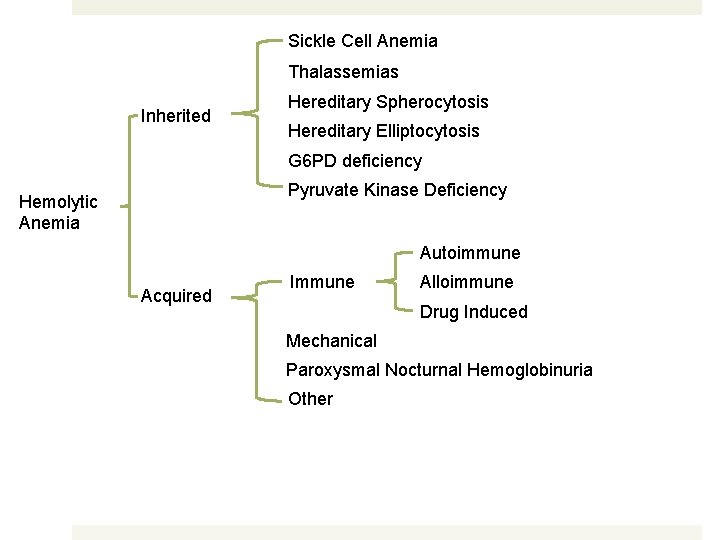
Sickle Cell Anemia Thalassemias Inherited Hereditary Spherocytosis Hereditary Elliptocytosis G 6 PD deficiency Pyruvate Kinase Deficiency Hemolytic Anemia Autoimmune Acquired Immune Alloimmune Drug Induced Mechanical Paroxysmal Nocturnal Hemoglobinuria Other
Autoimmune Hemolytic Anemia Increased destruction of erythrocytes due to anti-erythrocyte autoantibodies Incidence is estimated 1 -3 cases per 100, 000
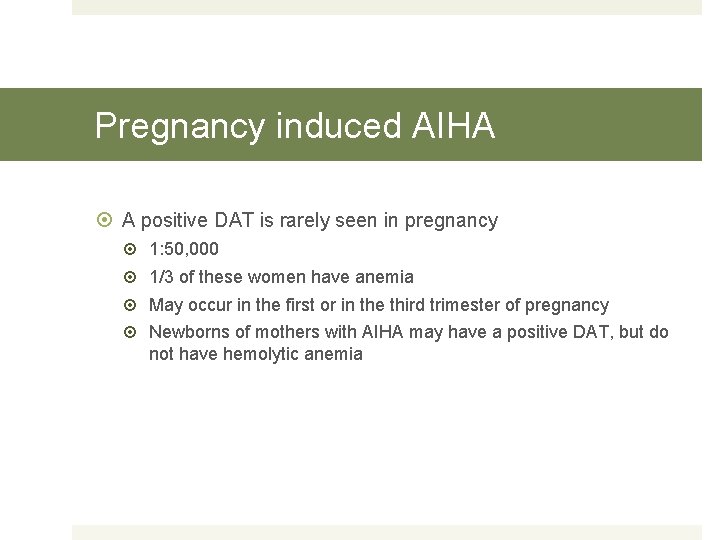
Pregnancy induced AIHA A positive DAT is rarely seen in pregnancy 1: 50, 000 1/3 of these women have anemia May occur in the first or in the third trimester of pregnancy Newborns of mothers with AIHA may have a positive DAT, but do not have hemolytic anemia
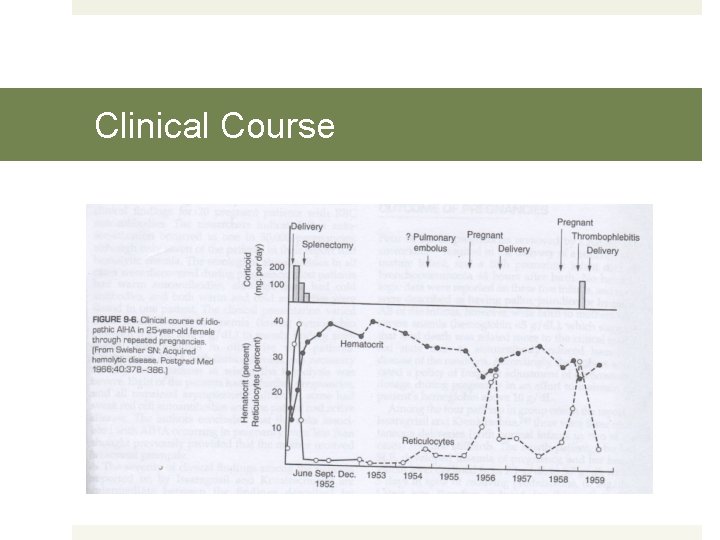
Clinical Course
Pregnancy and Idiopathic Autoimmune Haemolytic Anaemia: A Prospective Study during 6 Months Gestation and 3 Months Post-Partum Hugh Jr Chaplin, Robert Cohen, Gordon Bloomberg, Harold J. Kaplan, Joy A. Moore and Irene Dorner British Journal of Haematology Volume 24, Issue 2, pages 219– 229, February 1973
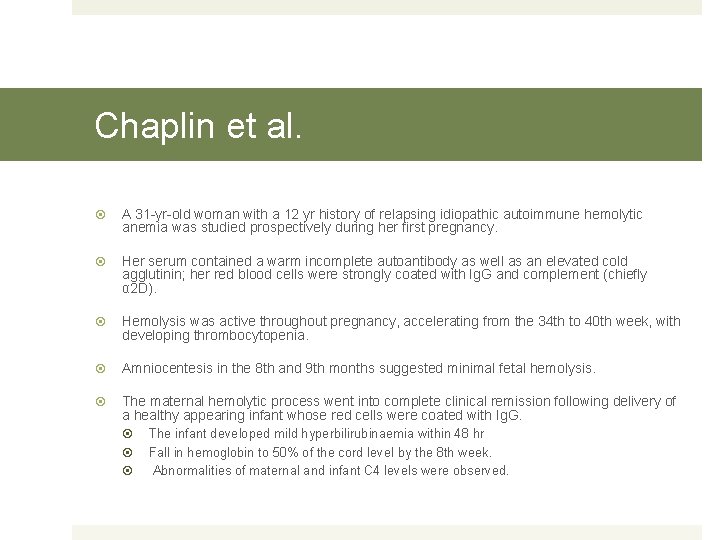
Chaplin et al. A 31 -yr-old woman with a 12 yr history of relapsing idiopathic autoimmune hemolytic anemia was studied prospectively during her first pregnancy. Her serum contained a warm incomplete autoantibody as well as an elevated cold agglutinin; her red blood cells were strongly coated with Ig. G and complement (chiefly α 2 D). Hemolysis was active throughout pregnancy, accelerating from the 34 th to 40 th week, with developing thrombocytopenia. Amniocentesis in the 8 th and 9 th months suggested minimal fetal hemolysis. The maternal hemolytic process went into complete clinical remission following delivery of a healthy appearing infant whose red cells were coated with Ig. G. The infant developed mild hyperbilirubinaemia within 48 hr Fall in hemoglobin to 50% of the cord level by the 8 th week. Abnormalities of maternal and infant C 4 levels were observed.
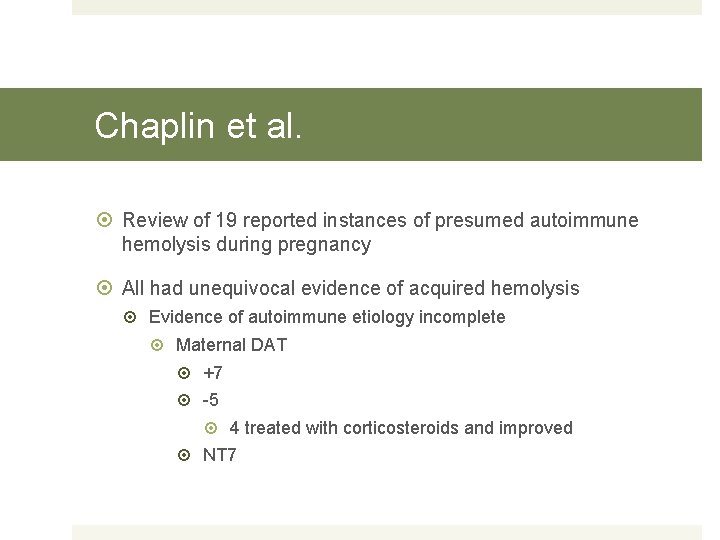
Chaplin et al. Review of 19 reported instances of presumed autoimmune hemolysis during pregnancy All had unequivocal evidence of acquired hemolysis Evidence of autoimmune etiology incomplete Maternal DAT +7 -5 4 treated with corticosteroids and improved NT 7
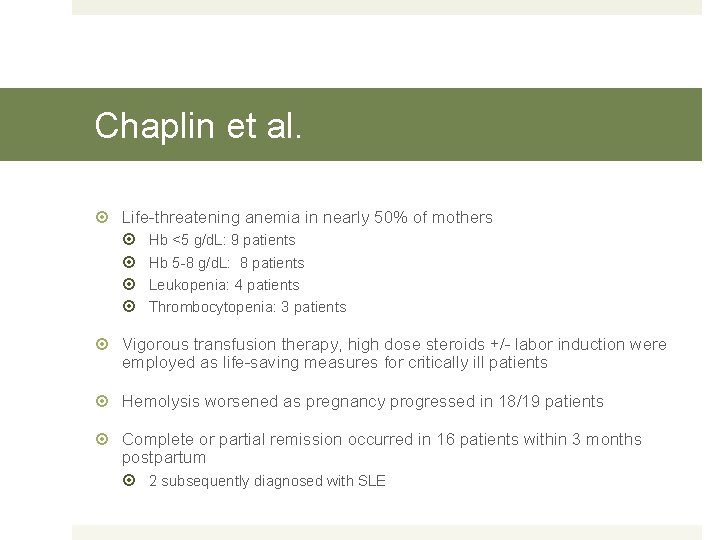
Chaplin et al. Life-threatening anemia in nearly 50% of mothers Hb <5 g/d. L: 9 patients Hb 5 -8 g/d. L: 8 patients Leukopenia: 4 patients Thrombocytopenia: 3 patients Vigorous transfusion therapy, high dose steroids +/- labor induction were employed as life-saving measures for critically ill patients Hemolysis worsened as pregnancy progressed in 18/19 patients Complete or partial remission occurred in 16 patients within 3 months postpartum 2 subsequently diagnosed with SLE
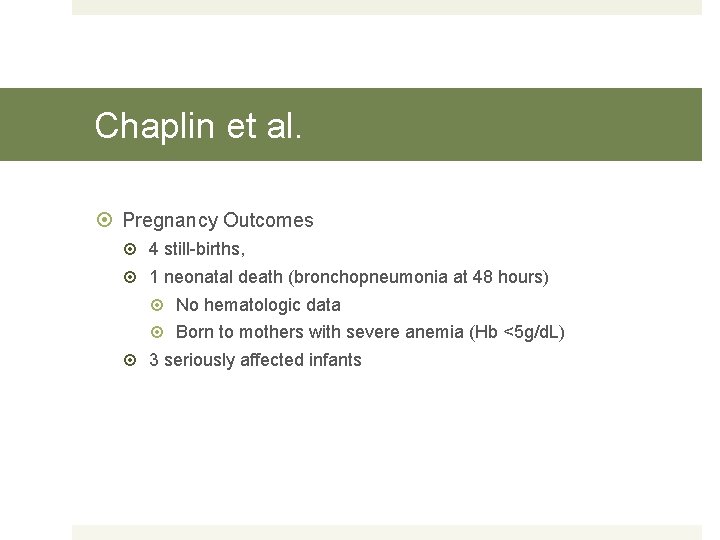
Chaplin et al. Pregnancy Outcomes 4 still-births, 1 neonatal death (bronchopneumonia at 48 hours) No hematologic data Born to mothers with severe anemia (Hb <5 g/d. L) 3 seriously affected infants
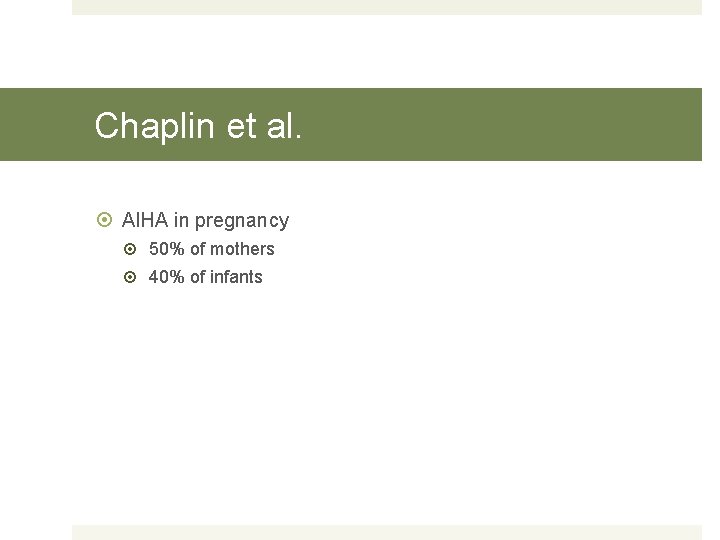
Chaplin et al. AIHA in pregnancy 50% of mothers 40% of infants
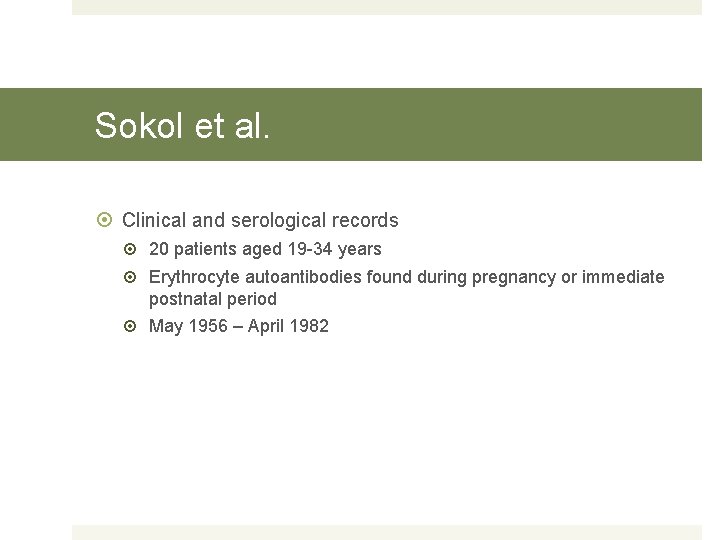
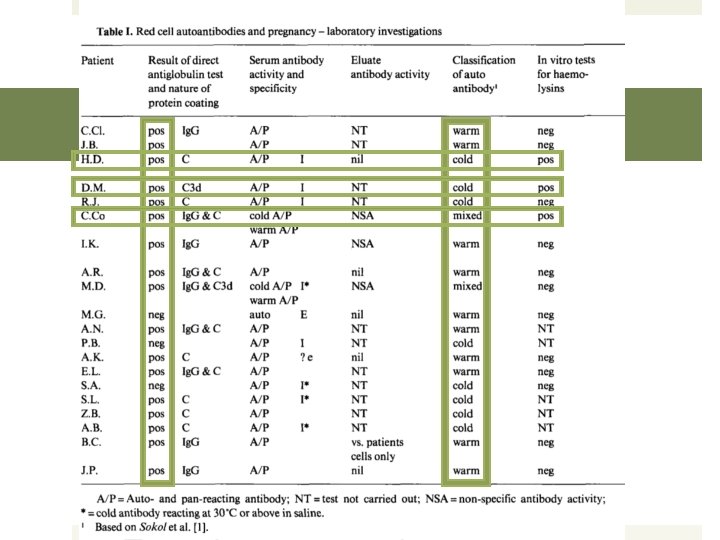
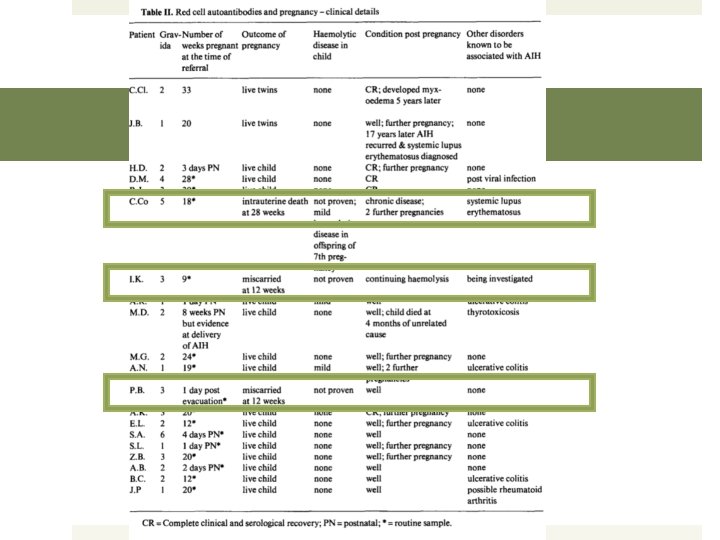
Sokol et al. Clinical and serological records 20 patients aged 19 -34 years Erythrocyte autoantibodies found during pregnancy or immediate postnatal period May 1956 – April 1982
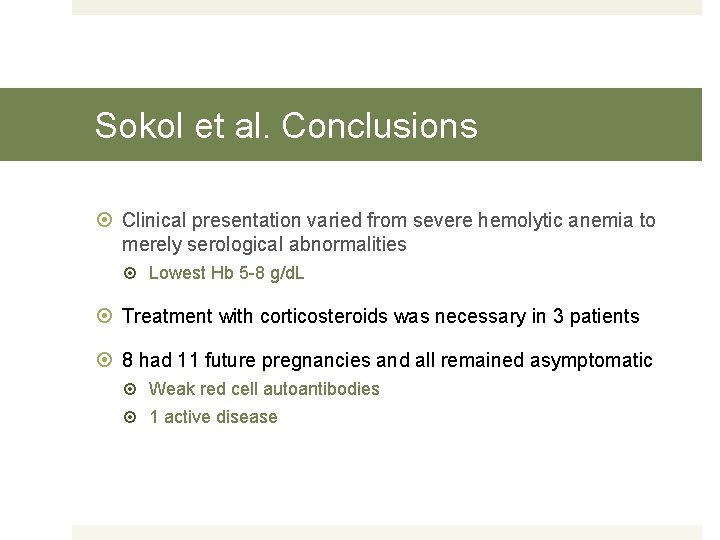
Sokol et al. Conclusions Clinical presentation varied from severe hemolytic anemia to merely serological abnormalities Lowest Hb 5 -8 g/d. L Treatment with corticosteroids was necessary in 3 patients 8 had 11 future pregnancies and all remained asymptomatic Weak red cell autoantibodies 1 active disease
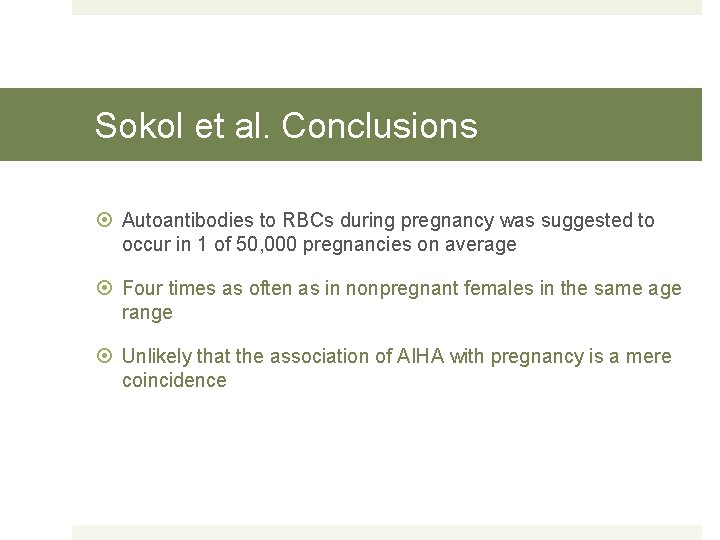
Sokol et al. Conclusions Autoantibodies to RBCs during pregnancy was suggested to occur in 1 of 50, 000 pregnancies on average Four times as often as in nonpregnant females in the same age range Unlikely that the association of AIHA with pregnancy is a mere coincidence
An Association of Pregnancy and Autoimmune Haemolytic Anaemia Surapol Issaragrisil and Mongkol Kruatrachue Scandinavian Journal of Haematology Volume 31, Issue 1, pages 63– 68, July 1983
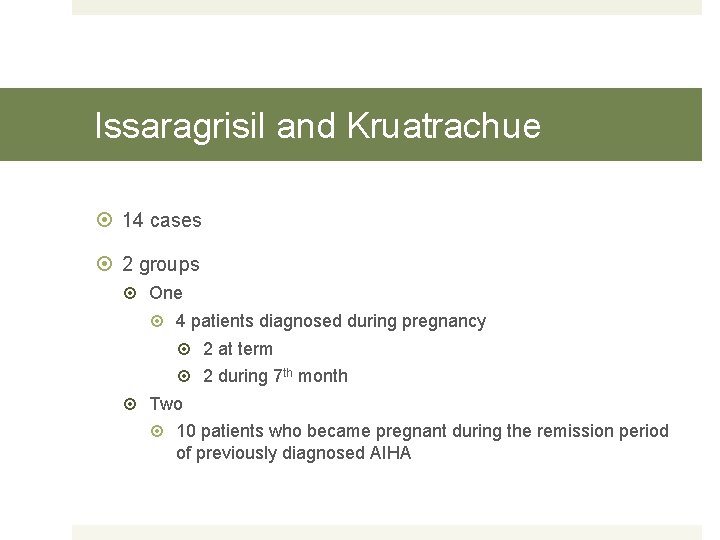
Issaragrisil and Kruatrachue 14 cases 2 groups One 4 patients diagnosed during pregnancy 2 at term 2 during 7 th month Two 10 patients who became pregnant during the remission period of previously diagnosed AIHA
Issaragrisil and Kruatrachue 2 groups One: 4 patients diagnosed during third trimester 3 spontaneous deliveries 2 normal infants 1 stillbirth 4 th with SLE developed toxemia Labor induced with low-birth-weight infant Both mom and infant survived
Issaragrisil and Kruatrachue 2 groups Two: 10 pregnancies during the remission of AIHA 6 developed Hb <6. 7 g/d. L 3 spontaneous abortions 2 therapeutic abortions due to lack of response to prednisolone therapy 1 spontaneous delivery Following termination of pregnancies, mothers’ Hb levels responded to glucocorticoid therapy
Issaragrisil and Kruatrachue 2 groups Two: 10 pregnancies during the remission of AIHA 5 continued to third trimester 2 responded well to prednisolone 1 did not require corticosteroids 3 spontaneous deliveries with normal infants 1 C-section due to severe preeclampsia and fetal distress Both survived 1 SLE and nephrotic syndrome Spontaneous abortion Acute renal failure death
Issaragrisil and Kruatrachue Corticosteroids generally started only after significant anemia occurred Patients with hemolytic anemia were not treated if Hb >9. 0 g/d. L More favorable outcomes may have occurred if treatment implemented earlier
Benraad et al 31 year old female presented with severe AIHA with her first pregnancy Ig. G and warm–acting Ig. M Treated with corticosteroids Second pregnancy treated similarly Two healthy children were born
Benraad et al. Ig. G warm autoimmune antibodies generally tend to be involved in the idiopathic form of AIH Ig. M warm or cold autoimmune antibodies are also found regularly Both can cause severe hemolysis Treatment with prednisone will prove effective Hemolysis generally disappears spontaneously after pregnancy has ended Relevant hemolysis is rarely seen in the newborn AIH clinically relevant prior to precnancy or secondary to an associated disease is generally more severe Pregnancy more often ends in spontaneous abortion or miscarriage
Hemolytic Anemia of Pregnancy with a Negative DAT and Frequent Recurrences
Kumar et al. 21 year old primigravida female present with severe hemolytic anemia detected near full term, resolved spontaneously 11 weeks after delivery Recurred at 32 weeks EGA Recurred at 30 weeks EGA Resolution 11 -12 weeks postpartum
Kumar et al. Direct (DAT) and indirect (IAT) antiglobulin tests with polyclonal and monoclonal antisera and search for cold reactive autoantibody were negative. Congenital hemolytic anemias were negative No red cell membrane defects identified Corticosteroids and high dose IVIG were ineffective Treated with blood transfusion
Transfusion(2001); 41: 1559 -1561
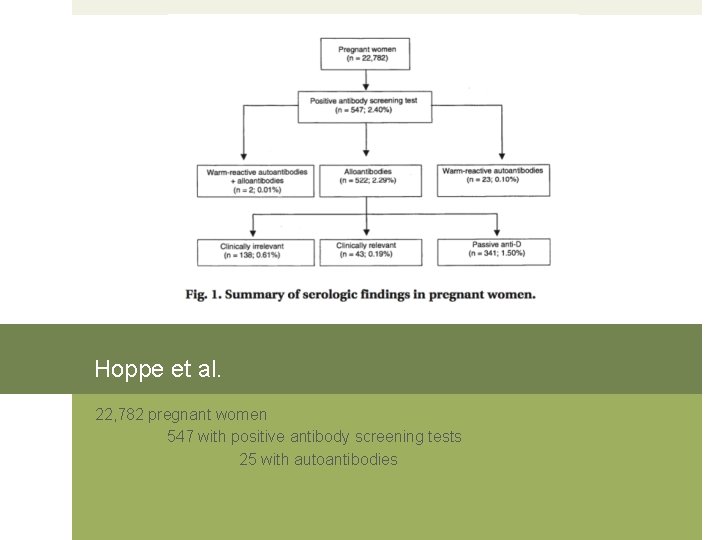
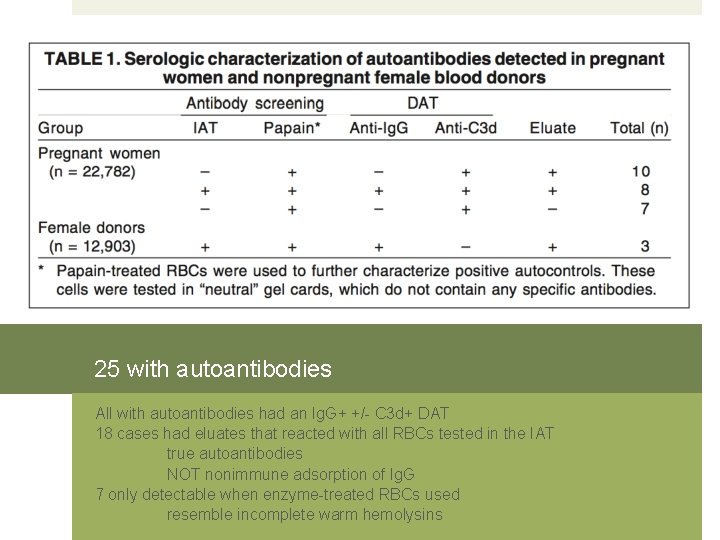
Hoppe et al. 22, 782 pregnant women 547 with positive antibody screening tests 25 with autoantibodies
25 with autoantibodies All with autoantibodies had an Ig. G+ +/- C 3 d+ DAT 18 cases had eluates that reacted with all RBCs tested in the IAT true autoantibodies NOT nonimmune adsorption of Ig. G 7 only detectable when enzyme-treated RBCs used resemble incomplete warm hemolysins
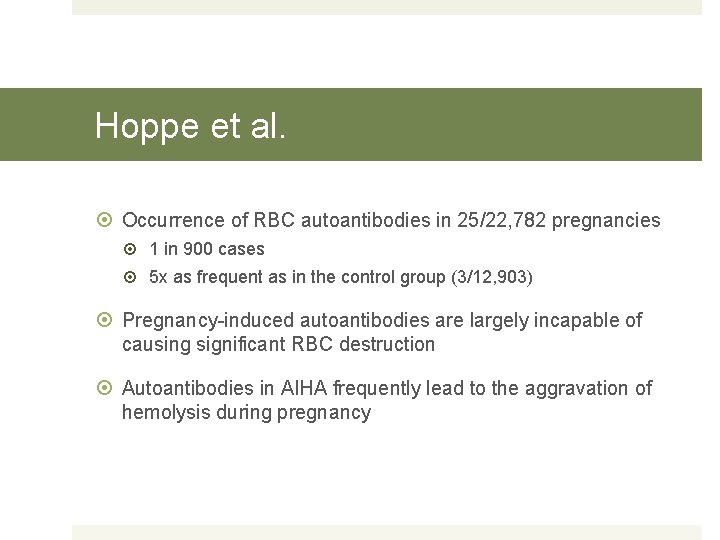
Hoppe et al. Occurrence of RBC autoantibodies in 25/22, 782 pregnancies 1 in 900 cases 5 x as frequent as in the control group (3/12, 903) Pregnancy-induced autoantibodies are largely incapable of causing significant RBC destruction Autoantibodies in AIHA frequently lead to the aggravation of hemolysis during pregnancy
Pathogenesis Idiopathic AIHA of pregnancy Unexplained hemolytic anemia associated with pregnancy Pregnancy-induced hemolytic anemia
Pathogenesis Placental driven event Immunological Hormonal Microchemical
CD 47 Integrin-associated protein ubiquitously expressed cell surface glycoprotein First identified in placenta and in neutrophil granulocytes Erythrocytes do not express integrins, but have high levels of CD 47 Suggesting integrin-independent functions for CD 47 Can function as ligand for inhibitory macrophage receptor Signal Regulatory Protein alpha Interaction prevents phagocytosis of circulating cells by splenic macrophages Erythrocytes from CD 47 deficient mice were rapidly cleared from circulation Placenta is paternal
Alpha-methyldopa-induced AIHA
Alpha-methyldopa Aldomet, Aldoril, Dopament, Dopegyt Alpha-adrenergic agonist Selective for alpha 2 -adrenergic receptors Used as a sympatholytic or antihypertensive Safe for use during pregnancy Used to treat gestational hypertension
Alpha-methyldopa Adverse side effects Psychological Depression +/- suicidal ideation, as well as nightmares Apathy +/- anhedonia, dysphoria Anxiety, esp social anxiety Decreased awareness, alertness, wakefulness Fatigue and lethargy Sexual dysfunction
Alpha-methyldopa Adverse side effects Physiological Dizziness, lightheadedness, vertigo Miosis/pupil constriction Xerostomia/dry mouth GI disturbance including diarrhea +/- constipation Headache or migraine Myalgia, arthralgia, paresthesia Restless leg syndrome Parkinsonian symptoms Ataxia Bradycardia Orthostatic hypotension Pancreatitis Skin rashes Bone marrow suppression Hemolytic anemia
Alpha-methyldopa-induced AIHA Production of antibodies in ~15% of patients receiving the drug for longer than 4 months Autoantibodies targeted against red blood cells Rh system>>>Jka and U 0. 5 -1% developing hemolytic anemia True autoimmune and drug-independent antibody Antibody is in vitro reactive, even in the absence of the drug Ig. G-mediated Extravascular hemolysis Slow onset – 1 to 3 months after starting medication Years until a negative DAT is achieved
Alpha-methyldopa-induced AIHA Treatment for hemolytic anemia Stop medication Corticosteroids Rarely blood transfusions Reintroduction of medication is contraindicated
Alpha-methyldopa-induced AIHA Treatment for positive DAT without hemolysis No treatment is required Usually acceptable to continue therapy Positive IAT will interfere with crossmatching and may obscure clinically relevant alloantibodies
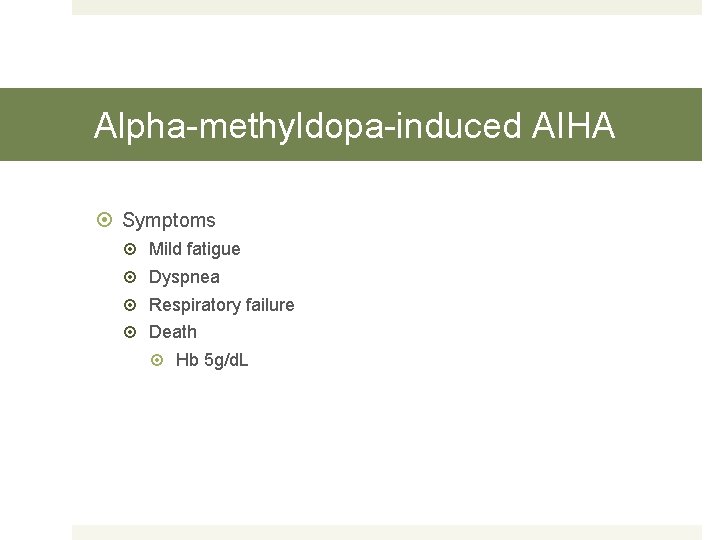
Alpha-methyldopa-induced AIHA Symptoms Mild fatigue Dyspnea Respiratory failure Death Hb 5 g/d. L
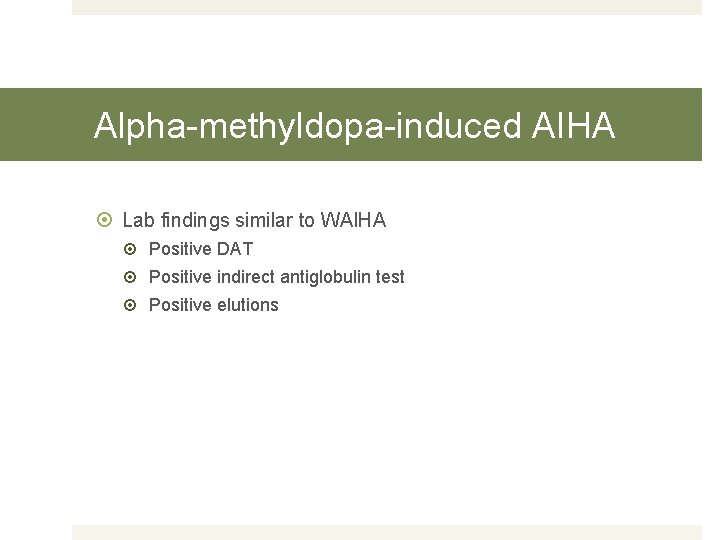
Alpha-methyldopa-induced AIHA Lab findings similar to WAIHA Positive DAT Positive indirect antiglobulin test Positive elutions
Summary
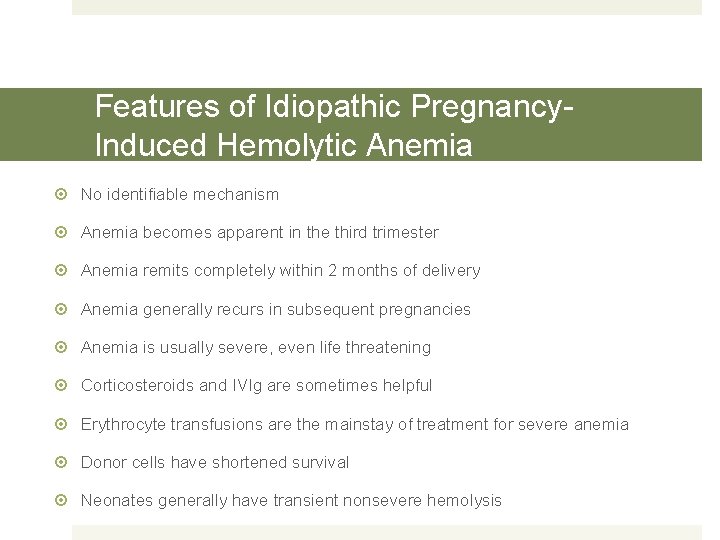
Features of Idiopathic Pregnancy. Induced Hemolytic Anemia No identifiable mechanism Anemia becomes apparent in the third trimester Anemia remits completely within 2 months of delivery Anemia generally recurs in subsequent pregnancies Anemia is usually severe, even life threatening Corticosteroids and IVIg are sometimes helpful Erythrocyte transfusions are the mainstay of treatment for severe anemia Donor cells have shortened survival Neonates generally have transient nonsevere hemolysis
References Benraad CEM, Scheerder HAJM, Overbeeke MAM. Autoimmune haemolytic anaemia during pregnancy. Eur J of Obstetrics and Gynecolgoy (1994)55: 209 -211. Chaplin H, Cohen R, Bloomberg G, et al. Pregnancy and idiopathic autoimmune haemolytic anaemia: a prospective study during 6 months gestation and 3 months post-partum. Br J Haematol (1973)24(2): 219229. Grigoriadis D, Tympa A, Liapis A, et al. Alpha-Methyldopa-Induced Autoimmune Hemolytic Anemia in the Third Trimester of Pregnancy. Case Reports in Obstetrics and Gynecology(2013): 1 -2 Hoppe B, Stibbe W, Bielefeld A, et al. Increased RBC autoantibody production in pregnancy. Transfusion (2001); 41: 1559 -1561. Kumar R, Advani AR, Sharan J, et al. Pregnancy induced hemolytic anemia: an unexplained entity. Ann Hematol (2001)80: 623 -626. Murphy WG and Kelton JG. Methyldopa-induced autoantibodies against red blood cells. Blood Reviews (1988)2: 36 -42. Ong M, Hawthorne L. Autoimmune Hemolytic Anemia in Pregnancy. Lab. Medicine (2010)42(5): 264 -266. Semple JW and Freedman J. Autoimmune Pathogenesis and Autoimmune Hemolytic Anemia. Seminars in Hematology (2005)42: 122 -130. Sokol RJ, Hewitt S, Stamps B. Erythrocytes Autoantibodies, Autoimmune Hemolysis and Pregnancy. Vox Sang (1982)43: 169 -176. Valent P and Lechner K. Diagnosis and treatment of autoimmune haemolytic anaemias in adults: a clinical review. Wien Klin Wochesnschr (2008)120/5 -6: 136 -151.