
Pregnancy Endocrinology William Harper Hamilton General Hospital Mc
- Slides: 45
Pregnancy & Endocrinology William Harper Hamilton General Hospital Mc. Master University www. drharper. ca
Objectives l Thyroid Disorders & Pregnancy Normal thyroid phsyiology & pregnancy l Hypothyroidism & pregnancy l Thyrotoxicosis & pregnancy l Postpartum thyroid dysfunction l l Diabetes & Pregnancy Gestational DM l Type 1 & Type 2 DM & Pregnancy l
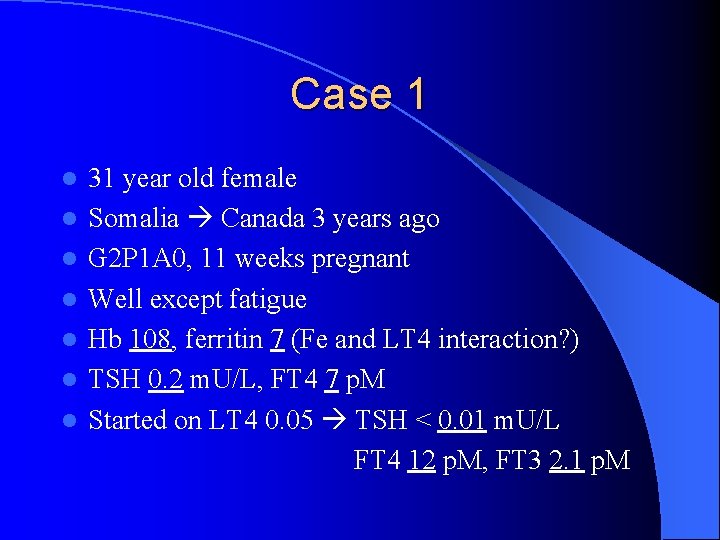
Case 1 l l l l 31 year old female Somalia Canada 3 years ago G 2 P 1 A 0, 11 weeks pregnant Well except fatigue Hb 108, ferritin 7 (Fe and LT 4 interaction? ) TSH 0. 2 m. U/L, FT 4 7 p. M Started on LT 4 0. 05 TSH < 0. 01 m. U/L FT 4 12 p. M, FT 3 2. 1 p. M
Case 1 How would you characterize her hypothyroidism? 2. What are the ramifications of pregnancy to thyroid function/dysfunction? 1.
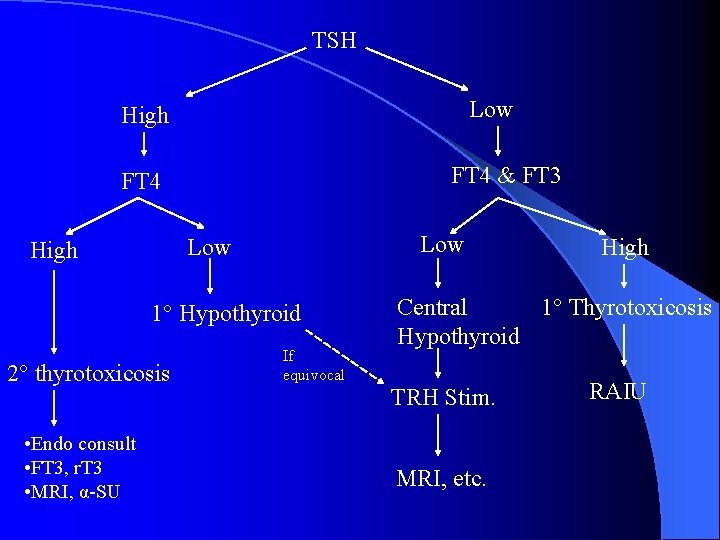
TSH Low High FT 4 & FT 3 FT 4 Low High 1° Hypothyroid 2° thyrotoxicosis • Endo consult • FT 3, r. T 3 • MRI, α-SU If equivocal High Central 1° Thyrotoxicosis Hypothyroid TRH Stim. MRI, etc. RAIU
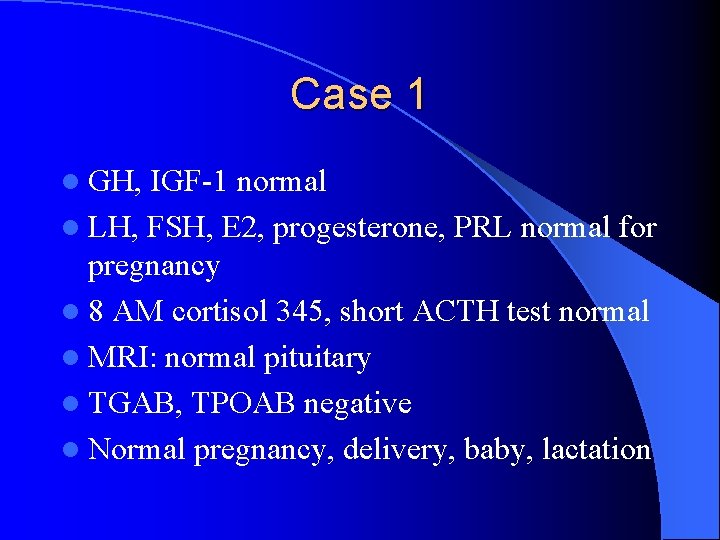
Case 1 l GH, IGF-1 normal l LH, FSH, E 2, progesterone, PRL normal for pregnancy l 8 AM cortisol 345, short ACTH test normal l MRI: normal pituitary l TGAB, TPOAB negative l Normal pregnancy, delivery, baby, lactation
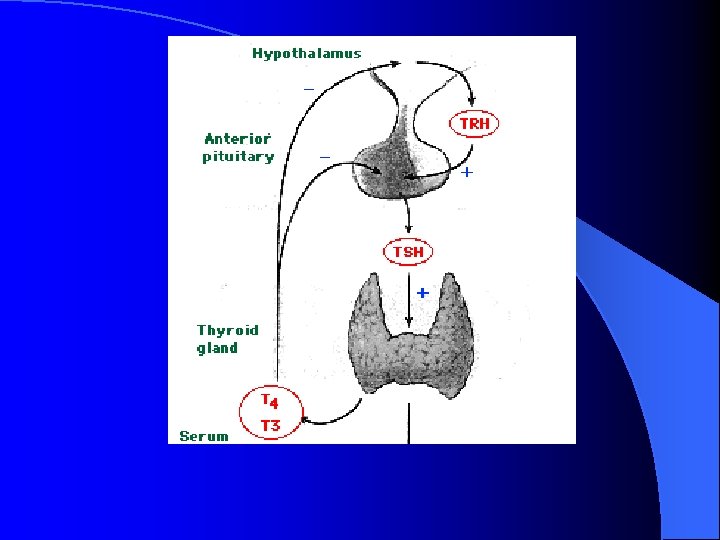
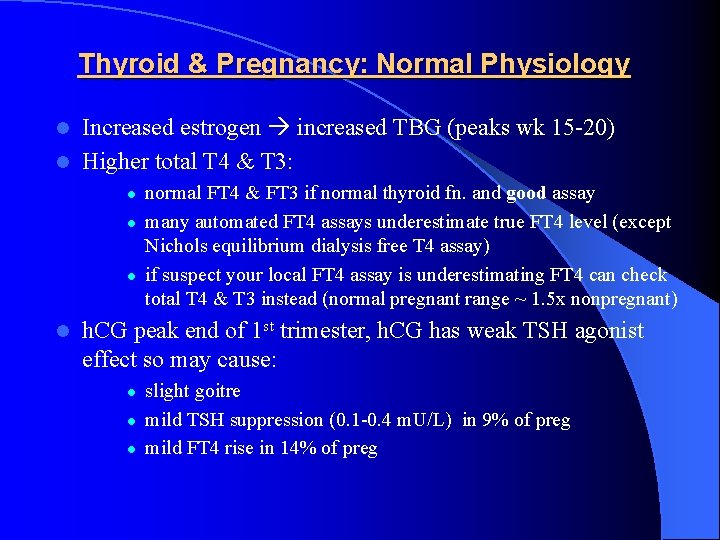
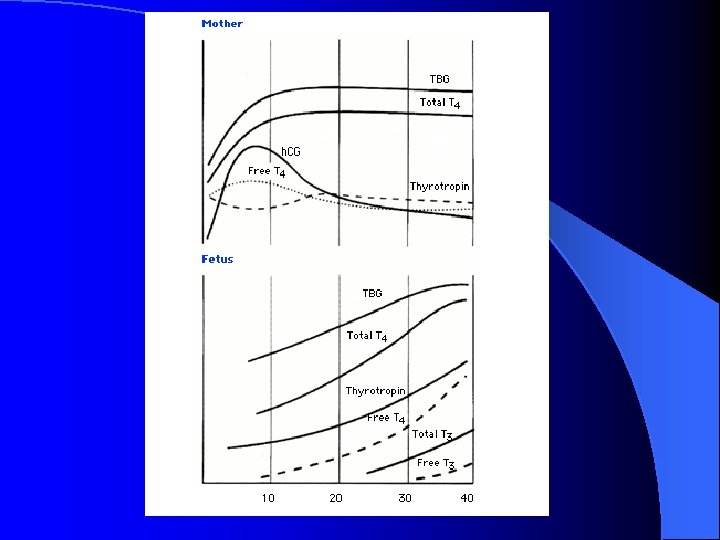
Thyroid & Pregnancy: Normal Physiology Increased estrogen increased TBG (peaks wk 15 -20) l Higher total T 4 & T 3: l l l normal FT 4 & FT 3 if normal thyroid fn. and good assay many automated FT 4 assays underestimate true FT 4 level (except Nichols equilibrium dialysis free T 4 assay) if suspect your local FT 4 assay is underestimating FT 4 can check total T 4 & T 3 instead (normal pregnant range ~ 1. 5 x nonpregnant) h. CG peak end of 1 st trimester, h. CG has weak TSH agonist effect so may cause: l l l slight goitre mild TSH suppression (0. 1 -0. 4 m. U/L) in 9% of preg mild FT 4 rise in 14% of preg
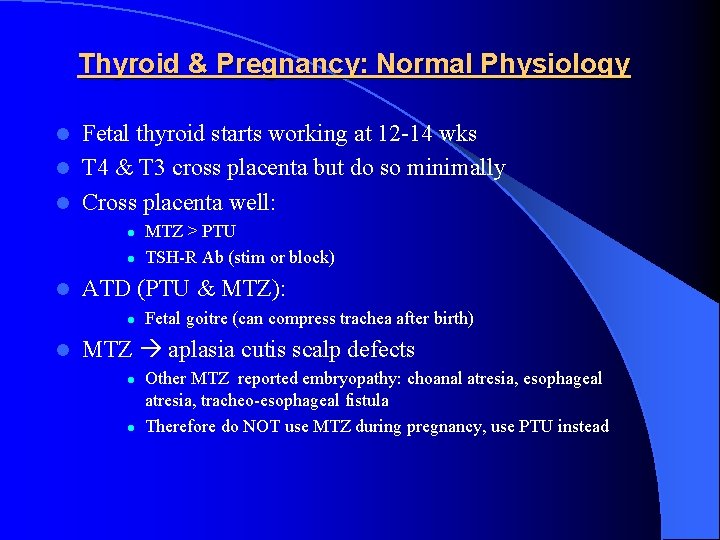
Thyroid & Pregnancy: Normal Physiology Fetal thyroid starts working at 12 -14 wks l T 4 & T 3 cross placenta but do so minimally l Cross placenta well: l l ATD (PTU & MTZ): l l MTZ > PTU TSH-R Ab (stim or block) Fetal goitre (can compress trachea after birth) MTZ aplasia cutis scalp defects l l Other MTZ reported embryopathy: choanal atresia, esophageal atresia, tracheo-esophageal fistula Therefore do NOT use MTZ during pregnancy, use PTU instead
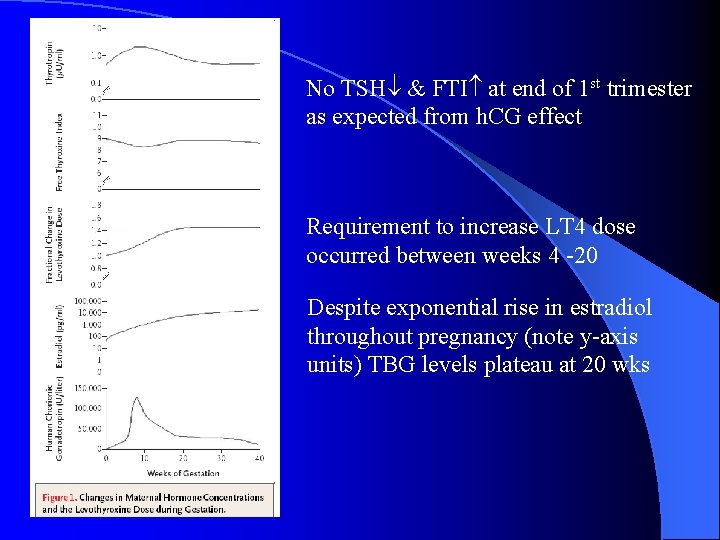
No TSH & FTI at end of 1 st trimester as expected from h. CG effect Requirement to increase LT 4 dose occurred between weeks 4 -20 Despite exponential rise in estradiol throughout pregnancy (note y-axis units) TBG levels plateau at 20 wks
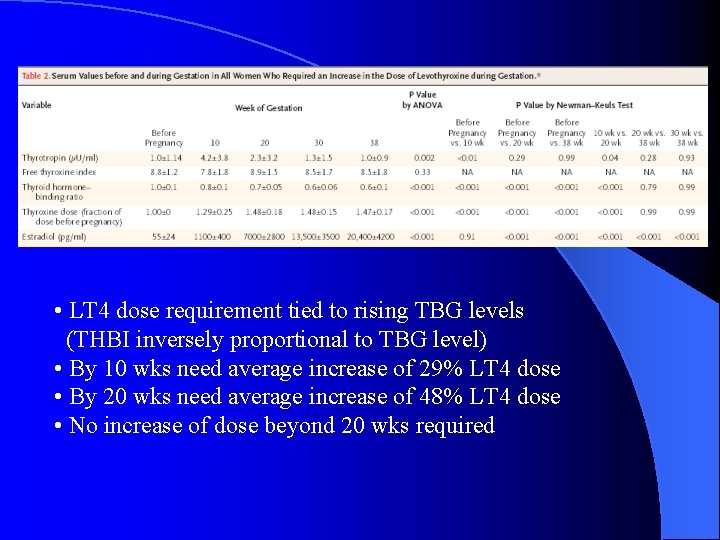
• LT 4 dose requirement tied to rising TBG levels (THBI inversely proportional to TBG level) • By 10 wks need average increase of 29% LT 4 dose • By 20 wks need average increase of 48% LT 4 dose • No increase of dose beyond 20 wks required
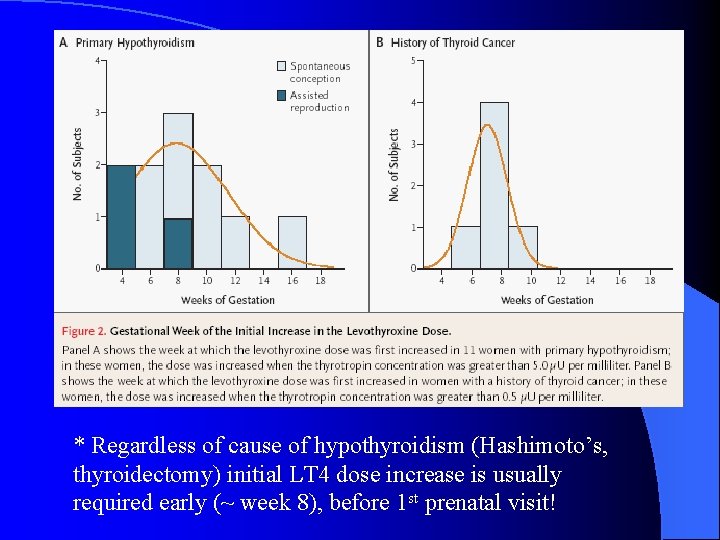
* Regardless of cause of hypothyroidism (Hashimoto’s, thyroidectomy) initial LT 4 dose increase is usually required early (~ week 8), before 1 st prenatal visit!
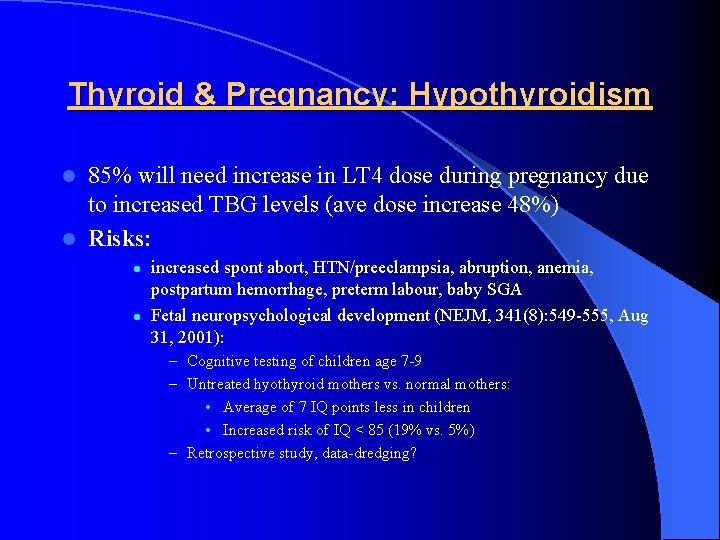
Thyroid & Pregnancy: Hypothyroidism 85% will need increase in LT 4 dose during pregnancy due to increased TBG levels (ave dose increase 48%) l Risks: l l l increased spont abort, HTN/preeclampsia, abruption, anemia, postpartum hemorrhage, preterm labour, baby SGA Fetal neuropsychological development (NEJM, 341(8): 549 -555, Aug 31, 2001): – Cognitive testing of children age 7 -9 – Untreated hyothyroid mothers vs. normal mothers: • Average of 7 IQ points less in children • Increased risk of IQ < 85 (19% vs. 5%) – Retrospective study, data-dredging?
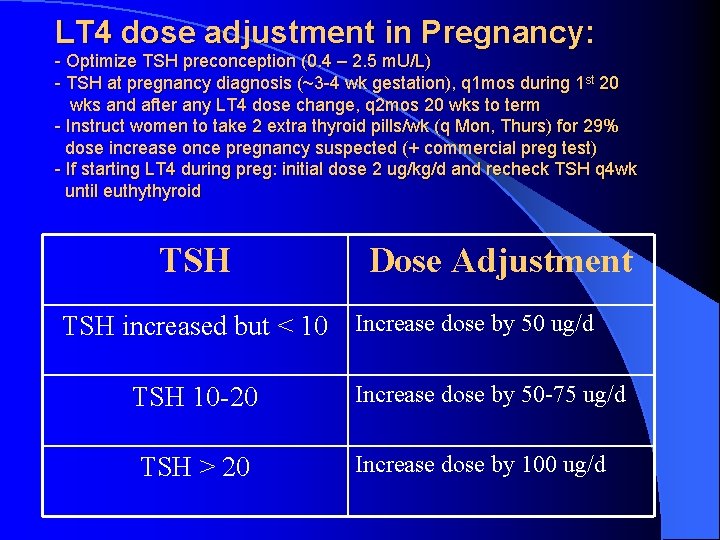
LT 4 dose adjustment in Pregnancy: - Optimize TSH preconception (0. 4 – 2. 5 m. U/L) - TSH at pregnancy diagnosis (~3 -4 wk gestation), q 1 mos during 1 st 20 wks and after any LT 4 dose change, q 2 mos 20 wks to term - Instruct women to take 2 extra thyroid pills/wk (q Mon, Thurs) for 29% dose increase once pregnancy suspected (+ commercial preg test) - If starting LT 4 during preg: initial dose 2 ug/kg/d and recheck TSH q 4 wk until euthythyroid TSH Dose Adjustment TSH increased but < 10 Increase dose by 50 ug/d TSH 10 -20 TSH > 20 Increase dose by 50 -75 ug/d Increase dose by 100 ug/d
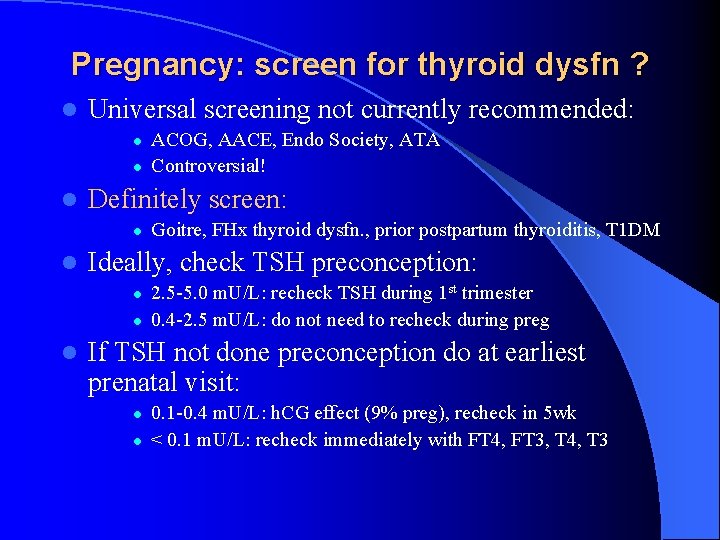
Pregnancy: screen for thyroid dysfn ? l Universal screening not currently recommended: l l l Definitely screen: l l Goitre, FHx thyroid dysfn. , prior postpartum thyroiditis, T 1 DM Ideally, check TSH preconception: l l l ACOG, AACE, Endo Society, ATA Controversial! 2. 5 -5. 0 m. U/L: recheck TSH during 1 st trimester 0. 4 -2. 5 m. U/L: do not need to recheck during preg If TSH not done preconception do at earliest prenatal visit: l l 0. 1 -0. 4 m. U/L: h. CG effect (9% preg), recheck in 5 wk < 0. 1 m. U/L: recheck immediately with FT 4, FT 3, T 4, T 3
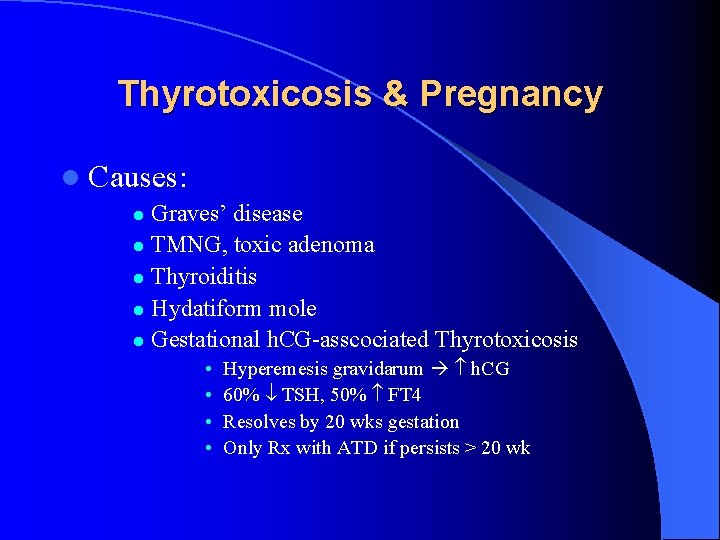
Thyrotoxicosis & Pregnancy l Causes: Graves’ disease l TMNG, toxic adenoma l Thyroiditis l Hydatiform mole l Gestational h. CG-asscociated Thyrotoxicosis l • • Hyperemesis gravidarum h. CG 60% TSH, 50% FT 4 Resolves by 20 wks gestation Only Rx with ATD if persists > 20 wk
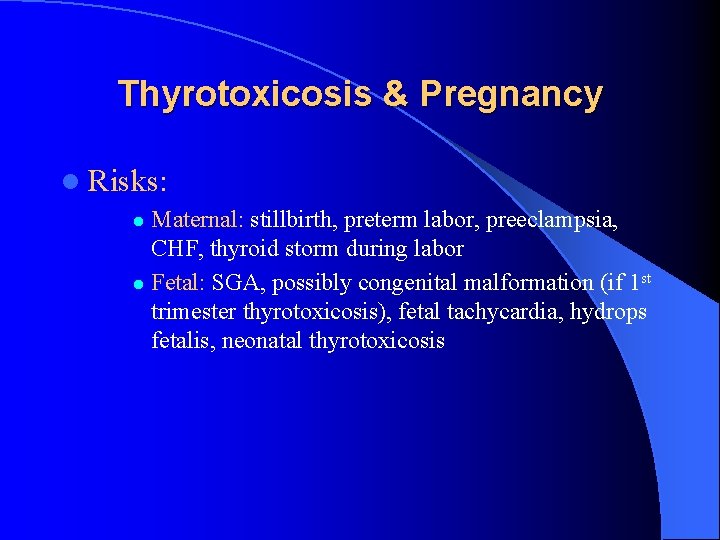
Thyrotoxicosis & Pregnancy l Risks: Maternal: stillbirth, preterm labor, preeclampsia, CHF, thyroid storm during labor l Fetal: SGA, possibly congenital malformation (if 1 st trimester thyrotoxicosis), fetal tachycardia, hydrops fetalis, neonatal thyrotoxicosis l
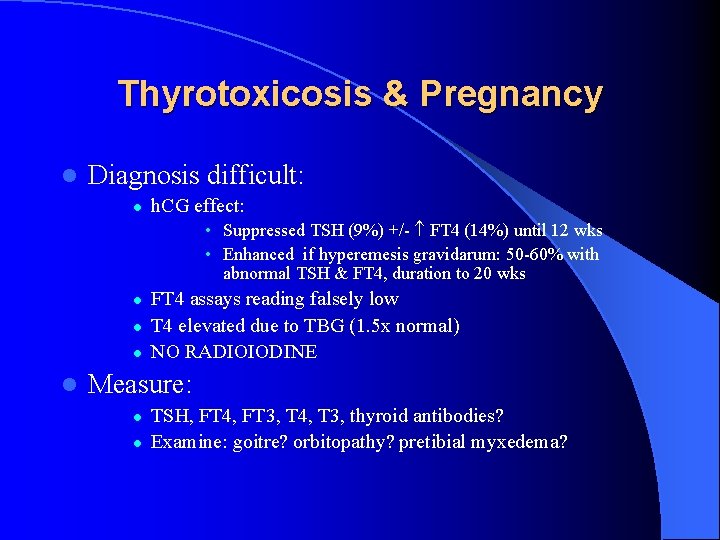
Thyrotoxicosis & Pregnancy l Diagnosis difficult: l h. CG effect: • Suppressed TSH (9%) +/- FT 4 (14%) until 12 wks • Enhanced if hyperemesis gravidarum: 50 -60% with abnormal TSH & FT 4, duration to 20 wks l l FT 4 assays reading falsely low T 4 elevated due to TBG (1. 5 x normal) NO RADIOIODINE Measure: l l TSH, FT 4, FT 3, T 4, T 3, thyroid antibodies? Examine: goitre? orbitopathy? pretibial myxedema?
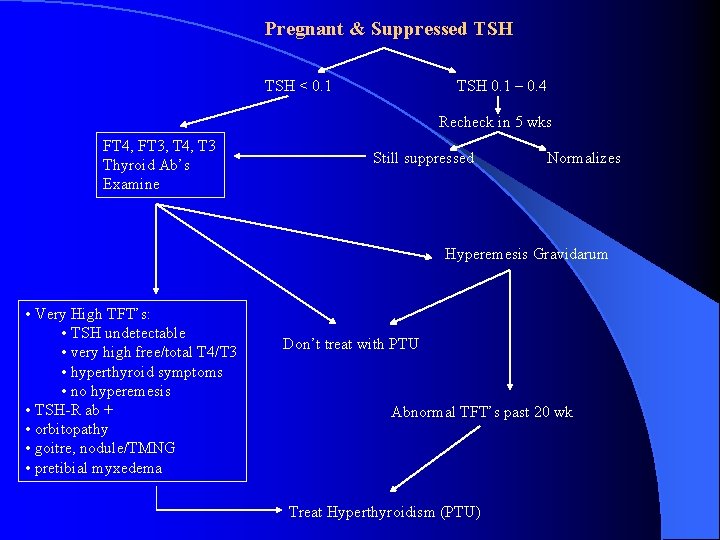
Pregnant & Suppressed TSH < 0. 1 TSH 0. 1 – 0. 4 Recheck in 5 wks FT 4, FT 3, T 4, T 3 Thyroid Ab’s Examine Still suppressed Normalizes Hyperemesis Gravidarum • Very High TFT’s: • TSH undetectable • very high free/total T 4/T 3 • hyperthyroid symptoms • no hyperemesis • TSH-R ab + • orbitopathy • goitre, nodule/TMNG • pretibial myxedema Don’t treat with PTU Abnormal TFT’s past 20 wk Treat Hyperthyroidism (PTU)
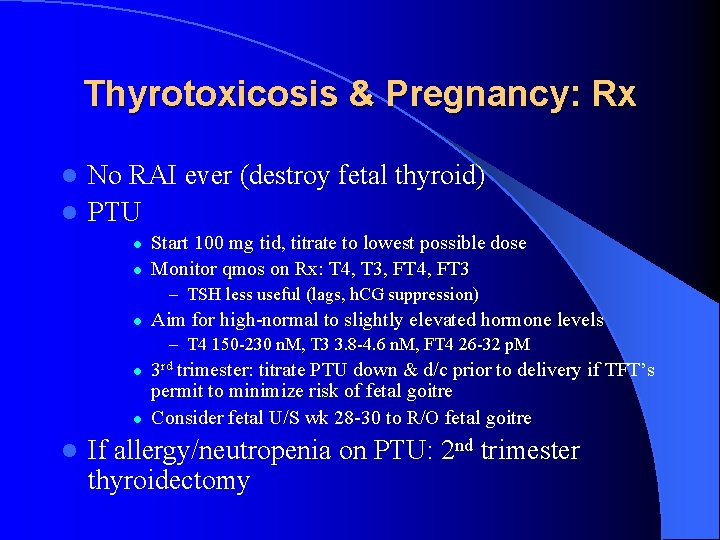
Thyrotoxicosis & Pregnancy: Rx No RAI ever (destroy fetal thyroid) l PTU l l l Start 100 mg tid, titrate to lowest possible dose Monitor qmos on Rx: T 4, T 3, FT 4, FT 3 – TSH less useful (lags, h. CG suppression) l Aim for high-normal to slightly elevated hormone levels – T 4 150 -230 n. M, T 3 3. 8 -4. 6 n. M, FT 4 26 -32 p. M l l l 3 rd trimester: titrate PTU down & d/c prior to delivery if TFT’s permit to minimize risk of fetal goitre Consider fetal U/S wk 28 -30 to R/O fetal goitre If allergy/neutropenia on PTU: 2 nd trimester thyroidectomy
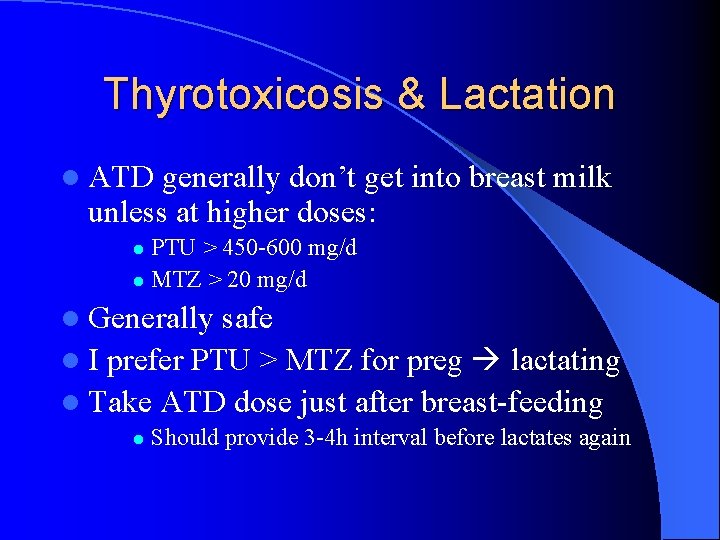
Thyrotoxicosis & Lactation l ATD generally don’t get into breast milk unless at higher doses: PTU > 450 -600 mg/d l MTZ > 20 mg/d l l Generally safe l I prefer PTU > MTZ for preg lactating l Take ATD dose just after breast-feeding l Should provide 3 -4 h interval before lactates again
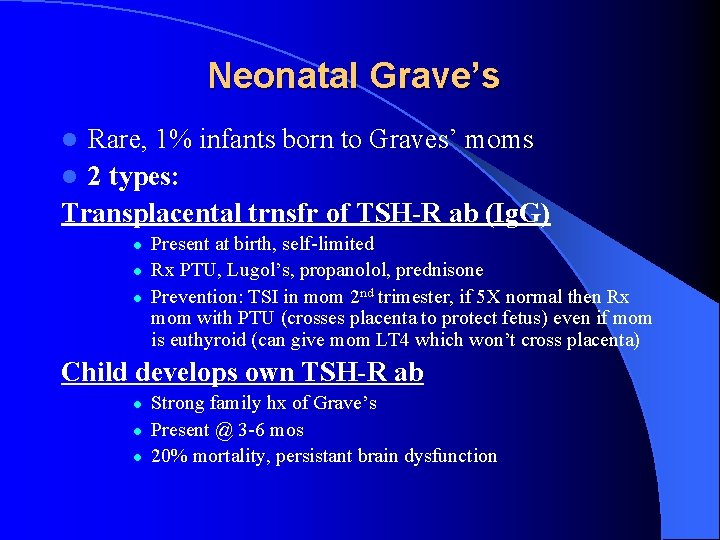
Neonatal Grave’s Rare, 1% infants born to Graves’ moms l 2 types: Transplacental trnsfr of TSH-R ab (Ig. G) l l Present at birth, self-limited Rx PTU, Lugol’s, propanolol, prednisone Prevention: TSI in mom 2 nd trimester, if 5 X normal then Rx mom with PTU (crosses placenta to protect fetus) even if mom is euthyroid (can give mom LT 4 which won’t cross placenta) Child develops own TSH-R ab l l l Strong family hx of Grave’s Present @ 3 -6 mos 20% mortality, persistant brain dysfunction
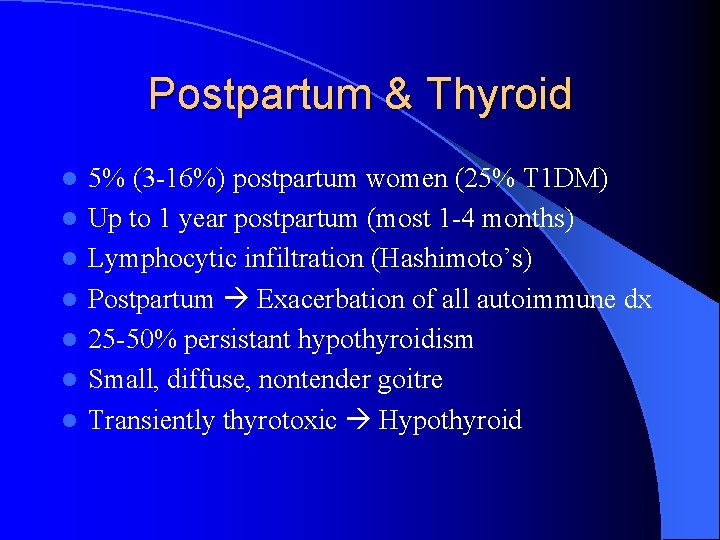
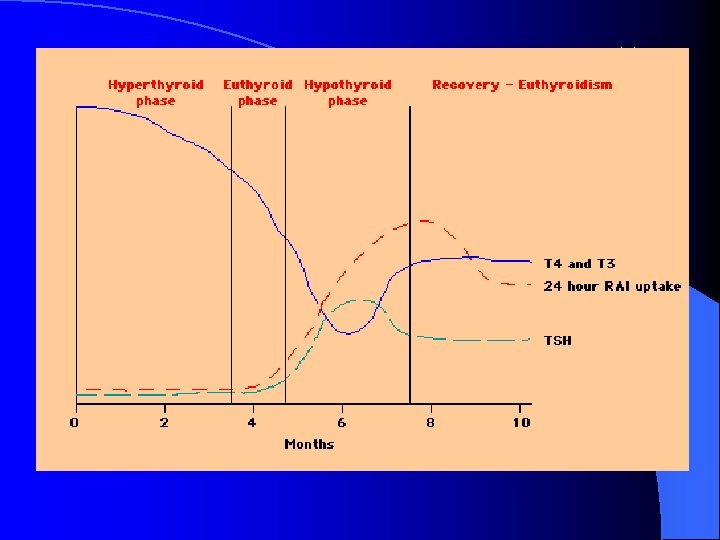
Postpartum & Thyroid l l l l 5% (3 -16%) postpartum women (25% T 1 DM) Up to 1 year postpartum (most 1 -4 months) Lymphocytic infiltration (Hashimoto’s) Postpartum Exacerbation of all autoimmune dx 25 -50% persistant hypothyroidism Small, diffuse, nontender goitre Transiently thyrotoxic Hypothyroid
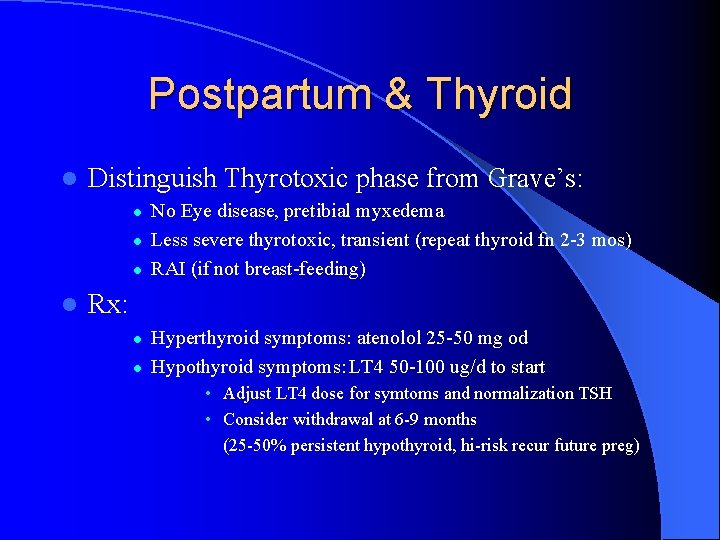
Postpartum & Thyroid l Distinguish Thyrotoxic phase from Grave’s: l l No Eye disease, pretibial myxedema Less severe thyrotoxic, transient (repeat thyroid fn 2 -3 mos) RAI (if not breast-feeding) Rx: l l Hyperthyroid symptoms: atenolol 25 -50 mg od Hypothyroid symptoms: LT 4 50 -100 ug/d to start • Adjust LT 4 dose for symtoms and normalization TSH • Consider withdrawal at 6 -9 months (25 -50% persistent hypothyroid, hi-risk recur future preg)
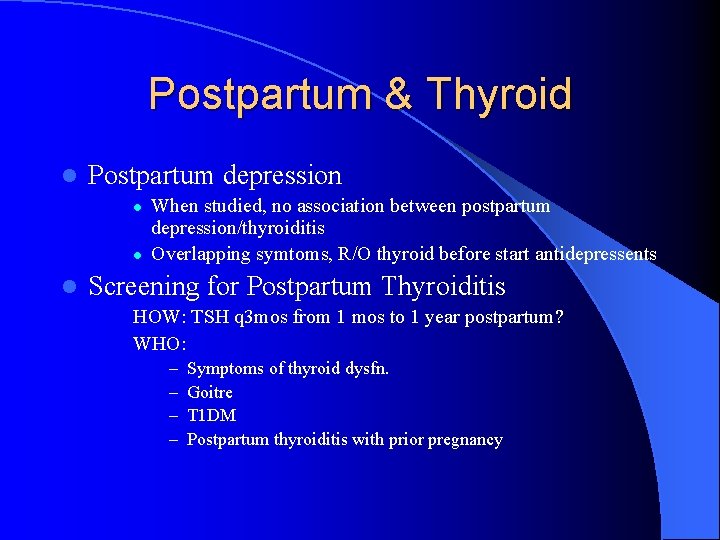
Postpartum & Thyroid l Postpartum depression l l l When studied, no association between postpartum depression/thyroiditis Overlapping symtoms, R/O thyroid before start antidepressents Screening for Postpartum Thyroiditis HOW: TSH q 3 mos from 1 mos to 1 year postpartum? WHO: – – Symptoms of thyroid dysfn. Goitre T 1 DM Postpartum thyroiditis with prior pregnancy
Objectives l Thyroid Disorders & Pregnancy Normal thyroid phsyiology & pregnancy l Hypothyroidism & pregnancy l Thyrotoxicosis & pregnancy l Postpartum thyroid dysfunction l l Diabetes & Pregnancy Gestational DM l Type 1 & Type 2 DM & Pregnancy l
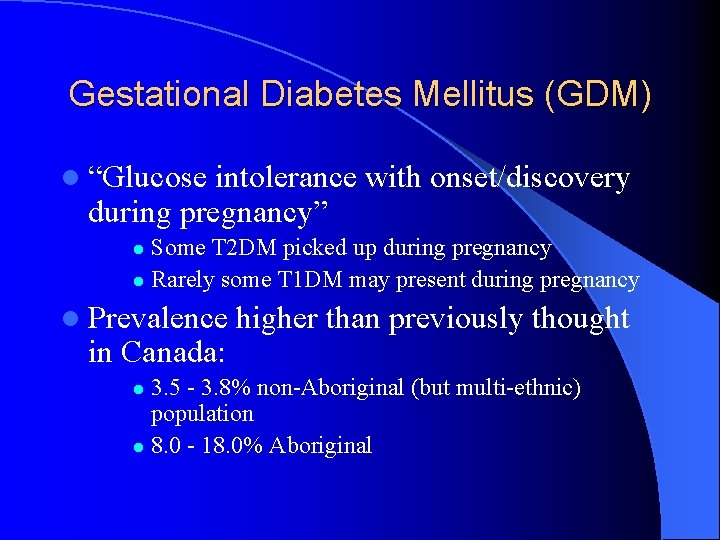
Gestational Diabetes Mellitus (GDM) l “Glucose intolerance with onset/discovery during pregnancy” Some T 2 DM picked up during pregnancy l Rarely some T 1 DM may present during pregnancy l l Prevalence in Canada: higher than previously thought 3. 5 - 3. 8% non-Aboriginal (but multi-ethnic) population l 8. 0 - 18. 0% Aboriginal l
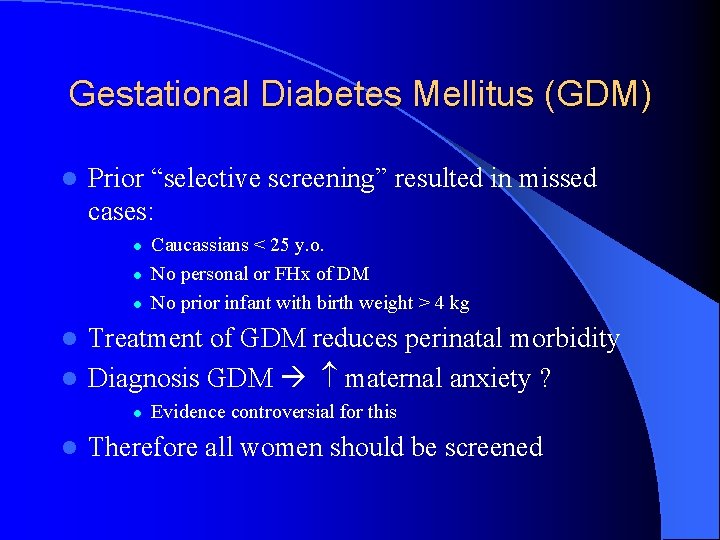
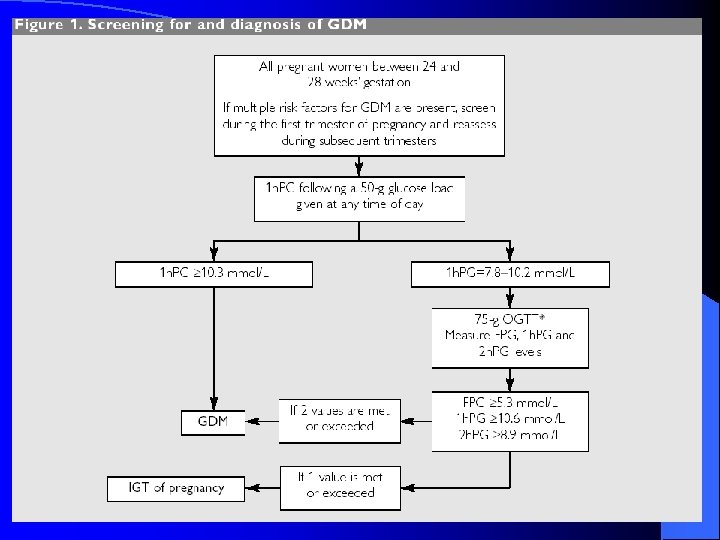
Gestational Diabetes Mellitus (GDM) l Prior “selective screening” resulted in missed cases: l l l Caucassians < 25 y. o. No personal or FHx of DM No prior infant with birth weight > 4 kg Treatment of GDM reduces perinatal morbidity l Diagnosis GDM maternal anxiety ? l l l Evidence controversial for this Therefore all women should be screened
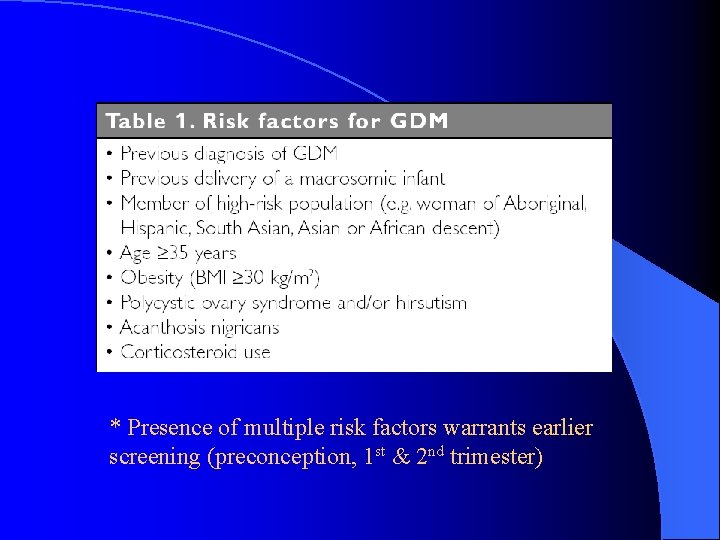
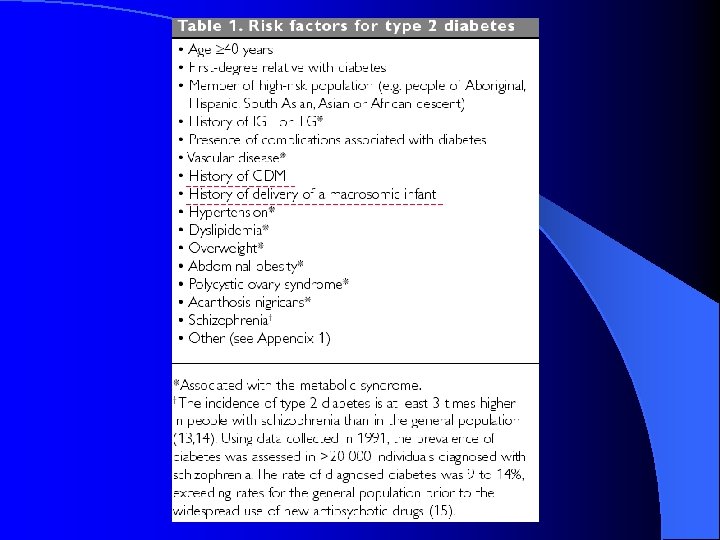
* Presence of multiple risk factors warrants earlier screening (preconception, 1 st & 2 nd trimester)
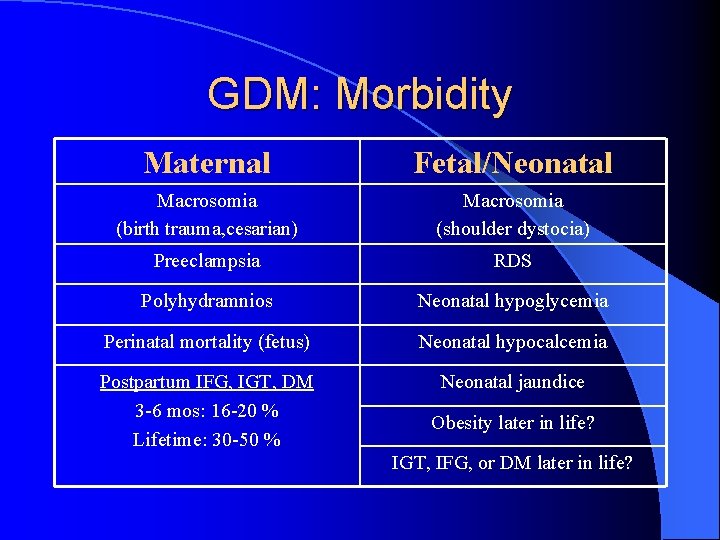
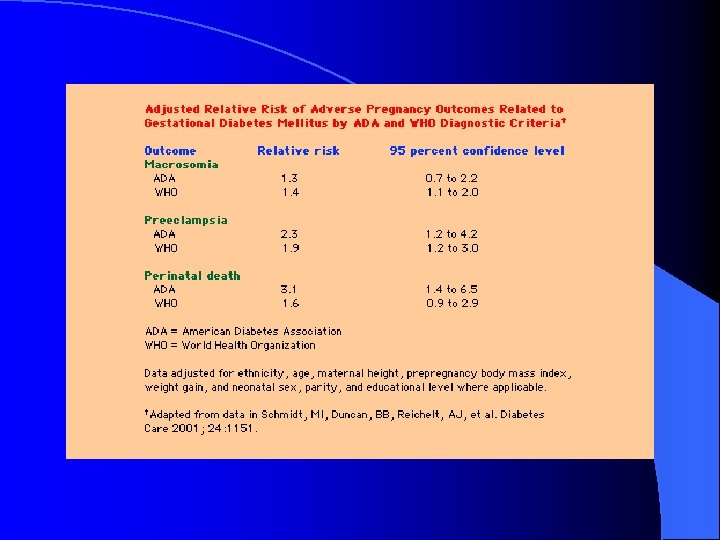
GDM: Morbidity Maternal Fetal/Neonatal Macrosomia (birth trauma, cesarian) Macrosomia (shoulder dystocia) Preeclampsia RDS Polyhydramnios Neonatal hypoglycemia Perinatal mortality (fetus) Neonatal hypocalcemia Postpartum IFG, IGT, DM 3 -6 mos: 16 -20 % Lifetime: 30 -50 % Neonatal jaundice Obesity later in life? IGT, IFG, or DM later in life?
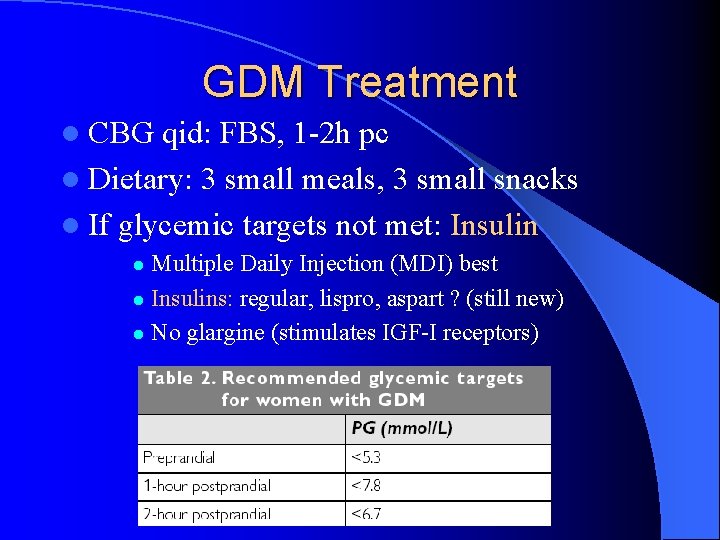
GDM Treatment l CBG qid: FBS, 1 -2 h pc l Dietary: 3 small meals, 3 small snacks l If glycemic targets not met: Insulin Multiple Daily Injection (MDI) best l Insulins: regular, lispro, aspart ? (still new) l No glargine (stimulates IGF-I receptors) l
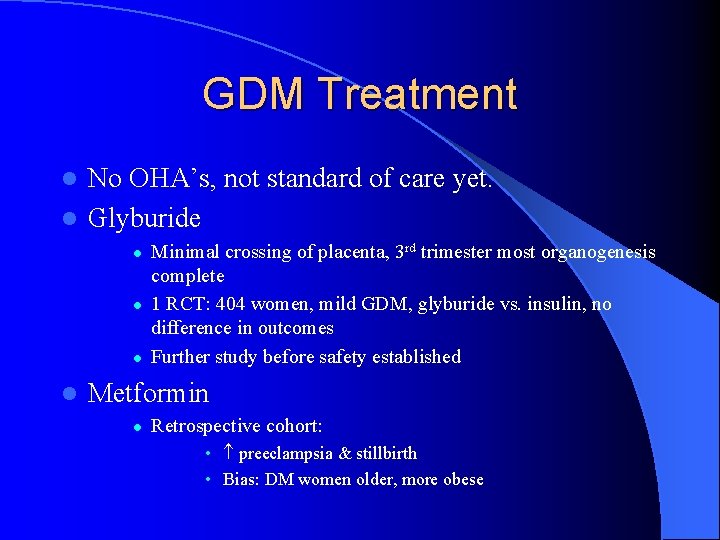
GDM Treatment No OHA’s, not standard of care yet. l Glyburide l l l Minimal crossing of placenta, 3 rd trimester most organogenesis complete 1 RCT: 404 women, mild GDM, glyburide vs. insulin, no difference in outcomes Further study before safety established Metformin l Retrospective cohort: • preeclampsia & stillbirth • Bias: DM women older, more obese
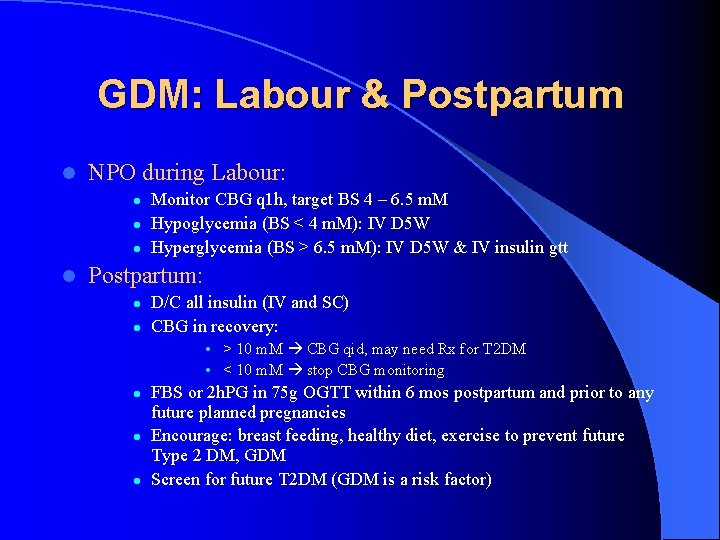
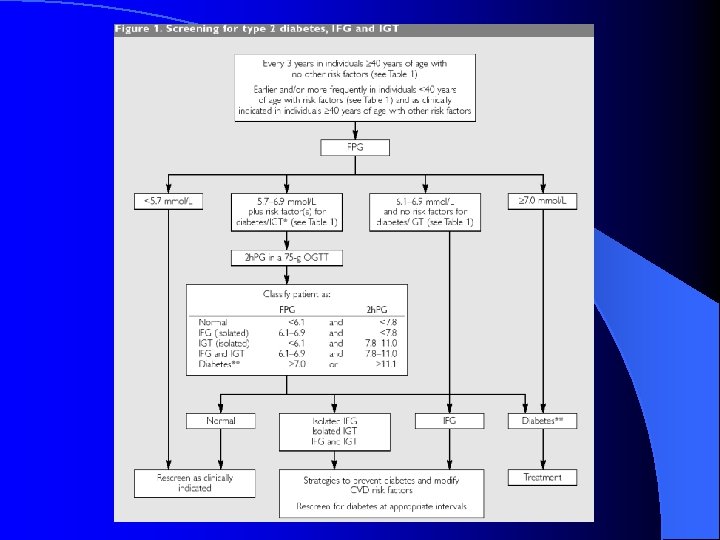
GDM: Labour & Postpartum l NPO during Labour: l l Monitor CBG q 1 h, target BS 4 – 6. 5 m. M Hypoglycemia (BS < 4 m. M): IV D 5 W Hyperglycemia (BS > 6. 5 m. M): IV D 5 W & IV insulin gtt Postpartum: l l D/C all insulin (IV and SC) CBG in recovery: • > 10 m. M CBG qid, may need Rx for T 2 DM • < 10 m. M stop CBG monitoring l l l FBS or 2 h. PG in 75 g OGTT within 6 mos postpartum and prior to any future planned pregnancies Encourage: breast feeding, healthy diet, exercise to prevent future Type 2 DM, GDM Screen for future T 2 DM (GDM is a risk factor)
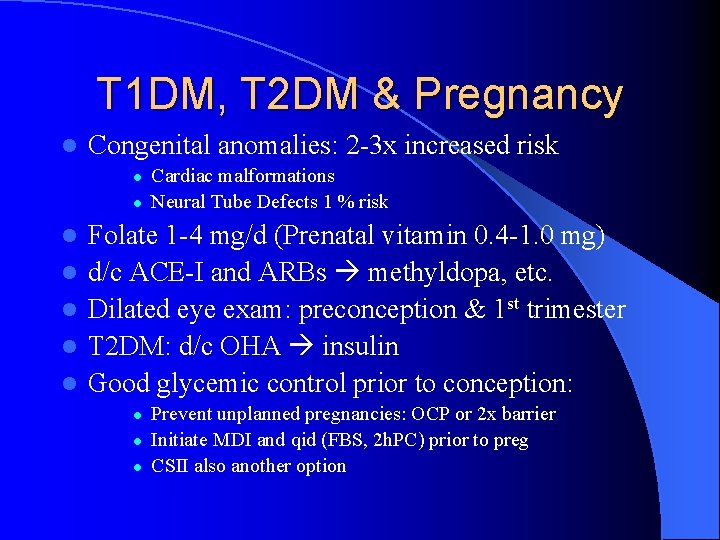
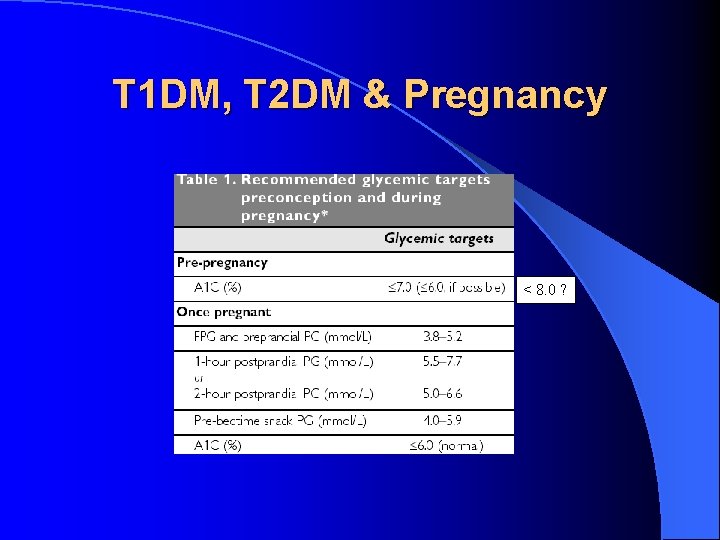
T 1 DM, T 2 DM & Pregnancy l Congenital anomalies: 2 -3 x increased risk l l l l Cardiac malformations Neural Tube Defects 1 % risk Folate 1 -4 mg/d (Prenatal vitamin 0. 4 -1. 0 mg) d/c ACE-I and ARBs methyldopa, etc. Dilated eye exam: preconception & 1 st trimester T 2 DM: d/c OHA insulin Good glycemic control prior to conception: l l l Prevent unplanned pregnancies: OCP or 2 x barrier Initiate MDI and qid (FBS, 2 h. PC) prior to preg CSII also another option
T 1 DM, T 2 DM & Pregnancy < 8. 0 ?
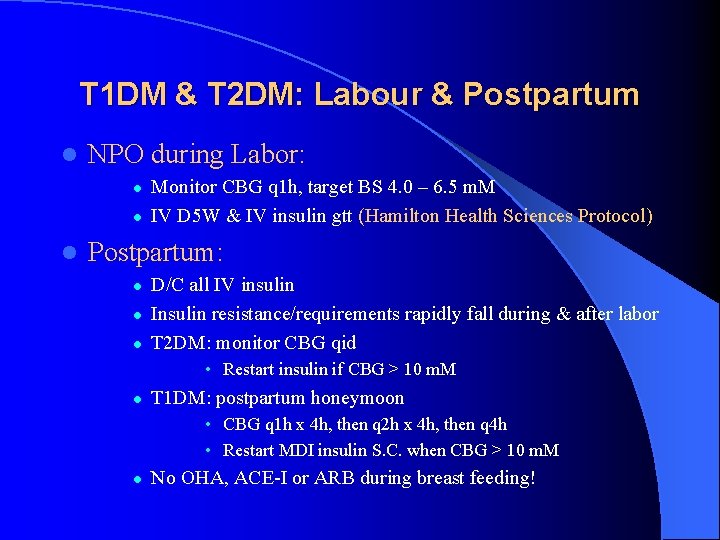
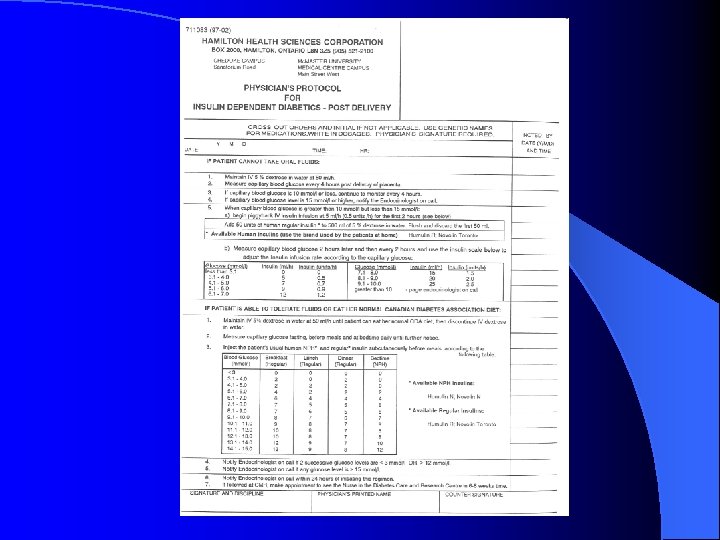
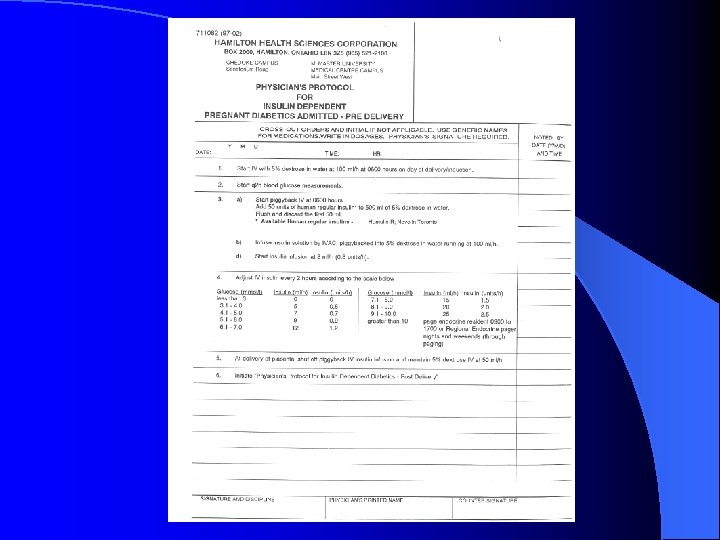
T 1 DM & T 2 DM: Labour & Postpartum l NPO during Labor: l l l Monitor CBG q 1 h, target BS 4. 0 – 6. 5 m. M IV D 5 W & IV insulin gtt (Hamilton Health Sciences Protocol) Postpartum: l l l D/C all IV insulin Insulin resistance/requirements rapidly fall during & after labor T 2 DM: monitor CBG qid • Restart insulin if CBG > 10 m. M l T 1 DM: postpartum honeymoon • CBG q 1 h x 4 h, then q 2 h x 4 h, then q 4 h • Restart MDI insulin S. C. when CBG > 10 m. M l No OHA, ACE-I or ARB during breast feeding!
END